Why Typhoon Waves Suddenly Double The Mystery of Wave Reflection [Free & Fixed Ends] | Physics on Your Phone #10
I’m Ken Kuwako, your Science Trainer. Every day is an experiment.
Have you ever heard a news story about someone going to the shore during a typhoon to watch the massive waves, only to be suddenly swept off their feet? As it turns out, waves have a surprising property: there are moments when they become much larger than they appear. In this article, we’ll explore the fascinating—and sometimes dangerous—world of wave reflection.
A Quick Review: Wave Superposition
In Lesson #09, we looked at wave superposition. When two waves overlap, their displacements are added together or canceled out depending on their positions.
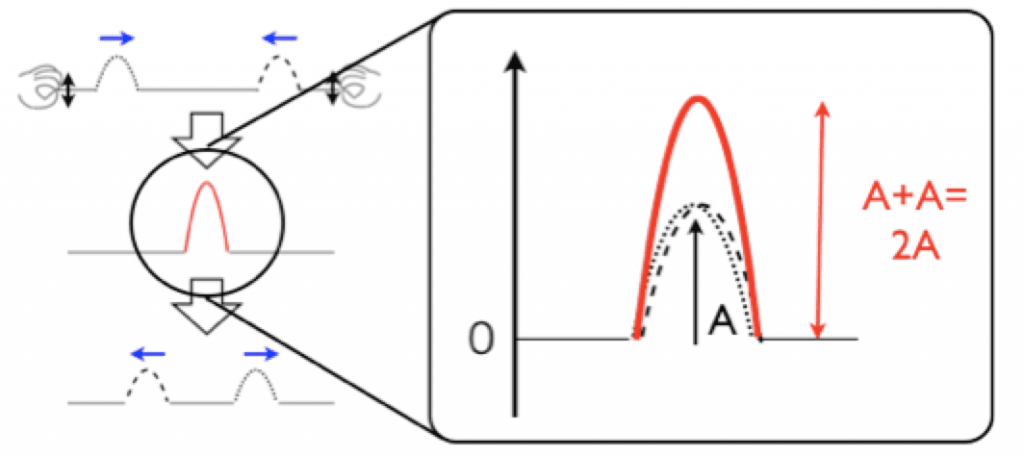
Example: When two crests overlap
Today, we’ll move on to the third major characteristic of waves: reflection.
What Happens When a Rock Hits a Wall? What About a Wave?
Imagine throwing a rock at a wall. The rock slams into it with a loud thud and falls to the ground. Sometimes it may even shatter on impact.
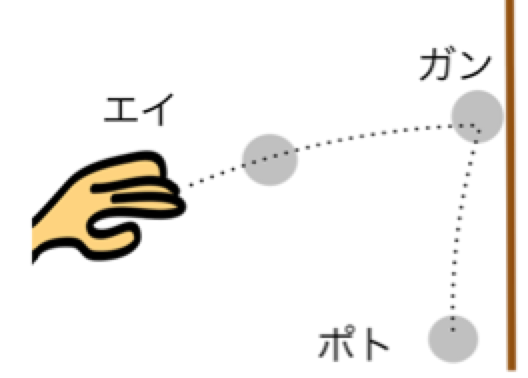
Now, what if we send a wave toward a wall instead? Try creating waves in a bathtub and letting them travel toward the side of the tub.
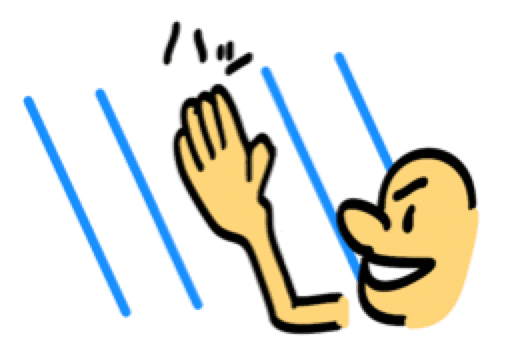
Give the water a quick chop with your hand and watch the waves travel!
When the wave reaches the wall… something remarkable happens! It bounces back as if nothing happened, traveling at essentially the same speed. This phenomenon is called wave reflection.
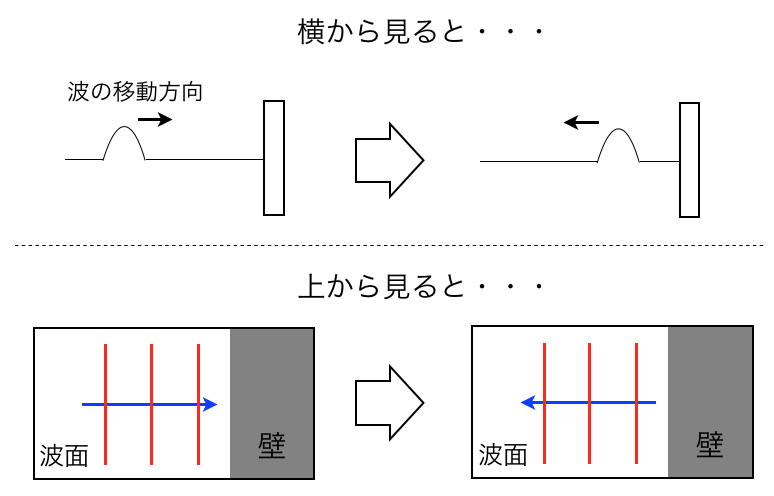
Red lines show wavefronts; blue arrows show the direction of travel.
Unlike a rock, a wave doesn’t break apart or disappear when it hits a wall. Instead, it reflects back (although its amplitude gradually decreases over time). You might say, “A rubber ball bounces too!” True—but waves have a unique twist.
There are actually two different types of reflection, and in one of them, the wave comes back looking completely different from when it arrived. A rubber ball can’t do that—but a wave can.
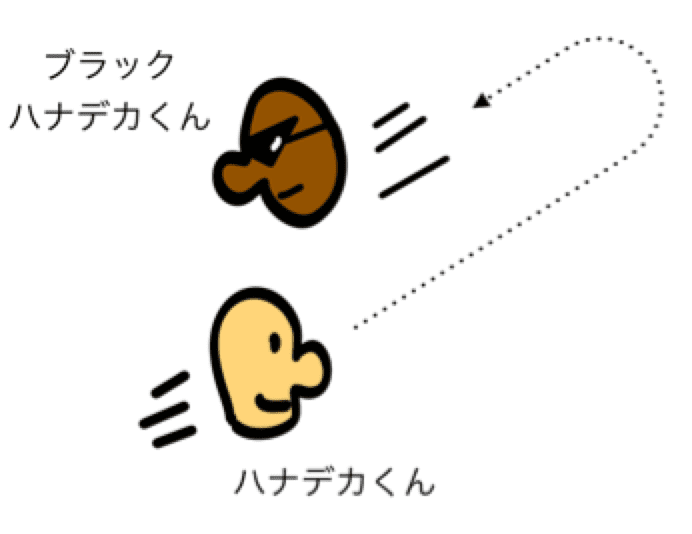
Imagine leaving as one person and returning as someone else!
Let’s look at these two types of reflection one by one.
① Free-End Reflection: Returning in the Same Shape
The incoming wave is called the incident wave, while the reflected wave is called the reflected wave.
In situations like the bathtub example, crests return as crests and troughs return as troughs. The wave reflects without changing its phase. This type of reflection is known as free-end reflection.
Watch it in action:
Notice how the wave comes back with the same shape it had before.
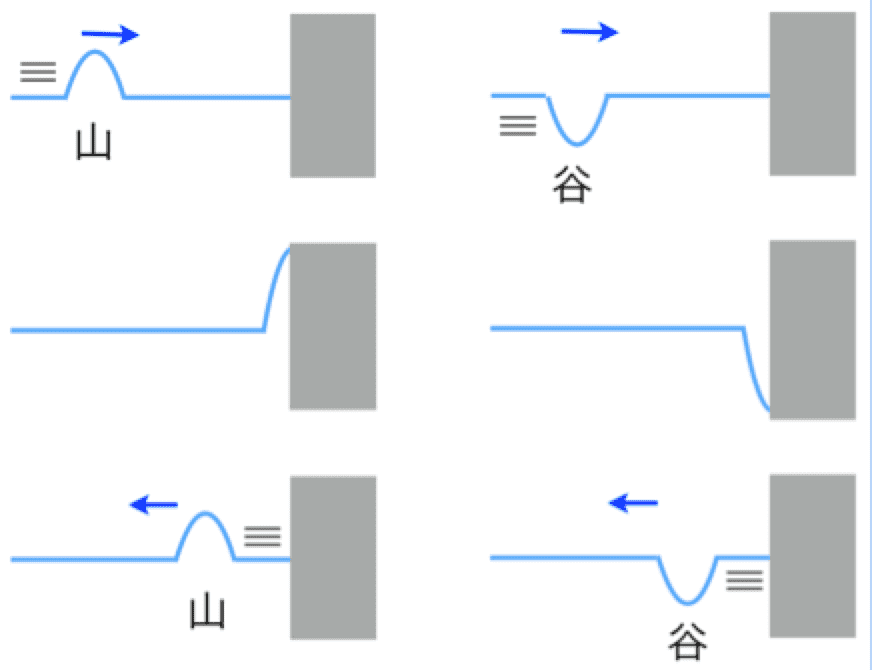
The key to creating free-end reflection is allowing the reflecting end to move freely.

It’s a bit hard to see, but a string loop is attached.
This setup allows the end of the string to move up and down freely, producing free-end reflection. Here’s a simulation as well:
One of the most important features of free-end reflection is that the amplitude becomes especially large at the reflecting boundary.
If the amplitude of the incoming wave is A meters, the maximum amplitude at the reflecting point becomes 2A meters—twice as large!
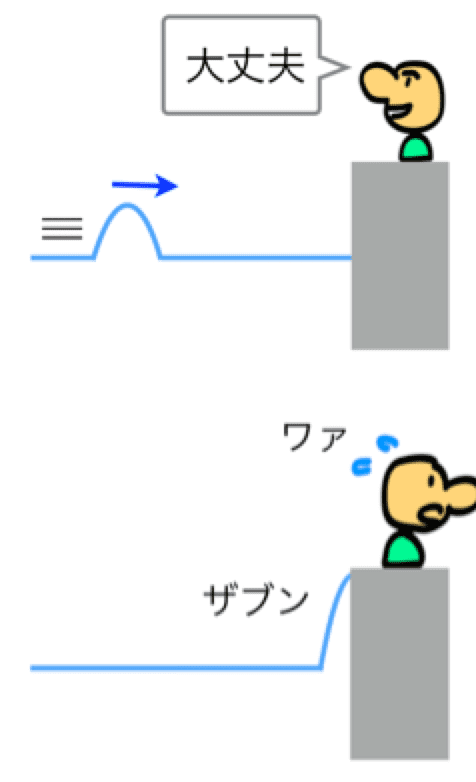
Now let’s return to the story at the beginning.
One reason people should never approach seawalls or breakwaters during a typhoon is that reflected waves can overlap with incoming waves. When this happens, a wave that looks ordinary can suddenly become much taller than expected.
That’s why people are sometimes caught off guard. “It looked safe just a moment ago” can quickly turn into a life-threatening mistake. Physics isn’t just about equations—it can help keep you alive.
② Fixed-End Reflection: Returning Upside Down
What happens if we prevent the end from moving?
In free-end reflection, the end of the string could move freely.
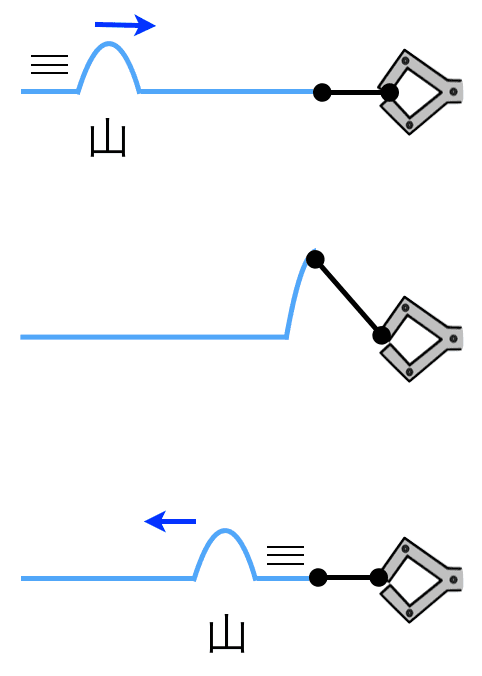
Now let’s fix the end firmly in place.
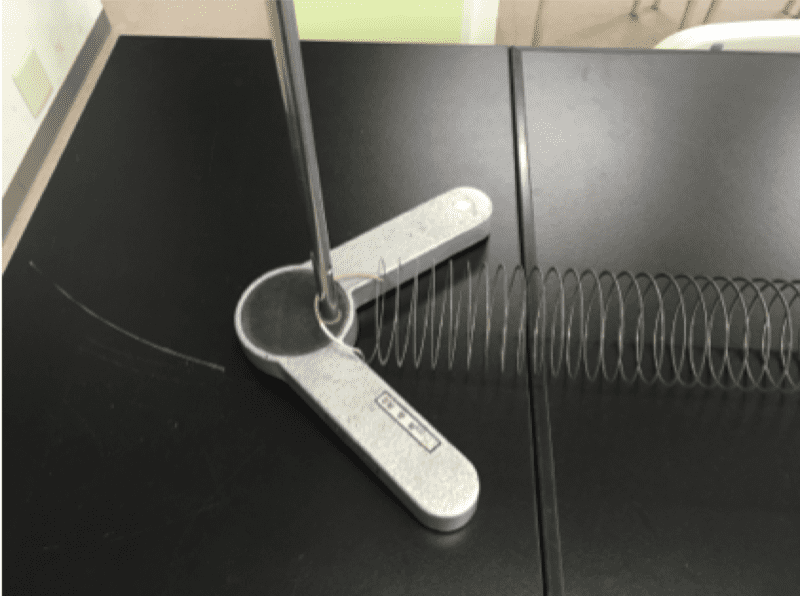
This time, the string is attached directly to the stand.
Watch the experiment:
Something amazing happens.
Send in a crest, and it comes back as a trough.
Likewise, send in a trough, and it returns as a crest.
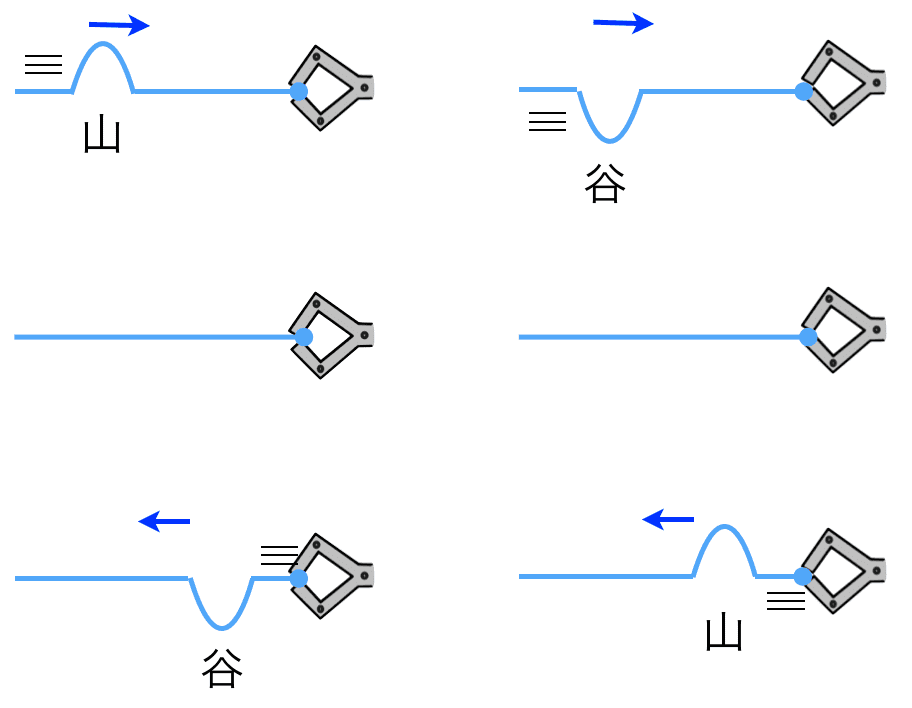
Let’s compare free-end and fixed-end reflection using the simulation:
Note: This simulation uses digital materials included with Tokyo Shoseki’s digital textbook package.
This type of reflection, where the phase flips by 180°, is called fixed-end reflection.
It came back completely inverted!
Another important feature is that the amplitude at the reflecting point momentarily becomes zero.
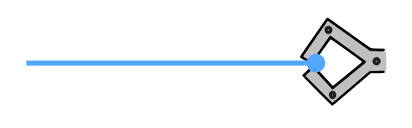
This happens because the medium is fixed in place and cannot move at the boundary. Since the displacement cannot change there, the amplitude must briefly drop to zero. It’s the exact opposite of what happens in free-end reflection.
Where Do These Two Types of Reflection Matter?
The difference between free-end and fixed-end reflection doesn’t just appear in strings and water waves—it also shows up in sound.
Wind instruments use two related concepts called open pipes and closed pipes, which correspond to free and fixed ends. These reflections play a major role in determining the pitch and tone of musical instruments.
Understanding wave reflection is one step toward understanding how music itself works.
In the next article, we’ll dig even deeper into what these two types of reflection really mean.
Stay tuned!
To be continued.
#01 The Single Most Important Idea in Waves
#02 The Two Graphs That Confuse Students About Waves
#03-1 Five Essential Physical Quantities
#03-2 Practice Problems: Wave Quantities and Graphs
#04 Meet the Second Type of Wave: Longitudinal Waves
#05 Can We Draw Longitudinal Waves as Transverse Waves?
#06-1 Turning Transverse Waves Back into Longitudinal Waves
#06-2 Practice Problems: Which Medium Isn’t Moving?
#07 The Building Blocks of Waves: Elementary Waves
#08 Understanding Diffraction Through Elementary Waves
#09 The Principle of Wave Superposition
#10 Wave Reflection: Free-End and Fixed-End Reflection
#11 How Should We Interpret These Two Types of Reflection?
Contact & Collaboration
Let’s bring the wonder of science closer to everyday life! Here you’ll find easy-to-understand explanations of fun science experiments you can do at home, along with practical tips and tricks. Feel free to explore the site!
・The contents of Science Notebook have been published as a book. Learn more here.
・Learn more about Ken Kuwako here.
・For writing projects, lectures, science workshops, TV consulting, appearances, and other requests, click here.
・Follow updates on new articles on X!
 Science Notebook Channel features experiment videos and science demonstrations!
9月のイチオシ実験!
お弁当箱をプラバンがわりにしてキーホルダーを作ろう!
テレビ番組監修・イベント等のお知らせ
- 8月27日(木)科学監修番組放送予定
- 9月20日(日)ダビンチマスターズ出演予定
- 10月10日(土)11:15~12:00 千葉市科学フェスタ2026「桑子先生の回転科学ショー」にてサイエンスショーを行います。
- 12月26日(土) ナリカサイエンスアカデミー(教員向け実験講習会)開催
書籍のお知らせ
- 『高校入試 分解問題集 理科』(学研)…難しい問題も小さな問題に分解することで、問題を解くことができます。そんな分解の技術が身につくように深く関わりを持って作りました。
 『大人のための高校物理復習帳』(講談社)…一般向けに日常の物理について公式を元に紐解きました。特設サイトでは実験を多数紹介しています。※増刷がかかり6刷となりました(2026/02/01)
- 『きめる!共通テスト 物理基礎 改訂版』(学研)… 高校物理の参考書です。イラストを多くしてイメージが持てるように描きました。授業についていけない、物理が苦手、そんな生徒におすすめです。特設サイトはこちら。
各種SNS(更新情報をお届け!)
【日本語】X(Twitter)/instagram/Facebook 【英語】BlueSky/Threads
Explore
- 楽しい実験…お子さんと一緒に夢中になれるイチオシの科学実験を多数紹介しています。また、高校物理の理解を深めるための動画教材も用意しました。
- 理科の教材… 理科教師をバックアップ!授業の質を高め、準備を効率化するための選りすぐりの教材を紹介しています。
- Youtube…科学実験等の動画を配信しています。
- 科学ラジオ …科学トピックをほぼ毎日配信中!AI技術を駆使して作成した「耳で楽しむ科学」をお届けします。
- 講演 …全国各地で実験講習会・サイエンスショー等を行っています。
- About …「科学のネタ帳」のコンセプトや、運営者である桑子研のプロフィール・想いをまとめています。
- お問い合わせ …実験教室のご依頼、執筆・講演の相談、科学監修等はこちらのフォームからお寄せください。