Just by “Holding” the Connection?! The Voltage Experiment That Suddenly Produced Shockingly Perfect Data (The Hidden Nature of Voltage)
I’m Ken Kuwako, the Science Trainer. Every day is an experiment.
Electricity is invisible, yet a tiny change in how you connect a circuit can completely transform its behavior. Connect components in series or in parallel, and suddenly the voltage behaves in entirely different ways. In this lesson, we used real experimental data to reveal those hidden patterns with surprising clarity. The results lined up so beautifully that I couldn’t help blurting out during class, “This is gorgeous!” Meanwhile, my students just stared at me in silence.
Warming Up — Learning How to Use a Digital Voltmeter
Before diving into the main experiment, we reviewed how to use a digital voltmeter. Students built a simple circuit using a single 20-ohm resistor and a 3V power supply, then measured both the voltage across the resistor and the voltage across the power source.
Some groups got perfectly matching values. Others were slightly off.
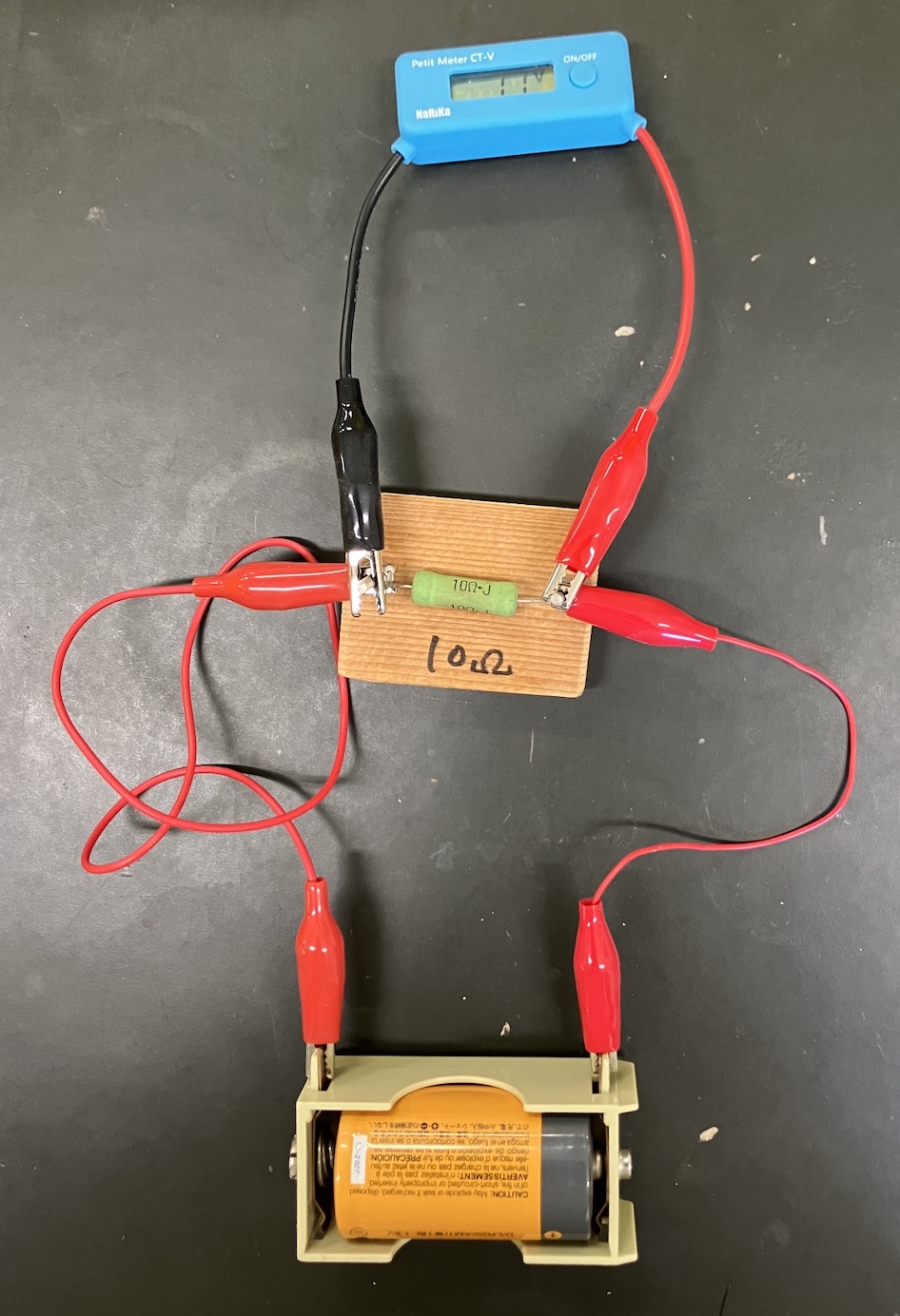
So we tried something simple: gently squeezing the circuit connections with our fingers.
And suddenly, the readings became much more consistent.
This highlights an important truth about electric circuits: poor connections create measurement errors. Even a microscopic gap between a wire and a terminal can create extra “contact resistance,” which throws off voltage measurements.
By squeezing the connection, the contact area increases and the resistance drops. It’s a tiny action, but it makes a huge difference.
From this, students learned several important habits before starting any experiment:
・After building a circuit, check and adjust every connection before measuring.
・Complete the entire circuit properly before taking voltage readings one by one.
・Each group gets one voltmeter, so measurements should be taken carefully and in order.
Making Predictions Before the Experiment — This Time Using Equations
The main topic of the day was the rules governing voltage in series and parallel circuits.
Before starting the experiment, each group came up with a hypothesis. Unlike previous current experiments, this time students shared their ideas only within their own groups instead of with the whole class.
And there was one more condition: hypotheses had to be written using equations, not vague guesses.
Expressions like V₁ + V₂ = V made it much easier to compare predictions with the actual data later.
The experiment used two resistors: 10 ohms and 20 ohms.
Time to test the theory.
Results for the Series Circuit — The Numbers Added Up Perfectly
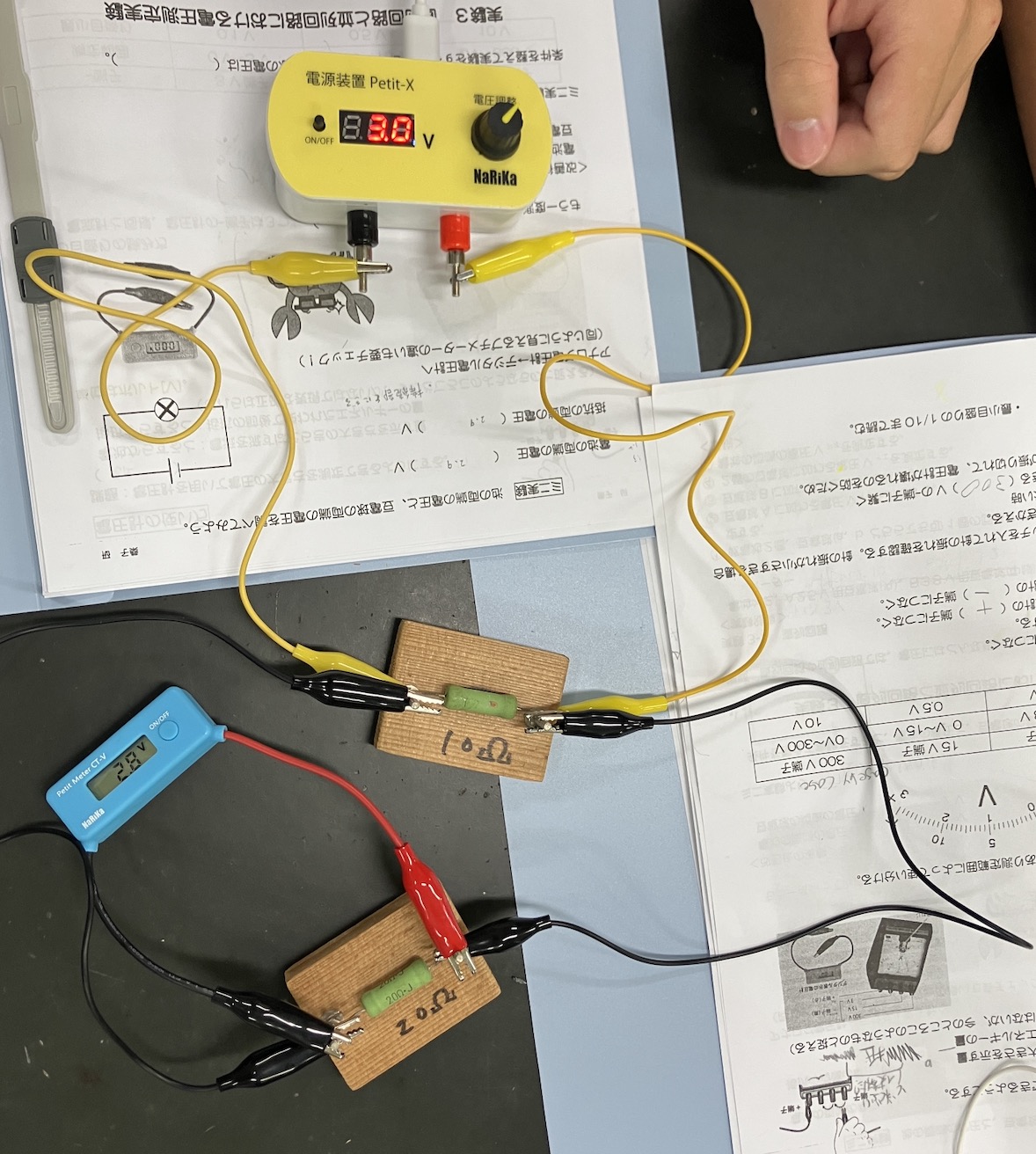
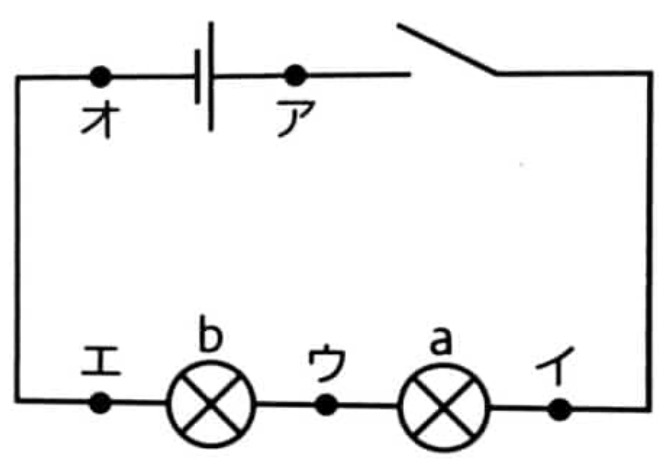
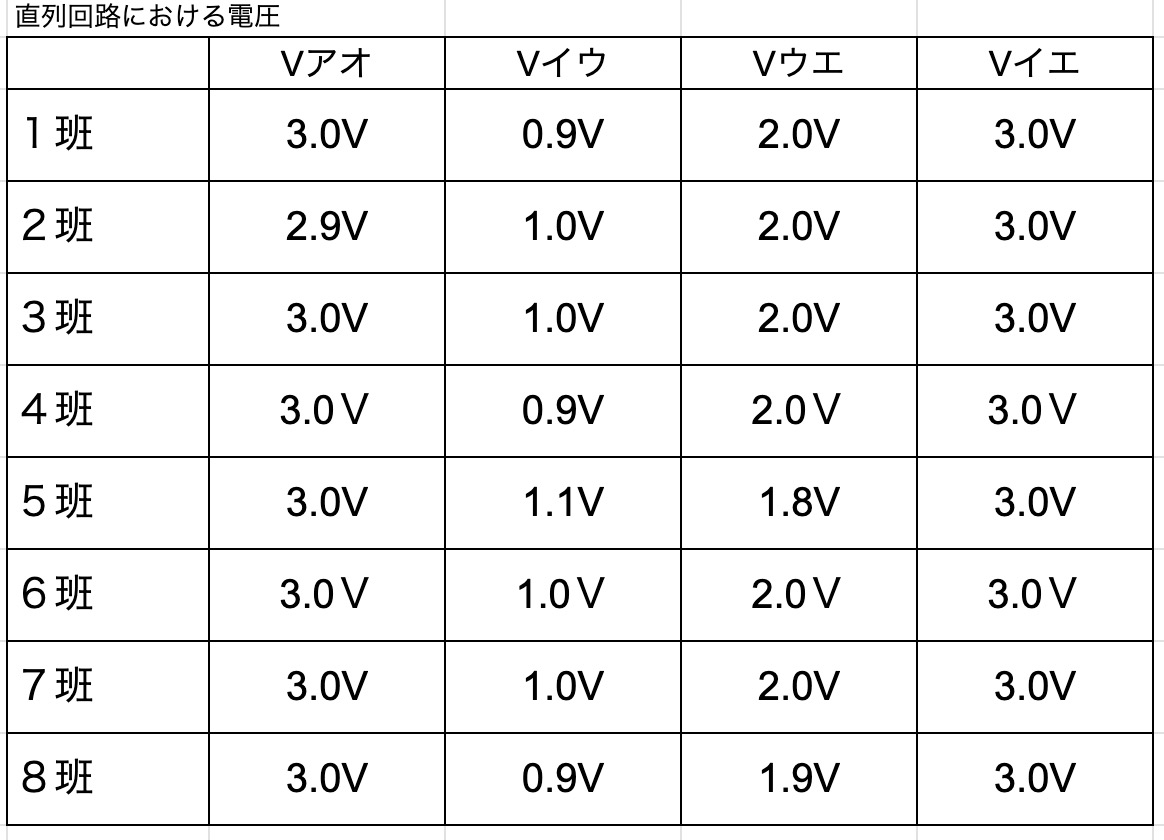
All class data was collected into a single shared spreadsheet, and every student entered their own measurements. By combining results from eight groups instead of relying on just one experiment, patterns became much easier to see.
And the pattern was stunningly clear.
Voltage across resistor A + voltage across resistor B = source voltage
Every single group showed the same relationship.
In a series circuit, voltage is divided according to resistance. Since the resistors were 10 ohms and 20 ohms — a ratio of 1:2 — the voltage should also divide in a 1:2 ratio.
And that is exactly what the data showed.
Electrical energy gets “used up” as current flows through each resistor. The energy supplied by the battery is gradually consumed, and by the time the current returns, the total energy drop matches the source voltage perfectly.
That’s the beauty of voltage in a series circuit.
Results for the Parallel Circuit — Everything Was the Same!
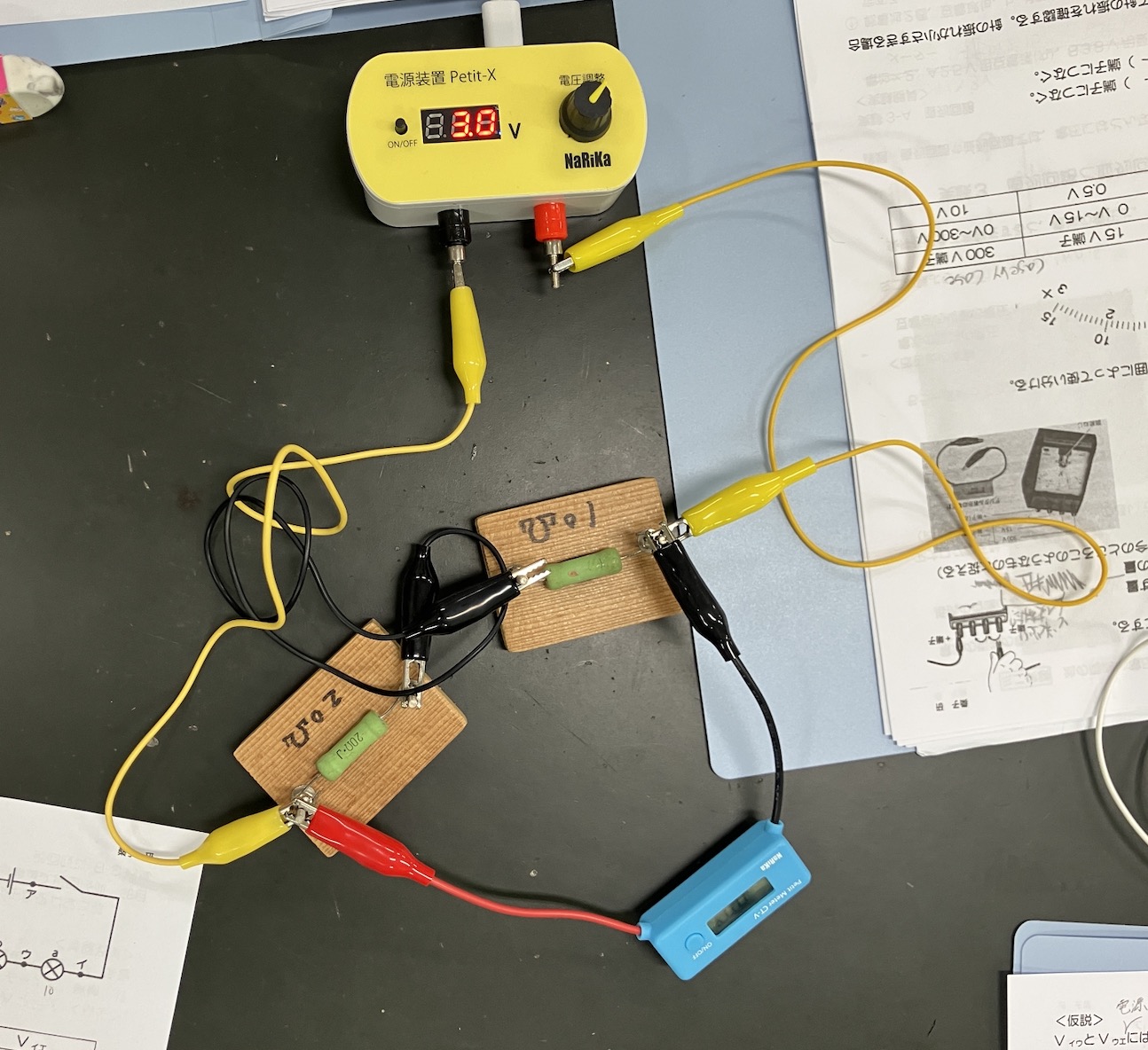
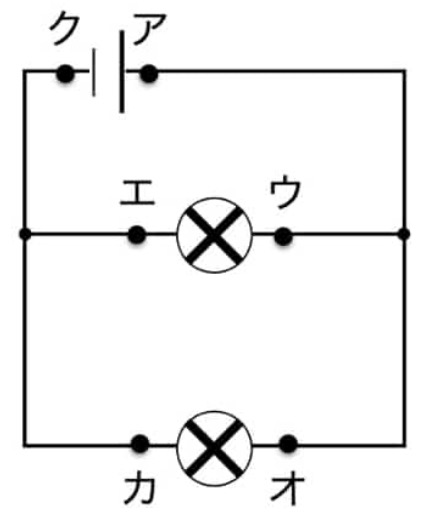
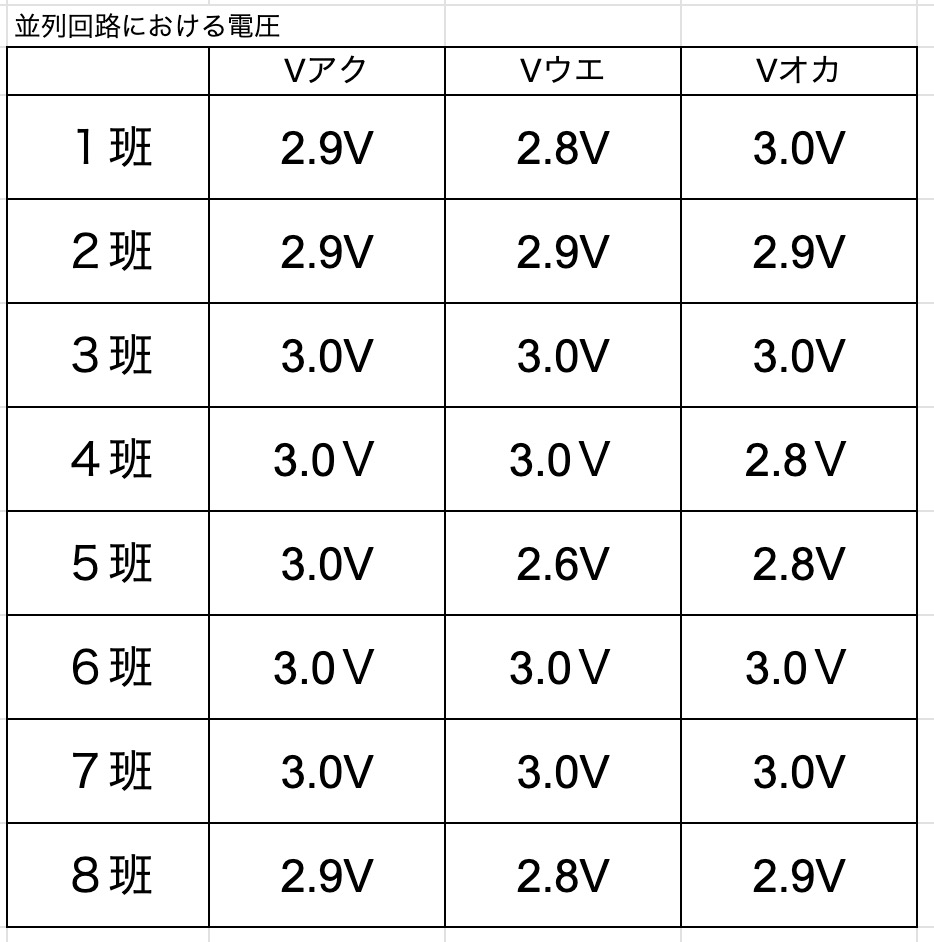
Next came the parallel circuit.
Once again, the data lined up beautifully.
The source voltage, resistor A voltage, and resistor B voltage were all nearly identical.
In a parallel circuit, each resistor is connected directly to the power source. That means every branch receives the same voltage.
A perfect real-world example is the electrical outlets in your home. Your TV, refrigerator, and lights all run on the same 100V supply. That’s possible because household wiring is connected in parallel.
Why Was the Data So Surprisingly Clean This Time?
Honestly, this experiment usually produces messy results. The patterns can be hard to spot because the measurements often scatter quite a bit.
For example, here’s data from a previous parallel circuit experiment.
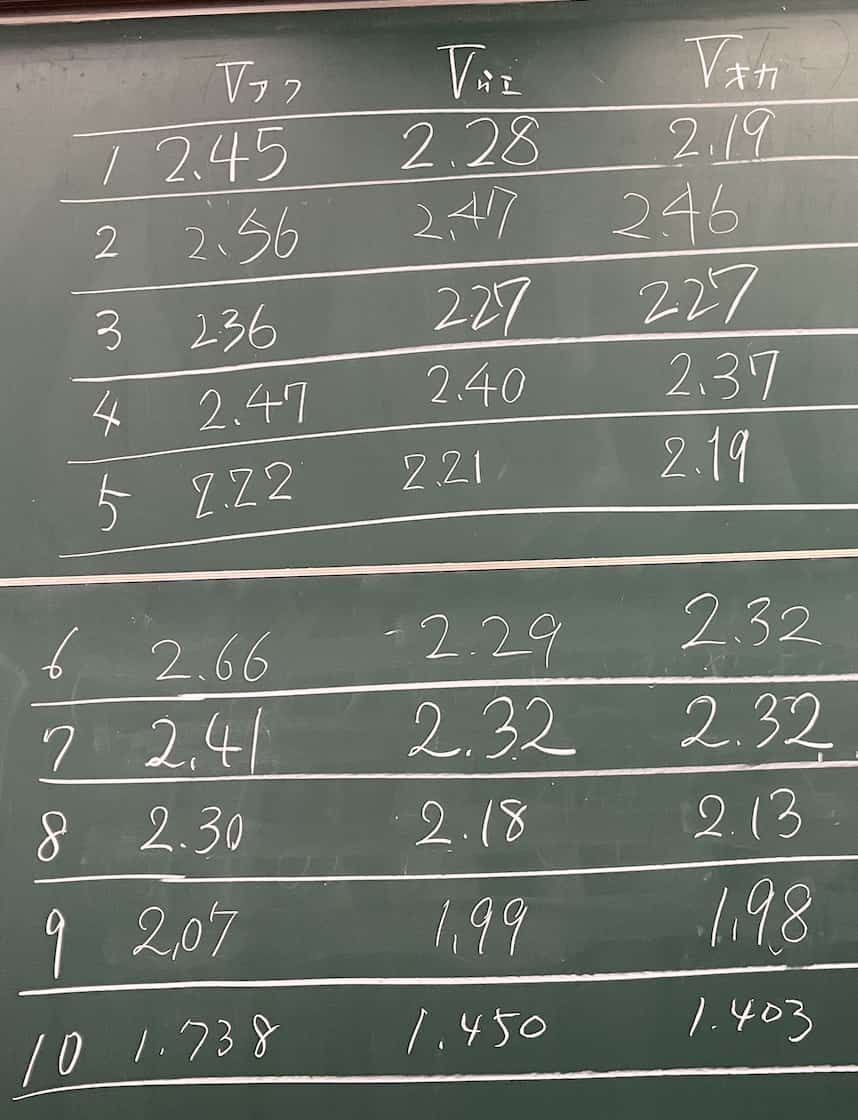
The variation is obvious, making the underlying rule difficult to recognize.
But this time, the results were probably the clearest we’ve ever had.
There seem to be two main reasons:
First, students became conscious of “squeezing” the connections. That reduced contact resistance and stabilized the readings.
Second, we replaced the old wires with new ones. Worn-out wires can develop internal damage or unstable contacts as insulation deteriorates over time.
It was a great reminder that the condition of your equipment can dramatically affect the quality of experimental data.
References
・Here is the spreadsheet used in the experiment. It is view-only, so please make your own copy before using it.
・For previous experiment records, see below.
Series Circuit
Parallel Circuit
・Reference: Previous lessons in this unit
- Pencil Circuit — Lesson 1
- How to Draw Circuit Diagrams — Lesson 2
- How to Use an Ammeter — Lesson 3
- What Happens to Current Before and After a Light Bulb? — Lesson 4
- Current Rules — Series and Parallel Circuits — Lesson 5
- From Analog to Digital Voltmeters — Lesson 6
Contact & Requests
Science should feel exciting and close to everyday life! This site shares fun science experiments you can try at home, along with easy-to-understand explanations and tips. Feel free to explore around!
・The contents of “Science Notebook” have been turned into a book. Learn more here.
・About the site creator, Ken Kuwako, click here.
・For requests such as writing, lectures, science workshops, TV supervision, or appearances, click here.
・Updates for new articles are posted on X!
 Science Note Channel features experiment videos!
10月のイチオシ実験!
テレビ番組監修・イベント等のお知らせ
- 10月27日(火) テレビ監修番組放送予定
- 11月27日(金) テレビ監修番組放送予定
- 12月26日(土) ナリカサイエンスアカデミー(教員向け実験講習会)開催
書籍のお知らせ
- 『高校入試 分解問題集 理科』(学研)…難しい問題も小さな問題に分解することで、問題を解くことができます。そんな分解の技術が身につくように深く関わりを持って作りました。
 『大人のための高校物理復習帳』(講談社)…一般向けに日常の物理について公式を元に紐解きました。特設サイトでは実験を多数紹介しています。※増刷がかかり6刷となりました(2026/02/01)
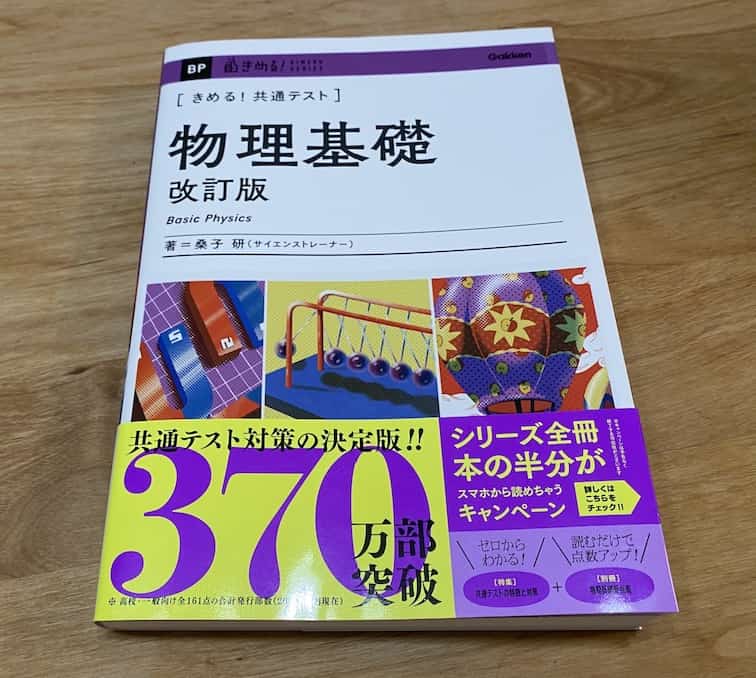
- 『きめる!共通テスト 物理基礎 改訂版』(学研)… 高校物理の参考書です。イラストを多くしてイメージが持てるように描きました。授業についていけない、物理が苦手、そんな生徒におすすめです。特設サイトはこちら。
各種SNS(更新情報をお届け!)
【日本語】X(Twitter)/instagram/Facebook 【英語】BlueSky/Threads
Explore
- 楽しい実験…お子さんと一緒に夢中になれるイチオシの科学実験を多数紹介しています。また、高校物理の理解を深めるための動画教材も用意しました。
- 理科の教材… 理科教師をバックアップ!授業の質を高め、準備を効率化するための選りすぐりの教材を紹介しています。
- Youtube…科学実験等の動画を配信しています。
- 科学ラジオ …科学トピックをほぼ毎日配信中!AI技術を駆使して作成した「耳で楽しむ科学」をお届けします。
- 講演 …全国各地で実験講習会・サイエンスショー等を行っています。
- About …「科学のネタ帳」のコンセプトや、運営者である桑子研のプロフィール・想いをまとめています。
- お問い合わせ …実験教室のご依頼、執筆・講演の相談、科学監修等はこちらのフォームからお寄せください。