
Knock Over a Coin Without Touching It—And Make Aluminum Foil Float!? Have Fun with Eddy Current Experiments at Home! (Faraday Desk)
I am Ken Kuwako, your Science Trainer. Every day is an experiment!
“I wish I could move objects without touching them, just like a superpower…” Believe it or not, you can make that wish come true right now using the power of science! Watch as aluminum foil—which shouldn’t react to magnets—floats into the air, or a high-speed spinning top stops dead as if it hit an invisible wall. Behind these wonders lies the work of Eddy Currents, a phenomenon that acts almost like a transparent ghost of electricity. Today, I will introduce several experiments where you can experience this mysterious “invisible force” using everyday items.
Moving Coins Without Touching Them
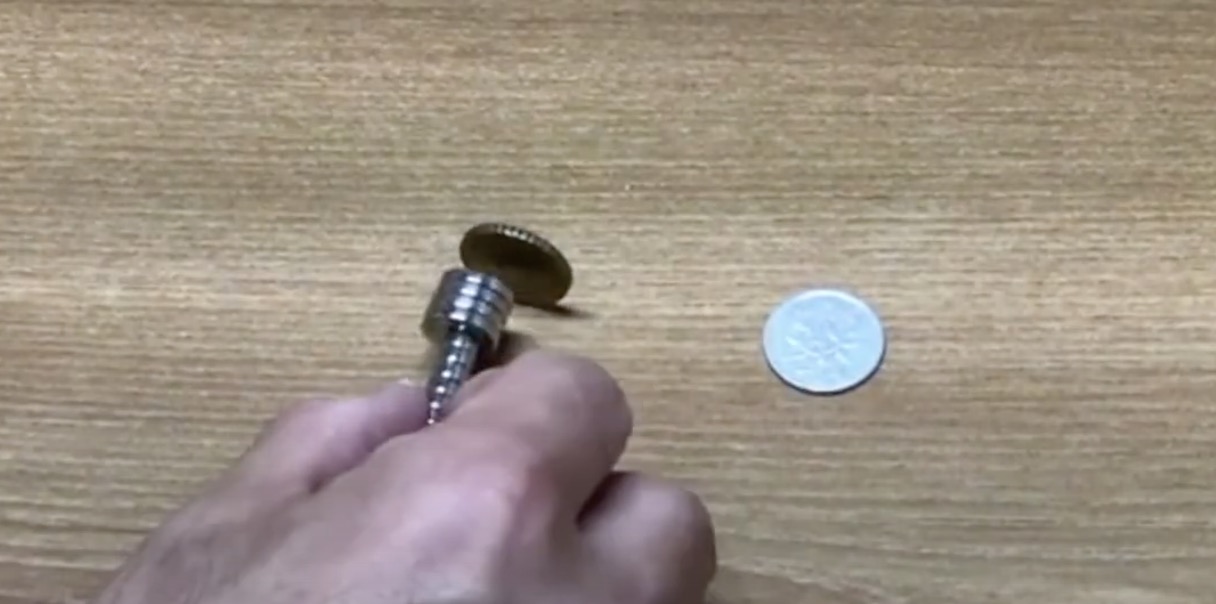
Let’s start with an experiment that looks like a magic trick. All you need are coins made of aluminum or copper (like a Japanese 1-yen or 10-yen coin) and a strong magnet. Normally, aluminum and copper are not attracted to magnets. However, try bringing the magnet close to the coin and then pulling it away suddenly. The coin will tip over as if it is being pulled by the magnet! Why does metal move when it isn’t supposed to react to magnetism at all?
Stopping Pot Lids, Fidget Spinners, and Gyroscopes Without Touching Them
Next, let’s try stopping a rotating object using a non-contact method. Spin a pot lid on a table and bring a magnet close to it… the rotation stops instantly, just like hitting the brakes.
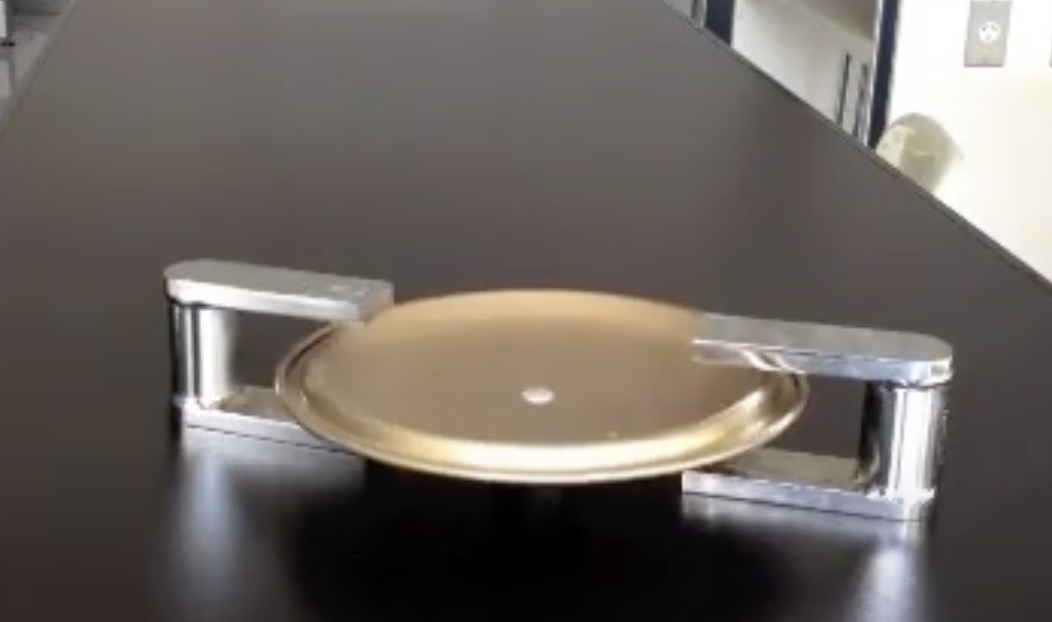
Similarly, you can stop a fast-spinning fidget spinner without touching it. It is also quite a sight to line up several precision gyroscopes (Chikyu-goma) and stop them all at once with a magnet.
These phenomena occur because Eddy Currents generated within the metal create a magnetic force that opposes the direction of rotation.
The Magic of IH: Levitating Aluminum Foil
The IH (Induction Heating) cooktop in your kitchen is actually a powerhouse of Eddy Currents. If you place a piece of aluminum foil on an IH stove and turn it on… the foil will suddenly float up into the air!
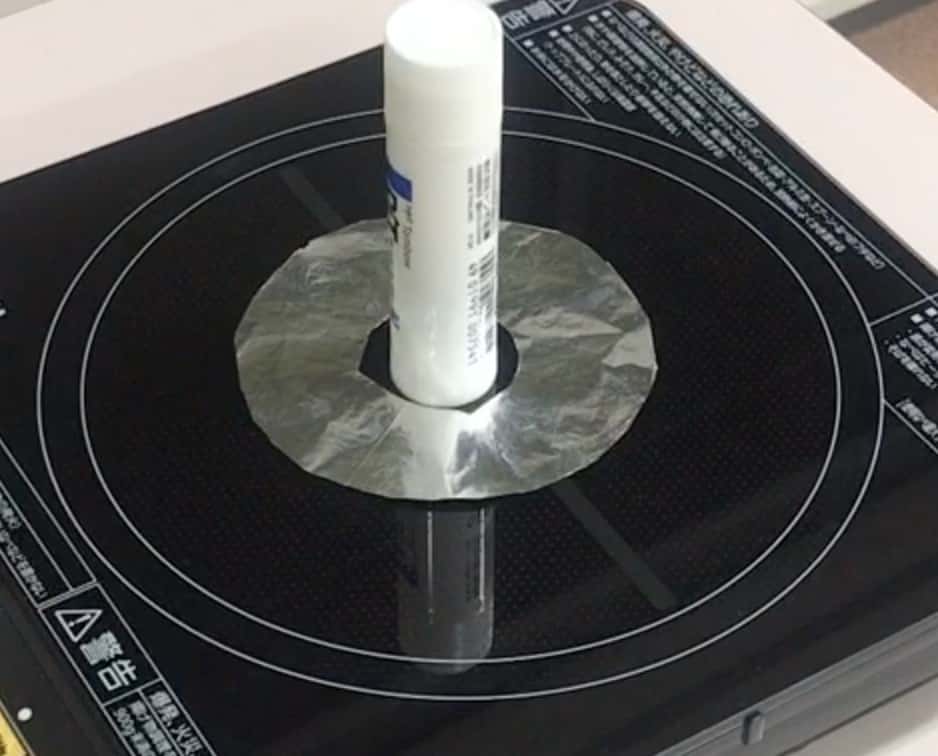
When you flip the switch…
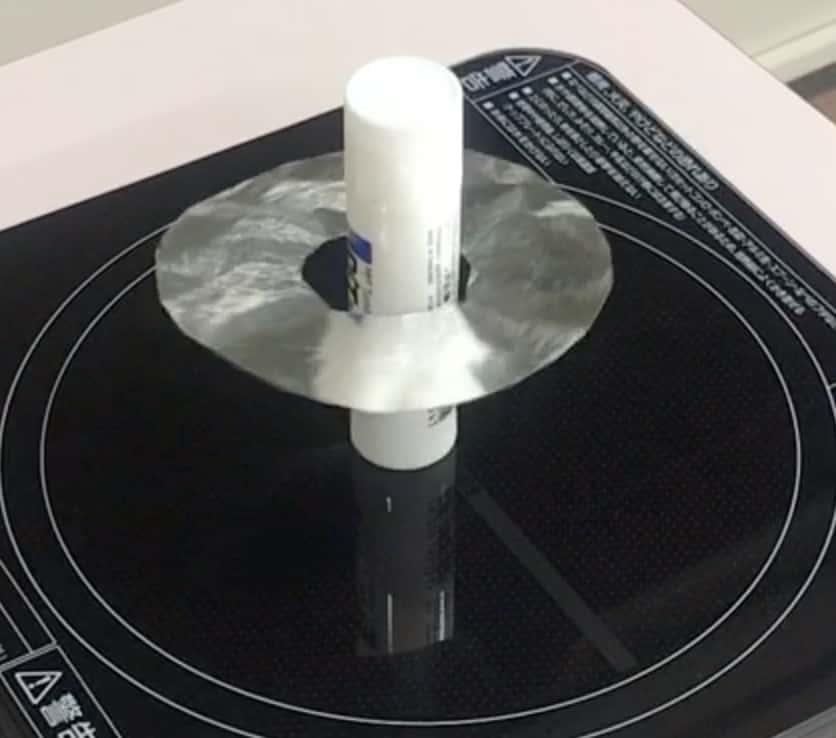
It floats perfectly! No tricks were used on the foil. The coils inside the IH cooktop change the magnetic field rapidly, which induces strong Eddy Currents in the foil. This creates a repulsive force—similar to two magnets pushing apart—causing it to levitate. The reason it floats up and down periodically is likely due to the IH’s safety sensor, which cuts and restores the current when it senses that a “pot” is missing.
Dropping a Magnet Through an Aluminum Pipe
Finally, let’s look at an experiment that makes you question the laws of gravity. Try dropping a magnet through an aluminum pipe.
If you drop the magnet outside the pipe, it falls instantly. But when you drop it inside the pipe, it falls slowly, as if it were in slow motion!
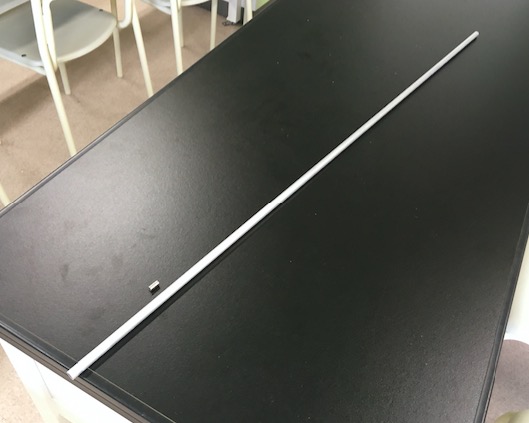

As the magnet moves through the pipe, Eddy Currents are generated on the pipe’s walls, creating a magnetic field that opposes and slows down the magnet’s fall. The stronger the Neodymium magnet you use, the stronger this “brake” becomes, and the longer it takes to fall.
What Exactly Are Eddy Currents?
Let’s take a closer look at the secret behind these strange forces: the Eddy Current Brake. This is a highly reliable technology used in the braking systems of Shinkansen bullet trains, heavy trucks, and roller coasters.
Eddy Currents are loops of electrical current induced within a conductor by a changing magnetic field. When you move a magnet near a metal plate, the metal tries to “cancel out” the change in magnetism, causing electricity to swirl inside like a whirlpool.
As shown in the diagram below, when a magnet slides over a metal plate, the area in front of the moving magnet tries to push it away, while the area behind tries to pull it back.

By using this principle, it is even possible to stop a violently vibrating coil instantly.
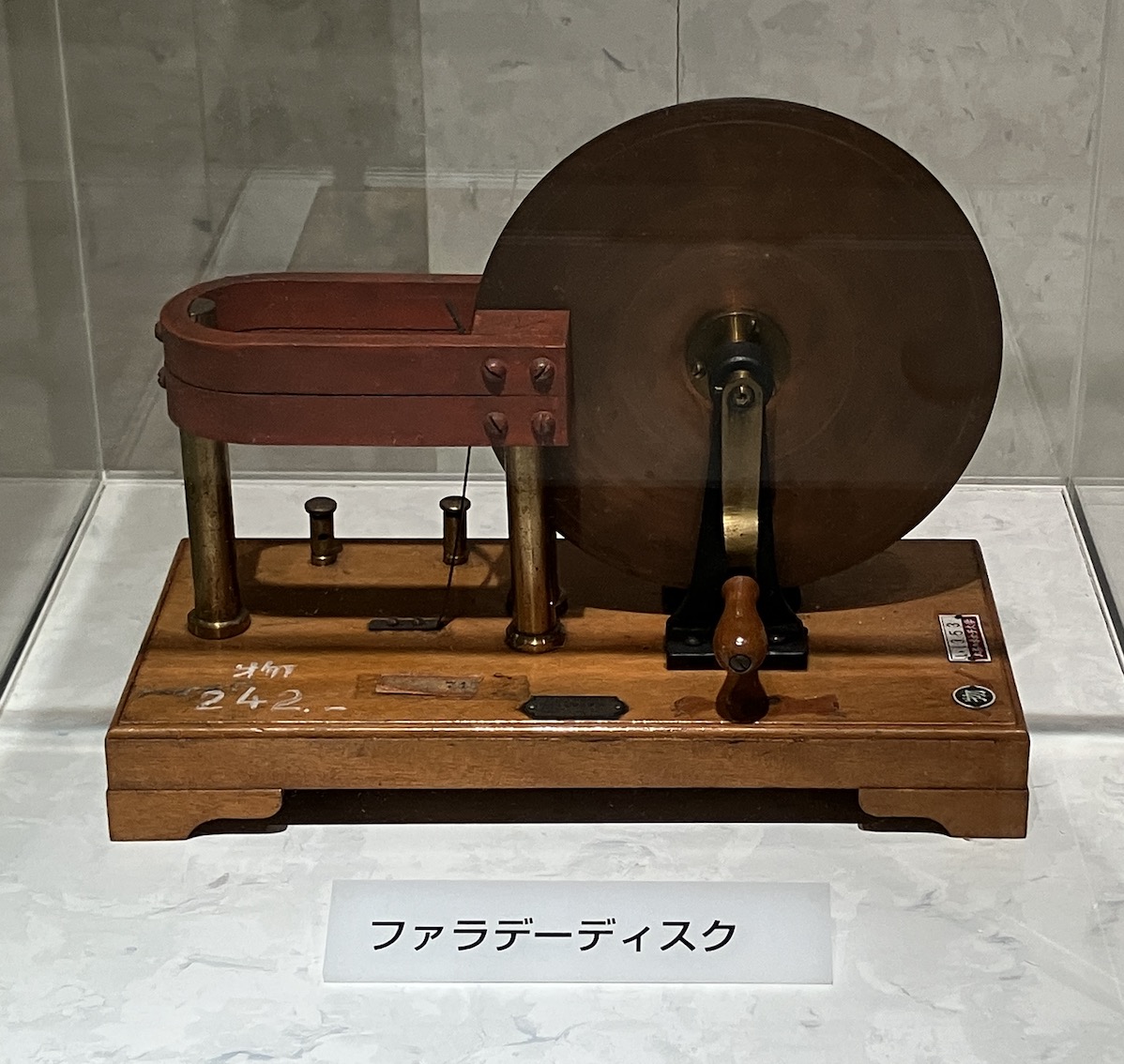
This story goes back to 1831, when Michael Faraday discovered Electromagnetic Induction. He invented the “Faraday Disk,” which extracted a continuous current from magnetism. By rotating a copper disk between the poles of a U-shaped magnet, a current is generated. This is the root of modern power generators! You can even experience this mechanism firsthand at the National Museum of Nature and Science in Tokyo.
Contact and Requests
I want to make the wonders of science more accessible to everyone! I’ve put together many fun experiments you can do at home with easy-to-follow tips. Feel free to explore my site!
My “Science Notebook” content is now a book! Find it here.
Learn more about the operator, Ken Kuwako, here.
For various requests (writing, lectures, workshops, TV supervision, appearances, etc.), please contact me here. – Follow me on X (Twitter) for updates!
 Check out experiment videos on my Science Channel!
10月のイチオシ実験!
https://youtube.com/shorts/jLVKYRVI1uY?feature=share
テレビ番組監修・イベント等のお知らせ
- 12月26日(土) ナリカサイエンスアカデミー(教員向け実験講習会)開催
書籍のお知らせ
- 『高校入試 分解問題集 理科』(学研)…難しい問題も小さな問題に分解することで、問題を解くことができます。そんな分解の技術が身につくように深く関わりを持って作りました。
 『大人のための高校物理復習帳』(講談社)…一般向けに日常の物理について公式を元に紐解きました。特設サイトでは実験を多数紹介しています。※増刷がかかり6刷となりました(2026/02/01)
- 『きめる!共通テスト 物理基礎 改訂版』(学研)… 高校物理の参考書です。イラストを多くしてイメージが持てるように描きました。授業についていけない、物理が苦手、そんな生徒におすすめです。特設サイトはこちら。
各種SNS(更新情報をお届け!)
【日本語】X(Twitter)/instagram/Facebook 【英語】BlueSky/Threads
Explore
- 楽しい実験…お子さんと一緒に夢中になれるイチオシの科学実験を多数紹介しています。また、高校物理の理解を深めるための動画教材も用意しました。
- 理科の教材… 理科教師をバックアップ!授業の質を高め、準備を効率化するための選りすぐりの教材を紹介しています。
- Youtube…科学実験等の動画を配信しています。
- 科学ラジオ …科学トピックをほぼ毎日配信中!AI技術を駆使して作成した「耳で楽しむ科学」をお届けします。
- 講演 …全国各地で実験講習会・サイエンスショー等を行っています。
- About …「科学のネタ帳」のコンセプトや、運営者である桑子研のプロフィール・想いをまとめています。
- お問い合わせ …実験教室のご依頼、執筆・講演の相談、科学監修等はこちらのフォームからお寄せください。
- [Live] Why Are Spinning Things So Powerful? Ken Kuwako’s Spin Science Show (Chiba City Science Festa 2026 Special Stage)

- Experiment! What Happens When You Take a Bag of Potato Chips Up a Mountain? Almost Bursting at 2,237 m?! (The Mystery of Air Pressure)

- We Live at the Bottom of an Ocean of Air! A Plastic Bottle Experiment Reveals the Truth About Air Pressure (A High School Physics Refresher for Adults)
- Seeing the World Through an Insect’s Eyes? The Hidden Secrets of Dandelions and Azaleas

- Did the Chopstick Snap? Did It Move Backward? The Strange Images in a Glass of Water
- Making the Invisible Visible: A Laser and Fog Machine Light Show!

- The 1,300-View Wall! What Middle Schoolers Learned About “Reaching People” Through Short Videos (Science Communication Course)

- Is the Image on Your Retina Upside Down? Discover the Magic of Light with a Squid Eye Experiment

- We Built a Volcano—and It Was Explosively Fun! The Ultimate Experiment Recipe Using Plaster and Baking Soda!