
Why Does an Ambulance Sound Change? Uncover the Doppler Effect with Scratch!
I am Ken Kuwako, a Science Trainer. Every day is an experiment!
Have you ever been walking down the street when an ambulance races past, and the high-pitched “wee-woo” suddenly drops in pitch the exact moment it passes you?
This curious phenomenon is known as the Doppler Effect. You might have heard the name before, but how many people actually know how it works? It is a truly dynamic event where “waves”—the true form of sound—stretch and squash depending on how the sound source or the listener moves.
In this post, I will introduce some interactive simulators and tools that let you feel the Doppler Effect with your own senses. If you are interested in a deep dive into the experimental data, be sure to check out this article as well:
Experience the Shift: The Sound of a Train Crossing
The Doppler Effect is all around us in our daily lives. For example, if you are riding a train or watching one zoom past from the platform, you have the perfect chance to observe it. First, take a look at this video. It captures the clear difference in the sound of a railroad crossing signal when heard from outside the train versus from inside a moving carriage. You can hear the pitch shift vividly!
Visualizing the Waves: What Happens When the Source Moves?
To solve the mystery of why this happens, I created a learning tool using Scratch. First, let’s look at the case where the object making the sound (the source) is moving. Imagine looking down at an ambulance emitting sound waves as it drives. You can try it out yourself using the link or the embedded screen below.
You can try it out here.
If the sound source is stationary, the width of the waves (wavelength) is the same in the front and the back.
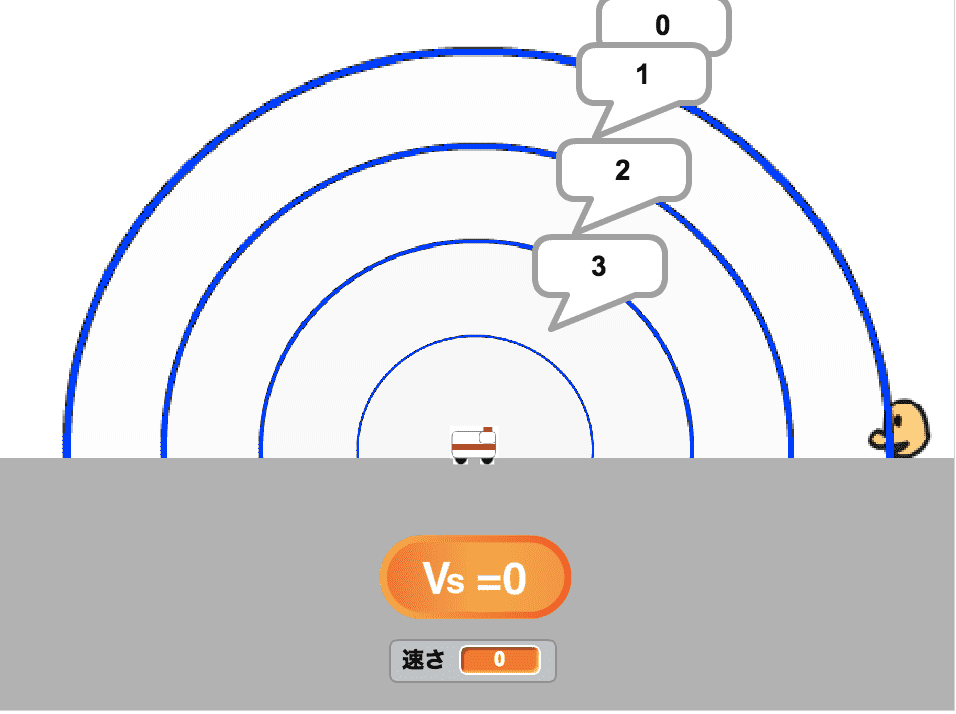
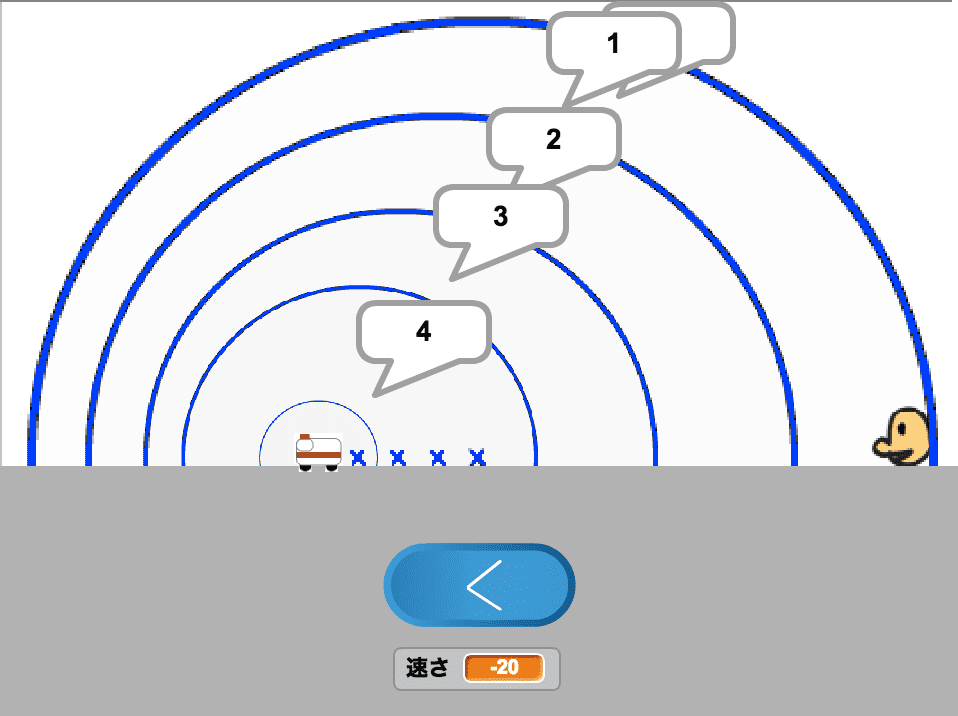
But what happens if the source moves to the left? Since the source is “chasing” the waves it just emitted, the waves in front get squashed together and become shorter. Conversely, the waves behind are left in the dust, stretching out and becoming longer.
Since shorter waves sound like a higher pitch and longer waves sound like a lower pitch, the siren sounds lower as the ambulance moves away.
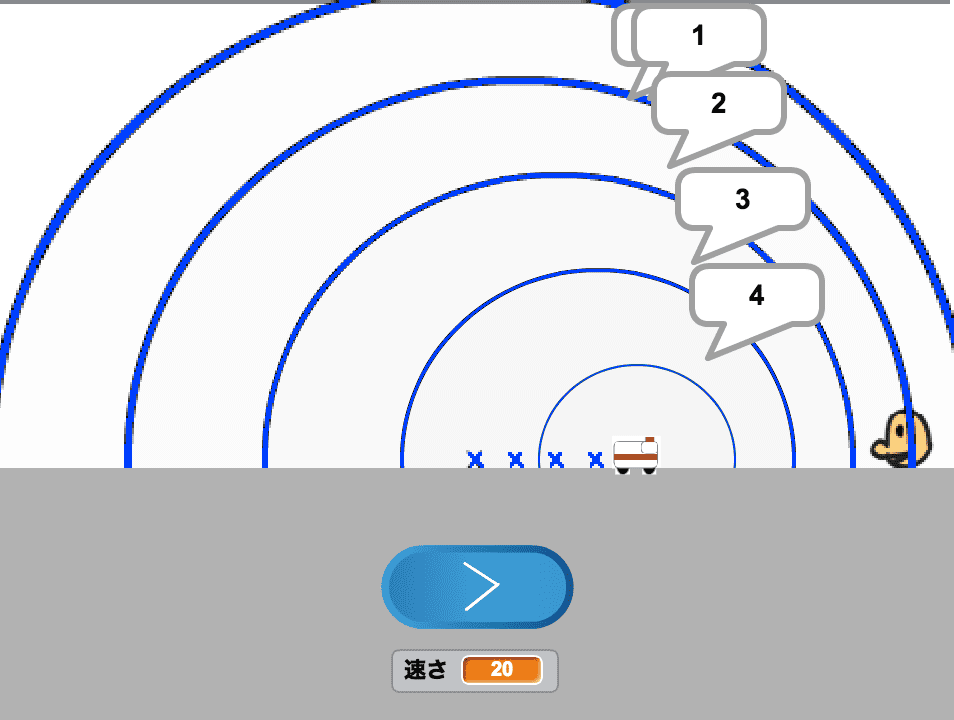
If you watch it move to the right, you can see how the wavelength shortens, creating that higher-pitched sound.
Phenomena involving movement can be tricky to explain with just words or still photos, but they click instantly once you see them in motion!
What If YOU Move? The Observer’s Perspective
Another part that people often find confusing is when the observer is the one moving. In this case, the actual wavelength of the sound traveling through the air doesn’t change at all. So why does the pitch still shift?
The answer lies in the number of waves you receive per second. To explain this, I built another simulator from the observer’s point of view. Give it a spin!
You can also see how it works on YouTube:
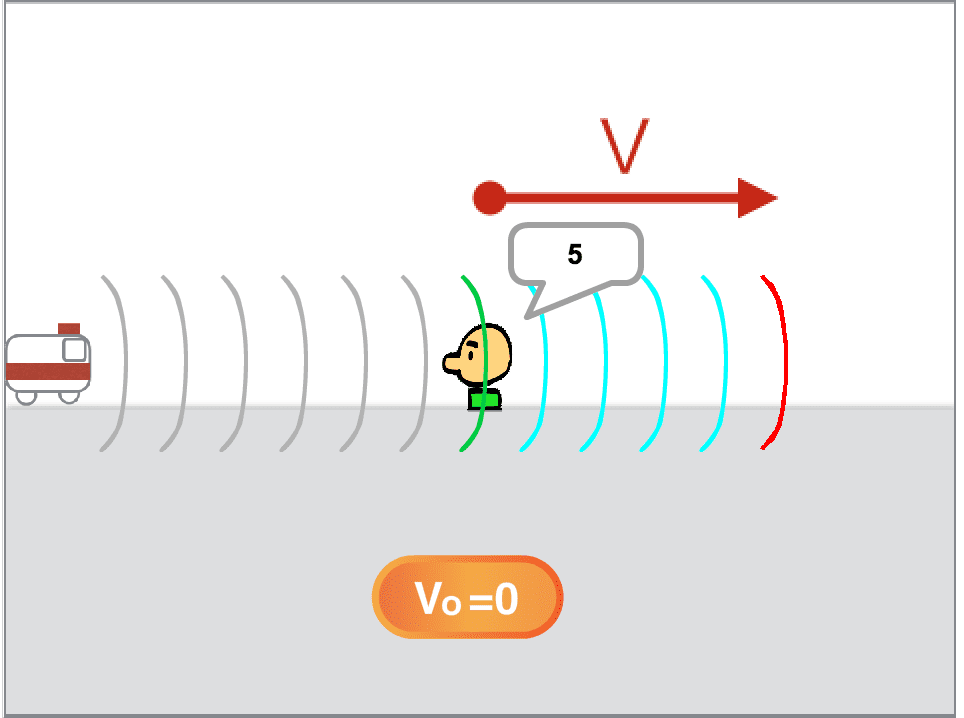
Let’s say an observer receives 5 sound waves while standing still.
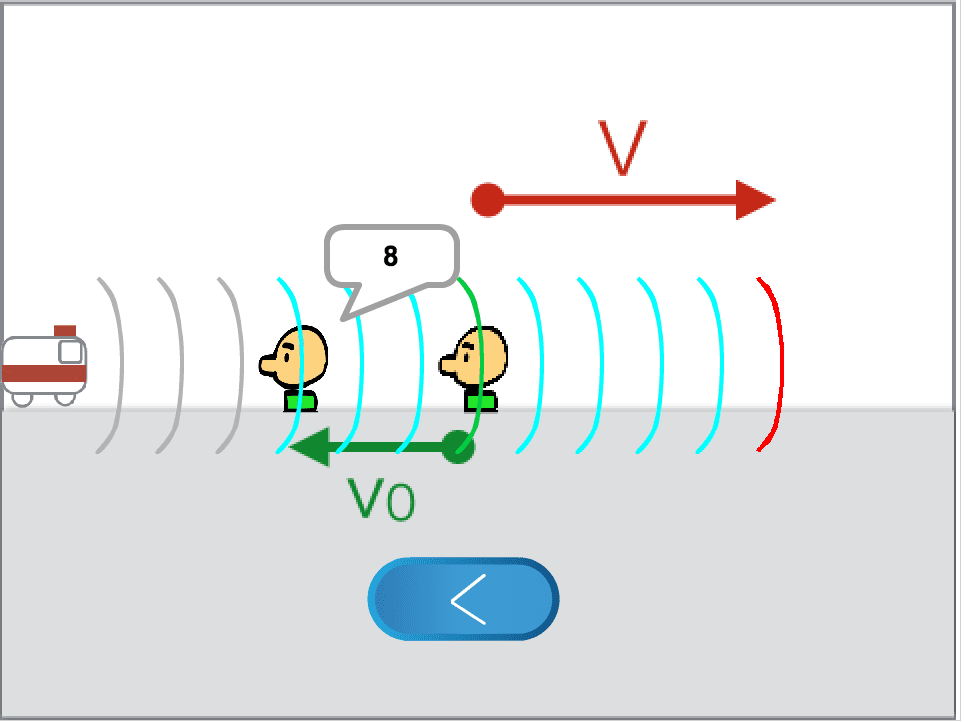
However, if the observer moves toward the sound, they bump into waves one after another, receiving maybe 8 waves in the same amount of time. Receiving more waves means the frequency increases—and that makes the pitch sound higher.
Think of it like being at the beach: if you stand still, waves hit you at a certain rate. But if you swim out toward the waves, they crash against you much more frequently!
Perfect for Classrooms or Self-Study!
I designed these tools specifically for teachers to use while explaining in class. You can easily toggle between “Stationary,” “Moving Right,” and “Moving Left.” Physics can feel intimidating when you only look at formulas, but using visual tools turns that confusion into a “Eureka!” moment.
Inquiries and Collaborations
Let’s make the wonders of science more accessible! I share easy and fun science experiments you can do at home, along with tips to make them successful. Feel free to explore more!
My “Science Notebook” is now a book! Details here.
Learn more about the creator, Ken Kuwako, here.
For requests (writing, speaking, workshops, TV supervision, etc.), click here.
– Get updates on X (formerly Twitter)!
 Watch experiment videos on the Science Channel!
テレビ番組監修・イベント等のお知らせ
- 10月27日(火) 23:56〜「ネイチャーティーチャー」(TBS)に出演予定

- 11月27日(金) テレビ監修番組放送予定
- 12月26日(土) ナリカサイエンスアカデミー(教員向け実験講習会)開催
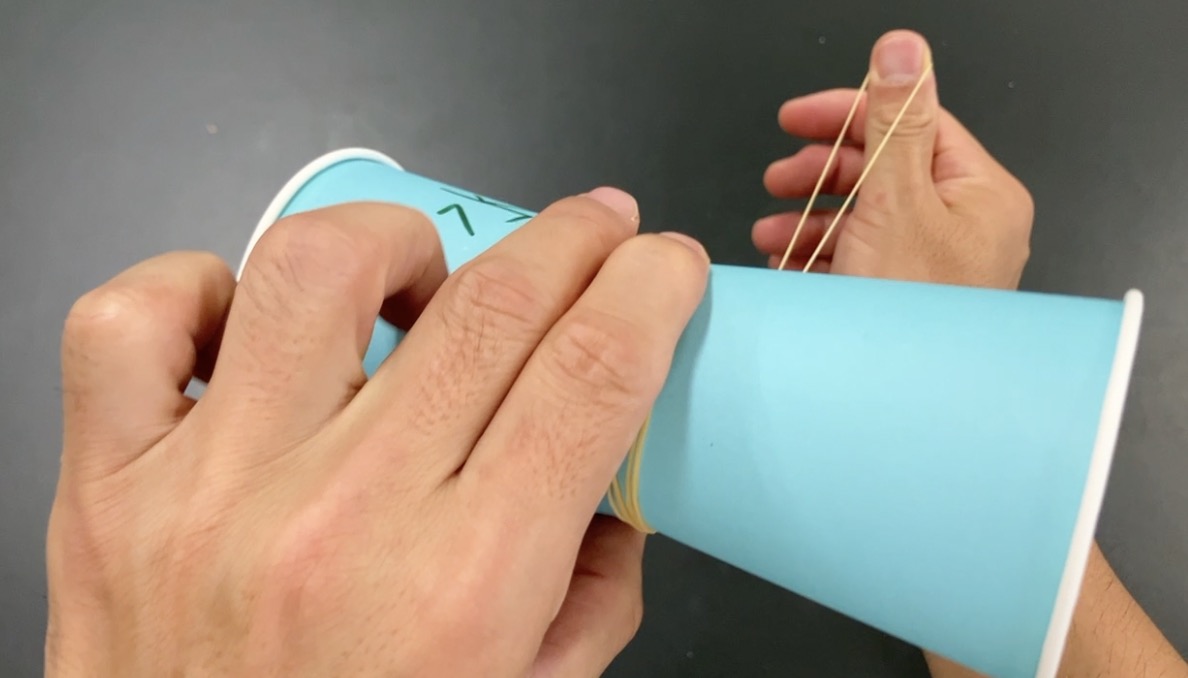
10月のイチオシ実験!
書籍のお知らせ
- 『高校入試 分解問題集 理科』(学研)…難しい問題も小さな問題に分解することで、問題を解くことができます。そんな分解の技術が身につくように深く関わりを持って作りました。
 『大人のための高校物理復習帳』(講談社)…一般向けに日常の物理について公式を元に紐解きました。特設サイトでは実験を多数紹介しています。※増刷がかかり6刷となりました(2026/02/01)
- 『きめる!共通テスト 物理基礎 改訂版』(学研)… 高校物理の参考書です。イラストを多くしてイメージが持てるように描きました。授業についていけない、物理が苦手、そんな生徒におすすめです。特設サイトはこちら。

各種SNS(更新情報をお届け!)
【日本語】X(Twitter)/instagram/Facebook 【英語】BlueSky/Threads
Explore
- 楽しい実験…お子さんと一緒に夢中になれるイチオシの科学実験を多数紹介しています。また、高校物理の理解を深めるための動画教材も用意しました。
- 理科の教材… 理科教師をバックアップ!授業の質を高め、準備を効率化するための選りすぐりの教材を紹介しています。
- Youtube…科学実験等の動画を配信しています。
- 科学ラジオ …科学トピックをほぼ毎日配信中!AI技術を駆使して作成した「耳で楽しむ科学」をお届けします。
- 講演 …全国各地で実験講習会・サイエンスショー等を行っています。
- About …「科学のネタ帳」のコンセプトや、運営者である桑子研のプロフィール・想いをまとめています。
- お問い合わせ …実験教室のご依頼、執筆・講演の相談、科学監修等はこちらのフォームからお寄せください。