A 10-Kilometer Cliff Time Travel! Discover Earth’s Memories at Choshi’s Byobugaura
I’m Ken Kuwako, your science trainer. Every day is an experiment!
Did you know that Japan has its very own “White Cliffs of Dover”? Located in Choshi City, Chiba Prefecture, Byobugaura is like a massive time capsule where the Earth’s memories are laid bare for all to see. Standing 40 to 50 meters high and stretching for about 10 kilometers along the coast, this magnificent cliffside is a sight you won’t soon forget.
I recently visited this bucket-list destination, and today, I want to share the magic of Byobugaura from a science teacher’s perspective, uncovering the Epic Story of Earth hidden behind this grand scenery.
Byobugaura: Exploring the “Dover of the East”
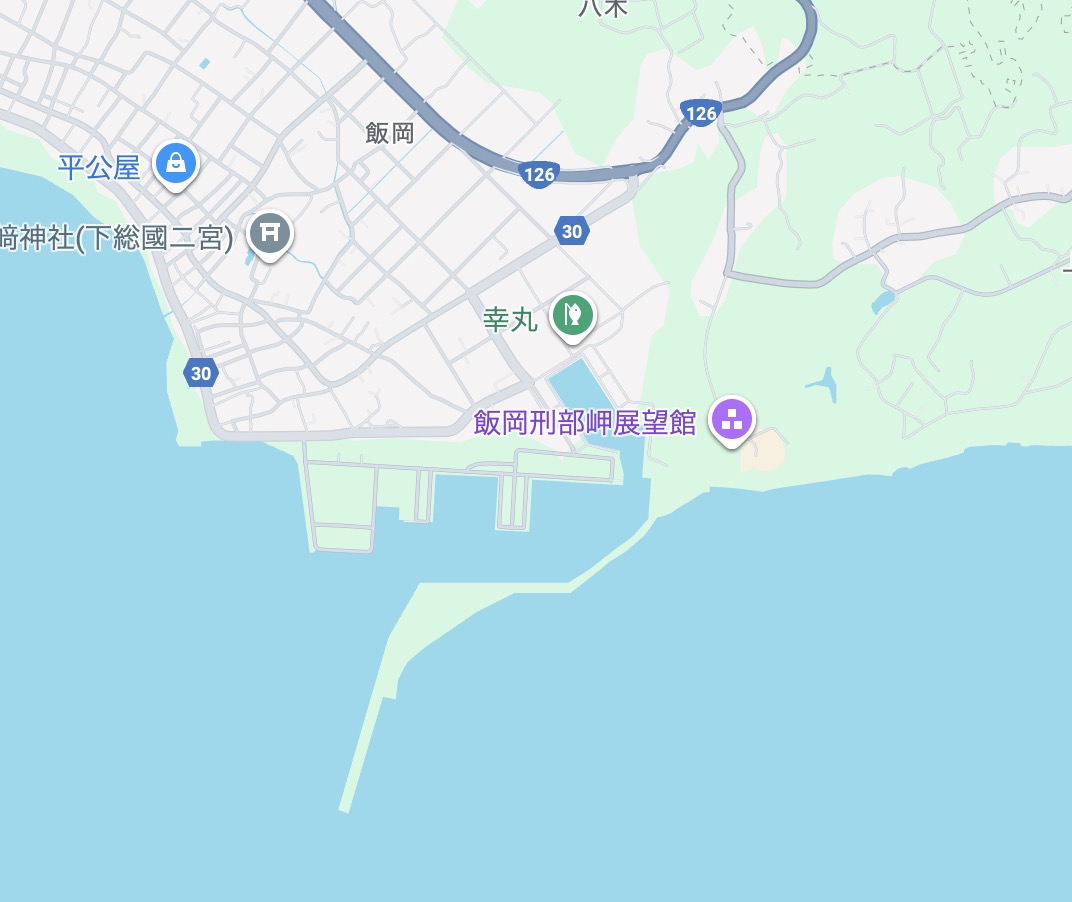
My journey began at the western edge of Byobugaura. I headed down to the shore near the Iioka Gyobu-misaki Lookout. While this area isn’t a paved promenade, reaching the water’s edge allows you to truly feel the scale of the giant wall towering over you.
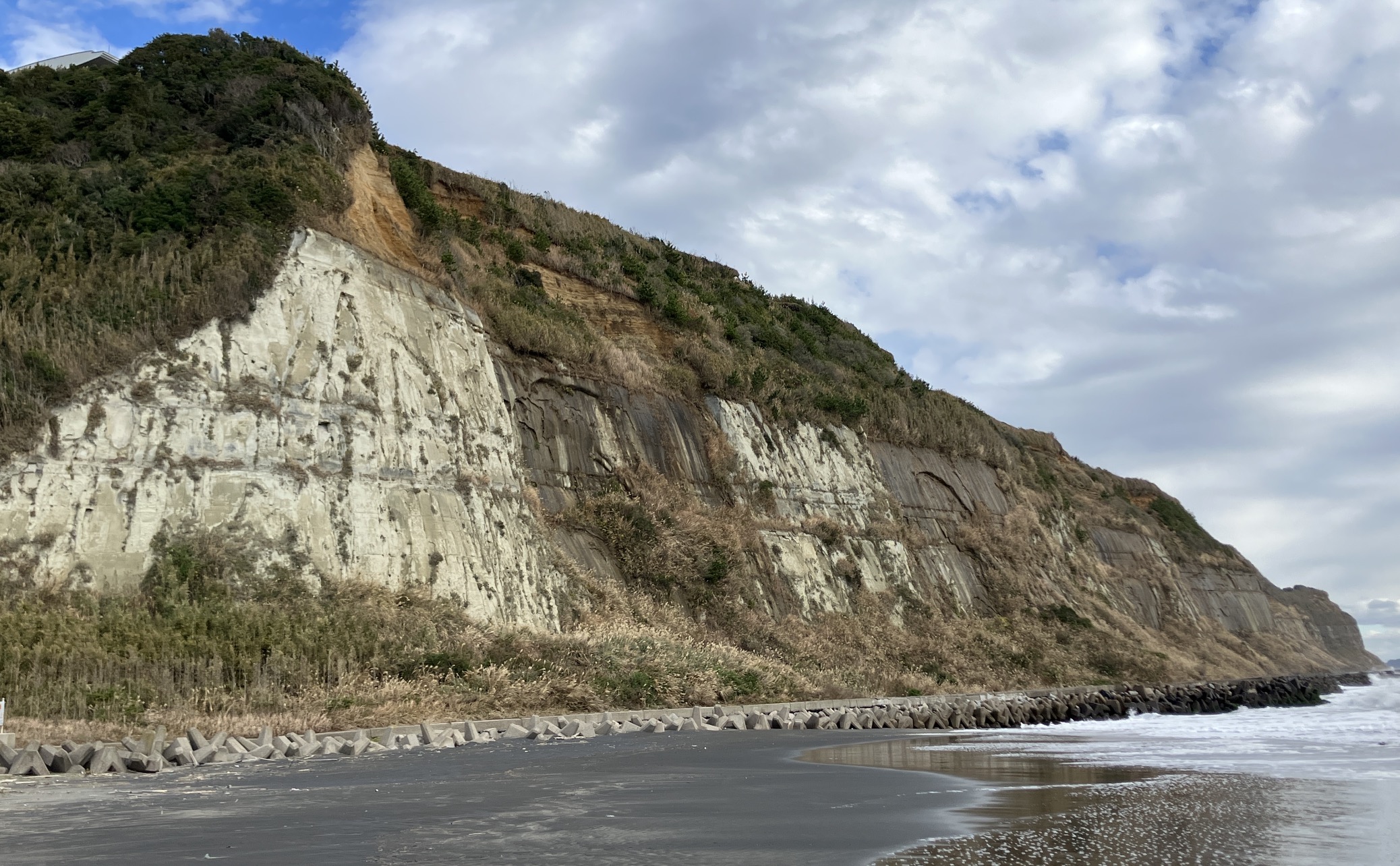
When you look closely at the cliff, you can see beautiful, distinct stripes. These are strata—layers of earth. The layers at Byobugaura were formed over millions of years, as sand and mud settled on the ocean floor between 3 million and several tens of thousands of years ago.
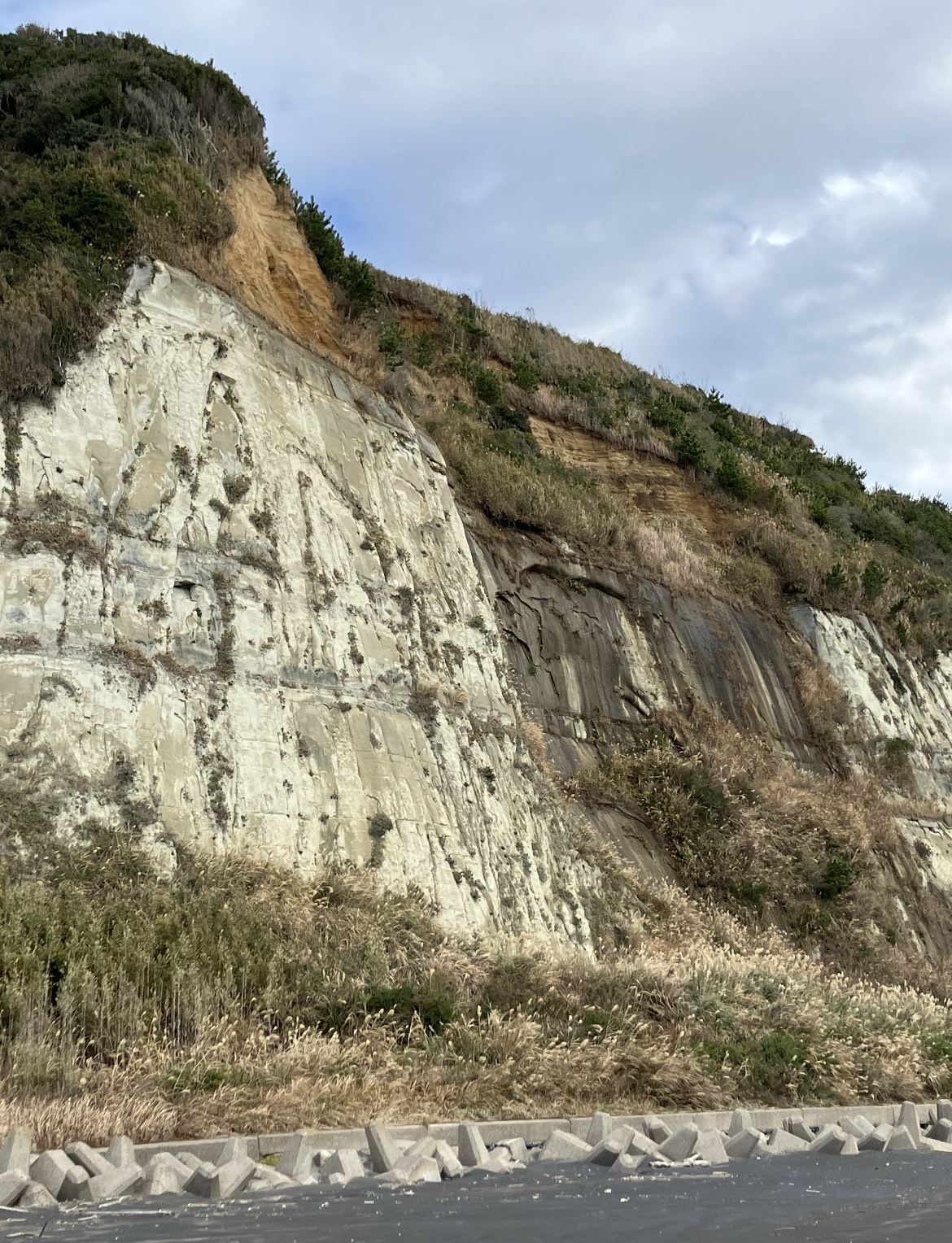
Is that a layer of volcanic ash sitting on top?
The reddish-brown layer visible at the very top is likely composed of volcanic ash, such as the Kanto Loam layer. Ash blown from volcanoes like Hakone and Mount Fuji accumulated over an almost unfathomable amount of time to create the ground we stand on today.
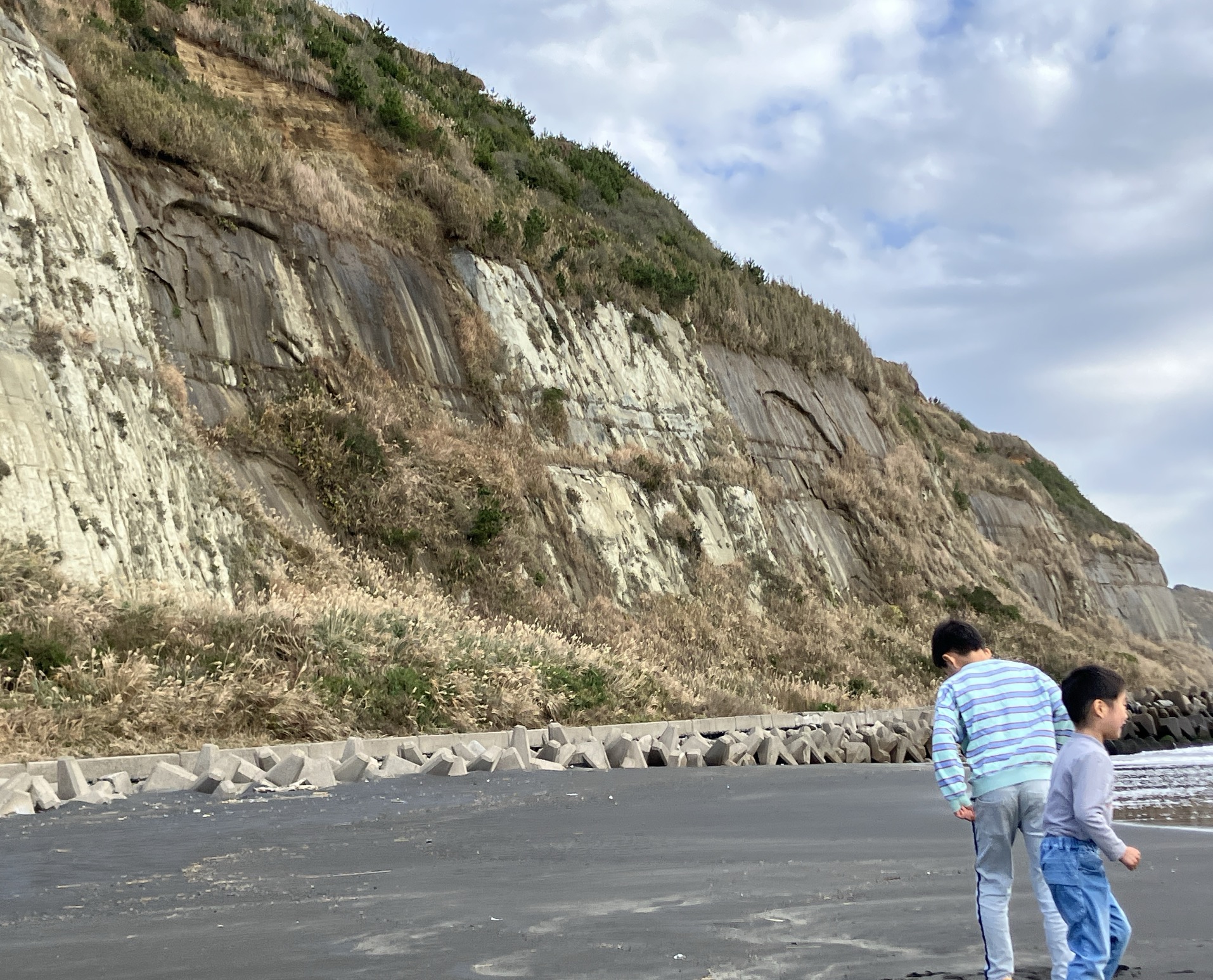
Standing my child next to the cliff really puts the scale into perspective. It makes you realize that a human lifetime is just a fleeting moment in the long history of our planet.
Observing Geological Shifts at the Geopark
Next, I moved to the eastern section, which is preserved as the “Choshi Geopark.” Near the Chiba Institute of Science, there is a well-maintained boardwalk where you can observe the strata safely and up close.
Byobugaura is a sea cliff that has been carved away by the fierce waves of the Pacific over eons. It’s said that the cliff used to erode by about one meter every year. Today, it is protected by wave-dissipating blocks, allowing us to admire its form at a more leisurely pace.
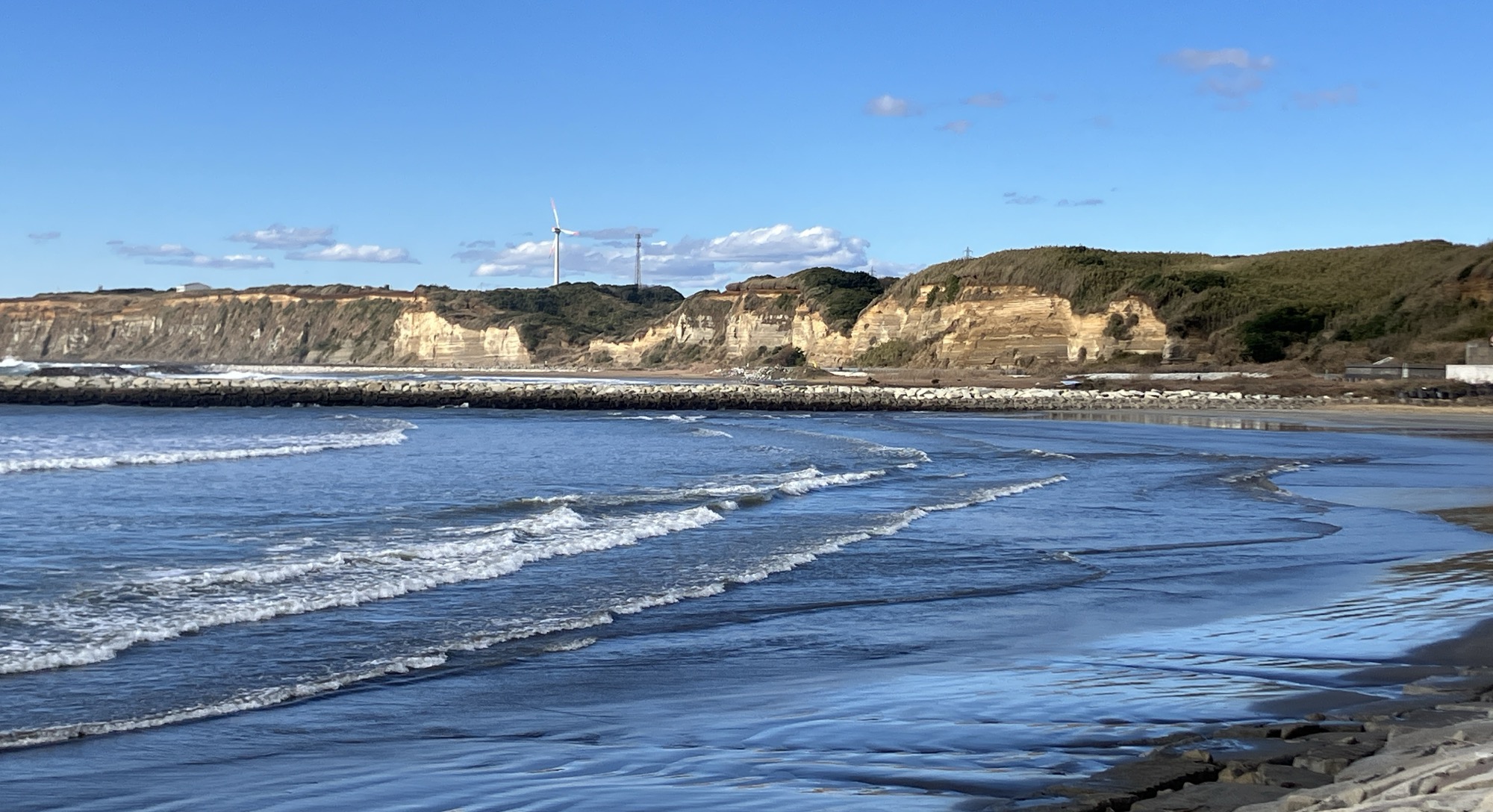
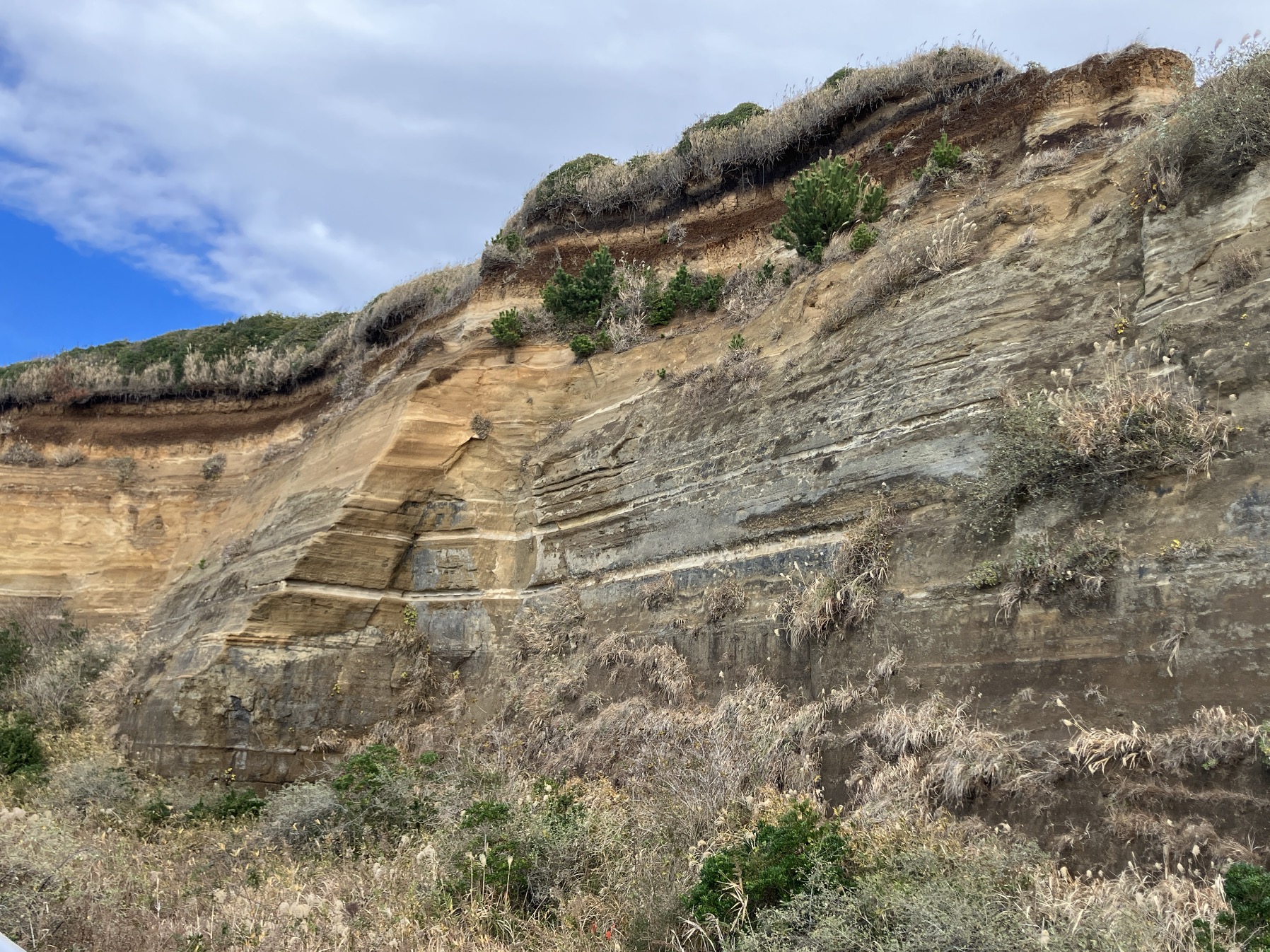
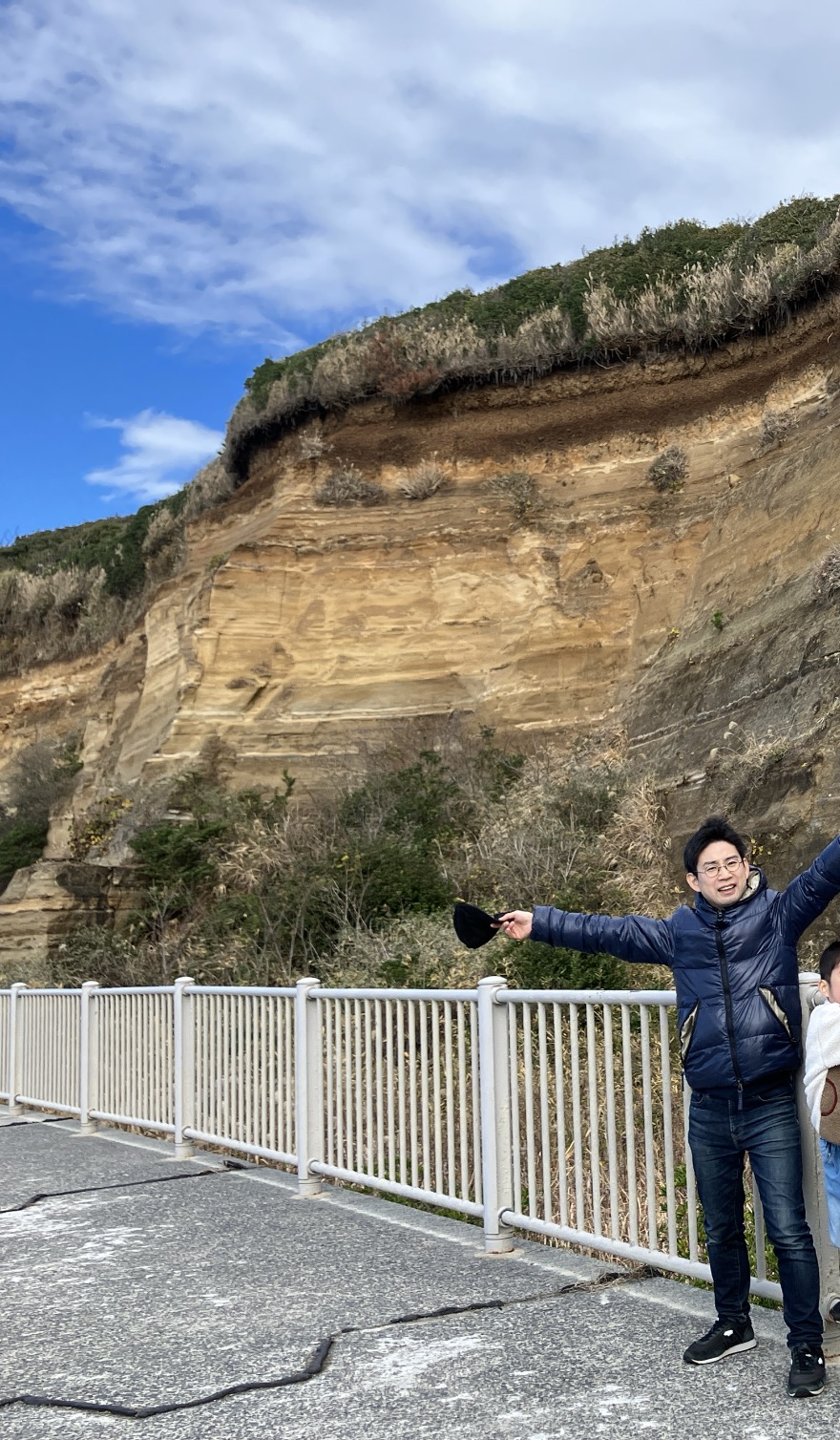
While walking along the path, I even spotted what looked like a fault, where the layers had shifted.
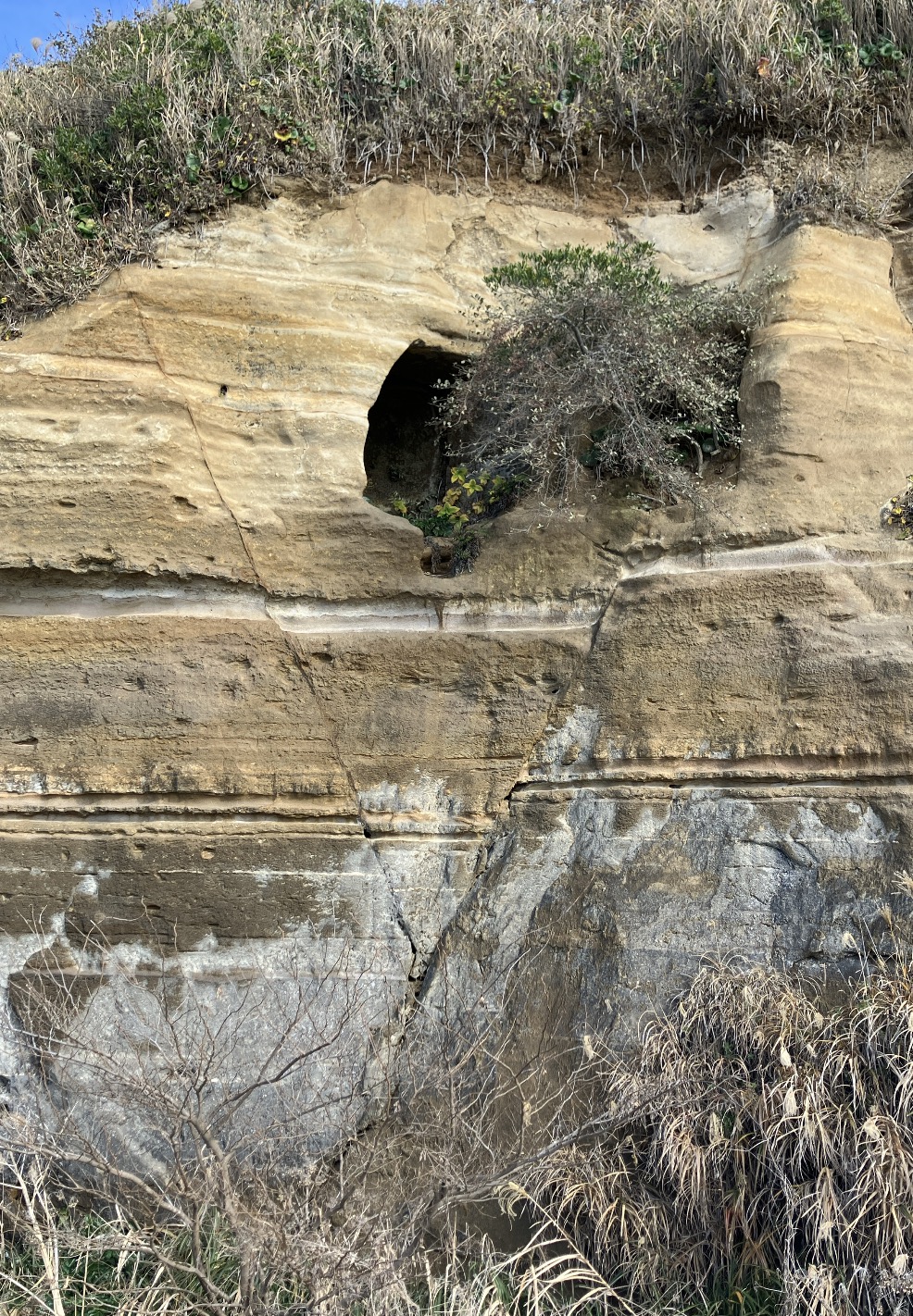
While we usually associate “faults” with crustal movements from earthquakes, these particular cracks are thought to be gravity-induced fissures, created by the sheer weight of the sediment or by sliding when the layers were still soft. Witnessing such phenomena is a luxury unique to an outcrop as vast as Byobugaura.
A Bird’s-Eye View: Exploring with Google Earth
After feeling the raw power of the site in person, it’s fun to look at it from a different perspective using technology. I decided to examine the same area via Google Maps and Google Earth.
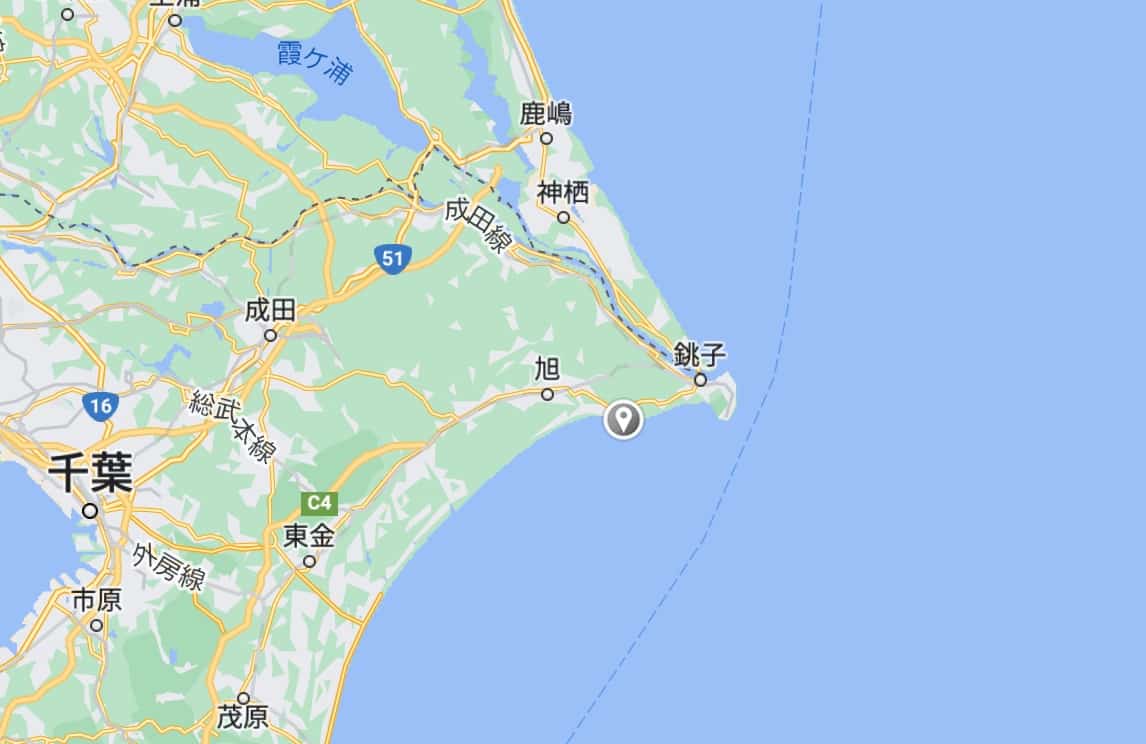
Source: Google Maps
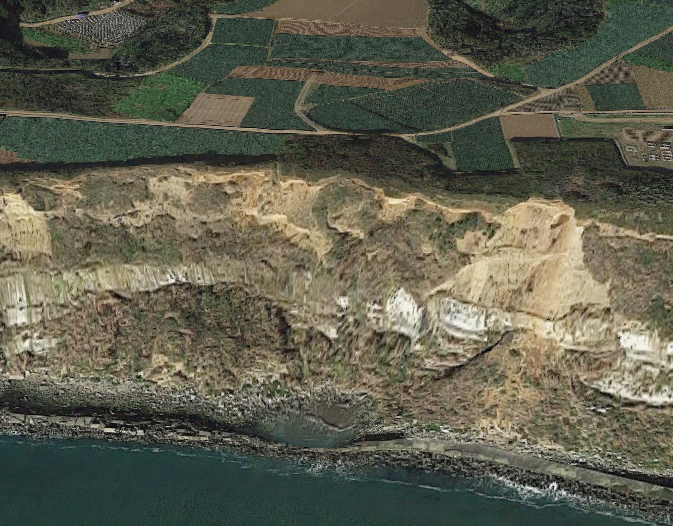
Source: Google Earth
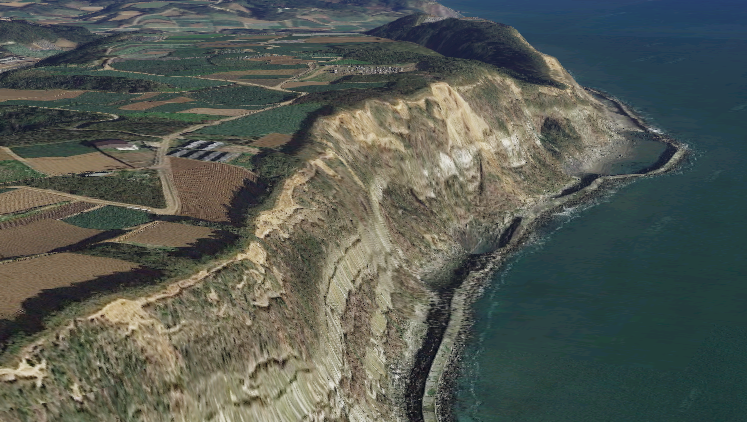
Source: Google Earth
Seeing the terrain from the sky makes it incredibly clear just how sharply the ocean has bitten into the land to create Byobugaura.
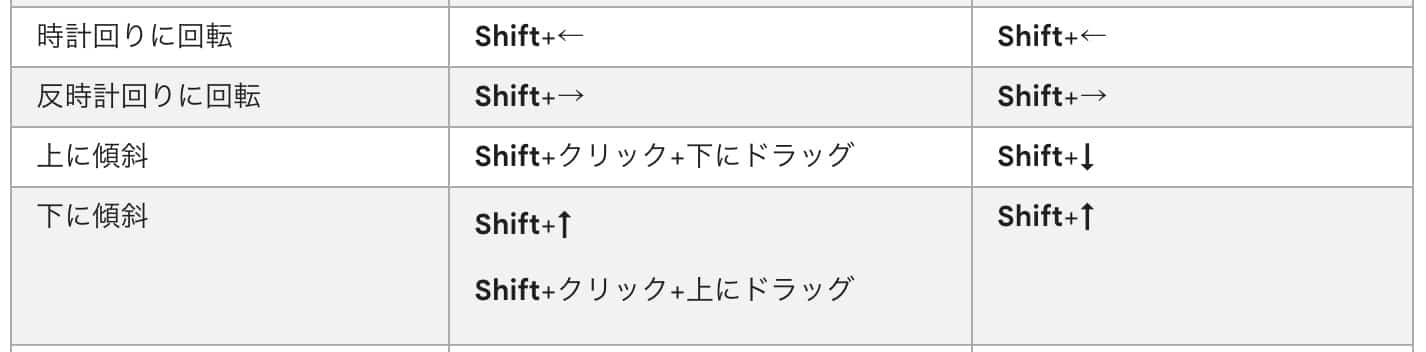
By the way, you can make your virtual exploration even more fun with a few pro-tips. If you are using the browser version or ChromeOS, hold down the Ctrl key while dragging the mouse up or down. This allows you to tilt the camera angle, giving you a 3D view of the cliff face as if you were flying right alongside it!
Here are some handy shortcuts:
Seeing the real landscape with your own eyes, then getting a bird’s-eye view digitally—this movement between the micro and macro is the best way to develop a “scientific eye.”
I highly recommend visiting Byobugaura on a clear day. A story millions of years in the making is waiting right beneath your feet.
https://phys-edu.net/wp/?p=41688
Inquiries and Requests
Bringing the wonder and fun of science closer to you! I share easy-to-follow tips and fun experiments you can try at home. Feel free to explore more:
My “Science Notebook” series is now a book! Details here
Learn more about Ken Kuwako here
For work requests (writing, lectures, workshops, TV supervision, etc.), click here – Follow me on X (formerly Twitter) for the latest updates!
 Watch experiment videos on the Science Material Channel!
10月のイチオシ実験!
https://youtube.com/shorts/jLVKYRVI1uY?feature=share
テレビ番組監修・イベント等のお知らせ
- 12月26日(土) ナリカサイエンスアカデミー(教員向け実験講習会)開催
書籍のお知らせ
- 『高校入試 分解問題集 理科』(学研)…難しい問題も小さな問題に分解することで、問題を解くことができます。そんな分解の技術が身につくように深く関わりを持って作りました。
 『大人のための高校物理復習帳』(講談社)…一般向けに日常の物理について公式を元に紐解きました。特設サイトでは実験を多数紹介しています。※増刷がかかり6刷となりました(2026/02/01)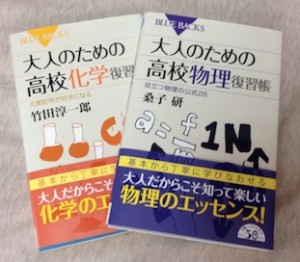
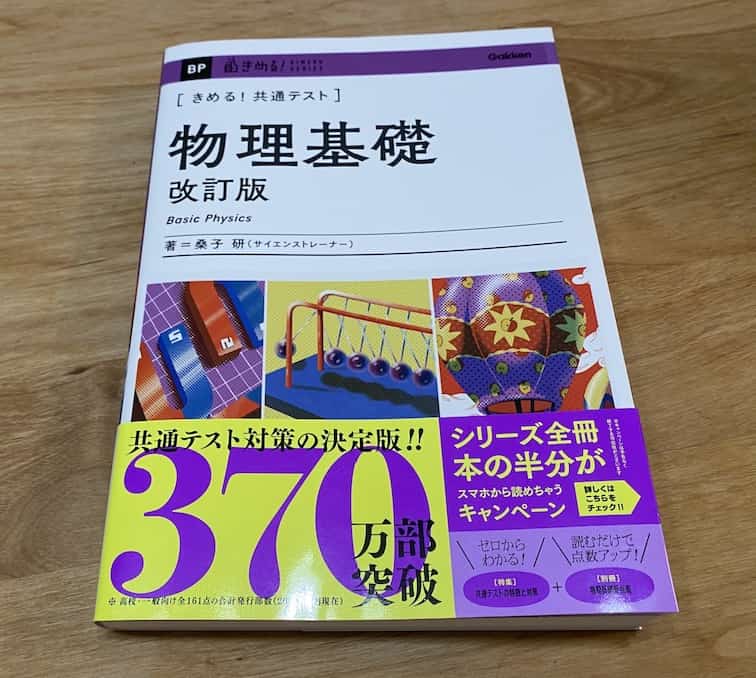
- 『きめる!共通テスト 物理基礎 改訂版』(学研)… 高校物理の参考書です。イラストを多くしてイメージが持てるように描きました。授業についていけない、物理が苦手、そんな生徒におすすめです。特設サイトはこちら。
各種SNS(更新情報をお届け!)
【日本語】X(Twitter)/instagram/Facebook 【英語】BlueSky/Threads
Explore
- 楽しい実験…お子さんと一緒に夢中になれるイチオシの科学実験を多数紹介しています。また、高校物理の理解を深めるための動画教材も用意しました。
- 理科の教材… 理科教師をバックアップ!授業の質を高め、準備を効率化するための選りすぐりの教材を紹介しています。
- Youtube…科学実験等の動画を配信しています。
- 科学ラジオ …科学トピックをほぼ毎日配信中!AI技術を駆使して作成した「耳で楽しむ科学」をお届けします。
- 講演 …全国各地で実験講習会・サイエンスショー等を行っています。
- About …「科学のネタ帳」のコンセプトや、運営者である桑子研のプロフィール・想いをまとめています。
- お問い合わせ …実験教室のご依頼、執筆・講演の相談、科学監修等はこちらのフォームからお寄せください。
- [Live] Why Are Spinning Things So Powerful? Ken Kuwako’s Spin Science Show (Chiba City Science Festa 2026 Special Stage)

- Experiment! What Happens When You Take a Bag of Potato Chips Up a Mountain? Almost Bursting at 2,237 m?! (The Mystery of Air Pressure)
- We Live at the Bottom of an Ocean of Air! A Plastic Bottle Experiment Reveals the Truth About Air Pressure (A High School Physics Refresher for Adults)
- Seeing the World Through an Insect’s Eyes? The Hidden Secrets of Dandelions and Azaleas

- Did the Chopstick Snap? Did It Move Backward? The Strange Images in a Glass of Water
- Making the Invisible Visible: A Laser and Fog Machine Light Show!

- The 1,300-View Wall! What Middle Schoolers Learned About “Reaching People” Through Short Videos (Science Communication Course)

- Is the Image on Your Retina Upside Down? Discover the Magic of Light with a Squid Eye Experiment

- We Built a Volcano—and It Was Explosively Fun! The Ultimate Experiment Recipe Using Plaster and Baking Soda!