【Quiz】Which Is Heavier After the Cut? A Carrot at the Balance Point! – Exploring Torque with Vegetables
I’m Ken Kuwako, your Science Trainer. Every day is an experiment!
Sometimes, our intuition gets “tricked” by the laws of physics. For instance, imagine a single carrot perfectly balanced on a string. If you were to cut that carrot right at the balancing point, wouldn’t you think both sides would weigh the same? Surprisingly, this simple scenario hides a secret of physics that supports our daily lives. Today, I’ve got a “Physics Quiz” that might make your brain itch a little. Let’s think through it together!
Quick Quiz Time! Ta-da!
Suppose we hang a carrot by a string like this. (Try to visualize the diagram!)
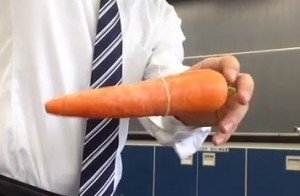
In this setup, we tied the string slightly to the right of the center, on the thicker side, to keep it perfectly horizontal. Now, here is the challenge: If we were to slice the carrot in two exactly where the string is, which part would be heavier: the left side (the thin end) or the right side (the thick end)?
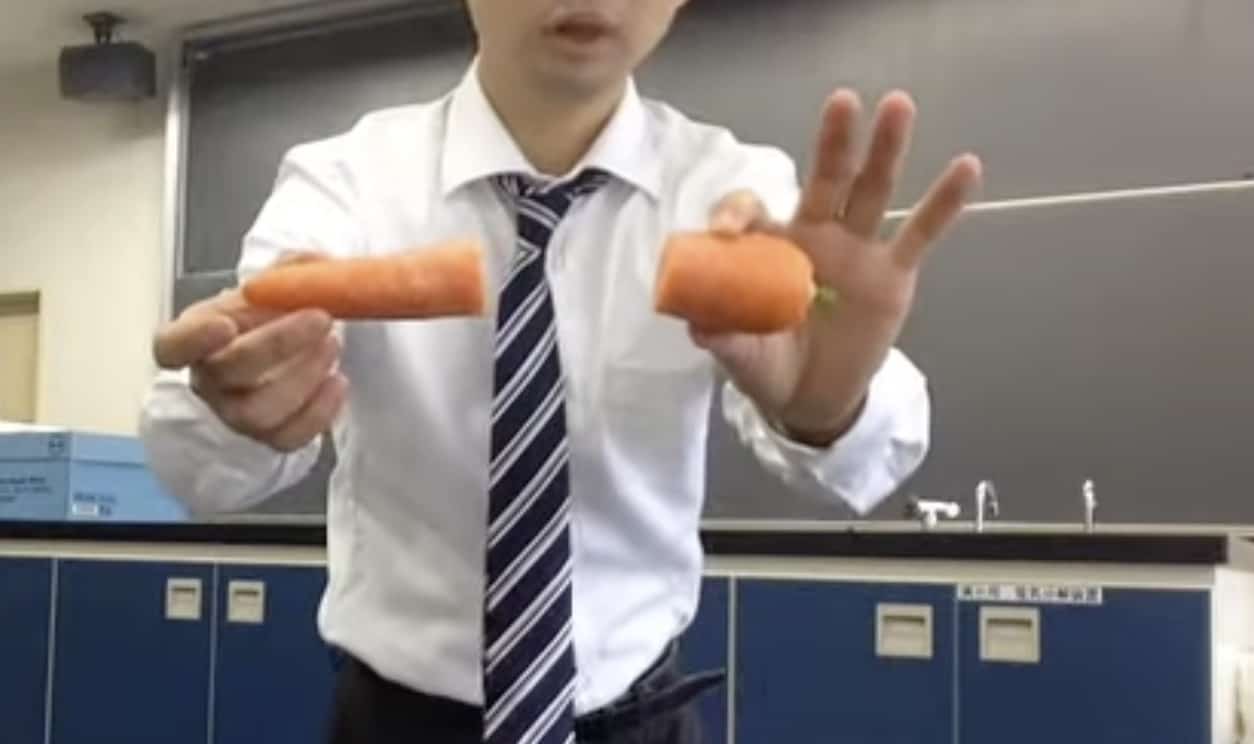
Take a moment to think about it. Got an answer? Let’s reveal the truth! I’ll explain the answer in this video.
A Surprising Result! The weights were actually different?
Believe it or not, they aren’t equal! One side is clearly heavier. “Wait, which one?” you might ask. This is a classic masterpiece in the world of physics puzzles. Let’s break down why the weights differ. The keyword here is Moment of Force (or Torque).
For the thick side:
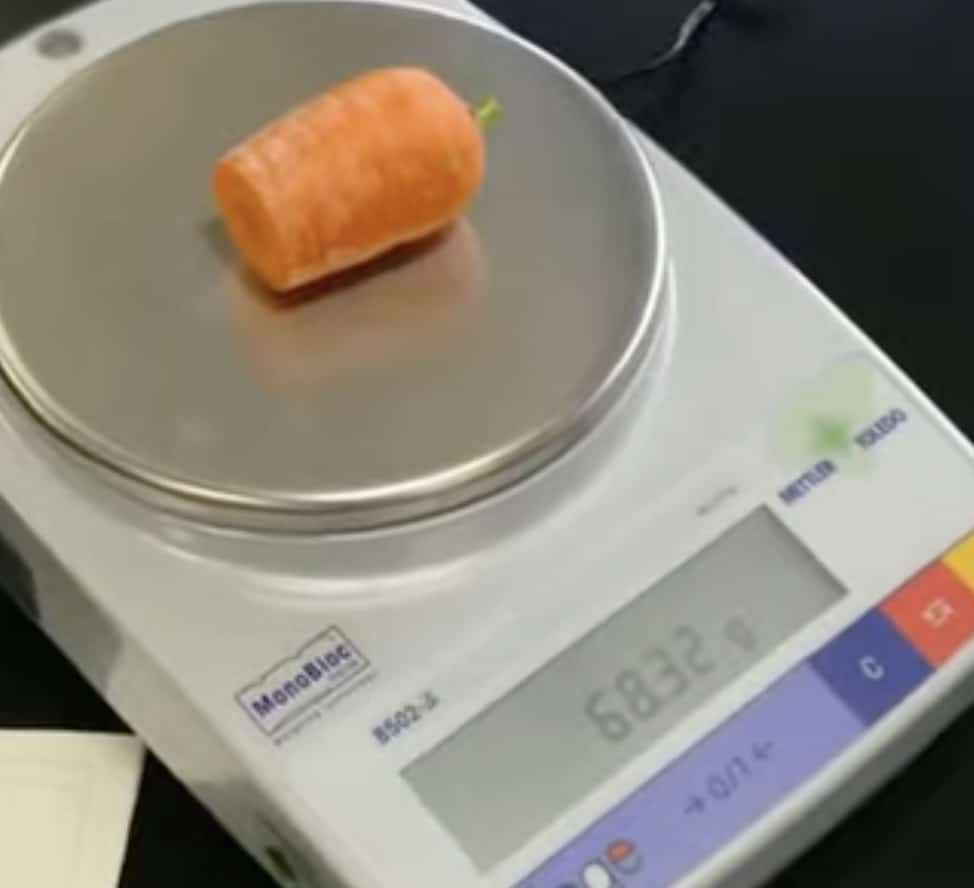
68g
And for the thin side: 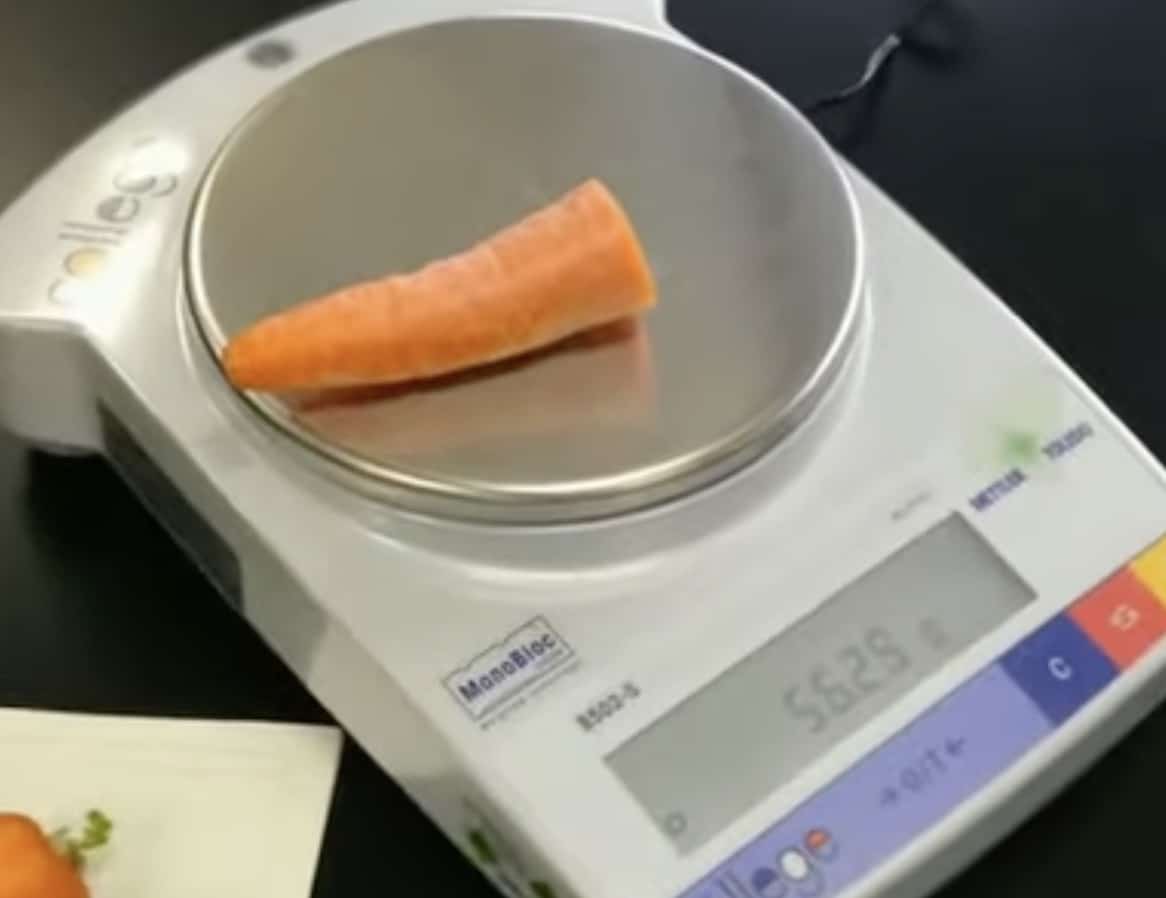
56g
That’s right—the thick side is heavier!
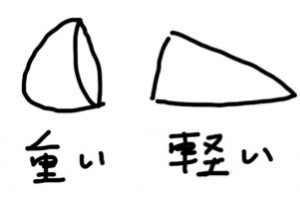
The thick side is heavier, while the thin side is lighter.
Why does this happen? Let’s use a bit of mathematical logic to solve this mystery.
What is the “Turning Force”? Understanding Moments
Imagine trying to loosen a rusty bolt with a wrench. If you want to apply the strongest force possible, where do you grab the wrench? Instinctively, you probably grab the very end of the handle. This is because the further you are from the center (the axis of rotation), the more “turning power” you generate with less effort. This concept is called a Moment. Mathematically, it looks like this:
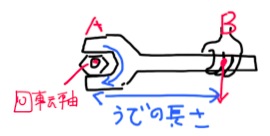
M = F × L
Moment = Force × Arm Length
This formula is vital! It’s not just about the “weight (force)”; the “distance from the center (arm length)” is what ultimately determines the rotational strength.
When Moments Balance Out
Let’s make a simple mobile using a light rod and two identical weights. In this case, if you tie the string exactly in the middle of the rod, it stays perfectly level.
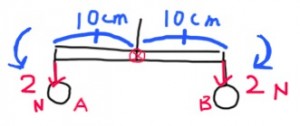
If we calculate the moments around the string (the axis), they are equal on both sides:
Left side: 2N × 10cm = 20N·cm (Counter-clockwise)
Right side: 2N × 10cm = 20N·cm (Clockwise)
When the clockwise and counter-clockwise moments are equal, the object stops rotating and stays still. We call this “Moment Equilibrium.”
What happens when we hang different weights?
Now, let’s get to the heart of the matter. Let’s hang two different weights: a heavy 6N ball and a light 2N ball. To make them balance, you can’t tie the string in the middle; you have to shift it closer to the heavier side.
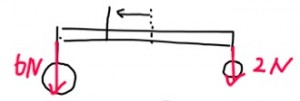
In practice, they will balance at a point like this:
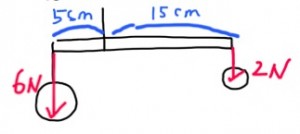
Left side: 6N × 5cm = 30N·cm
Right side: 2N × 15cm = 30N·cm
The math checks out—the moments are identical! But if we were to snip the rod right at the string…
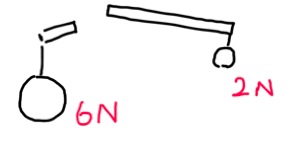
Naturally, the left piece (carrying the 6N weight) is much heavier than the right piece (carrying the 2N weight).
The Carrot Mystery Solved!
Now, let’s go back to our original carrot.
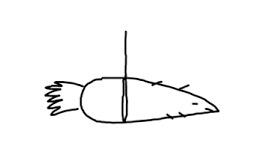
The string was tied much closer to the thick end than the thin end. This is exactly the same situation as our “6N vs 2N” experiment.
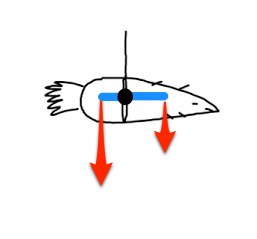
Because the thin, long part is far from the center (the string), even a small weight can generate a large moment (turning force). Conversely, because the thick part is so close to the center, it has to be significantly heavier to maintain the balance. Therefore, the answer is: The thick half is heavier! When you visualize the forces, it looks something like this:
When you look through the lens of physics, even a single vegetable in the supermarket becomes a gateway to a world of beautiful equations and balance. I’ve shared many more fascinating problems like this in my textbook for the Science Proficiency Test. Check it out if you’re curious!
Inquiries & Requests
Bringing the wonder and fun of science closer to you! I’ve compiled plenty of fun experiments you can do at home and the tips to make them work. Feel free to explore!
My “Science Notebook” content is now a book! Details here.
Learn more about the author, Ken Kuwako, here.
For requests (writing, speaking, science workshops, TV supervision/appearances, etc.), click here. – Get the latest updates on X (formerly Twitter)!
 Watch experiment videos on the Science Material Channel!
10月のイチオシ実験!
https://youtube.com/shorts/jLVKYRVI1uY?feature=share
テレビ番組監修・イベント等のお知らせ
- 12月26日(土) ナリカサイエンスアカデミー(教員向け実験講習会)開催
書籍のお知らせ
- 『高校入試 分解問題集 理科』(学研)…難しい問題も小さな問題に分解することで、問題を解くことができます。そんな分解の技術が身につくように深く関わりを持って作りました。
 『大人のための高校物理復習帳』(講談社)…一般向けに日常の物理について公式を元に紐解きました。特設サイトでは実験を多数紹介しています。※増刷がかかり6刷となりました(2026/02/01)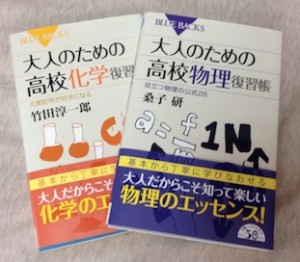
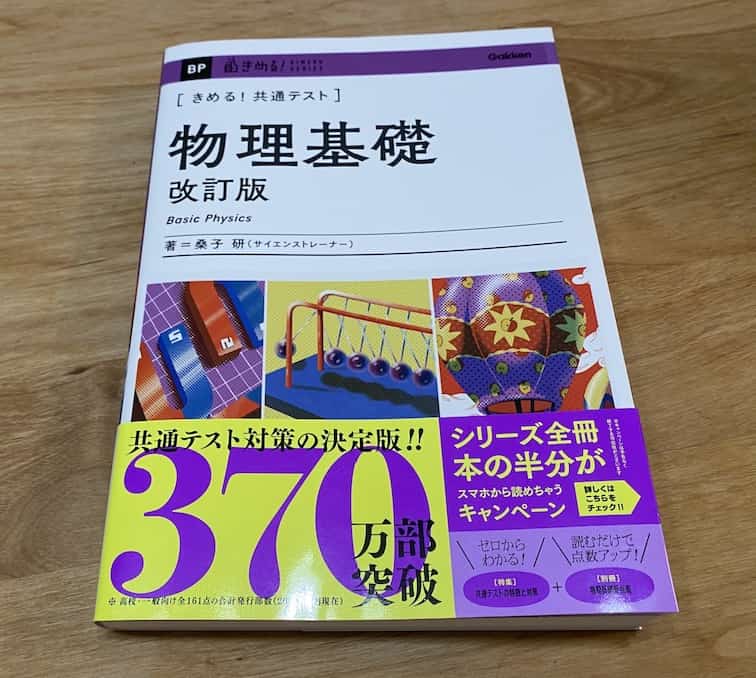
- 『きめる!共通テスト 物理基礎 改訂版』(学研)… 高校物理の参考書です。イラストを多くしてイメージが持てるように描きました。授業についていけない、物理が苦手、そんな生徒におすすめです。特設サイトはこちら。
各種SNS(更新情報をお届け!)
【日本語】X(Twitter)/instagram/Facebook 【英語】BlueSky/Threads
Explore
- 楽しい実験…お子さんと一緒に夢中になれるイチオシの科学実験を多数紹介しています。また、高校物理の理解を深めるための動画教材も用意しました。
- 理科の教材… 理科教師をバックアップ!授業の質を高め、準備を効率化するための選りすぐりの教材を紹介しています。
- Youtube…科学実験等の動画を配信しています。
- 科学ラジオ …科学トピックをほぼ毎日配信中!AI技術を駆使して作成した「耳で楽しむ科学」をお届けします。
- 講演 …全国各地で実験講習会・サイエンスショー等を行っています。
- About …「科学のネタ帳」のコンセプトや、運営者である桑子研のプロフィール・想いをまとめています。
- お問い合わせ …実験教室のご依頼、執筆・講演の相談、科学監修等はこちらのフォームからお寄せください。
- Experiment! What Happens When You Take a Bag of Potato Chips Up a Mountain? Almost Bursting at 2,237 m?! (The Mystery of Air Pressure)

- We Live at the Bottom of an Ocean of Air! A Plastic Bottle Experiment Reveals the Truth About Air Pressure (A High School Physics Refresher for Adults)
- Seeing the World Through an Insect’s Eyes? The Hidden Secrets of Dandelions and Azaleas

- Did the Chopstick Snap? Did It Move Backward? The Strange Images in a Glass of Water
- Making the Invisible Visible: A Laser and Fog Machine Light Show!

- The 1,300-View Wall! What Middle Schoolers Learned About “Reaching People” Through Short Videos (Science Communication Course)

- Is the Image on Your Retina Upside Down? Discover the Magic of Light with a Squid Eye Experiment

- We Built a Volcano—and It Was Explosively Fun! The Ultimate Experiment Recipe Using Plaster and Baking Soda!

- Data So Clean It’ll Wow You! Cracking the Link Between Potential Energy and Work with Just a Rail and a Marble