When Your Fridge Becomes a Lab: The Fascinating World of Standing Waves Drawn with Springs and Magnets
I’m Ken Kuwako, your science trainer. Every day is an experiment!
Whether it is the beautiful melody of a guitarist at a concert or the soothing sound of someone singing in the shower, invisible waves are hidden behind every sound we hear. Wouldn’t it be exciting if you could create a mysterious world where those waves appear to stand still, right in the palm of your hand? Today, I will share a clever trick to observe standing waves—a fan favorite in science class—easily at home, all by yourself.
The Art of Waves Created with a Slinky
Have you ever seen the long metal springs used in science labs for wave experiments? For science teachers, these are essential tools because they allow us to recreate standing waves so clearly it looks like you are watching strings vibrate in slow motion. Usually, this experiment requires two people: one person to hold the end firmly while the teacher shakes the other end. While I often ask students to help with this demonstration in class, I’ve always been bothered by the fact that if a student thinks, “I want to try this at home!”, it’s difficult to do without a partner.
A Science Recipe for Solo Exploration
Most people don’t have lab-grade springs at home, and finding a way to anchor one end by yourself can be a real challenge. That is why I want to share a brilliant workaround for solo experimentation, inspired by my colleague, Mr. O. Thank you, Mr. O, for this fantastic idea!
The Science Recipe
What You’ll Need:
A spring or Slinky (available at hobby shops like Tokyu Hands), and a magnetic clip.

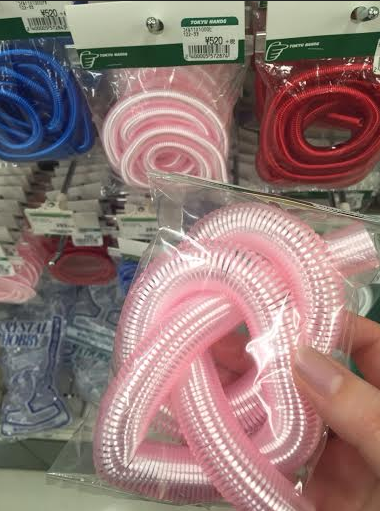
If you don’t have a hobby shop nearby, a heavy-duty bungee cord from a hardware store works as a great substitute!
Steps:
Attach the magnetic clip to one end of the spring.
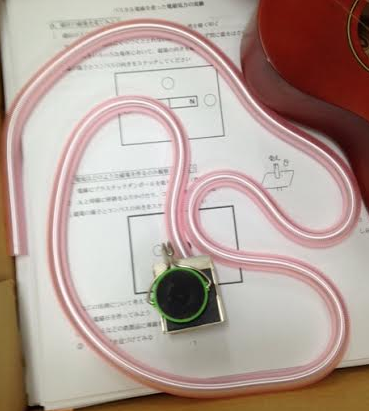
Stick the magnetic clip onto a refrigerator, a whiteboard, or any metal surface.
This use of a magnet for anchoring is the most important part of the trick! It holds the delicate spring firmly without damaging it and can be set up almost anywhere. It’s a simple yet revolutionary idea!
Hold the other end yourself and shake it rhythmically.
Shapes that Shift with Speed! The Amazing Standing Wave
As you begin to shake the spring, beautiful standing waves will emerge. A standing wave is a fascinating phenomenon where an outgoing wave and its reflection overlap, making the wave appear to vibrate in place rather than traveling. If you shake it slowly, you get the fundamental frequency—a single large arc. Shake it a bit faster, and you’ll see the second harmonic with a still point (a node) in the middle. Faster still, and you get the third harmonic!
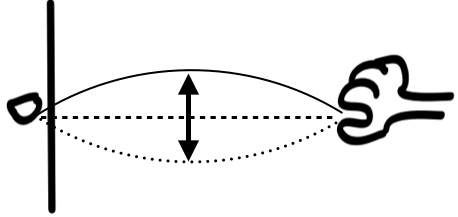
Fundamental Frequency
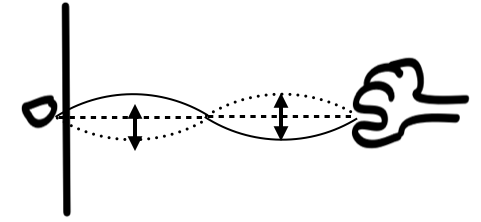
Second Harmonic
By simply changing your hand’s frequency (the speed of your shaking), the wave patterns shift one after another. It feels almost like playing a musical instrument!
With just a little bit of ingenuity, physics becomes so much more relatable. You don’t need massive equipment to touch the laws of nature—using everyday items is the true essence of science. On a side note, a child once told me that these springs make an incredibly interesting movement when dropped down stairs. I actually tried it out myself, and you can see it here:
Do you know any other fun experiments involving waves? If you have any great ideas, I’d love to hear them!
Inquiries and Requests
Bringing the wonder and fun of science closer to you! I share easy-to-follow tips and fun experiments you can try at home. Feel free to explore more:
My Science Notebook series is now a book! Details here
Learn more about Ken Kuwako here
For work requests (writing, lectures, workshops, TV supervision, etc.), click here
10月のイチオシ実験!
https://youtube.com/shorts/jLVKYRVI1uY?feature=share
テレビ番組監修・イベント等のお知らせ
- 12月26日(土) ナリカサイエンスアカデミー(教員向け実験講習会)開催
書籍のお知らせ
- 『高校入試 分解問題集 理科』(学研)…難しい問題も小さな問題に分解することで、問題を解くことができます。そんな分解の技術が身につくように深く関わりを持って作りました。
 『大人のための高校物理復習帳』(講談社)…一般向けに日常の物理について公式を元に紐解きました。特設サイトでは実験を多数紹介しています。※増刷がかかり6刷となりました(2026/02/01)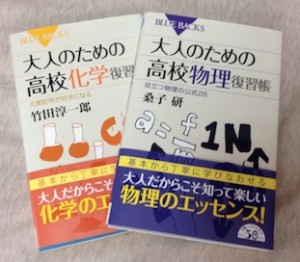
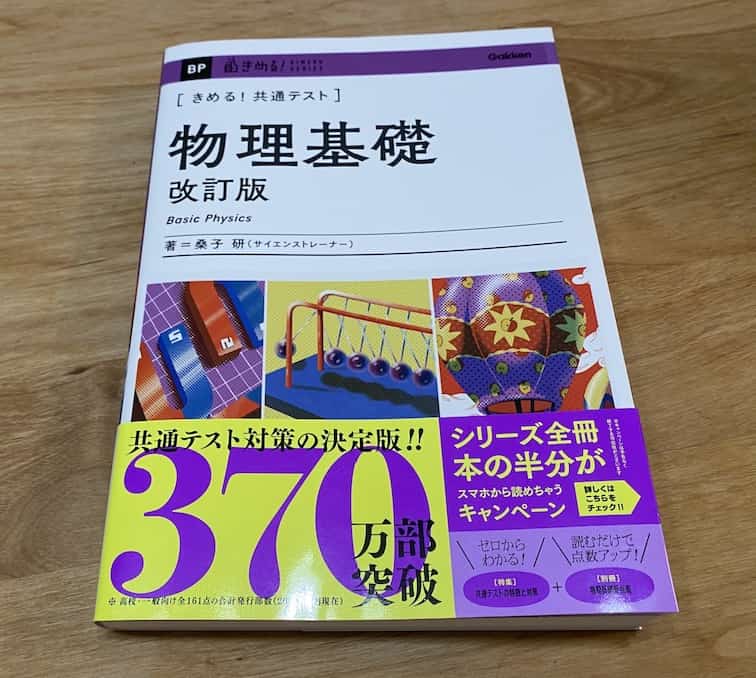
- 『きめる!共通テスト 物理基礎 改訂版』(学研)… 高校物理の参考書です。イラストを多くしてイメージが持てるように描きました。授業についていけない、物理が苦手、そんな生徒におすすめです。特設サイトはこちら。
各種SNS(更新情報をお届け!)
【日本語】X(Twitter)/instagram/Facebook 【英語】BlueSky/Threads
Explore
- 楽しい実験…お子さんと一緒に夢中になれるイチオシの科学実験を多数紹介しています。また、高校物理の理解を深めるための動画教材も用意しました。
- 理科の教材… 理科教師をバックアップ!授業の質を高め、準備を効率化するための選りすぐりの教材を紹介しています。
- Youtube…科学実験等の動画を配信しています。
- 科学ラジオ …科学トピックをほぼ毎日配信中!AI技術を駆使して作成した「耳で楽しむ科学」をお届けします。
- 講演 …全国各地で実験講習会・サイエンスショー等を行っています。
- About …「科学のネタ帳」のコンセプトや、運営者である桑子研のプロフィール・想いをまとめています。
- お問い合わせ …実験教室のご依頼、執筆・講演の相談、科学監修等はこちらのフォームからお寄せください。
- Experiment! What Happens When You Take a Bag of Potato Chips Up a Mountain? Almost Bursting at 2,237 m?! (The Mystery of Air Pressure)
- We Live at the Bottom of an Ocean of Air! A Plastic Bottle Experiment Reveals the Truth About Air Pressure (A High School Physics Refresher for Adults)
- Seeing the World Through an Insect’s Eyes? The Hidden Secrets of Dandelions and Azaleas

- Did the Chopstick Snap? Did It Move Backward? The Strange Images in a Glass of Water
- Making the Invisible Visible: A Laser and Fog Machine Light Show!

- The 1,300-View Wall! What Middle Schoolers Learned About “Reaching People” Through Short Videos (Science Communication Course)

- Is the Image on Your Retina Upside Down? Discover the Magic of Light with a Squid Eye Experiment

- We Built a Volcano—and It Was Explosively Fun! The Ultimate Experiment Recipe Using Plaster and Baking Soda!

- Data So Clean It’ll Wow You! Cracking the Link Between Potential Energy and Work with Just a Rail and a Marble