
[Shocking!] Can You “Keep a Bird” with Just One Straw!? A Real Water Whistle Experiment at Home
ご依頼いただいたブログ記事を、自然で親しみやすい英語に翻訳いたしました。
I’m Ken Kuwako, your Science Trainer. Every day is an experiment!

Let’s craft a straw whistle that sings just like a little bird!
[This story is also available on our radio show!]
Imagine sitting in your living room and suddenly hearing the sweet chirping of birds, as if you’ve wandered into a lush forest. Sounds magical, right? Believe it or not, you can create this “magic whistle” yourself using nothing more than a regular straw and a bit of water.
Can a straw really sing like a bird?
“Tweet, tweet! Chirp, chirp!”
That sound isn’t coming from a real bird—it’s coming from a straw! If it’s your first time making one, you’ll be amazed by how incredibly realistic the tone is. First, check out this video to hear the actual “song” for yourself.
What do you think? It sounds just like the real thing! I remember once when I was testing this in the science lab, a teacher from the next room rushed in with wide eyes, saying, “I thought a bird had accidentally flown into the classroom!” It really is that convincing.
This little project hides some deep science about the nature of sound waves that would surprise even high school students. Why not give it a try at home?
The “Science Recipe” for your Magic Whistle
Everything you need can be found around the house or at a local dollar store.
What you’ll need: A plastic container (one with a soft lid is best), a straw, scissors, a stapler, an awl (or a sharp tool for making holes), and water.
Step-by-Step Guide
1. Create a “Pathway” in the lid
First, use the awl to poke a small hole in the center of the plastic container’s lid.
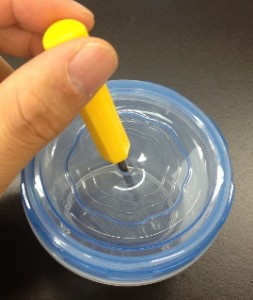
Once you’ve made a small hole, insert a pencil or something similar to widen it until it’s just the right size for the straw to fit through snugly. If the lid is tough, you might need a little muscle—kids, ask an adult for help!
2. Make a “Side Vent” for the air
Next, poke another small hole on the side of the container (just above the middle).
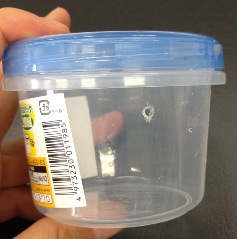
This hole doesn’t need to be big. It’s a vital exit point that allows the air trapped inside the container to escape along with the sound.
3. Craft the “Sound Source” from the straw
Insert the straw through the lid and set it so it’s long enough to almost touch the bottom.
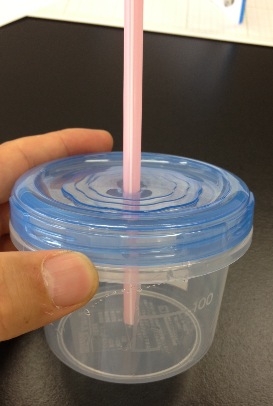
About 1cm above the lid, make a horizontal slit with your scissors.
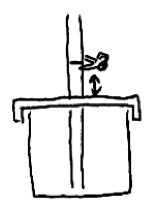
Here’s the most important tip: Don’t cut it all the way off! You want to leave just a tiny bit connected so you can fold the straw over.
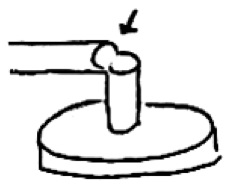
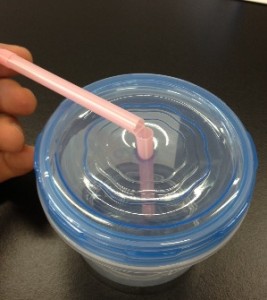
4. Shape the “Mouthpiece”
Squeeze the base of the folded part (the mouthpiece side) with your fingers to flatten it out.
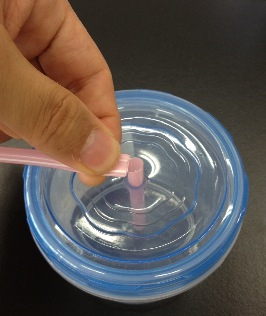
Staple both sides of the flattened area once. This is the real “craftsman” moment!
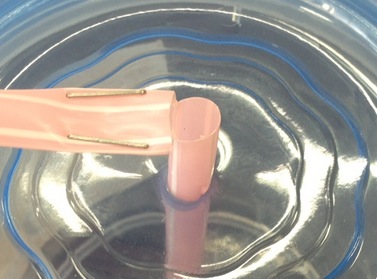
To finish, gently insert the tip of your awl into the center of the straw to create a tiny gap for the air to flow through.
5. Show Time! Blow into your whistle
Fill the container about 1/3 full with water. When you’re ready, aim your breath right at the slit in the straw.
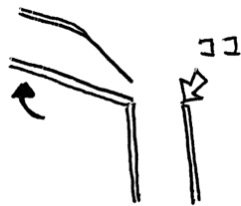
Aim specifically for the spot marked “HERE!” in the diagram below.
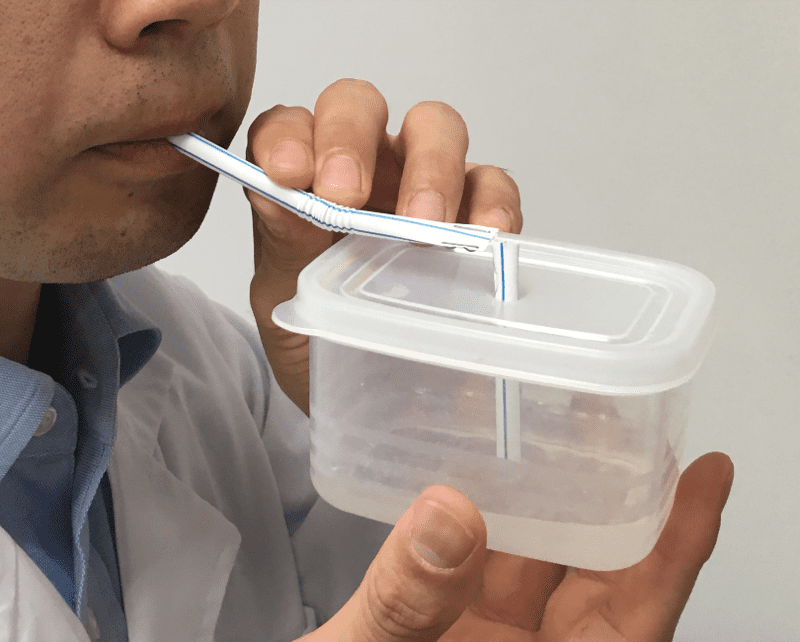
As you adjust the angle and strength of your breath…
“Tweet-tweet-chirp!”
Suddenly, the vibrant song of a bird fills the air!
Why does a straw sing like it’s come to life?
This mysterious whistle is actually called a “water whistle,” and in the world of science, it’s a member of the closed-pipe instrument family.
When you blow air into it, the air inside the straw vibrates rapidly, creating something called a “standing wave.” This produces the sound. However, usually, this would only produce a single, steady note—like blowing across the top of a beer bottle.
So, why does the pitch change to sound like a bird?
It’s because the water level inside the straw is moving up and down violently, like an elevator!
- When you blow, the pressure inside the straw drops.
- Water is sucked up, making the air column inside the straw shorter.
- A shorter air column creates a higher pitch.
- The weight of the water then pulls it back down, making the air column longer.
- A longer air column creates a lower pitch.
This cycle happens at incredible speeds, acting almost like a trumpet player moving their pistons frantically. That’s what creates those adorable chirps.
In physics, we call this phenomenon “resonance.” Isn’t it exciting to think such a dramatic scientific story is hidden inside a simple straw? Go ahead and find your own unique “bird song”!
Inquiries & Requests
Bringing the wonders of science closer to you! I share fun home experiments and easy-to-understand tips. Feel free to explore!
Learn more about Ken Kuwako here.
For business inquiries (writing, speaking, workshops, TV supervision/appearances), click here.
– Get the latest updates on X (formerly Twitter)!
 Check out my experiment videos on the Science Tips Channel!
テレビ番組監修・イベント等のお知らせ
- 10月27日(火) 23:56〜「ネイチャーティーチャー」(TBS)に出演予定

- 11月27日(金) テレビ監修番組放送予定
- 12月26日(土) ナリカサイエンスアカデミー(教員向け実験講習会)開催
10月のイチオシ実験!
書籍のお知らせ
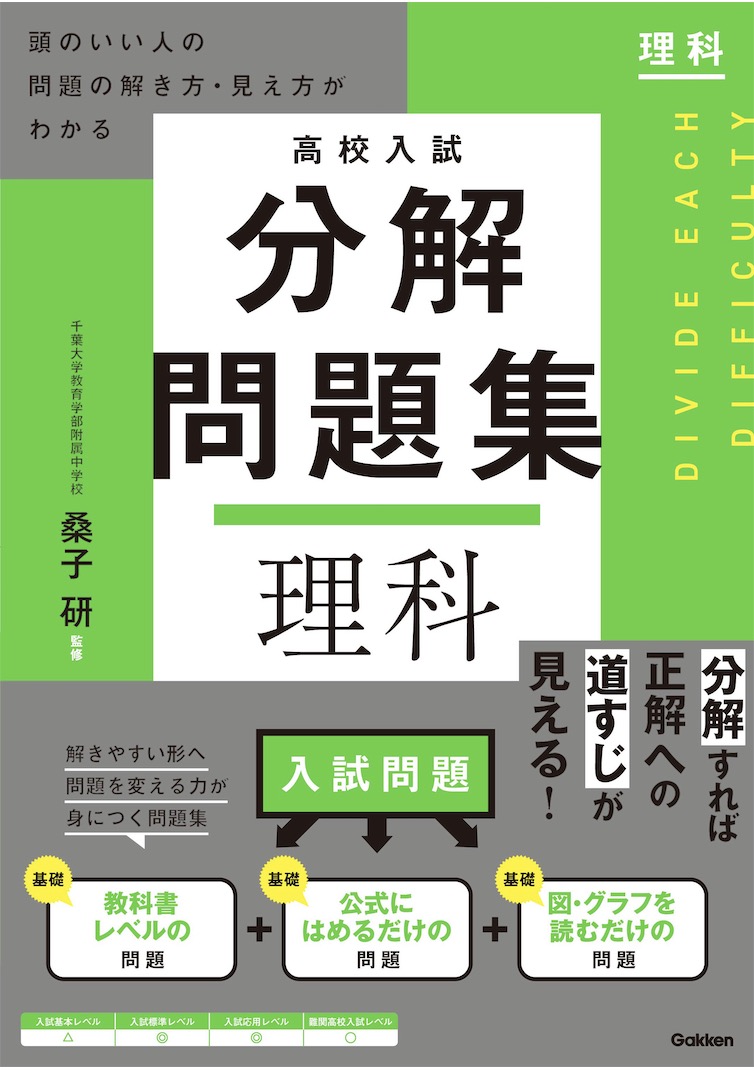
- 『高校入試 分解問題集 理科』(学研)…難しい問題も小さな問題に分解することで、問題を解くことができます。そんな分解の技術が身につくように深く関わりを持って作りました。
 『大人のための高校物理復習帳』(講談社)…一般向けに日常の物理について公式を元に紐解きました。特設サイトでは実験を多数紹介しています。※増刷がかかり6刷となりました(2026/02/01)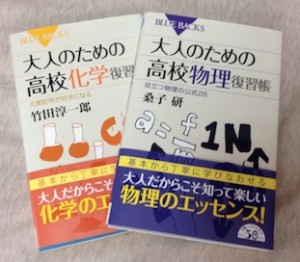
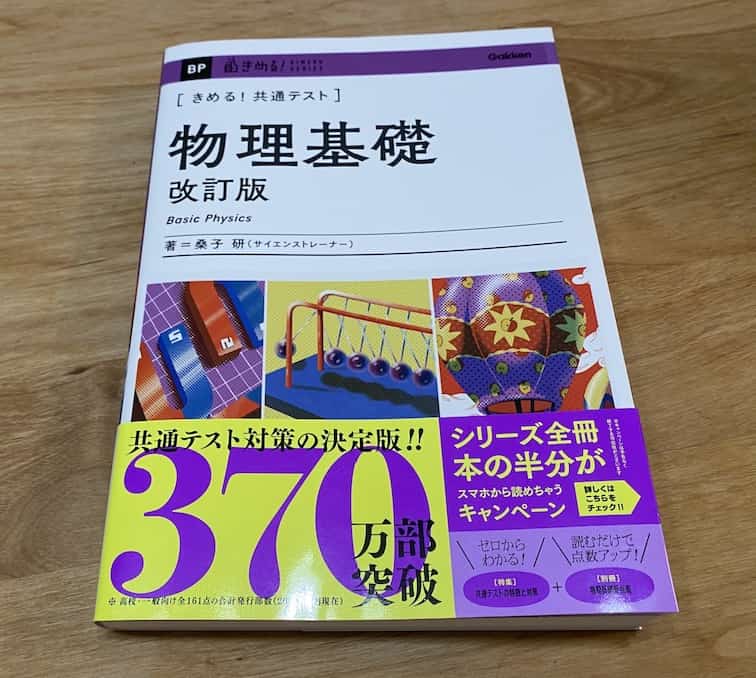
- 『きめる!共通テスト 物理基礎 改訂版』(学研)… 高校物理の参考書です。イラストを多くしてイメージが持てるように描きました。授業についていけない、物理が苦手、そんな生徒におすすめです。特設サイトはこちら。
各種SNS(更新情報をお届け!)
【日本語】X(Twitter)/instagram/Facebook 【英語】BlueSky/Threads
Explore
- 楽しい実験…お子さんと一緒に夢中になれるイチオシの科学実験を多数紹介しています。また、高校物理の理解を深めるための動画教材も用意しました。
- 理科の教材… 理科教師をバックアップ!授業の質を高め、準備を効率化するための選りすぐりの教材を紹介しています。
- Youtube…科学実験等の動画を配信しています。
- 科学ラジオ …科学トピックをほぼ毎日配信中!AI技術を駆使して作成した「耳で楽しむ科学」をお届けします。
- 講演 …全国各地で実験講習会・サイエンスショー等を行っています。
- About …「科学のネタ帳」のコンセプトや、運営者である桑子研のプロフィール・想いをまとめています。
- お問い合わせ …実験教室のご依頼、執筆・講演の相談、科学監修等はこちらのフォームからお寄せください。