Are Vetch Pods Secret Puzzle Masters? The Brilliant Efficiency Strategy Hidden in Plants
I’m Ken Kuwako, the Science Trainer. Every Day is an Experiment.
The Surprising Survival Strategy Hidden in a Tiny “Weed” at Your Feet
Have you ever noticed the quiet plants growing unnoticed on the roadside or in a corner of the park? Do you think, “Plants don’t move, so they’re kind of boring”? If so, you’re missing out on something huge! Precisely because plants cannot move, their bodies contain incredibly sophisticated “intelligence” designed purely for survival.
Today, we are going to dissect a common plant you often see on spring roadsides: the Vetch (or common vetch, Vicia sativa), known in Japanese as Karasu no Endou. Inside its pod is the “ultimate storage secret” for passing life on to the next generation. Let’s take a look together at this botanical strategy, which is calculated with puzzle-like precision.
What You Will Need
Vetch pods (A pod that is starting to turn black and has fully developed seeds is best) 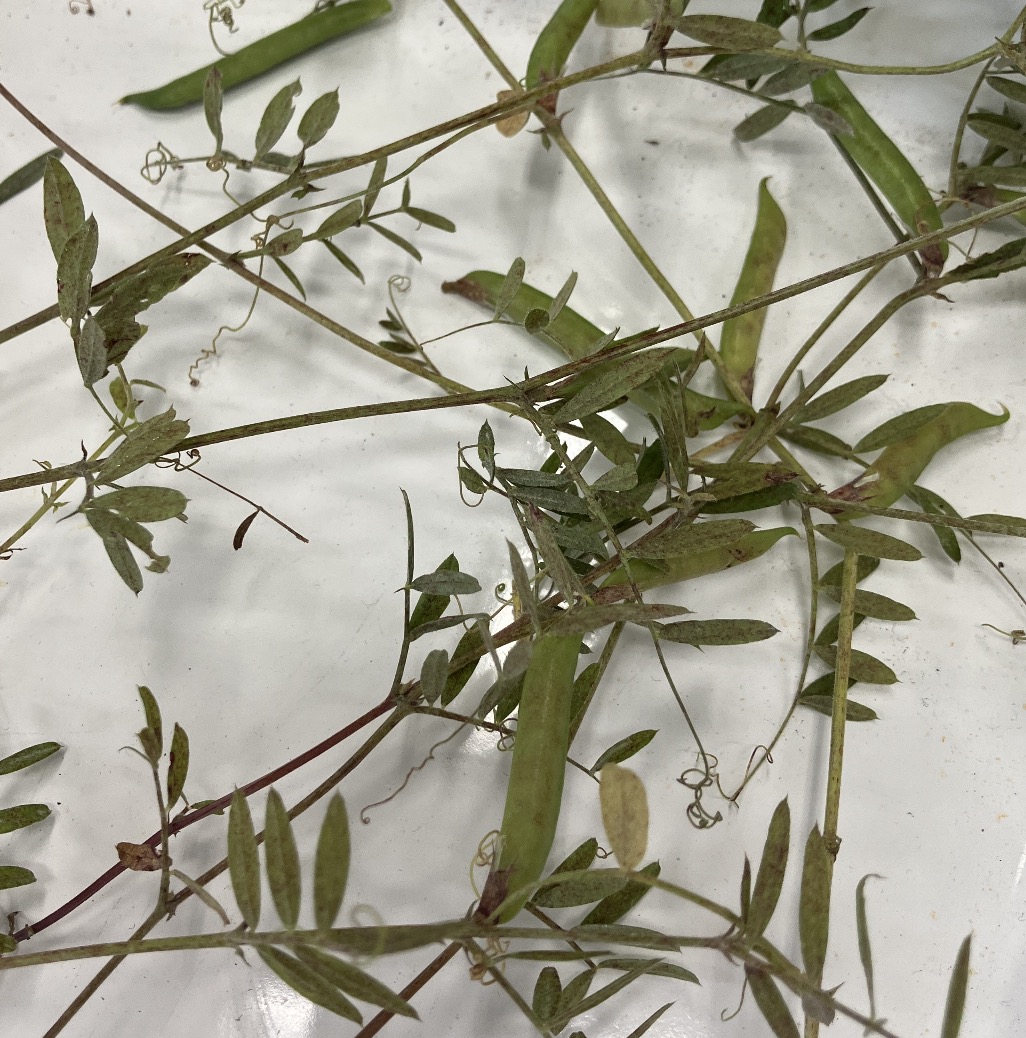
Utility knife (or an exacto knife/craft knife)
Cutting mat
Clear tape
Tweezers (optional)
Magnifying glass or hand lens (having one will allow you to see the fine structure and be amazed)
Blank paper or observation log sheet
Experiment Procedure
Cutting open a round pod with a knife is actually tricky, even for adults. So, as a science teacher, I recommend an “absolutely safe trick that guarantees success.”
- Secure the Pod (This is the key!): Use clear tape to stick the vetch pod down onto your cutting mat. The trick is to completely cover the pod with tape so that the entire structure is stabilized and won’t roll.
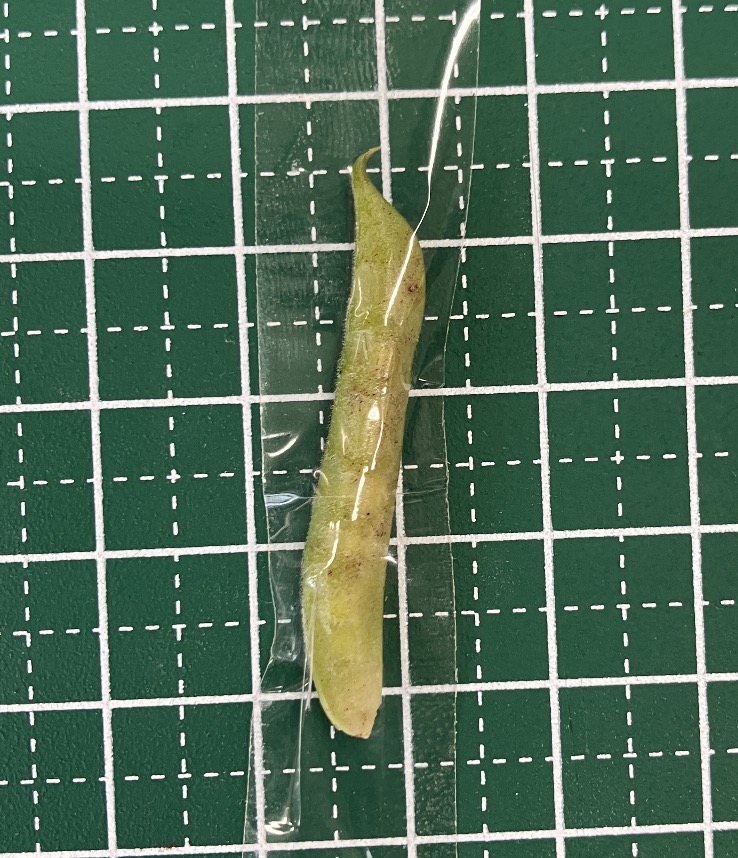
- Safe Incision: Make a single, straight cut along the seam (the long side) of the pod using the utility knife, cutting directly over the clear tape. Since the tape firmly secures the pod, the round shape won’t roll away. This drastically reduces the risk of cutting your fingers and ensures a clean cut. When doing this with students, be sure to strictly follow this method.
- Open and Observe: Peel the pod and tape off the cutting mat. Gently open the pod along the cut you made with a “snap.”
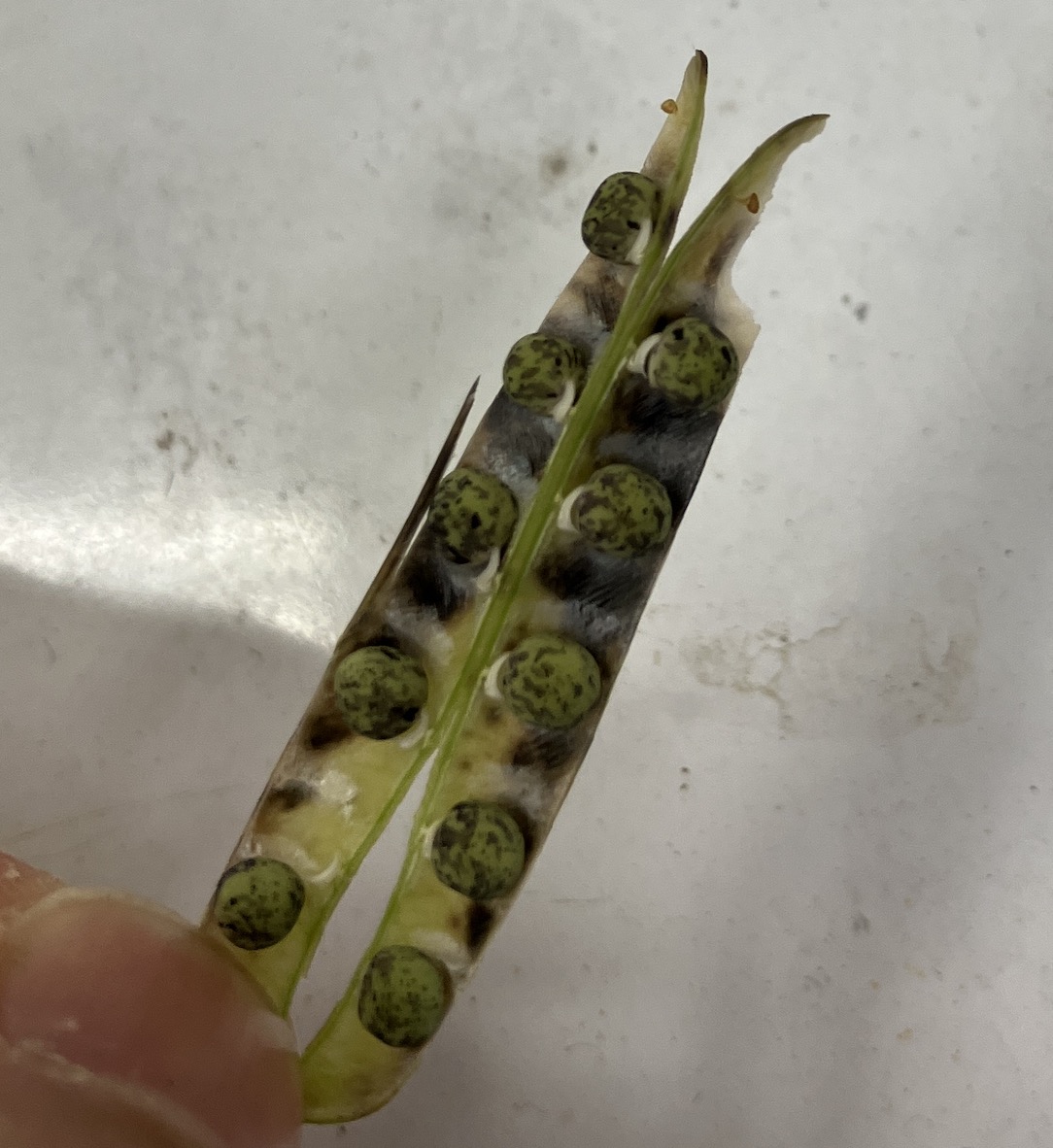
Make sure to record the sight you see the moment you open it with a sketch.
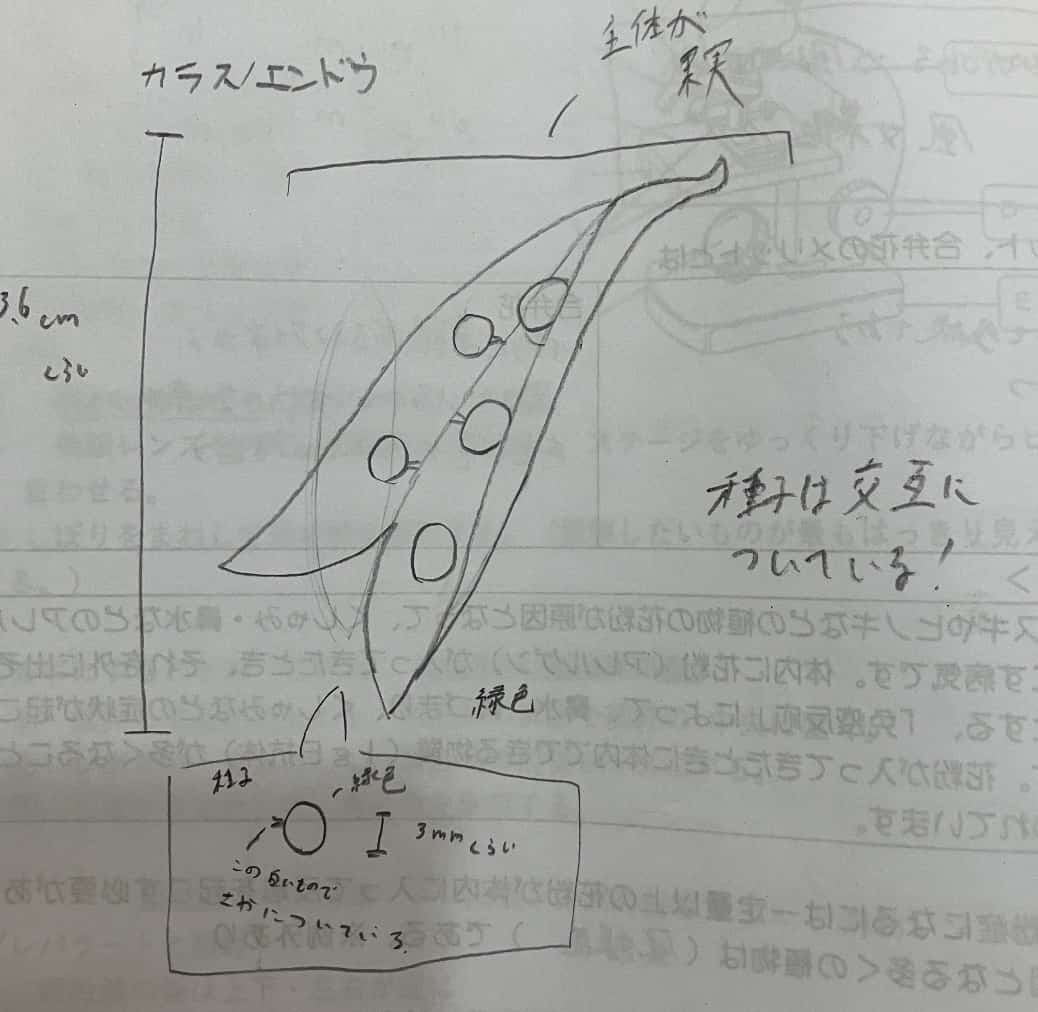
The Amazing Discovery: A “Zipper” Arrangement of Seeds
The moment you open the pod, you will surely gasp, “Wow!” You will be greeted by a geometrically beautiful sight that defies expectation.
Look closely. Can you see that the beans (seeds) are not aligned in a single row on one side, but are instead arranged “alternately” on the left and right sides of the pod? They are lined up neatly, one after the other, just like a zipper.
Why would the Vetch go to the trouble of arranging its seeds in such a complicated manner?
This demonstrates the plant’s survival strategy of “maximizing space in a limited area.” What would happen if all the seeds were lined up straight in the same column? The seeds would bump into each other, creating gaps, and only a few seeds would fit in the limited space of the pod.
Therefore, by arranging them alternately, the seeds are tucked into each other’s gaps. This allows the plant to grow the maximum number of seeds in the most efficient way. It’s the same optimization humans use when packing luggage tightly, a principle plants have been practicing for tens of thousands of years.
Furthermore, this “alternate arrangement” is also thought to play a role in evenly dispersing force when the ripe pod twists, bursts open, and launches the seeds far away.
Through this experiment, students not only learn about “plant structure” but also gain a crucial scientific perspective: that “form always has meaning (structure and function).” Please experience this magnificent drama of life hidden in a tiny weed at your feet, right alongside your students.
Inquiries and Requests
Let’s bring the wonders and fun of science closer to you! We’ve put together easy-to-understand guides on fun science experiments you can do at home, along with tips and tricks. Feel free to search around!
About the operator, Ken Kuwako: here
For various requests (writing, lectures, experimental classes, TV supervision/appearances, etc.): here * Article updates are posted on X (formerly Twitter)!
 We post experiment videos on the Science Idea Channel!
9月のイチオシ実験!
お弁当箱をプラバンがわりにしてキーホルダーを作ろう!
テレビ番組監修・イベント等のお知らせ
- 8月27日(木)科学監修番組放送予定
- 9月20日(日)ダビンチマスターズ出演予定
- 10月10日(土)11:15~12:00 千葉市科学フェスタ2026「桑子先生の回転科学ショー」にてサイエンスショーを行います。
- 12月26日(土) ナリカサイエンスアカデミー(教員向け実験講習会)開催
書籍のお知らせ
- 『高校入試 分解問題集 理科』(学研)…難しい問題も小さな問題に分解することで、問題を解くことができます。そんな分解の技術が身につくように深く関わりを持って作りました。
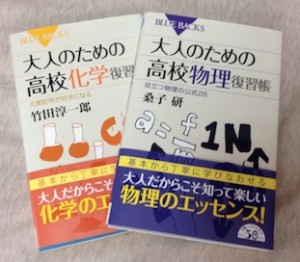
 『大人のための高校物理復習帳』(講談社)…一般向けに日常の物理について公式を元に紐解きました。特設サイトでは実験を多数紹介しています。※増刷がかかり6刷となりました(2026/02/01)
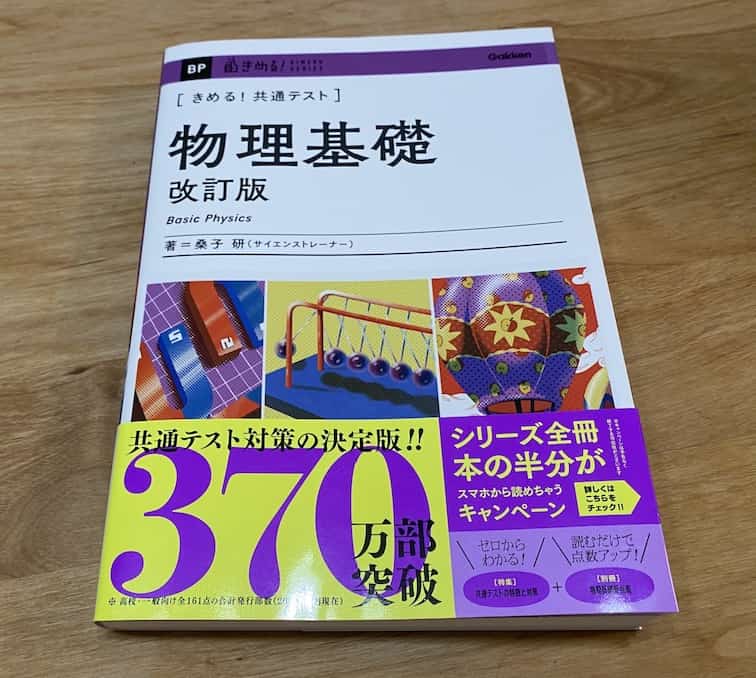
- 『きめる!共通テスト 物理基礎 改訂版』(学研)… 高校物理の参考書です。イラストを多くしてイメージが持てるように描きました。授業についていけない、物理が苦手、そんな生徒におすすめです。特設サイトはこちら。
各種SNS(更新情報をお届け!)
【日本語】X(Twitter)/instagram/Facebook 【英語】BlueSky/Threads
Explore
- 楽しい実験…お子さんと一緒に夢中になれるイチオシの科学実験を多数紹介しています。また、高校物理の理解を深めるための動画教材も用意しました。
- 理科の教材… 理科教師をバックアップ!授業の質を高め、準備を効率化するための選りすぐりの教材を紹介しています。
- Youtube…科学実験等の動画を配信しています。
- 科学ラジオ …科学トピックをほぼ毎日配信中!AI技術を駆使して作成した「耳で楽しむ科学」をお届けします。
- 講演 …全国各地で実験講習会・サイエンスショー等を行っています。
- About …「科学のネタ帳」のコンセプトや、運営者である桑子研のプロフィール・想いをまとめています。
- お問い合わせ …実験教室のご依頼、執筆・講演の相談、科学監修等はこちらのフォームからお寄せください。