This Is Science! Bringing Copper Back to Life with a Copper Plate and Chopsticks — The Drama of Oxidation & Reduction
I am Ken Kuwako, your Science Trainer. Every day is an experiment!
Can you imagine a piece of metal, scorched jet-black, returning to its original shiny state in an instant? It might look like magic, but it is pure science. The metal we often use in the science lab, copper, is actually a brilliant performer capable of dramatic transformations. Today, I want to introduce you to the surprising drama of “Oxidation and Reduction” played out by oxygen and hydrogen.
Oxidation: Watch Beautiful Copper Turn Jet-Black!
I first saw this experiment in an elective class taught by a fellow teacher. Seeing the students’ eyes light up at the vivid transformation made me want to cheer right along with them!
The method is incredibly simple. First, take a beautiful reddish-brown copper plate—the color of a brand new penny—and heat it steadily over a gas burner. In an instant, that gorgeous metallic luster vanishes, replaced by a jet-black surface. This happens because the heat causes the copper to bond violently with oxygen in the air, forming a new substance called copper oxide (CuO). In science, we call this process oxidation.
Here is the chemical equation for this reaction:

Reduction Part 1: The Rainbow Revival with Chopsticks
Now, this is where the “magic” really begins. What do you think happens if we place a simple wooden chopstick on top of that blackened copper?
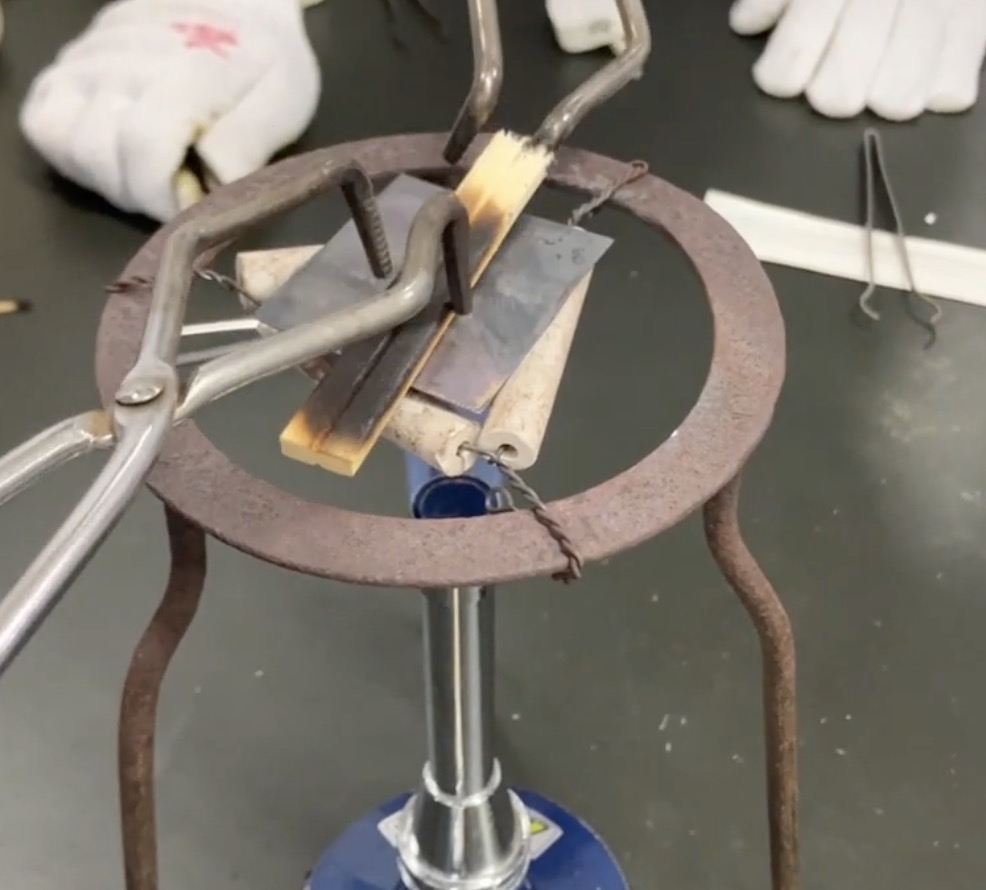
Take a look! Right where the chopstick touches the surface, that familiar reddish-brown copper starts to peek through again.
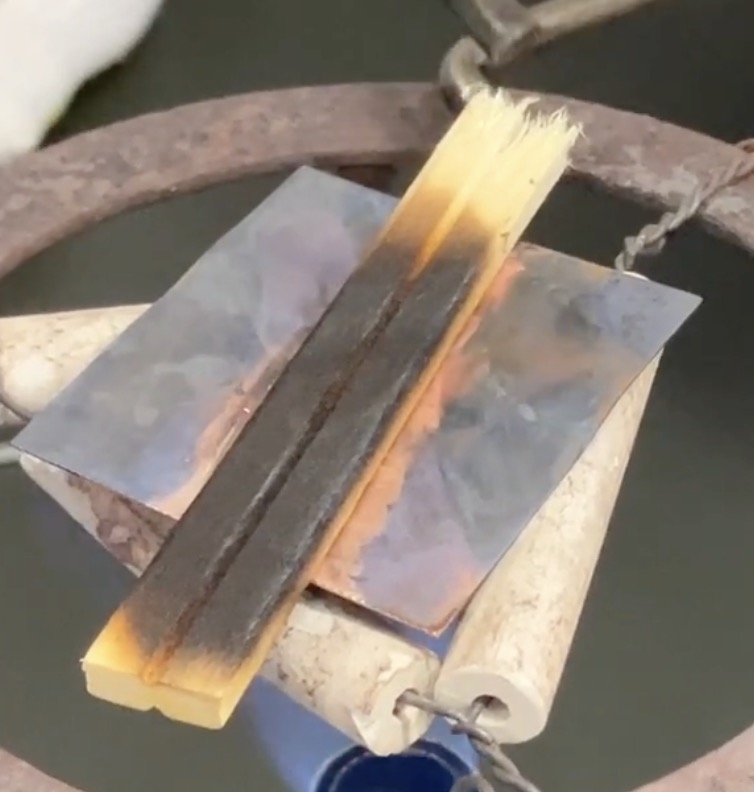
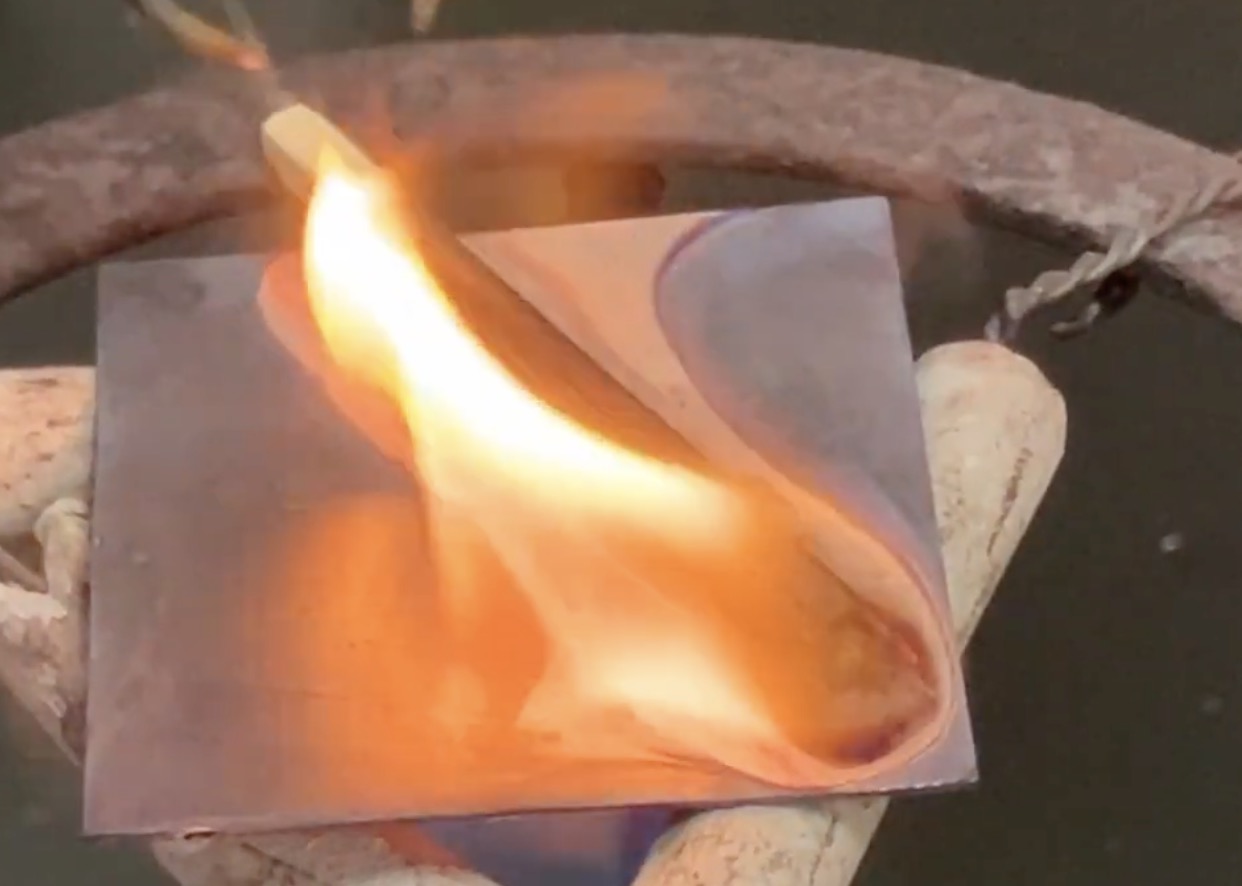
This occurs because the carbon in the chopstick forcibly “steals” the oxygen away from the copper oxide. Even more amazing is the moment you lift the chopstick. For a split second, you might see a mysterious, rainbow-like shimmer before the copper reacts with the oxygen in the air again and turns back to black. The way the colors shift in real-time sparked a huge wave of “Whoa!” from the entire classroom.
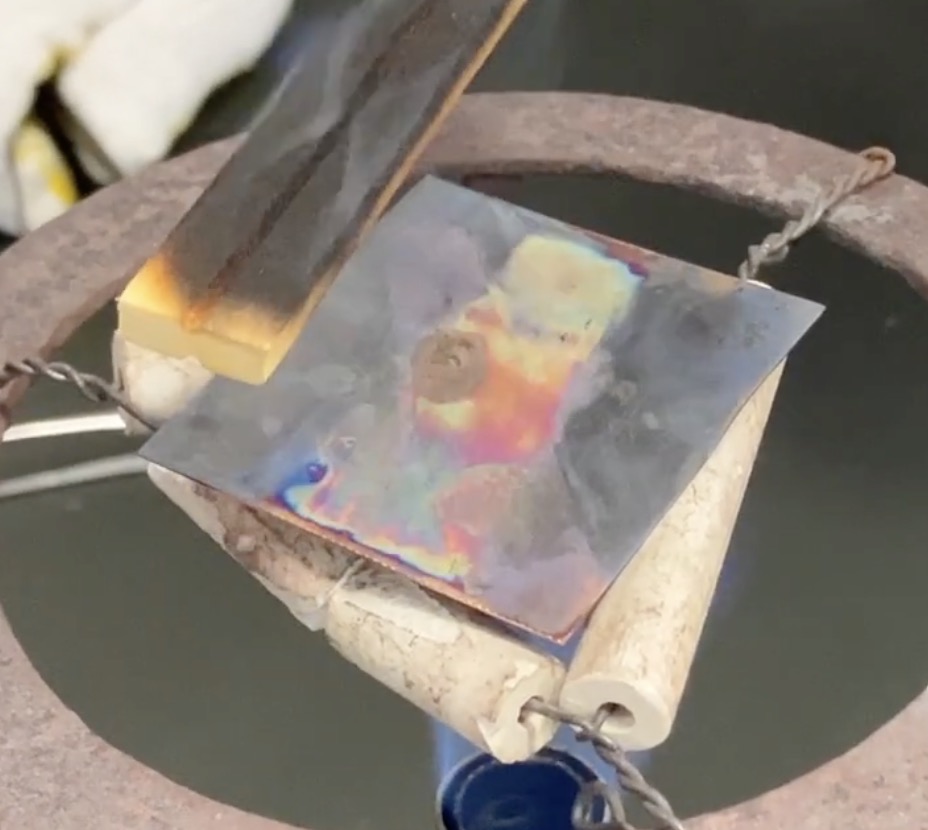
The chemical equation looks like this:
2CuO + C → 2Cu + CO2
Reduction Part 2: An Instant Miracle in Hydrogen
Next, let’s look at a reduction experiment using hydrogen. This video is a bit older, but the presenter’s bright and enthusiastic reaction perfectly captures the joy of chemistry. Watch and prepare to be amazed!
In this experiment, a coil of copper (Cu) is heated until it turns black and then plunged into a test tube filled with transparent hydrogen (H₂).
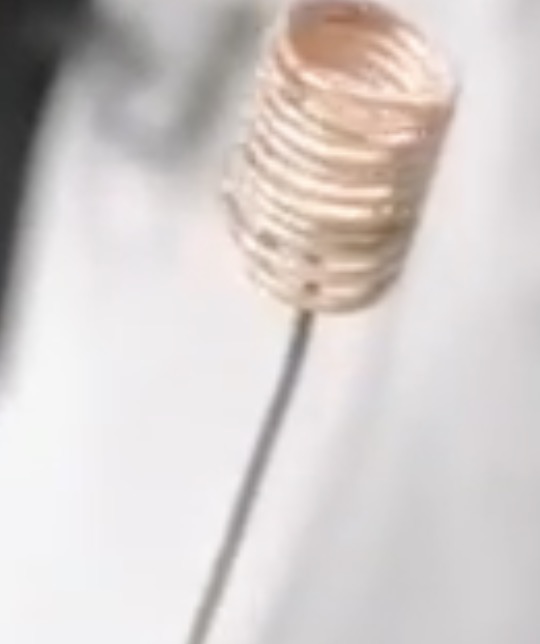
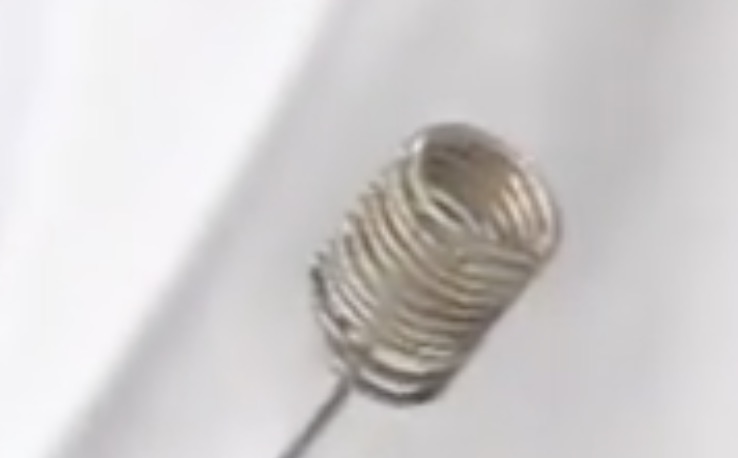
Then… as if by magic, it snaps back to its beautiful red copper color in a heartbeat!
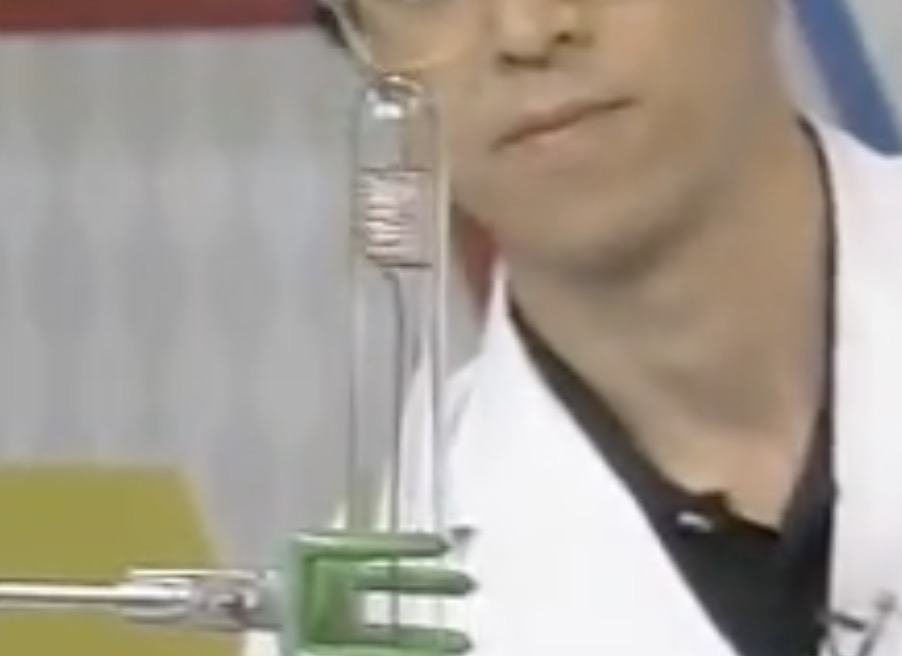
The “Battle for Oxygen”
Why does the color return so instantly? It all comes down to a fierce battle for oxygen between different substances.
Hydrogen and carbon have a much stronger desire to “bond with oxygen” than copper does. When these elements get close to blackened copper oxide, they rip the oxygen away to form water (H₂O) or carbon dioxide (CO₂).
Once the copper oxide is stripped of its oxygen, it returns to being pure copper. This process of removing oxygen from an oxide is called reduction.
Here is the chemical equation for the hydrogen reaction:

Reduction: The Power Supporting Our Modern Life
Actually, this reduction reaction is a vital technology that supports our entire civilization.
Take iron, for example, which is essential for building skyscrapers and cars. In nature, iron exists as “iron ore”—essentially iron oxide bonded with oxygen. By adding carbon and forcing a reduction reaction to “steal” the oxygen, we are able to obtain the strong, pure iron we need. From a tiny copper experiment in a classroom to a massive steel mill, the threads of science are all connected.
Try It Yourself! Making Your Own Charcoal for Reduction
While many school labs use commercial charcoal powder, you can actually make your own high-quality carbon using chopsticks! Check this out:
The secret is that handmade charcoal often reacts much better, allowing you to observe beautifully shiny copper. It’s easy to do!
Pack folded wooden chopsticks tightly into a steel can. Then, heat the can over a gas burner to “dry distill” them. Steel cans are great because they are heat-resistant and won’t easily develop holes.
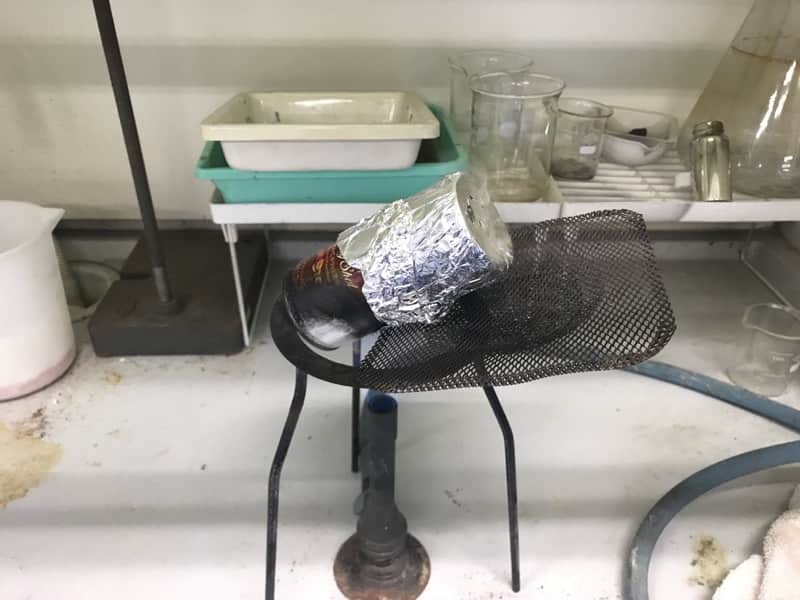
Be careful not to let the chopsticks catch fire directly. Since it produces smoke, do this in a well-ventilated area or under a fume hood. You’ll see “wood gas” escaping and igniting at the mouth of the can; just blow it out to ensure the chopsticks inside char rather than burn away.
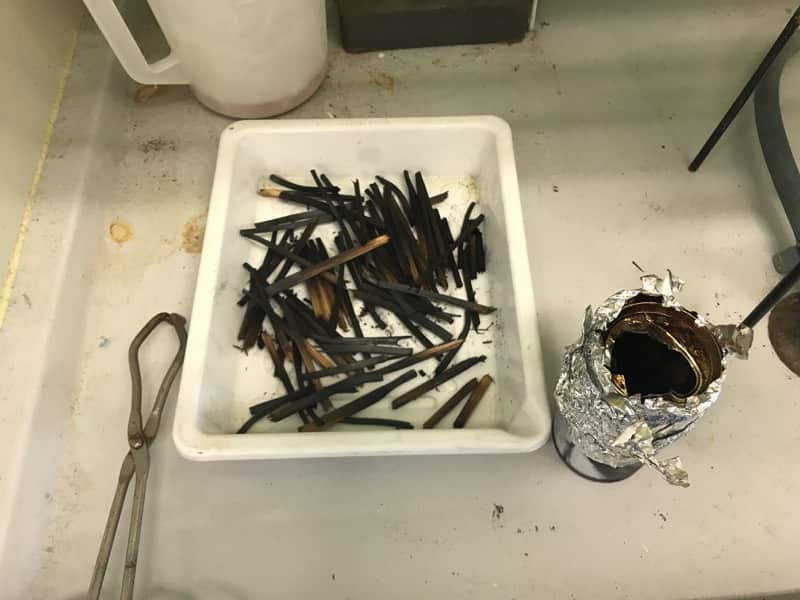
After about 35 minutes of heating and letting the can cool, you’ll have perfect charcoal! Grind it up in a mortar and pestle and mix it thoroughly with your copper oxide.
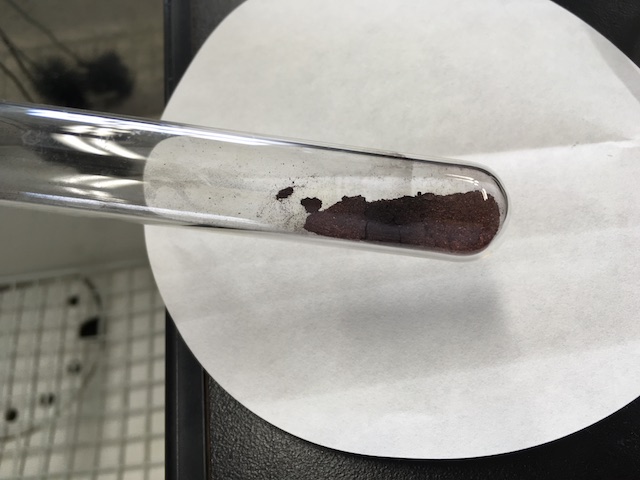
When my students tried this, some groups produced copper so beautiful it looked like treasure!
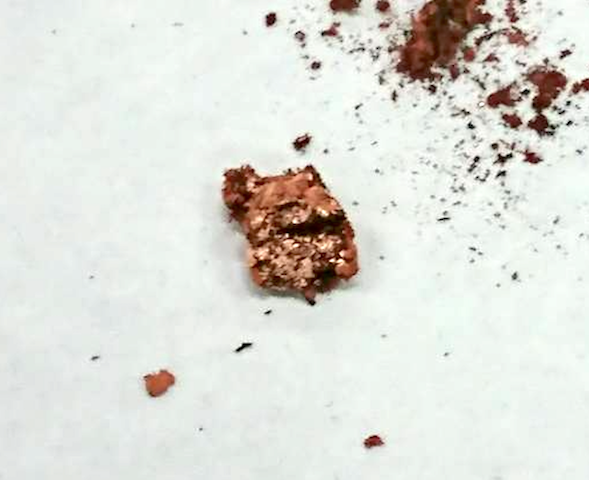
Truly moving, isn’t it?
The next time you see a piece of metal, try to imagine the oxygen drama happening behind the scenes. Is it oxidizing, or was it reduced to get here?
Inquiries and Requests
Making the wonders of science more accessible! I share fun experiments you can do at home and easy-to-understand tips. Take a look around!
My “Science Notebook” is now a book! Details here
Learn more about the operator, Ken Kuwako, here
For requests (writing, lectures, workshops, TV supervision, etc.), click here – Follow me for updates on X (formerly Twitter)!
 Check out my Science Channel for experiment videos!
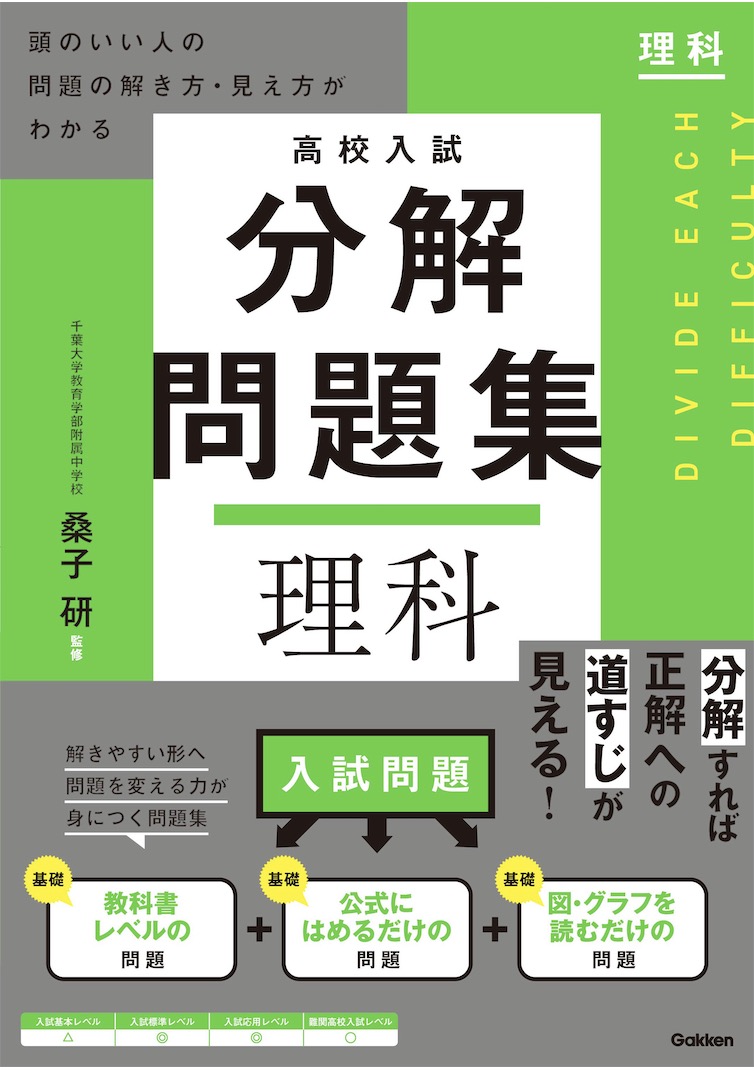
NEW 分解問題集 理科
- 7月21日発売!『高校入試 分解問題集 理科』(学研)…難しい問題も小さな問題に分解することで、問題を解くことができます。そんな分解の技術が身につくように深く関わりを持って作りました。
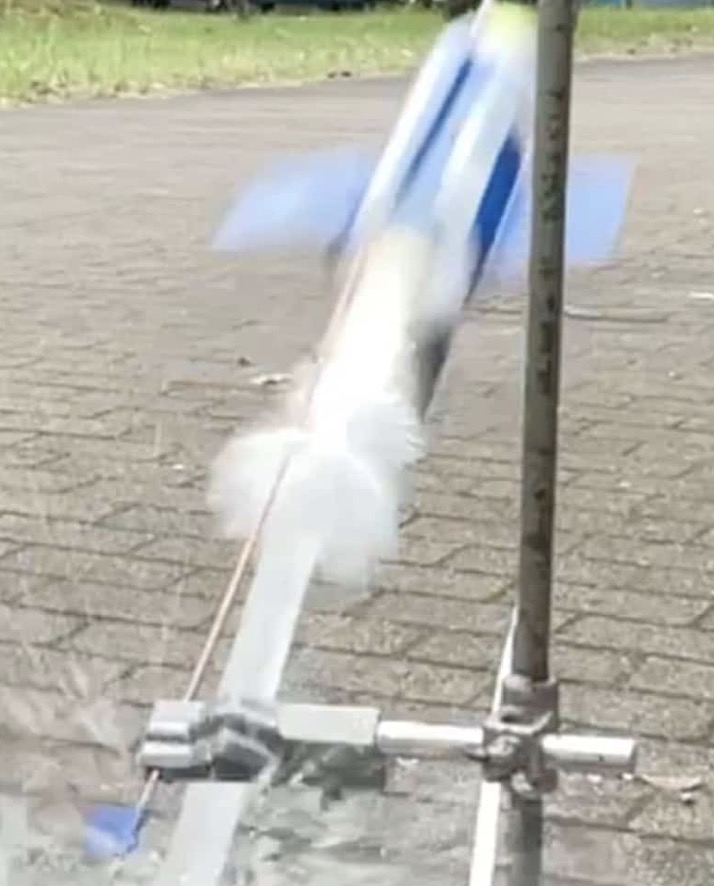
7・8月のイチオシ実験!
夏でプシュッと爽やか実験!
テレビ番組監修・イベント等のお知らせ
- 7月30日(水)科学監修「TIF presents ONE SONG FES」(フジテレビ) 26:15~27:15
- 12月26日(土) ナリカサイエンスアカデミー(教員向け実験講習会)開催
書籍のお知らせ
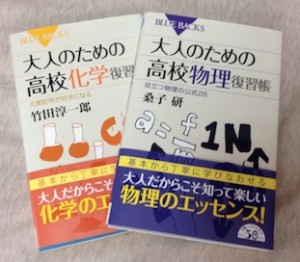
- 『大人のための高校物理復習帳』(講談社)…一般向けに日常の物理について公式を元に紐解きました。特設サイトでは実験を多数紹介しています。※増刷がかかり6刷となりました(2026/02/01)
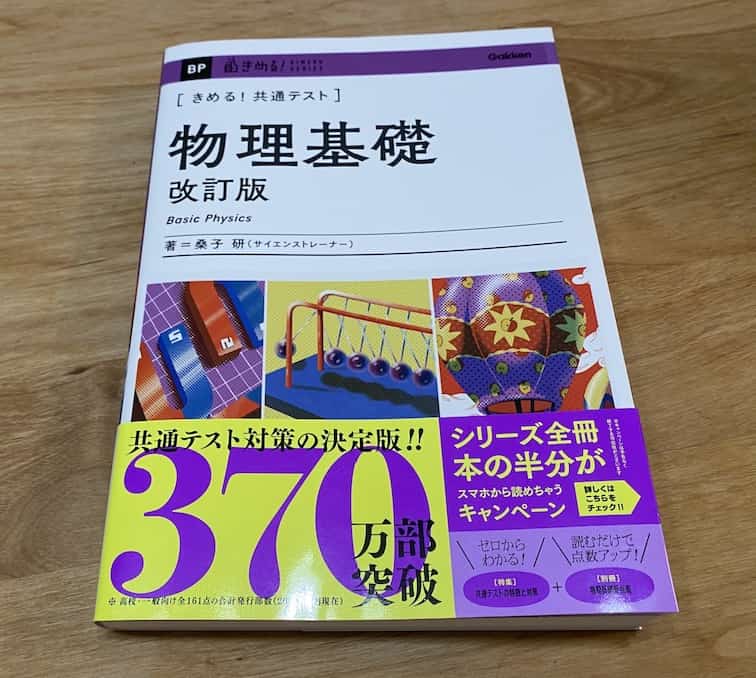
- 『きめる!共通テスト 物理基礎 改訂版』(学研)… 高校物理の参考書です。イラストを多くしてイメージが持てるように描きました。授業についていけない、物理が苦手、そんな生徒におすすめです。特設サイトはこちら。
各種SNS(更新情報をお届け!)
【日本語】X(Twitter)/instagram/Facebook 【英語】BlueSky/Threads
Explore
- 楽しい実験…お子さんと一緒に夢中になれるイチオシの科学実験を多数紹介しています。また、高校物理の理解を深めるための動画教材も用意しました。
- 理科の教材… 理科教師をバックアップ!授業の質を高め、準備を効率化するための選りすぐりの教材を紹介しています。
- Youtube…科学実験等の動画を配信しています。
- 科学ラジオ …科学トピックをほぼ毎日配信中!AI技術を駆使して作成した「耳で楽しむ科学」をお届けします。
- 講演 …全国各地で実験講習会・サイエンスショー等を行っています。
- About …「科学のネタ帳」のコンセプトや、運営者である桑子研のプロフィール・想いをまとめています。
- お問い合わせ …実験教室のご依頼、執筆・講演の相談、科学監修等はこちらのフォームからお寄せください。