Like Magic! A Budget-Friendly Experiment to Control Standing Waves with a Speaker and String
Hello, I’m Ken Kuwako, your science trainer. Every day is an experiment.
Ever wondered what the shape of invisible “sound” looks like? You might picture pricey gear in a science lab, but the truth is, you can pull off surprisingly professional experiments using simple, everyday items. Today, we’re diving into the “standing wave” (teijou-ha) experiment, where a string seems to come alive and dance. Working with Mr. I from our school, we managed to build a high-performance, budget-friendly device using smart finds from a 100-yen shop. It’s a fantastic project for teachers and a perfect science fair idea for students at home.
The Science Recipe: Building Your Experiment with Everyday Items
You don’t need any fancy or specialized equipment to conduct a “physics experiment.” Here are the items you’ll need. The entire setup will cost you about the price of a single lunch!
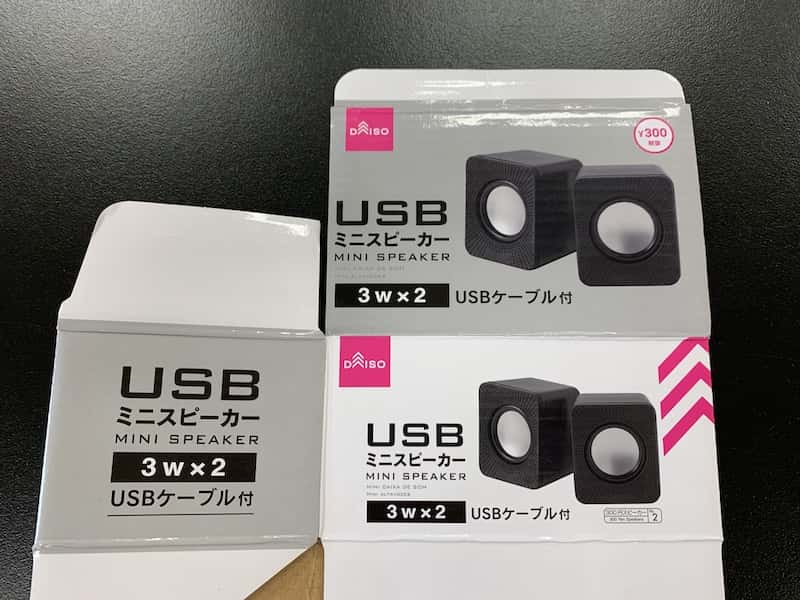
What You’ll Need: A cheap speaker (you’ll be taking this apart). For instance, the 300-yen speaker we found at Daiso was quite powerful. Its 3W output allows us to shake the string more forcefully and dynamically. That’s part of the fun in science experiments—finding better components and upgrading your setup!
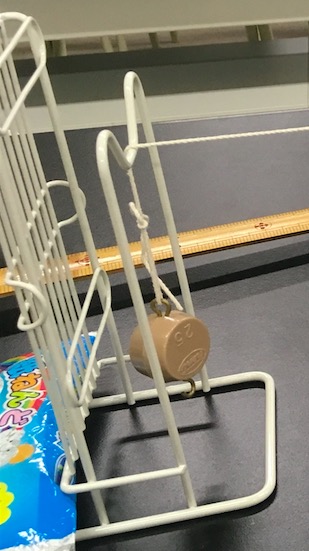
・Kite string (or similar) ・Weight (fishing weights or a bundle of five-yen coins work as a substitute) ・Cutting board rack (purchased at a 100-yen shop)
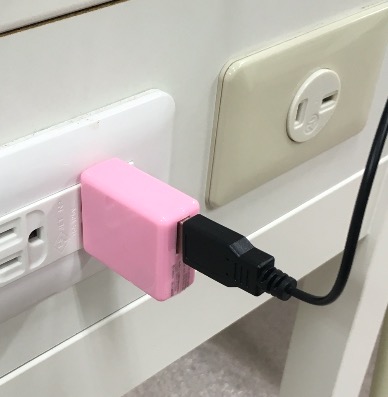
・USB charger/AC adapter (purchased at a 100-yen shop)
・A smartphone or iPad to be the sound source (Make sure to install a free “tone generator” app. Any app that can output specific frequencies will work.)
Now, let’s put these items together. Tie the kite string to the vibrating cone of the speaker. Run the other end over the cutting board rack, and use the weight to keep the string perfectly taut.
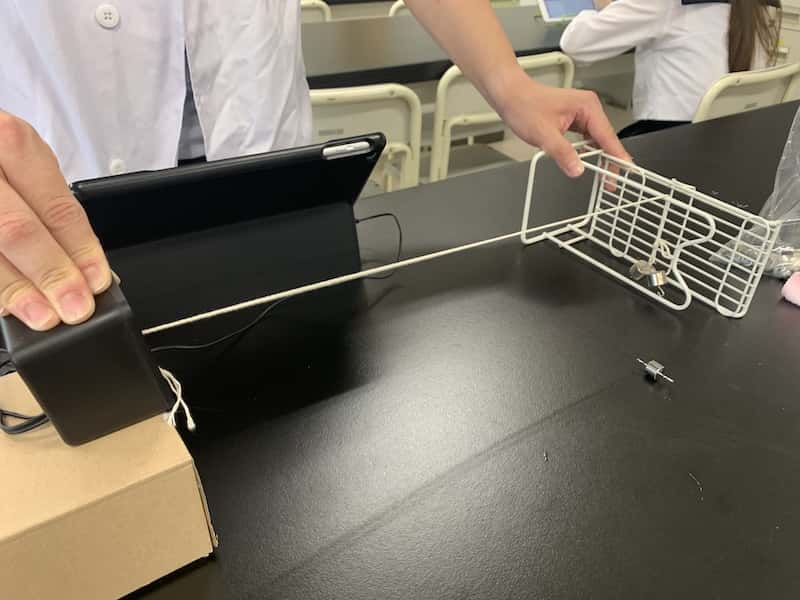
Time to flip the switch! When you start the vibration…
Check it out! You can clearly see the gorgeous wave patterns with the naked eye. We’ve managed to produce a standing wave that is far more visible than what older, professional lab equipment could show. It’s genuinely awe-inspiring!
Experiment Tips and the Mystery of ‘Resonance’
The mechanics of this experiment are simple, but they hold a profound concept. As you sweep the sound from a low pitch (low frequency) to a high pitch using the app, the moment it hits a specific frequency, the string will suddenly vibrate wildly and form a beautiful wave pattern. This is the phenomenon physicists call “resonance” (kyoshin), and the seemingly ‘frozen’ wave shape it creates is the “standing wave.”
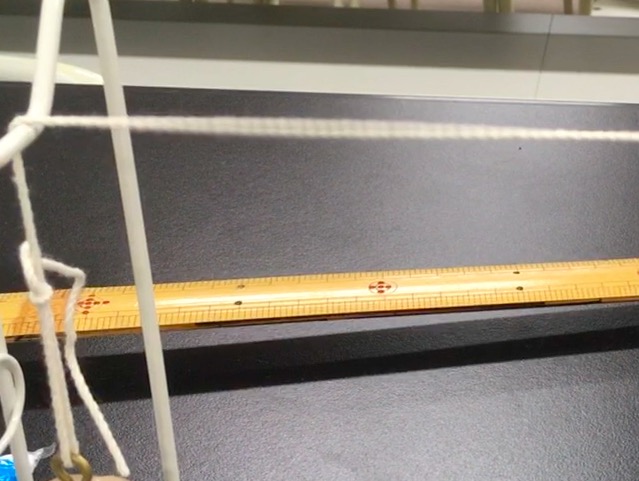
Key to Success: It’s hard to find the “fundamental oscillation” (the state with one wave lobe) right away. Start by adjusting the frequency to look for the 3rd or 4th harmonics (the state with 3 or 4 wave lobes). These are relatively easy to find. The trick is to establish those, then predict and gradually lower the frequency to challenge yourself to find the 2nd harmonic, and finally, the fundamental oscillation. The fundamental oscillation might take a little time to stabilize into a clean shape after the string starts shaking, so be patient and wait it out.
A Pro Tip: The Vibration Modification Technique
I recently visited Narika and had the chance to check out their professional string standing wave apparatus (String Standing Wave Experiment Set). As you’d expect, it had more power than our DIY version and produced stunningly clear standing waves.
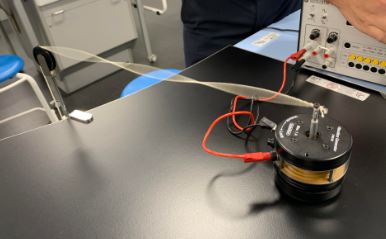
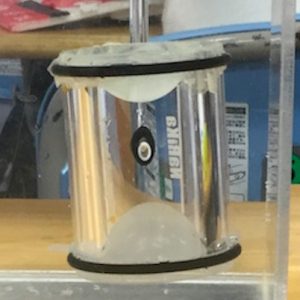
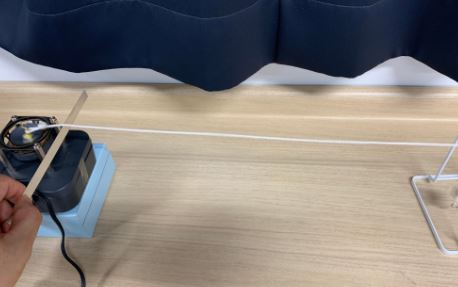
It’s interesting that turning the vibrator vertically seems to halve the frequency. We were able to clearly observe a phenomenon, perhaps similar to Melde’s Experiment. I decided to mimic this with my own Daiso-made device, wondering if pointing the vibrator upward and using a ruler would produce a clearer wave. It did! A beautiful standing wave was the result.
Inquiries and Requests
Bring the wonders and fun of science closer to you! We’ve compiled easy-to-understand tips and fun science experiments you can do at home. Feel free to search around! ・The content of Science Neta-cho (Science Idea Notebook) is now a book. Find details here ・About the operator, Ken Kuwako: click here ・For all requests (writing, lectures, experiment classes, TV supervision, appearances, etc.): click here ・Article updates are posted on X!
 The Science Neta Channel features experiment videos!
10月のイチオシ実験!
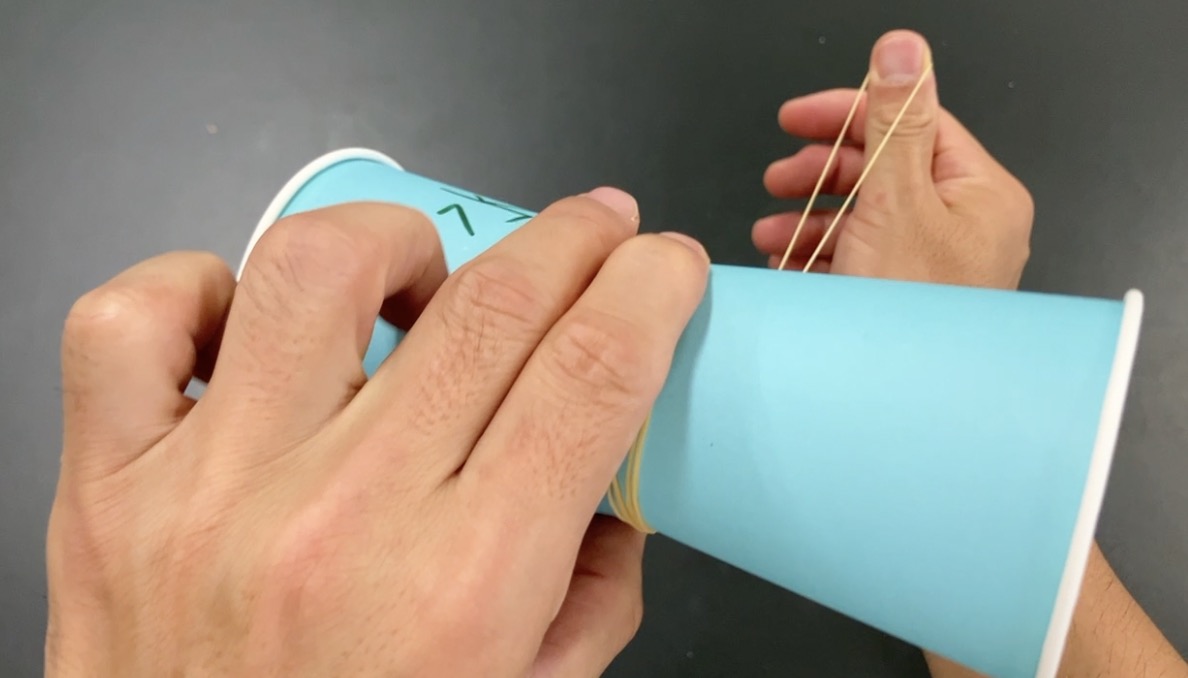
テレビ番組監修・イベント等のお知らせ
- 10月27日(火) テレビ監修番組放送予定
- 11月27日(金) テレビ監修番組放送予定
- 12月26日(土) ナリカサイエンスアカデミー(教員向け実験講習会)開催
書籍のお知らせ
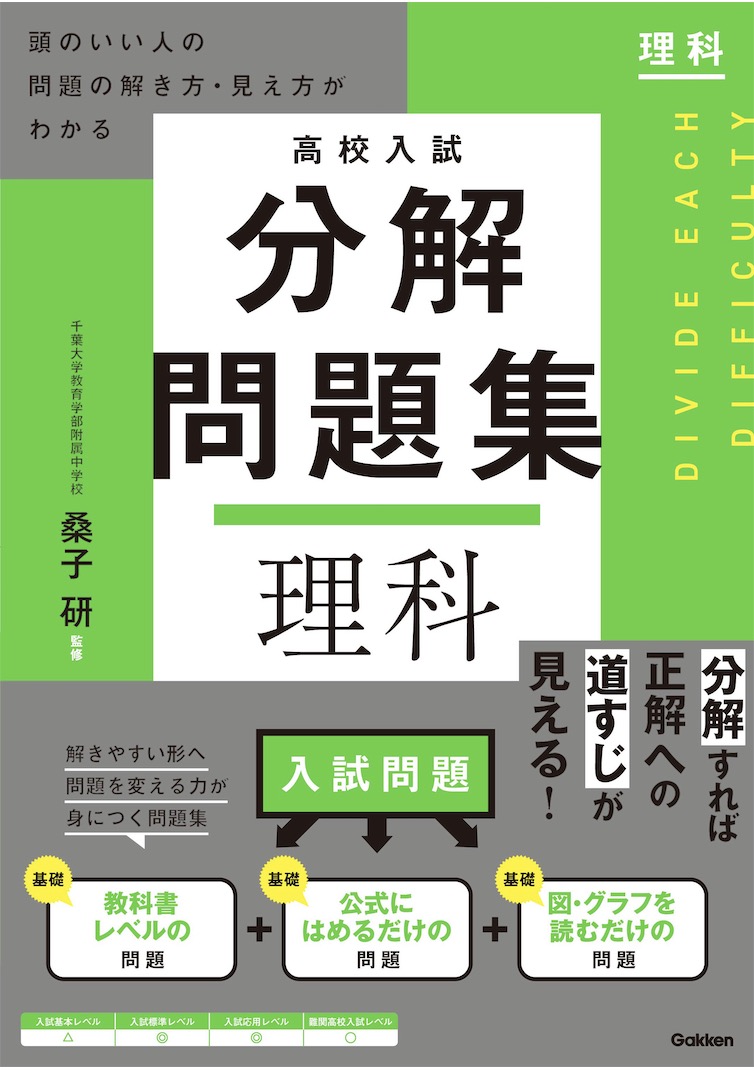
- 『高校入試 分解問題集 理科』(学研)…難しい問題も小さな問題に分解することで、問題を解くことができます。そんな分解の技術が身につくように深く関わりを持って作りました。
 『大人のための高校物理復習帳』(講談社)…一般向けに日常の物理について公式を元に紐解きました。特設サイトでは実験を多数紹介しています。※増刷がかかり6刷となりました(2026/02/01)
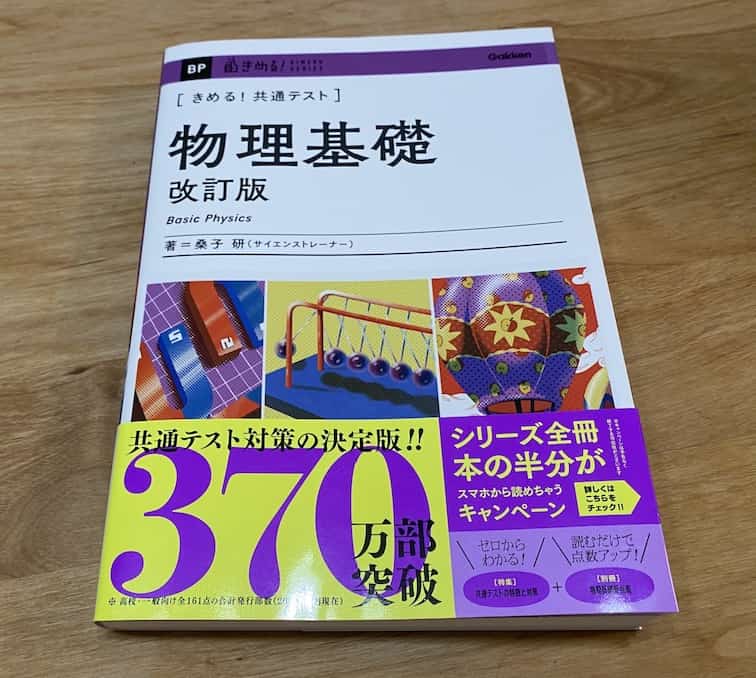
- 『きめる!共通テスト 物理基礎 改訂版』(学研)… 高校物理の参考書です。イラストを多くしてイメージが持てるように描きました。授業についていけない、物理が苦手、そんな生徒におすすめです。特設サイトはこちら。
各種SNS(更新情報をお届け!)
【日本語】X(Twitter)/instagram/Facebook 【英語】BlueSky/Threads
Explore
- 楽しい実験…お子さんと一緒に夢中になれるイチオシの科学実験を多数紹介しています。また、高校物理の理解を深めるための動画教材も用意しました。
- 理科の教材… 理科教師をバックアップ!授業の質を高め、準備を効率化するための選りすぐりの教材を紹介しています。
- Youtube…科学実験等の動画を配信しています。
- 科学ラジオ …科学トピックをほぼ毎日配信中!AI技術を駆使して作成した「耳で楽しむ科学」をお届けします。
- 講演 …全国各地で実験講習会・サイエンスショー等を行っています。
- About …「科学のネタ帳」のコンセプトや、運営者である桑子研のプロフィール・想いをまとめています。
- お問い合わせ …実験教室のご依頼、執筆・講演の相談、科学監修等はこちらのフォームからお寄せください。