The Half-Height Secret: The Physics Trick That Lets Any Mirror Reflect Your Entire Body
Unlocking the Mirror Mystery: Why Half Your Height Is All You Need
I’m Kuwako Ken, your Science Trainer. Every day is an experiment.
When you head to the furniture store looking for a full-length mirror for your fashion check, do you find yourself searching for one that’s exactly the same height as you?
Here’s a secret: You absolutely don’t need a mirror that matches your height to see your entire reflection. It’s often written in textbooks, but theoretically, a mirror that is only “half your height” is sufficient to reflect your body from the top of your head to the tip of your toes.
“Wait, really? I know you can see everything if you stand far away, but not up close, right?” Many students feel this way. While it certainly seems counterintuitive when you try it, the geometric proof explains the phenomenon perfectly, bringing clarity to the confusion. This time, I’ve created a printable diagram that makes the mechanism immediately understandable.
Solving the Half-Height Puzzle with a Geometric Diagram
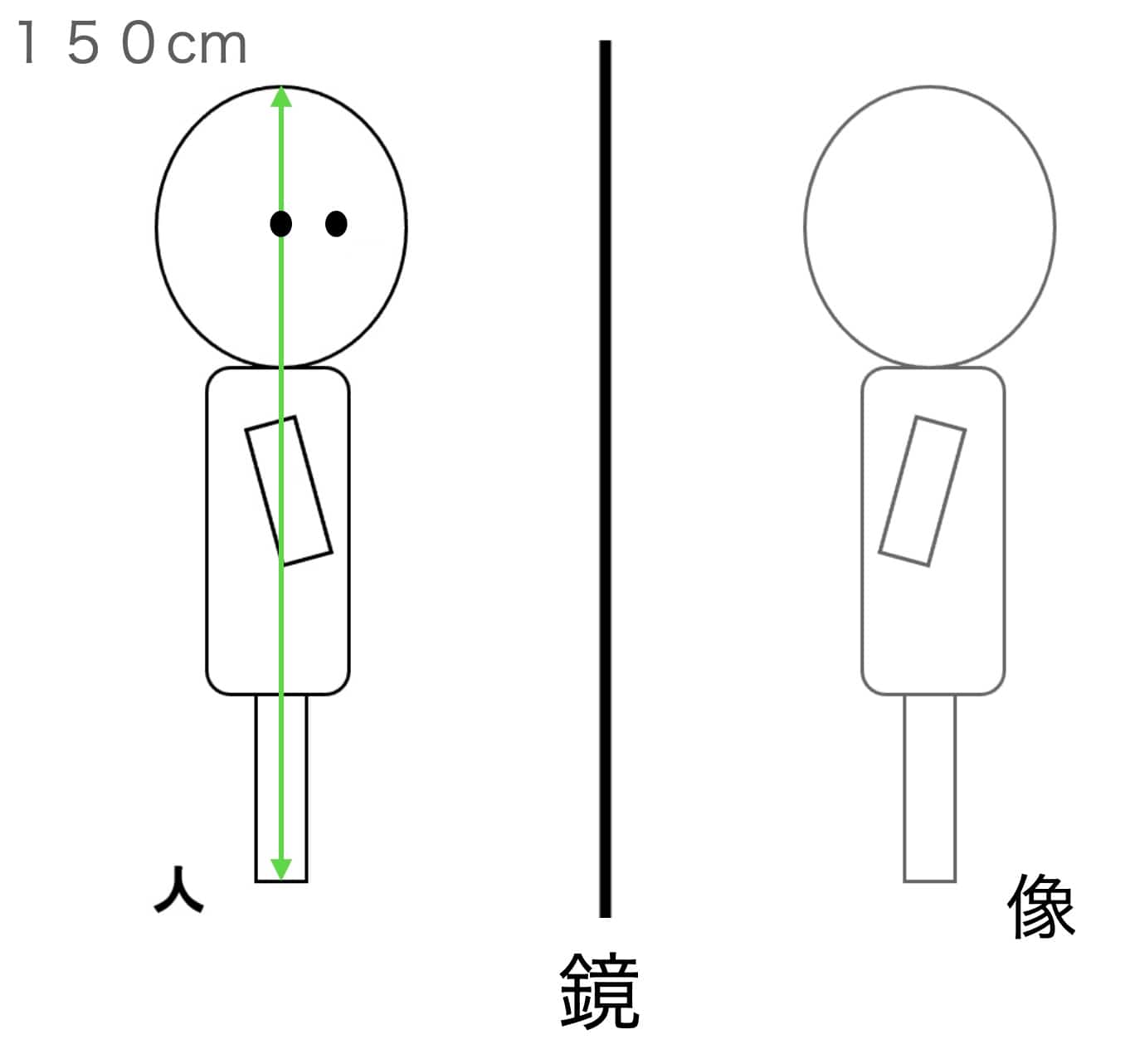
Here is the worksheet data you can use in class. Students are asked to determine the necessary range on the mirror (the line on the left) for the entire body of the person standing on the right to be reflected, specifically from their eye level.
Following the Path of Light Reveals the Secret
This is the answer key after completing the geometric construction.
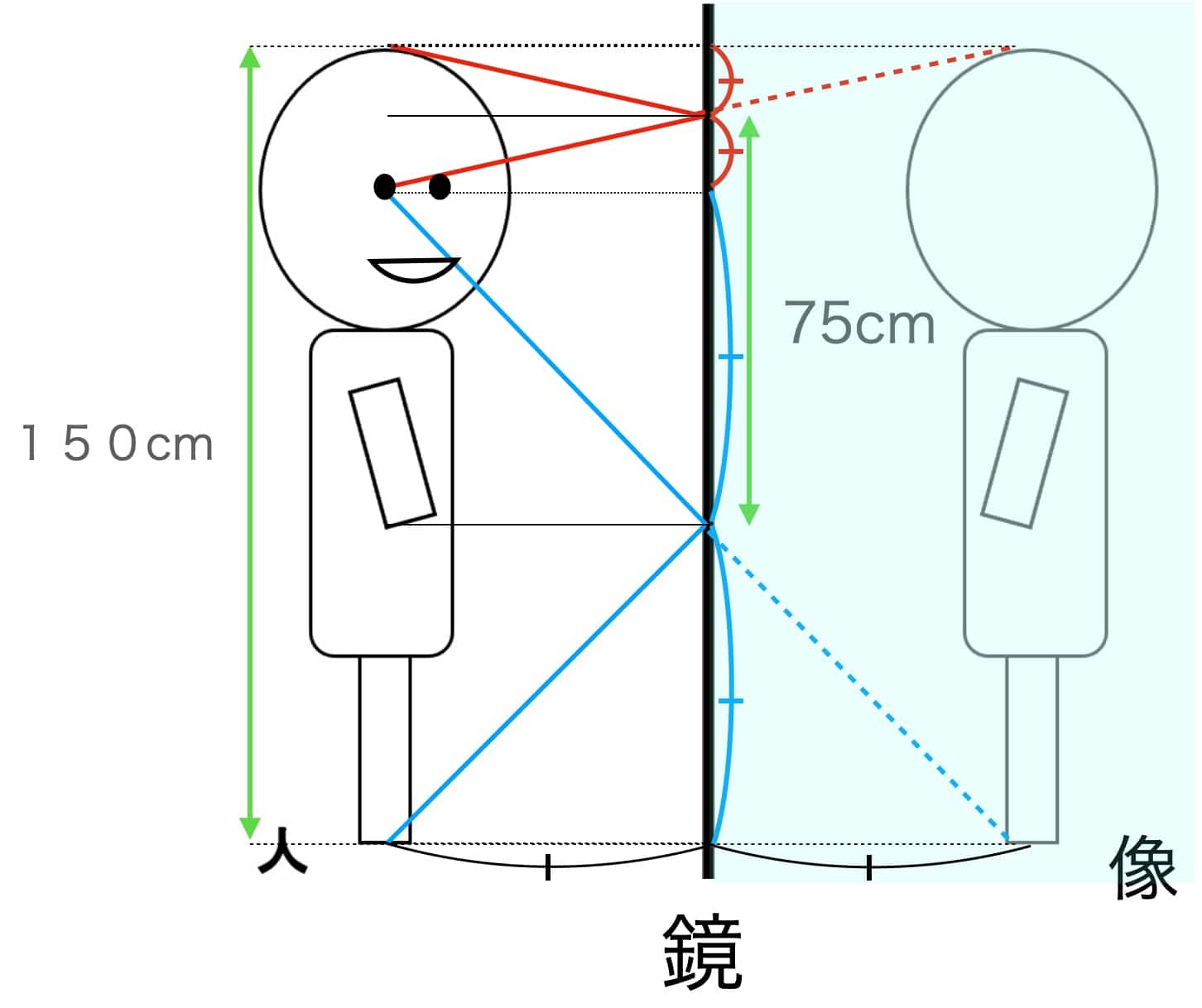
The key to understanding this is the Law of Reflection.
How your head is visible: Light emitted from the top of your head reflects off the mirror and reaches your eye.
How your feet are visible: Light emitted from your toes reflects off the mirror and reaches your eye.
By drawing these light paths, we can see that the required mirror segment spans from the point halfway between your eye and the top of your head to the point halfway between your eye and your toes. When these two segments are added together, the total length is exactly half of your height.
It’s a simple diagram, but actually using a ruler to draw the lines—rather than just listening to a blackboard explanation—leads to a dramatic increase in student comprehension. The moment they realize, “Ah! It really is half!” is priceless. This is a point that requires careful explanation for students to fully grasp, so please feel free to use this worksheet!
[Science Side Note] Do you need an even smaller mirror if you step back?
Here’s another great question that often comes up from sharp students: “Sensei, if I step farther away from the mirror, won’t a smaller mirror be able to show my whole body?”
When you take a photo with a camera or a smartphone, the farther you move back, the wider the area you capture, right? It’s natural to assume a mirror works the same way.
However, the answer is a firm “NO”.
This “half-your-height” rule is constant, regardless of your distance from the mirror. If you move away, your reflection appears smaller, but at the same time, the section of the mirror needed to reflect your image also becomes narrower, meaning the ratio never changes.
“Whether you’re close or far, you always need half your height.” That is the fascinating and quirky nature of mirrors. If you have an accessible mirror at home, try covering the top and bottom with paper to create a “half-sized” mirror, and experiment by moving closer and farther away. You’re sure to experience a wonderfully strange sensation!
Inquiries and Requests
Bring the wonders and fun of science closer to home! We’ve compiled easy-to-understand tips and fun science experiments you can do at home. Feel free to search around!
The content of our science notebook has been published as a book. Find out more here
For information on the administrator, Kuwako Ken, click here
For various requests (writing, lectures, science classes, TV supervision, appearances, etc.), click here * Updates on articles are available on X!
 The Science Trick Channel delivers experiment videos!
9月のイチオシ実験!
お弁当箱をプラバンがわりにしてキーホルダーを作ろう!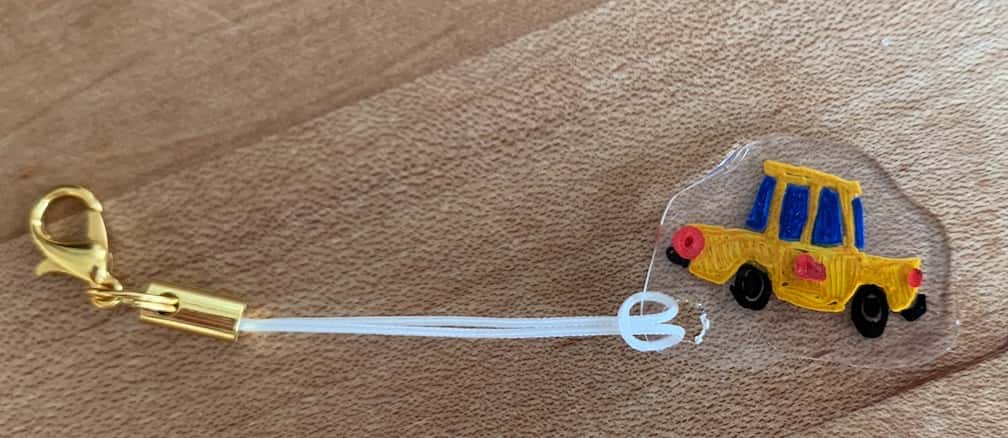
テレビ番組監修・イベント等のお知らせ
- 8月27日(木)科学監修番組放送予定
- 9月20日(日)ダビンチマスターズ出演予定
- 10月10日(土)11:15~12:00 千葉市科学フェスタ2026「桑子先生の回転科学ショー」にてサイエンスショーを行います。
- 12月26日(土) ナリカサイエンスアカデミー(教員向け実験講習会)開催
書籍のお知らせ
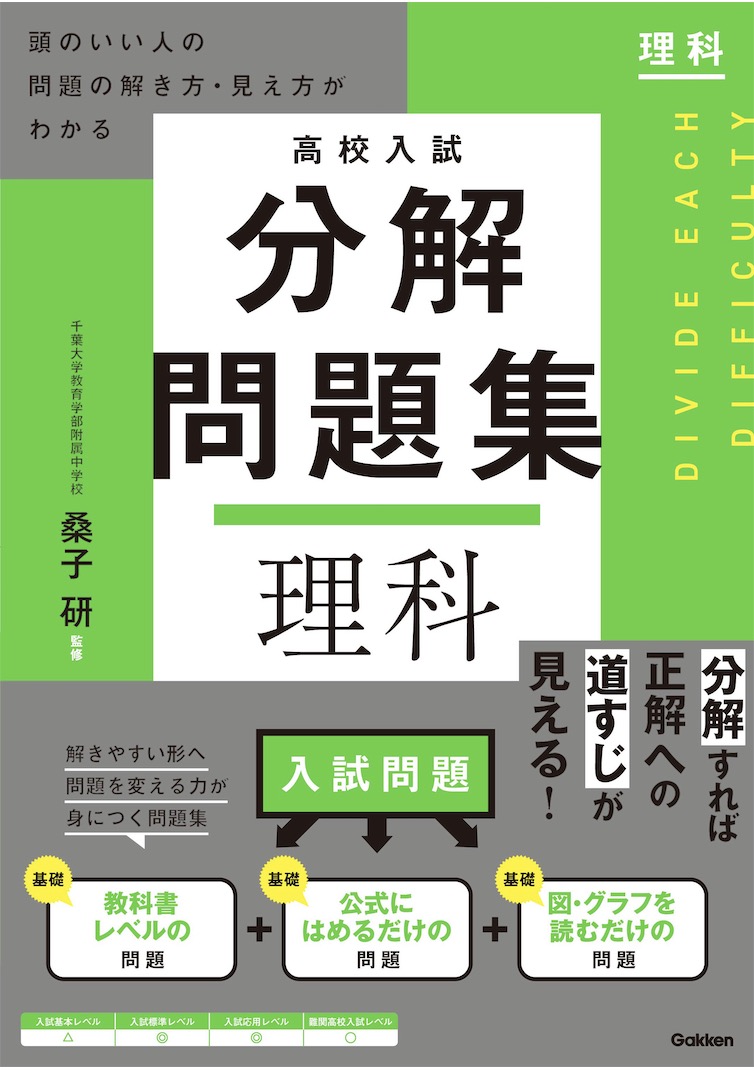
- 『高校入試 分解問題集 理科』(学研)…難しい問題も小さな問題に分解することで、問題を解くことができます。そんな分解の技術が身につくように深く関わりを持って作りました。
 『大人のための高校物理復習帳』(講談社)…一般向けに日常の物理について公式を元に紐解きました。特設サイトでは実験を多数紹介しています。※増刷がかかり6刷となりました(2026/02/01)
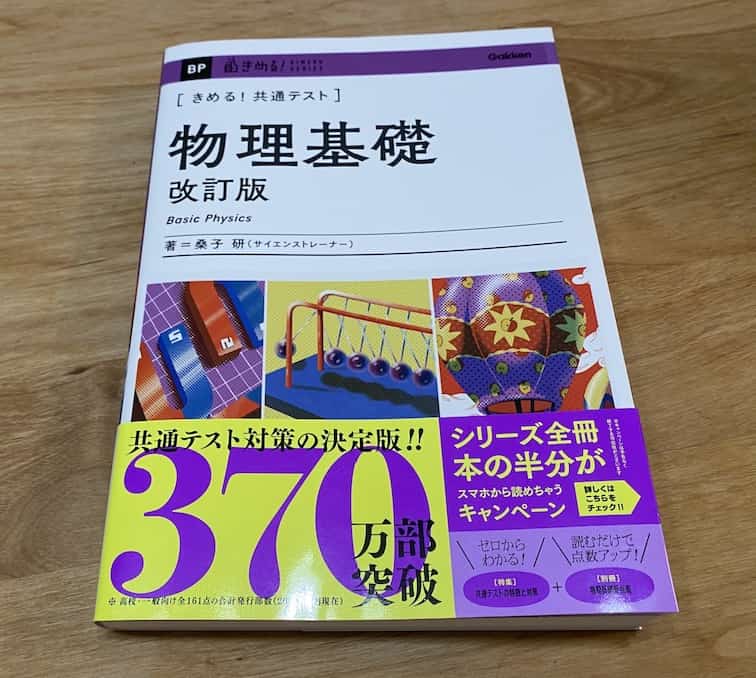
- 『きめる!共通テスト 物理基礎 改訂版』(学研)… 高校物理の参考書です。イラストを多くしてイメージが持てるように描きました。授業についていけない、物理が苦手、そんな生徒におすすめです。特設サイトはこちら。
各種SNS(更新情報をお届け!)
【日本語】X(Twitter)/instagram/Facebook 【英語】BlueSky/Threads
Explore
- 楽しい実験…お子さんと一緒に夢中になれるイチオシの科学実験を多数紹介しています。また、高校物理の理解を深めるための動画教材も用意しました。
- 理科の教材… 理科教師をバックアップ!授業の質を高め、準備を効率化するための選りすぐりの教材を紹介しています。
- Youtube…科学実験等の動画を配信しています。
- 科学ラジオ …科学トピックをほぼ毎日配信中!AI技術を駆使して作成した「耳で楽しむ科学」をお届けします。
- 講演 …全国各地で実験講習会・サイエンスショー等を行っています。
- About …「科学のネタ帳」のコンセプトや、運営者である桑子研のプロフィール・想いをまとめています。
- お問い合わせ …実験教室のご依頼、執筆・講演の相談、科学監修等はこちらのフォームからお寄せください。