Boiling Without Heat?! A Mind-Blowing “Vacuum Boiling” Experiment Using Just a Syringe (Phase Changes)
I’m Ken Kuwako, your Science Trainer. Life is one big experiment!
“Water only boils when it hits 212°F (100°C)”… Do you find yourself believing that’s an absolute rule? Actually, there’s a magical way to make warm water burst into a vigorous boil in an instant—without using any heat at all.
Today, I want to introduce you to the surprising “Vacuum Boiling Experiment” that you can try with just a single syringe. Let’s watch together as “states of matter”—something that usually stays tucked away in textbooks—dynamically transforms right before your eyes.
The Magic Syringe: Boiling Water Without Changing the Temperature
In science class, we learn about “phase changes,” where water turns into ice or steam depending on the temperature. However, you can also dramatically change the state of a substance by changing the “pressure.” This simple yet profound experiment was shared with me by the wonderful Mr. Y, who I’m always grateful to.
[What You’ll Need] ・A syringe (plastic medical type) ・Warm water (around 160°F / 70°C)
[Experimental Procedure]
First, prepare some warm water (about 70°C) in a beaker or cup.
Draw a small amount of the warm water into the syringe. The key is to leave plenty of room so you can pull the plunger back significantly later.
Firmly cover the tip of the syringe with your thumb to create an airtight seal.
Now, pull the plunger back as hard as you can to drop the internal pressure.
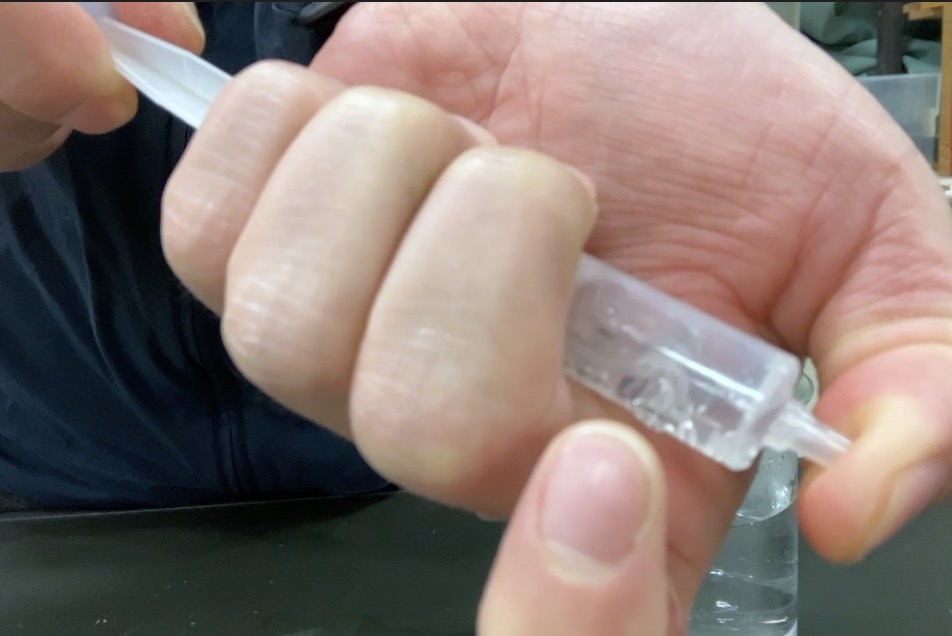
Look at that! Even though you haven’t added any heat, the water inside suddenly starts boiling violently.
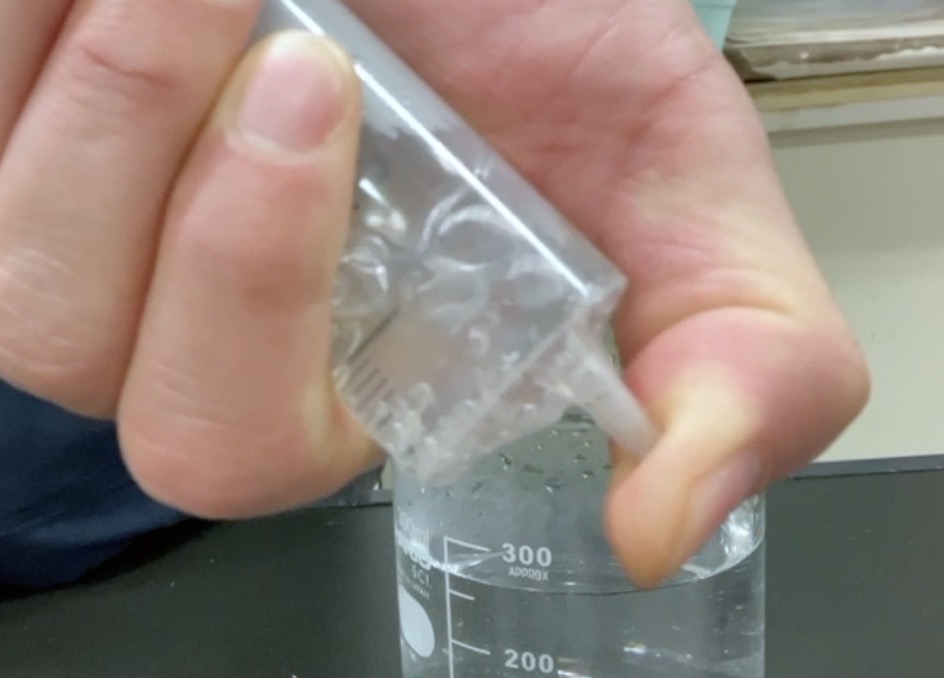
What’s even more fascinating is that as soon as you release the plunger, the boiling stops instantly. This clearly demonstrates that it’s the “change in pressure,” not the temperature, causing the water to boil.
Why Rice Doesn’t Cook Well on a Mountaintop
Why does lowering the pressure make water boil?
Water stays in liquid form because the weight of the surrounding air (atmospheric pressure) is pressing down on the water molecules, keeping them from escaping. Normally, at sea level (1 atmosphere), water molecules can’t overcome this downward pressure until they reach 100°C. However, when you create a near-vacuum inside the syringe, the force holding the molecules down weakens. As a result, the water molecules can break free and turn into gas even at lower temperatures, and that’s when boiling begins.
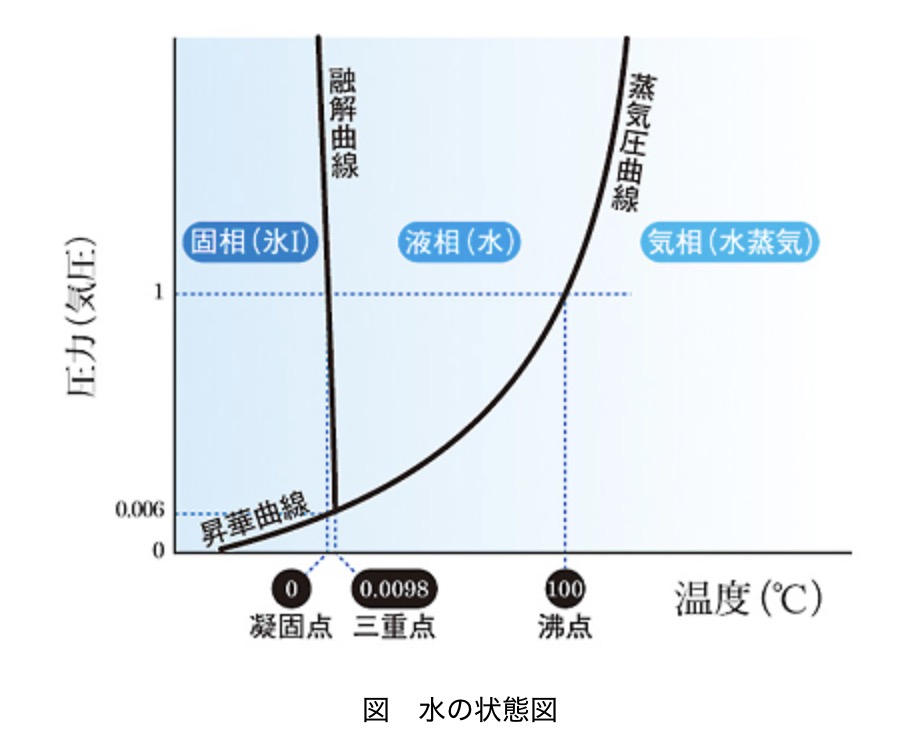
Source: Chronological Scientific Tables “Please explain the states of solids, liquids, and gases.” https://official.rikanenpyo.jp/posts/6660
This principle is closely tied to our daily lives. For example, at high altitudes like the summit of Mt. Fuji (12,388 ft), where the air pressure is only about two-thirds of that at sea level, water boils at around 175°F to 195°F (80-90°C). This is why if you try to cook rice in a regular pot up there, you’ll end up with crunchy, undercooked grains!
Ever noticed how bags of chips puff up when you go to high altitudes?
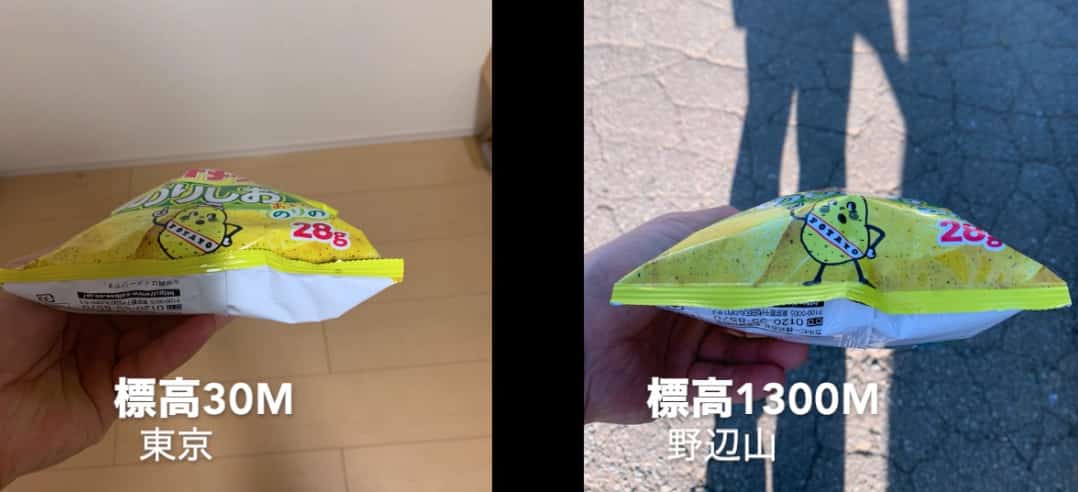
The best part of science is that you can recreate the environment of a mountain peak using just a simple syringe. Give it a try and see how cool the water can be while still making it boil!
Inquiries and Requests
Bringing the wonder and fun of science closer to you! I’ve compiled various fun experiments you can do at home and easy-to-understand tips. Feel free to explore more! ・The “Science Notebook” content is now a book! Details here ・Learn more about the administrator, Ken Kuwako, here ・For various requests (writing, lectures, science workshops, TV supervision, appearances, etc.), click here ・Get the latest updates on X (Twitter)!
 Watch experiment videos on the Science Material Channel!
9月のイチオシ実験!
お弁当箱をプラバンがわりにしてキーホルダーを作ろう!
テレビ番組監修・イベント等のお知らせ
- 8月27日(木)科学監修番組放送予定
- 9月20日(日)ダビンチマスターズ出演予定
- 10月10日(土)11:15~12:00 千葉市科学フェスタ2026「桑子先生の回転科学ショー」にてサイエンスショーを行います。
- 12月26日(土) ナリカサイエンスアカデミー(教員向け実験講習会)開催
書籍のお知らせ
- 『高校入試 分解問題集 理科』(学研)…難しい問題も小さな問題に分解することで、問題を解くことができます。そんな分解の技術が身につくように深く関わりを持って作りました。
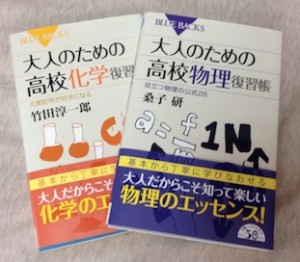
 『大人のための高校物理復習帳』(講談社)…一般向けに日常の物理について公式を元に紐解きました。特設サイトでは実験を多数紹介しています。※増刷がかかり6刷となりました(2026/02/01)
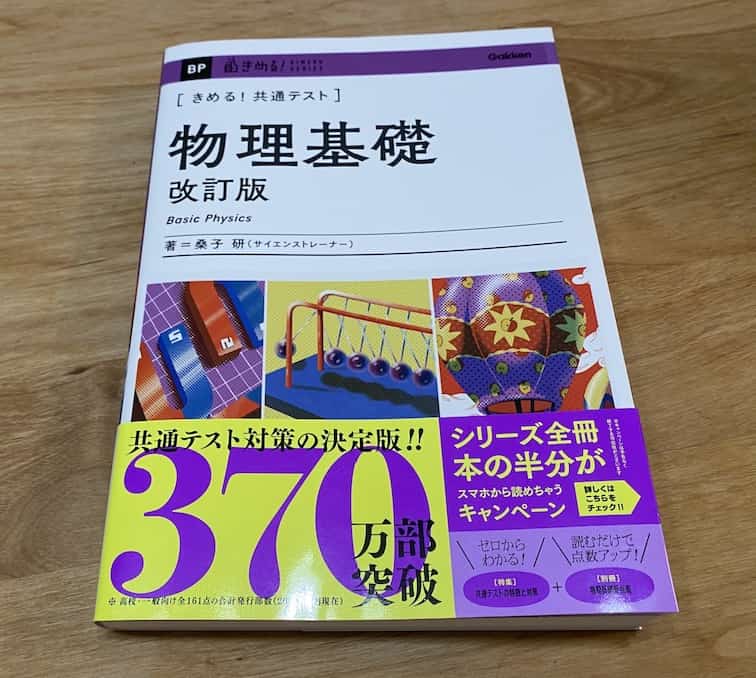
- 『きめる!共通テスト 物理基礎 改訂版』(学研)… 高校物理の参考書です。イラストを多くしてイメージが持てるように描きました。授業についていけない、物理が苦手、そんな生徒におすすめです。特設サイトはこちら。
各種SNS(更新情報をお届け!)
【日本語】X(Twitter)/instagram/Facebook 【英語】BlueSky/Threads
Explore
- 楽しい実験…お子さんと一緒に夢中になれるイチオシの科学実験を多数紹介しています。また、高校物理の理解を深めるための動画教材も用意しました。
- 理科の教材… 理科教師をバックアップ!授業の質を高め、準備を効率化するための選りすぐりの教材を紹介しています。
- Youtube…科学実験等の動画を配信しています。
- 科学ラジオ …科学トピックをほぼ毎日配信中!AI技術を駆使して作成した「耳で楽しむ科学」をお届けします。
- 講演 …全国各地で実験講習会・サイエンスショー等を行っています。
- About …「科学のネタ帳」のコンセプトや、運営者である桑子研のプロフィール・想いをまとめています。
- お問い合わせ …実験教室のご依頼、執筆・講演の相談、科学監修等はこちらのフォームからお寄せください。