Shake It and Watch the Magic! Color-Changing Chemistry That Transforms Your Classroom (The Signal & Gaming Reaction)
I’m Ken Kuwako, your Science Trainer. Every day is an experiment.
【This article is also available on Radio!】
If I told you there’s a “mysterious water” that changes color just by shaking it, would you believe me? Imagine a potion brewed by a wizard—shifting from yellow to red, then to green, and eventually fading back to its original state. This isn’t fantasy; it’s the pure magic of chemistry.
Today, I’m excited to introduce two visually stunning experiments perfected through trial and error by our science club students: the Traffic Light Reaction and the Gaming Reaction. These colorful liquid transformations captivate anyone who sees them. Plus, the trendy “Gaming” nickname is sure to get middle school students hyped!
Traffic Light and Gaming Reactions: The Magic of Chemical Light
Both of these experiments involve creating a liquid that changes colors like a chameleon.
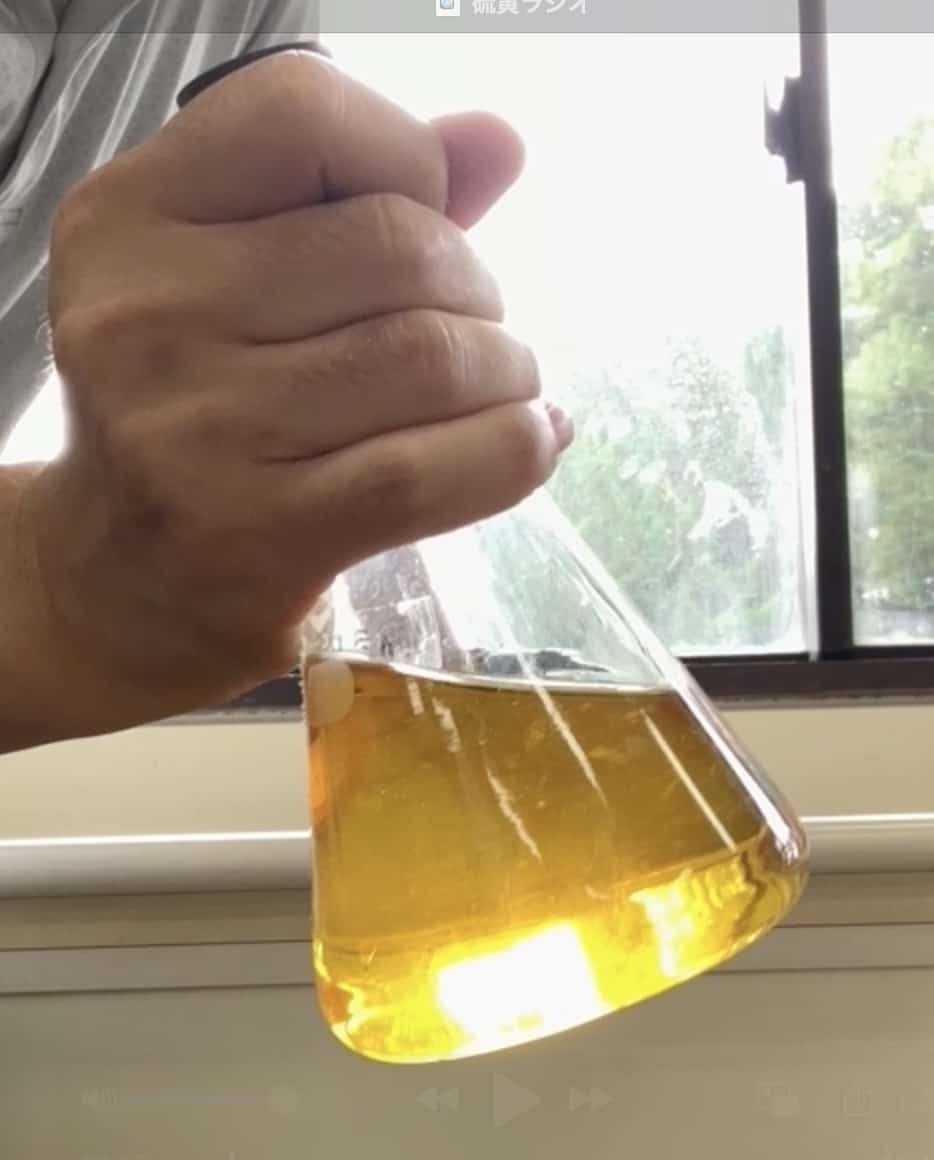
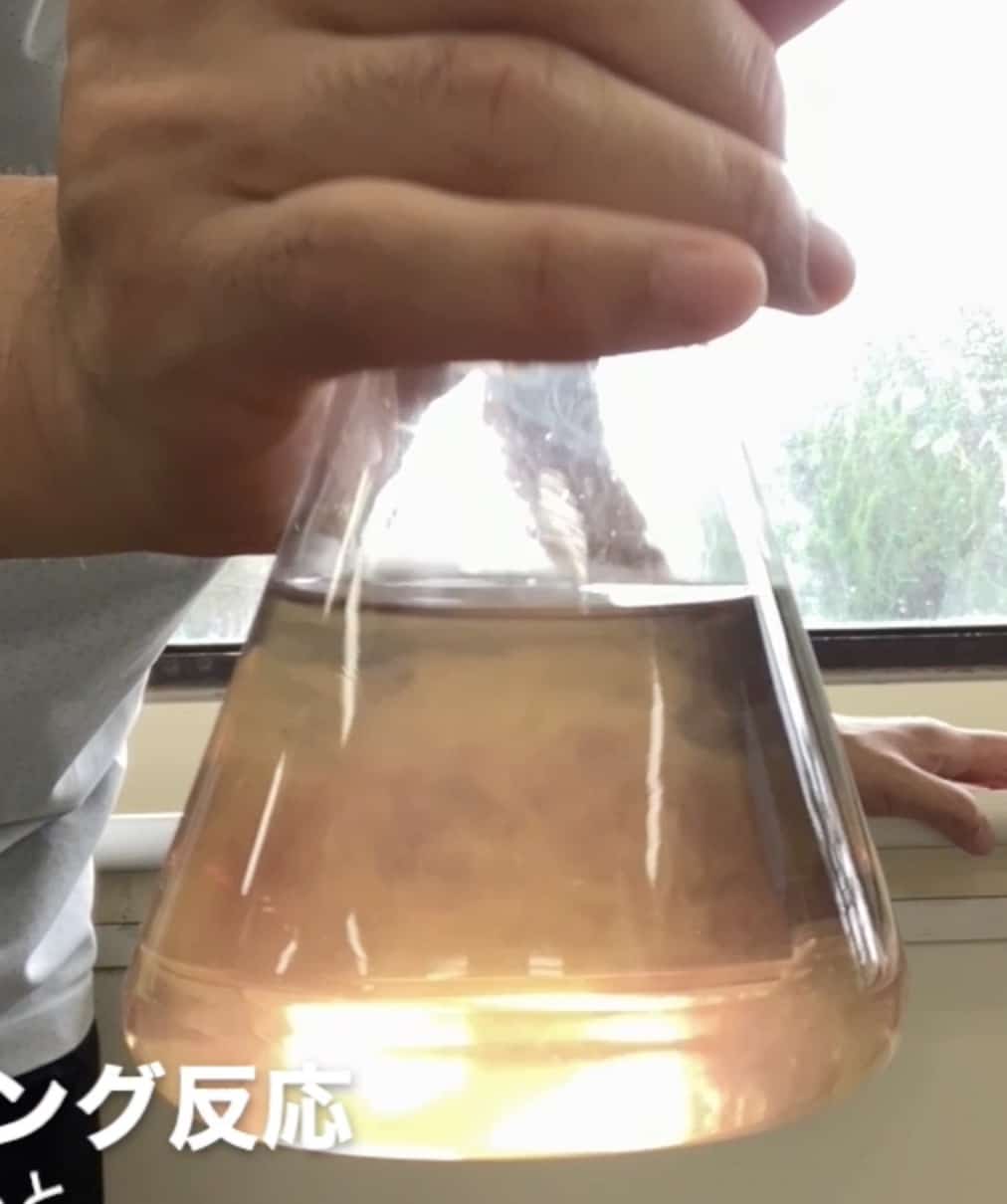
The Traffic Light Reaction is named for its sequence: Yellow → Red → Green, just like a roadside signal. Simply shake the container to trigger the change, then let it sit, and it cycles back to yellow.
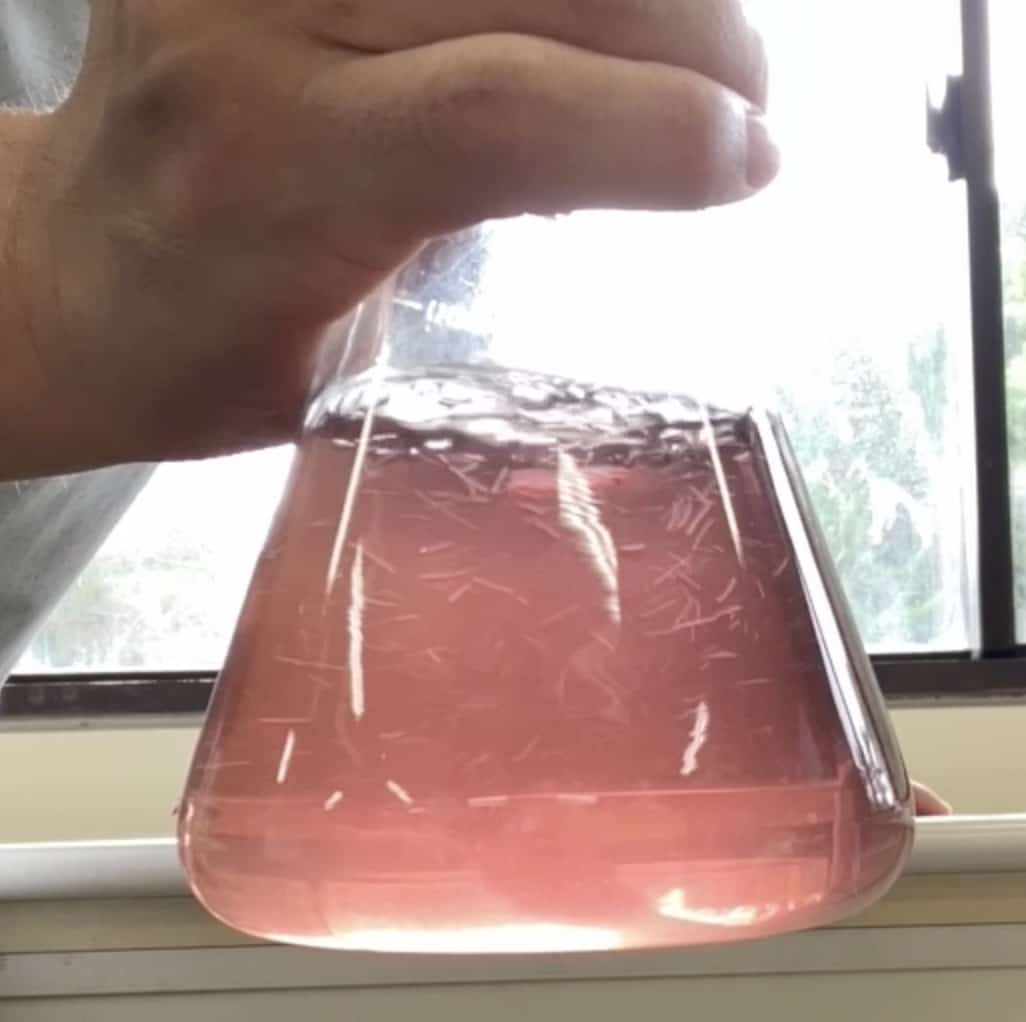
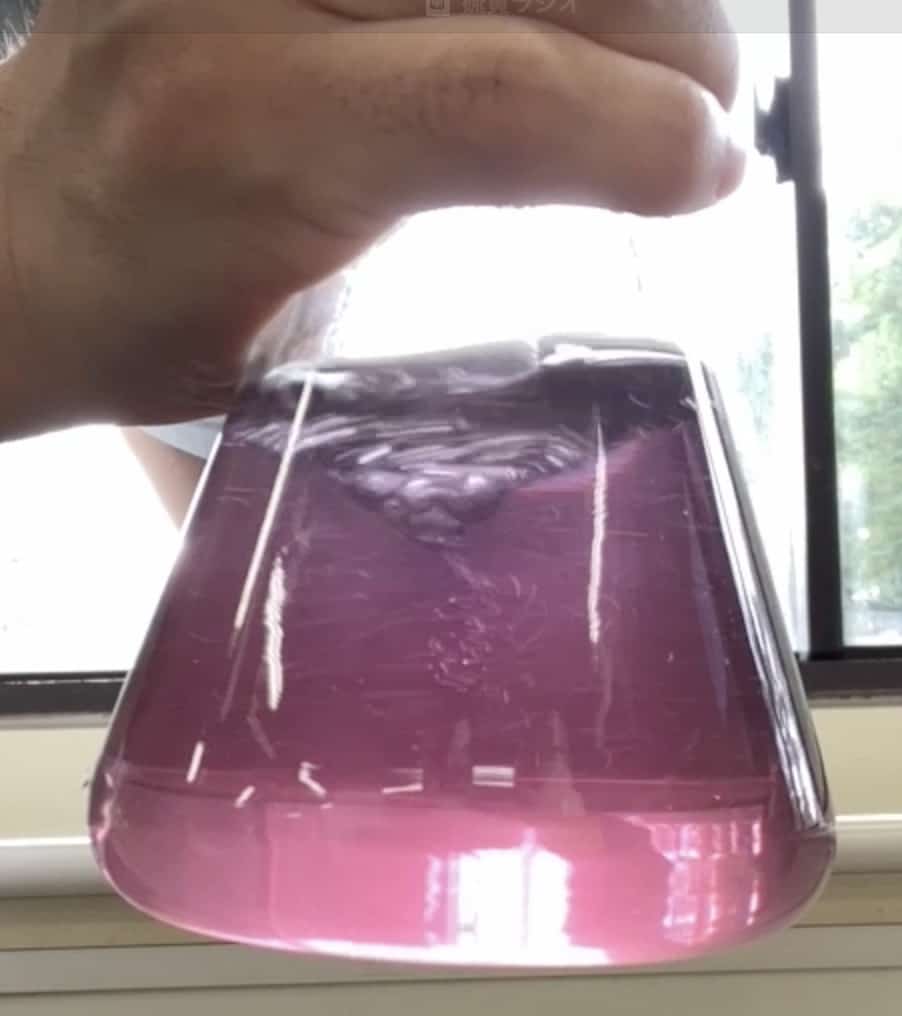
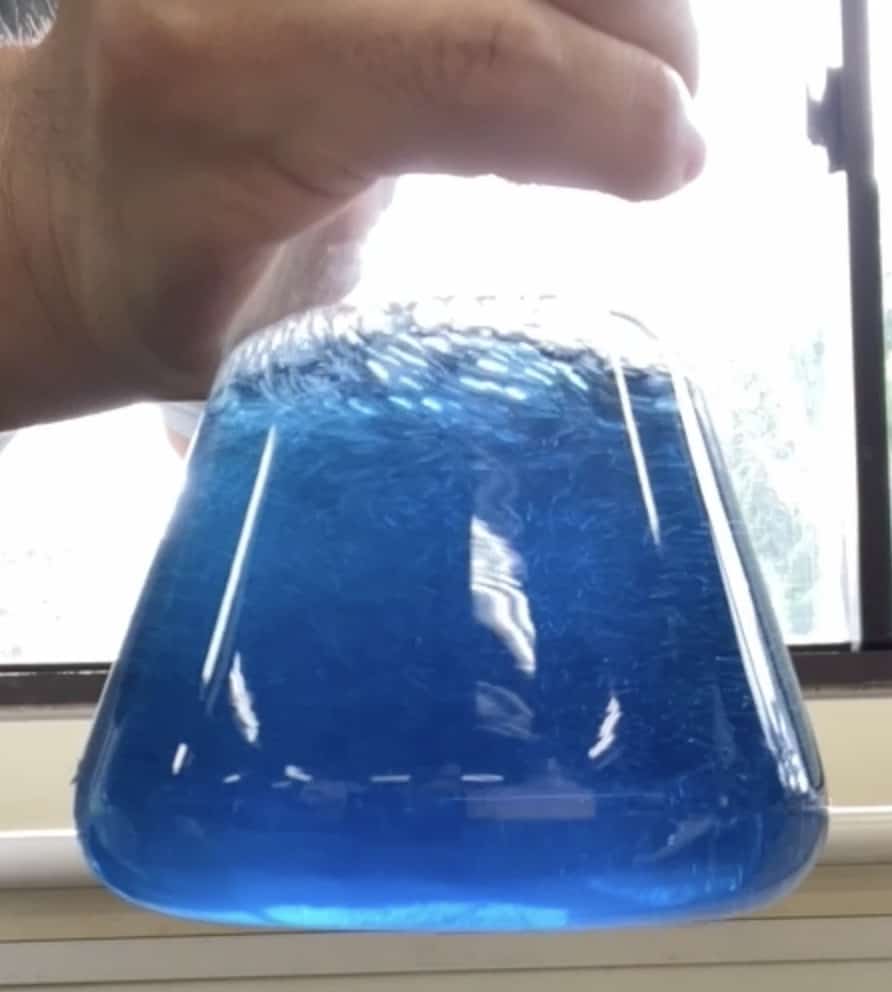
On the other hand, we have the Gaming Reaction, a modern twist on the classic. While the colors are similar (Yellow → Red → Blue), its standout feature is the incredibly smooth, beautiful gradient of the transition.
The name comes from modern gaming PCs and mice that glow with vibrant LEDs. Some of these devices can display over 16.8 million colors, and that “rainbow-shifting” aesthetic has become the perfect nickname for this chemical phenomenon.
Why Does the Color Change? Unlocking Redox Reactions
The secret behind this “magic” is a process called a Redox (Reduction-Oxidation) reaction. A dye in the liquid called Indigo Carmine changes its molecular structure—and therefore its color—as it bonds with oxygen (oxidation) or releases it (reduction).
The Traffic Light Reaction
Let’s look at the mechanics behind the signal:
- When the liquid is yellow: The Indigo Carmine is in a “reduced” state (low oxygen).
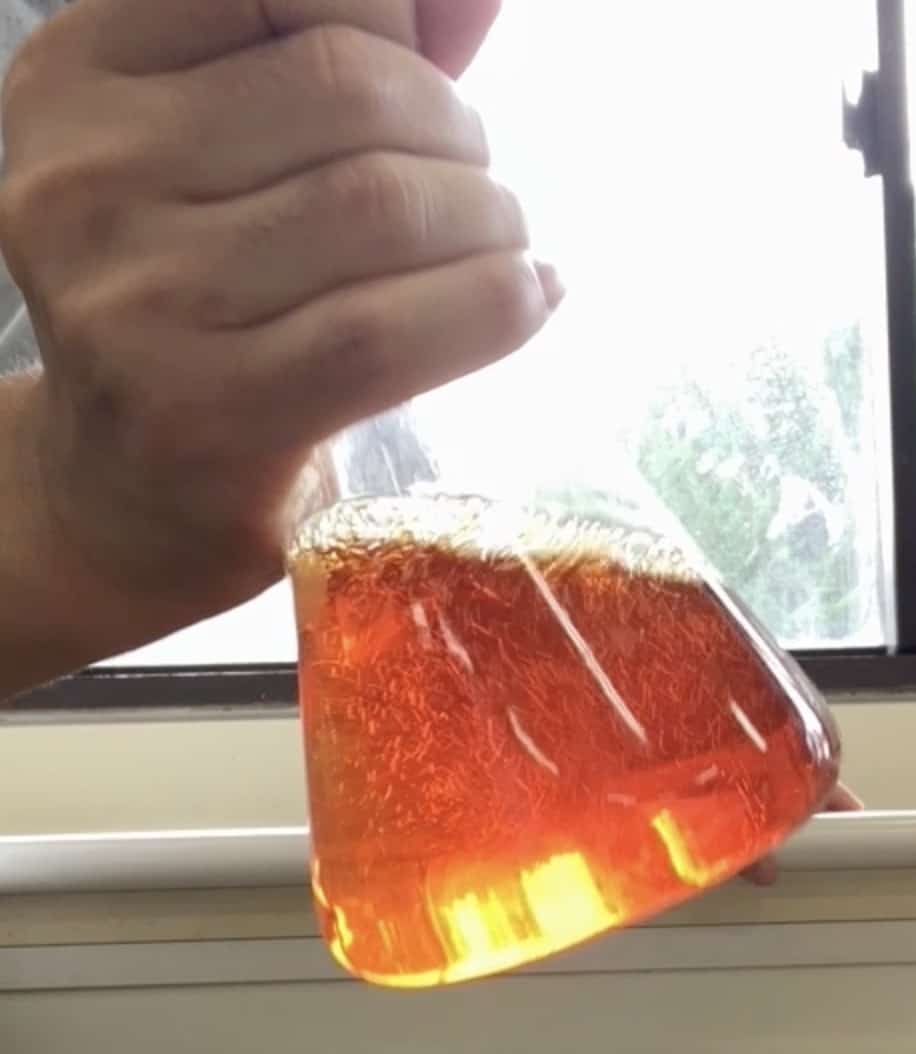
- When you shake it: Oxygen from the air dissolves into the liquid, oxidizing the dye.
A gentle shake turns it red (semi-oxidized), while a vigorous shake turns it green (fully oxidized).

- When you let it sit: The glucose (sugar) in the liquid “steals” the oxygen back from the Indigo Carmine, reducing it once again.
The liquid shifts from green back to red, and finally to yellow. This constant “tag team” between shaking (oxidation) and resting (reduction) creates the vibrant cycle!
The Gaming Reaction
In the Gaming Reaction, we use different chemicals and add heat to achieve those ultra-smooth gradients.

Preparation: Brew Your Own Magic Potion!
Here is how you can bring this excitement to your classroom or science club. I’ve prepared recipes for both large (3L) and small (300ml) batches.
CRITICAL SAFETY NOTE: Sodium Hydroxide and Sodium Carbonate are strong alkalis that can dissolve proteins. They pose a serious risk of blindness or chemical burns. Always wear safety goggles and gloves. Never touch the chemicals or the solution with bare hands.
The Traffic Light Reaction: Recipe
A. Large Scale (3000ml)
Dissolve 60g of Sodium Hydroxide and 36g of Glucose into 2400ml of water (Solution A).
Dissolve 1.5g of Indigo Carmine into 300ml of water (Solution B).
Mix A and B, and wait until the liquid turns yellow.
B. Small Scale (300ml)
Dissolve 5g of Sodium Hydroxide and 3g of Glucose into 200ml of water (Solution A).
Dissolve 0.125g of Indigo Carmine into 25ml of water (Solution B).
Mix A and B, and wait until the liquid turns yellow.
The Gaming Reaction: Recipe
A. Large Scale (3000ml)
Dissolve 120g of Sodium Carbonate and 36g of Glucose into 2400ml of water (Solution A).
Dissolve 1.5g of Indigo Carmine into 300ml of water (Solution B).
Heat Solution A to 60°C (This is the secret to the Gaming colors!).
After heating, mix A and B, and wait for yellow.
B. Small Scale (300ml)
Dissolve 10g of Sodium Carbonate and 3g of Glucose into 200ml of water (Solution A).
Dissolve 0.125g of Indigo Carmine into 25ml of water (Solution B).
Heat Solution A to 60°C, then mix with B.
Let the Magic Begin!
Once you’re ready, hand out the containers and tell everyone to “Give it a shake!”
From a gentle swirl to a vigorous rattle, students will quickly realize how their movements dictate the colors. You’ll hear shouts of “Whoa, so cool!” and “It actually looks like it’s glowing!” especially with the Gaming Reaction.
The best part of this experiment is that it makes “invisible oxygen” visible. It transforms chemistry from a textbook chore into a vivid, hands-on experience. I hope you enjoy the magic!
Inquiries and Bookings
Making science more accessible and fun! I provide easy-to-understand guides and tips for home experiments. Feel free to explore! ・About the Author, Ken Kuwako: Click here ・For requests (Writing, Lectures, Workshops, TV Supervision/Appearance): Click here ・Get the latest updates on X (formerly Twitter)!
 Check out my experiment videos on the Science Material Channel!
9月のイチオシ実験!
お弁当箱をプラバンがわりにしてキーホルダーを作ろう!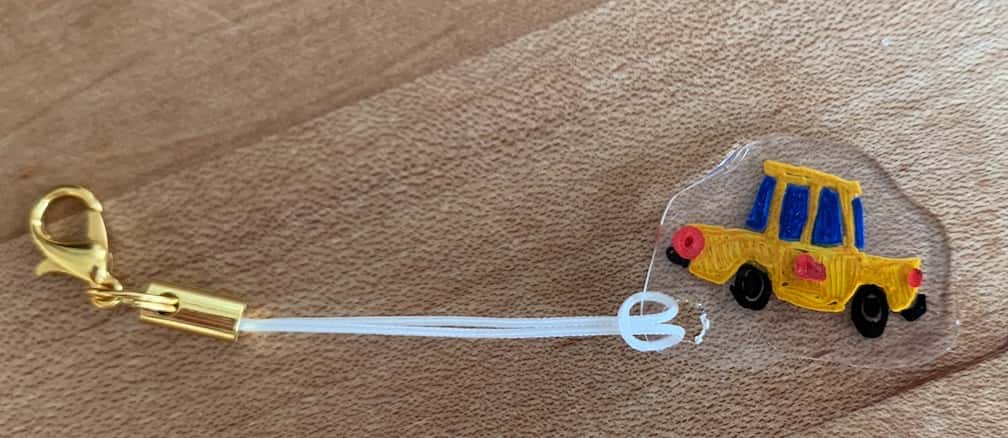
テレビ番組監修・イベント等のお知らせ
- 8月27日(木)科学監修番組放送予定
- 9月20日(日)ダビンチマスターズ出演予定
- 10月10日(土)11:15~12:00 千葉市科学フェスタ2026「桑子先生の回転科学ショー」にてサイエンスショーを行います。
- 12月26日(土) ナリカサイエンスアカデミー(教員向け実験講習会)開催
書籍のお知らせ
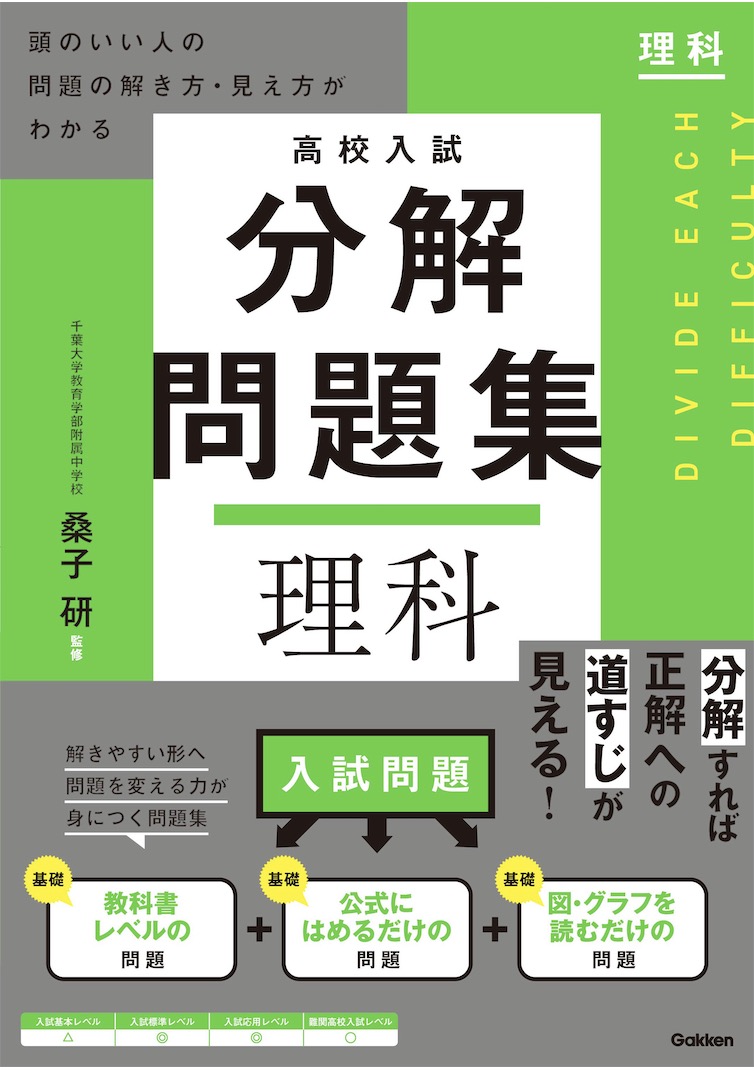
- 『高校入試 分解問題集 理科』(学研)…難しい問題も小さな問題に分解することで、問題を解くことができます。そんな分解の技術が身につくように深く関わりを持って作りました。
 『大人のための高校物理復習帳』(講談社)…一般向けに日常の物理について公式を元に紐解きました。特設サイトでは実験を多数紹介しています。※増刷がかかり6刷となりました(2026/02/01)
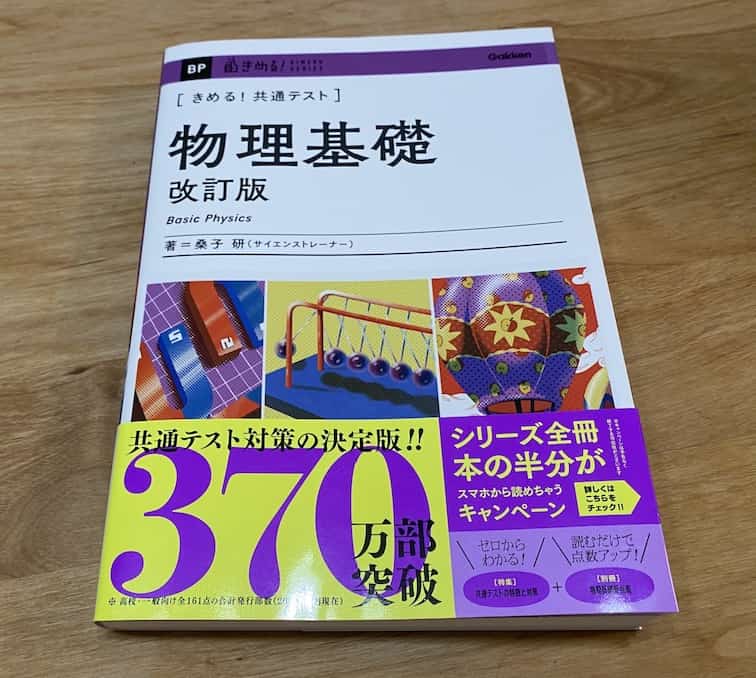
- 『きめる!共通テスト 物理基礎 改訂版』(学研)… 高校物理の参考書です。イラストを多くしてイメージが持てるように描きました。授業についていけない、物理が苦手、そんな生徒におすすめです。特設サイトはこちら。
各種SNS(更新情報をお届け!)
【日本語】X(Twitter)/instagram/Facebook 【英語】BlueSky/Threads
Explore
- 楽しい実験…お子さんと一緒に夢中になれるイチオシの科学実験を多数紹介しています。また、高校物理の理解を深めるための動画教材も用意しました。
- 理科の教材… 理科教師をバックアップ!授業の質を高め、準備を効率化するための選りすぐりの教材を紹介しています。
- Youtube…科学実験等の動画を配信しています。
- 科学ラジオ …科学トピックをほぼ毎日配信中!AI技術を駆使して作成した「耳で楽しむ科学」をお届けします。
- 講演 …全国各地で実験講習会・サイエンスショー等を行っています。
- About …「科学のネタ帳」のコンセプトや、運営者である桑子研のプロフィール・想いをまとめています。
- お問い合わせ …実験教室のご依頼、執筆・講演の相談、科学監修等はこちらのフォームからお寄せください。