Giant Salmon Roe or Tarako?! Make Your Own Mysterious “Water Ball” You Can Hold!
Science Trainer Ken Kuwako: Where Every Day is an Experiment.
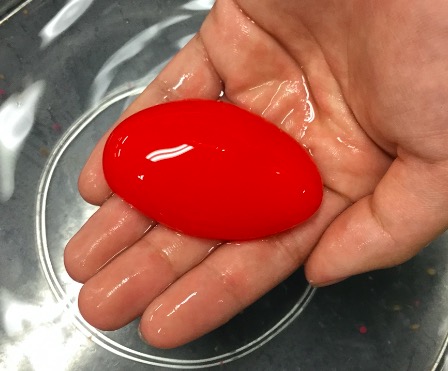
Have you ever tried holding water directly in your hands?
Yesterday, my science club students and I whipped up these jiggly “Water Balls.” They look like drinking water from a futuristic sci-fi movie, but this is actually a chemistry experiment using very common ingredients.
While generally known as “Ooho” or “edible water bottles,” it might be easier to picture them as giant artificial salmon roe (Ikura).
For this batch, the students requested we dye them red. The result? They ended up looking exactly like giant spicy cod roe (Mentaiko) (lol). There is something oddly addictive about scratching the surface and feeling the water ooze out. Today, I’ll share this mysterious “Science Recipe” you can try at home, along with the secret behind why they solidify.
The Mysterious “Water Ball” Science Recipe
The stars of this experiment are two chemicals: Sodium Alginate and Calcium Chloride. The names might sound intimidating, but they are actually safe substances that support our daily lives as food additives.
What You Need
Sodium Alginate (The sticky component found in kelp and seaweed)
Calcium Chloride (A relative of “Nigari” used to make tofu, also found in dehumidifiers)
Containers like beakers, a ladle, and a water tank (or a large bowl)
How to Make It (and the Tricks!)
① First, let’s make the “filling.” Dissolve 2g of Sodium Alginate into 200ml of water.
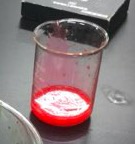
[Pro Tip] Sodium alginate is notoriously hard to dissolve and loves to clump up. Using lukewarm water and mixing patiently is the key to success. We added red food coloring at this stage.
② Next, prepare the “hardening bath.” Mix 3g of Calcium Chloride into 800ml of water and stir well (we used a water tank for this).
③ This is the most fun part! Scoop up the thick, sticky liquid from step ① with a ladle, and gently submerge it into the liquid from step ②.
④ Gently rotate or roll the blob inside the tank to help it form a round shape as the surface hardens.
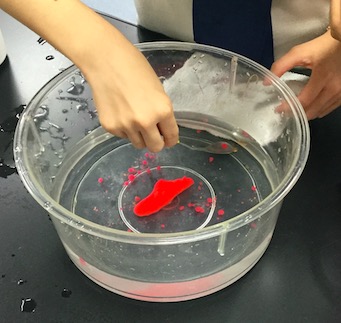
Wait a few minutes for the membrane to firm up, and you’re done! Easy, right?
Why Does Water Turn Solid? The Secret of the “Membrane”
Why does simply mixing two liquids create a thin film?
This is a phenomenon called chemical gelation. As I mentioned, Sodium Alginate is the sticky stuff from seaweed. In water, it floats around like long, loose chains. When you drop these chains into a pool full of calcium, the calcium ions wedge themselves between the chains and create bridges. This is known as “cross-linking.”
To visualize it: Imagine the alginate as loose strings floating around. The calcium acts like a stapler
Shutterstock
詳しく見る
, snapping the strings together to form a sturdy net. Because this net forms instantly on the surface of the blob, it becomes a capsule that traps the water inside.
This technology isn’t just for fake fish eggs. It’s used in high-end cuisine (Molecular Gastronomy) to turn sauces into spheres, and it’s gaining attention as an eco-friendly way to carry water without plastic.
A cutting-edge science experience starting with just two powders. I hope you’ll try making these jiggly creations at home!
Inquiries & Requests
Bringing the wonder and fun of science closer to you! I compile fun science experiments you can do at home, along with tips to make them work. Feel free to browse around! ・My blog “Science Netacho” is now a book. Details here ・About the author, Ken Kuwako: Click here ・For requests (Writing, Speaking, Workshops, TV supervision/appearance, etc.): Click here ・Get article updates on X (Twitter)!
 Science Netacho Channel is streaming experiment videos now!
9月のイチオシ実験!
お弁当箱をプラバンがわりにしてキーホルダーを作ろう!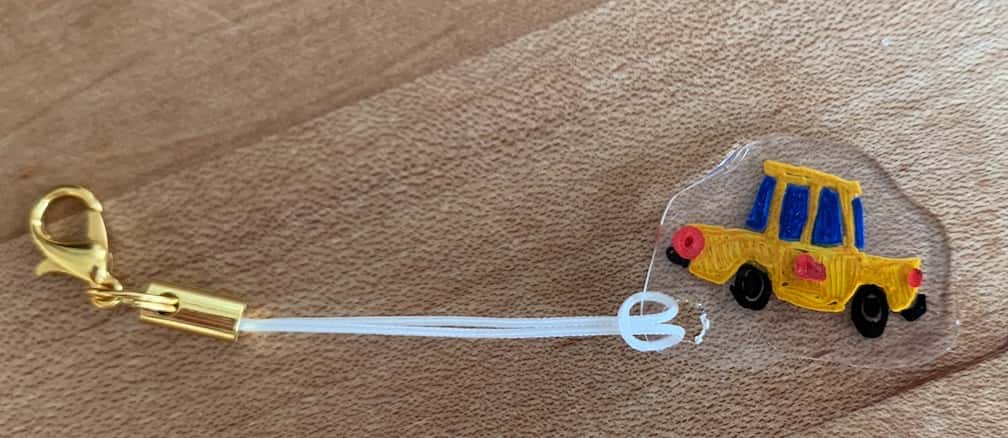
テレビ番組監修・イベント等のお知らせ
- 8月27日(木)科学監修番組放送予定
- 9月20日(日)ダビンチマスターズ出演予定
- 10月10日(土)11:15~12:00 千葉市科学フェスタ2026「桑子先生の回転科学ショー」にてサイエンスショーを行います。
- 12月26日(土) ナリカサイエンスアカデミー(教員向け実験講習会)開催
書籍のお知らせ
- 『高校入試 分解問題集 理科』(学研)…難しい問題も小さな問題に分解することで、問題を解くことができます。そんな分解の技術が身につくように深く関わりを持って作りました。
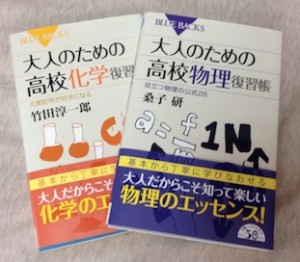
 『大人のための高校物理復習帳』(講談社)…一般向けに日常の物理について公式を元に紐解きました。特設サイトでは実験を多数紹介しています。※増刷がかかり6刷となりました(2026/02/01)
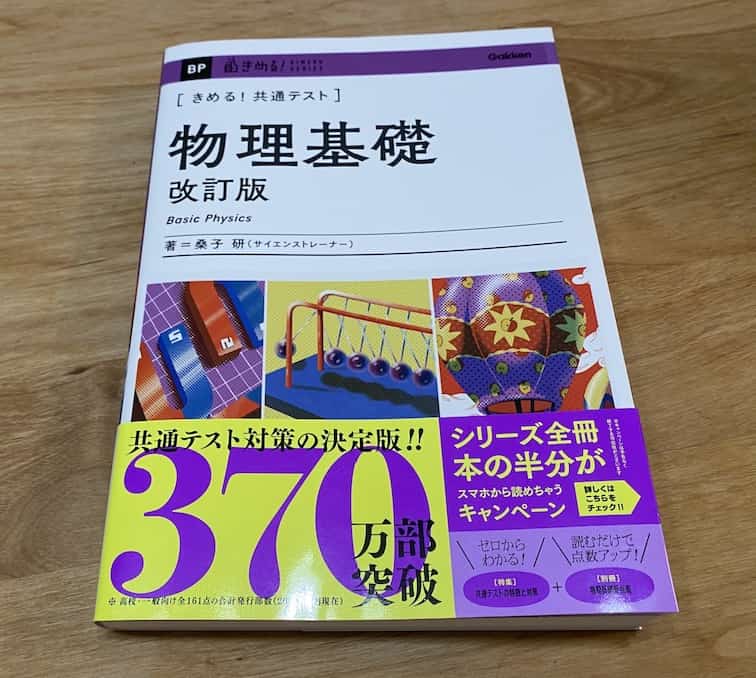
- 『きめる!共通テスト 物理基礎 改訂版』(学研)… 高校物理の参考書です。イラストを多くしてイメージが持てるように描きました。授業についていけない、物理が苦手、そんな生徒におすすめです。特設サイトはこちら。
各種SNS(更新情報をお届け!)
【日本語】X(Twitter)/instagram/Facebook 【英語】BlueSky/Threads
Explore
- 楽しい実験…お子さんと一緒に夢中になれるイチオシの科学実験を多数紹介しています。また、高校物理の理解を深めるための動画教材も用意しました。
- 理科の教材… 理科教師をバックアップ!授業の質を高め、準備を効率化するための選りすぐりの教材を紹介しています。
- Youtube…科学実験等の動画を配信しています。
- 科学ラジオ …科学トピックをほぼ毎日配信中!AI技術を駆使して作成した「耳で楽しむ科学」をお届けします。
- 講演 …全国各地で実験講習会・サイエンスショー等を行っています。
- About …「科学のネタ帳」のコンセプトや、運営者である桑子研のプロフィール・想いをまとめています。
- お問い合わせ …実験教室のご依頼、執筆・講演の相談、科学監修等はこちらのフォームからお寄せください。