
One Safety Pin to Stop Static!? The Shocking Life Hack That Ends the Zap!
I’m Ken Kuwako, your Science Trainer. Every day is an experiment!
Have you ever reached for a doorknob during the dry winter season and heard a sharp “ZAP!” that made you jump? That painful sting is an unpleasant rite of passage for many in the colder months. Well, a surprising solution to this common problem has been making the rounds online: “You can prevent static electricity just by attaching a safety pin to the cuff of your sweater.”
“Wait, that’s it?” It sounds completely unbelievable, right? But a certain scientific phenomenon popped into my head, igniting a spark of curiosity: “Maybe… just maybe!” There was only one thing left to do: put it to the test! Today, we’re using the power of science to thoroughly investigate whether this everyday rumor is true.
Does a Safety Pin Stop Static? Time for the Experiment!
To verify this popular claim, we prepared our secret weapons: the “Static Charge Gun” and the “Insulated Charging Chair.” We’ll use these to numerically measure how much static electricity accumulates on the body.

First, let’s establish the baseline data. I sat in the charging chair without any pins and used the charge gun to build up static electricity in my body.
The result? An incredible voltage reading of over 20,000V (Volts)! Considering a standard wall outlet is only 100V, that’s an enormous voltage. Don’t worry, the current is too tiny to be lethal, but it’s certainly enough energy to deliver that painful “ZAP!” (Since the experiment was conducted in October, the effect of humidity caused the charge to dissipate naturally in about 8 seconds.)
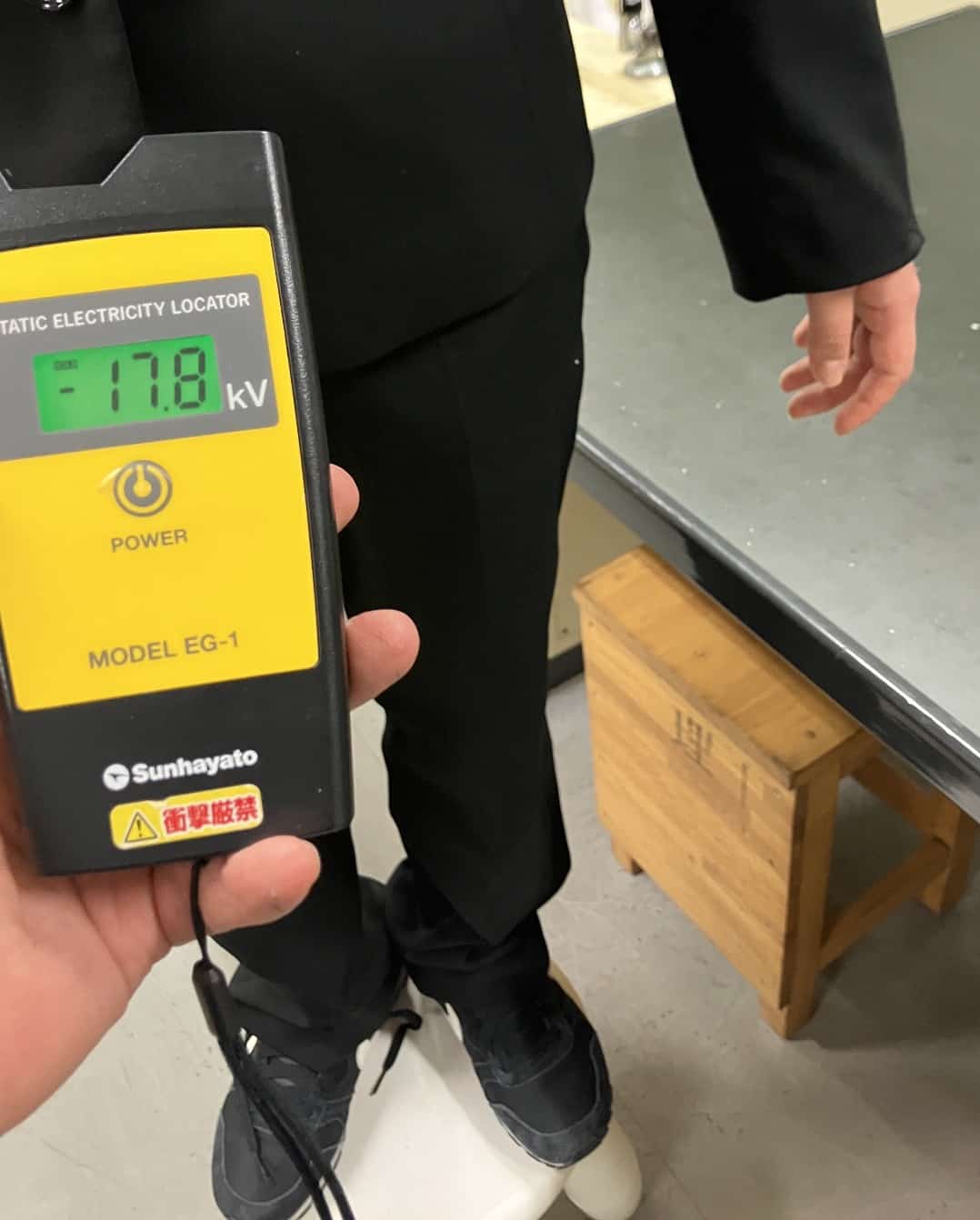
Next, while still charged, I lightly touched the cuff of my clothes to the desk. This mimics the everyday action of casually brushing against a desk or wall. The voltage only rose to 12,000V. This proves that the static electricity built up in the body is slowly escaping (discharging) through the clothes and the desk.
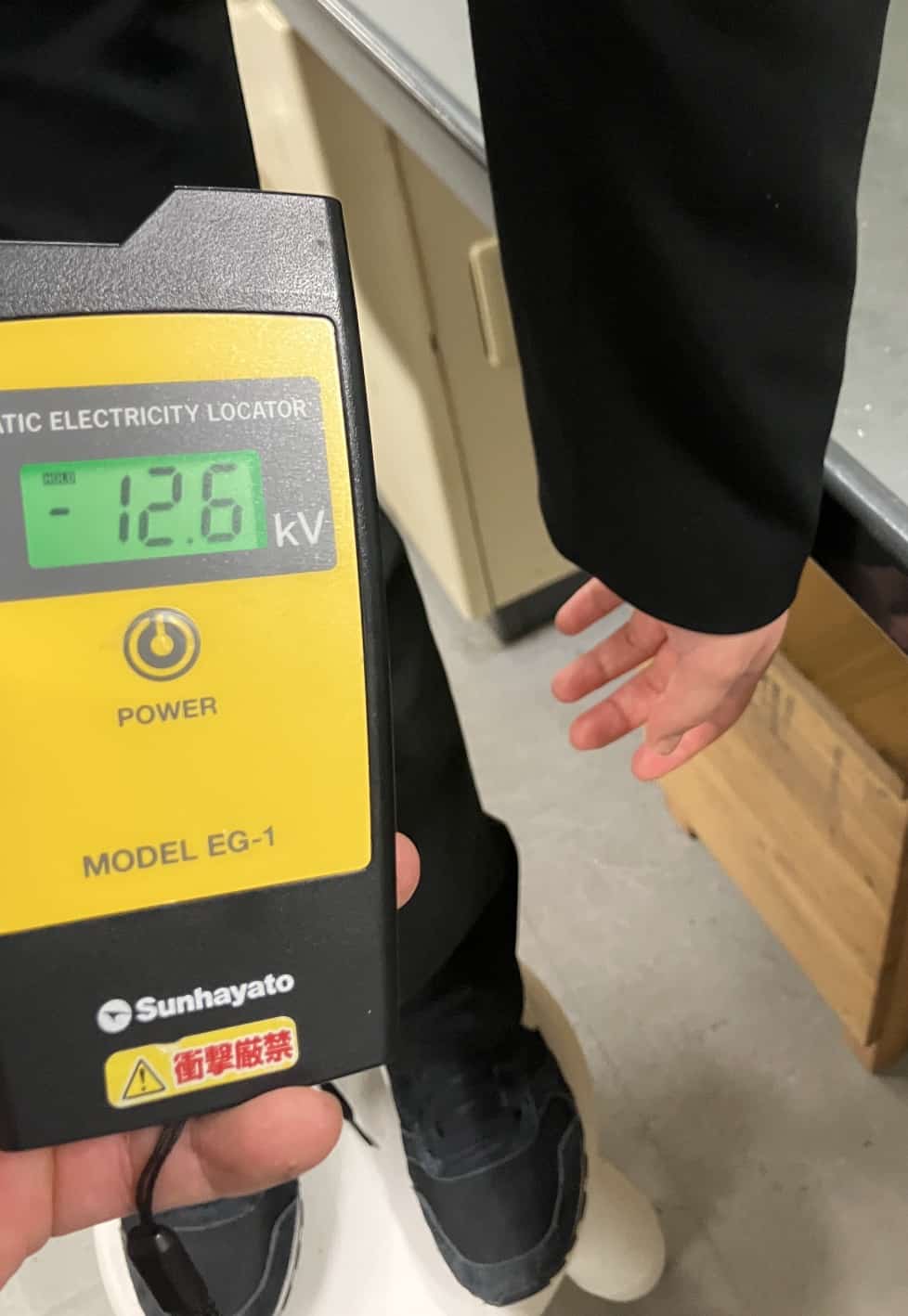
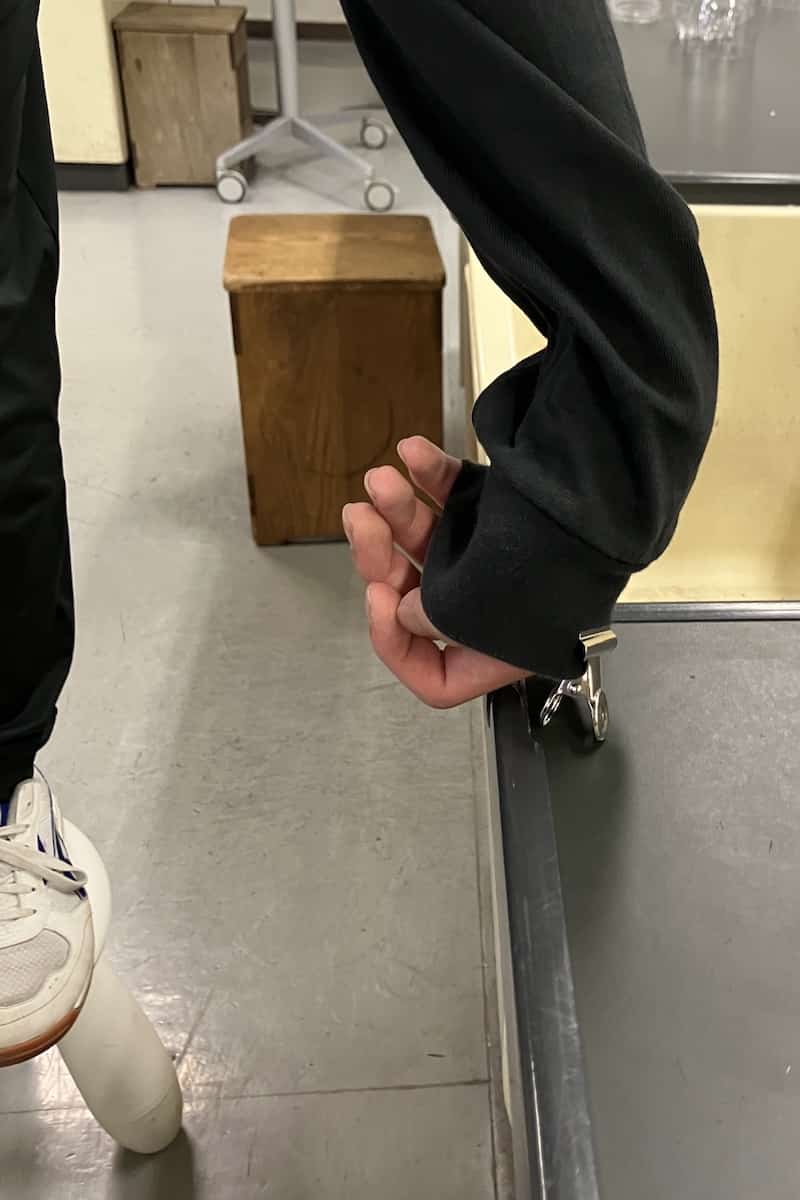
Now for the main event! I attached a metal clip (a substitute for a safety pin) to the cuff and made sure the clip touched the desk. The result was astonishing! The accumulated voltage was only a meager 9,000V!
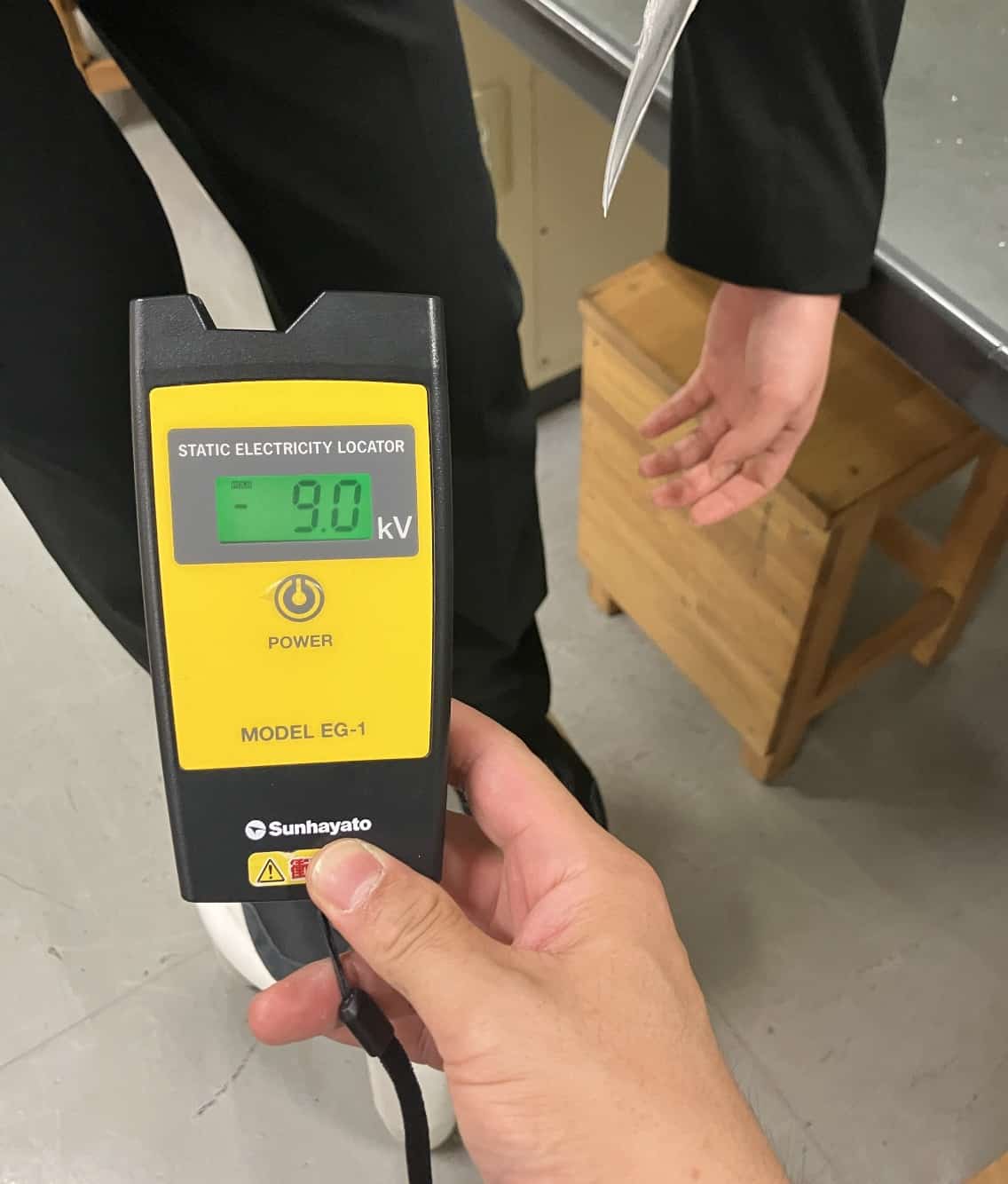
Even more interestingly, the time it took for the electricity to drain away was noticeably faster. This demonstrates that “by attaching a safety pin (metal), static electricity is both less likely to build up and, if it does, it escapes quickly.” The rumor was true!
We tried the experiment again with a larger binder clip, and the effect was even more pronounced.
Why a Safety Pin? The Secret is “Corona Discharge”
So, how can a single safety pin have such a powerful effect? When static electricity builds up in the body, the safety pin acts as an efficient channel for the charge to discharge whenever you touch a wall or desk during your daily routine. This prevents high voltages from accumulating on your body.
A Scientific Principle Connecting Past Wisdom
There’s a reason why I suspected this rumor might be true. I had previously conducted an experiment where I drove a staple into the sole of a shoe to see if it would allow the accumulated charge to escape to the ground. It worked! This operates on the exact same principle: the metal staple acts as an electrical ground (an “earth”).
Going back even further, you often used to see cars with a “grounding strap”—a rubber belt hanging down to the road. This was designed to bleed off the static electricity that builds up on the car body while driving, serving the exact same function as our modern safety pin trick.
From one tiny safety pin to lightning rods and the ingenuity of old car accessories, the principles of science transcend time and place, actively working in countless aspects of our daily lives. If you are troubled by that dreaded “ZAP!,” why not try putting a single safety pin on your sweater cuff? You have nothing to lose!
Contact and Requests
Bring the wonder and excitement of science closer to you! We provide easy-to-understand explanations of fun science experiments you can do at home, along with tips and tricks. Feel free to browse through our content! ・The content from Science Notebook is now available as a book. Details are here ・Find out more about the operator, Ken Kuwako, here ・For all requests (writing, lectures, science classes, TV supervision/appearances, etc.), click here ・Updates on new articles are posted on X!
 We stream experiment videos on the Science Topics Channel!
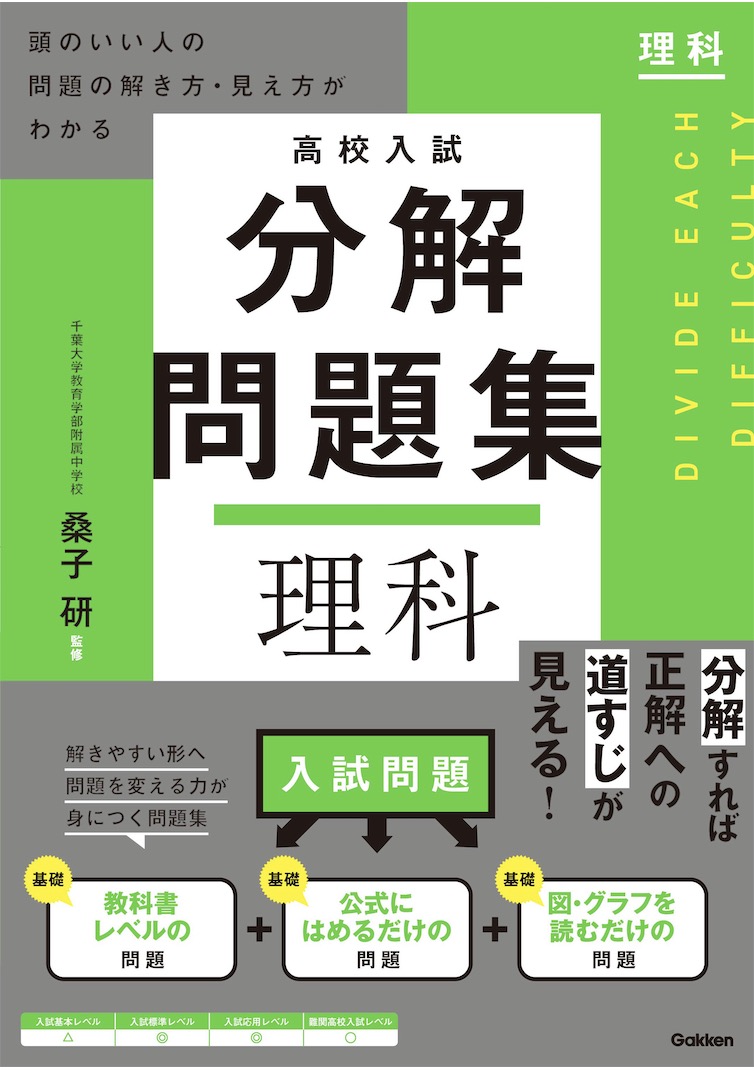
NEW 分解問題集 理科
- 7月21日発売!『高校入試 分解問題集 理科』(学研)…難しい問題も小さな問題に分解することで、問題を解くことができます。そんな分解の技術が身につくように深く関わりを持って作りました。
7・8月のイチオシ実験!
夏でプシュッと爽やか実験!

テレビ番組監修・イベント等のお知らせ
- 7月30日(水)科学監修「TIF presents ONE SONG FES」(フジテレビ) 26:15~27:15
- 12月26日(土) ナリカサイエンスアカデミー(教員向け実験講習会)開催
書籍のお知らせ
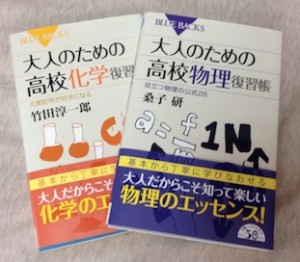
- 『大人のための高校物理復習帳』(講談社)…一般向けに日常の物理について公式を元に紐解きました。特設サイトでは実験を多数紹介しています。※増刷がかかり6刷となりました(2026/02/01)
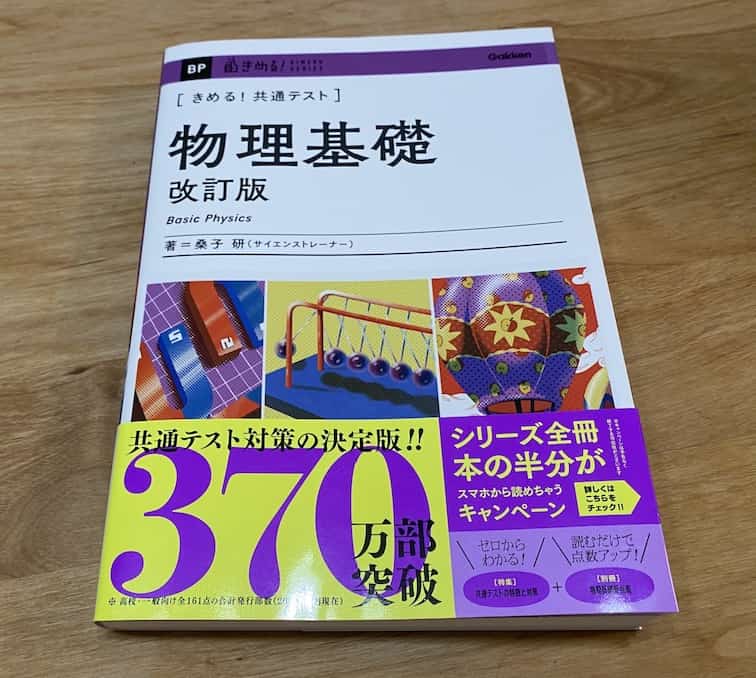
- 『きめる!共通テスト 物理基礎 改訂版』(学研)… 高校物理の参考書です。イラストを多くしてイメージが持てるように描きました。授業についていけない、物理が苦手、そんな生徒におすすめです。特設サイトはこちら。
各種SNS(更新情報をお届け!)
【日本語】X(Twitter)/instagram/Facebook 【英語】BlueSky/Threads
Explore
- 楽しい実験…お子さんと一緒に夢中になれるイチオシの科学実験を多数紹介しています。また、高校物理の理解を深めるための動画教材も用意しました。
- 理科の教材… 理科教師をバックアップ!授業の質を高め、準備を効率化するための選りすぐりの教材を紹介しています。
- Youtube…科学実験等の動画を配信しています。
- 科学ラジオ …科学トピックをほぼ毎日配信中!AI技術を駆使して作成した「耳で楽しむ科学」をお届けします。
- 講演 …全国各地で実験講習会・サイエンスショー等を行っています。
- About …「科学のネタ帳」のコンセプトや、運営者である桑子研のプロフィール・想いをまとめています。
- お問い合わせ …実験教室のご依頼、執筆・講演の相談、科学監修等はこちらのフォームからお寄せください。