
Zapping Your Way to Science: How to Build the Mind-Bending Moore’s Motor
I’m Ken Kuwako, a Science Trainer. Every day is an experiment.
Is Static Electricity Performing Magic? The Whimsical ‘Moore’s Motor’
You know that “Zap!” you get when you touch a doorknob on a dry winter day, or how your hair stands up when you take off a sweater? That’s static electricity—it’s everywhere around us, a little troublemaker. But did you know this tiny prankster holds enough power to run a motor?
The device I’m introducing today is called Moore’s Motor. It uses nothing but the power of static electricity to make a small ball roll around on a dish in a mysterious, whimsical path. It acts as if it has a mind of its own—it might spin clockwise, suddenly stop, and then reverse direction. Its unpredictable movement is endlessly fascinating.
First, take a look at its strange, adorable movement in this video. I guarantee you’ll exclaim, “Wait, how is that happening?!”
Why does the ball move around as if it’s alive? Today, I’ll unravel the scientific magic hidden within Moore’s Motor and show you how to recreate this spell with your own hands!
Why Does It Move? Unlocking the Magic of Static Electricity
The secret to Moore’s Motor’s movement lies in two fundamental rules of static electricity: Coulomb Force and Electrostatic Induction. While those names sound complicated, don’t worry. It’s a simple rule, just like how the North and South poles of a magnet attract: electricity has positive (+) and negative (-) charges, and “Opposite charges (+ and -) attract, and like charges (+ and + or – and -) repel.” That’s the essence of the “Coulomb Force.”
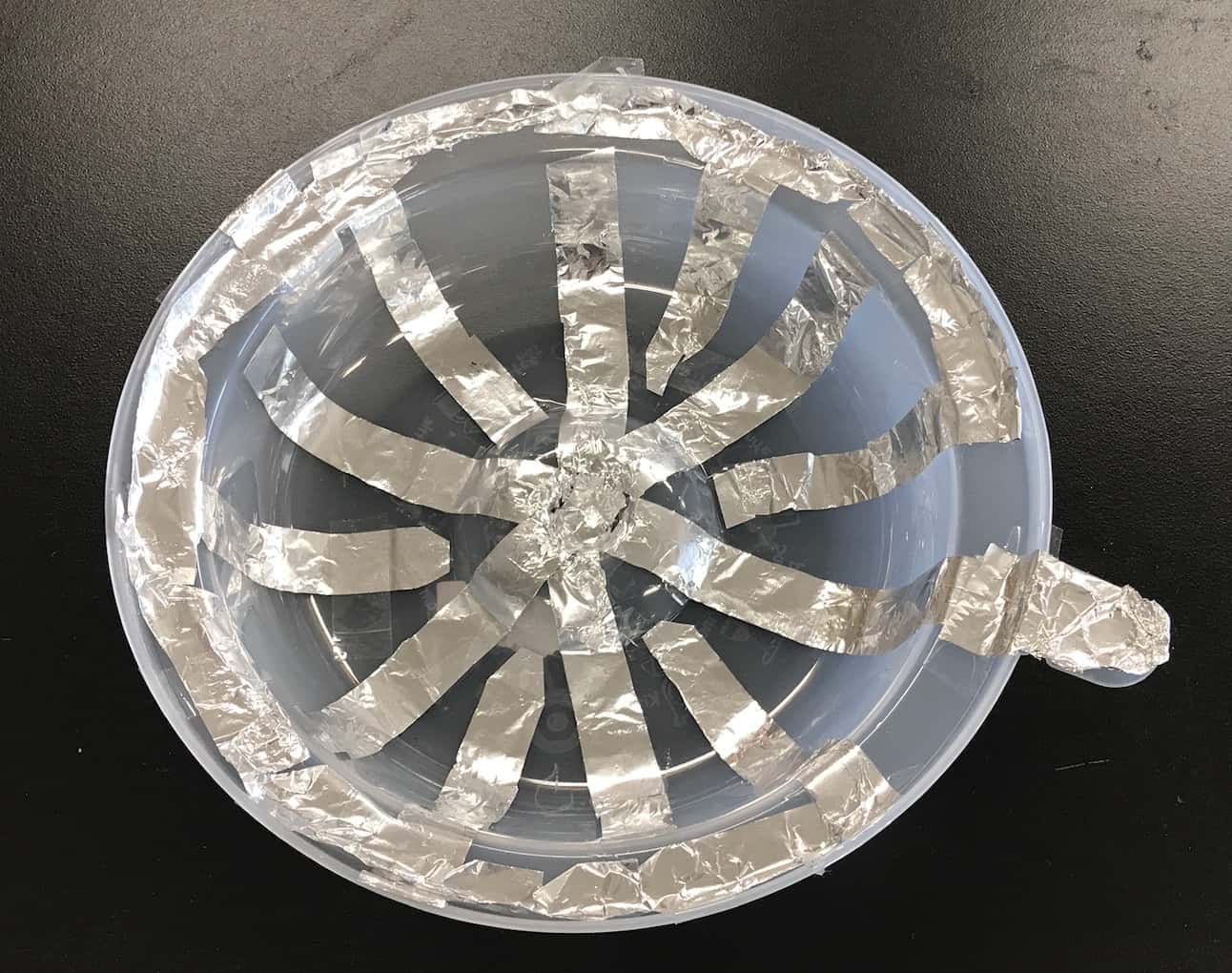
In Moore’s Motor, alternating positive and negative static charges are channeled into strips of aluminum foil placed on a dish, as shown in the figure below.
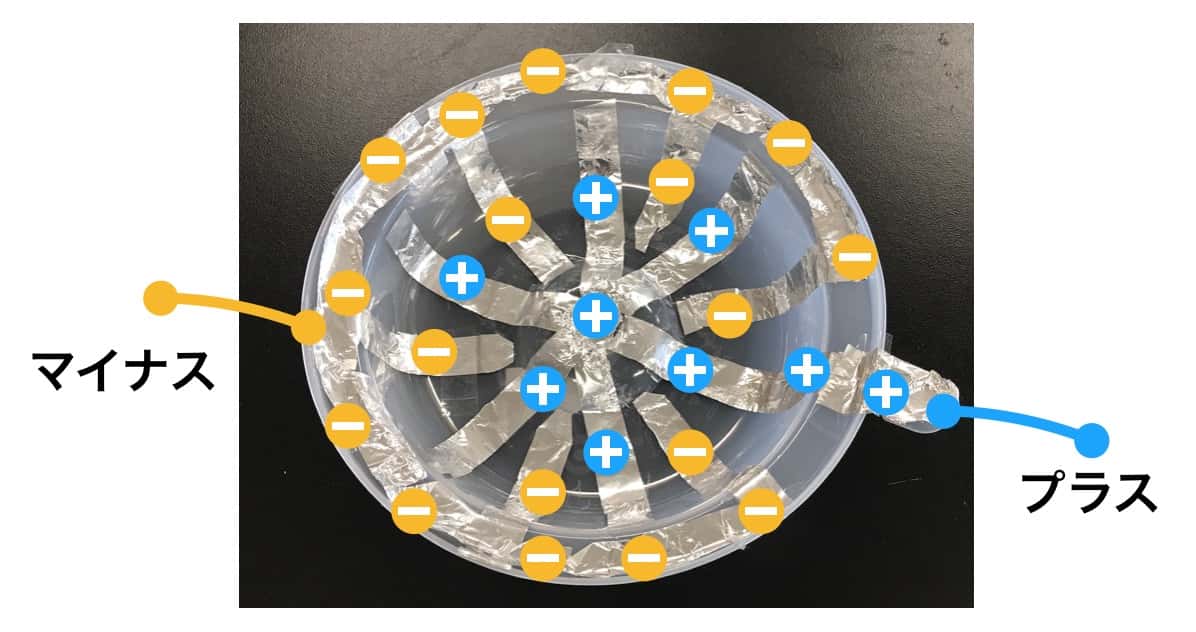
When you place a conductor ball (in this case, a ball made conductive by coating it with India ink) on the setup, the magic begins.
- As the ball approaches a positive strip, the negative charges within the ball are pulled towards it (this is “Electrostatic Induction”). Then, the Coulomb force causes the ball to “snap!” towards the positive strip.
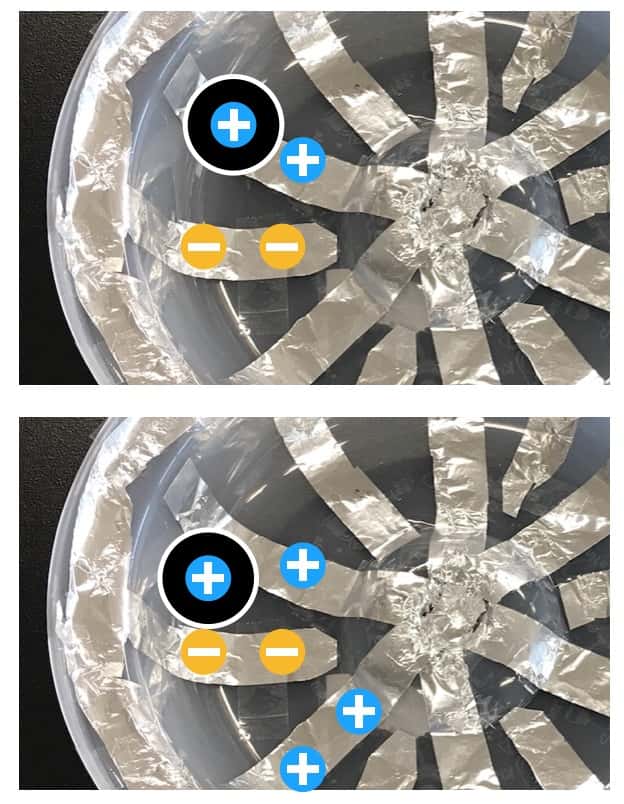
- The moment the ball touches the positive strip, it shares some of the positive charge and becomes positively charged itself. Now, because of the “repulsion” between like (positive) charges, it is forcefully “kicked out” from the strip.
- The now-positive ball is strongly attracted to the adjacent negative strip and rolls towards it.
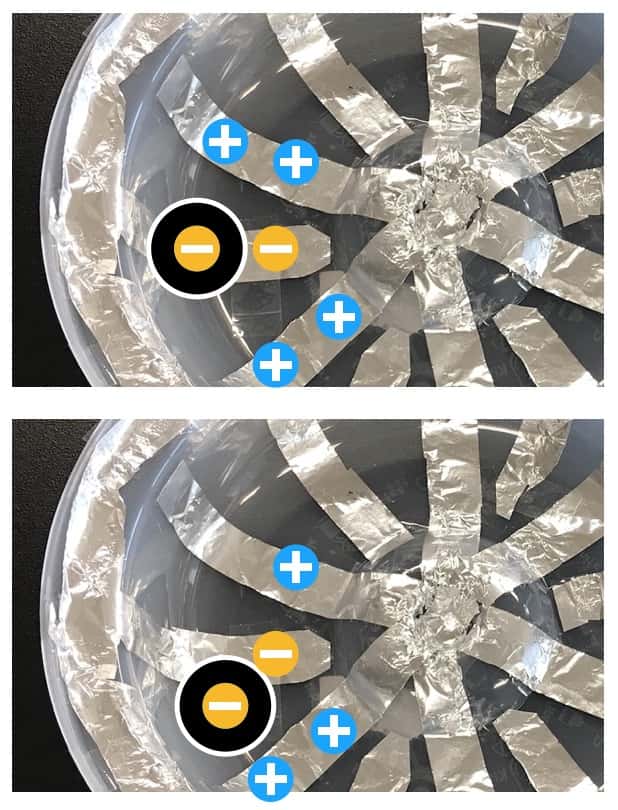
- And when it touches the negative strip… you guessed it! It becomes negatively charged, repels, and is drawn to the next positive strip… and so on!
This endless “electric game of catch”—attract, touch and repel, get attracted to the next one—is what keeps the ball rotating. Because it operates on such a delicate balance, minor triggers can change its rotation direction or make it move back and forth, resulting in that whimsical, unpredictable motion.
Let’s Build It! The Recipe for a Whimsical Motor
What You’ll Need
- Insulating Plate/Dish: A dish that prevents electricity from escaping. I used a microwave lid from a 100-yen store (Daiso/similar).
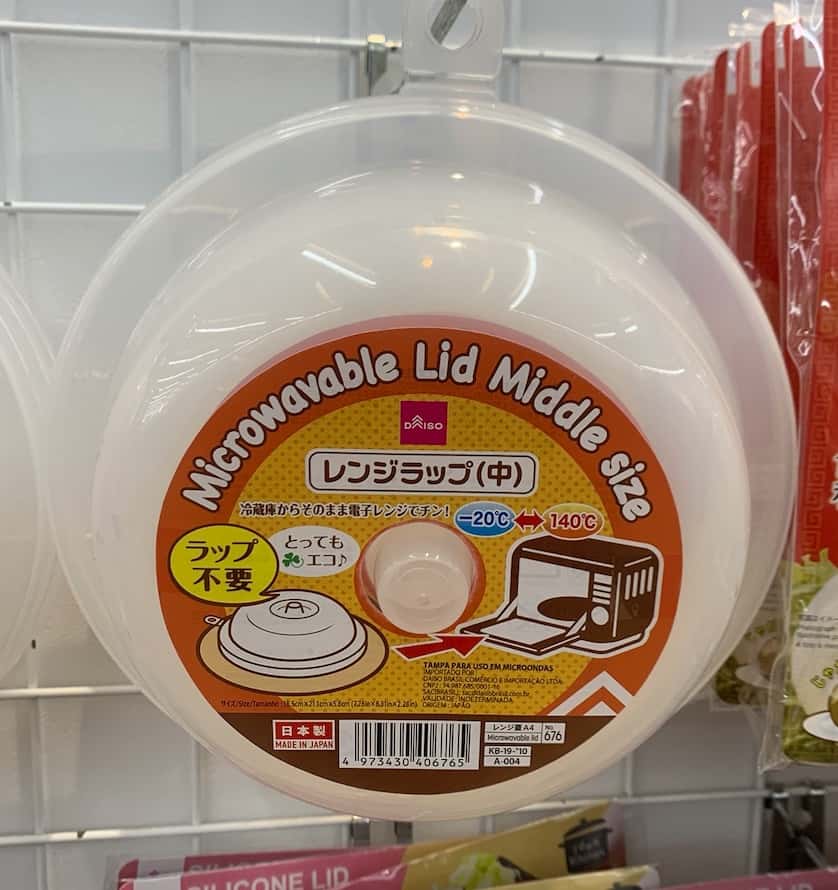
- Aluminum Foil, Cellophane Tape, Scissors
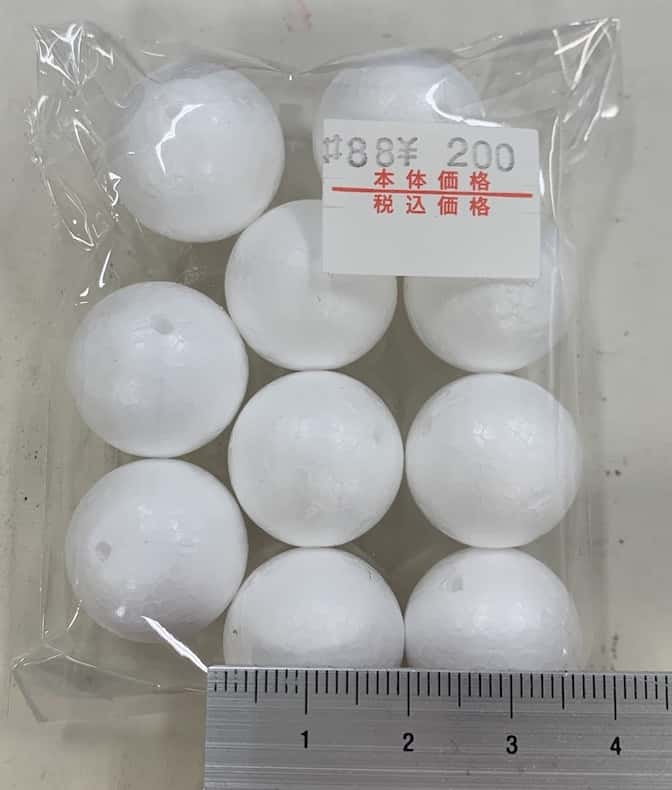
- Styrofoam Ball (approx. 2cm diameter): A light ball that rolls easily.
- India Ink, Sandpaper, Paper Cup, Toothpick: Tools to transform the Styrofoam ball into a conductor.
- Static Electricity Generator: We used an electrostatic high-voltage generator, but you can also use a Van de Graaff generator.
Instructions
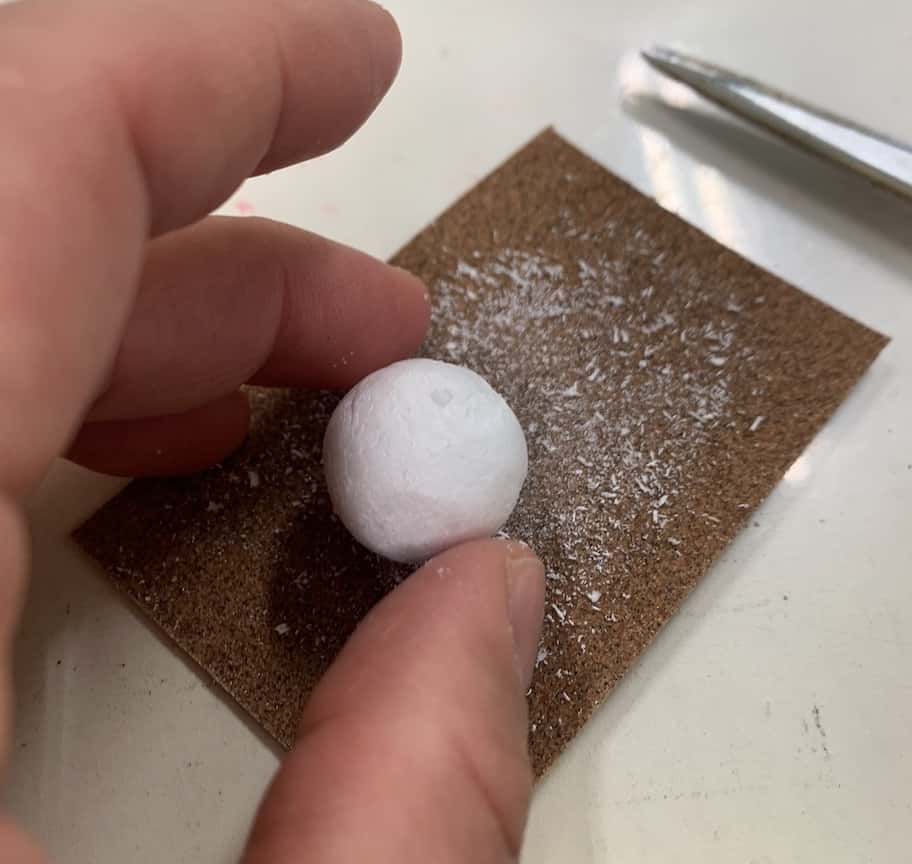
First, transform the Styrofoam ball into a “conductor.” Gently scratch the surface with sandpaper to help the India ink adhere. Styrofoam is originally an insulator (doesn’t conduct electricity), but by coating it with India ink, which is made of carbon particles, it is reborn as an electrically conductive ball.
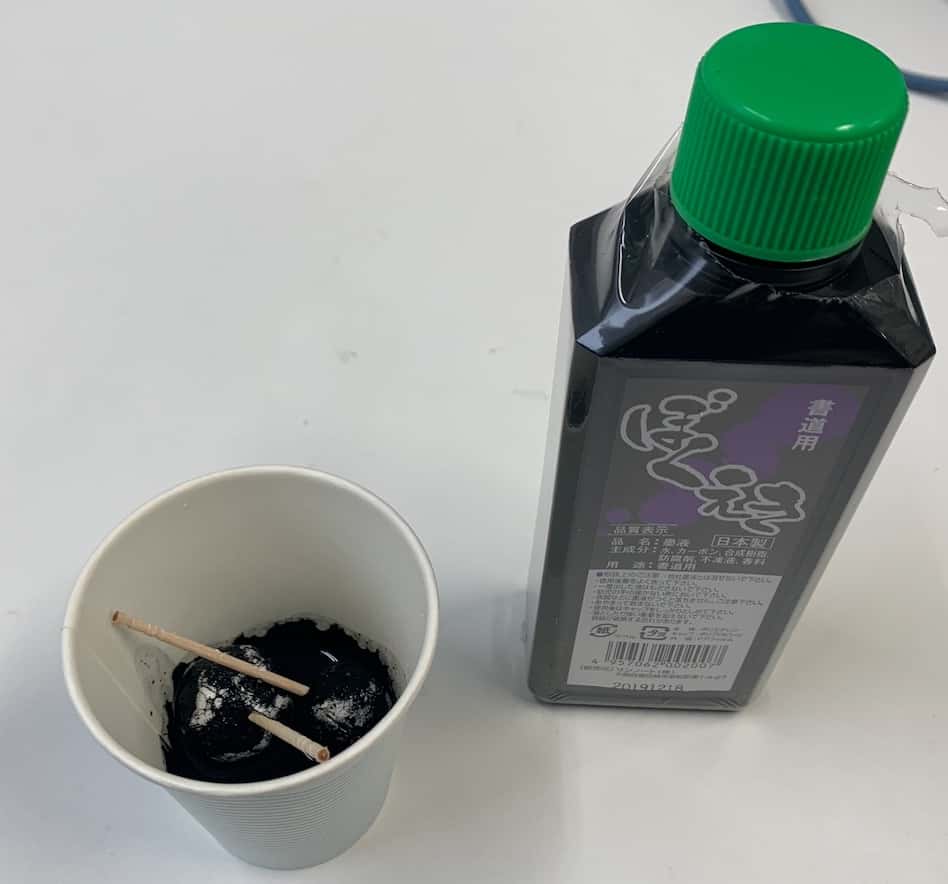
Stick a toothpick into the ball and dip it completely into the paper cup containing the India ink. Once evenly coated, let it stand somewhere to dry.
On the dish, stick thin, evenly spaced strips of aluminum foil in a radial pattern (like spokes on a wheel). Crucially, make sure that no adjacent strips of aluminum foil ever touch.
Connect the positive (+) and negative (-) terminals of the static electricity generator to the aluminum foil strips, connecting to every other strip. Once the dried India ink ball is placed in the center, you’re ready! Flip the switch and send the static charge!
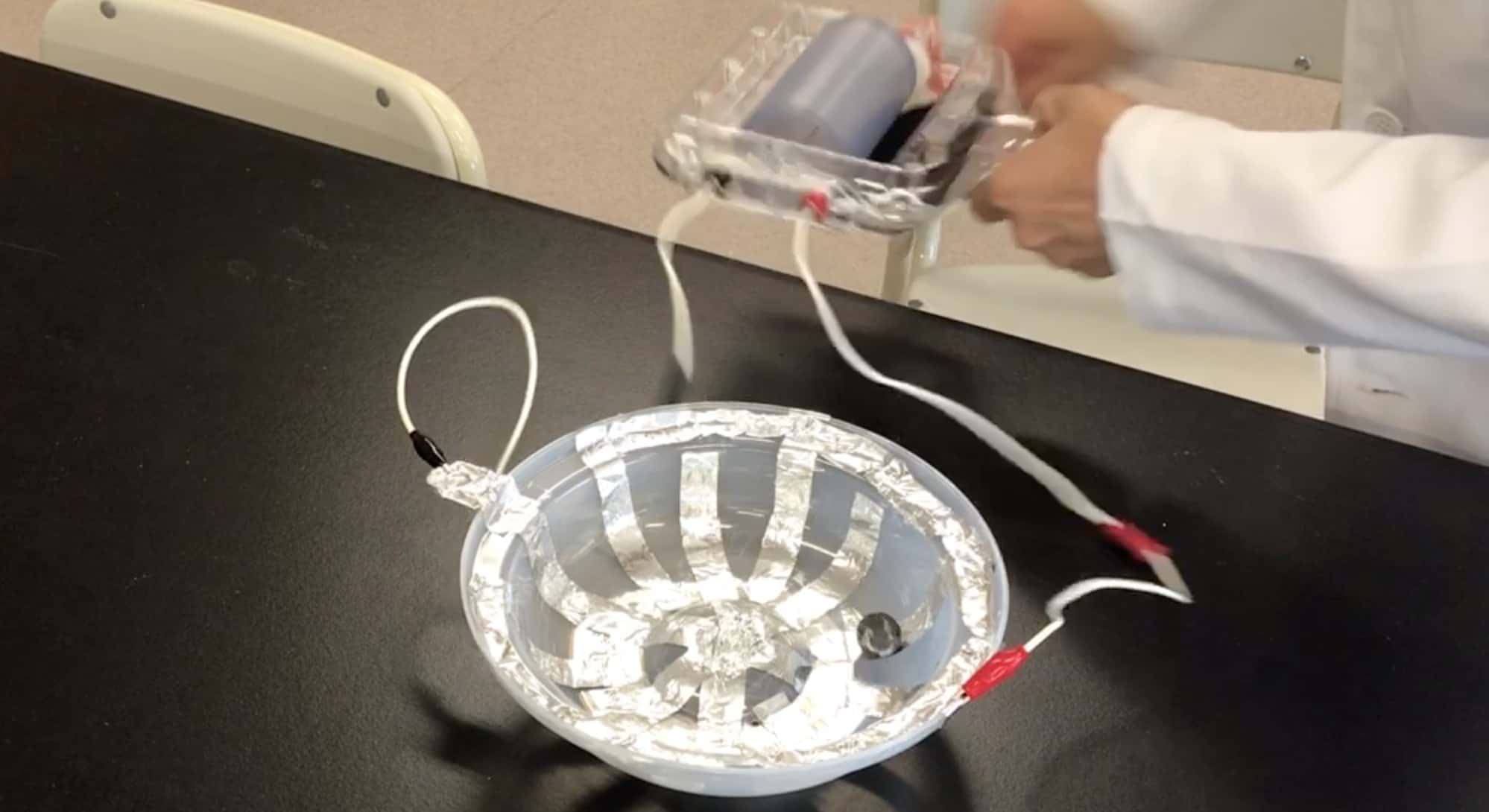
How did it go? Did your ball start its mysterious dance?
Take the Fun Further! The Giant Motor at the Science Museum
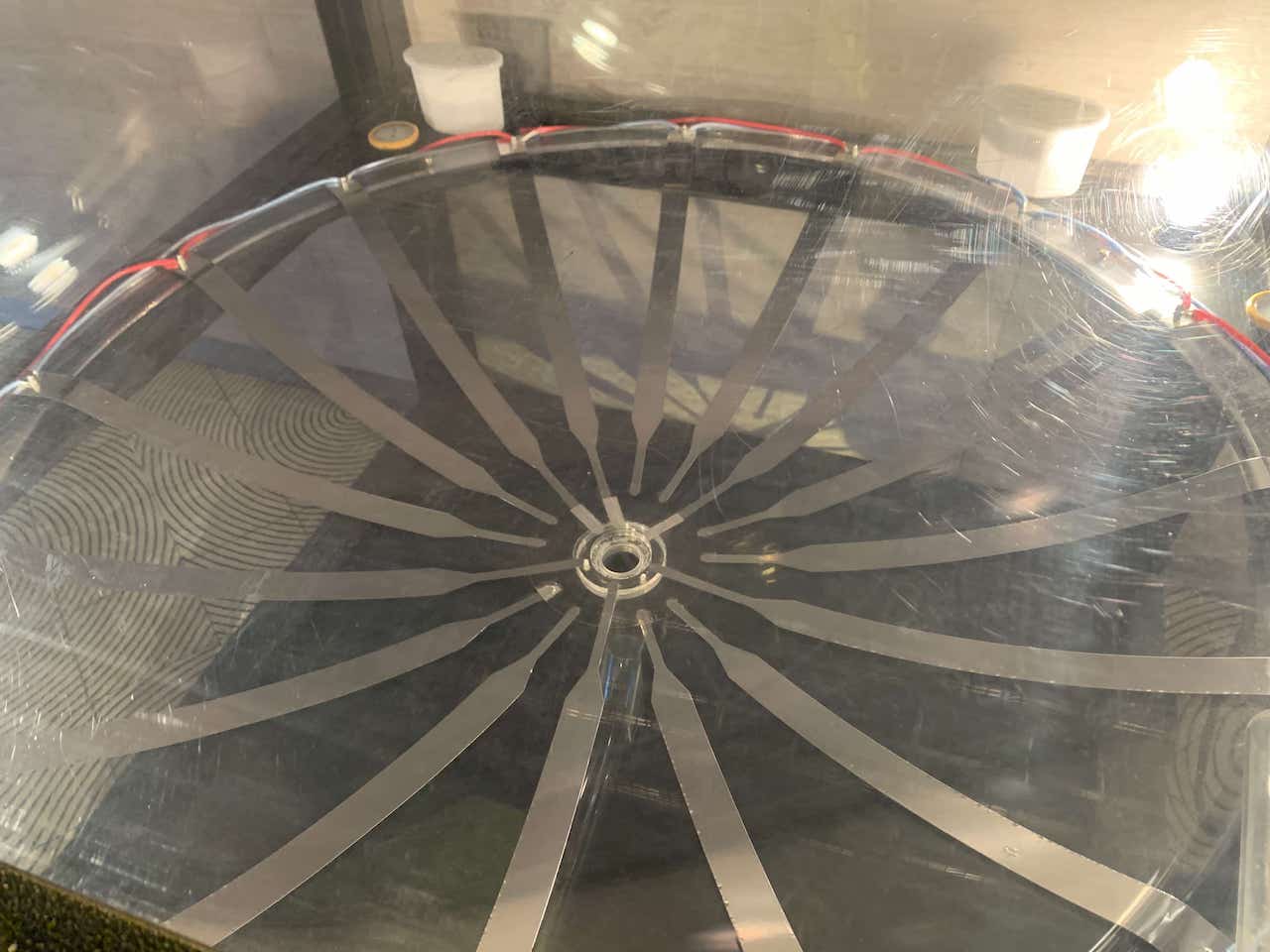
A fun fact: the Science Museum in Tokyo (Kagaku Gijutsukan) has a giant, interactive version of Moore’s Motor on display. You can play a game where you have to save the ball from falling into a hole by using a hand-cranked generator to create the static charge!
Even More Fun Experiments Using a Static Electricity Generator (Van de Graaff)!!
I’ve also shared some fun experiments using a Van de Graaff generator. These include experiments we’ve performed on TV with celebrities like Suzu Hirose, Ryohei Suzuki, Yasuko, and Chocolate Planet’s Osada and Matsuo. Find out more here.

* IMPORTANT SAFETY NOTE: Experiments using a static electricity generator (Van de Graaff) must always be performed under the supervision of a qualified expert. Please proceed with caution. For requests regarding static electricity experiments (workshops, TV supervision/appearances, etc.), please contact us here.
【FEATURE】You Can’t Stop! Irresistible Static Electricity Experiments
Inquiries and Requests
Bring the wonder and fun of science closer to you! I’ve put together easy-to-understand explanations of fun science experiments you can do at home, along with tips and tricks. Feel free to search around!
・The content of the Science Notebook has been published as a book. Details here
・About the administrator, Ken Kuwako: click here
・For various requests (writing, lectures, experiment workshops, TV supervision/appearances, etc.): click here
・Article updates are distributed on X (formerly Twitter)!
 We are broadcasting experiment videos on the Science Content Channel!
9月のイチオシ実験!
お弁当箱をプラバンがわりにしてキーホルダーを作ろう!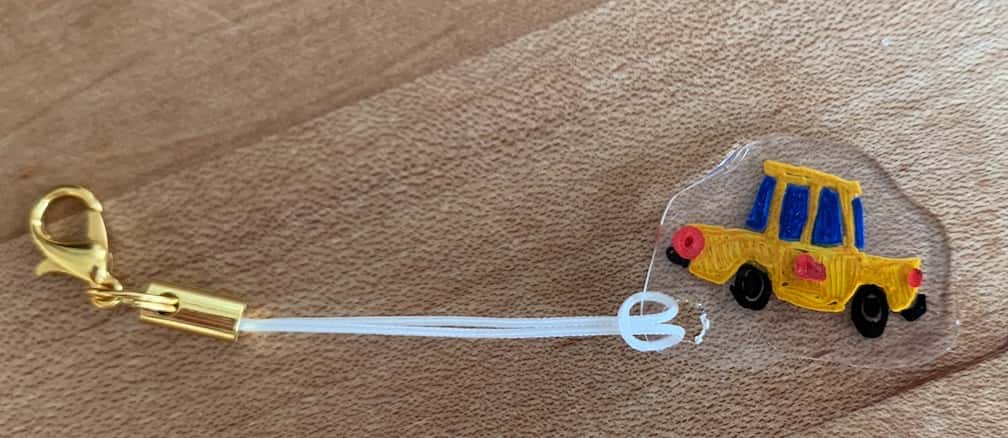
テレビ番組監修・イベント等のお知らせ
- 8月27日(木)科学監修番組放送予定
- 9月20日(日)ダビンチマスターズ出演予定
- 10月10日(土)11:15~12:00 千葉市科学フェスタ2026「桑子先生の回転科学ショー」にてサイエンスショーを行います。
- 12月26日(土) ナリカサイエンスアカデミー(教員向け実験講習会)開催
書籍のお知らせ
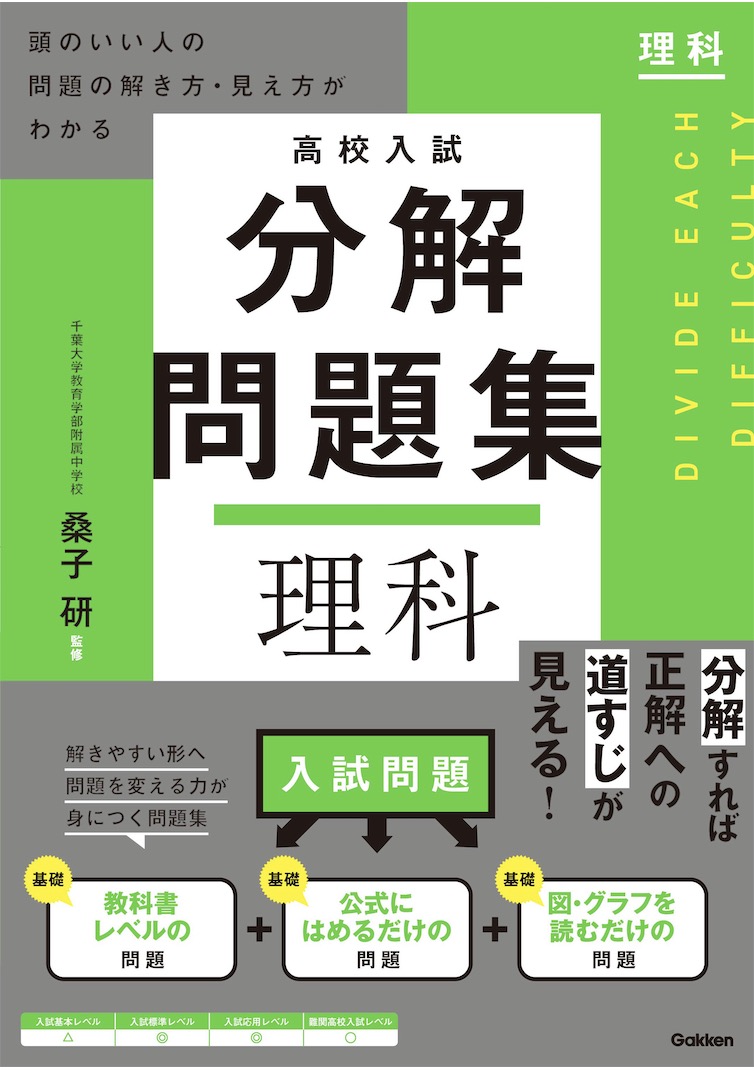
- 『高校入試 分解問題集 理科』(学研)…難しい問題も小さな問題に分解することで、問題を解くことができます。そんな分解の技術が身につくように深く関わりを持って作りました。
 『大人のための高校物理復習帳』(講談社)…一般向けに日常の物理について公式を元に紐解きました。特設サイトでは実験を多数紹介しています。※増刷がかかり6刷となりました(2026/02/01)

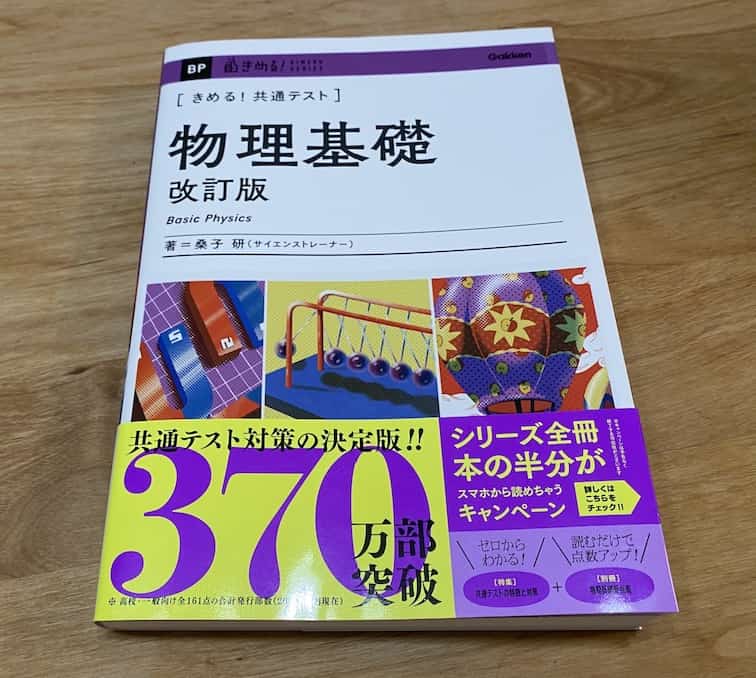
- 『きめる!共通テスト 物理基礎 改訂版』(学研)… 高校物理の参考書です。イラストを多くしてイメージが持てるように描きました。授業についていけない、物理が苦手、そんな生徒におすすめです。特設サイトはこちら。
各種SNS(更新情報をお届け!)
【日本語】X(Twitter)/instagram/Facebook 【英語】BlueSky/Threads
Explore
- 楽しい実験…お子さんと一緒に夢中になれるイチオシの科学実験を多数紹介しています。また、高校物理の理解を深めるための動画教材も用意しました。
- 理科の教材… 理科教師をバックアップ!授業の質を高め、準備を効率化するための選りすぐりの教材を紹介しています。
- Youtube…科学実験等の動画を配信しています。
- 科学ラジオ …科学トピックをほぼ毎日配信中!AI技術を駆使して作成した「耳で楽しむ科学」をお届けします。
- 講演 …全国各地で実験講習会・サイエンスショー等を行っています。
- About …「科学のネタ帳」のコンセプトや、運営者である桑子研のプロフィール・想いをまとめています。
- お問い合わせ …実験教室のご依頼、執筆・講演の相談、科学監修等はこちらのフォームからお寄せください。