Become a Master Detective! Uncovering the “Hidden Résumé” of Carnivores and Herbivores from Real Skulls
I’m Ken Kuwako, your Science Trainer. Every day is an experiment!
If a set of sun-bleached animal bones were placed right in front of you, what would you feel? Would you be a little spooked, or would you find them fascinating? In reality, an animal’s skull is far more than just a relic; it is a “Resume of Life” that eloquently tells the story of what they ate, the landscapes they roamed, and exactly how they survived.
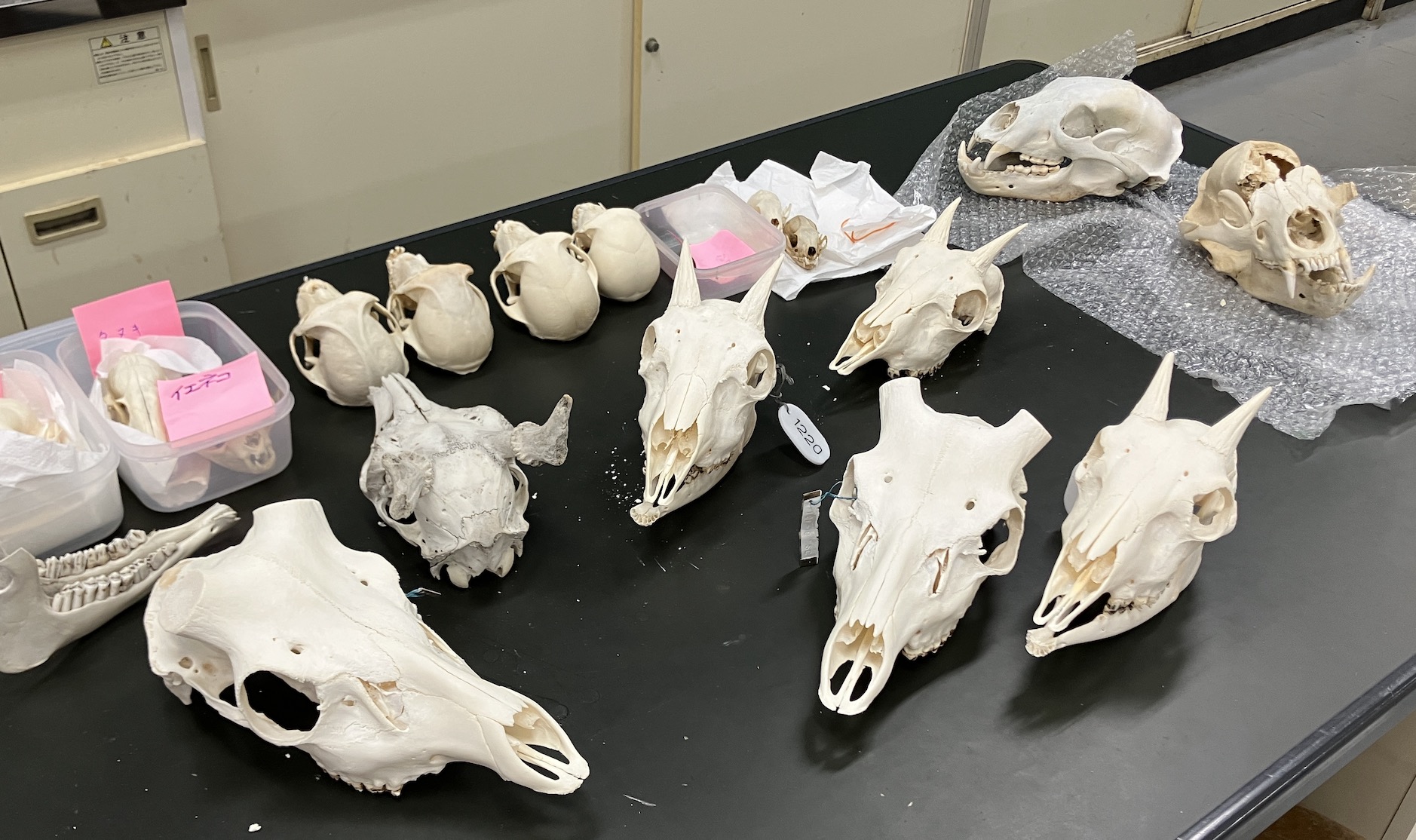
Today, I’m excited to share a look into a very special science class. We used real skulls, handled with the utmost respect, from animals that unfortunately lost their lives in accidents like road collisions. These teaching materials were provided by my research collaborator, Mr. Y, who also designed the flow of this lesson. A huge thank you to him!
Silent Bones, Vivid Stories: The Reality of the Wild
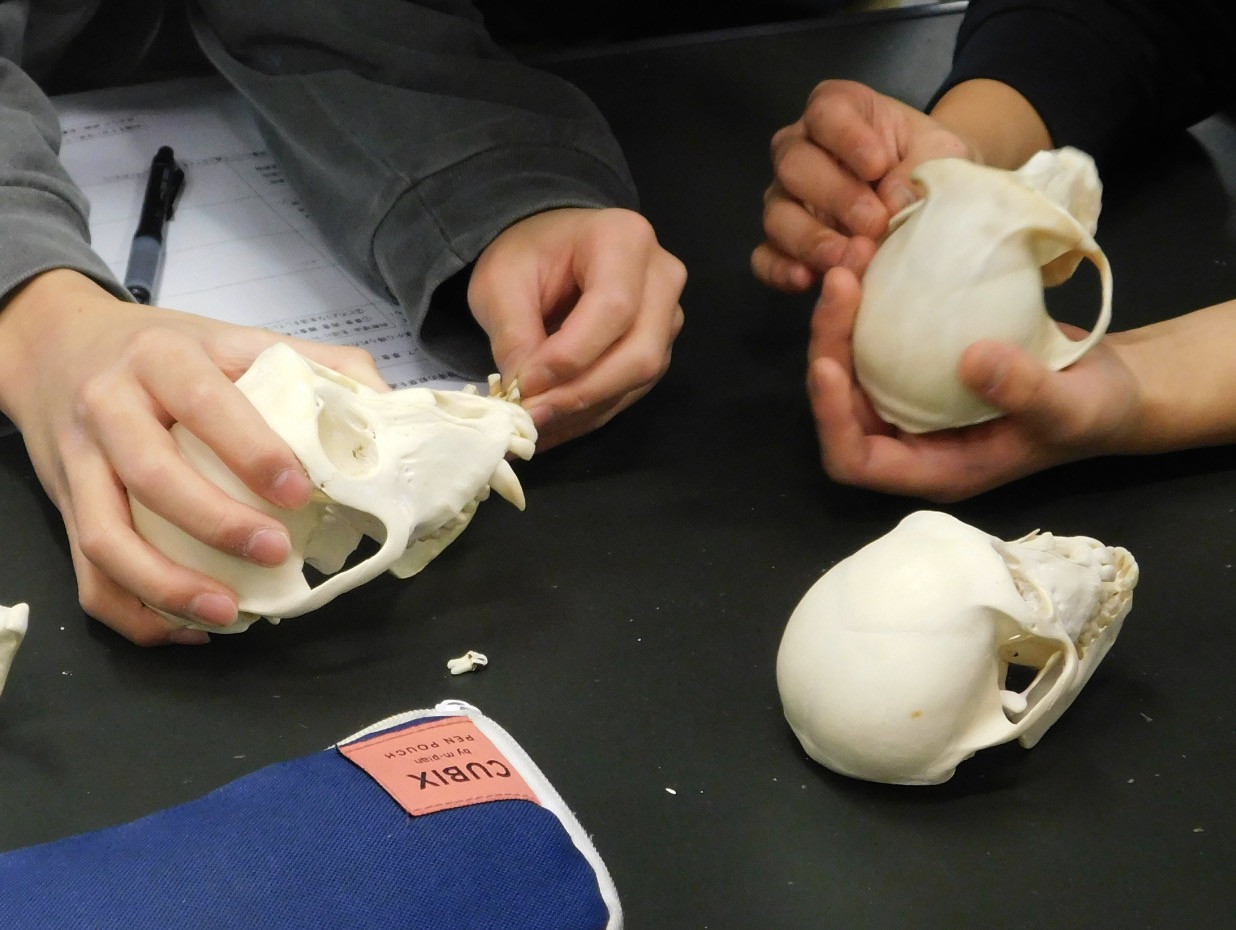
Spread across the classroom were authentic skulls of martens, bears, raccoons, and even domestic cats. Unlike the flat illustrations or photos you see in textbooks, the real things possess a unique texture and an overwhelming presence that demands attention.
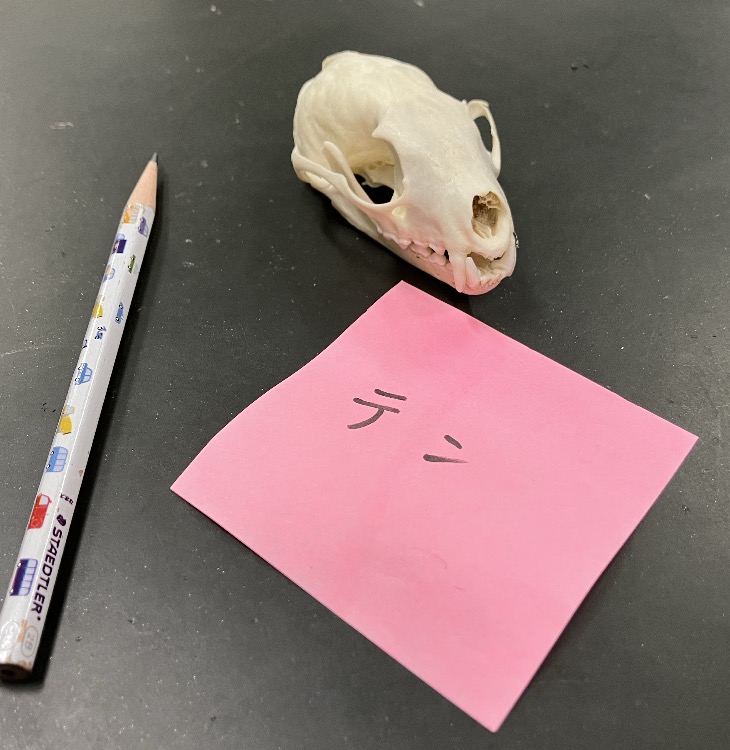
Marten
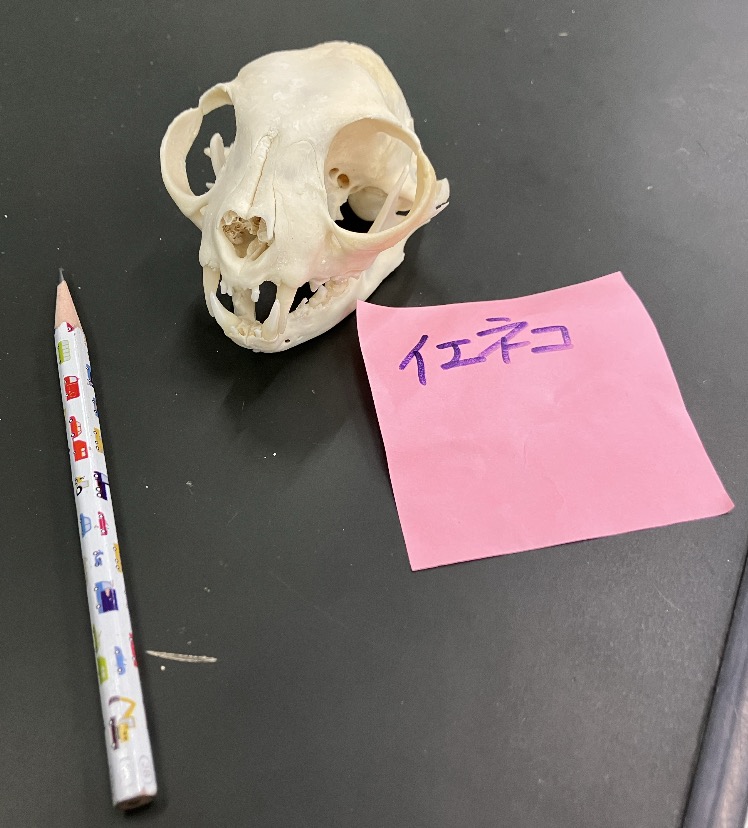
Domestic Cat
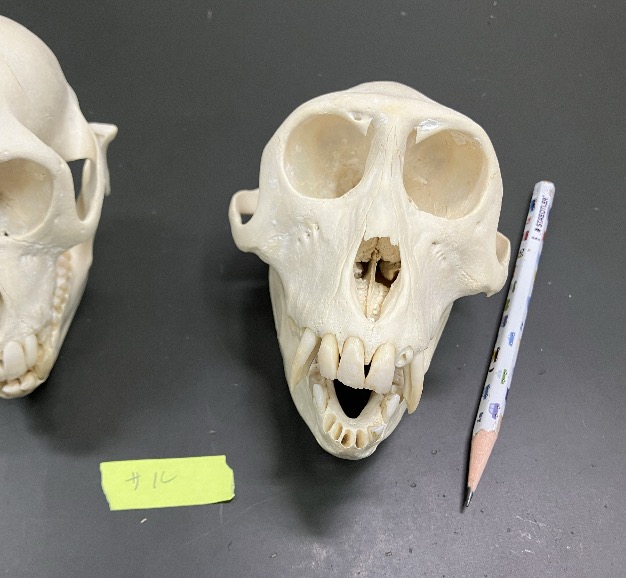
Monkey
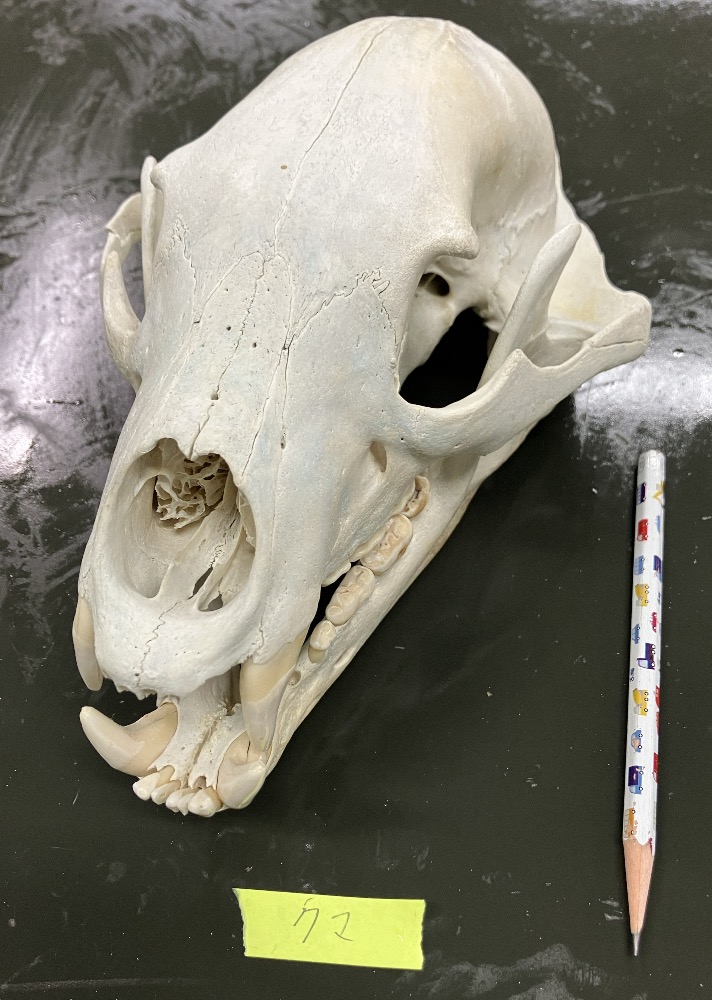
Bear
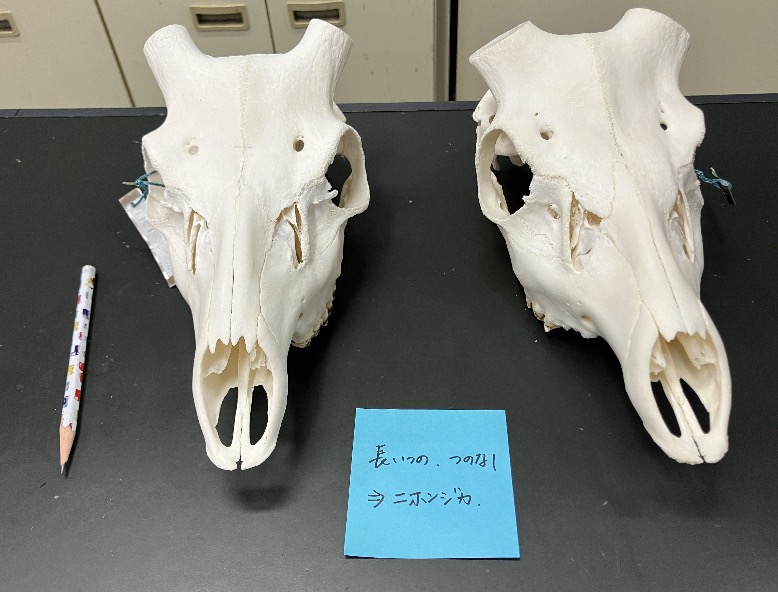
Playing Detective: Can You Identify the Mystery Animal?
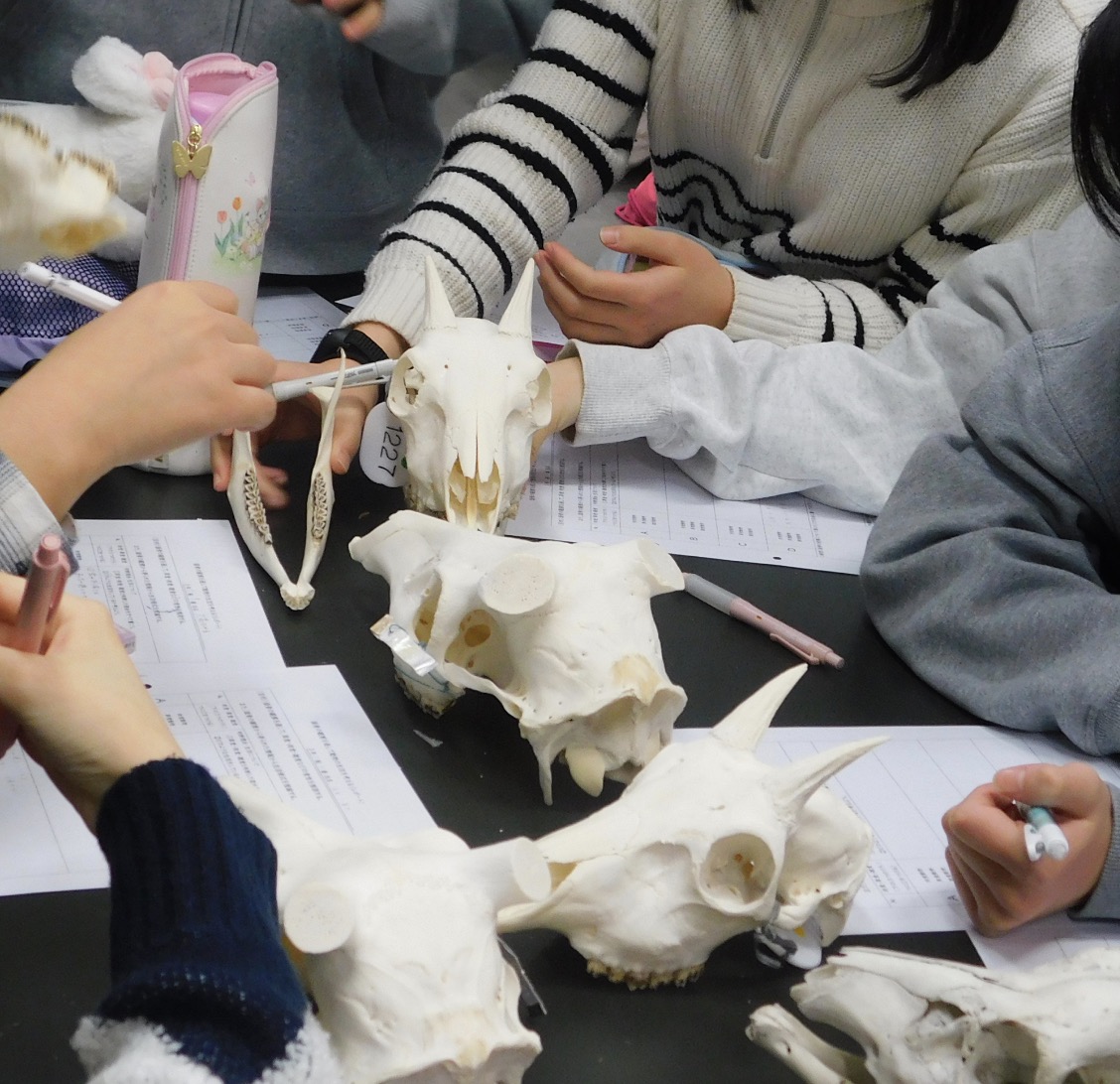
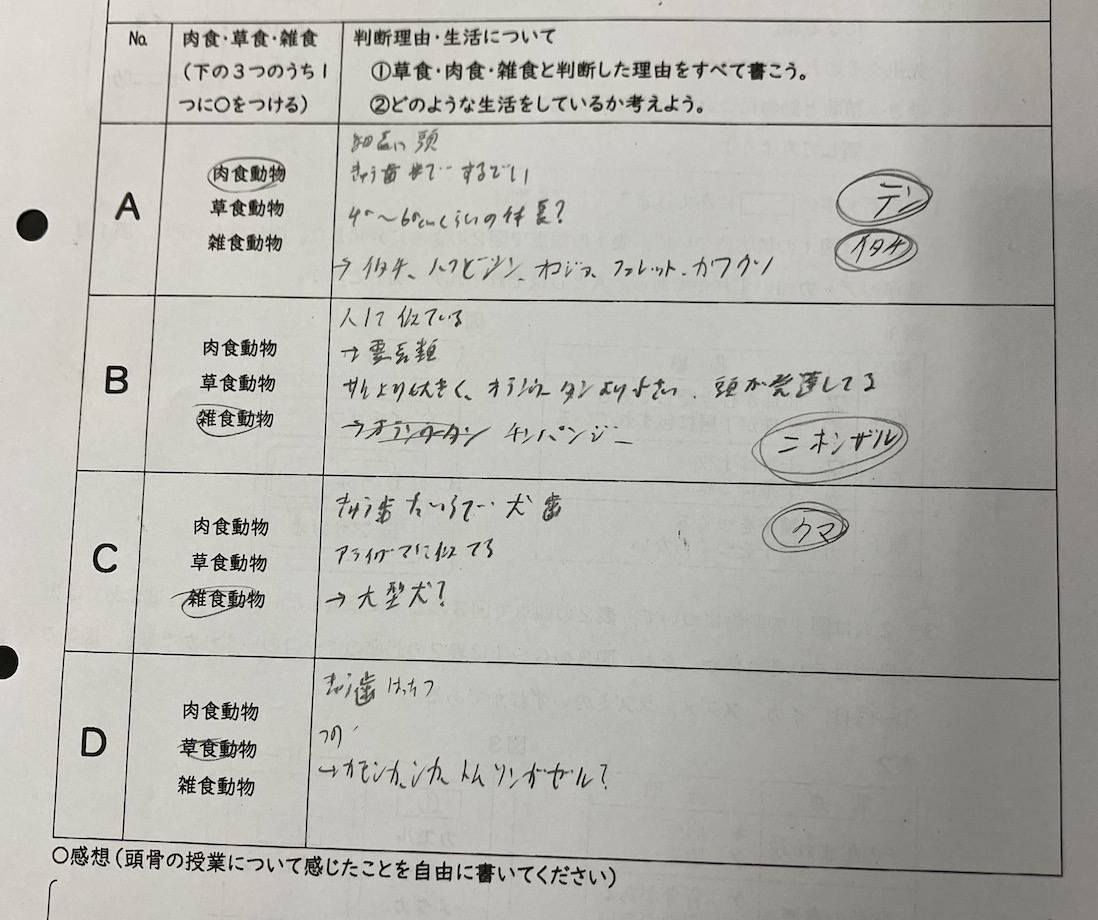
In this lesson, students became “Skull Detectives.” Each group observed the bone structures on their desks to deduce whether the animal was a carnivore, herbivore, or omnivore—and ultimately, what species it was.
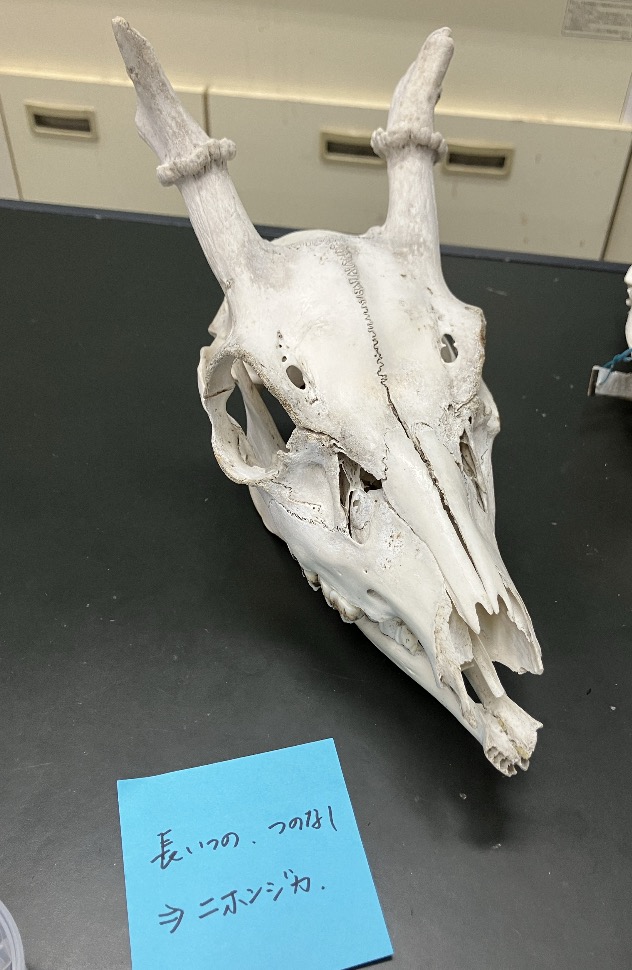
Sika Deer
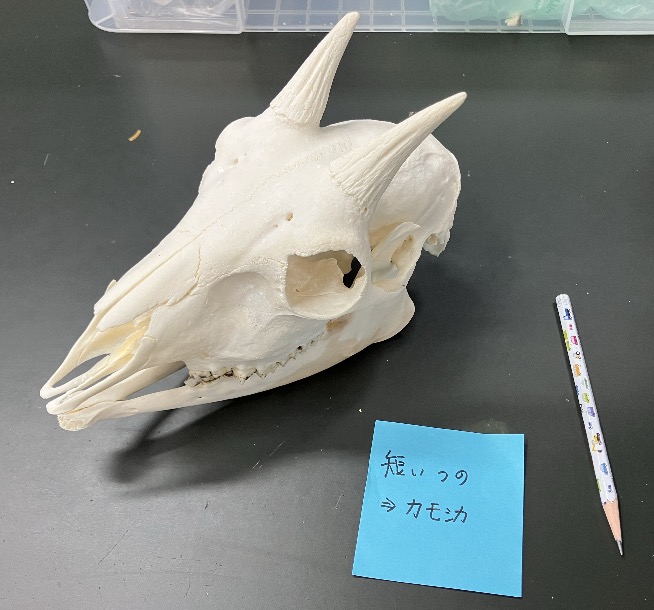
Serow
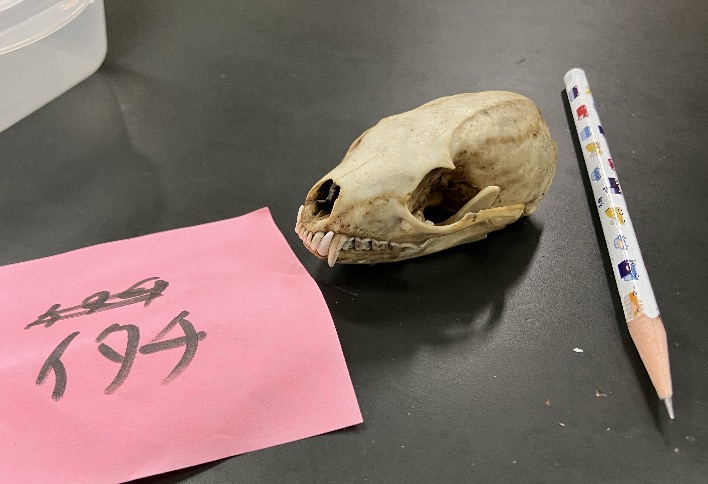
Weasel
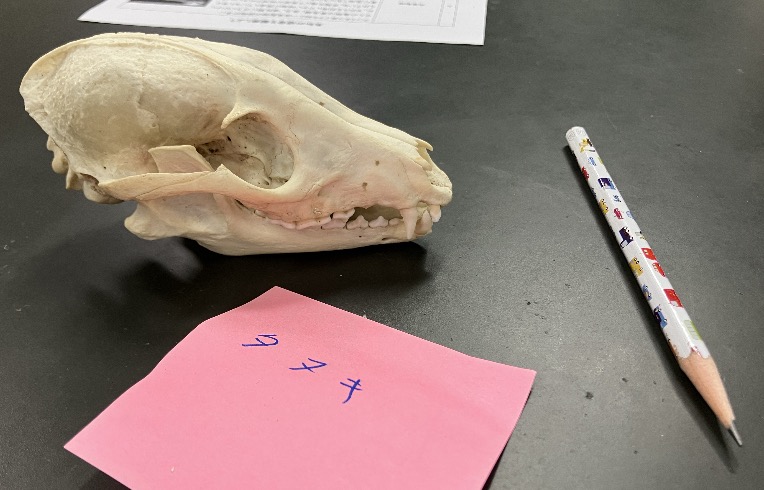
Raccoon Dog
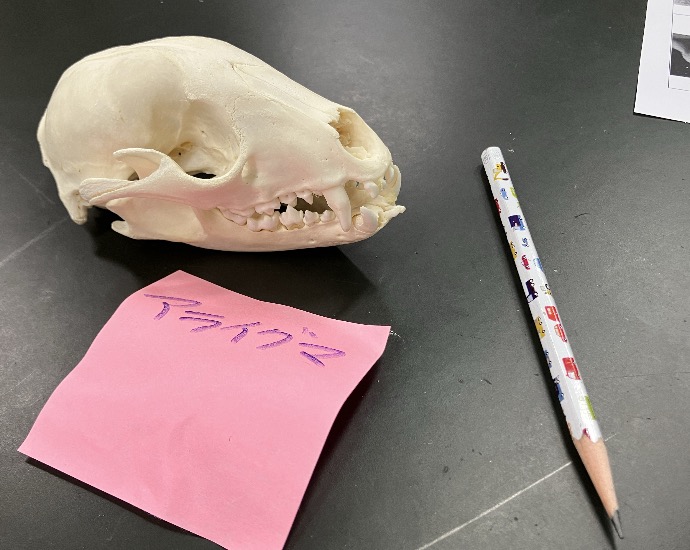
Raccoon
“Look how sharp these teeth are! This one definitely eats meat,” one student exclaimed. Another noted, “The eyes are on the sides of the head—maybe that’s to spot enemies faster?” Watching them debate was incredible. “Is this a tiger?” “Wait, if it’s from Japan, maybe it’s a marten!” Their curiosity was palpable as they dove into the mystery.
Design With a Purpose: Why Every Shape Matters
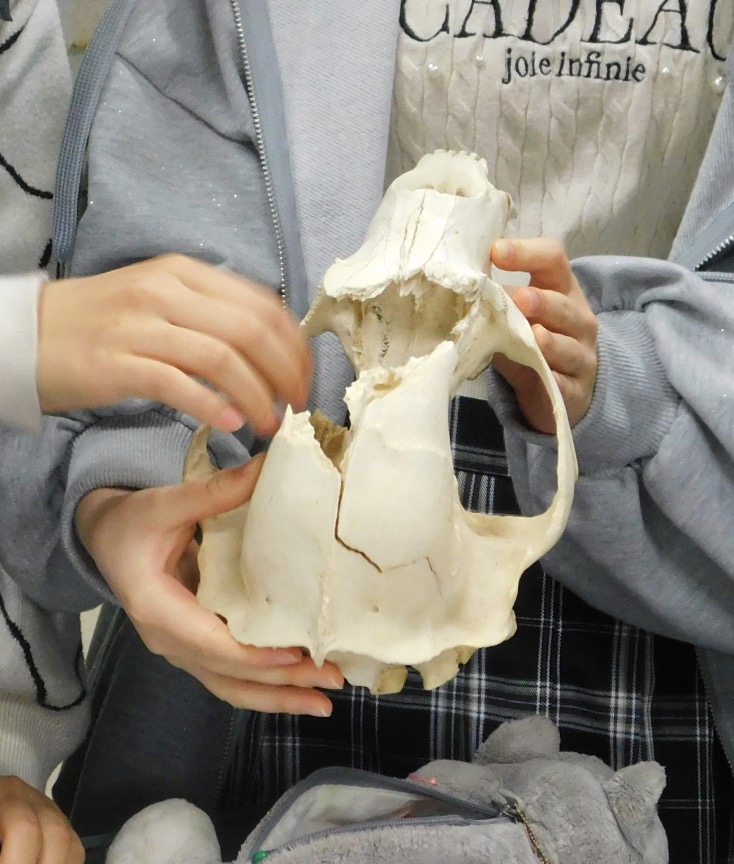
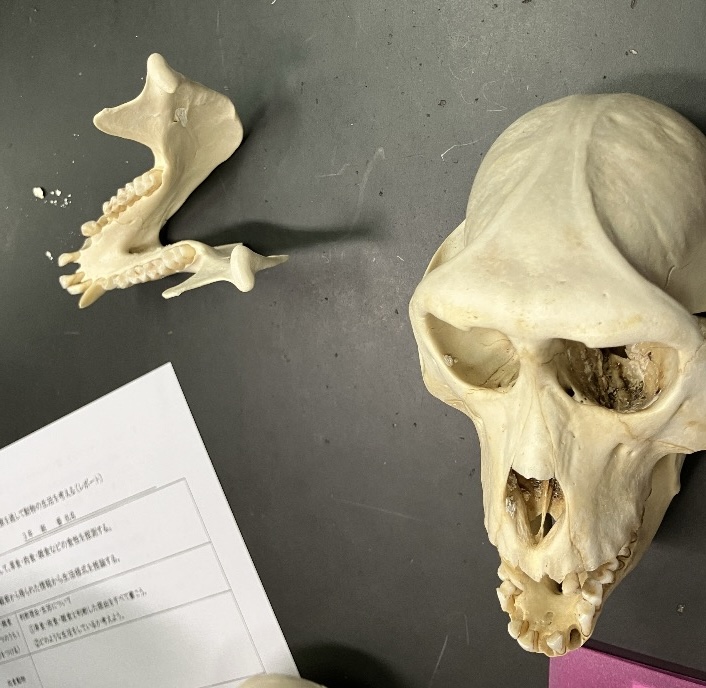
In nature, every “form” has a “function.” For instance, when looking at a monkey’s skull, you’ll notice the eye sockets face directly forward. This allows for 3D stereoscopic vision, which is essential for accurately measuring distances when swinging from branch to branch.
In contrast, herbivores like deer have eyes positioned on the sides of their heads. This provides a wide field of view, ensuring they can detect a predator sneaking up on them even while they are busy grazing.
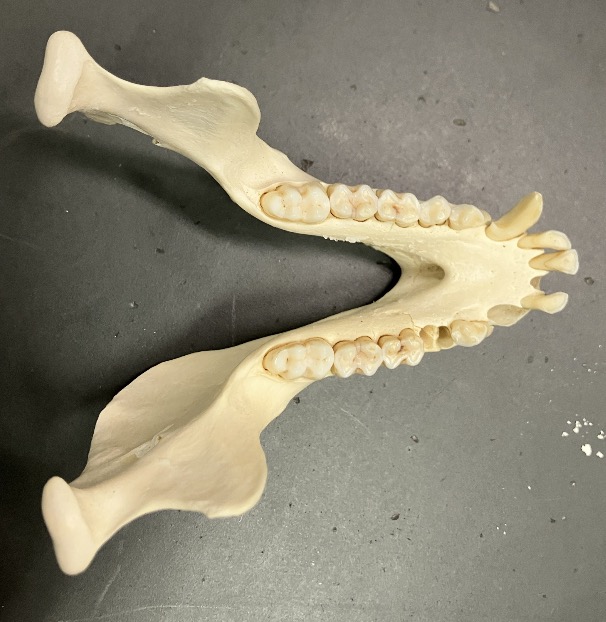
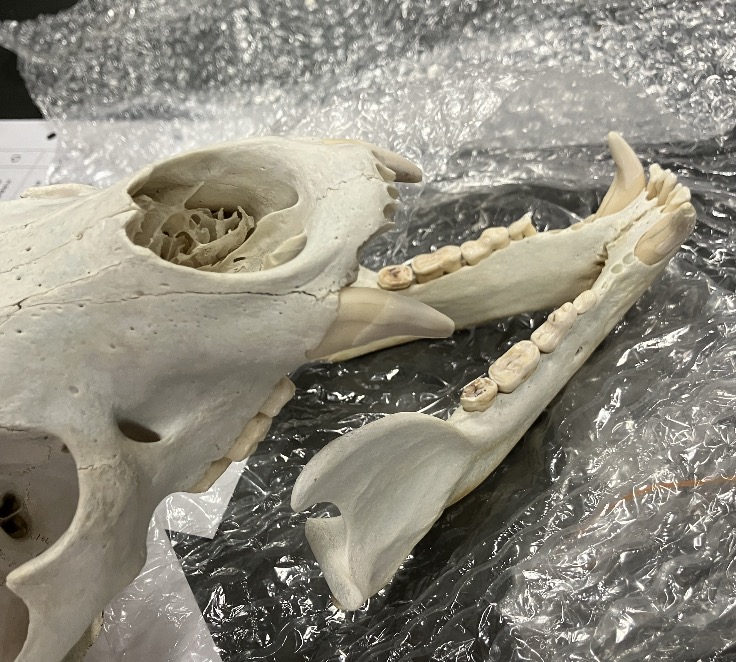
Teeth are equally revealing. If you look closely at the lower jaw of a bear, you’ll see sharp canines paired with flat molars in the back for grinding. This is the hallmark of an omnivore that enjoys both meat and plants. Every curve and ridge of the bone is a masterpiece of functional beauty designed for survival.
These are the lower teeth of a bear.
Passing the Torch of Life
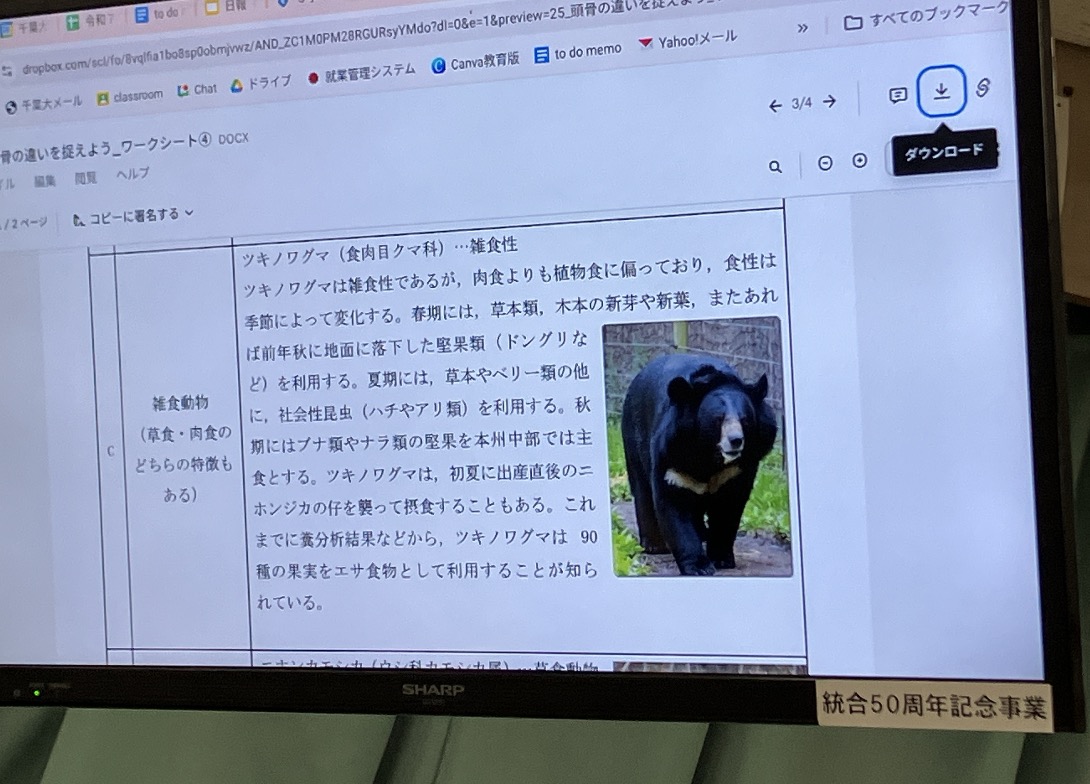
At the end of the lesson, we revealed the answers and explored the ecology of each animal. Through these bones, the students could almost see what these creatures chased and what they fled from in the mountains. We felt a deep connection to the grand cycle of life.
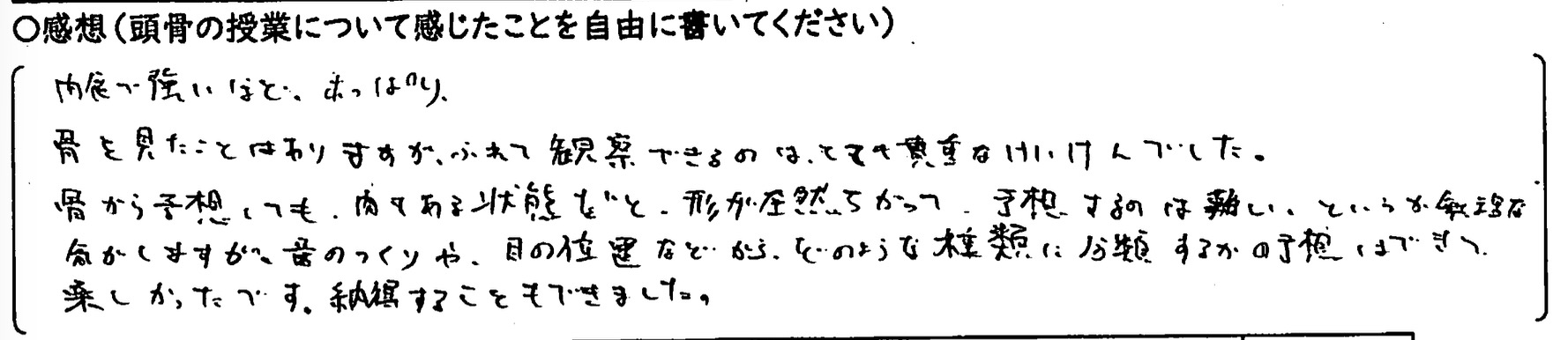
Seeing the sparkle in the students’ eyes reminded me why hands-on learning is so vital. These bones, left behind by animals that have finished their journey, are the best teachers we could ask for—sharing a magical scientific story of evolution and adaptation.
Contact and Inquiries
Let’s make the wonders of science a part of your daily life! I share fun experiments you can try at home and easy-to-understand tips. Feel free to explore more!
My “Science Notebook” is now a book! Find it here.
Learn more about me, Ken Kuwako, here.
For inquiries regarding writing, speaking, science workshops, or TV consulting, click here. – Stay updated via X (Twitter)!
 Check out my experiment videos on the Science Material Channel!
NEW 分解問題集 理科
- 7月21日発売!『高校入試 分解問題集 理科』(学研)…難しい問題も小さな問題に分解することで、問題を解くことができます。そんな分解の技術が身につくように深く関わりを持って作りました。
7・8月のイチオシ実験!
夏でプシュッと爽やか実験!
テレビ番組監修・イベント等のお知らせ
- 7月30日(水)科学監修「TIF presents ONE SONG FES」(フジテレビ) 26:15~27:15
- 12月26日(土) ナリカサイエンスアカデミー(教員向け実験講習会)開催
書籍のお知らせ
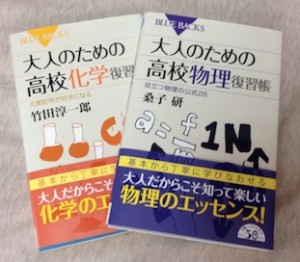
- 『大人のための高校物理復習帳』(講談社)…一般向けに日常の物理について公式を元に紐解きました。特設サイトでは実験を多数紹介しています。※増刷がかかり6刷となりました(2026/02/01)
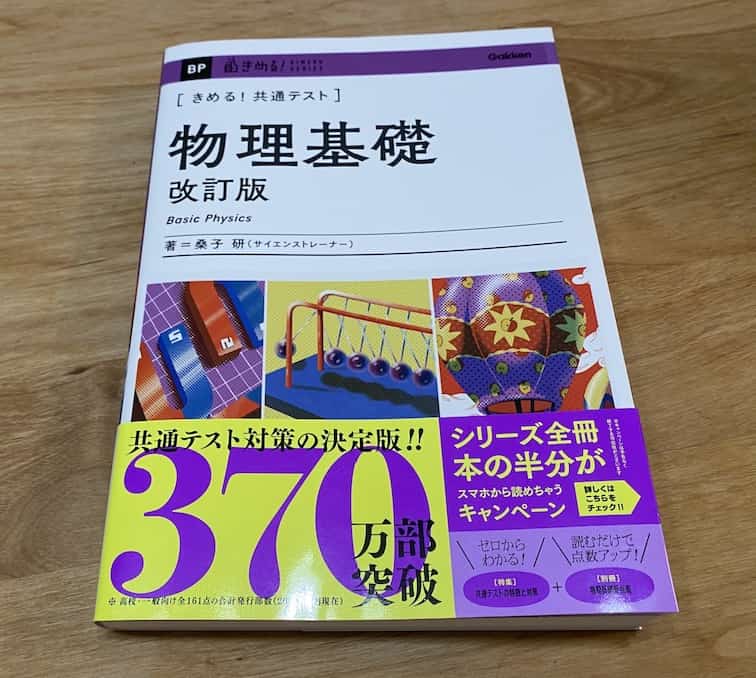
- 『きめる!共通テスト 物理基礎 改訂版』(学研)… 高校物理の参考書です。イラストを多くしてイメージが持てるように描きました。授業についていけない、物理が苦手、そんな生徒におすすめです。特設サイトはこちら。
各種SNS(更新情報をお届け!)
【日本語】X(Twitter)/instagram/Facebook 【英語】BlueSky/Threads
Explore
- 楽しい実験…お子さんと一緒に夢中になれるイチオシの科学実験を多数紹介しています。また、高校物理の理解を深めるための動画教材も用意しました。
- 理科の教材… 理科教師をバックアップ!授業の質を高め、準備を効率化するための選りすぐりの教材を紹介しています。
- Youtube…科学実験等の動画を配信しています。
- 科学ラジオ …科学トピックをほぼ毎日配信中!AI技術を駆使して作成した「耳で楽しむ科学」をお届けします。
- 講演 …全国各地で実験講習会・サイエンスショー等を行っています。
- About …「科学のネタ帳」のコンセプトや、運営者である桑子研のプロフィール・想いをまとめています。
- お問い合わせ …実験教室のご依頼、執筆・講演の相談、科学監修等はこちらのフォームからお寄せください。