Reveal the Invisible Force! Exploring Action and Reaction with a Force Sensor
Hi, I’m Ken Kuwako, your Science Trainer. To me, every day is a new experiment!
“If only we could actually see force…” Have you ever felt that way while sitting in a science class—or perhaps while teaching one? In the world of physics, “force” is the foundation of everything. However, because it is invisible, trying to imagine it solely in your head is a monumental task. For many middle school students, mechanics becomes the first major wall they hit in their studies.
Digital sensor technology is the tool that vividly brings this “invisible world” to light. While people often shy away from these devices thinking they are too expensive or difficult to set up, having just one for demonstrations can dramatically increase how much a lesson resonates with students. Today, I want to introduce an experiment using my favorite tools—Narika’s “EasySense” and “Force Sensors”—to visualize a vital principle of physics: Newton’s Third Law, also known as the Law of Action and Reaction.
Visualizing Invisible Force: The Magic of the Force Sensor
A major turning point in understanding physics is whether or not a person can perceive force as a “vector” (something with both direction and magnitude). This is exactly where the Force Sensor comes to the rescue.
The most iconic example of a force you can “see” through data is the Law of Action and Reaction. You know the one: “If you punch a wall, the wall punches you back with the same amount of force.” Even if we understand the logic, it is difficult to capture the exact moment two identical forces act in opposite directions. In this experiment, we use two sensors and set them up so that one moves in a positive direction while the other moves in a negative direction on the graph. This allows us to visualize the movement of force as if it were reflecting in a mirror.
Science Recipe: Witnessing Action and Reaction
What You Need
EasySense, 2 Force Sensors, Windows PC, Ultrasonic Sensor, 2 Dynamics Carts, and weights.
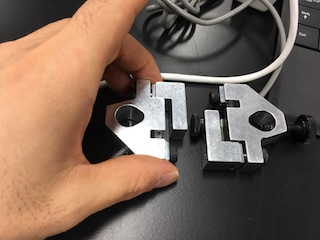
This is the Force Sensor.
The Method
Attach a force sensor to each of the two dynamics carts.
Face the carts toward each other and let them collide.

Add a weight to one of the carts (changing its mass) and try the collision again.
Experiment Results: The Mirror World Appears in Real-Time
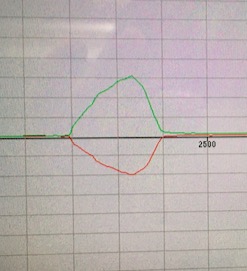
When you perform the experiment, the changes in force are recorded on the computer screen in real-time. First, let’s look at what happens when we gently press the two force sensors against each other.
In the video, you can see the green and blue lines appearing in opposite directions as the pressure is applied. When one line creates a peak, the other creates a valley. The graph perfectly highlights the reality of “pushing and being pushed back.”
In this specific trial, the zero-point calibration on one sensor was a bit off, so the numbers look slightly misaligned. However, you can still clearly see that “forces of almost identical magnitude occur at the exact same timing in opposite directions.”
The Scientific World Revealed by This Experiment
The fascinating thing about this experiment is how a law that seems “obvious” on paper manifests as a complex, dancing curve. No matter how irregularly a human applies force, the opposing sensor reacts instantly, returning a mirror-image force without a hair’s breadth of difference.
The Law of Action and Reaction is the reason we can walk by pushing off the ground, and it’s the principle that allows rockets to blast off into space. “Whenever you apply a force, you are always receiving a force in return.” Once you experience this universal rule through a graph, you’ll start to see every phenomenon around you as an “exchange of force.”
While we focused on action and reaction today, force sensors are useful in many other scenarios. For example, if you attach one to the weight of a pendulum, you can graph the changes in tension and acceleration as it swings.
I highly encourage everyone to try these sensor experiments in your classrooms or for independent research projects to capture these invisible forces. If any teachers out there have other creative ways to use these tools, I’d love to hear them! Let’s enjoy “visualizing” science together.
Inquiries and Requests
Making the wonders of science more accessible! I’ve put together fun experiments you can do at home and easy-to-understand tips. Feel free to explore more!
The “Science Notes” content is now a book! Details here
Learn more about the author, Ken Kuwako, here
For work requests (writing, lectures, workshops, TV supervision, appearances, etc.), click here – I’m posting updates on X (Twitter)!
 Check out experiment videos on the Science Lab Channel!
9月のイチオシ実験!
お弁当箱をプラバンがわりにしてキーホルダーを作ろう!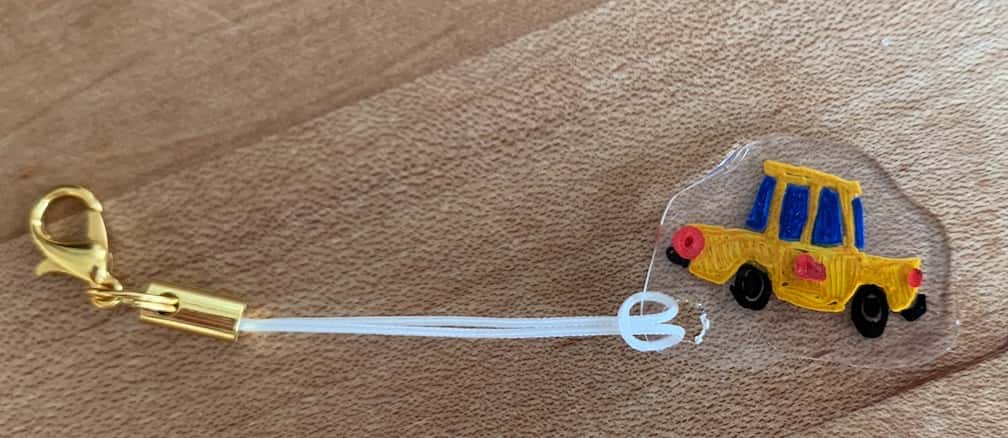
テレビ番組監修・イベント等のお知らせ
- 8月27日(木)科学監修番組放送予定
- 9月20日(日)ダビンチマスターズ出演予定
- 10月10日(土)11:15~12:00 千葉市科学フェスタ2026「桑子先生の回転科学ショー」にてサイエンスショーを行います。
- 12月26日(土) ナリカサイエンスアカデミー(教員向け実験講習会)開催
書籍のお知らせ
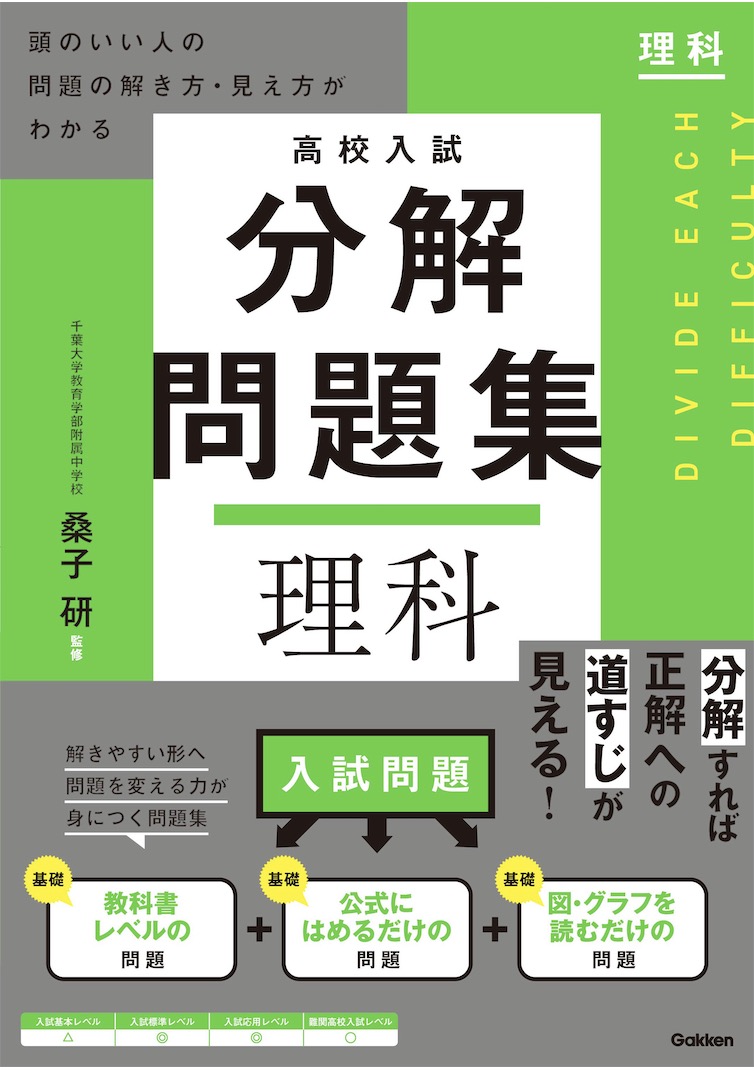
- 『高校入試 分解問題集 理科』(学研)…難しい問題も小さな問題に分解することで、問題を解くことができます。そんな分解の技術が身につくように深く関わりを持って作りました。
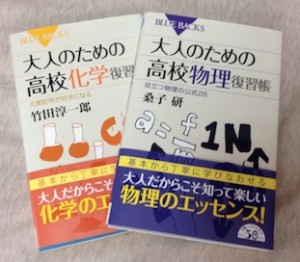
 『大人のための高校物理復習帳』(講談社)…一般向けに日常の物理について公式を元に紐解きました。特設サイトでは実験を多数紹介しています。※増刷がかかり6刷となりました(2026/02/01)
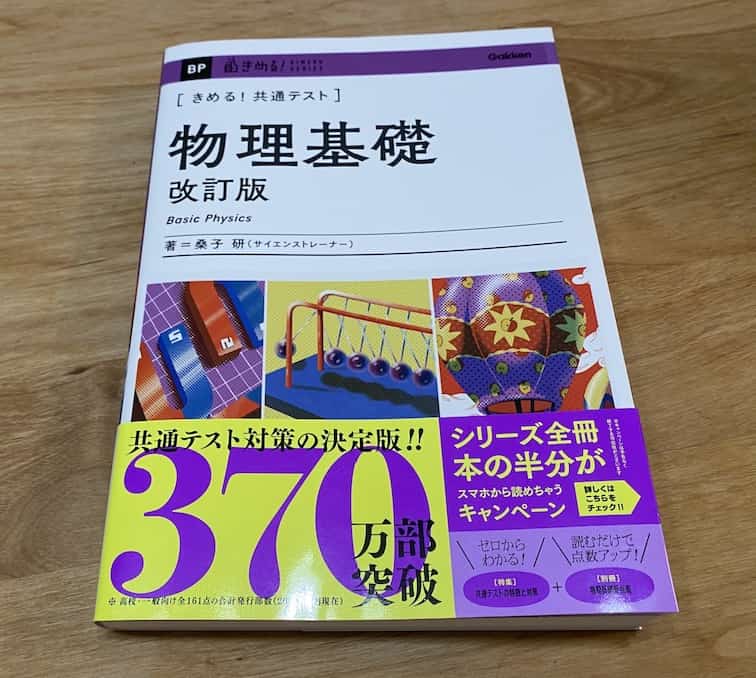
- 『きめる!共通テスト 物理基礎 改訂版』(学研)… 高校物理の参考書です。イラストを多くしてイメージが持てるように描きました。授業についていけない、物理が苦手、そんな生徒におすすめです。特設サイトはこちら。
各種SNS(更新情報をお届け!)
【日本語】X(Twitter)/instagram/Facebook 【英語】BlueSky/Threads
Explore
- 楽しい実験…お子さんと一緒に夢中になれるイチオシの科学実験を多数紹介しています。また、高校物理の理解を深めるための動画教材も用意しました。
- 理科の教材… 理科教師をバックアップ!授業の質を高め、準備を効率化するための選りすぐりの教材を紹介しています。
- Youtube…科学実験等の動画を配信しています。
- 科学ラジオ …科学トピックをほぼ毎日配信中!AI技術を駆使して作成した「耳で楽しむ科学」をお届けします。
- 講演 …全国各地で実験講習会・サイエンスショー等を行っています。
- About …「科学のネタ帳」のコンセプトや、運営者である桑子研のプロフィール・想いをまとめています。
- お問い合わせ …実験教室のご依頼、執筆・講演の相談、科学監修等はこちらのフォームからお寄せください。