Held Up Without Glue! The Magic of Friction from Just Two Toothbrushes
I’m Ken Kuwako, a Science Trainer. Every day is an experiment!
Can you imagine a toothbrush suddenly transforming into a heavy-lifting powerhouse? We’re going to show you an experiment where a simple tool, usually just for cleaning teeth, unleashes astonishing power through the magic of science. It’s a perfect, everyday trick to experience the fun of physics!
The Experiment: Toothbrush vs. Banana! Which Wins?
All you need are two toothbrushes with firm bristles. The procedure is incredibly simple, but the result is shocking.
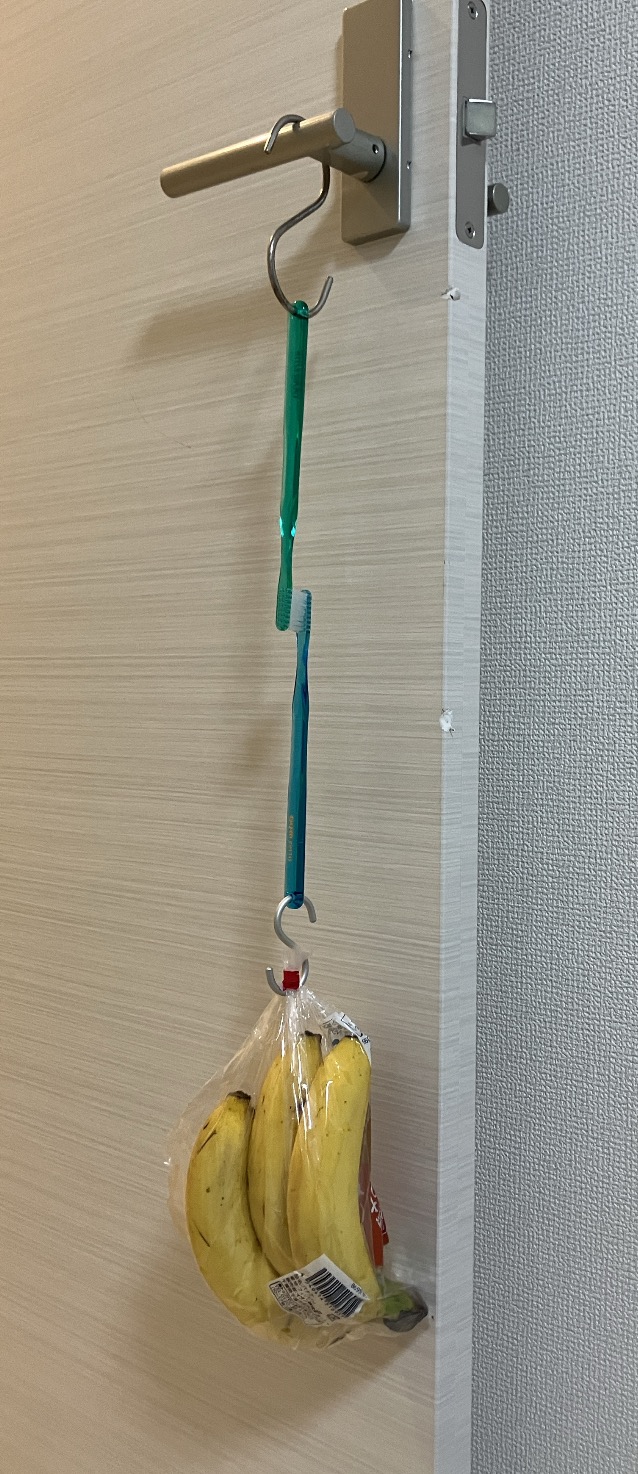
First, hang one toothbrush from a high spot using an S-hook or similar item.
Next, take the second toothbrush and mesh its bristles tightly with the hanging brush’s bristles, gripping them firmly together.
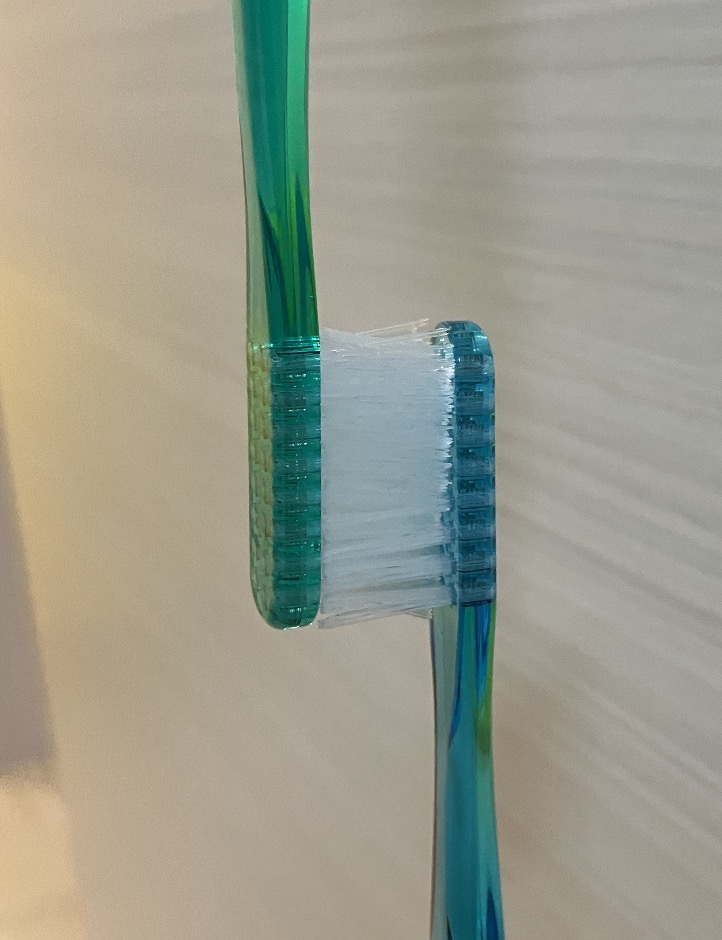
While lightly pressing the meshed section with your fingers, attach a weight to the bottom brush.
We decided to hang an entire bunch of bananas! That’s quite a load, isn’t it? You’d assume it must fall, but when you release your fingers…
The Amazing Result: It Holds!
Incredibly, the bottom toothbrush doesn’t slip! It firmly supports the bunch of bananas! We didn’t use any glue or tape—just the interlocking action of the bristles.
Science Explained: The Tiny Forces that Add Up to “Friction”
How is this possible? The secret lies in friction.
Each individual bristle on a toothbrush is weak and only exerts a tiny amount of force. However, a toothbrush is packed with hundreds, even thousands, of bristles. When you mesh the two brushes together, each bristle rubs against the others and slightly bends. The attempt of the bristles to straighten back out creates a strong squeezing force between the brushes, which in turn generates friction.
“Tiny Frictional Force per Bristle × Hundreds of Bristles”
This simple addition of forces creates an enormous cumulative frictional force—enough to support a whole bunch of bananas!
The Same Principle as the Famous Phone Book Trick
If this phenomenon sounds familiar, you might be remembering a famous experiment seen on TV or at science shows.
That’s right—the experiment where two interleaved phone books cannot be pulled apart, even by strong adults! In that case, the frictional force from each individual sheet of paper is small, but when hundreds of pages overlap, the combined force becomes powerful enough to tow a car.
This toothbrush experiment is essentially a “miniature version” of the phone book challenge! It’s exciting because you can experience this amazing law of physics using simple, affordable items you might even find at a dollar store.
Conclusion: The Hidden Power in the Mundane
We rarely think about the benefits of friction, but it’s why your sneakers don’t slip, and why Velcro (hook-and-loop fasteners) sticks. Velcro, in fact, was invented by observing how plant burrs cling to animal fur—a principle very similar to the “structural friction” we see in this toothbrush experiment.
I was genuinely surprised to learn a toothbrush could be used for such a demonstration. Please try this at home or in the classroom. You’ll find discoveries far more exciting than anything in a science textbook!
About Contact and Requests
We aim to make the wonders and fun of science more accessible! We compile easy-to-understand information on fun science experiments you can do at home and the tips behind them. Feel free to browse around! ・The content of our Science Idea Notebook has been published as a book. Details here. ・Find out more about the administrator, Ken Kuwako, here. ・For various requests (writing, lectures, workshops, TV supervision, appearances, etc.), click here. ・Article updates are delivered on X!
 The Science Idea Channel is streaming experiment videos!
9月のイチオシ実験!
お弁当箱をプラバンがわりにしてキーホルダーを作ろう!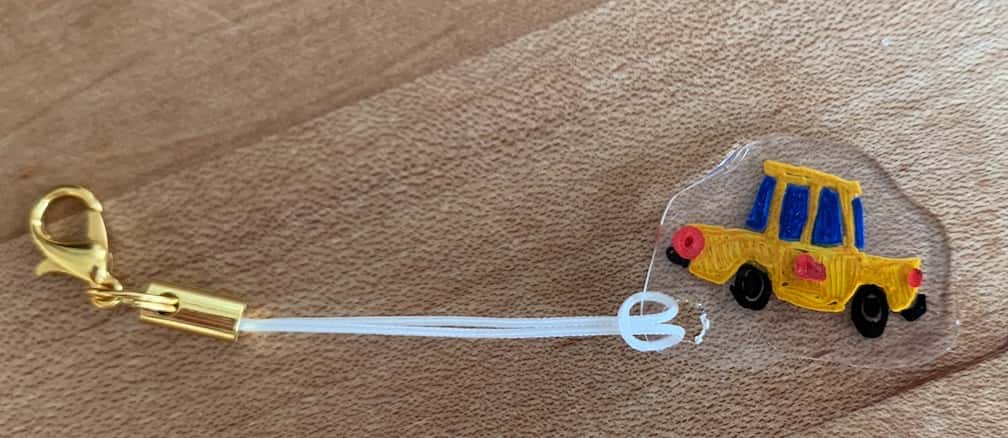
テレビ番組監修・イベント等のお知らせ
- 8月27日(木)科学監修番組放送予定
- 9月20日(日)ダビンチマスターズ出演予定
- 10月10日(土)11:15~12:00 千葉市科学フェスタ2026「桑子先生の回転科学ショー」にてサイエンスショーを行います。
- 12月26日(土) ナリカサイエンスアカデミー(教員向け実験講習会)開催
書籍のお知らせ
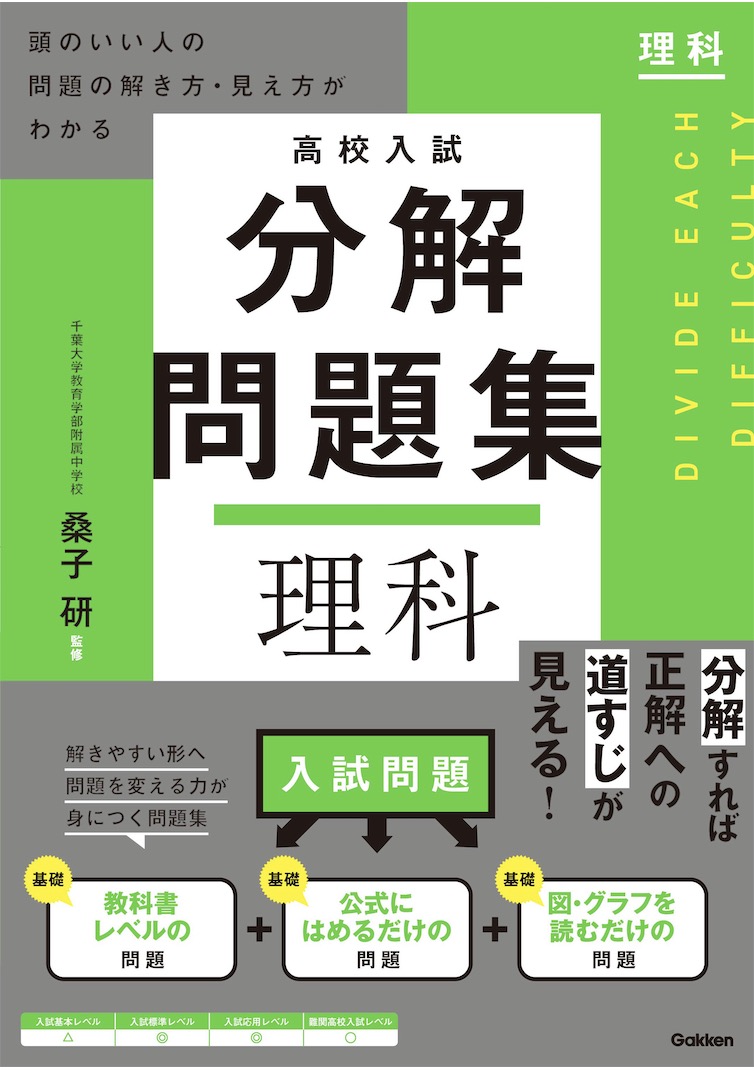
- 『高校入試 分解問題集 理科』(学研)…難しい問題も小さな問題に分解することで、問題を解くことができます。そんな分解の技術が身につくように深く関わりを持って作りました。
 『大人のための高校物理復習帳』(講談社)…一般向けに日常の物理について公式を元に紐解きました。特設サイトでは実験を多数紹介しています。※増刷がかかり6刷となりました(2026/02/01)
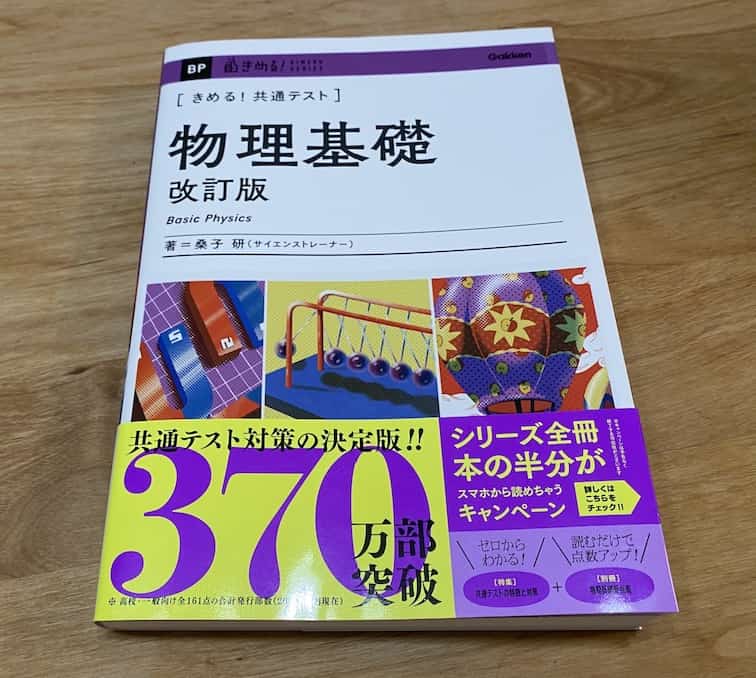
- 『きめる!共通テスト 物理基礎 改訂版』(学研)… 高校物理の参考書です。イラストを多くしてイメージが持てるように描きました。授業についていけない、物理が苦手、そんな生徒におすすめです。特設サイトはこちら。
各種SNS(更新情報をお届け!)
【日本語】X(Twitter)/instagram/Facebook 【英語】BlueSky/Threads
Explore
- 楽しい実験…お子さんと一緒に夢中になれるイチオシの科学実験を多数紹介しています。また、高校物理の理解を深めるための動画教材も用意しました。
- 理科の教材… 理科教師をバックアップ!授業の質を高め、準備を効率化するための選りすぐりの教材を紹介しています。
- Youtube…科学実験等の動画を配信しています。
- 科学ラジオ …科学トピックをほぼ毎日配信中!AI技術を駆使して作成した「耳で楽しむ科学」をお届けします。
- 講演 …全国各地で実験講習会・サイエンスショー等を行っています。
- About …「科学のネタ帳」のコンセプトや、運営者である桑子研のプロフィール・想いをまとめています。
- お問い合わせ …実験教室のご依頼、執筆・講演の相談、科学監修等はこちらのフォームからお寄せください。