Fly a Seed Model! Ride the Wind and Discover Plants’ Genius Designs (Pine, Tree of Heaven & Alsomitra)
I’m Ken Kuwako, your Science Trainer. To me, every day is an experiment!
Back in May, I spotted some Chinese Wingnut fruits at the park.
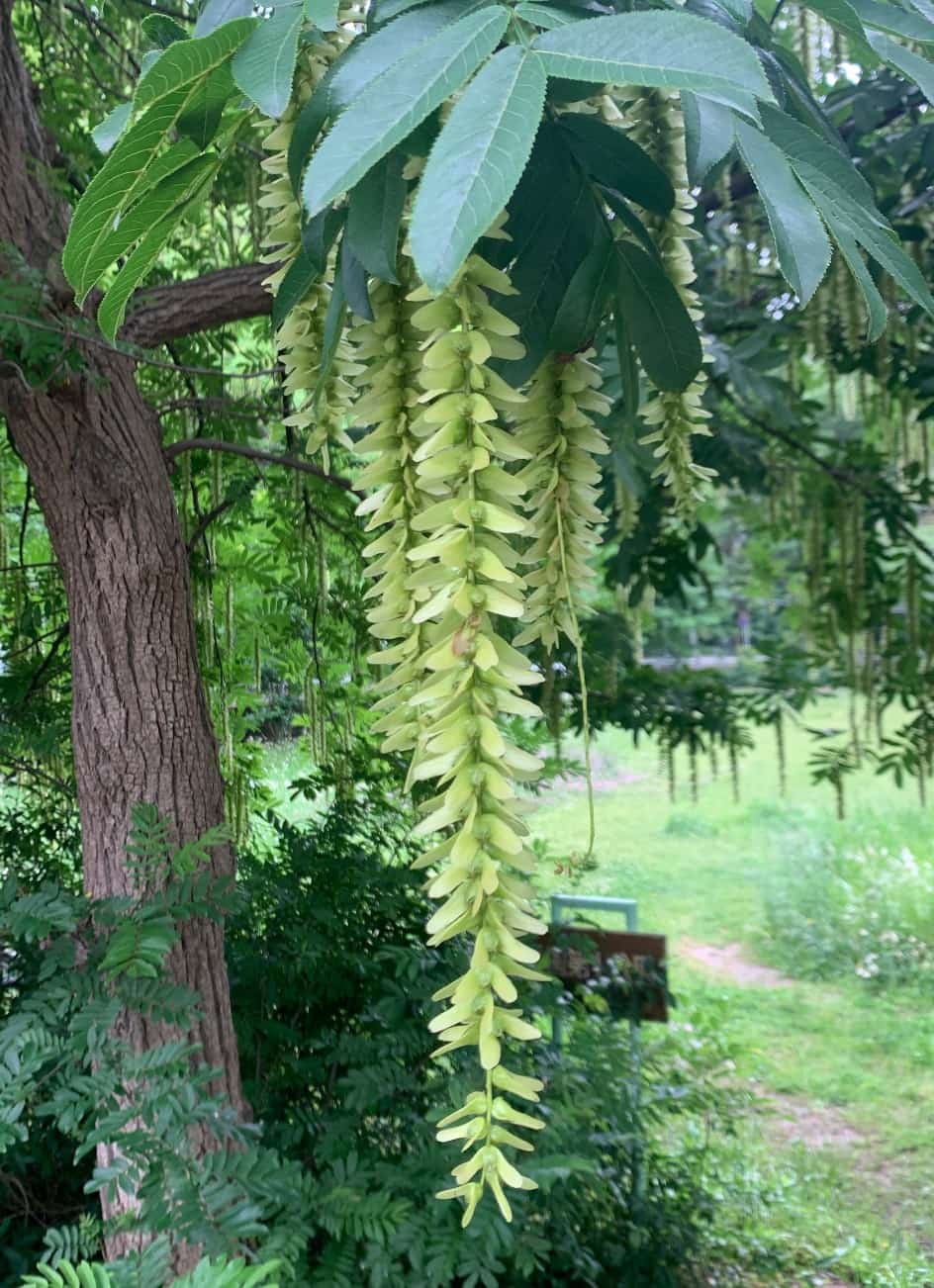
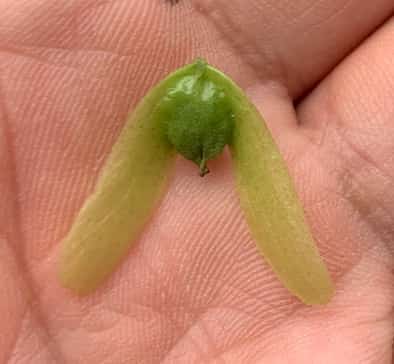
They have a very distinctive shape, with two wings attached to a single fruit. This design is actually a brilliant survival strategy.
Imagine for a moment: if you were rooted to one spot for your entire life, how would you send your children out to explore the wide world? The plants around us are constantly solving this puzzle. They are nature’s tiny inventors. While the parent plant stays grounded, they equip their seeds with incredible flight mechanisms to help them journey to new lands.
These seeds look like miniature planes or helicopters designed by a genius engineer! Today, I want to share the wisdom of these plants and show you a fun workshop where you can recreate their movements using simple materials.
Welcome to Flight School: Plant Edition!
Plants have a very practical reason for sending their seeds far away. If a seed just drops right beneath the parent tree, they’ll end up competing for the same light and nutrients. To avoid this, plants evolved a strategy called wind dispersal (anemochory), using the power of the breeze to travel. Here are our star performers:
Tree of Heaven (Ailanthus): These shaped like propellers, spinning as they drift sideways.
Japanese Maple / Nikko Maple: Their wings are set at a perfect angle, allowing them to spin like helicopter rotors to stay airborne longer.
Pine: These have a thin, single wing that creates a beautiful fluttering descent.
Alsomitra: These seeds have glider-like wings that allow them to coast long distances on the wind.
Lauan: These spin rapidly downward, just like a bamboo copter toy.
When you watch their flight performances, you’ll be amazed by the beautiful designs that seem to have calculated air resistance perfectly.
At-Home Experiment: Building Your Own Flying Seed Models
The best way to understand how they fly so well is to build them yourself! By mimicking the shapes of real seeds, you’ll see just how logical nature’s designs really are.
What You’ll Need
Origami paper (any color you like!)
Scissors
Glue tape (or scotch tape)
Paper clips (used as weights)
1. Pine and Maple Seed Models
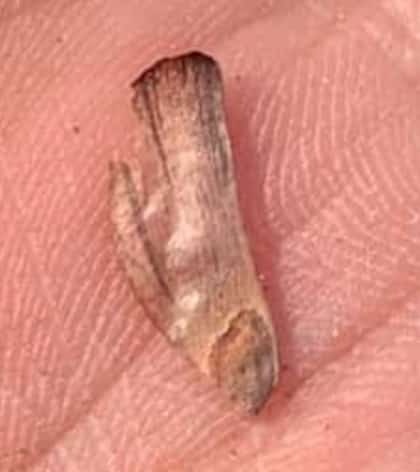
Here is a photo I took of a real pine seed.
And here is a maple seed.
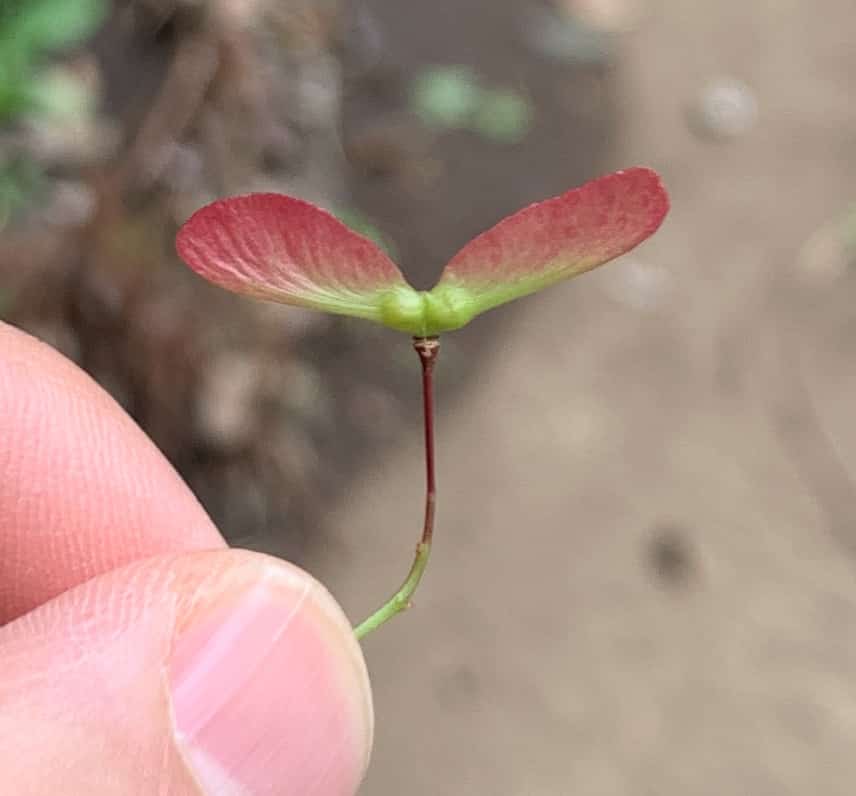
Pine seeds have a tiny wing attached. Maple and Nikko Maple seeds also have unique shapes that catch the wind and spin. Check out this video to see how a real pine seed flies. → How Pine Seeds Fly
How to Fold:
- First, cut a piece of origami paper in half to make a 15cm x 7.5cm rectangle.
- Cut that rectangle further into a strip that is 7.5cm x 2.5cm.
- Fold the rectangle along the diagonal as shown in the diagram.
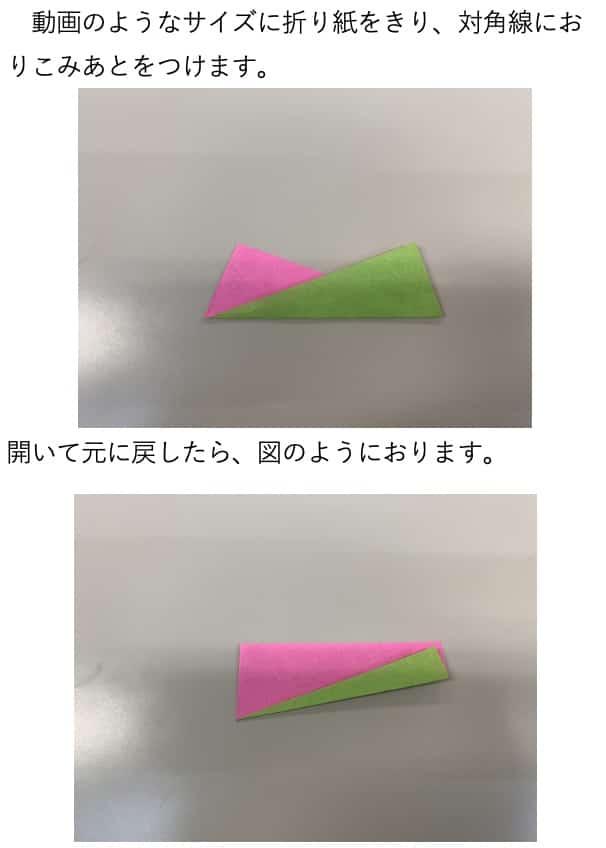
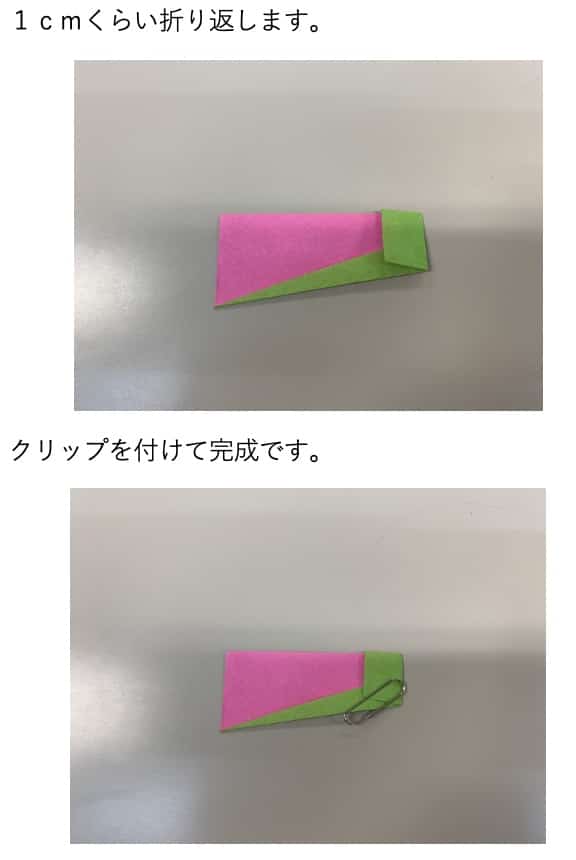
- Finally, fold over about 1cm at the end and secure it with a paper clip. You can see the full demonstration here! → Folding Pine and Maple Seed Models
https://youtu.be/JxwEJ5Qqq6I
2. Tree of Heaven Seed Model
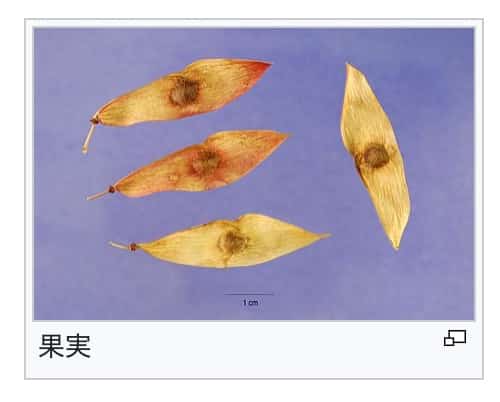
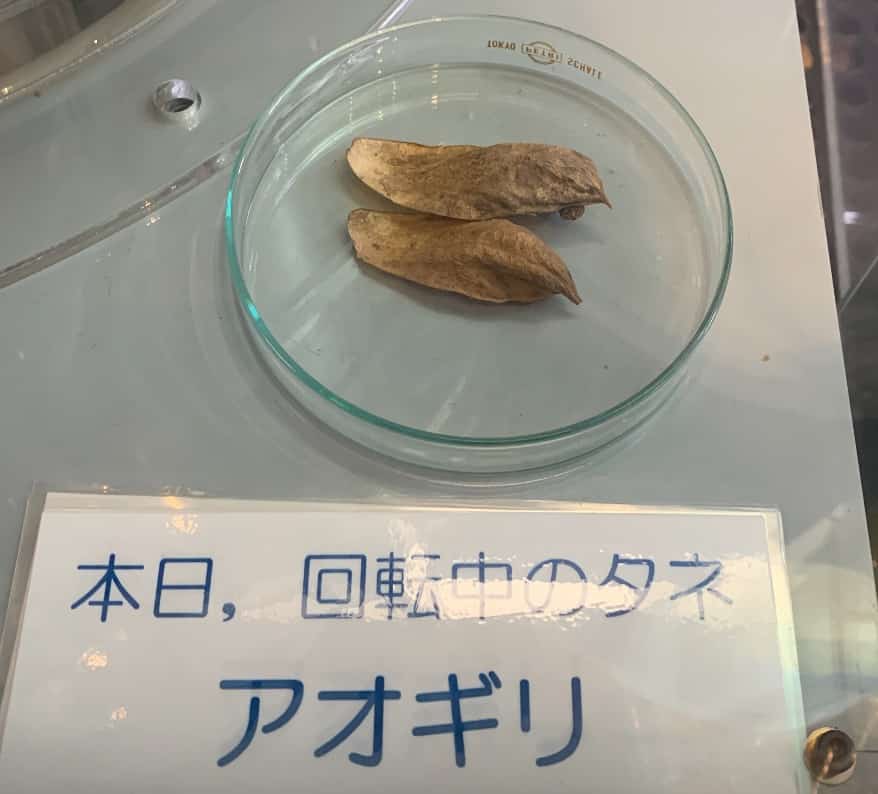
Tree of Heaven seeds have thin, flat, disc-like wings. They flutter down like tiny UFOs. You can see them in action starting at the 19-second mark of this video. → How Ailanthus Seeds Fly
How to Fold:
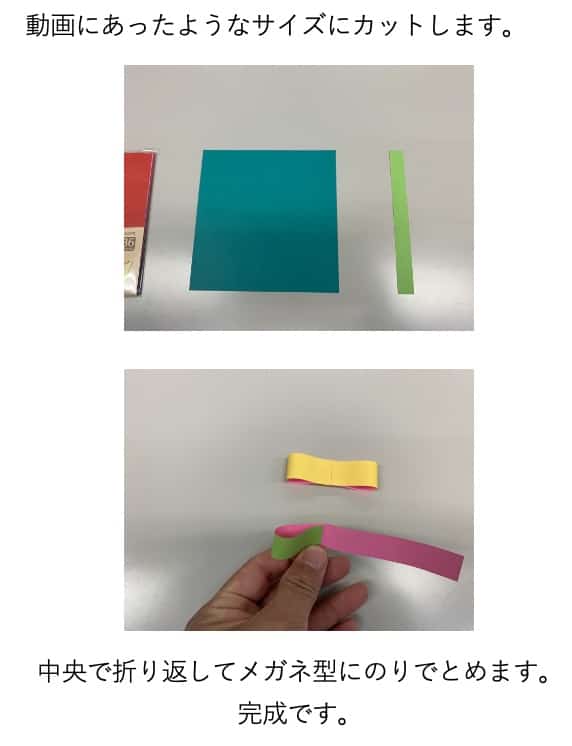
- Cut a strip of origami paper 15cm x 1.5cm.
- Fold the strip in half and apply glue tape to the center.
- Fold both ends to meet in the middle and stick them down. Your Ailanthus model is ready!
3. Alsomitra Seed Model
Often called the flying jewels of the plant kingdom, Alsomitra seeds are shaped like high-performance gliders!
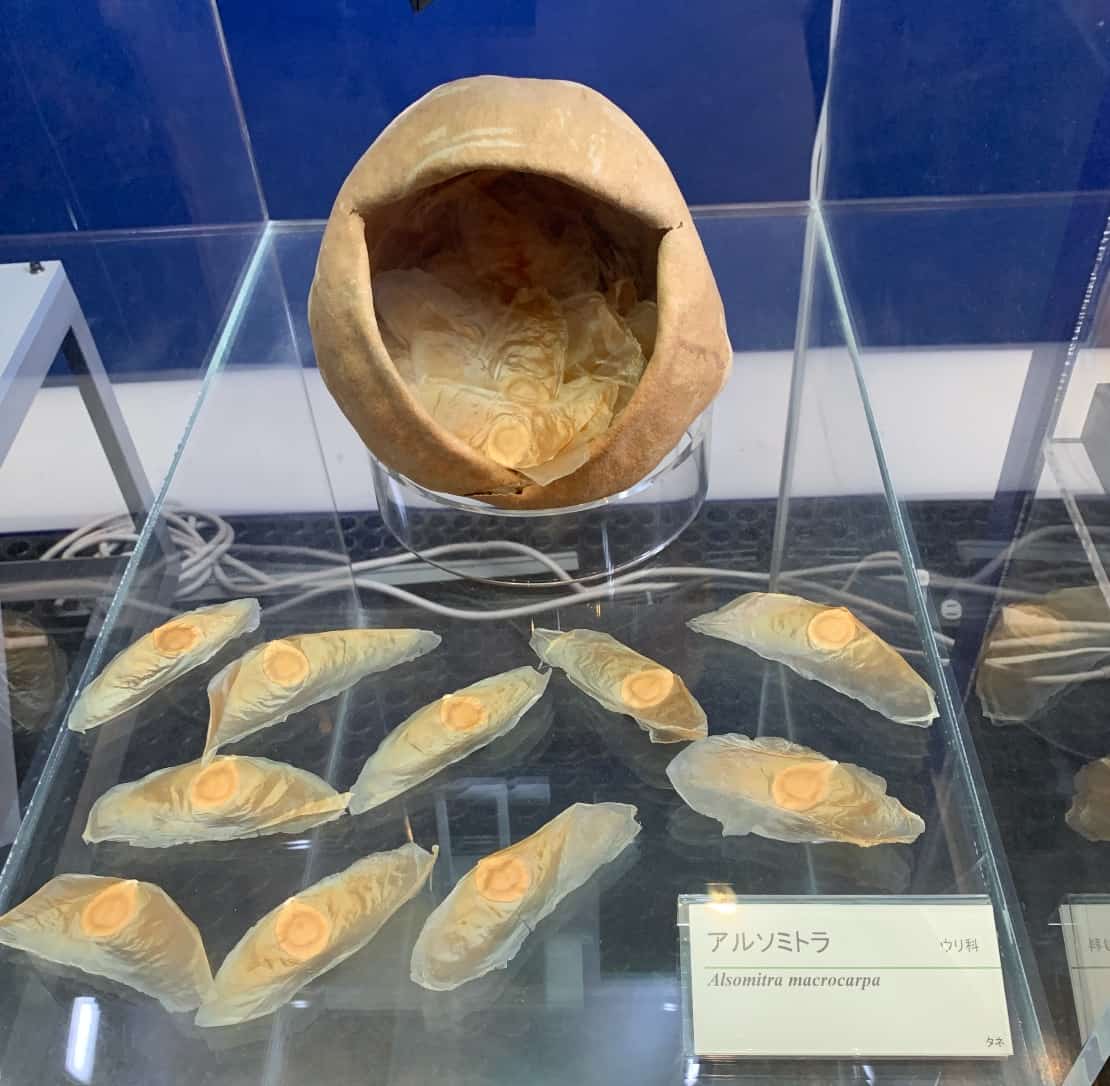
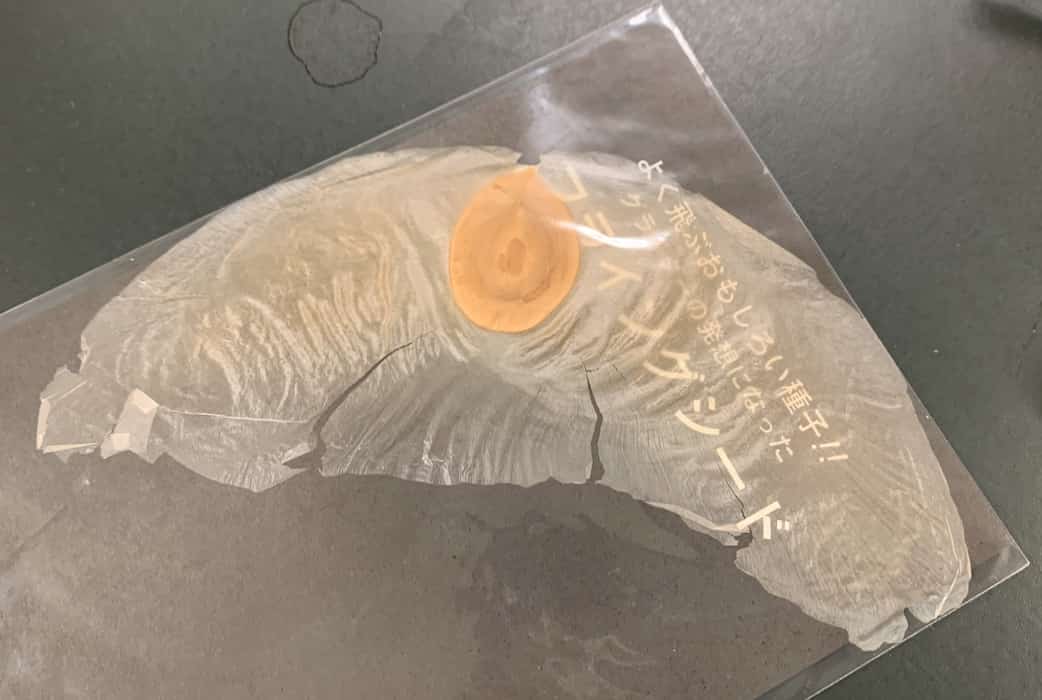
Because the seeds are incredibly light, they can glide for dozens of meters on a breeze. Watch this amazing flight here. → Alsomitra Seed Flight
You can make a very realistic Alsomitra model by folding a paper glider.
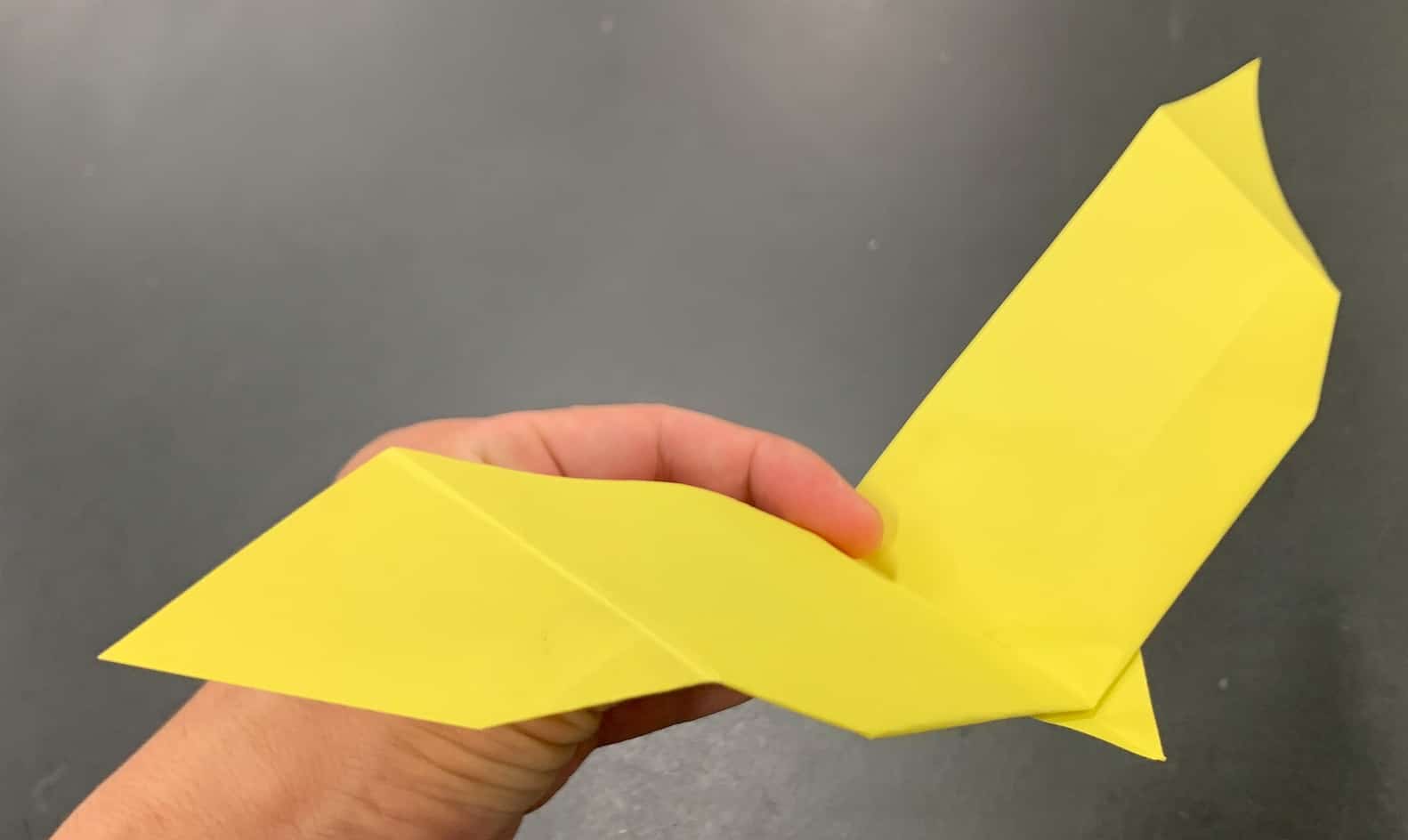
It reminds me of the Mehve glider from the Ghibli movie Nausicaä of the Valley of the Wind. The most important trick here is to cut the paper into a triangle.
How to Make:
Check out this video for a detailed guide on making the origami glider. Give it a try!
Remember, the key is starting with a triangular piece of paper. Let’s uncover the secrets of these flying jewels together!
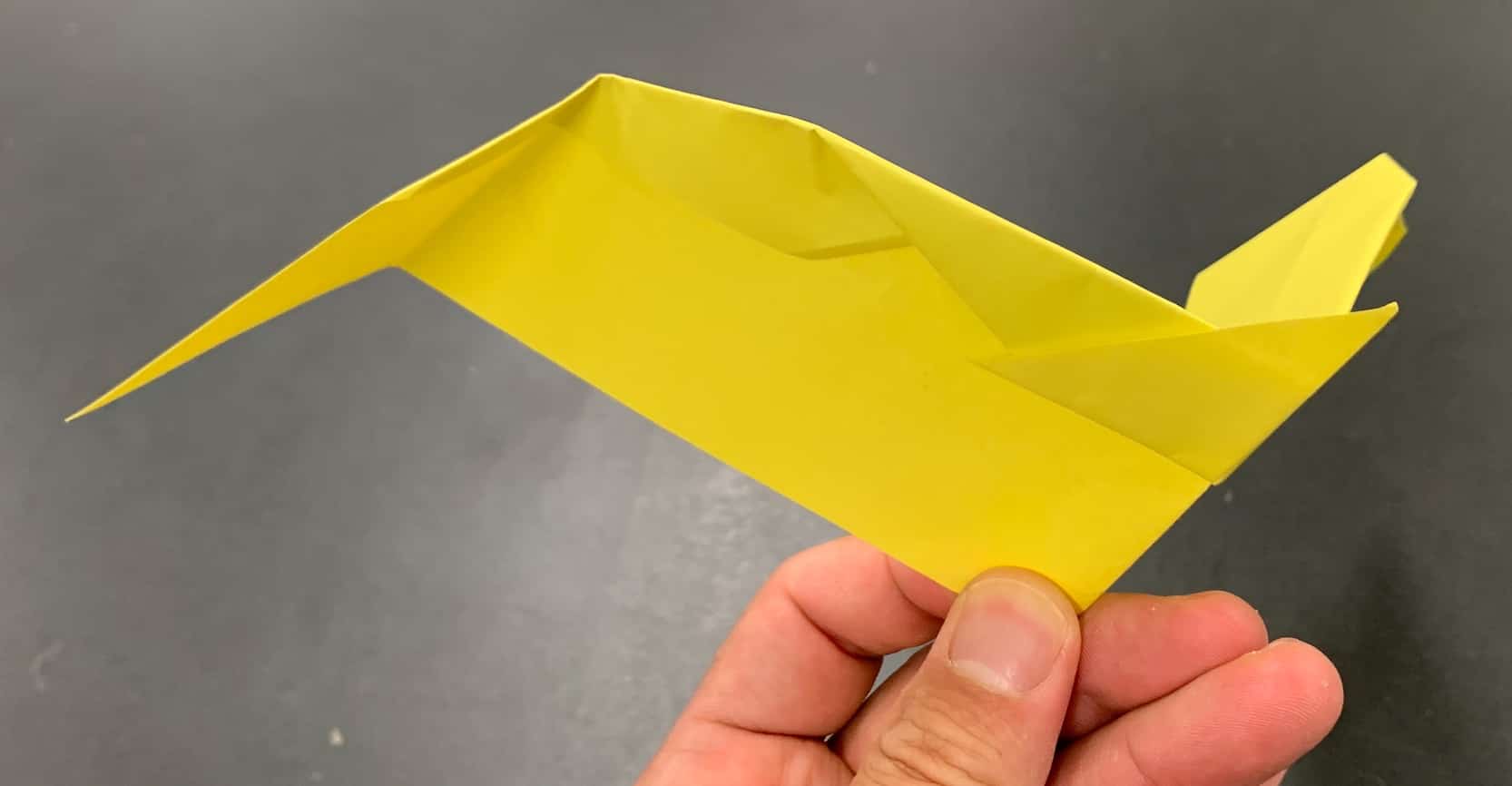
Try making these models and flying them outside. You’ll get a real sense of why they are shaped this way and how they catch the wind so effectively.
4. The Lauan Model
For a school science project, my child investigated how the fall time of Lauan (Dipterocarp) seeds changes. They were already interested in dandelion fluff, so when I showed them these winged seeds, they were hooked. Here is what they look like:
When you let go, they fly like this:
They spin just like a helicopter! We built a model of this seed using a bouncy ball and cardboard.
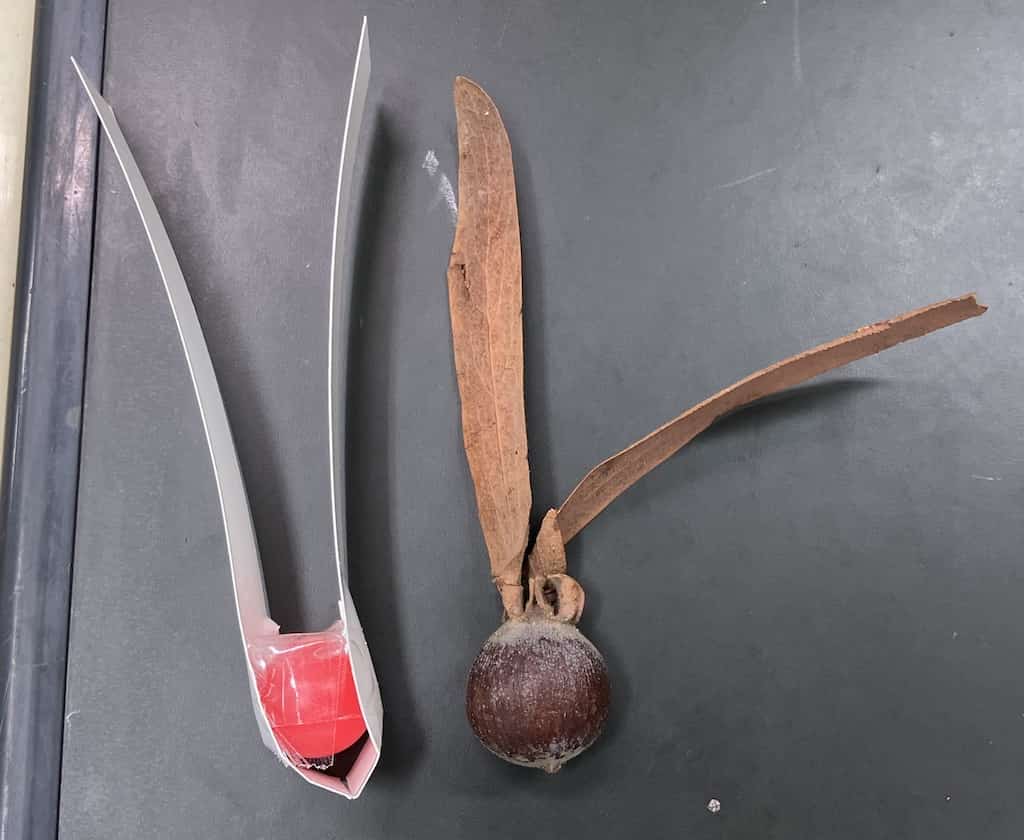
The real Lauan seed weighed 5.5g, and our handmade model was 6.0g—almost identical! We matched the wing length at 10.8cm.
Dropping it from a height of 5.66 meters, the model seed spun beautifully as it fell.
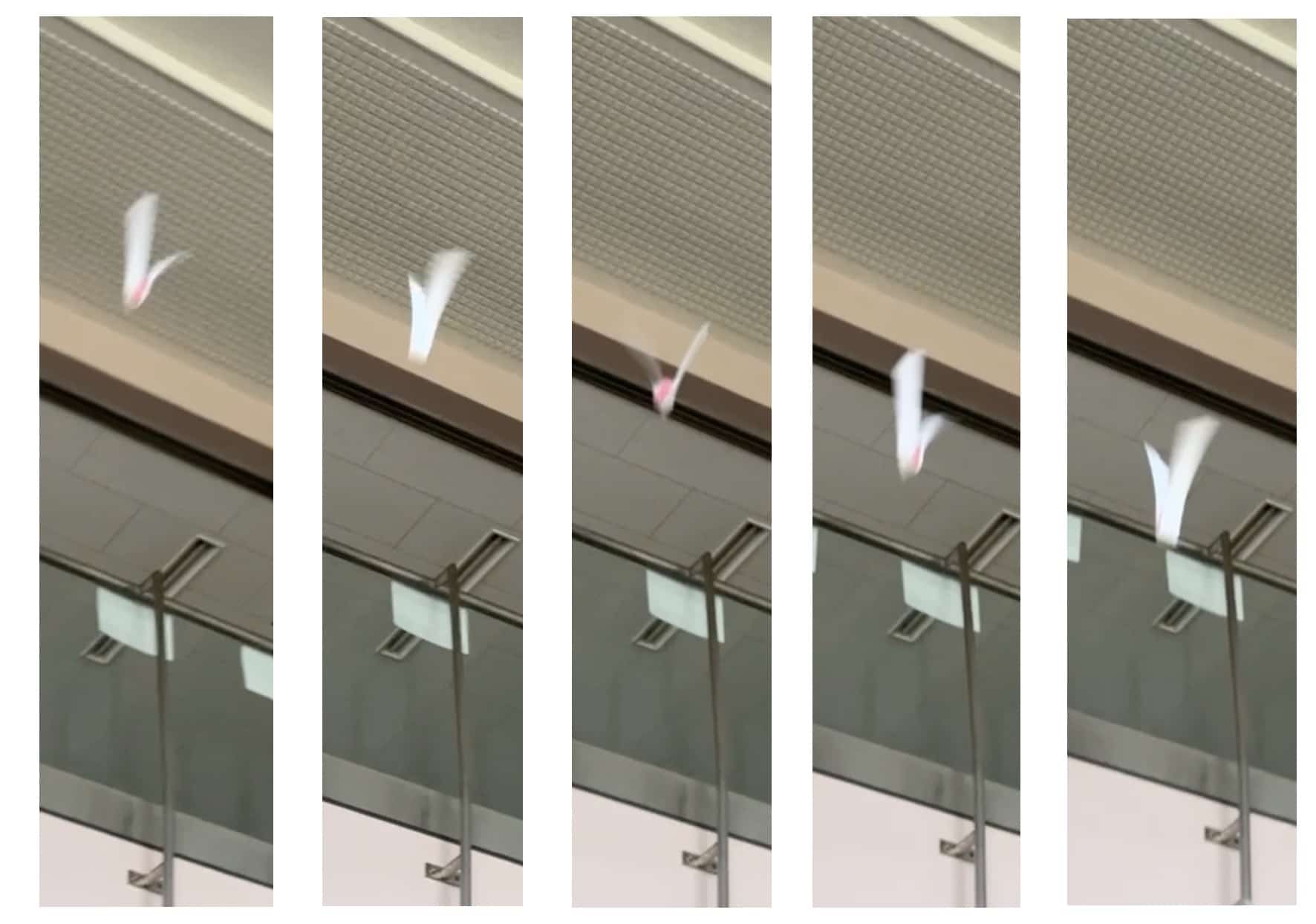
We timed the descent. After three drops from the same height, the results were:
1.66s, 1.31s, 1.21s (Average: 1.39s)
Next, we removed the wings and dropped it again:
1.08s, 1.24s, 1.19s (Average: 1.17s)
This clearly shows that having wings significantly increases the flight time.
We then experimented with different wing lengths: one model with double the length and one with half the length.
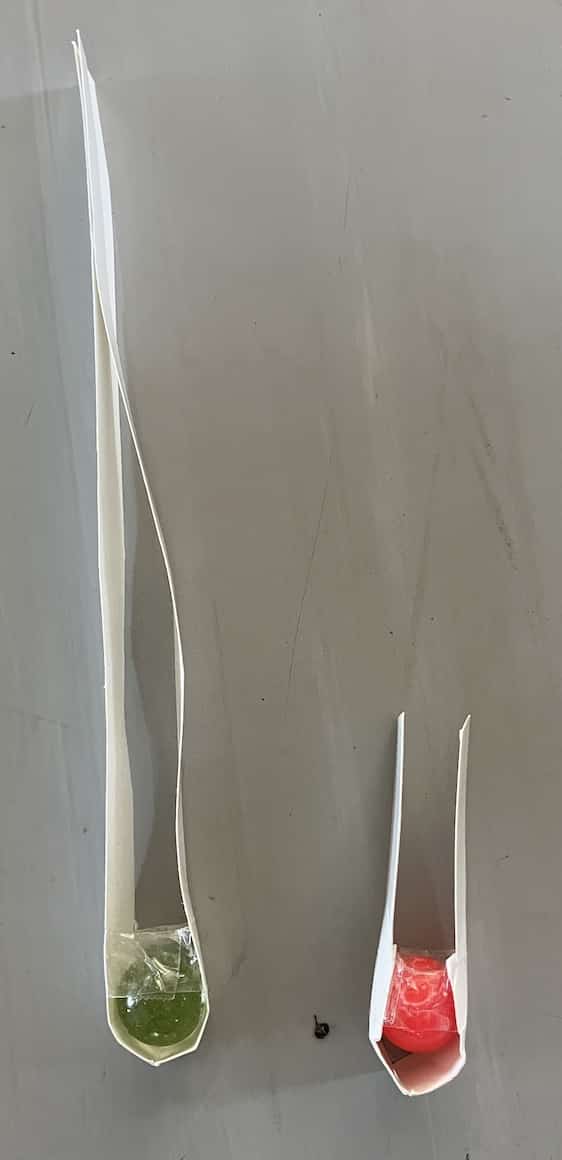
Double length results: 1.39s, 1.04s, 1.08s (Average: 1.17s) Half length results: 0.96s, 1.31s, 1.14s (Average: 1.13s)
In both cases, the seeds either didn’t spin at all or spun much slower than the original length. It suggests that Lauan wings have evolved to the perfect length for optimal rotation. I’m excited to see how my child puts these findings together!
Inquiries and Requests
I’m on a mission to make the wonders of science more accessible! I share fun home experiments and easy-to-understand tips. Feel free to explore!
Learn more about Ken Kuwako here
For work requests (writing, speaking, workshops, TV supervision, etc.), click here – Get the latest updates on X (Twitter)!
 Watch experiments on the Science Material Channel!
9月のイチオシ実験!
お弁当箱をプラバンがわりにしてキーホルダーを作ろう!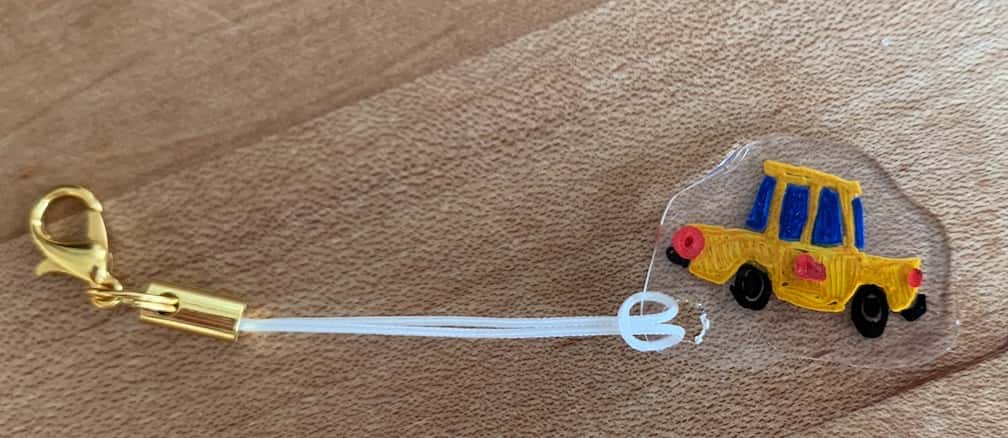
テレビ番組監修・イベント等のお知らせ
- 8月27日(木)科学監修番組放送予定
- 9月20日(日)ダビンチマスターズ出演予定
- 10月10日(土)11:15~12:00 千葉市科学フェスタ2026「桑子先生の回転科学ショー」にてサイエンスショーを行います。
- 12月26日(土) ナリカサイエンスアカデミー(教員向け実験講習会)開催
書籍のお知らせ
- 『高校入試 分解問題集 理科』(学研)…難しい問題も小さな問題に分解することで、問題を解くことができます。そんな分解の技術が身につくように深く関わりを持って作りました。
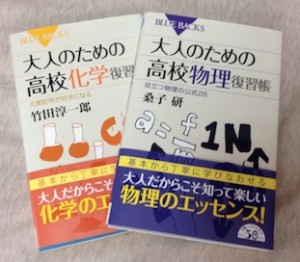
 『大人のための高校物理復習帳』(講談社)…一般向けに日常の物理について公式を元に紐解きました。特設サイトでは実験を多数紹介しています。※増刷がかかり6刷となりました(2026/02/01)
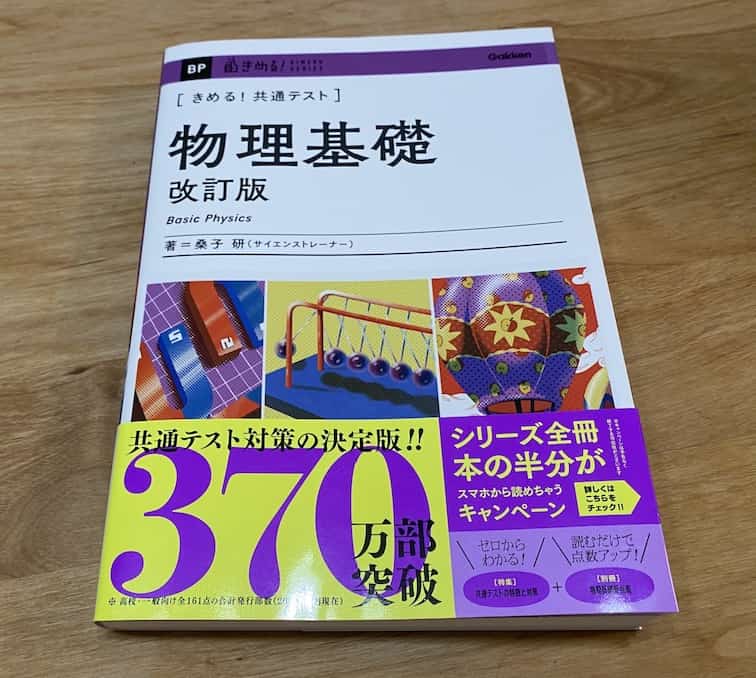
- 『きめる!共通テスト 物理基礎 改訂版』(学研)… 高校物理の参考書です。イラストを多くしてイメージが持てるように描きました。授業についていけない、物理が苦手、そんな生徒におすすめです。特設サイトはこちら。
各種SNS(更新情報をお届け!)
【日本語】X(Twitter)/instagram/Facebook 【英語】BlueSky/Threads
Explore
- 楽しい実験…お子さんと一緒に夢中になれるイチオシの科学実験を多数紹介しています。また、高校物理の理解を深めるための動画教材も用意しました。
- 理科の教材… 理科教師をバックアップ!授業の質を高め、準備を効率化するための選りすぐりの教材を紹介しています。
- Youtube…科学実験等の動画を配信しています。
- 科学ラジオ …科学トピックをほぼ毎日配信中!AI技術を駆使して作成した「耳で楽しむ科学」をお届けします。
- 講演 …全国各地で実験講習会・サイエンスショー等を行っています。
- About …「科学のネタ帳」のコンセプトや、運営者である桑子研のプロフィール・想いをまとめています。
- お問い合わせ …実験教室のご依頼、執筆・講演の相談、科学監修等はこちらのフォームからお寄せください。