
A Balloon Becomes a Hand Warmer!? The Strange Science of Rubber and Heat — Warm When Stretched, Cool When Released
I’m Ken Kuwako, the Science Trainer. Every day is an experiment.
Stretch a balloon with a big “boiiing!” and suddenly your cheek feels warm. Let it relax back to its original shape, and it feels surprisingly cool. All you need is a single balloon. That’s enough to experience the fascinating world of thermodynamics firsthand.
I recently demonstrated this experiment in a university thermodynamics class, and even the adults couldn’t help but react with a surprised “Wow!” Today, let’s explore the curious relationship between rubber and heat.
Science Recipe: Feel Temperature Changes with a Balloon
What You’ll Need: A balloon (even an inexpensive one from a dollar store works perfectly!)
Let’s start with the simplest version of the experiment.
Method ①: Stretch and Release
① Place an uninflated balloon against your cheek (or lips, or another sensitive area of skin) and notice its temperature.
② Keeping it against your cheek, quickly stretch the balloon with both hands.
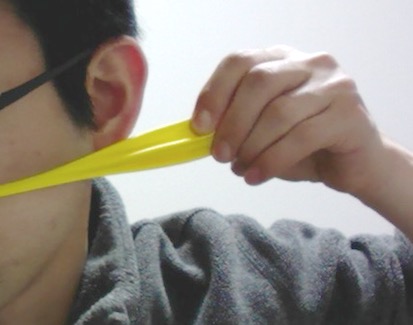
③ While still touching your cheek, slowly release the stretched balloon and let it return to its original shape.

Result: What did you notice? The balloon should have felt warmer when you stretched it in step ② and cooler when it returned to normal in step ③.
An Even More Dramatic Version: Inflate and Deflate
The first method works well, but if you want to feel the temperature change more dramatically, try inflating the balloon. Recruit a family member or friend and use their cheek as the thermometer!
Method ②: Inflate and Deflate
① Place an uninflated balloon against your child’s or family member’s cheek.
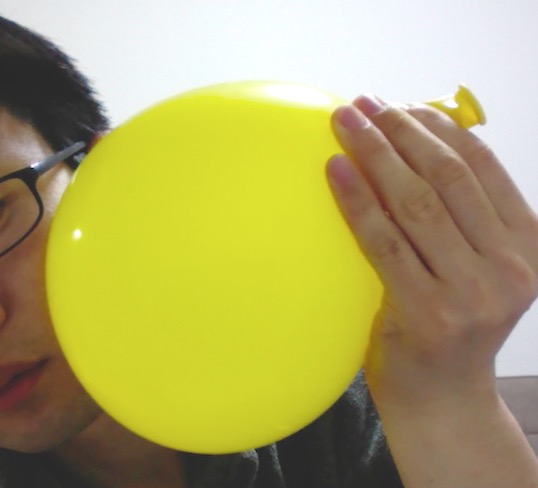
② While keeping the balloon against the cheek, blow it up quickly.
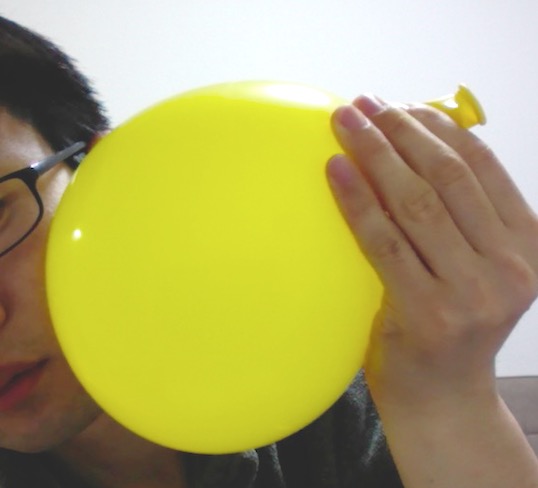
③ Ask how the cheek feels where it is touching the balloon. Most people will say, “It’s warm!”
④ Next, keep the inflated balloon against the cheek and slowly let the air escape with a long “whoooosh.”
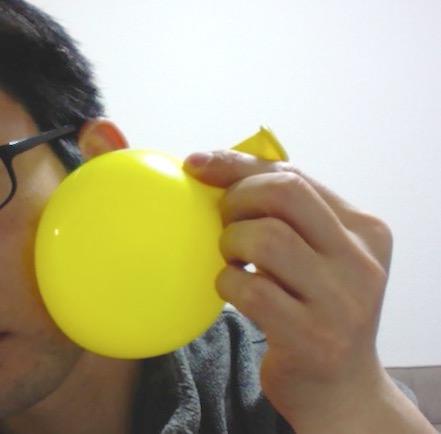
⑤ Ask how the cheek feels as the balloon shrinks.
Result: This time the effect is even stronger. The balloon feels warm while inflating and surprisingly cold while deflating. It’s a genuinely impressive effect that people rarely expect.
Why Does This Happen? The Rubber Molecules’ Game of “Human Tetris”
Both experiments rely on the same principle. Although the setup is incredibly simple, the explanation involves a concept from thermodynamics known as an adiabatic process. Don’t worry—we can make it much easier to visualize by imagining life from the perspective of the rubber molecules inside the balloon.
Rubber consists of countless long molecular chains tangled together in a loose, flexible arrangement. In their relaxed state, these molecules can move around relatively freely.
When You Stretch the Balloon (Why It Gets Warm)
When you force the balloon to stretch, those freely moving molecular chains are pulled into a more ordered arrangement.
Imagine playing freely in a huge park and then suddenly being squeezed into a crowded classroom. Things become cramped and uncomfortable. The rubber molecules experience a similar loss of freedom.
As they are forced into this organized state, they release energy to their surroundings in the form of heat. That’s why the balloon feels warm.
When You Let the Balloon Shrink (Why It Gets Cool)
Now imagine the classroom doors suddenly open.
“Freedom at last!”
The rubber molecules spread out again and return to their preferred tangled state. To do this, they absorb energy from their surroundings.
And where does that energy come from? From your cheek.
As heat leaves your skin and flows into the rubber, your cheek feels cool.
Reference: KEK Essay #29: “Chiko-chan Knew It! Why Does Rubber Return to Its Original Shape?”
The Name of This Phenomenon: The Gough–Joule Effect
The fact that rubber warms when stretched and cools when released is a well-known scientific phenomenon called the Gough–Joule effect.
It was first observed by Gough in 1805 and later studied in detail by Joule.
Polymer chains in rubber naturally prefer a highly disordered, tangled state—a state with high entropy.
When stretched:
The chains are forced into a more ordered arrangement, reducing entropy. The work done during stretching is partly released as heat.
When released:
The chains return toward their preferred disordered state. To do so, they absorb energy from their surroundings, causing cooling.
This is fundamentally different from a metal spring.
A metal spring’s restoring force comes mainly from electrical forces between atoms and depends only weakly on temperature. Rubber, however, gets its elasticity from statistical forces that favor maximum entropy. As a result, the force that makes rubber contract actually becomes stronger at higher temperatures.
This entropy-driven elasticity is one of rubber’s most remarkable properties.
The NGK Science Site’s article “The Curious Properties of Rubber” also introduces experiments involving heating and cooling rubber. One especially surprising result is that heated rubber contracts rather than expands.
When rubber is stretched, its molecules are restricted to a limited range of shapes. As it contracts, they gain access to a much larger variety of configurations. Since materials generally favor states with greater freedom as temperature rises, stretched rubber shrinks when heated.
Feeling Science Is the First Step Toward Understanding It
Science is full of phenomena that are easy to observe but surprisingly challenging to explain. That’s part of the fun.
The most important thing is not understanding every equation right away—it’s experiencing that moment of curiosity:
“Wait… why did that happen?”
A single balloon can lead you from a simple sensation on your cheek to discussions about thermodynamics, entropy, and even future cooling technologies. That’s the beauty of science.
If you’d like to see this phenomenon through a thermal camera, check out the following article:
Contact and Requests
I aim to make the wonders of science more accessible through fun experiments that anyone can try at home. Feel free to explore the site for more ideas and explanations.
• My science articles have been published as a book. Learn more here:
https://amzn.to/42PMCEL
• Learn more about me, Ken Kuwako:
• For writing, lectures, science workshops, TV consulting, appearances, and other projects:
• Follow updates on X:
https://x.com/kuwako
 Science Notes Channel features videos of science experiments!
お知らせ!10/10 サイエンスショー開催(無料イベント!)
10月10日(土)11:15~12:00 千葉市科学フェスタ2026「桑子先生の回転科学ショー」にてサイエンスショーを行います。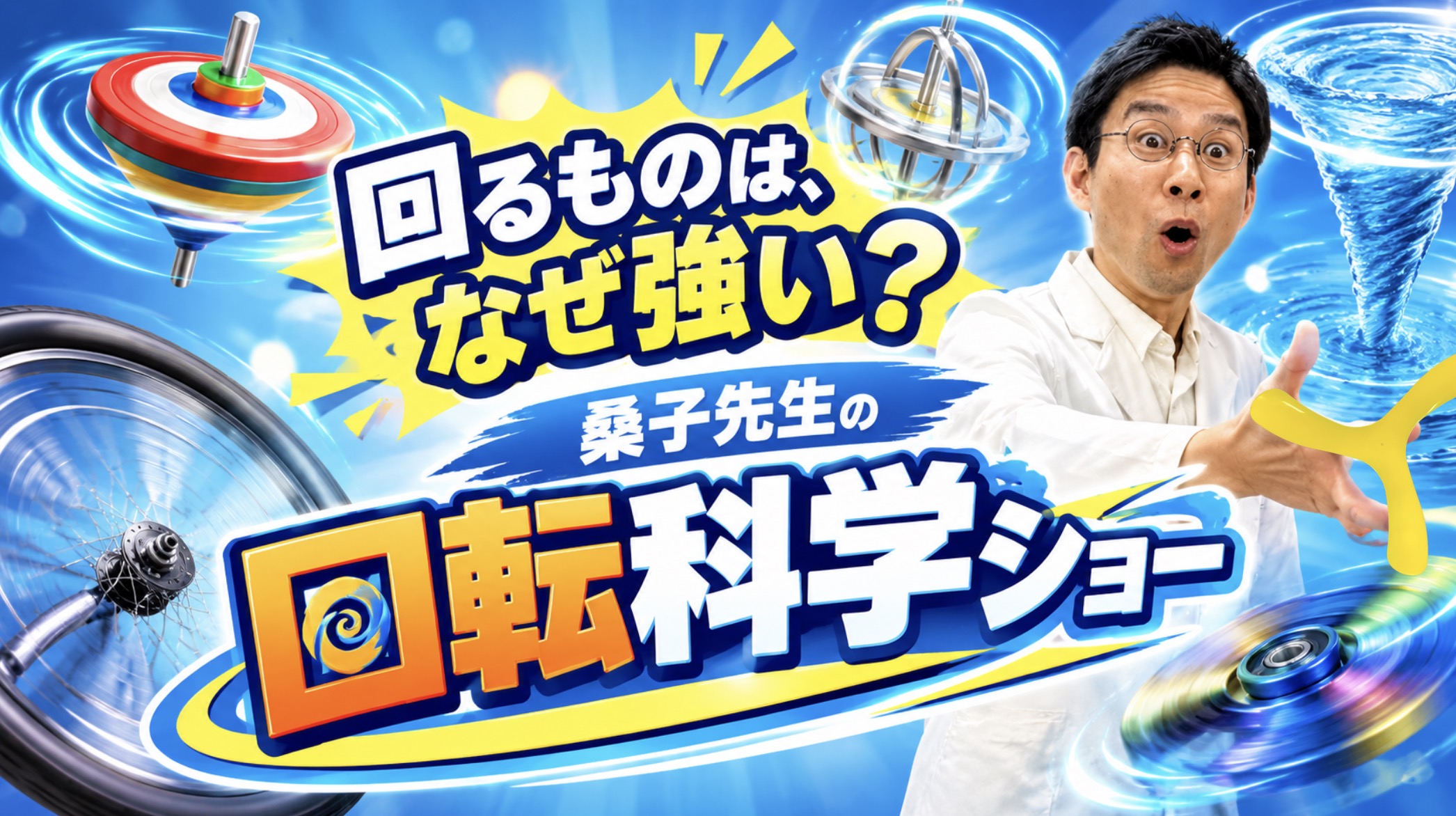
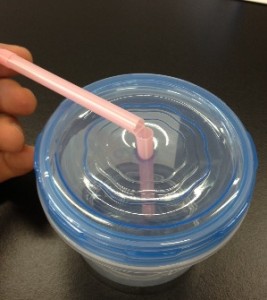
10月のイチオシ実験!
テレビ番組監修・イベント等のお知らせ
- 12月26日(土) ナリカサイエンスアカデミー(教員向け実験講習会)開催
書籍のお知らせ
- 『高校入試 分解問題集 理科』(学研)…難しい問題も小さな問題に分解することで、問題を解くことができます。そんな分解の技術が身につくように深く関わりを持って作りました。
 『大人のための高校物理復習帳』(講談社)…一般向けに日常の物理について公式を元に紐解きました。特設サイトでは実験を多数紹介しています。※増刷がかかり6刷となりました(2026/02/01)

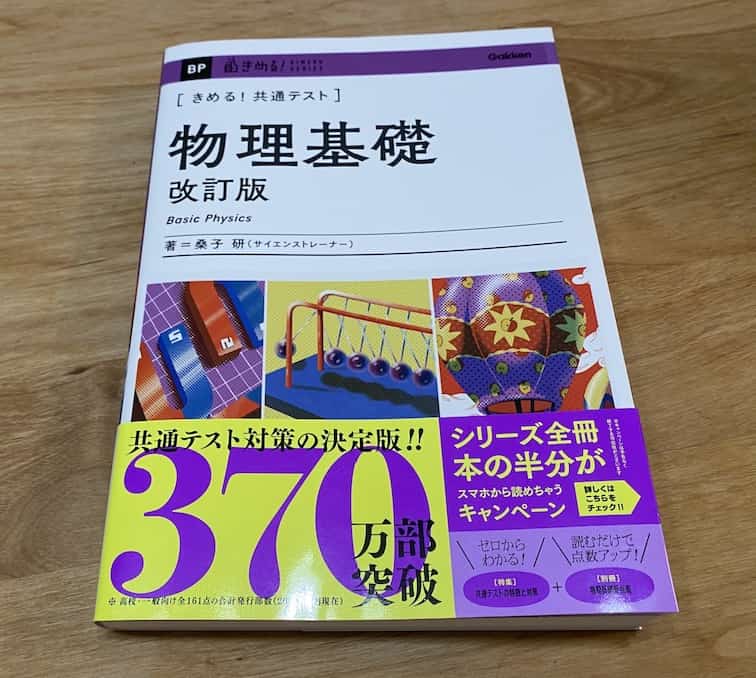
- 『きめる!共通テスト 物理基礎 改訂版』(学研)… 高校物理の参考書です。イラストを多くしてイメージが持てるように描きました。授業についていけない、物理が苦手、そんな生徒におすすめです。特設サイトはこちら。
各種SNS(更新情報をお届け!)
【日本語】X(Twitter)/instagram/Facebook 【英語】BlueSky/Threads
Explore
- 楽しい実験…お子さんと一緒に夢中になれるイチオシの科学実験を多数紹介しています。また、高校物理の理解を深めるための動画教材も用意しました。
- 理科の教材… 理科教師をバックアップ!授業の質を高め、準備を効率化するための選りすぐりの教材を紹介しています。
- Youtube…科学実験等の動画を配信しています。
- 科学ラジオ …科学トピックをほぼ毎日配信中!AI技術を駆使して作成した「耳で楽しむ科学」をお届けします。
- 講演 …全国各地で実験講習会・サイエンスショー等を行っています。
- About …「科学のネタ帳」のコンセプトや、運営者である桑子研のプロフィール・想いをまとめています。
- お問い合わせ …実験教室のご依頼、執筆・講演の相談、科学監修等はこちらのフォームからお寄せください。