DIY Boomerang Experiment! Why Does It Come Back? The Science of Spin (Lift, Gyroscopic Effect & Precession)
I’m Ken Kuwako, a science trainer. Every day is an experiment.
“Why does it come back when you throw it?”
Anyone who sees a boomerang for the first time asks that exact question. And it turns out the answer involves not one but several layers of physics — the same science behind airplane wings and spinning tops, all working together in harmony. Let’s unpack them one by one. By the end, the “ordinary” world around you might look surprisingly different.
A boomerang’s cross-section is shaped just like an airplane wing
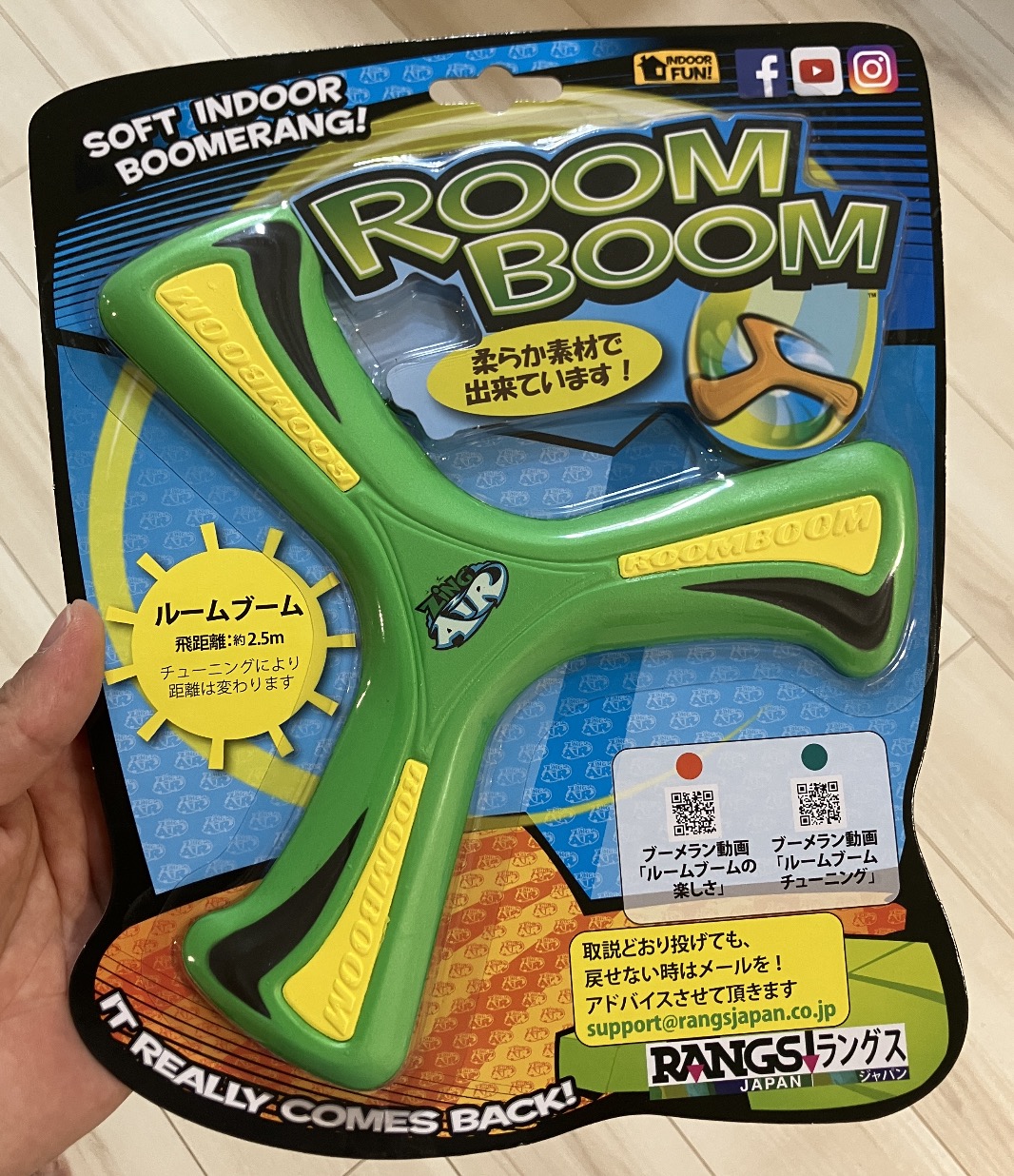
I started by picking up this indoor boomerang. It’s soft and squishy — it won’t hurt if it hits you in the face — which makes it perfect for getting a feel for how boomerangs work without any risk.
Using that as my reference, I built this one from scratch:
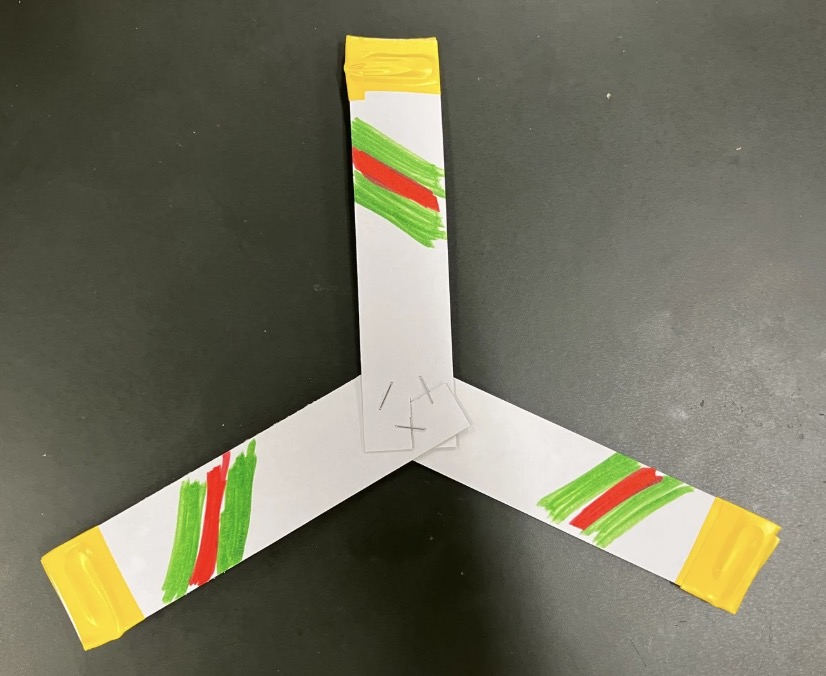
It’s based on a design from the book Why Does a Boomerang Come Back?, with a few of my own tweaks.
How to make a paper boomerang
The key is using stiff paper — but regular cardboard didn’t cut it. After a lot of trial and error, I found that this specific board paper worked best:
KOKUYO Board Cover Paper, A4 Size, 10 Sheets (SEI-830N)

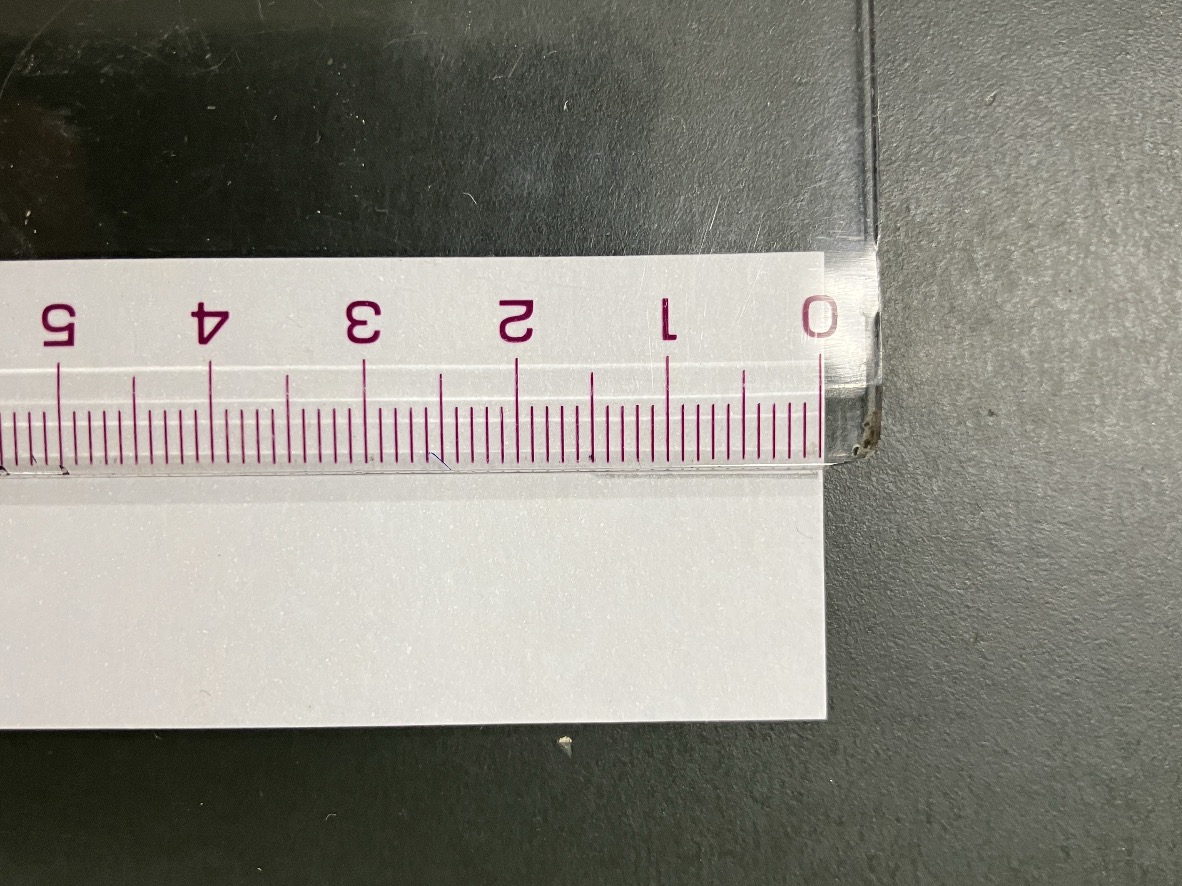
Cut strips that are 13 cm long and 3 cm wide, with a 1.5 cm notch cut into the center.
Length: 13 cm
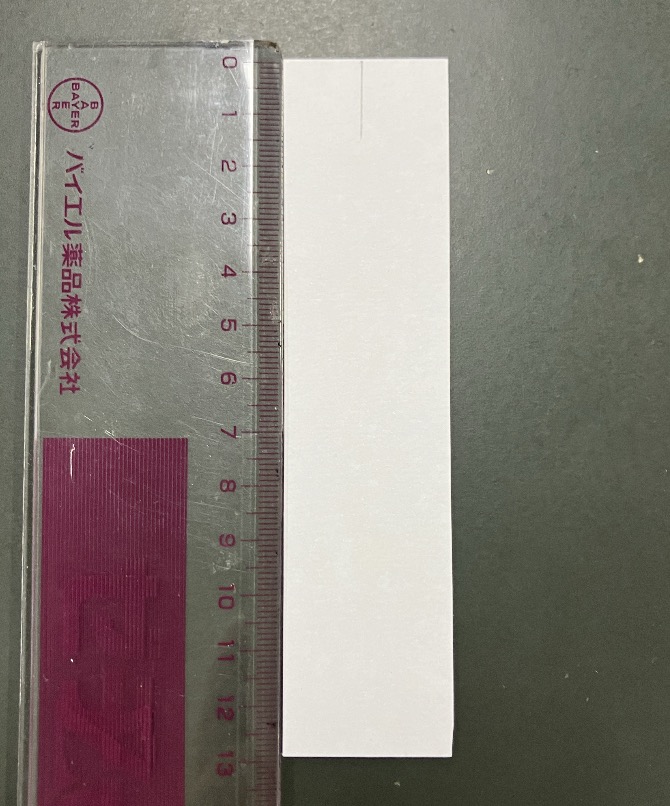
Width: 3 cm
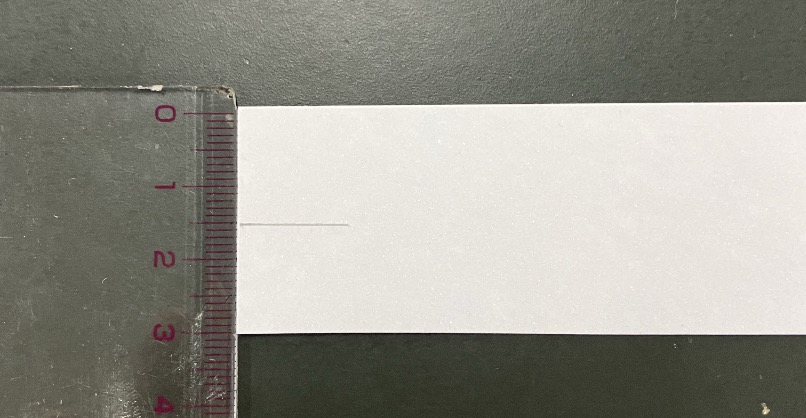
Notch: 1.5 cm
Make three of these strips.
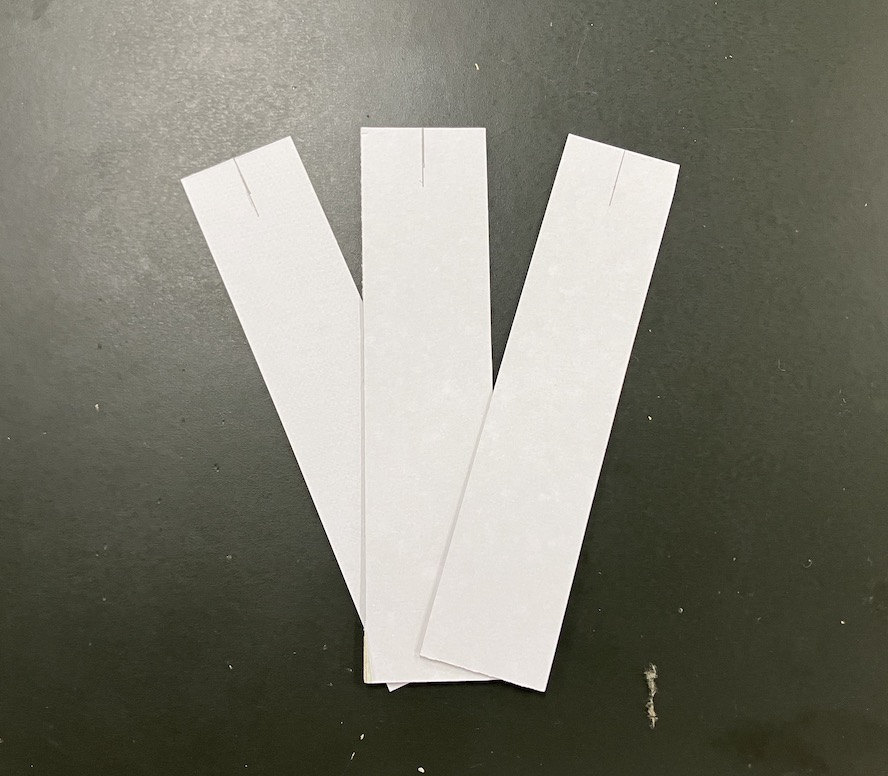
Slot the strips together at the notches so each blade is spaced about 120 degrees apart. Adjust the shape until it looks even, then:
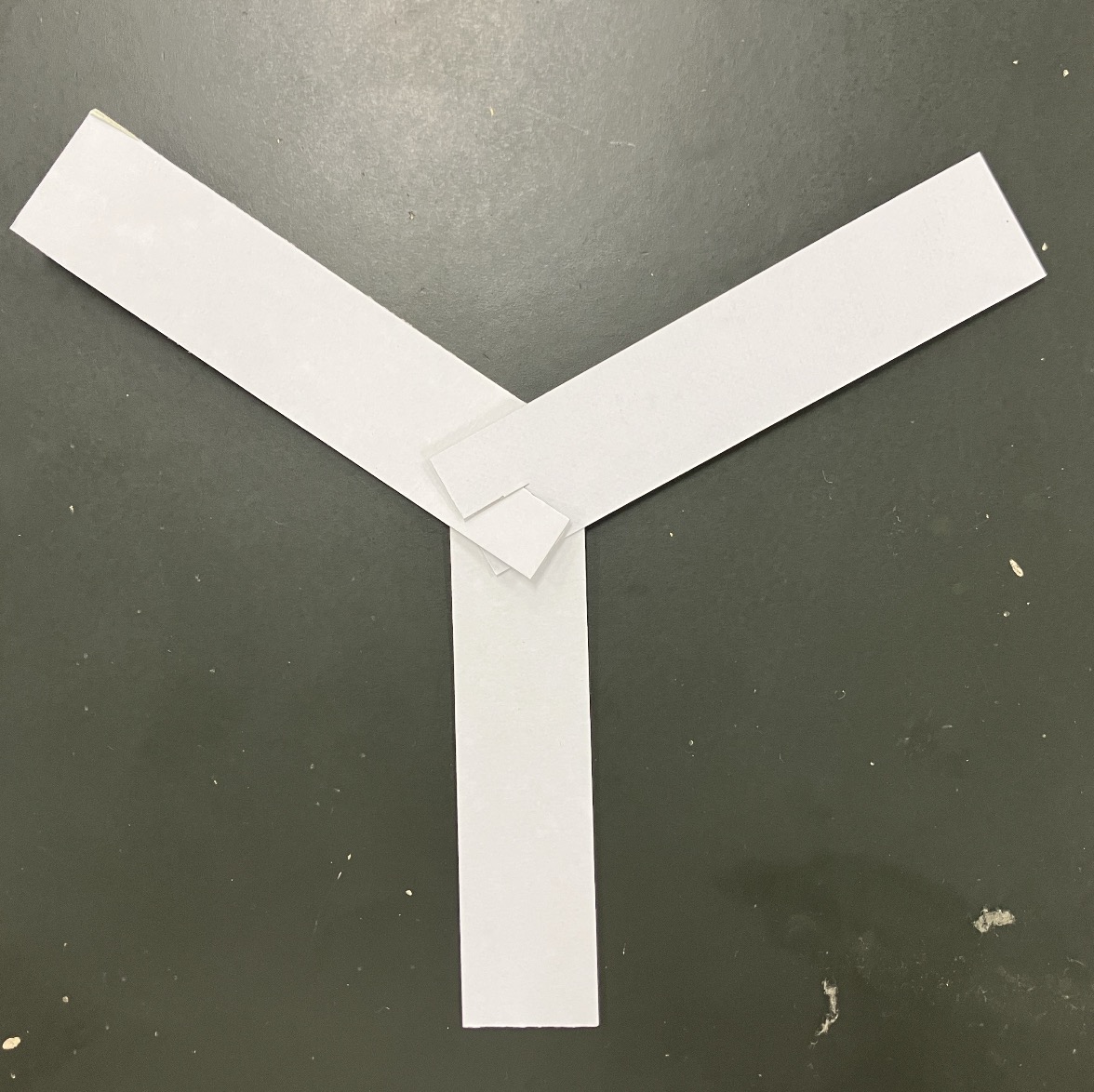
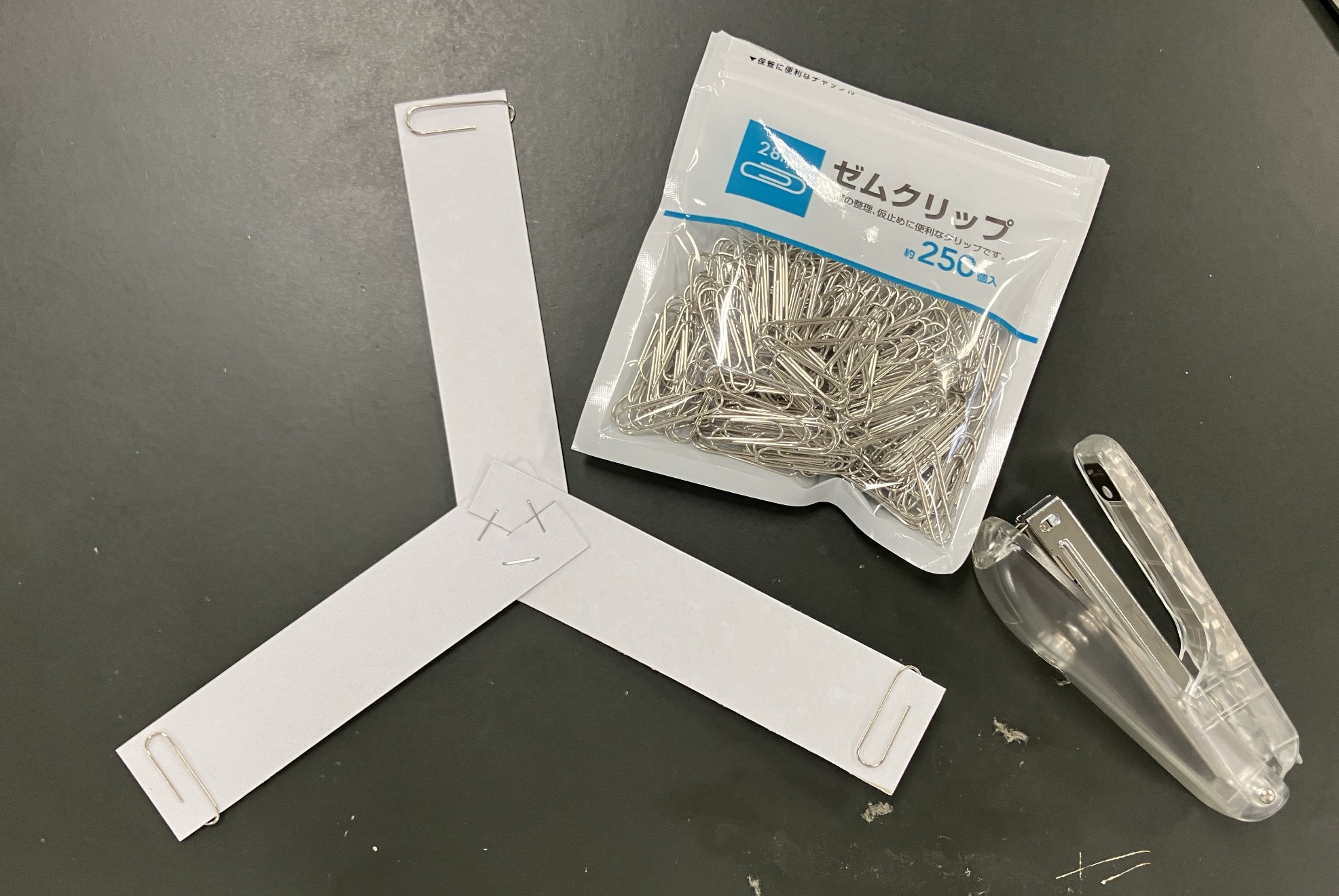
Staple the center in three places. To boost spin (technically, to increase the moment of inertia), clip a paper clip onto the tip of each blade.
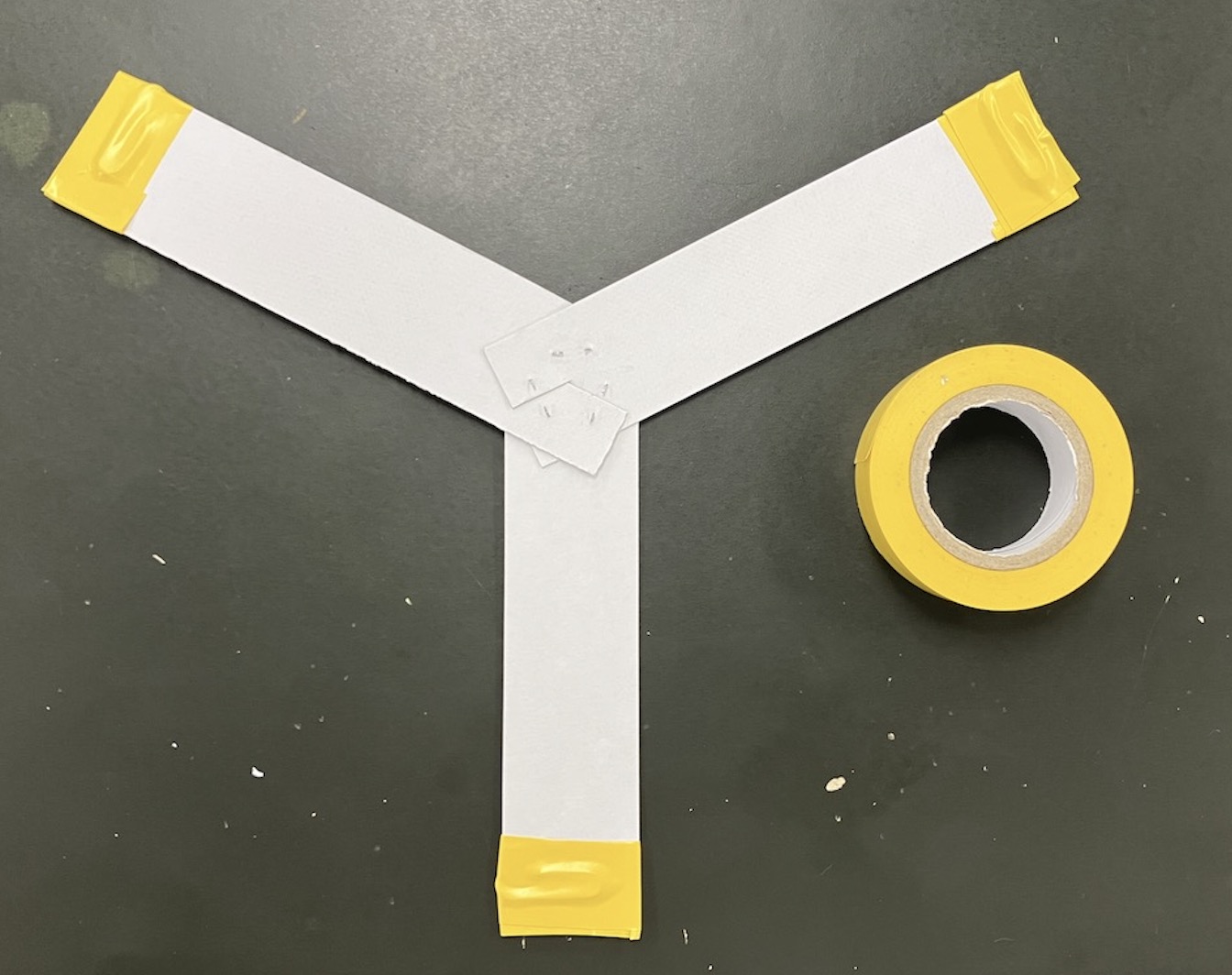
Wrap vinyl tape around each clip to keep it from flying off.
Now for the most important step — fine-tuning. Look at the boomerang from the side and twist each blade slightly so the right side tilts upward.
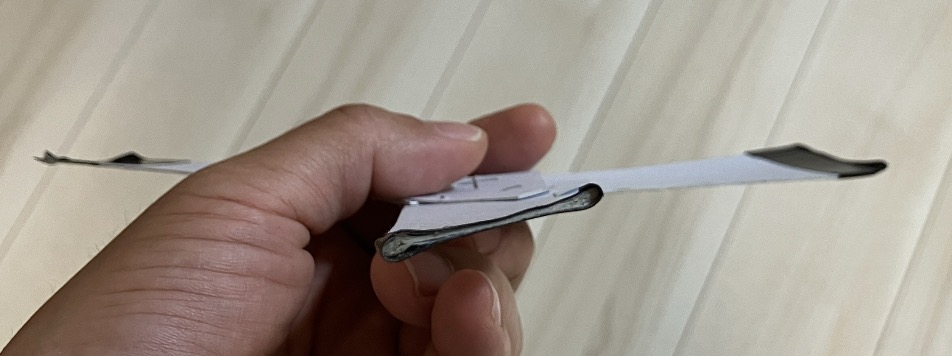
Then cup the whole thing gently into a shallow bowl shape.
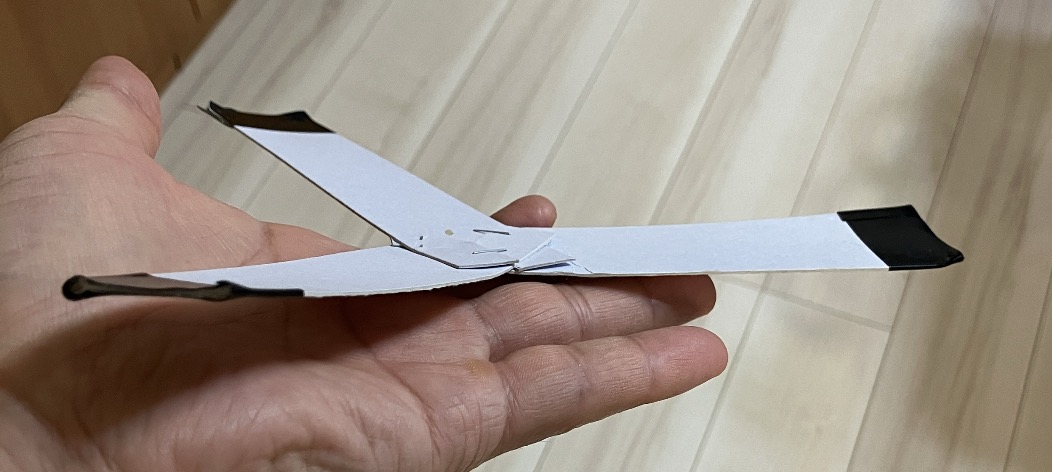
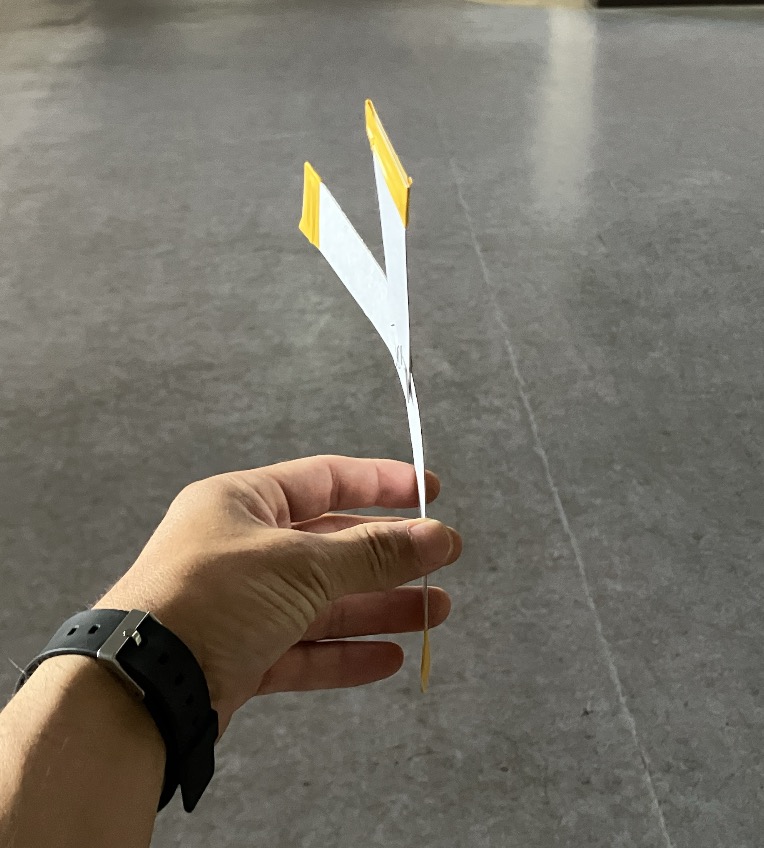
This part is hard to describe in words, so I put it all in a video — check it out below.
How to throw it
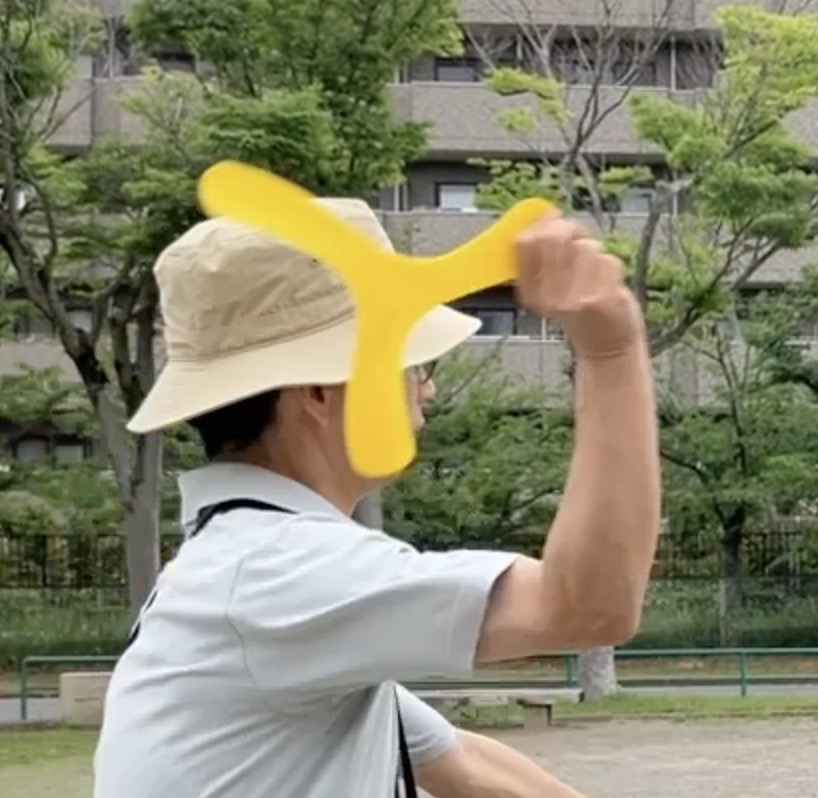
The video above also covers throwing technique, but here’s the key: hold a blade tip, hold it vertically, and forget about pushing it forward. Focus entirely on spinning it. A sharp flick of the wrist is all you need.
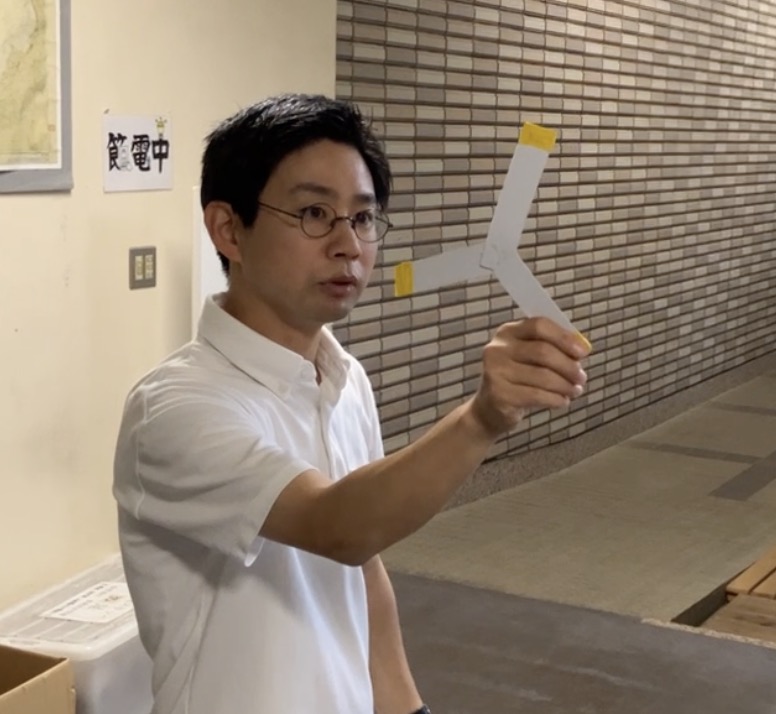
Get the spin right, and it’ll curve right back to you.
Here’s a commercial boomerang from Daiso for comparison. You can see right away that it’s essentially the same shape as the one we just built.
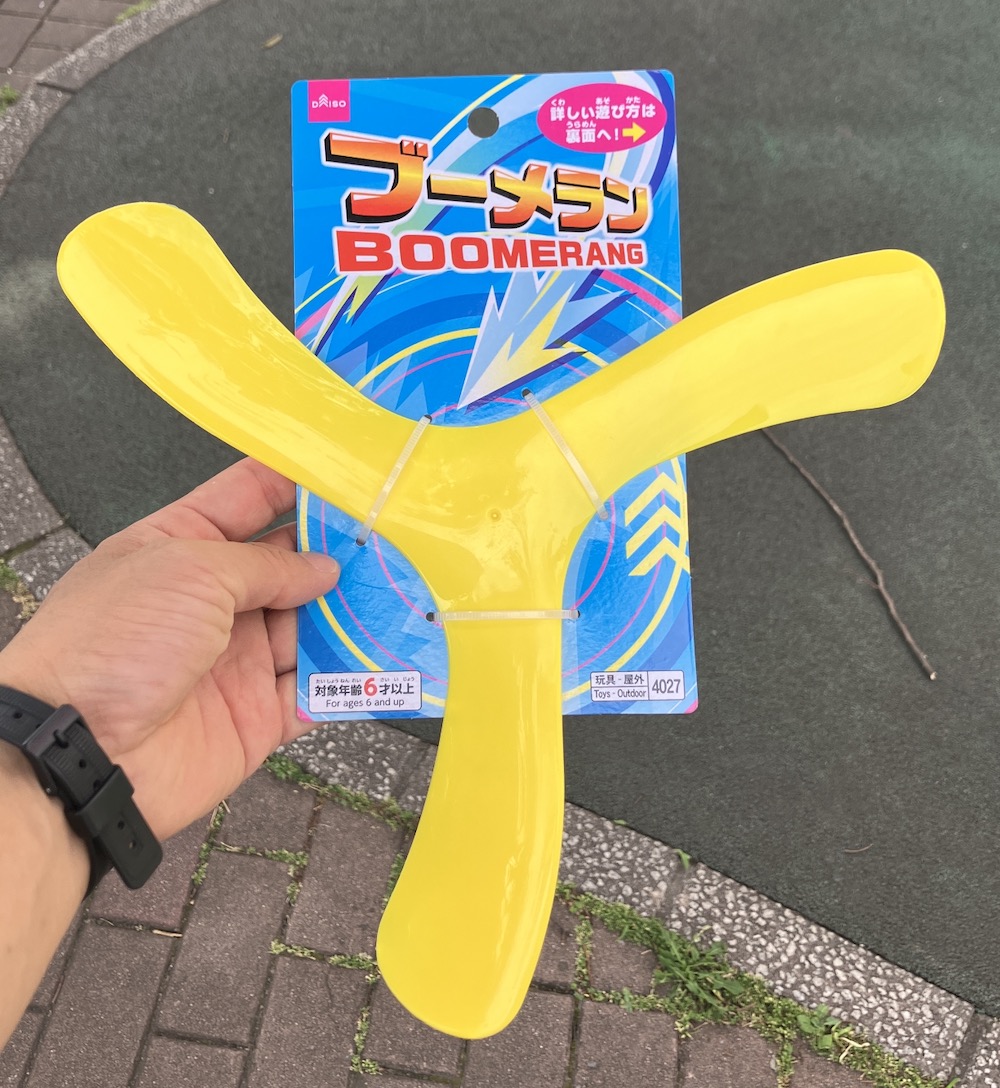
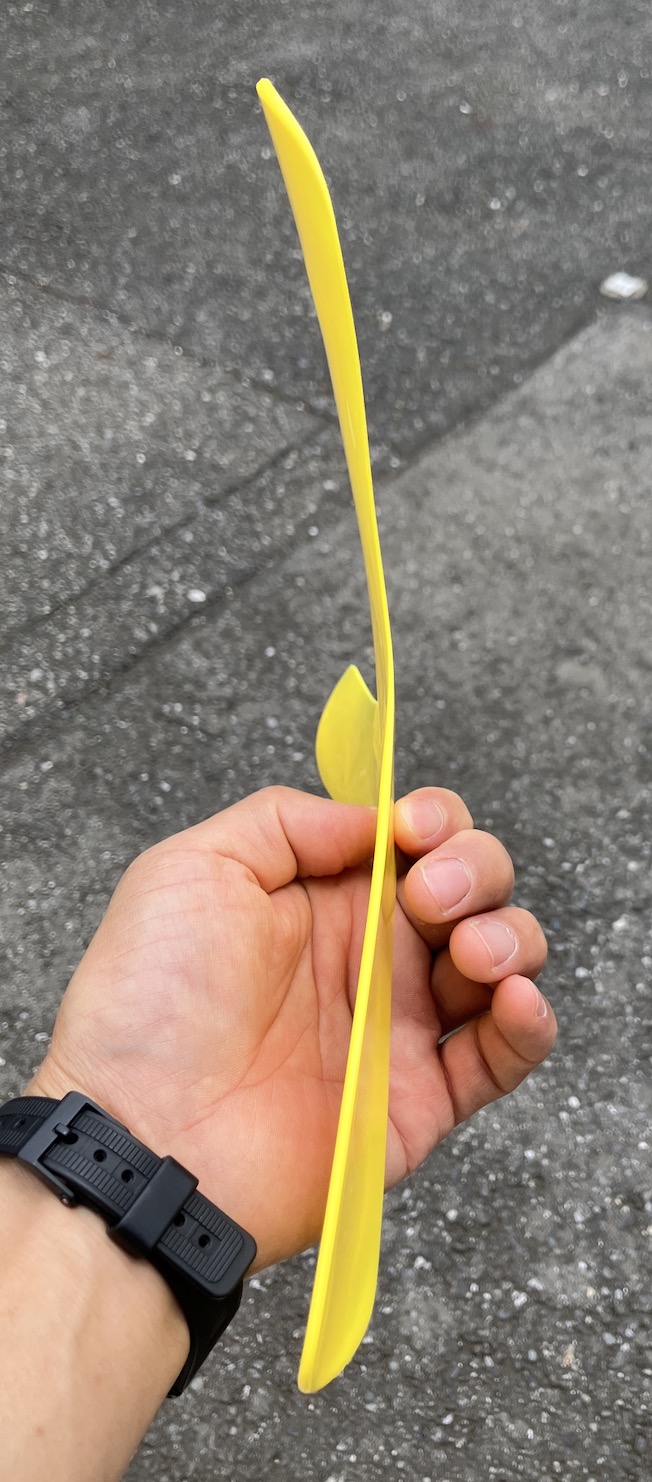
The blade profile is curved like an airplane wing, with the right side raised.
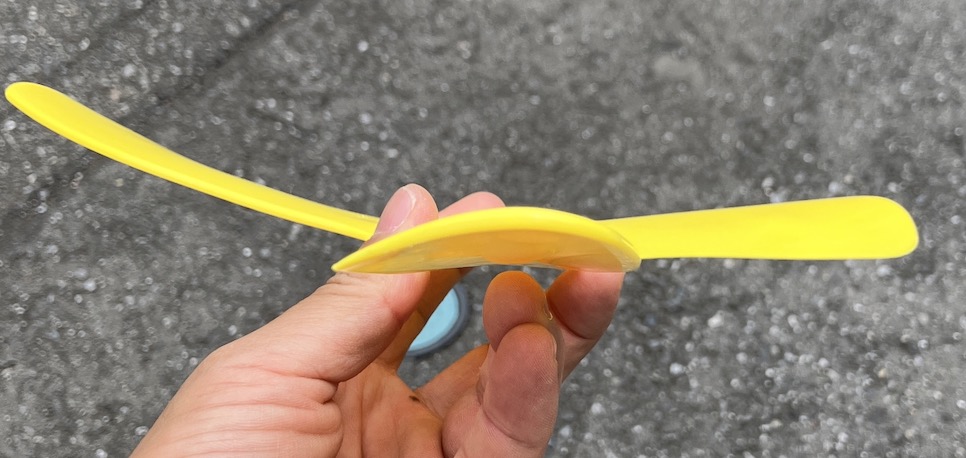
Viewed from the side, the whole thing curves into that gentle bowl shape.
The Daiso boomerang even has a QR code on the packaging that links to this throwing tutorial — pretty handy.
So why does this particular shape make a boomerang come back? Let’s dig in.
Why does a boomerang come back?
When air flows over a curved surface, it changes speed — and that speed difference creates lift, the same upward force that keeps a jumbo jet in the sky. But lift alone isn’t the whole story. The other crucial ingredient is something called precession, which is deeply tied to the gyroscopic effect of a spinning object.
Here’s what’s happening: as the boomerang spins and moves forward, the upper half of each blade is moving in the same direction as the boomerang’s travel — so it’s cutting through the air faster. The lower half is moving against the direction of travel, so it’s slower relative to the air. Since lift increases with speed, the upper half generates more lift than the lower half. That difference creates a torque — a force trying to tilt the boomerang.
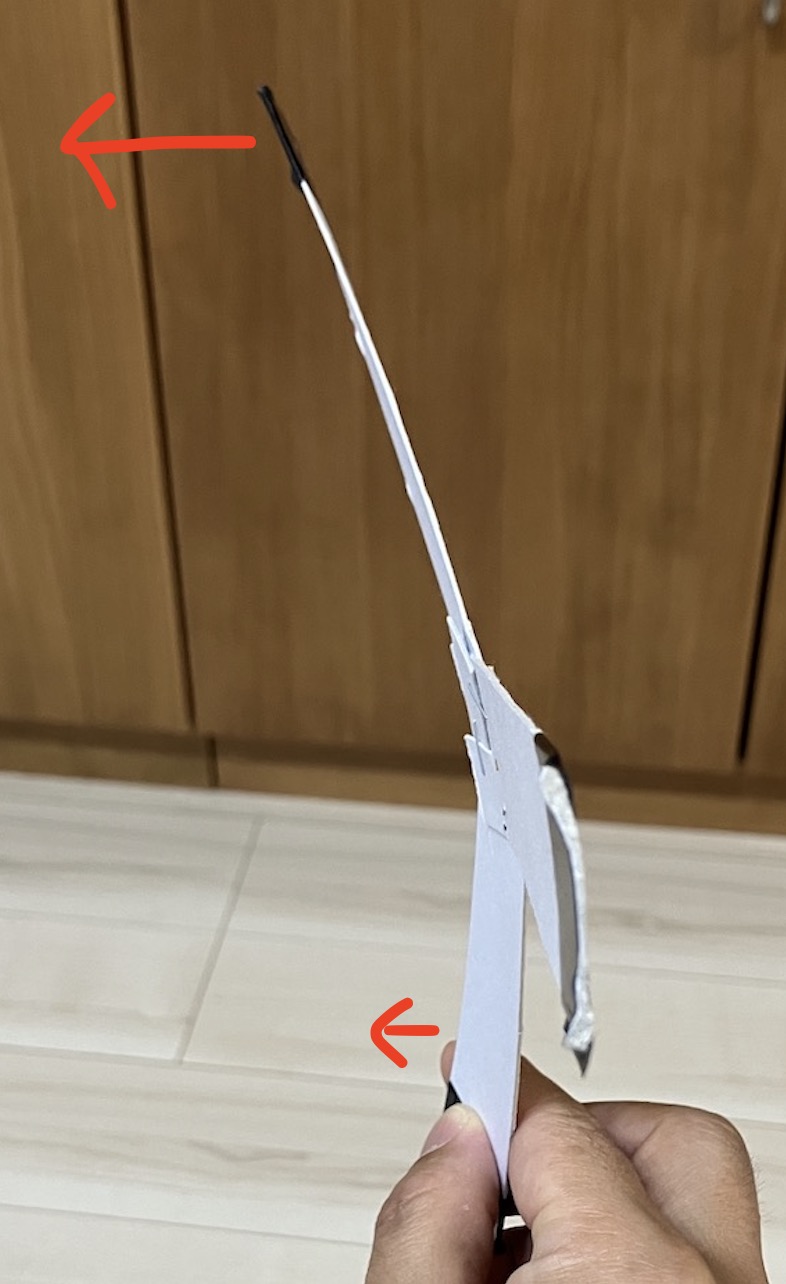
Now here’s where it gets wild. With a fast-spinning object, a tilting force doesn’t make it tilt in the direction you’d expect — instead, it causes the rotation axis to shift sideways, 90 degrees from where the force was applied. That’s precession. Your instinct says “push here, it leans that way.” Physics says otherwise.
This gyroscopic precession is what bends the boomerang’s path into a curve. Throw it vertically, and it arcs through the air in a wide loop back to you.
Precession is also what makes a spinning top so fascinating — you can see a great example in this gyroscope video:
And here’s another beautiful detail: when the boomerang returns to you, it tilts horizontal and seems to hover in the air before landing in your hand. That’s precession again — a second gyroscopic effect caused by the difference in lift between the front and rear halves gradually tilts the rotation plane toward horizontal, so the boomerang levels out and floats back like a frisbee.
Now, the path a boomerang traces through the air looks like a circle — but it’s not quite. Because precession continuously shifts the direction of the rotation axis, the lift direction changes throughout the flight too. That makes it fundamentally different from a true circular orbit, where the centripetal force always points steadily inward. In reality, the boomerang follows something closer to an inward spiral, gradually curling in as precession builds up.
The bowl shape tightens the flight path
When you curve the boomerang into that shallow bowl — higher in the center, lower at the tips — something interesting happens to the lift geometry.
On a flat boomerang, lift acts perpendicular to the rotation plane — mostly sideways. But the bowl shape tilts each blade’s lift slightly inward, toward the center axis. That inward component adds centripetal force, which tightens the curve and shrinks the flight radius. Think of it like leaning into a bicycle turn — a small lean makes a big difference. That subtle curve in the paper is doing more physics work than it looks.
It even works in space — with zero gravity!
Here’s a remarkable fact: in March 2008, JAXA astronaut Takao Doi threw a paper boomerang inside the International Space Station — and it came right back to him, just like it would on Earth.
Takao Doi (age 53), currently aboard the International Space Station (ISS), conducted an unofficial experiment throwing a boomerang gifted to him by world boomerang champion Yasuhiro Togai (age 36) from Osaka-Sayama City. The ISS interior maintains atmospheric pressure equivalent to ground level, but is in a state of microgravity. According to a report received by JAXA, the boomerang Doi threw vertically returned to him successfully.
Source: “Boomerang Came Back in Space — Doi’s Experiment” (Asahi Shimbun)
http://www.asahi.com/special/space/kibou/OSK200803200044.html
The fact that it works without gravity tells us something important: the real mechanism behind a boomerang’s return is lift and the gyroscopic effect — gravity is largely beside the point.
Airplane wing aerodynamics. Gyroscopic precession from a spinning top. Two completely different corners of physics, brought together in one curved piece of wood. If you build a boomerang for a science club or class, try experimenting with the throwing angle and spin speed and see how the flight path changes. There’s always something new to discover.
References
Wikipedia: “Boomerang” — covers the physics of lift generation from wing cross-sections and the precession mechanism in detail, with solid references.
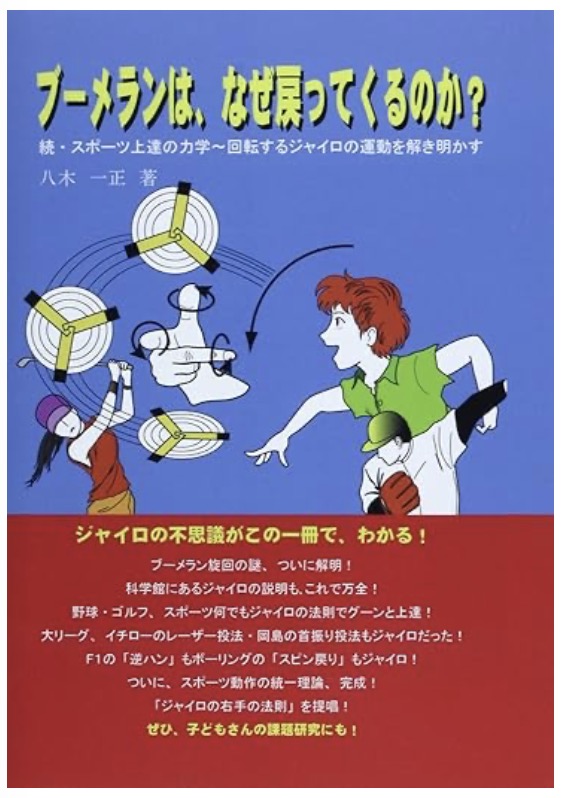
Book: Why Does a Boomerang Come Back?
Related Articles
Air Cannon Vortex Rings
Contact & Requests
Making the wonders of science more accessible — one experiment at a time! Browse the site for fun, hands-on experiments you can try at home.
The content from Science Notebook is now available as a book. Details here
About the author, Ken Kuwako: here
Requests (writing, speaking, experiment workshops, TV supervision/appearance, etc.): here
Article updates posted on X!
 Experiment videos on the Science Notebook Channel!
NEW 分解問題集 理科
- 7月21日発売!『高校入試 分解問題集 理科』(学研)…難しい問題も小さな問題に分解することで、問題を解くことができます。そんな分解の技術が身につくように深く関わりを持って作りました。
7・8月のイチオシ実験!
夏でプシュッと爽やか実験!
テレビ番組監修・イベント等のお知らせ
- 7月30日(水)科学監修「TIF presents ONE SONG FES」(フジテレビ) 26:15~27:15
- 12月26日(土) ナリカサイエンスアカデミー(教員向け実験講習会)開催
書籍のお知らせ
- 『大人のための高校物理復習帳』(講談社)…一般向けに日常の物理について公式を元に紐解きました。特設サイトでは実験を多数紹介しています。※増刷がかかり6刷となりました(2026/02/01)

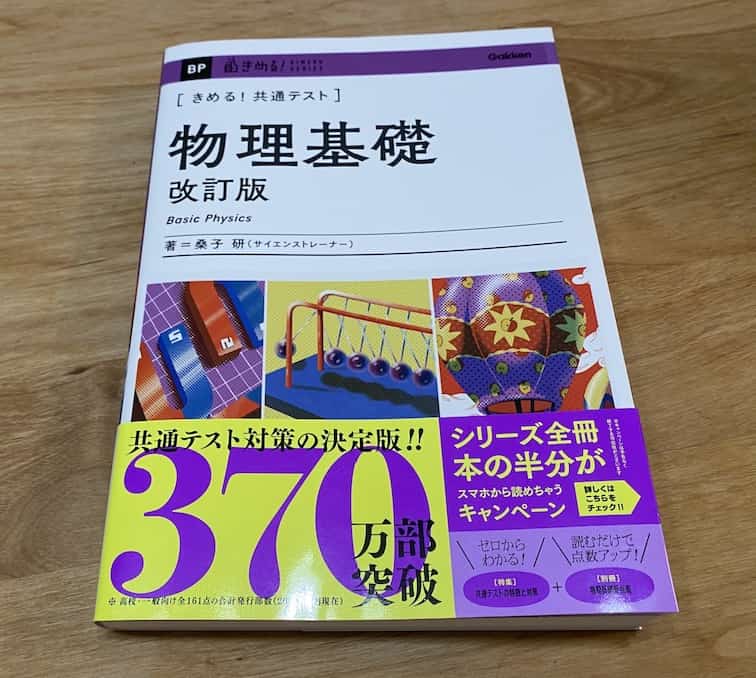
- 『きめる!共通テスト 物理基礎 改訂版』(学研)… 高校物理の参考書です。イラストを多くしてイメージが持てるように描きました。授業についていけない、物理が苦手、そんな生徒におすすめです。特設サイトはこちら。
各種SNS(更新情報をお届け!)
【日本語】X(Twitter)/instagram/Facebook 【英語】BlueSky/Threads
Explore
- 楽しい実験…お子さんと一緒に夢中になれるイチオシの科学実験を多数紹介しています。また、高校物理の理解を深めるための動画教材も用意しました。
- 理科の教材… 理科教師をバックアップ!授業の質を高め、準備を効率化するための選りすぐりの教材を紹介しています。
- Youtube…科学実験等の動画を配信しています。
- 科学ラジオ …科学トピックをほぼ毎日配信中!AI技術を駆使して作成した「耳で楽しむ科学」をお届けします。
- 講演 …全国各地で実験講習会・サイエンスショー等を行っています。
- About …「科学のネタ帳」のコンセプトや、運営者である桑子研のプロフィール・想いをまとめています。
- お問い合わせ …実験教室のご依頼、執筆・講演の相談、科学監修等はこちらのフォームからお寄せください。