Recreate a Sunset with a Plastic Bottle! Discover the Magic of Light Scattering with Milk
I’m Ken Kuwako, your Science Trainer. Every day is an experiment!
Have you ever gazed at a sunset so beautiful it took your breath away? Today, we’re diving into one of the sky’s greatest mysteries: Why does the setting sun turn brilliant shades of orange and red? I’ll show you a simple, fun experiment to recreate this magic right at home.
The secret behind those stunning colors lies in a phenomenon called light scattering. It might sound technical, but once you see it in action, you’ll be hooked on the science behind it.
As a bonus, we’ll take a peek under the microscope to see the “secret ingredient” of our experiment—milk particles—moving around as if they were alive!

The Science Recipe: Sunset in a Bottle
What You’ll Need:
Two 1.5-liter plastic bottles
Milk (Soapy water works too!)
Water
A flashlight (A powerful one with a focused beam works best)
For the best results, use a high-intensity LED flashlight like the ones below:
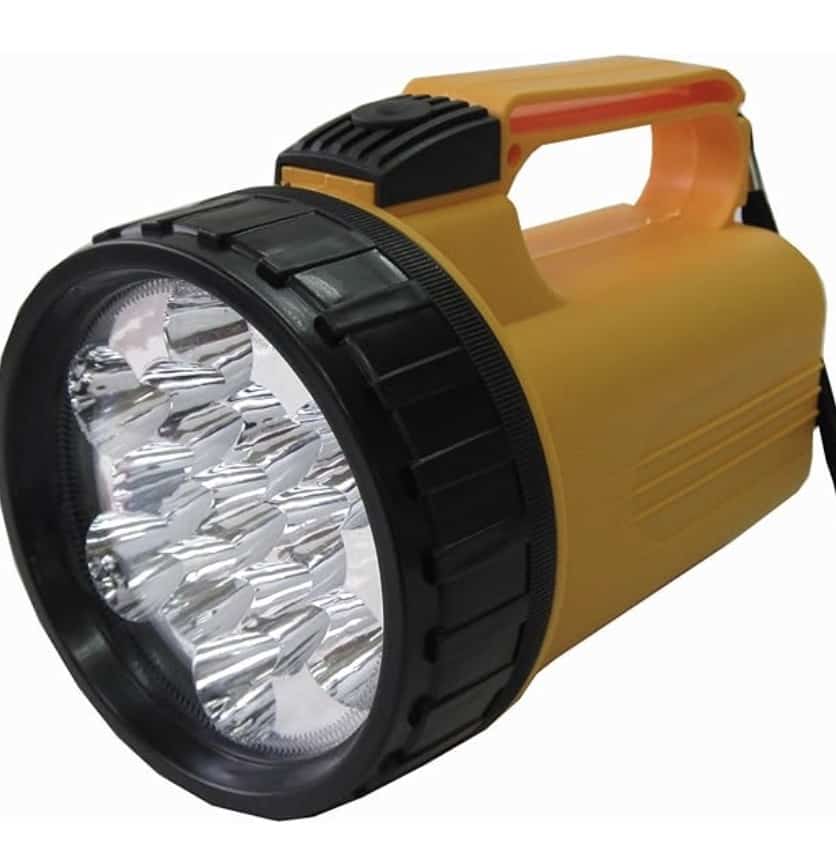
Amazon: Flashlight
Rakuten: LED 13LED Super Light SV-3345
Steps:
Prep Time! Fill both plastic bottles to the brim with water.
A Drop of Magic: Add just a few drops of milk to one bottle. You want the water to look slightly cloudy or hazy. Be careful not to overdo it! Use a dropper to add it one drop at a time until you get a faint tint.
The Dark Room Test (The Comparison)
Turn off the lights. Press your flashlight against the bottom of the plain water bottle. You’ll see the light travel straight through, reaching the cap as a clear white beam.
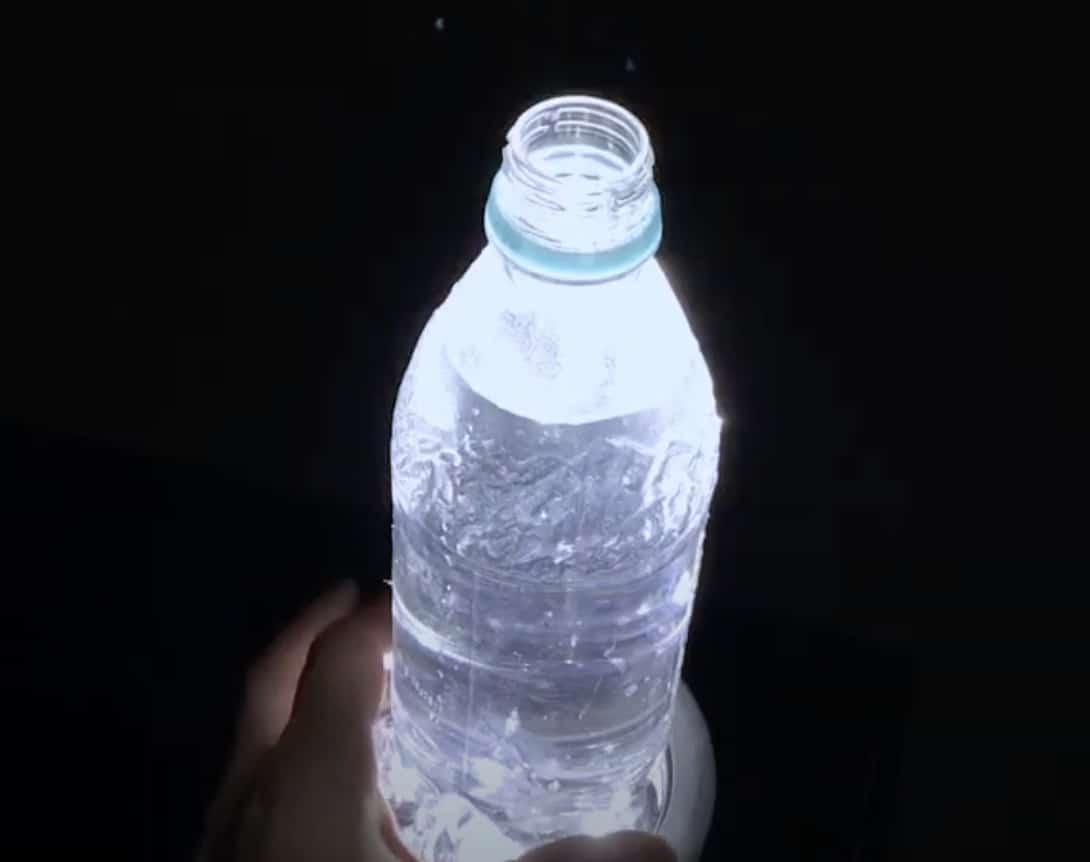
The Main Event: Now, do the same with the milky bottle. Look closely at the bottle from the side, and then look directly at the cap (the “exit point”). Notice the difference!
The Results:
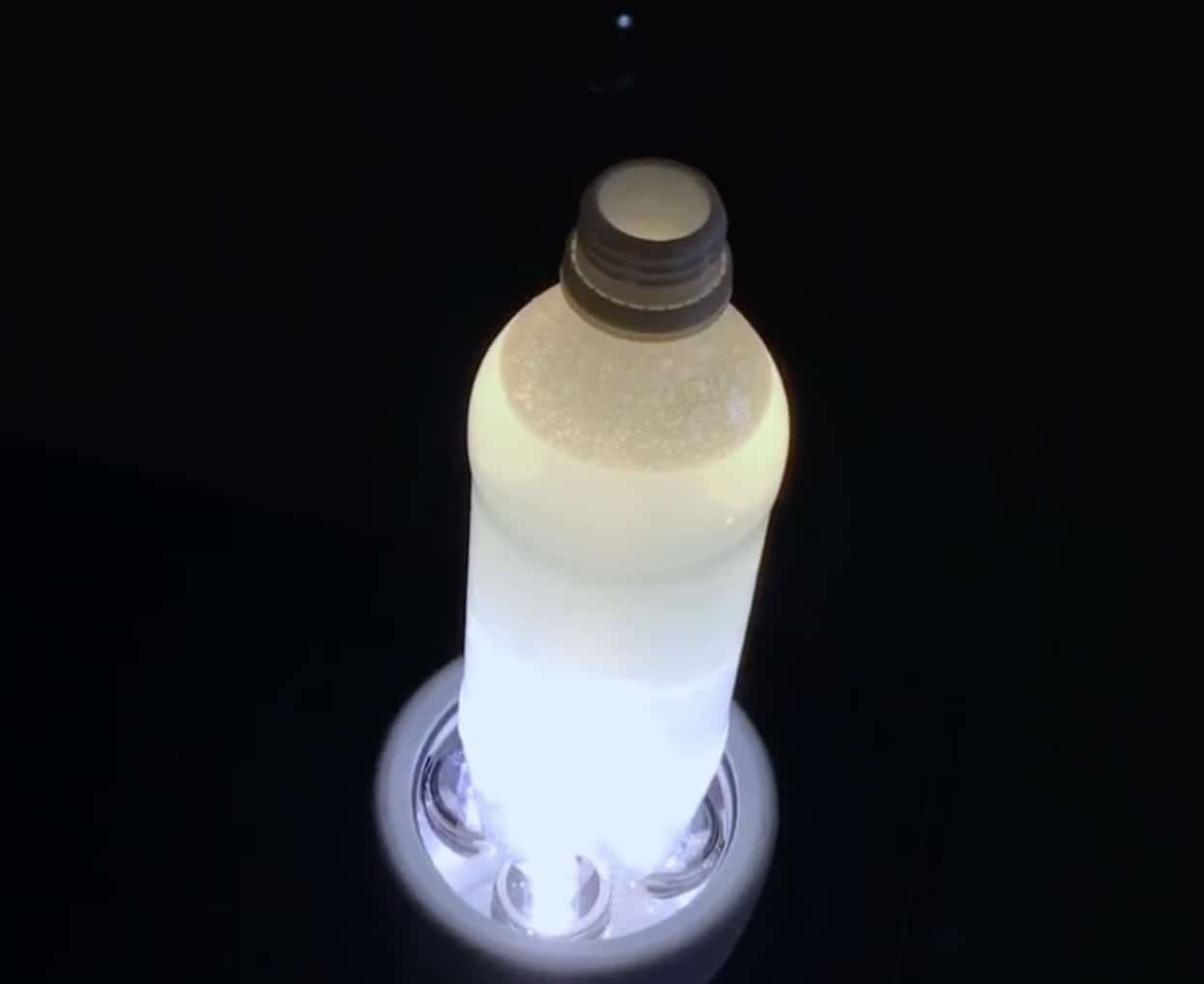
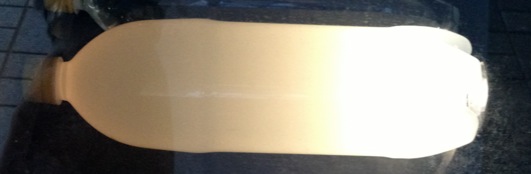
In the plain water, the light stayed white. But in the milky water? From the side, the beam looks bluish-white. But when you look at the light coming out of the cap… wow! It has shifted from white to orange, and even deep red. It’s a sunset in a bottle!
The Science: How Milk Becomes a Sunset
The key to this magic is the tiny, invisible “particles” (fats and proteins) found in milk.
Color and Wavelength:
While sunlight and flashlight beams look white, they are actually a mix of all colors, like a rainbow. Light travels in waves, and different colors have different wavelengths:
Blue light: Short wavelength
Red light: Long wavelength
The Scatter Effect:
When light hits tiny particles in the air or water, it bounces off in all directions. This is scattering.
Short-wavelength blue light is easily interrupted by these particles and scatters everywhere. Long-wavelength red light, however, is like an off-road vehicle—it’s tough enough to bypass the particles and keep moving straight ahead.
Breaking Down the Experiment:
In our bottle, the light hits millions of milk particles:
Why it looks blue from the side: As soon as the light enters, the blue light scatters in all directions. That scattered blue light hits your eyes, making the path look bluish.
Why the exit looks red: By the time the light reaches the cap, most of the blue light has been scattered away. Only the strong red light manages to push through the particles, reaching your eyes at the end of the bottle.
This is Exactly What Happens in Our Sky
This experiment is a perfect miniature model of Earth’s atmosphere:
Milk particles = Dust, water vapor, and gas molecules in the air.
Water in the bottle = Our atmosphere.
Flashlight = The Sun.
Daytime (Why the sky is blue): When the sun is directly overhead, the light travels through a “short” path of atmosphere. Blue light scatters all over the sky, making it look blue to us.
Evening (Why the sunset is red): As the sun sinks toward the horizon, the light has to travel a much longer, diagonal path through the atmosphere—just like the light traveling the full length of our bottle. By the time it reaches you, the blue light is gone, and only the surviving red light paints the sky.
The “Living” World Under the Microscope: Brownian Motion
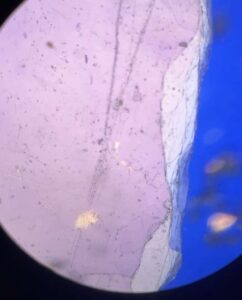
If you look at our “sunset milk” under a microscope (around 150x), you’ll see something even wilder. Those protein particles aren’t just sitting there; they are staggering around, zig-zagging back and forth like they’re alive!
They aren’t actually alive, though. This is proof that invisible water molecules are vibrating with heat energy and constantly “kicking” the milk particles from all sides. This is called Brownian Motion.
From the physics of light (waves) to the movement of particles (thermodynamics)—it’s amazing how much science is hidden in a single drop of milk!
A Literary Connection: Kenji Miyazawa’s “Copper Sky”

Light scattering even shows up in classic literature. In Kenji Miyazawa’s The Biography of Gusko Budori, there is a description of the sun turning a copper-brown color during a period of global cooling.
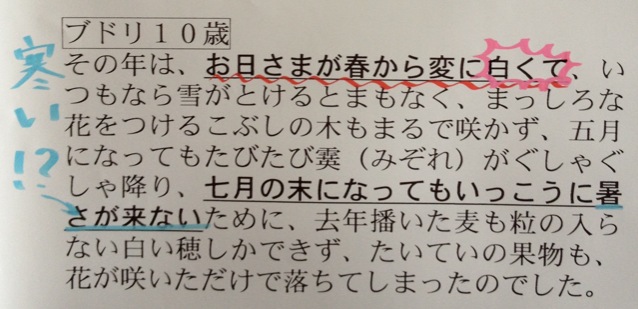
From The Biography of Gusko Budori
This wasn’t just imagination. About 100 years ago, massive volcanic eruptions released so much ash into the atmosphere that it acted like adding way too much milk to our bottle! With so many particles in the air, blue light was completely scattered away even during the day, leaving the sun looking a dark, haunting “copper” red.
Science is hidden everywhere in our daily lives. The secret to a successful experiment is a bright LED flashlight, so grab one and try it yourself!
Amazon: Flashlight
Rakuten: LED 13LED Super Light SV-3345
Next time, why not try making a rainbow with a plastic bottle?
Contact & Inquiries
Let’s make the wonders of science a part of your life! I share fun experiments you can do at home and the secrets behind how they work. Feel free to explore more!
My “Science Notebook” is now a book! Details here.
Learn more about Ken Kuwako here.
For bookings (writing, lectures, workshops, TV supervision, etc.), click here.
Follow me on X (Twitter) for updates!
 Check out experiment videos on the Science Channel!
9月のイチオシ実験!
テレビ番組監修・イベント等のお知らせ
- 9月25日(金)21:00〜 かまいたちの瞬間回答!にて、科学監修を行いました。
- 10月10日(土)11:15~12:00 千葉市科学フェスタ2026「桑子先生の回転科学ショー」にてサイエンスショーを行います。
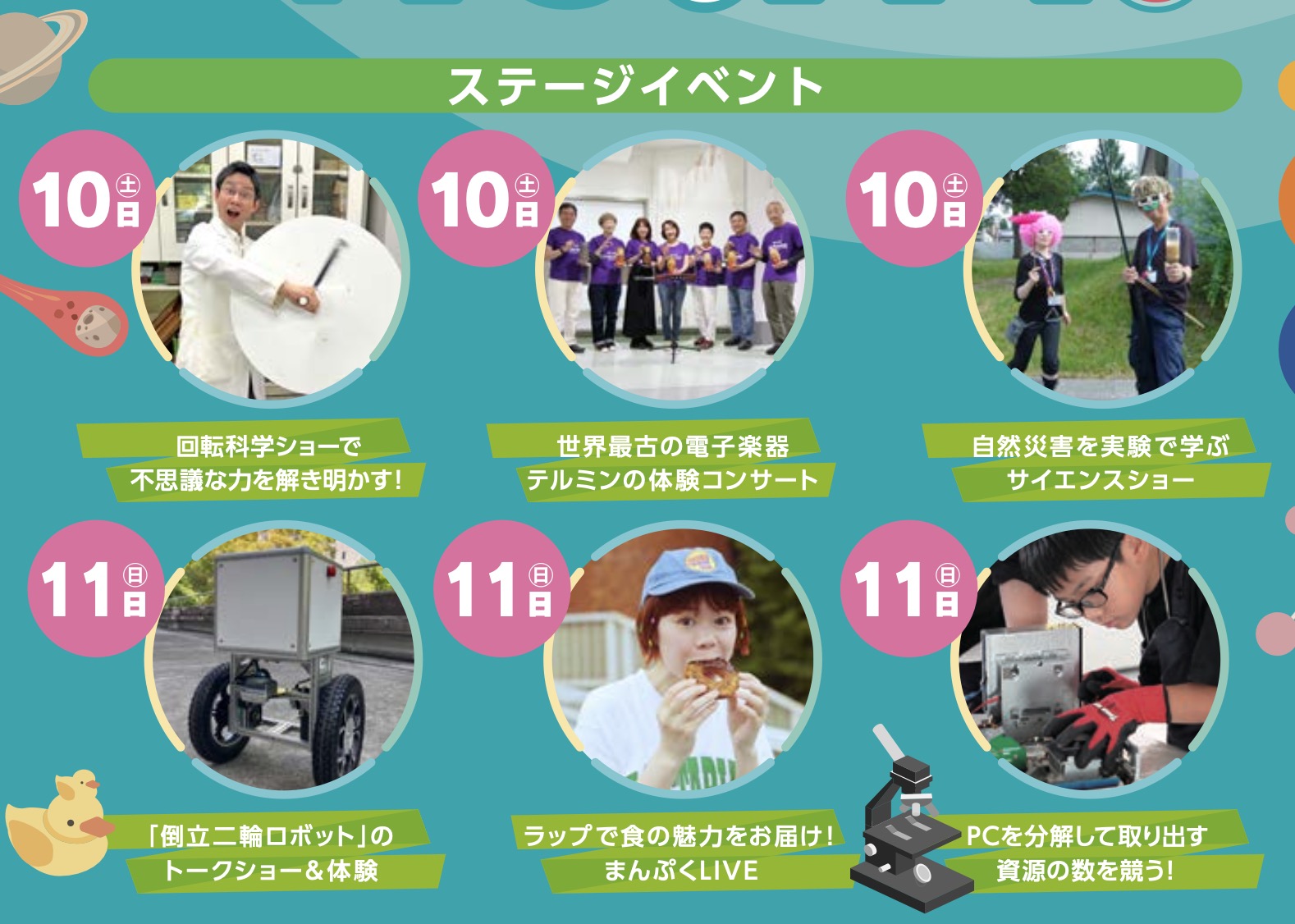
- 12月26日(土) ナリカサイエンスアカデミー(教員向け実験講習会)開催
書籍のお知らせ
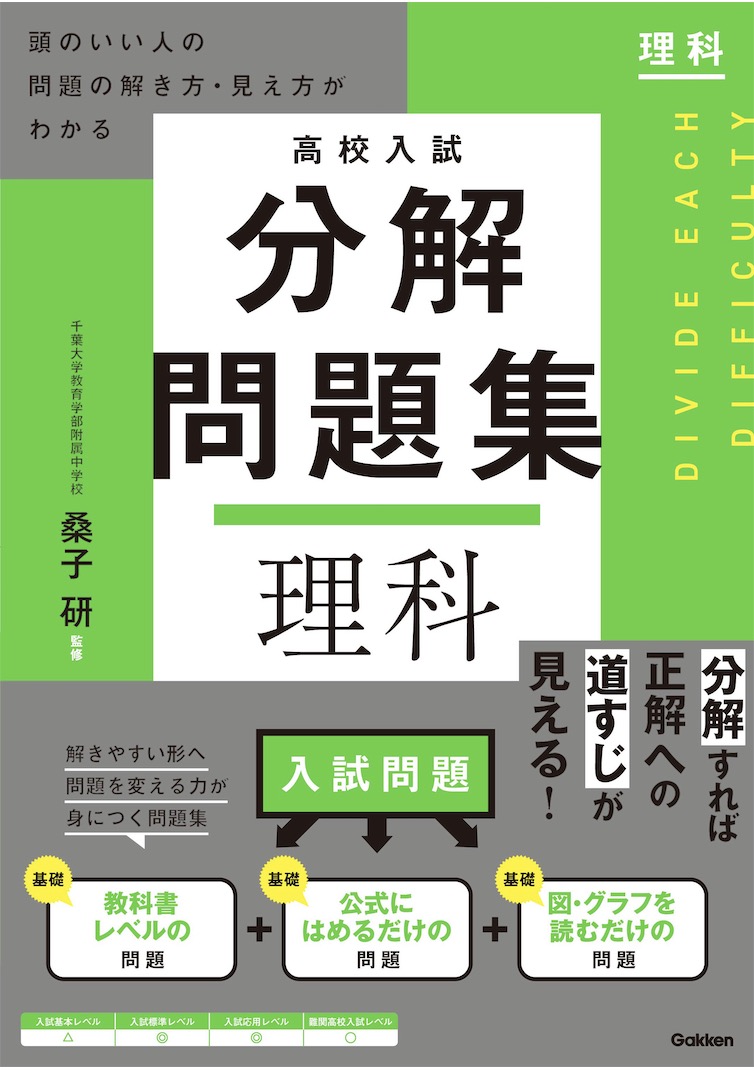
- 『高校入試 分解問題集 理科』(学研)…難しい問題も小さな問題に分解することで、問題を解くことができます。そんな分解の技術が身につくように深く関わりを持って作りました。
 『大人のための高校物理復習帳』(講談社)…一般向けに日常の物理について公式を元に紐解きました。特設サイトでは実験を多数紹介しています。※増刷がかかり6刷となりました(2026/02/01)
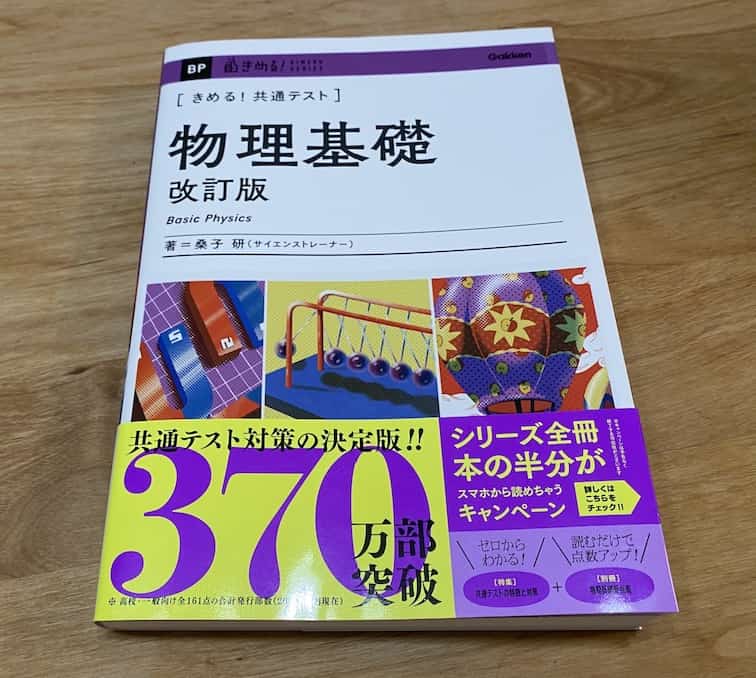
- 『きめる!共通テスト 物理基礎 改訂版』(学研)… 高校物理の参考書です。イラストを多くしてイメージが持てるように描きました。授業についていけない、物理が苦手、そんな生徒におすすめです。特設サイトはこちら。
各種SNS(更新情報をお届け!)
【日本語】X(Twitter)/instagram/Facebook 【英語】BlueSky/Threads
Explore
- 楽しい実験…お子さんと一緒に夢中になれるイチオシの科学実験を多数紹介しています。また、高校物理の理解を深めるための動画教材も用意しました。
- 理科の教材… 理科教師をバックアップ!授業の質を高め、準備を効率化するための選りすぐりの教材を紹介しています。
- Youtube…科学実験等の動画を配信しています。
- 科学ラジオ …科学トピックをほぼ毎日配信中!AI技術を駆使して作成した「耳で楽しむ科学」をお届けします。
- 講演 …全国各地で実験講習会・サイエンスショー等を行っています。
- About …「科学のネタ帳」のコンセプトや、運営者である桑子研のプロフィール・想いをまとめています。
- お問い合わせ …実験教室のご依頼、執筆・講演の相談、科学監修等はこちらのフォームからお寄せください。