Rock Detectives: How to Uncover Earth’s Secrets with Just 6 Stones
Ken Kuwako, Science Trainer. Every Day is an Experiment!
That pebble on the side of the road. That large boulder tucked away in the corner of the park. Wouldn’t it be thrilling if these were actually time capsules whispering tales of Earth’s ancient drama? Well, they might be! Many are actually igneous rocks, born deep inside the Earth when molten magma cools and solidifies.
When students encounter the “Classification of Rocks” in junior high science, many feel the textbook photos don’t quite click or that the names all blur together. Sound familiar? That’s why I’m sharing a class where we transform the often tedious memorization of igneous rocks into an intellectually stimulating, active adventure, like a group of detectives solving a geological mystery. A hands-on workshop where students classify six different igneous rocks shone brighter in their eyes than I could have imagined. I want to share the magic of truly “seeing, touching, and thinking” in science that this lesson rekindled.
The “Challenge” from the Earth Itself
The materials we use in this lesson are, in a way, works of art created by the Earth.
-
- Specimens of 6 Types of Igneous Rocks (Granite, Diorite, Gabbro, Rhyolite, Andesite, Basalt). If actual rock kits aren’t available, photo cards can be substituted, but the feel and weight of the rocks are important clues, so I highly recommend the real thing.
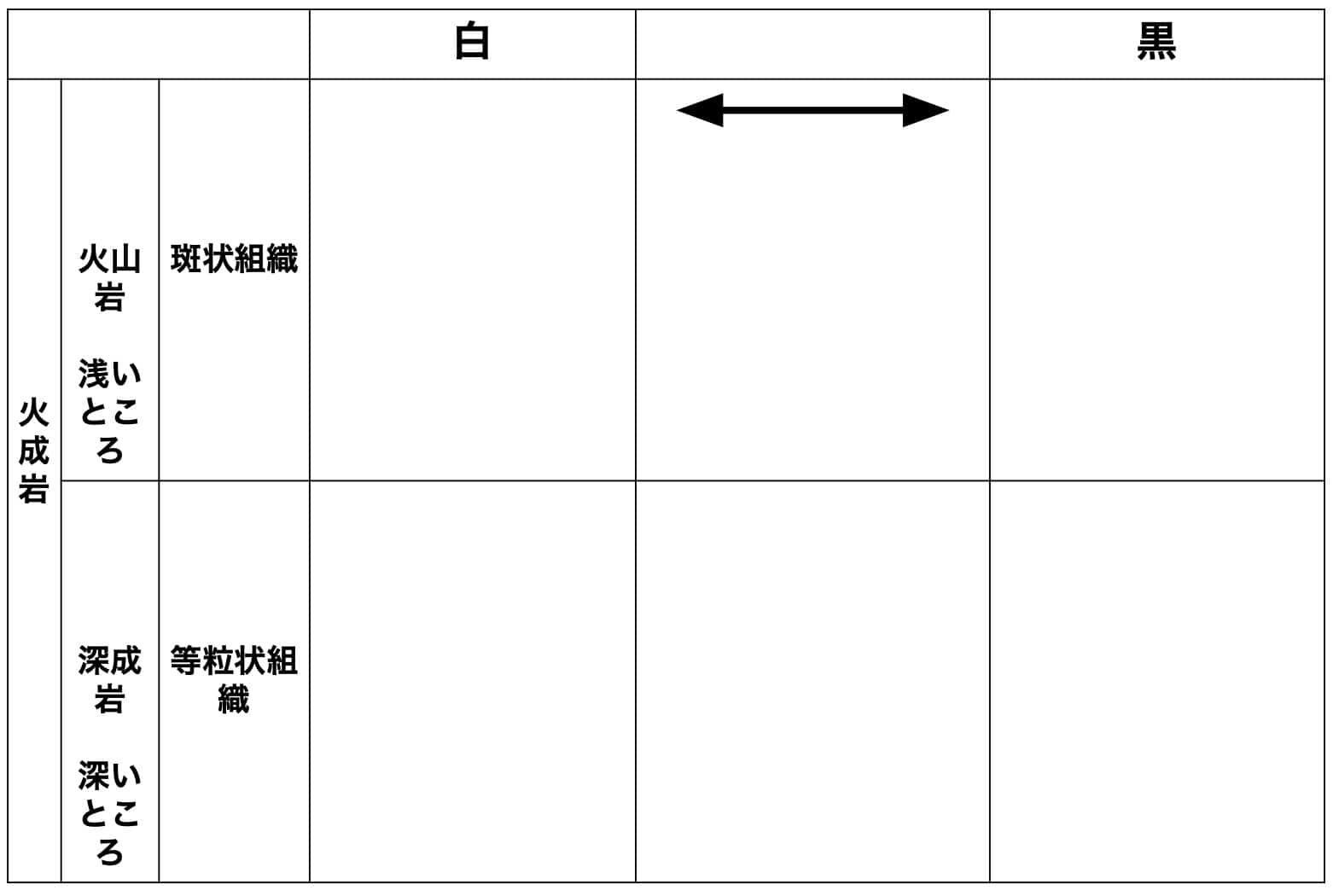
- A3 Worksheet (for the classification chart) → Make sure the key terms like “Color” and “Crystal Size” are clearly written in large boxes.
- Colored stickers or sticky notes (for marking classification groups)
- A mnemonic card/slide for classifying igneous rocks: “Shin-Kan-Sen-Ha-Ka-Ri-Age” (a popular Japanese mnemonic)
The 45-Minute Mystery: Classifying Igneous Rocks
1. Introduction: The Story Begins (10 minutes)
We start with volcanoes. “The Earth’s interior is incredibly hot, filled with magma—molten rock. When that magma cools and solidifies, it becomes an ‘igneous rock.’ But there are actually two main groups of igneous rocks.”
Then, I pose the challenge to the students:
[The Question] “Where and how do you think these rocks in front of you were formed?”
And so, their detective work begins.
2. Mission 1: Classify by Color! (10 minutes)
The first instruction is simple: “Work in pairs and divide the rocks into two groups: the ‘light-colored group’ and the ‘dark-colored group.'”
Students immediately start moving the rocks, debating, “This one’s whitish,” and “This one is black.” However, they quickly hit a snag with the intermediate-colored rocks: “Which one does this belong to?” This realization that “looks can be deceiving” is the perfect entry point for genuine scientific inquiry.
3. Mission 2: Focus on Crystal Size! (10 minutes)
Now the A3 worksheet comes into play. They spread it out in the middle of the desk and start thinking.
“Look closely. Are the grains inside the rocks all the same size?”
Students discover some rocks have large, sparkling crystals, while others have tiny grains, making the surface look rough or smooth. This leads to classifying the two main groups:
- Large Grains (Plutonic Rocks): Evidence that the magma cooled slowly, deep underground, like simmering a stew.
- Small Grains (Volcanic Rocks): Evidence that the magma erupted near the surface and cooled quickly.
4. Unraveling the Mystery: The Core of the Story (10 minutes)
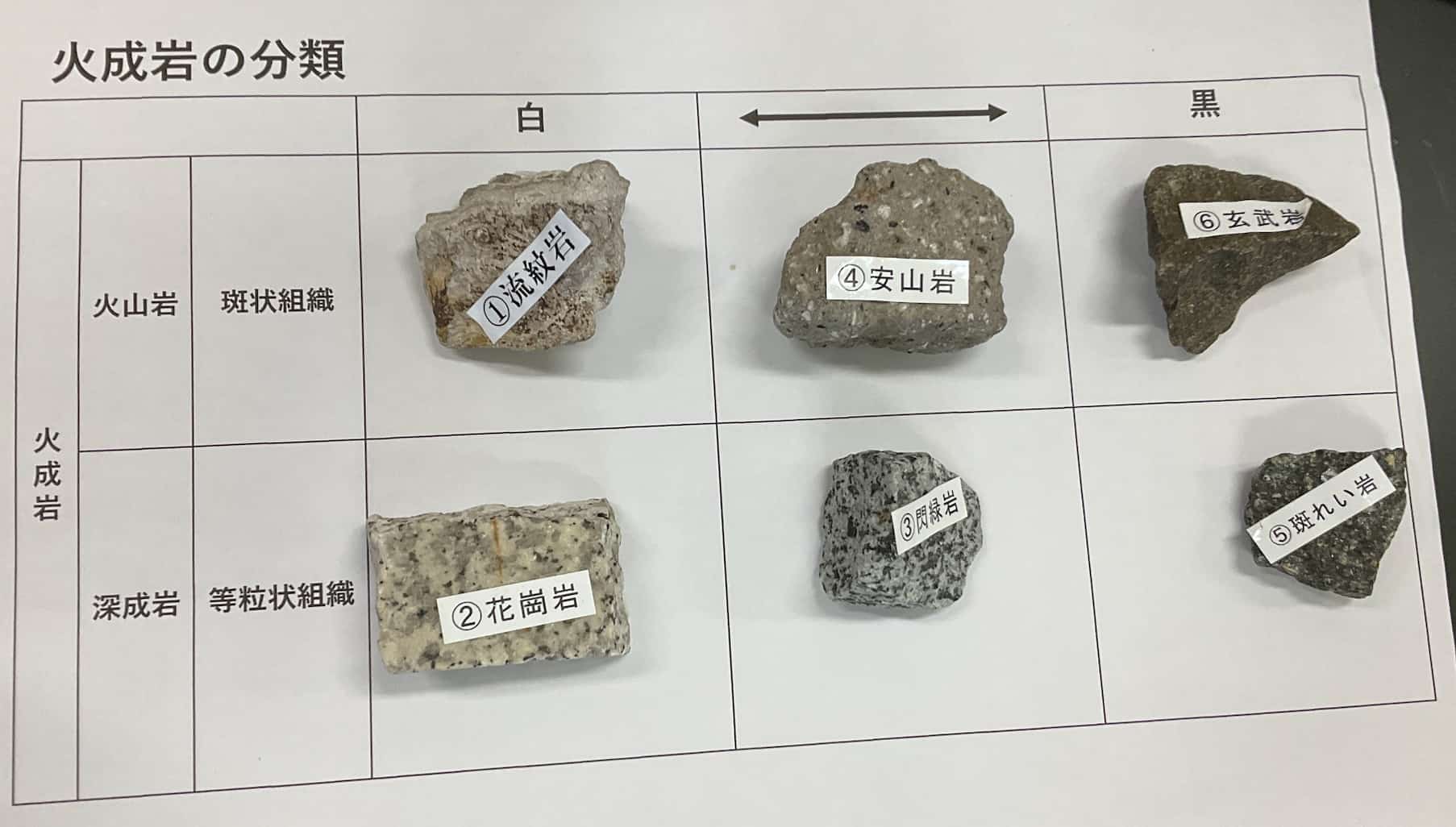
By combining the two clues—color and crystal size—the true identities of the six rocks are finally revealed.
Why the difference in crystal size? It all comes down to the “place” and “time” the rock was born: Did the magma cool slowly, deep underground (Plutonic rock), or quickly, near the surface (Volcanic rock)? As I hear the students’ excited “I got it!” moments, we share the joy of doing science by observing, manipulating, and thinking.
5. Sealing the Memory with a Spell (5 minutes)
Finally, I introduce the “magic spell” for memorization: “Shin-Kan-Sen-Ha-Ka-Ri-Age.”
- Shin (Plutonic) → Ka (Granite), Sen (Diorite), Ha (Gabbro)
- Ka (Volcanic) → Ri (Rhyolite), A (Andesite), Ge (Basalt)
Because they just had the hands-on experience of classifying the rocks themselves, this mnemonic slips right into their minds and sticks, forming a deep memory.
The Profiles of the Rocks
Here are the profiles of the six unique rock personalities that took center stage in the lesson.
| Rock Name | Rock Type | Crystal Size | Color | Key Point |
|---|---|---|---|---|
| Granite | Plutonic | Large (clearly visible) | Light (white to pinkish) | Rich in quartz and feldspar; often sparkly. Famous as “mikage-ishi” (Japanese term for granite). |
| Diorite | Plutonic | Large | Intermediate (grayish) | A salt-and-pepper look of black and white. Intermediate among plutonic rocks. |
| Gabbro | Plutonic | Large | Dark (blackish) | Overall dark-colored and heavy-looking. |
| Rhyolite | Volcanic | Small (gritty/fine) | Light (whitish) | The “sibling” of Granite, formed from the same magma type. Sometimes has a texture similar to pumice. |
| Andesite | Volcanic | Small (fine grains) | Intermediate (gray) | A common volcanic rock, the “representative player” of Japanese volcanoes. |
| Basalt | Volcanic | Small (nearly invisible) | Dark (solid black) | Formed when low-viscosity magma flows gently, like at Hawaii’s Kilauea volcano. |
The Two Detective Tools for Rock Identification
1. What Color Is It? (Light vs. Dark)
This is due to the different minerals in the magma. Light-colored rocks have high silica content (the raw material for glass), making the magma sticky (high viscosity). Dark-colored rocks are rich in iron and magnesium, making the magma runny (low viscosity). The eruption styles are also different: sticky magma tends to erupt explosively, while runny magma flows out gently.
2. Can You See the Crystals? (Large vs. Small)
This is about the speed of cooling.
- Cooled Slowly (Plutonic): There was time for large crystals to grow. Think of them as well-developed adults.
- Cooled Quickly (Volcanic): The rock solidified before the crystals could get big. These are the impatient ones!
Knowing the Name’s Origin Makes Rocks More Fascinating!
| Rock Name | English Name | Origin/Meaning of the Japanese Name |
|---|---|---|
| 花崗岩 (Kōgan) | Granite | Meaning “Flower-Ridge Rock.” A hard rock with a beautiful, flower-like pattern, like a “kō” (ridge/mound). |
| 閃緑岩 (Senryokugan) | Diorite | The minerals “flash” (sen), and the whole rock appears “green” (ryoku). A greenish plutonic rock that sparkles. |
| 斑れい岩 (Hanreigan) | Gabbro | Meaning “Mottled Blue-Gray Rock.” It has a “mottled” (han) pattern and an “azure-black” (reisei) color. A dark, mottled rock. |
| 流紋岩 (Ryūmongan) | Rhyolite | Meaning “Flow-Pattern Rock.” You can see the “flow patterns” (ryūmon) created by the viscous magma. |
| 安山岩 (Anzangan) | Andesite | Named because it is commonly found in the Andes (An-De-Shi) Mountains of South America. A truly global rock! |
| 玄武岩 (Genbugan) | Basalt | “Gen” means black. Named after the Genbu-do Cave in Hyogo Prefecture, where it was first studied in Japan. It evokes “Genbu”—the Black Tortoise, a powerful, dark guardian god in Chinese mythology. A black, strong-looking volcanic rock. |
What I Felt Doing This Lesson
The time students spent moving the rocks around, debating “this or that,” was more engaging than I had ever anticipated. When I was a junior high student, igneous rocks were “just something to memorize.” But when you actually hold them and closely observe the crystal grains, a story unfolds in your mind: “Ah, this one cooled slowly deep inside the Earth,” or “This guy burst out of a crater and solidified instantly.” Seeing them spread out the worksheet and arrange the rocks like scientists or detectives was incredibly encouraging. I realized anew that giving students the chance to “discover” things for themselves is what truly transforms learning into genuine joy.
If you read this article, I encourage you to pause next time you see a rock on the roadside. By looking at its color and the size of its grains, you might just be reading a page from Earth’s grand drama.
Bonus: The Worksheet for Your Class
👇 You can download the A3 classification worksheet here.
Contact and Requests
Bring the wonder and fun of science closer to you! I’ve put together easy-to-follow tips and fun experiments you can do at home. Please feel free to search around!
- About the author, Ken Kuwako: Click here
- For requests (writing, lectures, science classes, TV supervision/appearances, etc.): Click here
- Article updates are shared on X!
 Experimental videos are available on the Science Idea Channel!
9月のイチオシ実験!
テレビ番組監修・イベント等のお知らせ
- 9月25日(金)21:00〜 かまいたちの瞬間回答!にて、科学監修を行いました。
- 10月10日(土)11:15~12:00 千葉市科学フェスタ2026「桑子先生の回転科学ショー」にてサイエンスショーを行います。
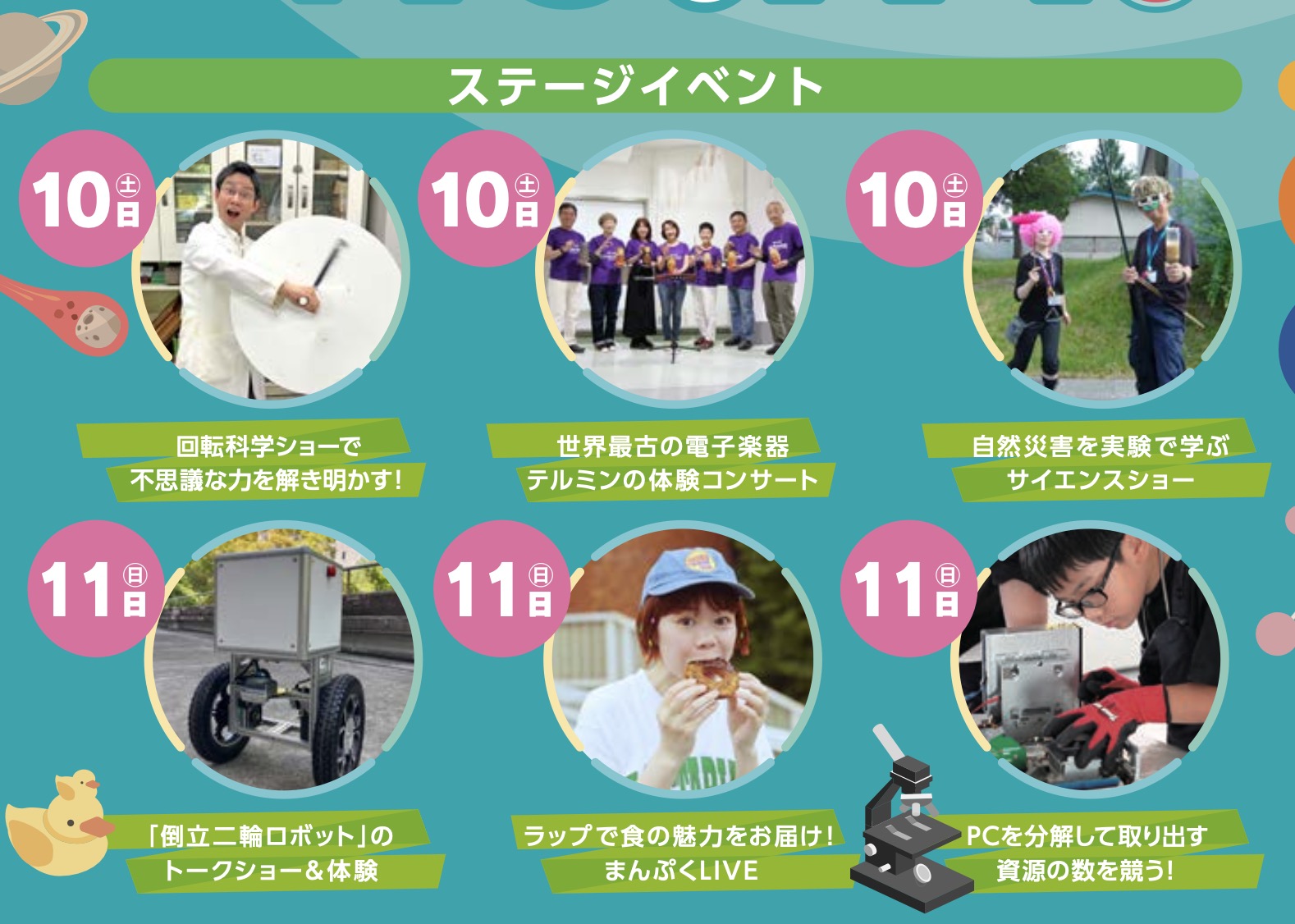
- 12月26日(土) ナリカサイエンスアカデミー(教員向け実験講習会)開催
書籍のお知らせ
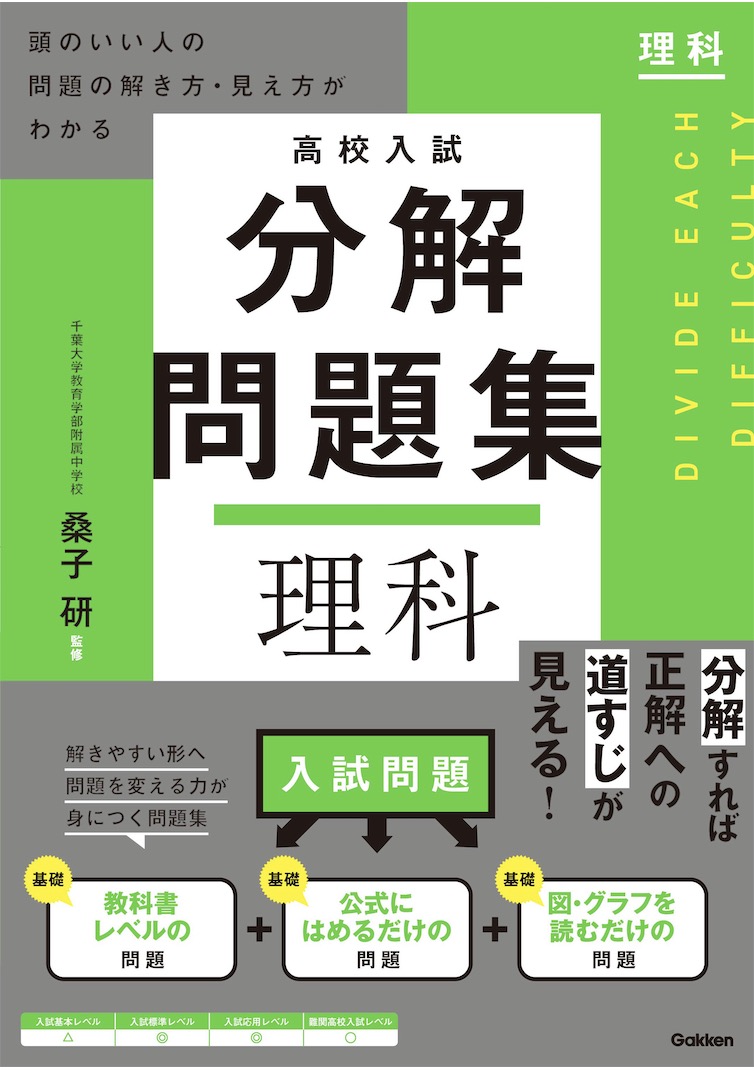
- 『高校入試 分解問題集 理科』(学研)…難しい問題も小さな問題に分解することで、問題を解くことができます。そんな分解の技術が身につくように深く関わりを持って作りました。
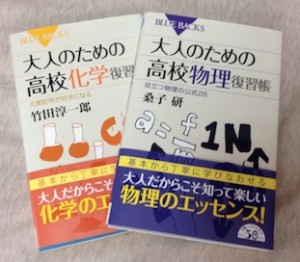
 『大人のための高校物理復習帳』(講談社)…一般向けに日常の物理について公式を元に紐解きました。特設サイトでは実験を多数紹介しています。※増刷がかかり6刷となりました(2026/02/01)
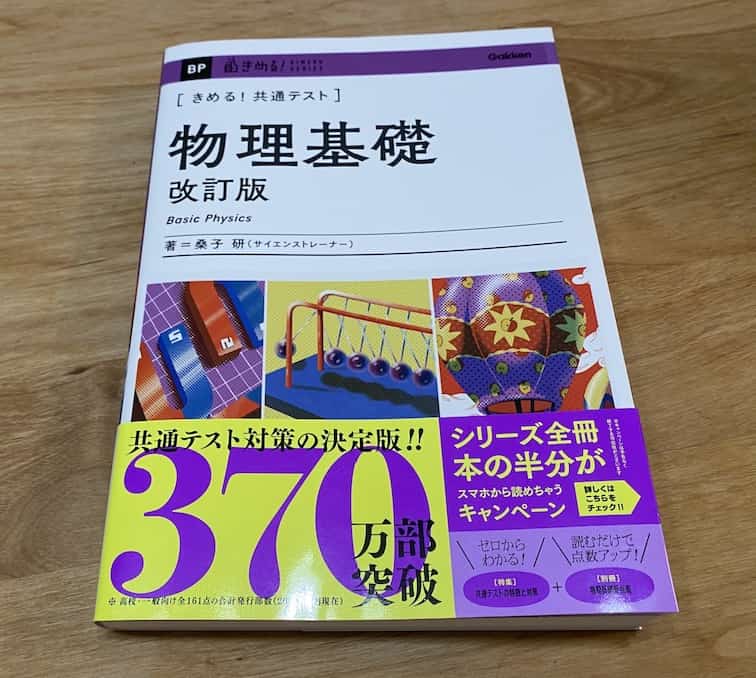
- 『きめる!共通テスト 物理基礎 改訂版』(学研)… 高校物理の参考書です。イラストを多くしてイメージが持てるように描きました。授業についていけない、物理が苦手、そんな生徒におすすめです。特設サイトはこちら。
各種SNS(更新情報をお届け!)
【日本語】X(Twitter)/instagram/Facebook 【英語】BlueSky/Threads
Explore
- 楽しい実験…お子さんと一緒に夢中になれるイチオシの科学実験を多数紹介しています。また、高校物理の理解を深めるための動画教材も用意しました。
- 理科の教材… 理科教師をバックアップ!授業の質を高め、準備を効率化するための選りすぐりの教材を紹介しています。
- Youtube…科学実験等の動画を配信しています。
- 科学ラジオ …科学トピックをほぼ毎日配信中!AI技術を駆使して作成した「耳で楽しむ科学」をお届けします。
- 講演 …全国各地で実験講習会・サイエンスショー等を行っています。
- About …「科学のネタ帳」のコンセプトや、運営者である桑子研のプロフィール・想いをまとめています。
- お問い合わせ …実験教室のご依頼、執筆・講演の相談、科学監修等はこちらのフォームからお寄せください。