We Took Apart a Motor and Found Just a Coil and a Magnet! The Secret Behind the Spin
Ken Kuwako, Science Trainer. Every day is an experiment.
I took a motor apart to see what was inside. I was sure there’d be some complicated machinery in there, but all I found was a coil and a magnet. Just those two things. And yet they power electric fans, electric cars, and even drones.
So what’s actually inside a motor?
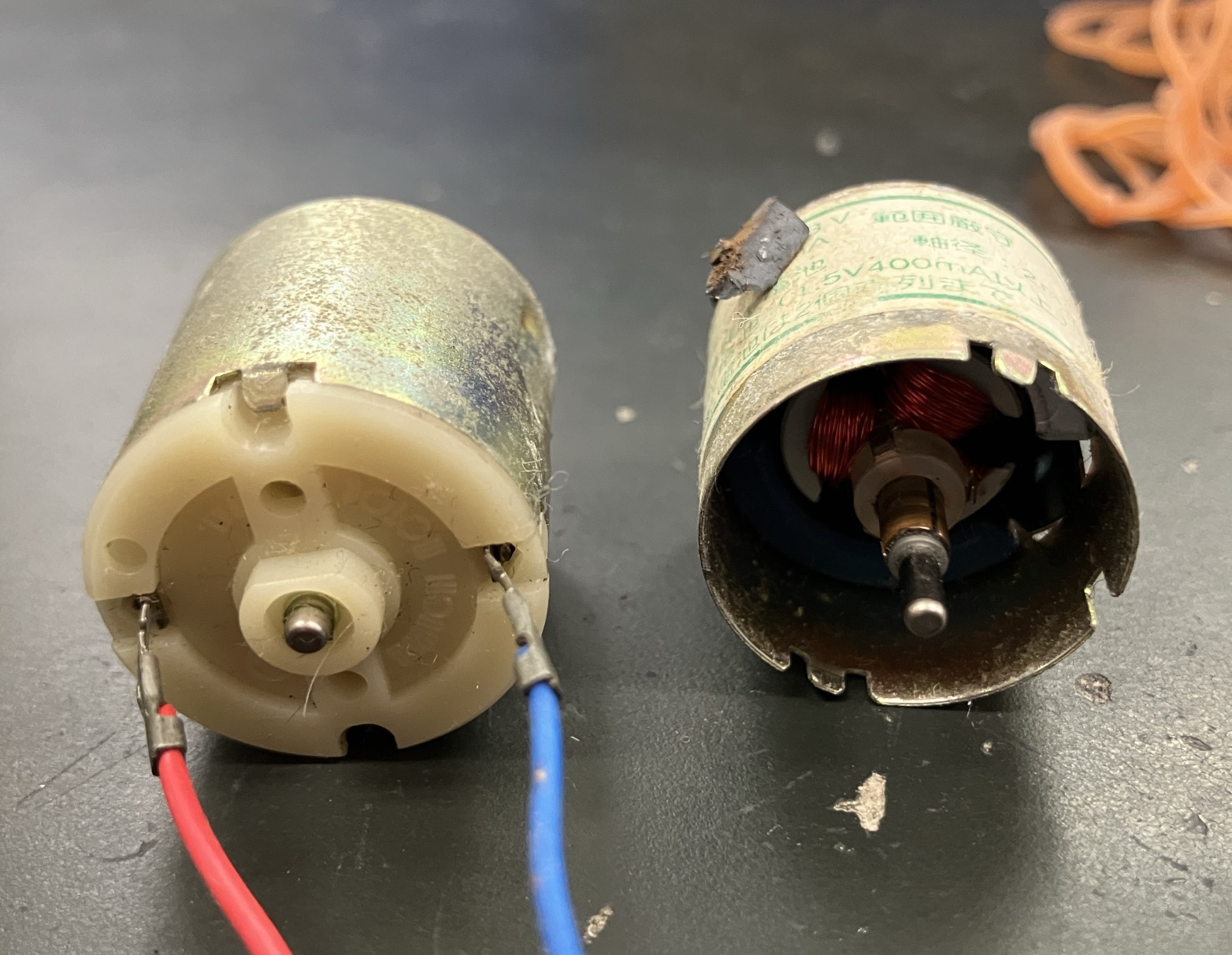
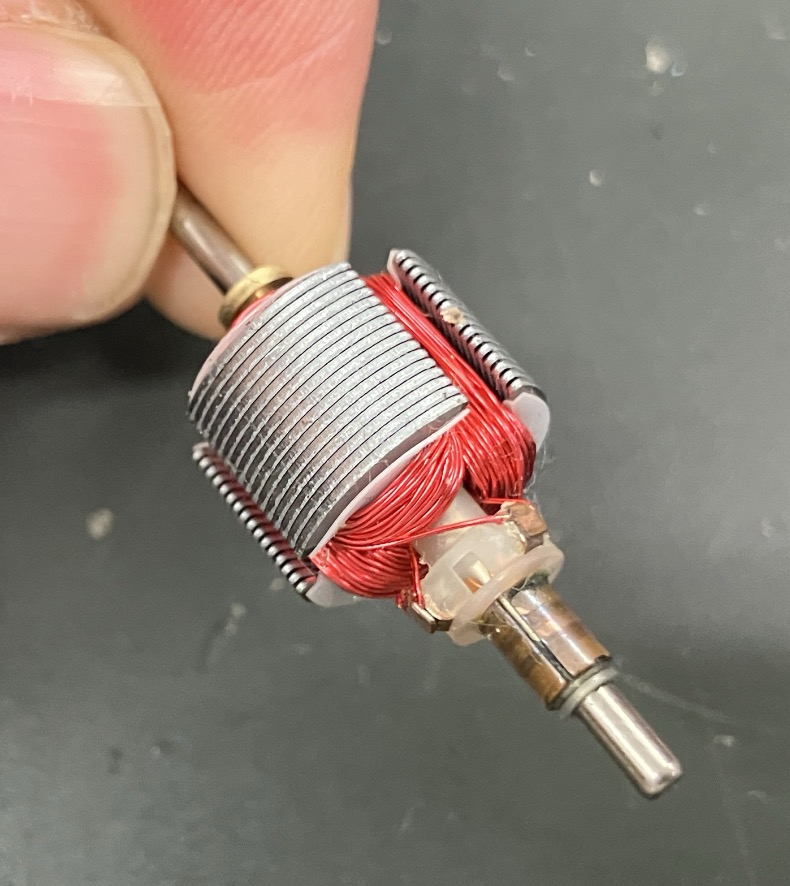
The magnets were stuck to the inside of the motor’s outer case. The coils were wound around an iron core. And I could clearly see the metal commutator, too.
In other words, the magnets sit still on the outside, while the iron core wrapped in coils spins on the inside. When electricity flows, the coils turn, and that spinning motion is carried out through the motor’s shaft.
The force on a current in a magnetic field makes it spin
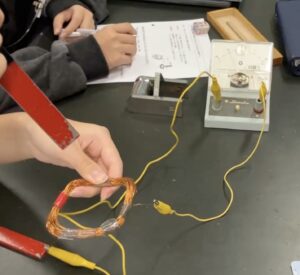
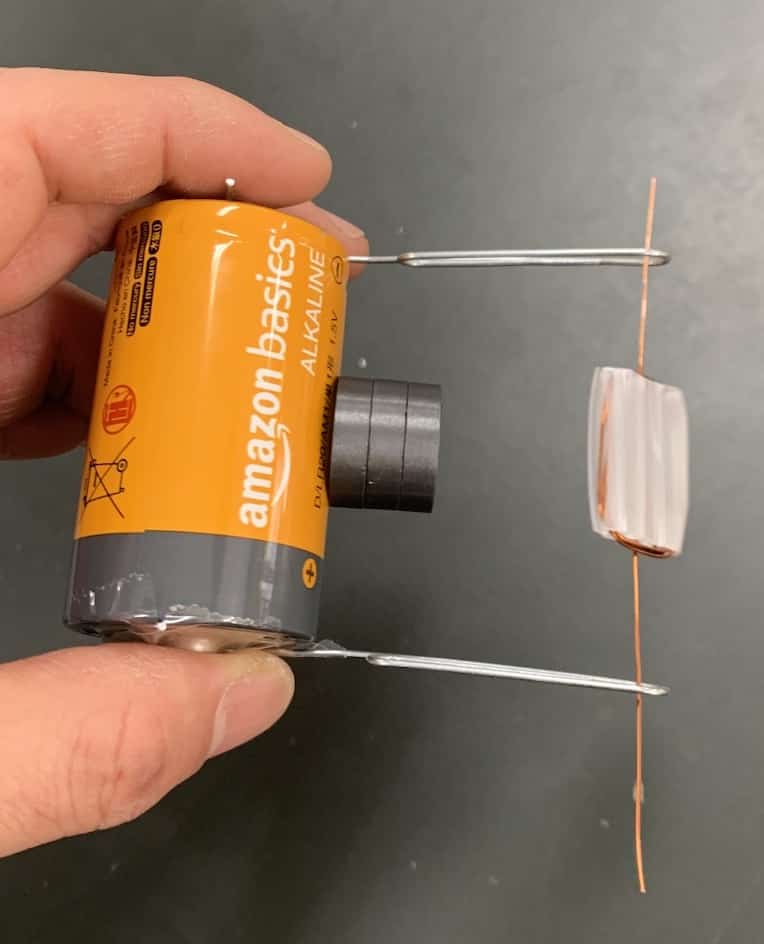
This motor shows off the principle beautifully: a motor spins because of the force that a current feels in a magnetic field. Run a current through a coil sitting inside a magnet’s field, and the coil gets pushed. The current flows in opposite directions on the coil’s right and left sides, so the forces point in opposite directions too, and together they twist the coil around.
You can work out the direction of that force with Fleming’s left-hand rule, which you may remember from junior high science. That diagram in your textbook? Here it is, working in real life.
The commutator: the part that flips the current
Now enter the commutator. If the coil simply kept turning, then after half a rotation the force would reverse and the spinning would stop dead. So at just the right moment, the commutator flips the direction of the current flowing through the coil. That way, the coil keeps getting pushed the same way and can keep spinning.
Reversing the current mid-rotation. That one clever trick is the heart of the motor.
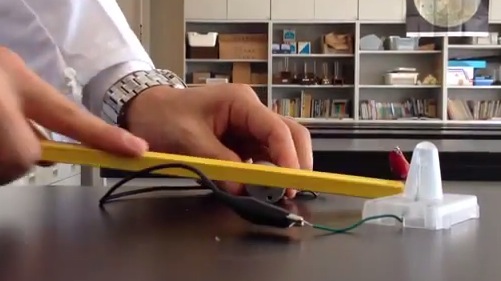
A paper clip motor has just one coil. Because of that, there are spots where it tends to get stuck (positions where the force can’t do its job), and sometimes it won’t start unless you give it a little flick with your finger first.
This motor, on the other hand, has three coils wound around its iron core. As it turns, the commutator keeps switching the magnetic poles of the three sections of the core, one after another. So no matter what angle it’s stopped at, there’s always a force pushing it to rotate. That’s why it starts up all by itself the moment current flows. If you’ve ever played with a paper clip motor, this “it just goes on its own” magic will really surprise you.
Try turning it by hand
Slowly turn the shaft of the disassembled motor with your finger. You’ll feel it catch at regular intervals, going click, click, click. That’s the iron core being pulled toward the magnets. Because the three coils get tugged by the magnets in three places, there are lots of little “cozy spots” where the shaft wants to settle during a single full turn.
Here’s another fun fact: a motor can also work as a generator. Spin the shaft hard with your finger while an LED is connected to the terminals, and the LED might light up! A motor, which spins because a current feels a force in a magnetic field, and a generator, which produces current when a coil spins in a magnetic field, are built in exactly the same way. (One more thing: even small magnets can be surprisingly strong, so be careful not to pinch your fingers when you take a motor apart.)
Contact and Requests
Let’s bring the wonder and fun of science closer to everyday life! This site collects fun science experiments you can do at home, along with tips to help them work. Try searching around and see what you find!
・The content of this blog (Kagaku no Neta-cho) has been published as a book! Details here
・Learn more about Ken Kuwako, the author of this site, here
・For requests of any kind (writing, lectures, science workshops, TV supervision and appearances, and more), please click here
・Get article updates on X!
 Kagaku no Neta Channel: experiment videos on YouTube!
10月のイチオシ実験!
テレビ番組監修・イベント等のお知らせ
- 10月27日(火) テレビ監修番組放送予定
- 11月27日(金) テレビ監修番組放送予定
- 12月26日(土) ナリカサイエンスアカデミー(教員向け実験講習会)開催
書籍のお知らせ
- 『高校入試 分解問題集 理科』(学研)…難しい問題も小さな問題に分解することで、問題を解くことができます。そんな分解の技術が身につくように深く関わりを持って作りました。
 『大人のための高校物理復習帳』(講談社)…一般向けに日常の物理について公式を元に紐解きました。特設サイトでは実験を多数紹介しています。※増刷がかかり6刷となりました(2026/02/01)
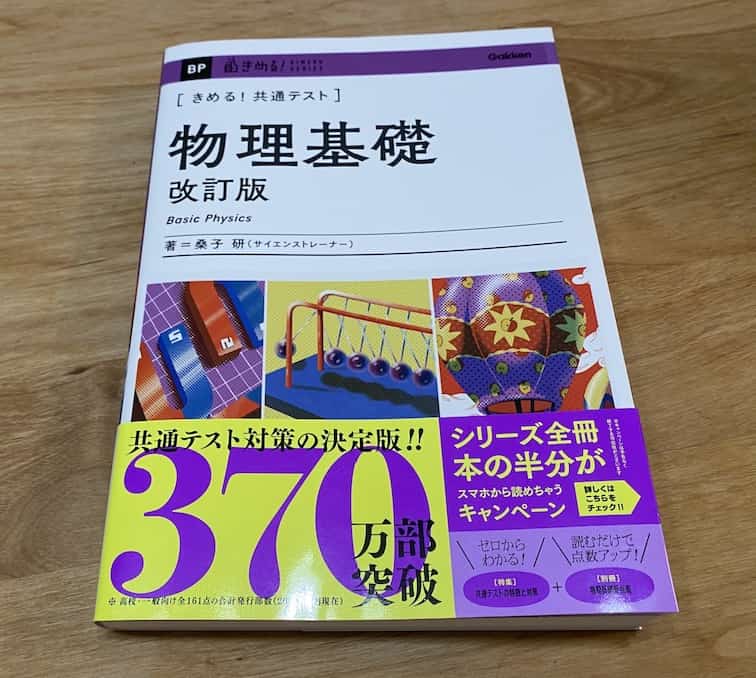
- 『きめる!共通テスト 物理基礎 改訂版』(学研)… 高校物理の参考書です。イラストを多くしてイメージが持てるように描きました。授業についていけない、物理が苦手、そんな生徒におすすめです。特設サイトはこちら。
各種SNS(更新情報をお届け!)
【日本語】X(Twitter)/instagram/Facebook 【英語】BlueSky/Threads
Explore
- 楽しい実験…お子さんと一緒に夢中になれるイチオシの科学実験を多数紹介しています。また、高校物理の理解を深めるための動画教材も用意しました。
- 理科の教材… 理科教師をバックアップ!授業の質を高め、準備を効率化するための選りすぐりの教材を紹介しています。
- Youtube…科学実験等の動画を配信しています。
- 科学ラジオ …科学トピックをほぼ毎日配信中!AI技術を駆使して作成した「耳で楽しむ科学」をお届けします。
- 講演 …全国各地で実験講習会・サイエンスショー等を行っています。
- About …「科学のネタ帳」のコンセプトや、運営者である桑子研のプロフィール・想いをまとめています。
- お問い合わせ …実験教室のご依頼、執筆・講演の相談、科学監修等はこちらのフォームからお寄せください。