A Green Universe Under the Microscope! Discover Living Cells with Elodea
I’m Ken Kuwako, your Science Trainer. Every day is an experiment!
Did you know that a “micro-universe” is hidden right beneath our feet or at the bottom of a river? The moment you peer through a microscope, you’re greeted by vibrant green grains dancing as if they have a mind of their own. Today, I’m excited to share the thrill of observing the pulse of life, featuring a common waterweed called Elodea (Anacharis) as our tiny protagonist!
1. Why is Elodea the Ultimate Choice for Science Experiments?
When it comes to observing cells in middle school science, onion skin is the classic go-to. However, as a science teacher, my top recommendation is hands-down Elodea! The reason? It allows you to directly witness life in action, right here and now. While onion skins are great for preservation, Elodea cells are real-time powerhouses performing photosynthesis in the water. Plus, since the chloroplasts are clearly visible without any complex prep, the science lab always erupts with “Wow!” the moment students look through the lens.
2. Get Ready for Your Micro-Adventure
First, let’s gather the tools needed for our journey into the microscopic world.
[What You’ll Need]
• Elodea (The young, soft tips of the leaves work best!)
• Tweezers
• Petri dish (filled with a little water)
• Microscope slides and cover slips
• Dissecting needle
• Graduated pipette
• Filter paper
• Acetocarmine solution (The “magic liquid” used to stain the nucleus)
• Microscope (capable of up to 400x magnification)
3. Step-by-Step: Creating Your Slides
Harvesting the Leaves
Use your tweezers to pick 2 or 3 soft leaves from the tip of the plant and float them in the Petri dish. Pro tip: If you use a plant that has been exposed to bright light beforehand, your chances of seeing something spectacular increase significantly!
The “Live” Slide (Unstained)
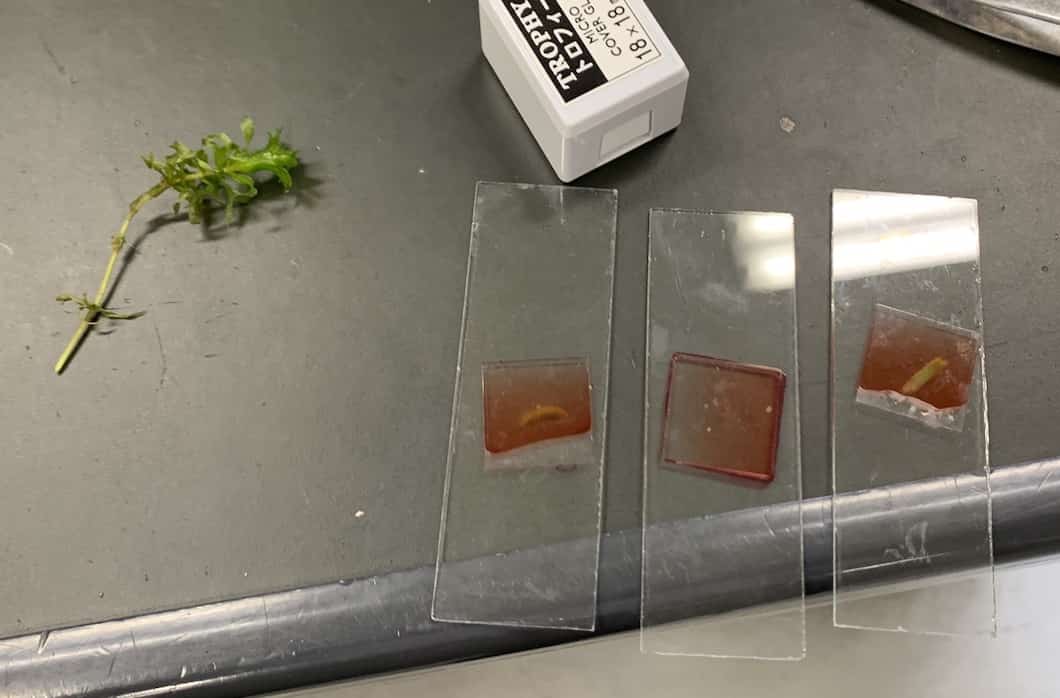
Place a single drop of water on the slide and lay the leaf on top. When placing the cover slip, use the dissecting needle to lower it slowly at an angle to avoid trapping air bubbles.
The Stained Slide
On a different leaf, add one drop of acetocarmine solution. This will turn the usually elusive “nucleus” a vivid red. The secret to a beautiful stain is to wait patiently for about 3 minutes.
Diving In! Tips for Observation
The golden rule of microscopy is to start with the lowest magnification and work your way up.
40x: Take in the big picture—the cells look like neatly stacked bricks.
100x: The outlines of individual cells begin to emerge.
400x: The chloroplast grains become crystal clear!
When switching to high power, be careful not to let the lens hit the slide. A pro move is to lower the lens while watching from the side until it’s just barely touching, then focus by moving the lens away from the slide.
The Big Reveal: Are Those Green Grains Moving?!
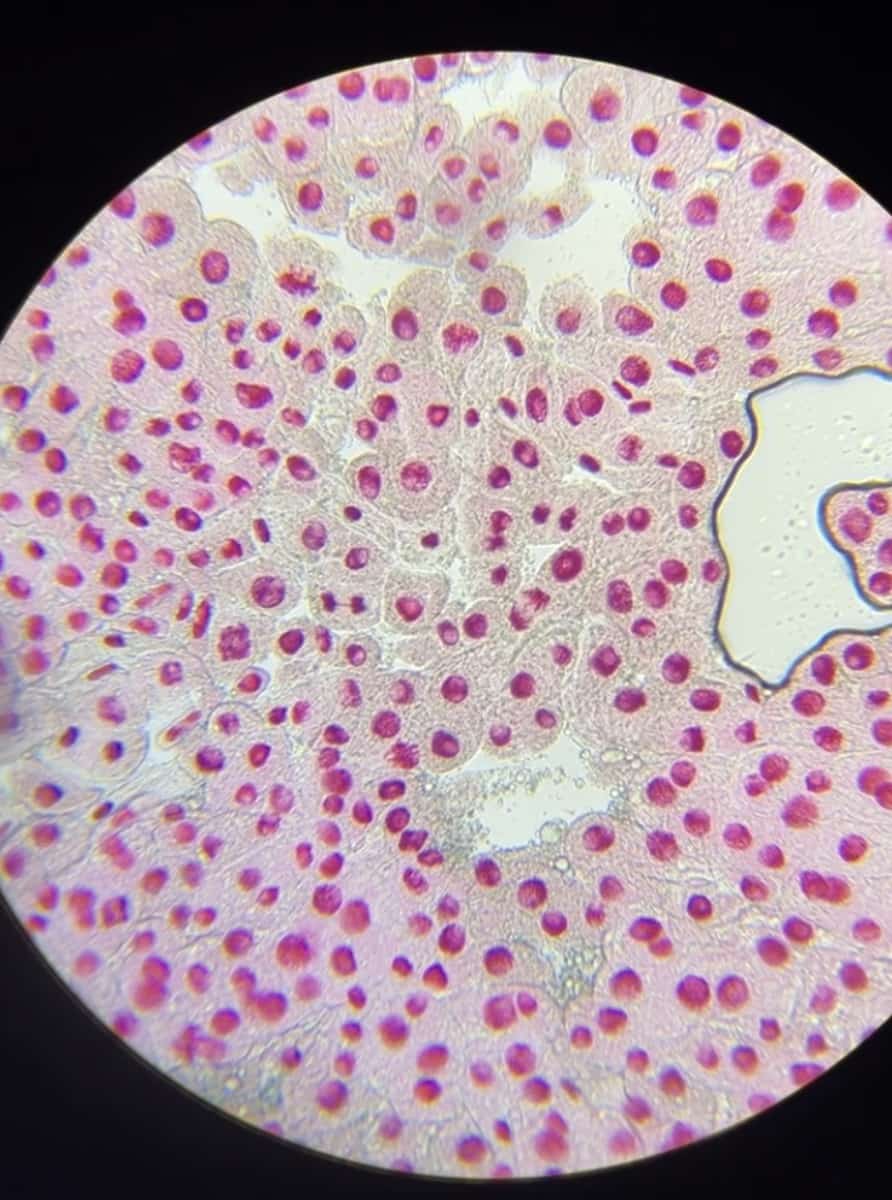
In the unstained sample, you’ll see cells packed with brilliant green chloroplasts. If you’re lucky, you might witness cytoplasmic streaming—a phenomenon where the chloroplasts swirl around the inside of the cell. It’s definitive proof that the cell is alive! It looks like a tiny conveyor belt in motion, and it’s honestly mesmerizing to watch.

40x: Cells standing in perfect formation
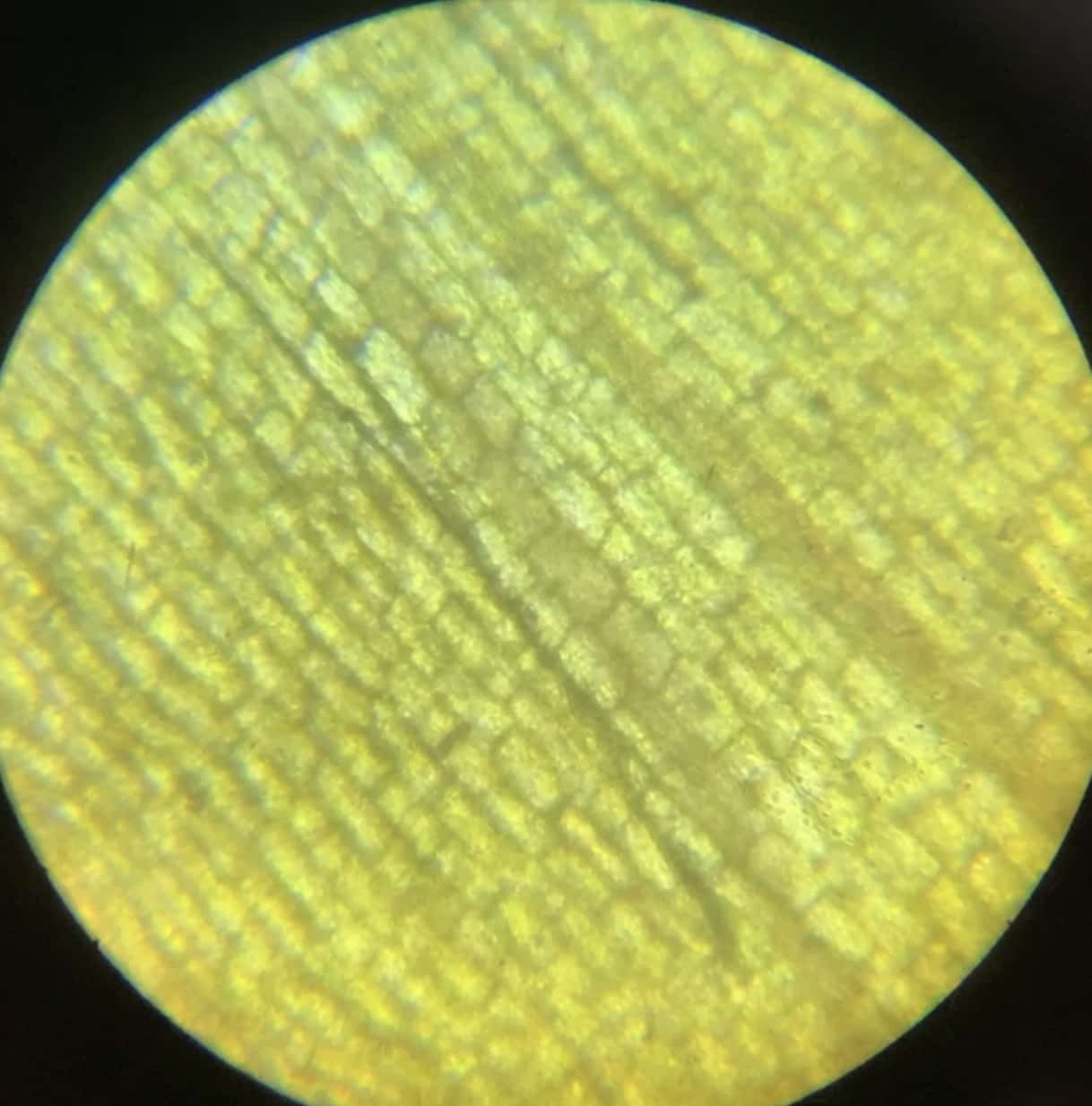
100x: The structure starts to reveal itself

400x: Vivid, distinct chloroplast grains!
On the other hand, we tried to find the nucleus in the stained sample… but it was a bit of a challenge this time. Elodea has so many chloroplasts that they often hide the nucleus. If your main goal is to see the nucleus clearly, the onion skin still holds the crown.
Expanding the Lesson at School or Home
The best part of this experiment is how it naturally sparks questions like “Why are they moving?” or “Why do we need to stain them?”
• The Energy of Life: It is believed that chloroplasts move to soak up sunlight more efficiently and to help transport nutrients throughout the cell.
• The Joy of Comparison: By comparing onions (non-photosynthetic, easy-to-see nucleus) with Elodea (photosynthetic, easy-to-see chloroplasts), you can start to see the different “strategies” plants use to survive.
Elodea is a “living textbook” that provides endless fascination without needing expensive chemicals. I encourage you to take a look through the lens and feel the vibrant pulse of life for yourself!
Inquiries and Bookings
Let’s bring the wonder of science closer to home! I provide easy-to-follow guides for fun experiments you can do yourself. Feel free to explore more!
• About the Author, Ken Kuwako: Click here
• For requests (writing, lectures, workshops, TV supervision/appearances): Click here
• Get the latest updates on X (Twitter)!
 Check out experiment videos on my Science Tips Channel!
9月のイチオシ実験!
お弁当箱をプラバンがわりにしてキーホルダーを作ろう!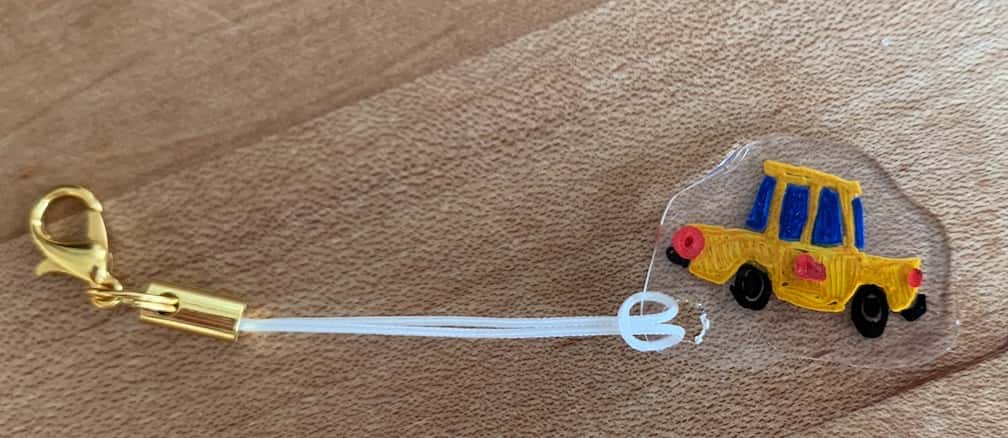
テレビ番組監修・イベント等のお知らせ
- 8月27日(木)科学監修番組放送予定
- 9月20日(日)ダビンチマスターズ出演予定
- 10月10日(土)11:15~12:00 千葉市科学フェスタ2026「桑子先生の回転科学ショー」にてサイエンスショーを行います。
- 12月26日(土) ナリカサイエンスアカデミー(教員向け実験講習会)開催
書籍のお知らせ
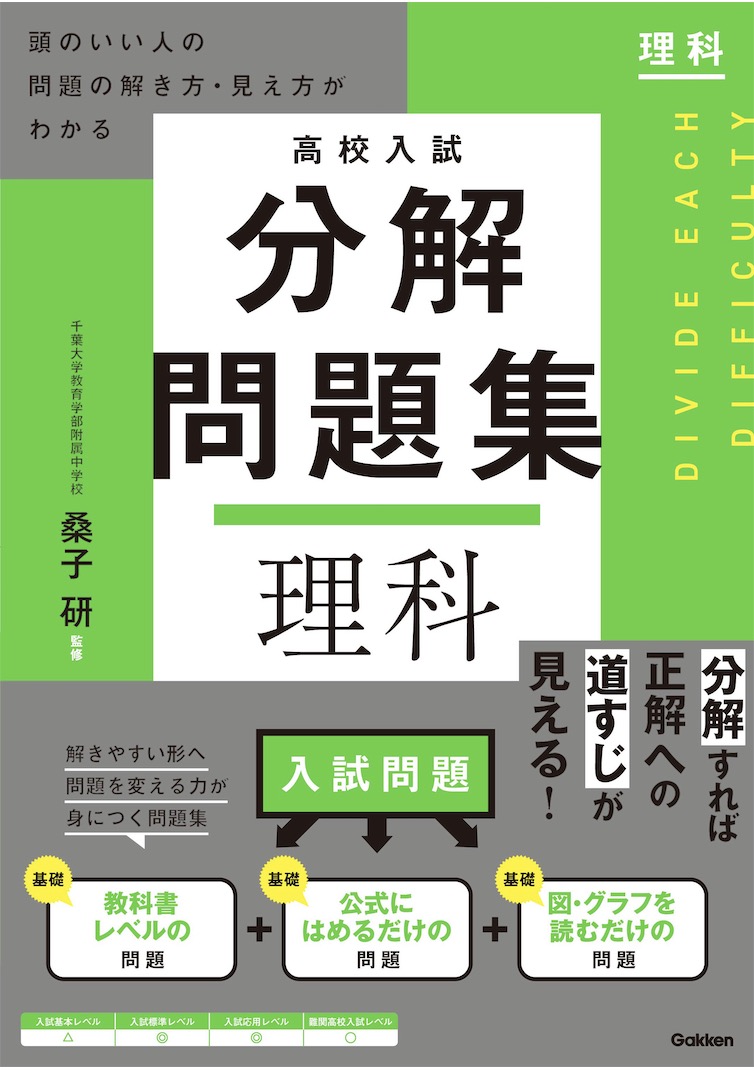
- 『高校入試 分解問題集 理科』(学研)…難しい問題も小さな問題に分解することで、問題を解くことができます。そんな分解の技術が身につくように深く関わりを持って作りました。
 『大人のための高校物理復習帳』(講談社)…一般向けに日常の物理について公式を元に紐解きました。特設サイトでは実験を多数紹介しています。※増刷がかかり6刷となりました(2026/02/01)

- 『きめる!共通テスト 物理基礎 改訂版』(学研)… 高校物理の参考書です。イラストを多くしてイメージが持てるように描きました。授業についていけない、物理が苦手、そんな生徒におすすめです。特設サイトはこちら。

各種SNS(更新情報をお届け!)
【日本語】X(Twitter)/instagram/Facebook 【英語】BlueSky/Threads
Explore
- 楽しい実験…お子さんと一緒に夢中になれるイチオシの科学実験を多数紹介しています。また、高校物理の理解を深めるための動画教材も用意しました。
- 理科の教材… 理科教師をバックアップ!授業の質を高め、準備を効率化するための選りすぐりの教材を紹介しています。
- Youtube…科学実験等の動画を配信しています。
- 科学ラジオ …科学トピックをほぼ毎日配信中!AI技術を駆使して作成した「耳で楽しむ科学」をお届けします。
- 講演 …全国各地で実験講習会・サイエンスショー等を行っています。
- About …「科学のネタ帳」のコンセプトや、運営者である桑子研のプロフィール・想いをまとめています。
- お問い合わせ …実験教室のご依頼、執筆・講演の相談、科学監修等はこちらのフォームからお寄せください。