
Why Don’t We Fall Over When We Bow Deeply? The Hidden Secret of “Center of Gravity” in Everyday Life
I’m Ken Kuwako, a science trainer. Every day is an experiment!
Have you ever seen the legendary entertainer Michael Jackson perform his astonishing “zero-gravity” move? It’s that incredible performance where he appears to break free from gravity, leaning his entire body forward at a sharp angle without falling over. Watch this video.
How on earth can anyone do that? That’s probably the first thought that comes to mind when you see it for the first time. Although it looks almost like magic, this amazing move is actually a clever trick based on a fundamental principle of physics: the center of gravity.
The other day, I read a book called Body Mechanics for Caregiving, which is packed with easy-to-follow explanations and plenty of photographs. It introduced an interesting example that provides a clue to the secret behind the zero-gravity move. For example, take a look at the stick figure below as it bows. What do you notice?
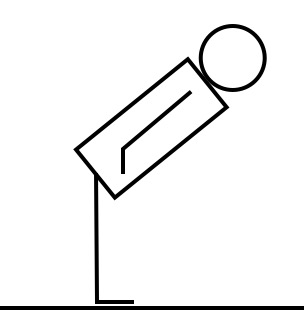
A person bowing
If you had the feeling, “Wait a minute… something doesn’t look right here,” you may have a good instinct for science. The reason for that strange feeling is actually connected to a fascinating law of physics—the very same principle that helps explain Michael Jackson’s zero-gravity move.
The Science of Falling—or Staying Upright
In nursing and caregiving, an understanding of “body mechanics”—the use of mechanics to understand and control human body movements—is considered essential. But this knowledge isn’t limited to professional caregivers. There are surprisingly many situations in everyday life when we may need to support or move another person. For example, if a family member suddenly collapses, how can you move them safely using as little force as possible while also avoiding injury to yourself? The key lies in two basic principles:
Lower your center of gravity.
Stay as close to the other person as possible.
This time, let’s focus on the first point—the center of gravity—and use physics to uncover why that stick figure’s bowing motion looks so strange. Whether an object falls or remains upright depends on whether its center of gravity moves beyond its “axis of rotation.”
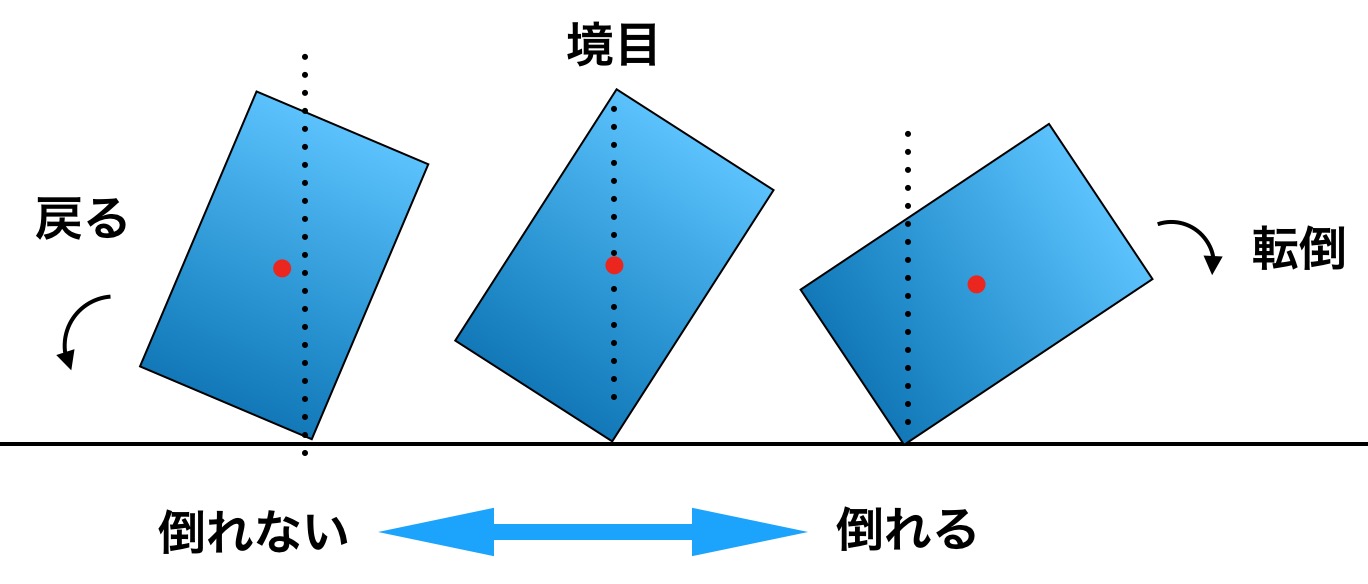
Try bowing while keeping your back against a wall. The moment your body leans forward, you lose your balance. That’s because when we normally bow, we unconsciously push our hips backward, shifting our center of gravity back over our feet so that we don’t fall. The reason the stick figure’s bow looked strange at first was that this essential movement—pushing the hips backward to keep the center of gravity in place—was missing.
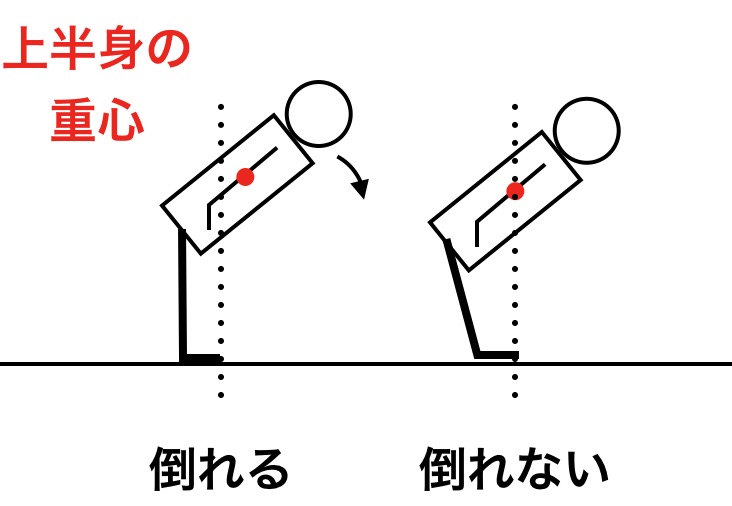
You’ll fall over if you don’t move your hips slightly backward.
And if you want to stay stable and avoid falling, lowering your center of gravity is extremely important. When your center of gravity is high, even a small tilt can cause it to move beyond the axis of rotation, making the object much less stable.
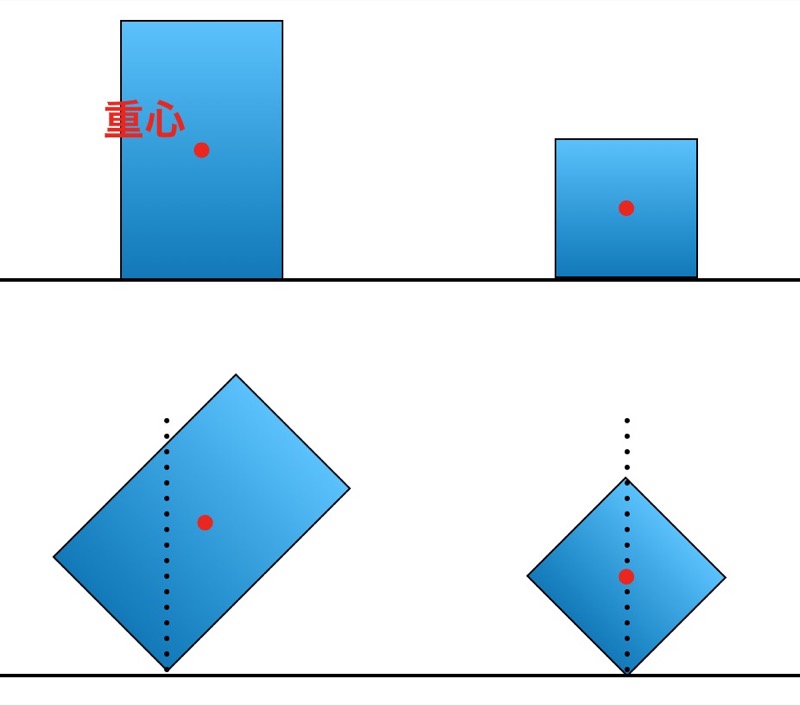
An object with a high center of gravity and one with a low center of gravity. When tilted by the same angle, the lower object stays upright.
This principle is also widely used in sports and caregiving. A basic posture for moving someone safely while protecting yourself from injury is to lower your center of gravity and spread your feet apart. This increases the size of your “base of support,” creating a much more stable position.
The other key point—“stay as close to the other person as possible”—is also based on physics. The idea is to reduce the lever arm of the “moment of force,” thereby reducing the load placed on your muscles. This concept of torque is studied in detail in high school physics, typically in the second year.
The book I mentioned explains these physical principles clearly with illustrations and brings together practical body-mechanics techniques that can be useful in caregiving. It may be a little expensive, but the content is accessible even to high school students. If you get the chance, I highly recommend taking a look.
Now, you may be wondering: how was Michael Jackson able to hold that incredible pose without falling over? You can find the secret here:
[https://phys-edu.net/wp/?p=362](https://phys-edu.net/wp/?p=362)
Contact and Requests
Want to bring the wonders and excitement of science a little closer to everyday life? I share fun science experiments you can try at home, along with simple tips and explanations to help you get the most out of them. Take a look around and search for something that catches your eye!
・For more about the site and its creator, Ken Kuwako, click here.
・For various requests, including writing, lectures, science workshops, TV science supervision, and appearances, click here.
・For updates on new articles, follow me on X!
Science Tricks Channel features videos of science experiments!
9月のイチオシ実験!
テレビ番組監修・イベント等のお知らせ
- 9月25日(金)21:00〜 かまいたちの瞬間回答!にて、科学監修を行いました。
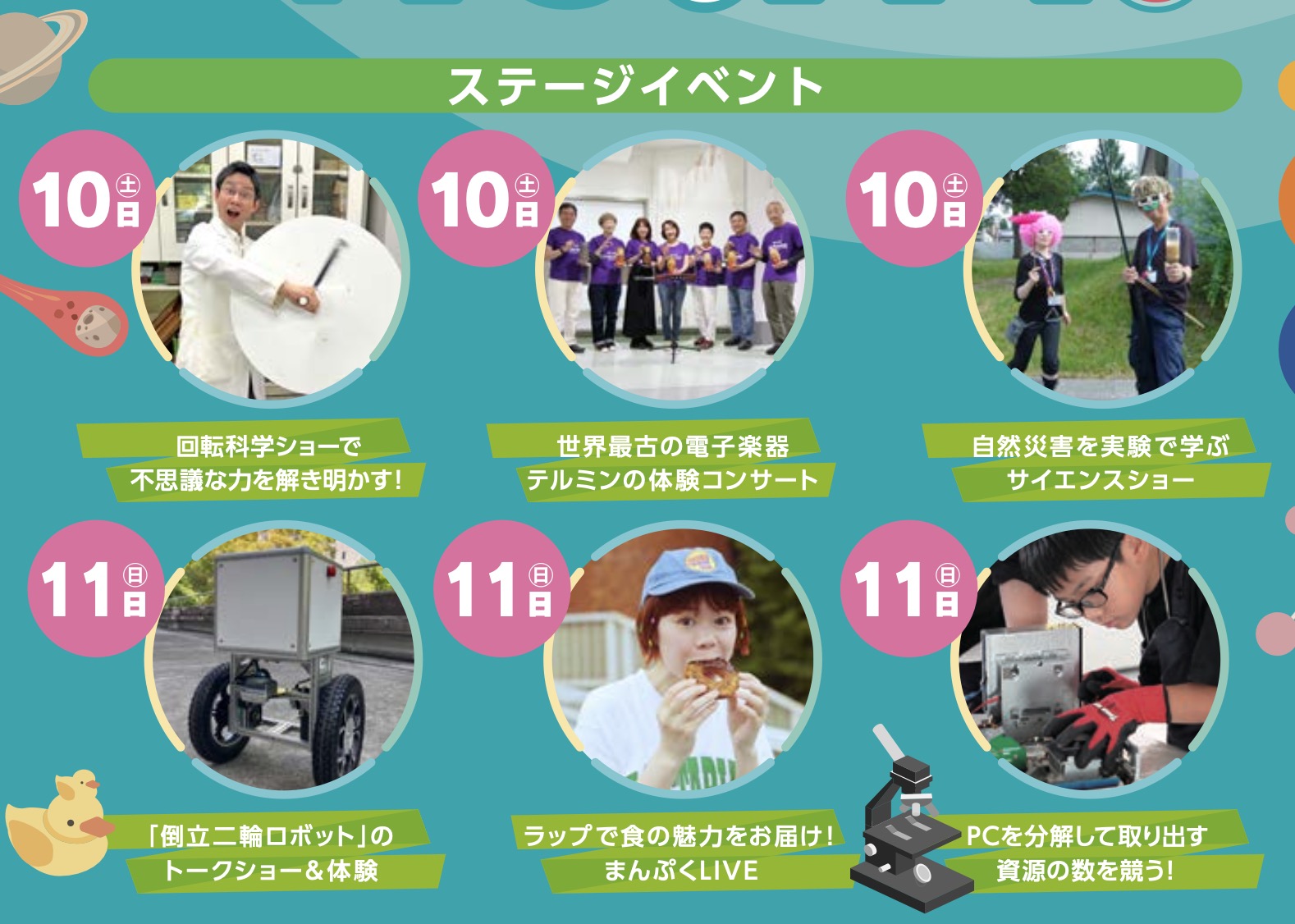
- 10月10日(土)11:15~12:00 千葉市科学フェスタ2026「桑子先生の回転科学ショー」にてサイエンスショーを行います。
- 12月26日(土) ナリカサイエンスアカデミー(教員向け実験講習会)開催
書籍のお知らせ
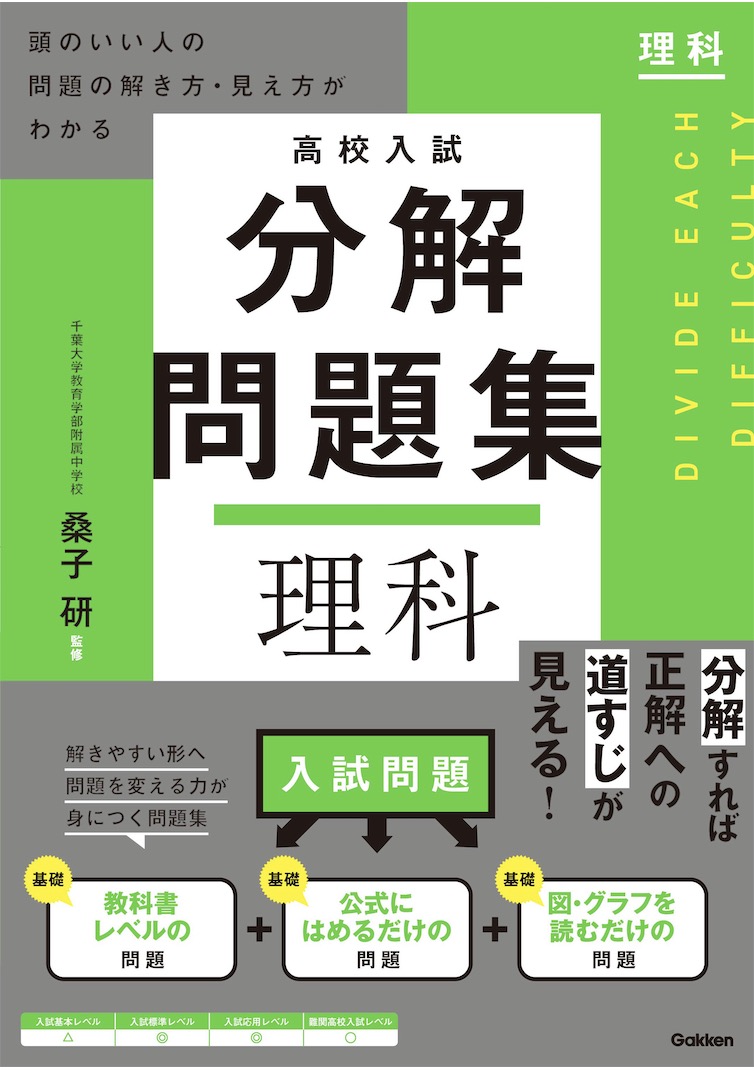
- 『高校入試 分解問題集 理科』(学研)…難しい問題も小さな問題に分解することで、問題を解くことができます。そんな分解の技術が身につくように深く関わりを持って作りました。
 『大人のための高校物理復習帳』(講談社)…一般向けに日常の物理について公式を元に紐解きました。特設サイトでは実験を多数紹介しています。※増刷がかかり6刷となりました(2026/02/01)
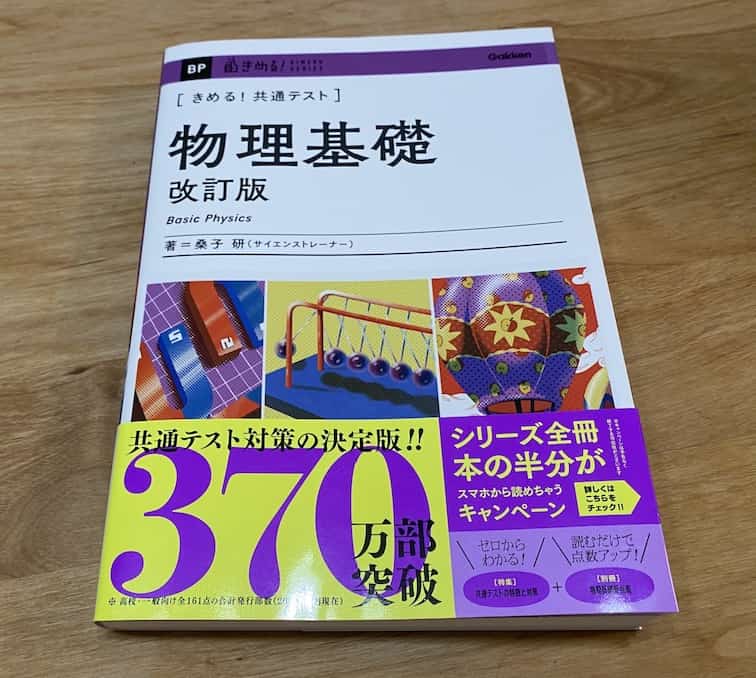
- 『きめる!共通テスト 物理基礎 改訂版』(学研)… 高校物理の参考書です。イラストを多くしてイメージが持てるように描きました。授業についていけない、物理が苦手、そんな生徒におすすめです。特設サイトはこちら。
各種SNS(更新情報をお届け!)
【日本語】X(Twitter)/instagram/Facebook 【英語】BlueSky/Threads
Explore
- 楽しい実験…お子さんと一緒に夢中になれるイチオシの科学実験を多数紹介しています。また、高校物理の理解を深めるための動画教材も用意しました。
- 理科の教材… 理科教師をバックアップ!授業の質を高め、準備を効率化するための選りすぐりの教材を紹介しています。
- Youtube…科学実験等の動画を配信しています。
- 科学ラジオ …科学トピックをほぼ毎日配信中!AI技術を駆使して作成した「耳で楽しむ科学」をお届けします。
- 講演 …全国各地で実験講習会・サイエンスショー等を行っています。
- About …「科学のネタ帳」のコンセプトや、運営者である桑子研のプロフィール・想いをまとめています。
- お問い合わせ …実験教室のご依頼、執筆・講演の相談、科学監修等はこちらのフォームからお寄せください。