Made From Oil!? We Tried Turning Salad Oil Into Homemade Soap (The Chemistry of Cleaning)
I’m Ken Kuwako, your Science Trainer. Every day is an experiment.
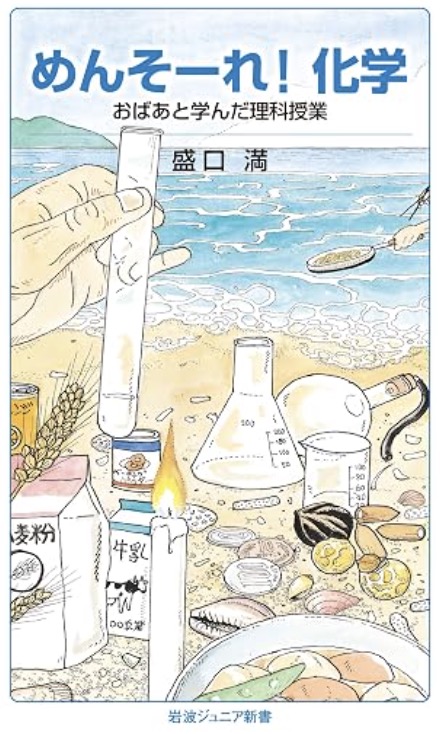
Do you know what soap is made from? Believe it or not, it starts with something as familiar as cooking oil. And even more surprisingly, the process involves the very same kind of chemical reaction that helps us clean greasy stains in our everyday lives. This time, I tried making soap with students from our science club, following the soap-making experiment featured on page 196 of the book “Mensoore! Chemistry” (Iwanami Junior Shinsho).
Just Three Ingredients! Making Soap from Cooking Oil
All you need is a 2-liter PET bottle designed for carbonated drinks, water, sodium hydroxide, and cooking oil. The process is surprisingly simple.
First, pour 100 mL of water and 45 g of sodium hydroxide into the PET bottle. There is one very important point to keep in mind here. When sodium hydroxide dissolves in water, it releases a large amount of heat. For this reason, be sure to place the PET bottle in a container filled with water while dissolving the sodium hydroxide completely.
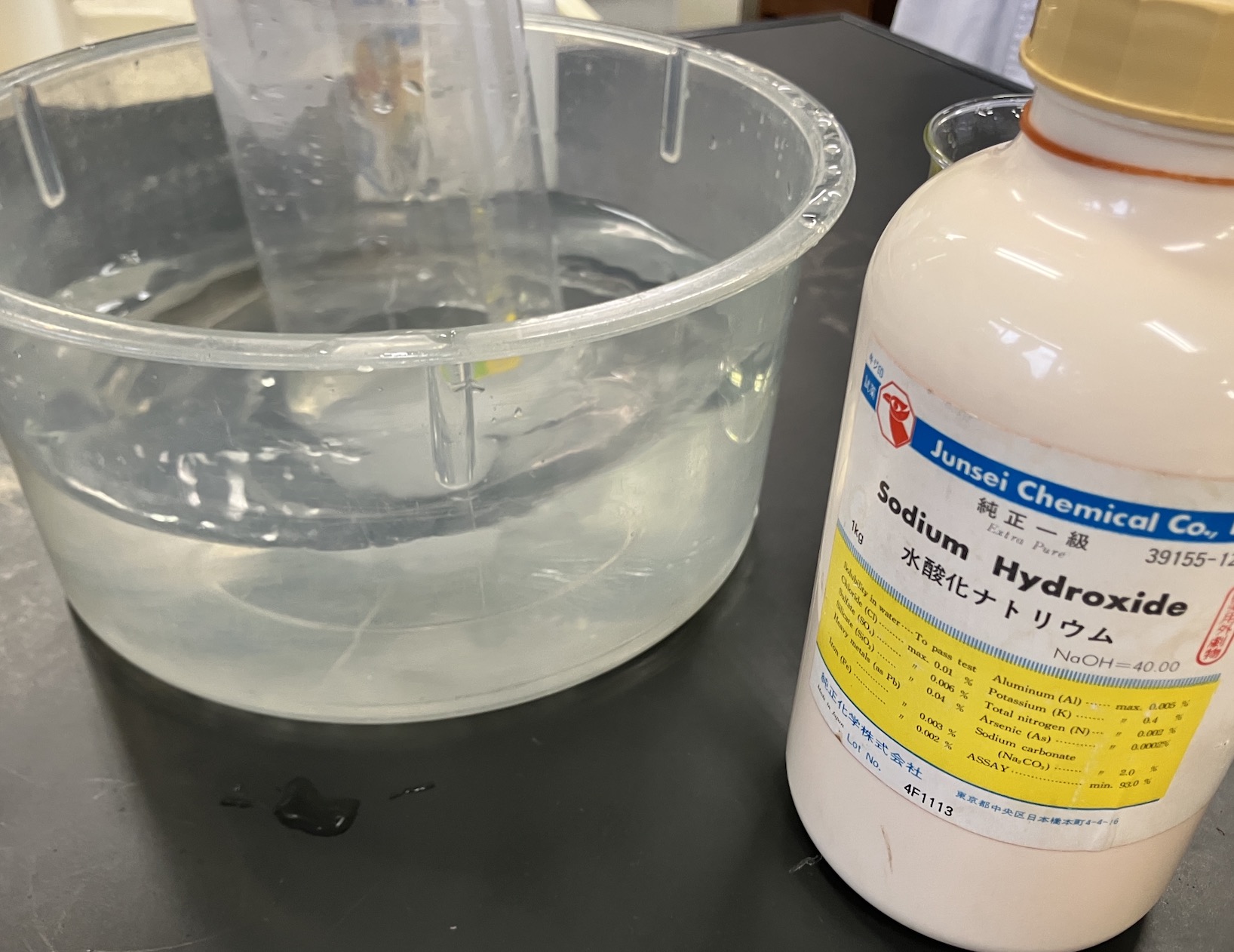
Once the sodium hydroxide has completely dissolved and the PET bottle has started to cool down, add 330 mL of cooking oil. Used cooking oil works just fine, too. Knowing that oil that would otherwise be thrown away can be transformed into soap makes the whole thing feel like a pretty good deal!
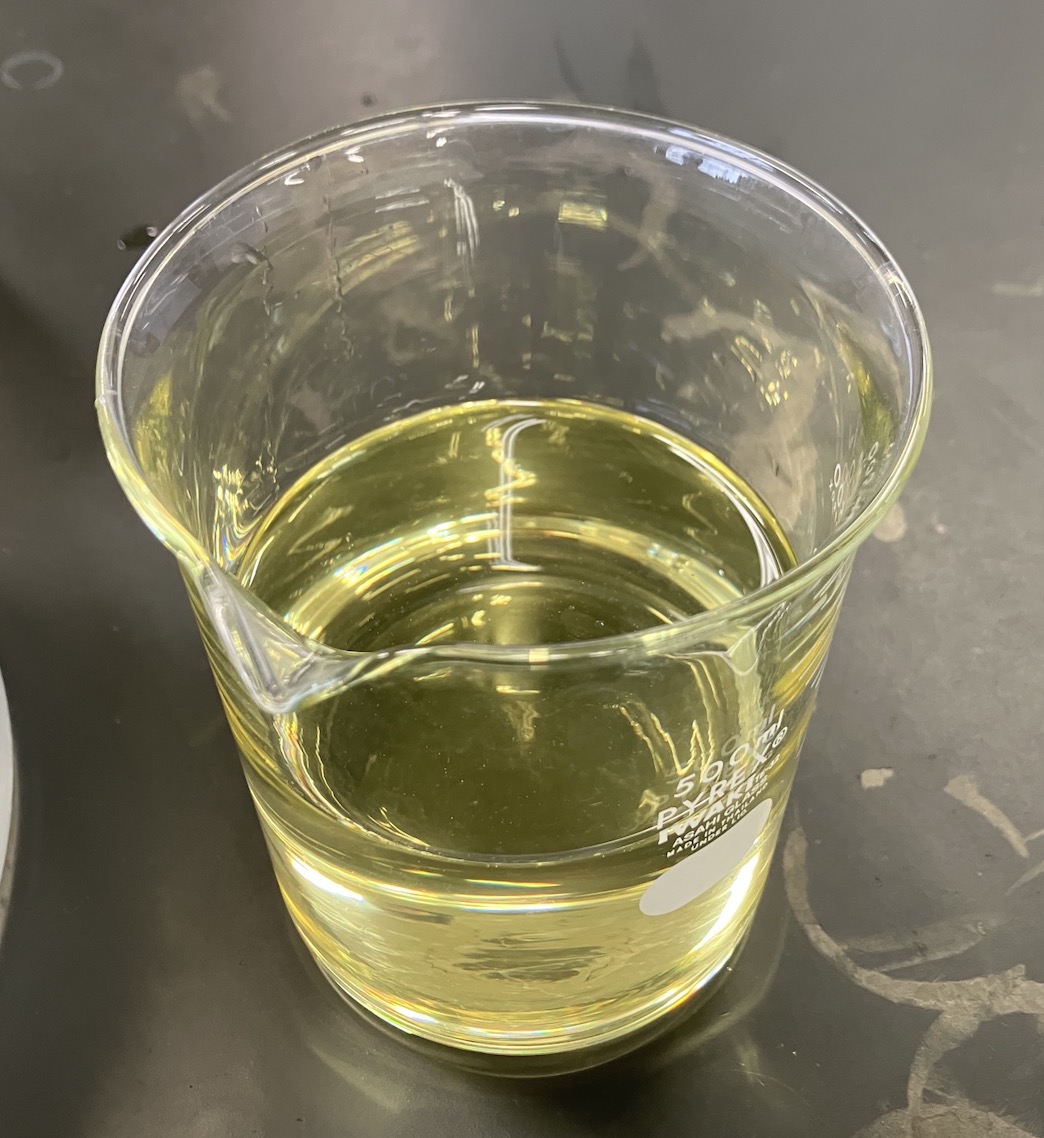
Tighten the cap securely, and then all you have to do is shake, shake, shake! Aim for about 10 minutes.
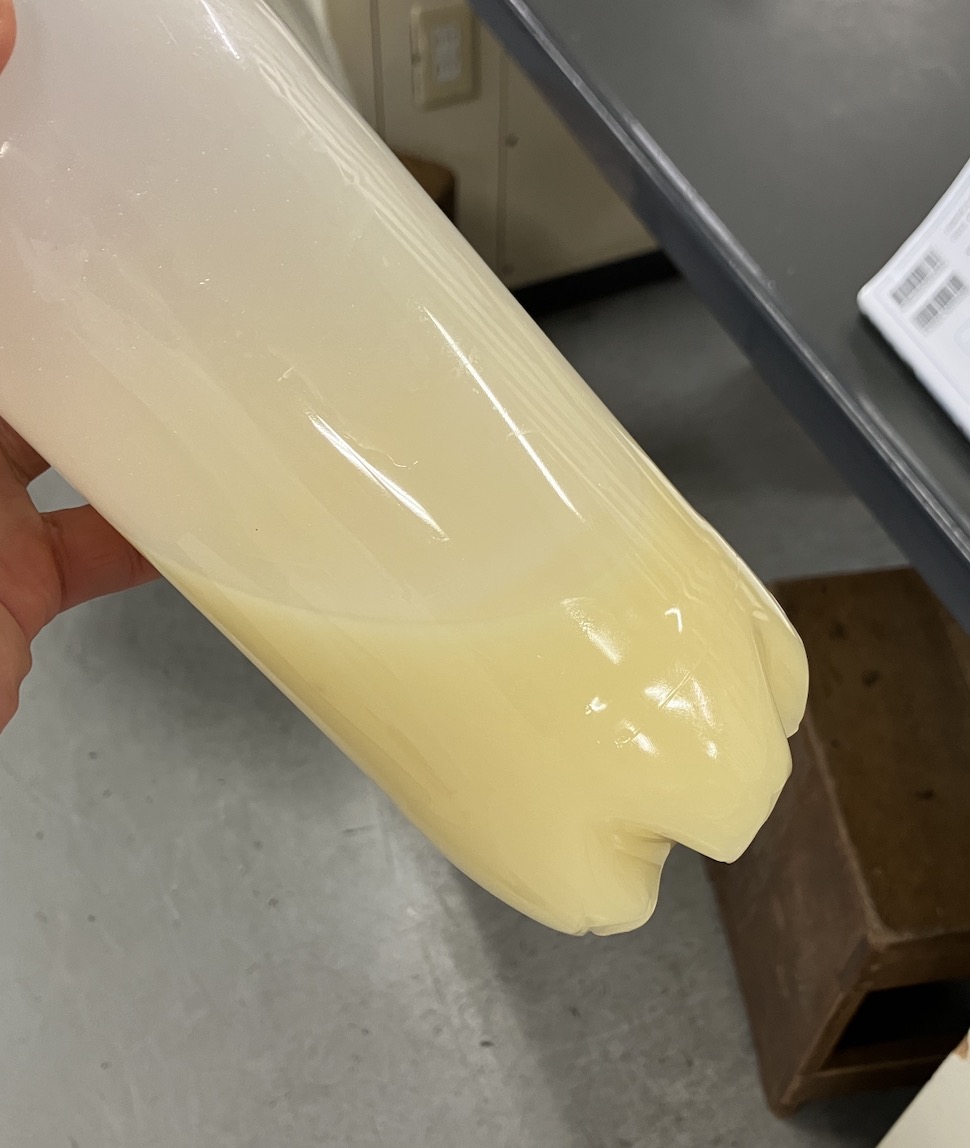
It is quite a workout, but we keep going!
Once you’re done shaking, pour the mixture into whatever mold you like, such as a milk carton or paper cups, and let it dry for 2–3 days. Remove the soap from the mold, cut it into whatever size you like with a knife, and then let it rest for about another month. Your homemade soap is ready!
The Chemical Reaction Behind Soap Making
Now we get to the most fascinating part. Let’s take a closer look at the moment soap is formed using a chemical equation.
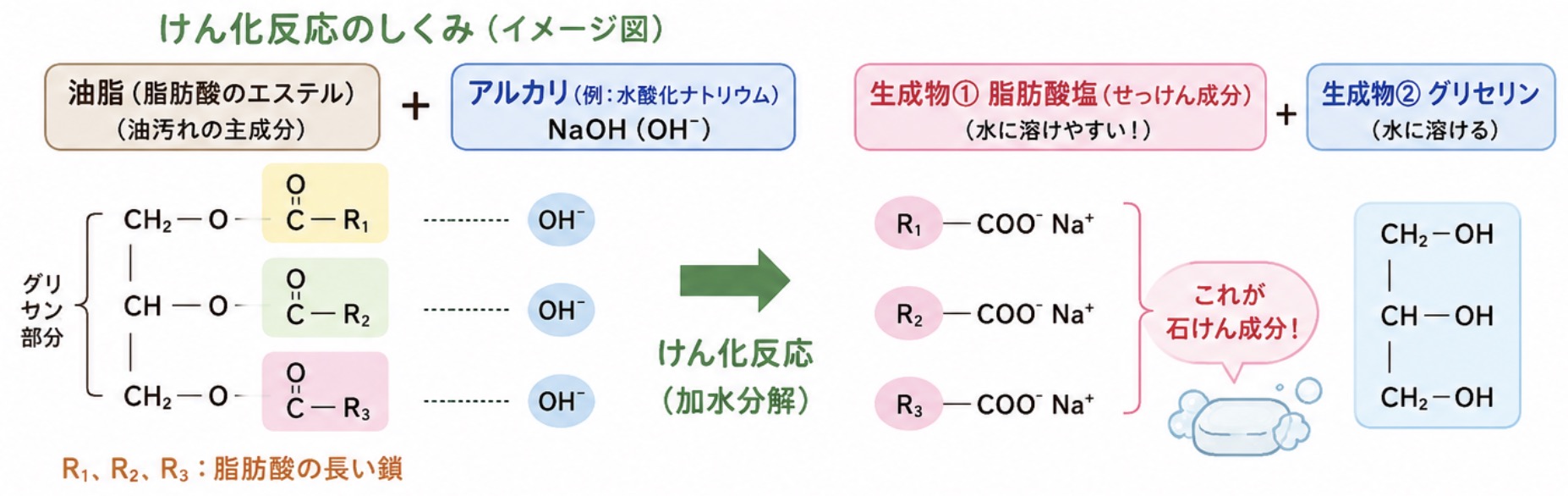

In fact, this reaction works in exactly the same way as the chemistry behind cleaning greasy stains in our everyday lives. The same type of chemical reaction takes place when we use detergent to remove grease from kitchen surfaces. In other words, making soap is essentially a way of deliberately carrying out the chemical reaction that breaks down greasy dirt and capturing the result in the form of “soap.”
Let’s take a look at the main players in this equation, starting from the left.
- Triglycerides (fats and oils) These are what greasy stains are actually made of. In this experiment, we used cooking oil.
- Sodium hydroxide (a strong alkali) This is the “attacker” that breaks down the grease. We used the powerful alkali sodium hydroxide this time, but when we’re cleaning at home, milder alkaline substances such as baking soda and sodium sesquicarbonate are often used.
- Glycerin A moisturizing ingredient commonly used in skincare products such as lotions. It dissolves in water.
- Sodium fatty acid salts (soap) This is the soap itself. Because it is water-soluble, once greasy dirt is converted into these fatty acid salts, it can simply be washed away with water, leaving the surface clean.
When oil meets an alkali, water-insoluble “greasy dirt” is transformed into water-soluble “soap.” This process is called saponification. It is a chemical reaction in which fats and oils (triglycerides) react with a strong alkali such as sodium hydroxide and are broken down into soap (fatty acid salts) and glycerin.
This chemical reaction is essentially the fundamental principle behind cleaning. When you realize that the dishwashing detergents and soaps we use without a second thought every day rely on chemistry like this to remove dirt, even doing the dishes might start to feel a little more interesting!
Contact & Inquiries
Bring the wonders and excitement of science a little closer to everyday life! I share fun science experiments you can try at home, along with easy-to-understand tips and tricks. Take a look around and see what you can discover!
・The Science Notes content is now available as a book. Find out more here
・Learn more about Ken Kuwako, the site creator, here
・For various inquiries and requests (writing, lectures, science workshops, TV supervision, appearances, etc.), please click here
・Follow X for updates on new articles!
 Science Notes Channel features videos of science experiments!
NEW 分解問題集 理科
- 7月21日発売!『高校入試 分解問題集 理科』(学研)…難しい問題も小さな問題に分解することで、問題を解くことができます。そんな分解の技術が身につくように深く関わりを持って作りました。
7・8月のイチオシ実験!
夏でプシュッと爽やか実験!
テレビ番組監修・イベント等のお知らせ
- 7月30日(水)科学監修「TIF presents ONE SONG FES」(フジテレビ) 26:15~27:15
- 12月26日(土) ナリカサイエンスアカデミー(教員向け実験講習会)開催
書籍のお知らせ
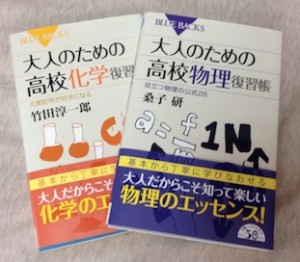
- 『大人のための高校物理復習帳』(講談社)…一般向けに日常の物理について公式を元に紐解きました。特設サイトでは実験を多数紹介しています。※増刷がかかり6刷となりました(2026/02/01)
- 『きめる!共通テスト 物理基礎 改訂版』(学研)… 高校物理の参考書です。イラストを多くしてイメージが持てるように描きました。授業についていけない、物理が苦手、そんな生徒におすすめです。特設サイトはこちら。

各種SNS(更新情報をお届け!)
【日本語】X(Twitter)/instagram/Facebook 【英語】BlueSky/Threads
Explore
- 楽しい実験…お子さんと一緒に夢中になれるイチオシの科学実験を多数紹介しています。また、高校物理の理解を深めるための動画教材も用意しました。
- 理科の教材… 理科教師をバックアップ!授業の質を高め、準備を効率化するための選りすぐりの教材を紹介しています。
- Youtube…科学実験等の動画を配信しています。
- 科学ラジオ …科学トピックをほぼ毎日配信中!AI技術を駆使して作成した「耳で楽しむ科学」をお届けします。
- 講演 …全国各地で実験講習会・サイエンスショー等を行っています。
- About …「科学のネタ帳」のコンセプトや、運営者である桑子研のプロフィール・想いをまとめています。
- お問い合わせ …実験教室のご依頼、執筆・講演の相談、科学監修等はこちらのフォームからお寄せください。