
Your Phone Screen Is Made of Just 3 Colors! Discovering the True Colors of Light with a Digital Microscope
I’m Ken Kuwako, your Science Trainer. Every day is an experiment.
Did you know that the screen you’re looking at right now, both the white areas and the black ones, is actually made from combinations of just three colors of light? This time, I took a closer look at the secret of the “three primary colors of light” hidden inside an everyday screen using a digital microscope I bought as a gift for my child.
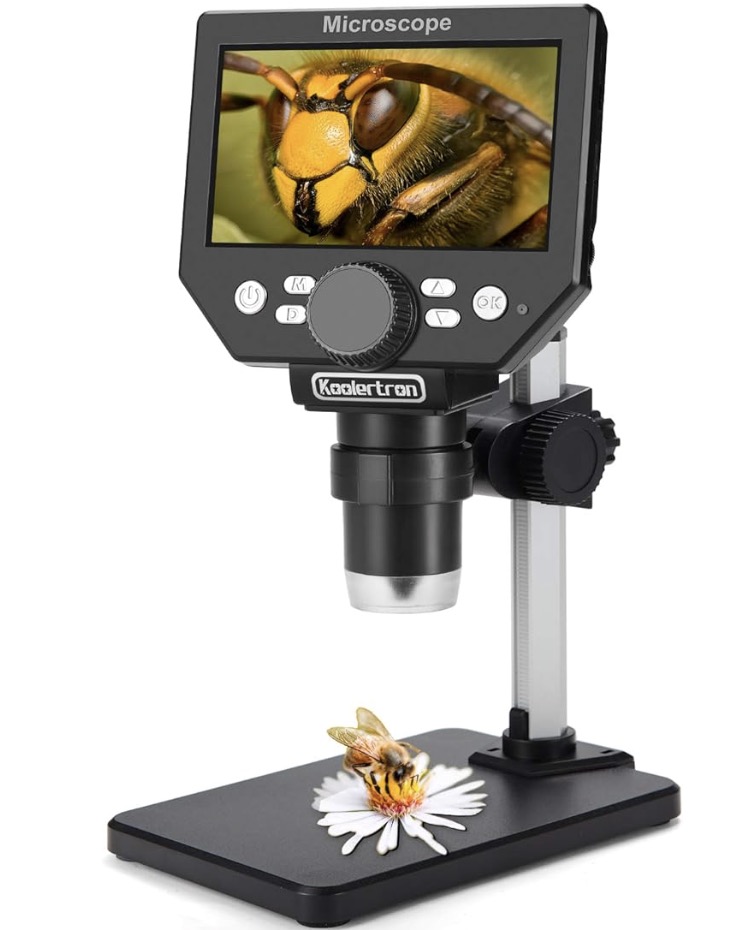
A Budget Digital Microscope That Packs a Punch
The microscope I bought this time is the Koolertron digital microscope. I originally chose it as a gift for my child, but I quickly came to appreciate the fact that, because it is reasonably priced, I don’t have to worry too much about it being handled a little roughly. At the same time, it has more than enough performance for everyday observations, which is a big plus. Since it has its own screen, we can look at the same magnified image together, making it a great tool for exploring science with kids.
What You Can See When You Magnify an iPad Screen
The first thing I tried with this camera was taking a closer look at an iPad’s LCD screen. And there it was: clear as day. Every color on the screen is created by combining three colors of light known as RGB.
The screens we casually look at every day, whether on smartphones or TVs, are actually made up of countless tiny light sources called subpixels, arranged in a regular pattern: red, green, and blue. These are known as the “three primary colors of light.” By adjusting the intensity of each color, screens can produce an enormous range of colors. Unlike the “three primary colors of pigments,” where mixing colors of paint tends to make them darker and muddier, light works through additive color mixing: the more light you combine, the brighter the result becomes. That’s a fascinating difference.
Let’s Zoom In and Take a Closer Look at Color
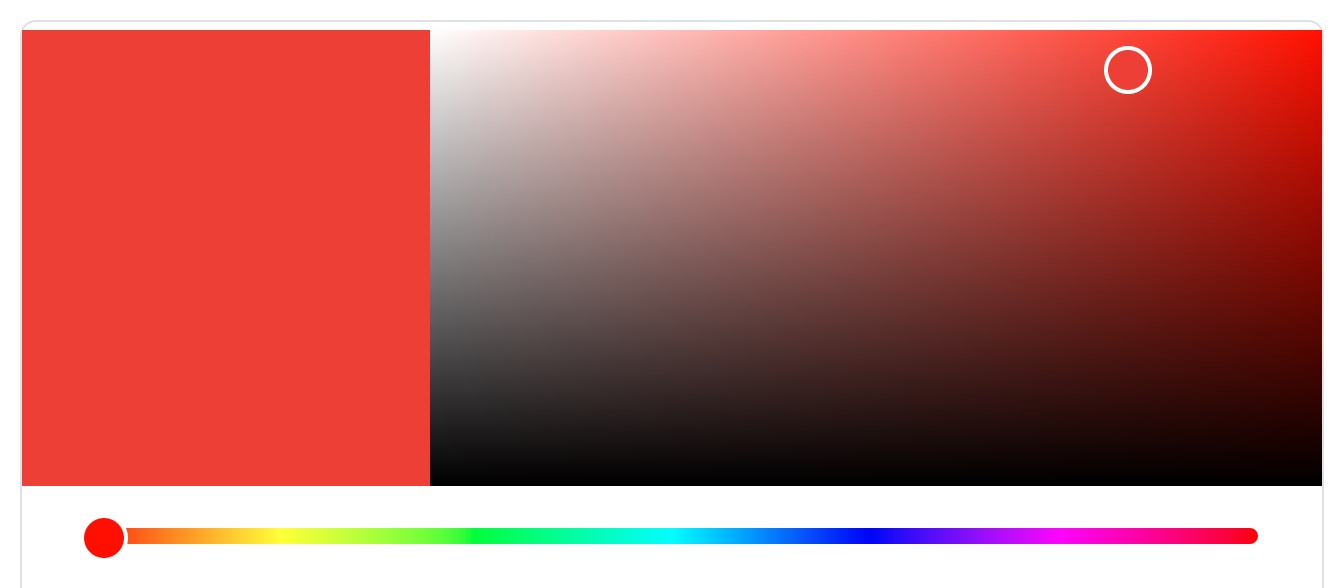
Using a color picker, you can display all kinds of colors on your screen. I used it to magnify and observe a variety of colors up close.
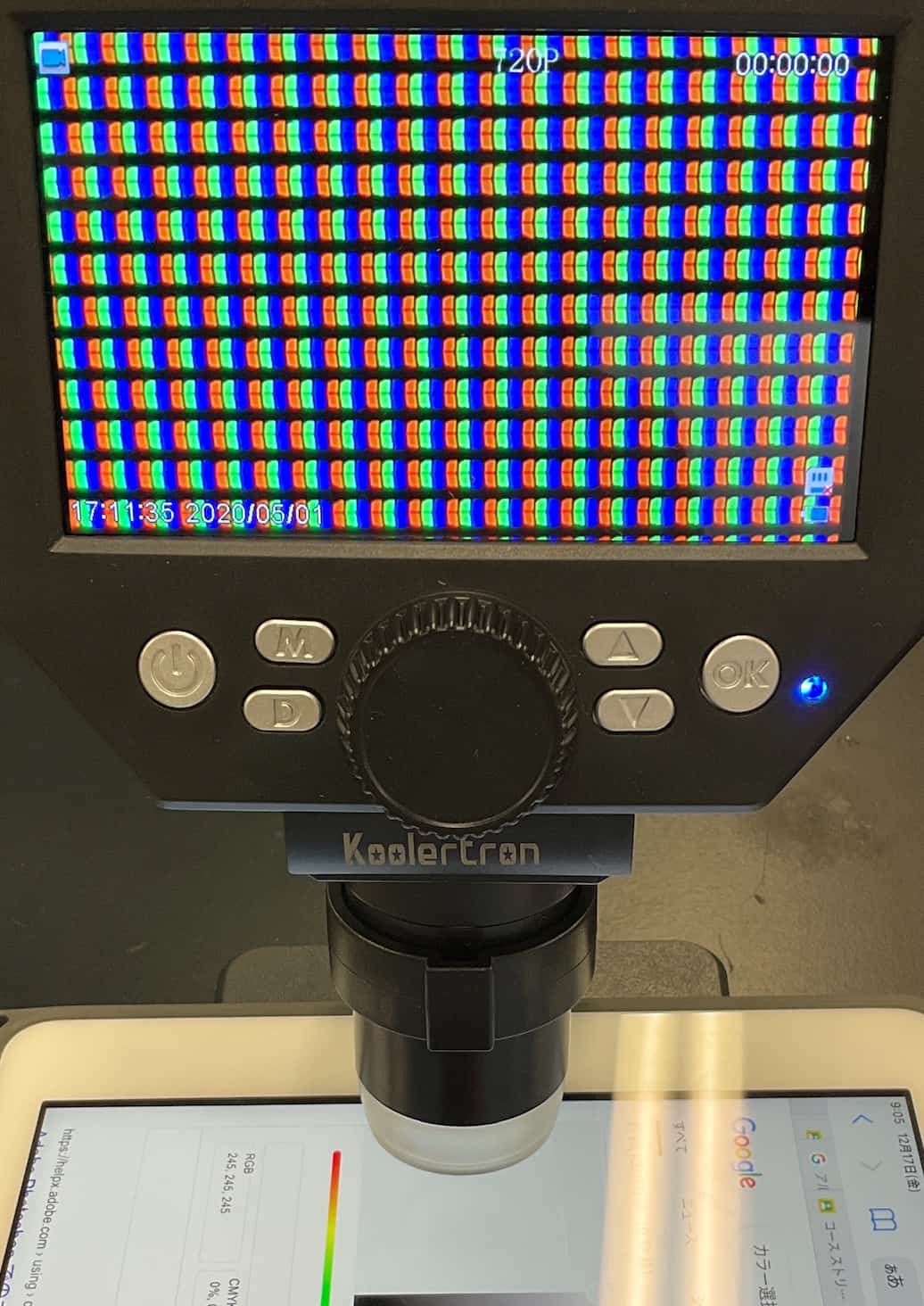
Take white, for example. You can see that all three RGB lights are switched on. When all three are shining at maximum brightness and overlap, our eyes perceive the result as “white.” It’s pretty satisfying to see the science behind color mixing become instantly obvious just by zooming in.
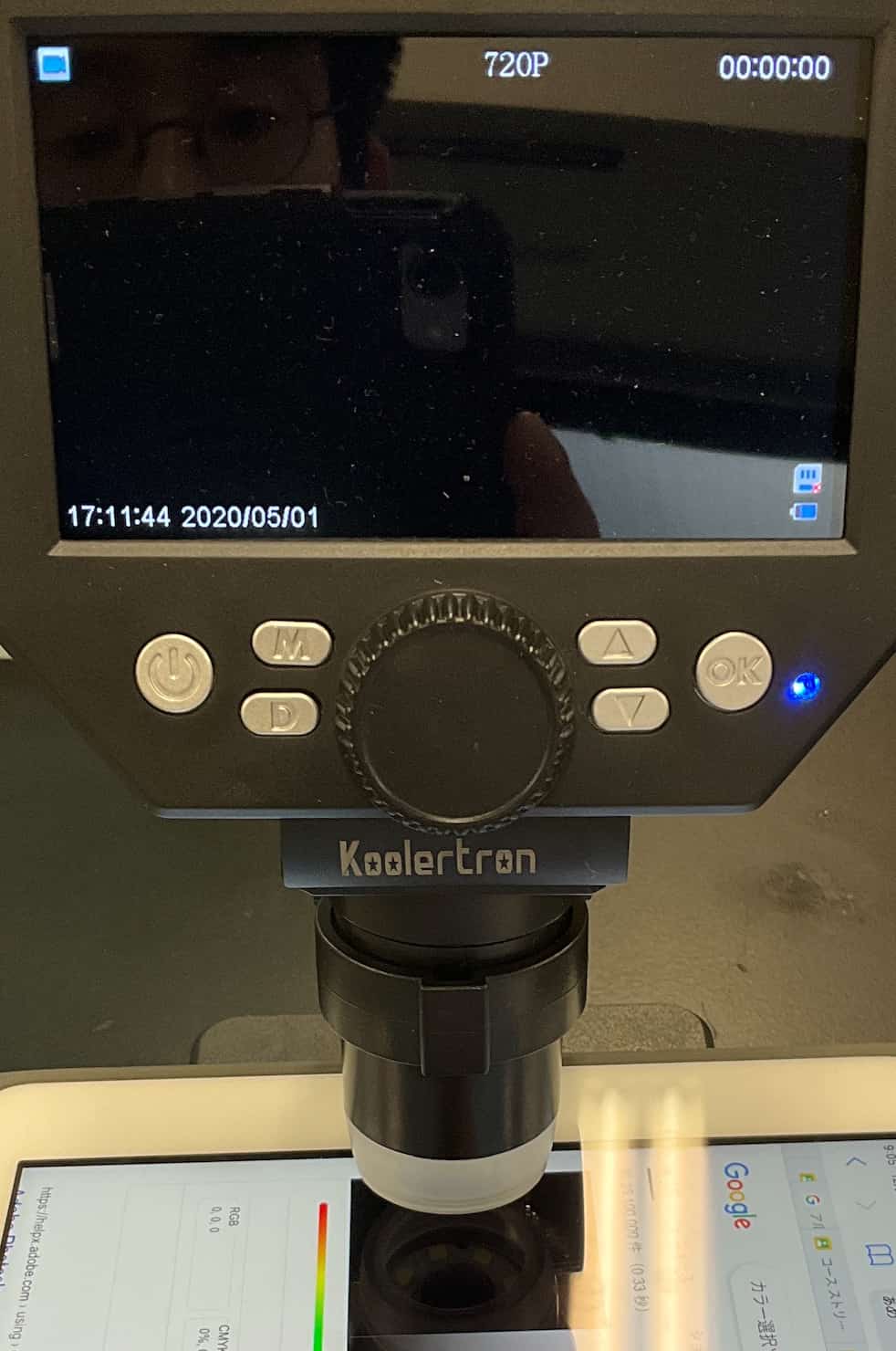
Now let’s look at black. None of the RGB lights are shining at all. In the world of the three primary colors of light, black is simply the state where there is “no light.” And with the microscope, you can actually see that for yourself.
What about light blue? Here, you can see blue and green shining together. It’s fascinating to see how combining just two colors of light can create an entirely different color.
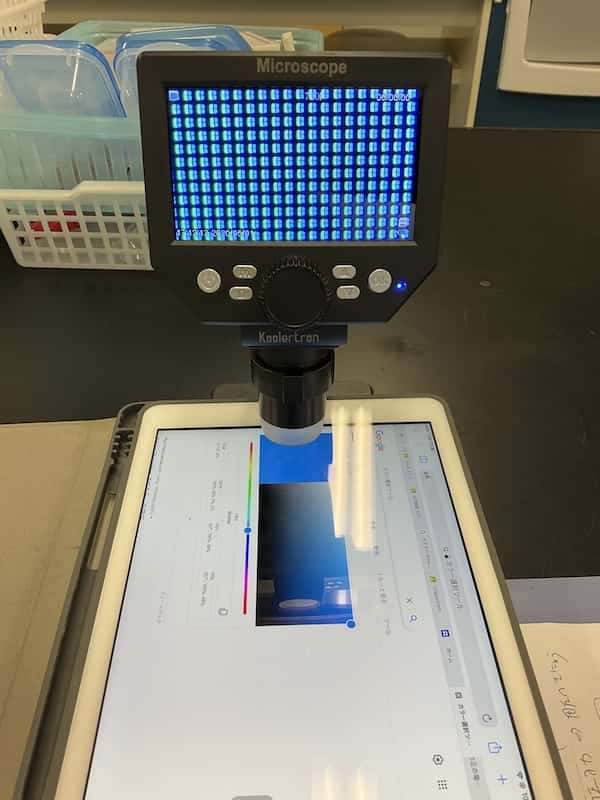
Can You Guess the Color?
Now it’s quiz time! Take a look at the magnified images and try to figure out what the actual color is. Ready? What color do you think this is?
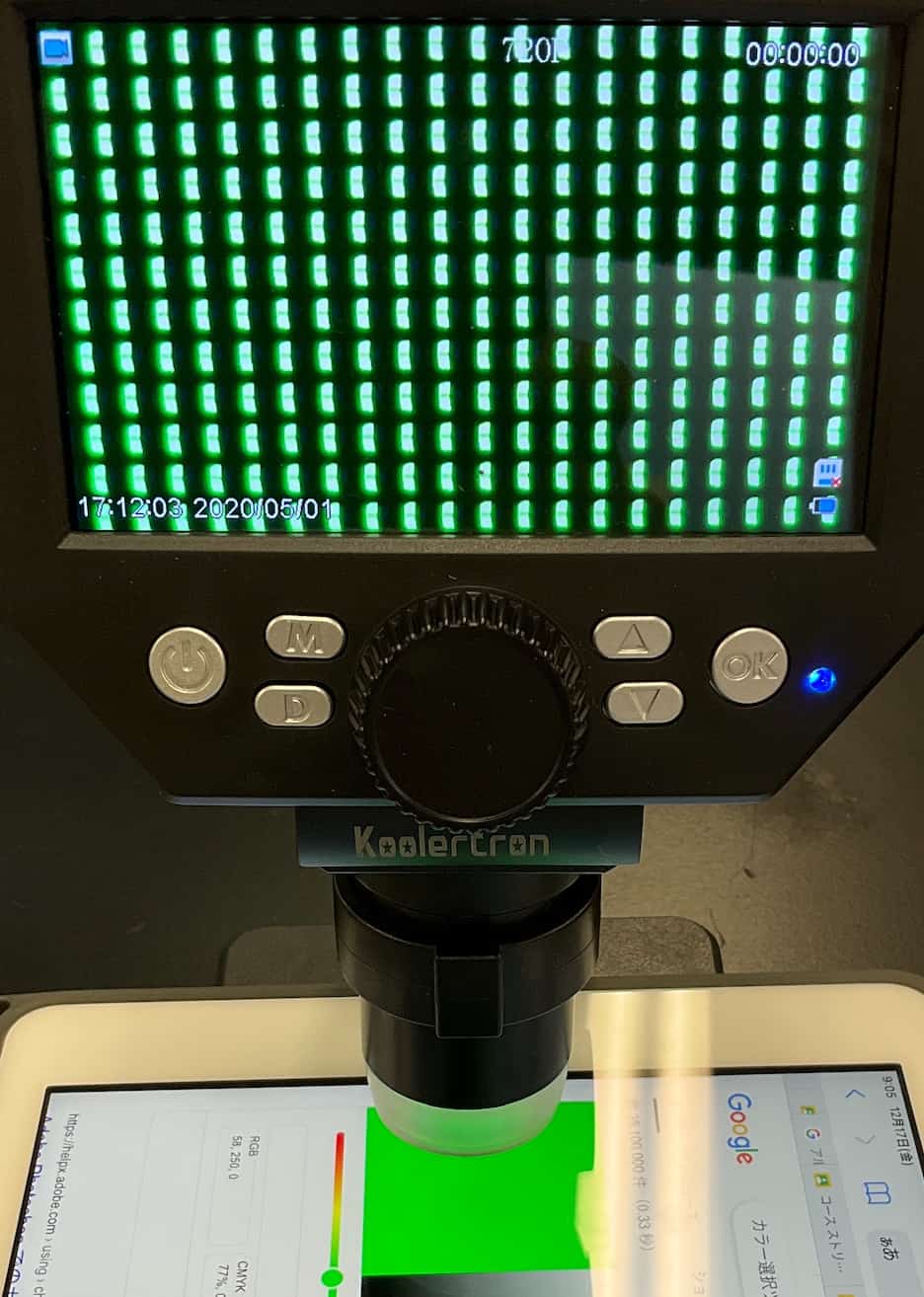
The answer is green. Only G is shining.
Next one: what color do you think this is?
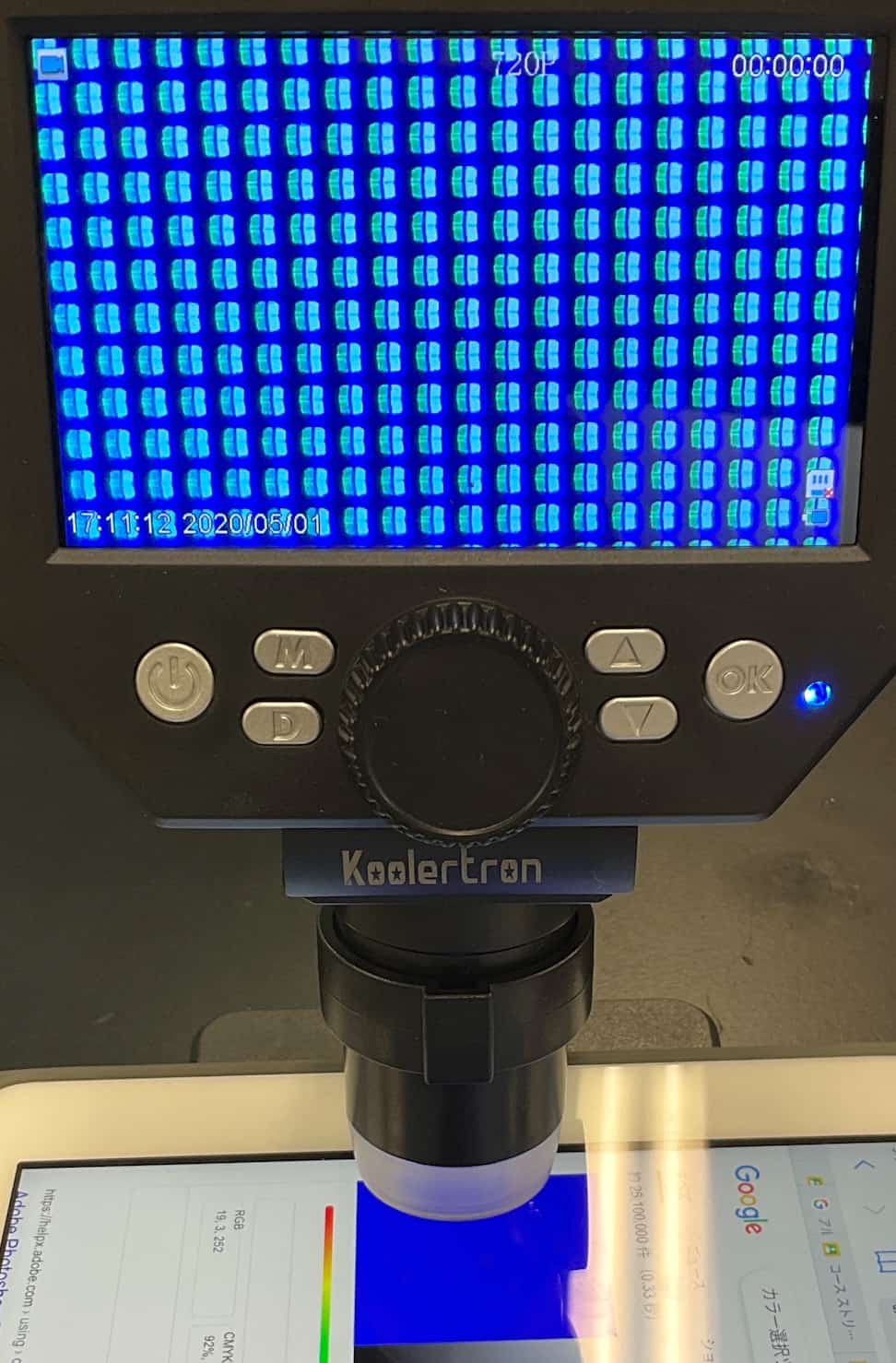
It was a deep blue. You can see G and B shining together.
And how about this one?
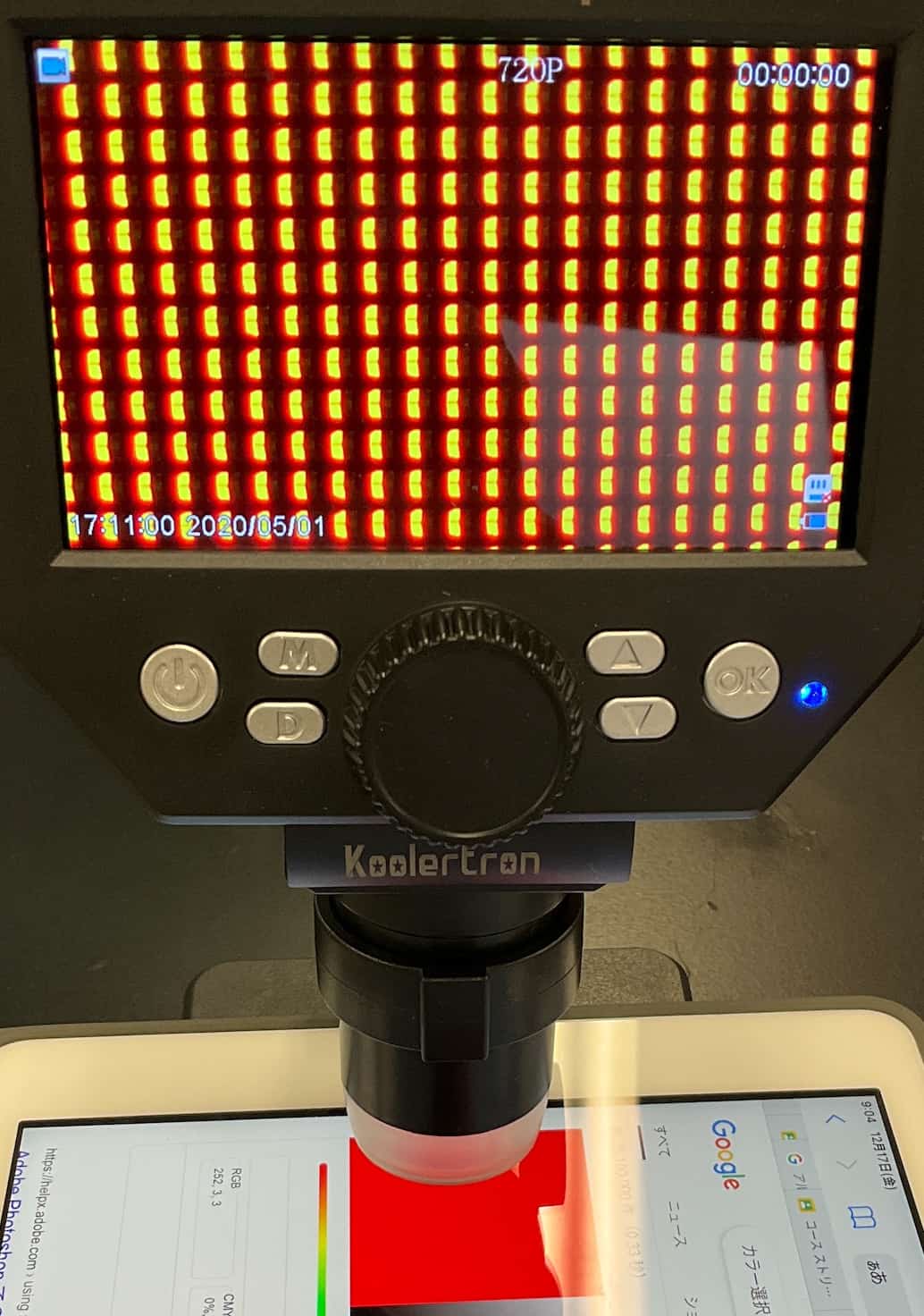
The answer is red. Only R is shining.
And finally, what about this one?
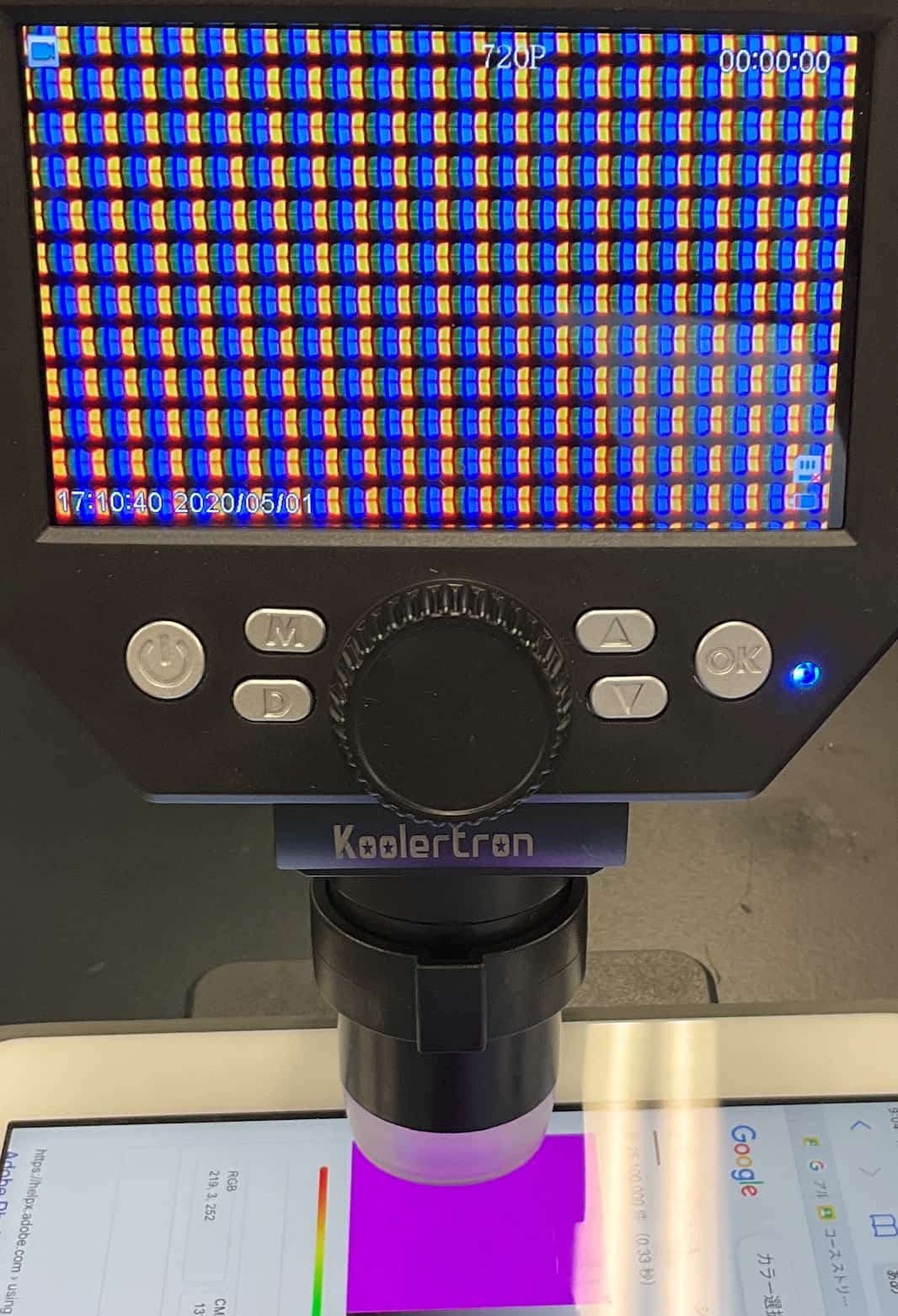
It was purple. R is shining more strongly, with a little G and B mixed in.
The Moment an Everyday Screen Becomes a Science Lesson
The smartphone or tablet screen we casually glance at every day can create an almost endless range of colors using combinations of just three colors of light. Once you realize that, doesn’t the familiar world around you start to look a little different? All it takes is a digital microscope to turn ordinary objects around us into fascinating science teaching materials. Why not try it at home with your children? Pick different colors, magnify them, and see if you can figure out how their RGB combinations work.
For more about the three primary colors of pigments, take a look here.
Contact & Inquiries
Want to bring the wonders and excitement of science a little closer to home? I share fun science experiments you can do at home, along with easy-to-understand tips and tricks. Take a look around and see what you can discover!
・The Science Notes has now been published as a book. Find out more here
・Learn more about Ken Kuwako, the author, here
・For inquiries and requests such as writing, lectures, science workshops, TV supervision, and appearances, please visit this page
・Get updates on new articles on X!
 Science Notes Channel features videos of fun and fascinating experiments!
9月のイチオシ実験!
テレビ番組監修・イベント等のお知らせ
- 9月25日(金)21:00〜 かまいたちの瞬間回答!にて、科学監修を行いました。
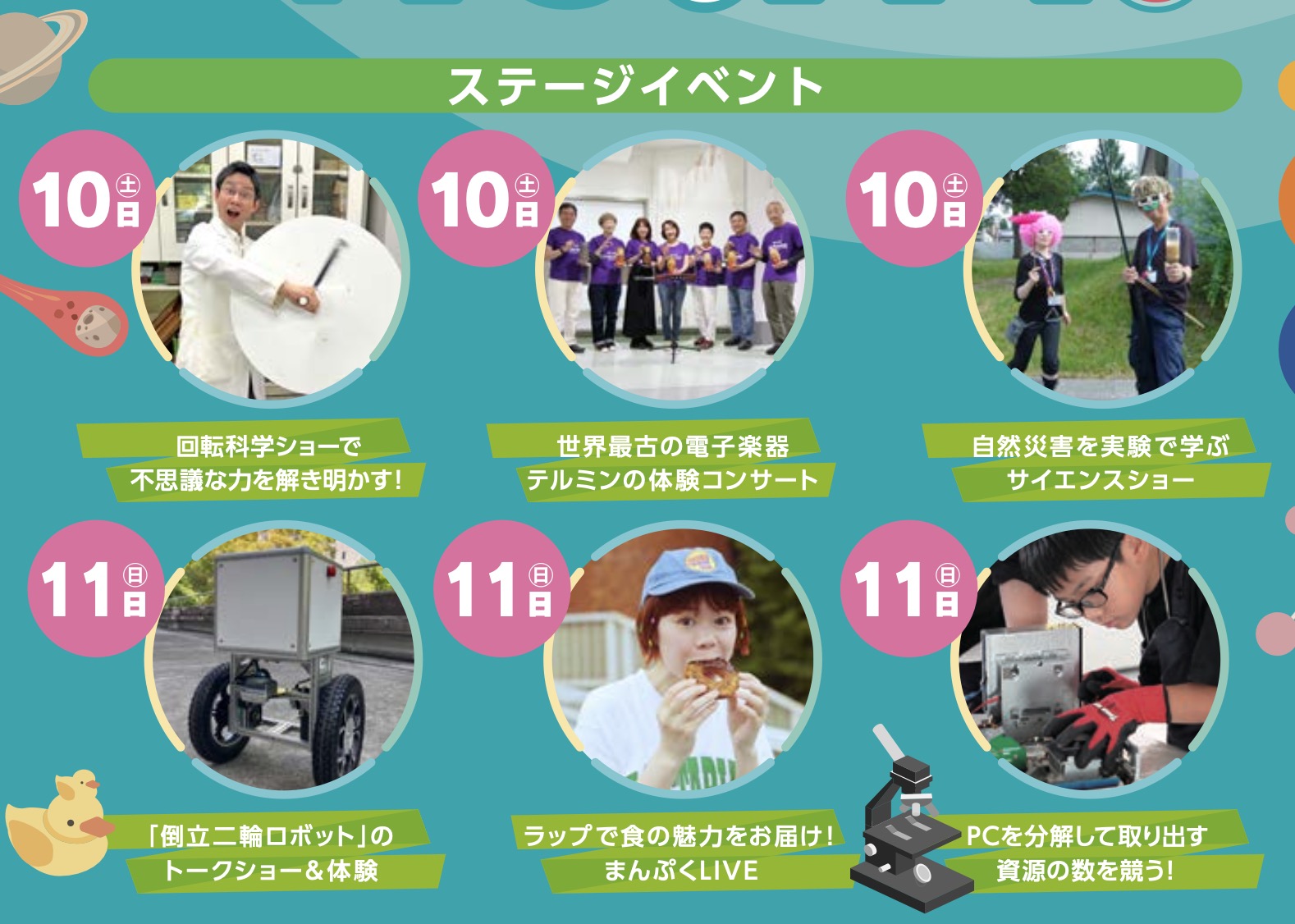
- 10月10日(土)11:15~12:00 千葉市科学フェスタ2026「桑子先生の回転科学ショー」にてサイエンスショーを行います。
- 12月26日(土) ナリカサイエンスアカデミー(教員向け実験講習会)開催
書籍のお知らせ
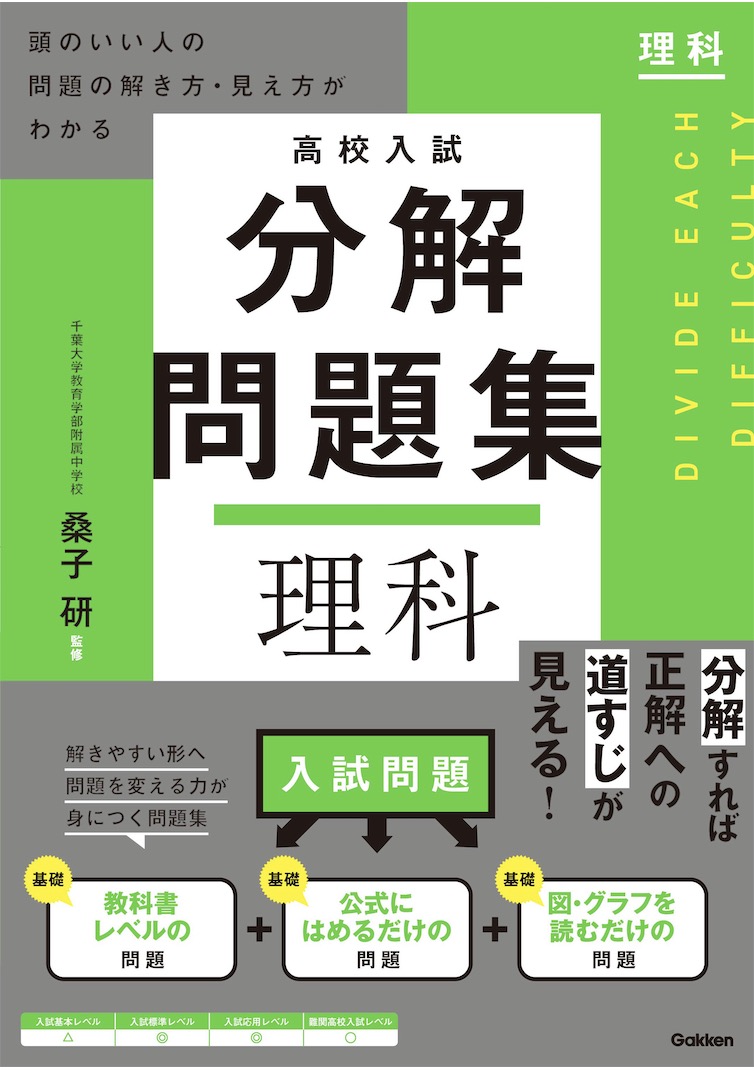
- 『高校入試 分解問題集 理科』(学研)…難しい問題も小さな問題に分解することで、問題を解くことができます。そんな分解の技術が身につくように深く関わりを持って作りました。
 『大人のための高校物理復習帳』(講談社)…一般向けに日常の物理について公式を元に紐解きました。特設サイトでは実験を多数紹介しています。※増刷がかかり6刷となりました(2026/02/01)

- 『きめる!共通テスト 物理基礎 改訂版』(学研)… 高校物理の参考書です。イラストを多くしてイメージが持てるように描きました。授業についていけない、物理が苦手、そんな生徒におすすめです。特設サイトはこちら。

各種SNS(更新情報をお届け!)
【日本語】X(Twitter)/instagram/Facebook 【英語】BlueSky/Threads
Explore
- 楽しい実験…お子さんと一緒に夢中になれるイチオシの科学実験を多数紹介しています。また、高校物理の理解を深めるための動画教材も用意しました。
- 理科の教材… 理科教師をバックアップ!授業の質を高め、準備を効率化するための選りすぐりの教材を紹介しています。
- Youtube…科学実験等の動画を配信しています。
- 科学ラジオ …科学トピックをほぼ毎日配信中!AI技術を駆使して作成した「耳で楽しむ科学」をお届けします。
- 講演 …全国各地で実験講習会・サイエンスショー等を行っています。
- About …「科学のネタ帳」のコンセプトや、運営者である桑子研のプロフィール・想いをまとめています。
- お問い合わせ …実験教室のご依頼、執筆・講演の相談、科学監修等はこちらのフォームからお寄せください。