Discovered! Why Regular Cola Sinks but Diet Cola Floats — The Scary Truth About Sugar
I’m Ken Kuwako, the Science Trainer. Every day is an experiment!
When I first watched the video below, I was amazed. At the same time, I realized it would make a perfect lesson on buoyancy, so I decided to investigate it myself. The video shows a regular cola can and a zero-sugar (diet) cola can placed in water. Surprisingly, the regular cola sinks while the diet cola floats.
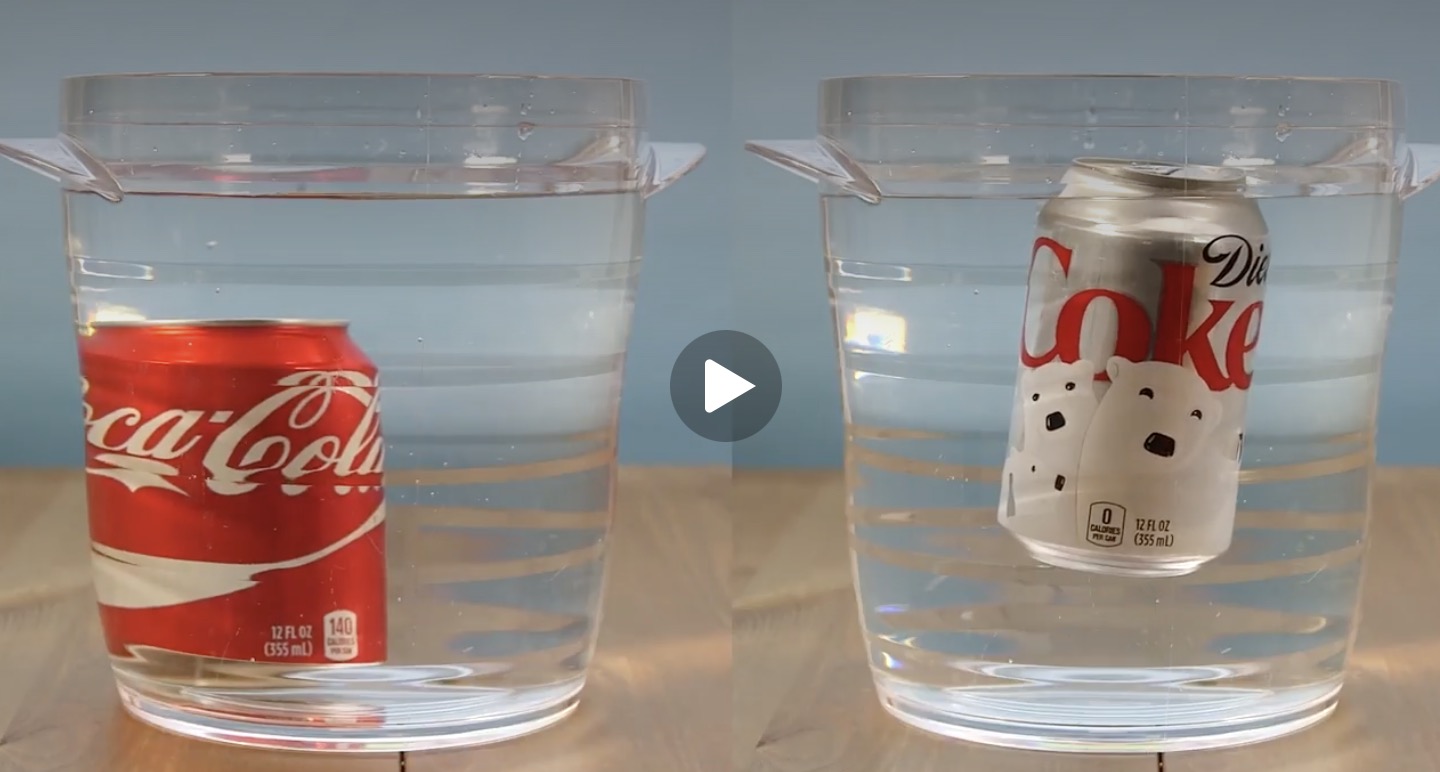
My first thought was, “This must be because of the difference between sugar and artificial sweeteners.” But guessing wasn’t enough—I wanted to prove it with a real experiment.
Let’s Start by Weighing Them
I didn’t have cans on hand, so I used 700 mL plastic bottles of regular cola and zero-sugar cola instead.
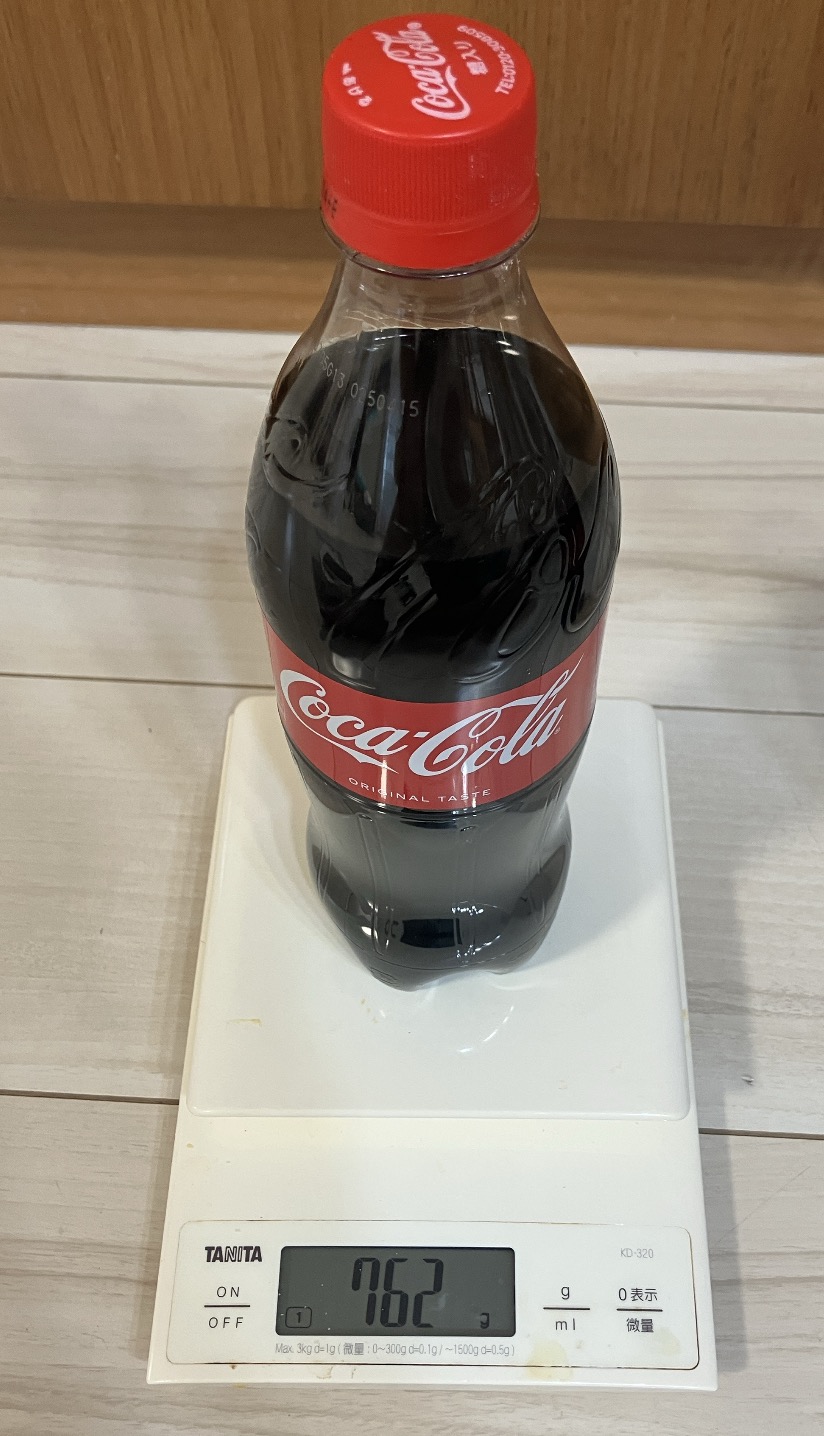
First, I weighed the unopened regular cola. It came in at 762 g.
Next, I weighed the zero-sugar cola. To my surprise, it weighed only 733 g.
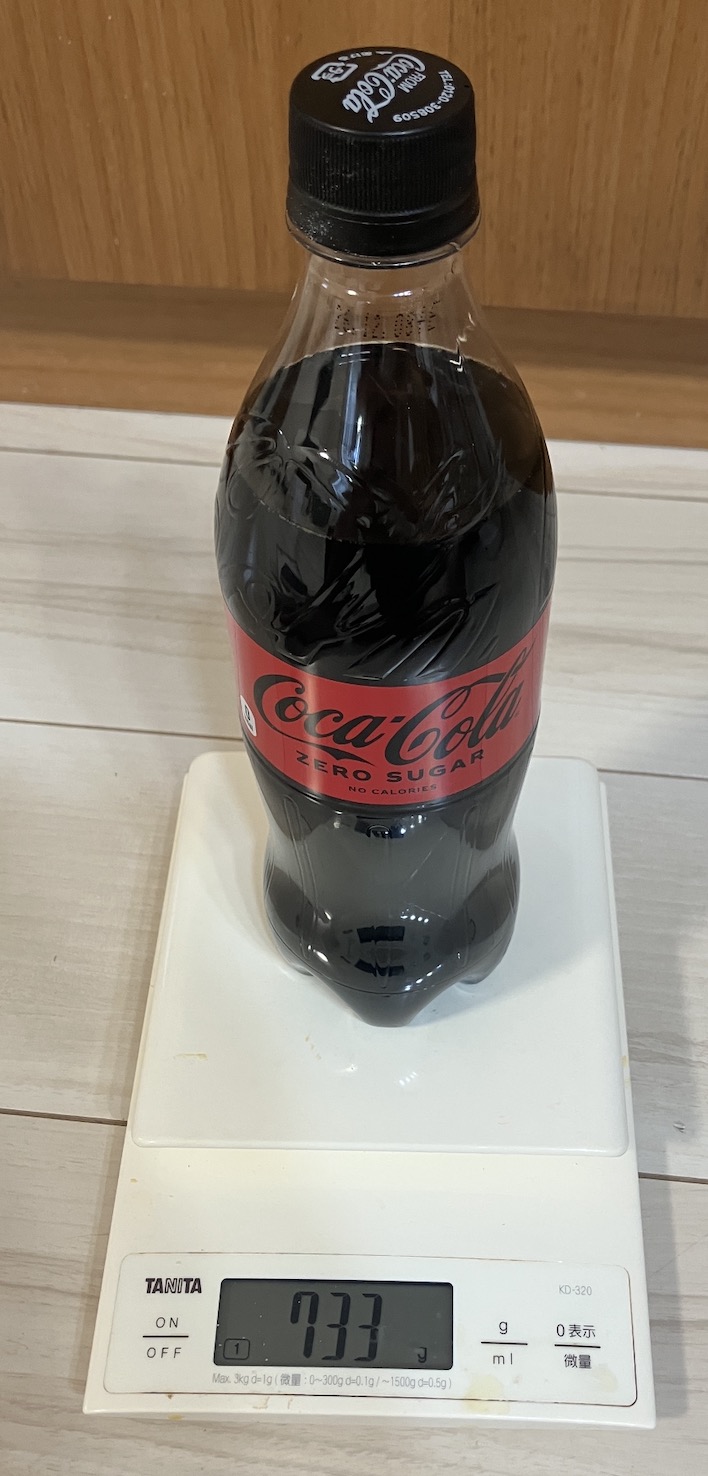
At this point, one thing was already crystal clear:
the zero-sugar cola is lighter.
Comparing Just the Liquid
Of course, the bottle itself contributes to the total weight, so I separated the liquid from the container to make a fair comparison.
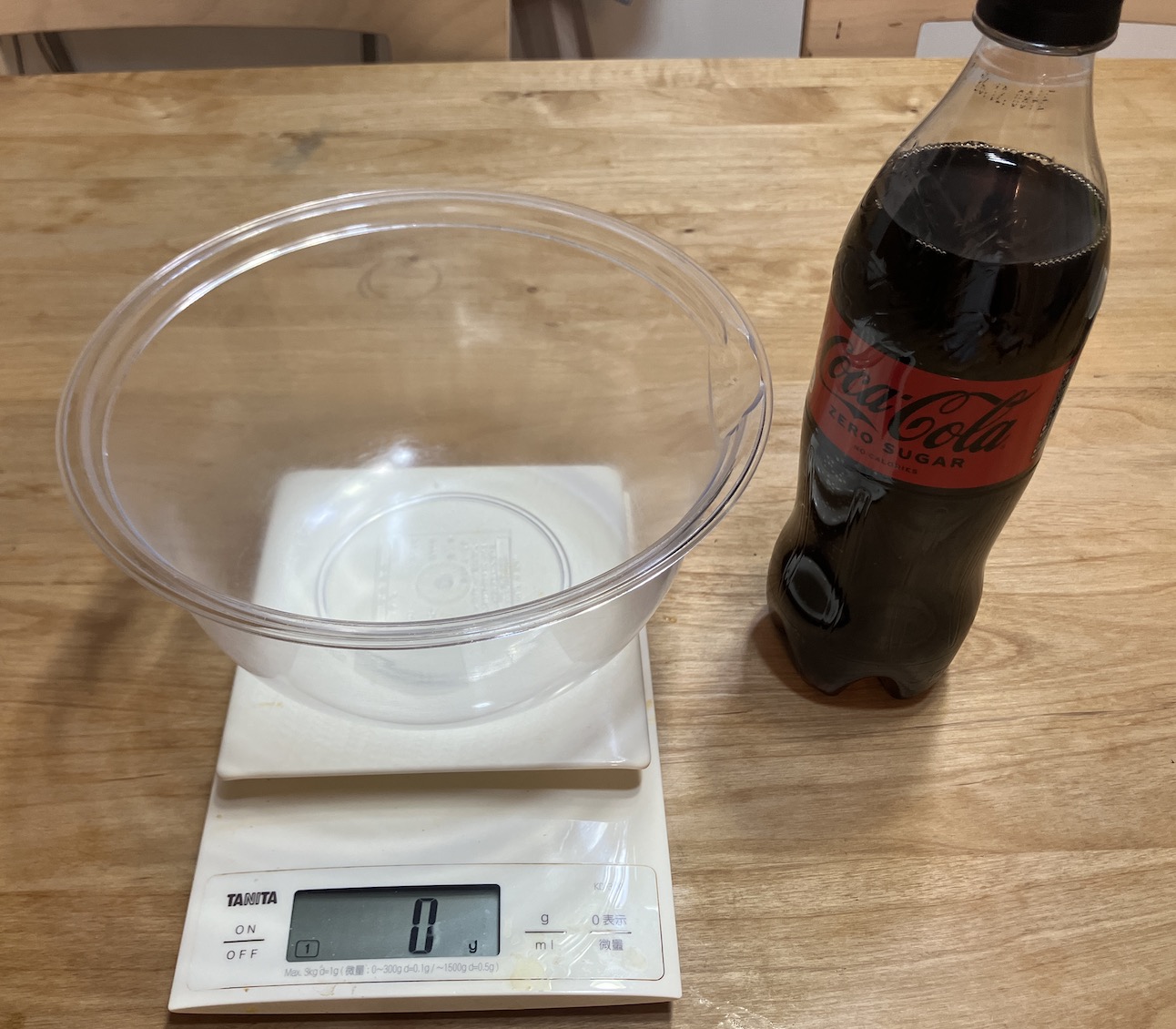
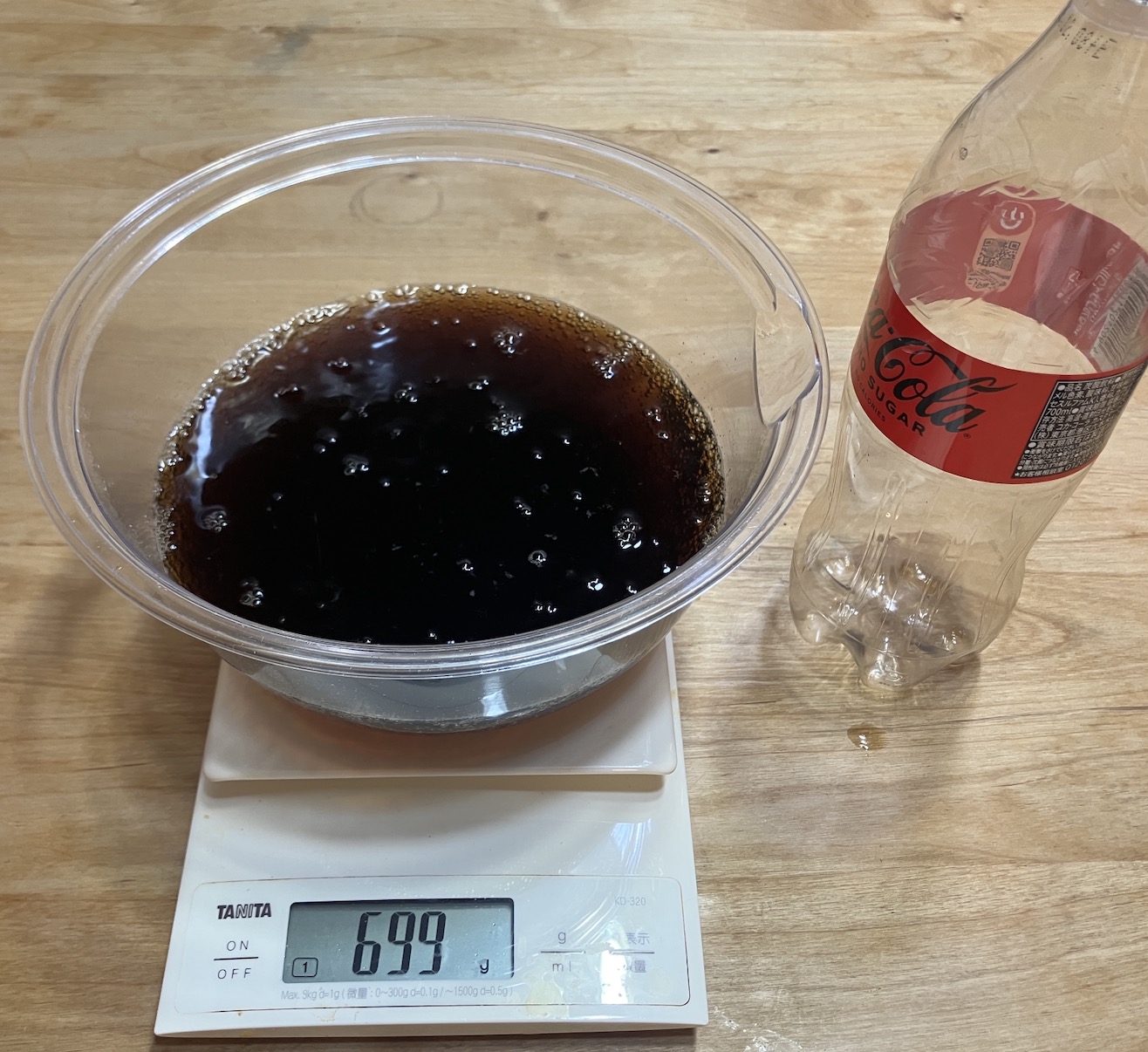
The liquid from the zero-sugar cola weighed 699 g—almost exactly the same as water.
Since 700 mL of water weighs almost exactly 700 g, the missing gram is easily explained by the tiny amount left clinging to the bottle. In other words, the zero-sugar cola is nearly identical to water in terms of mass.
When I measured the liquid from the regular cola, it weighed 730 g. That’s a surprisingly large difference!
Then I weighed the empty bottles themselves.
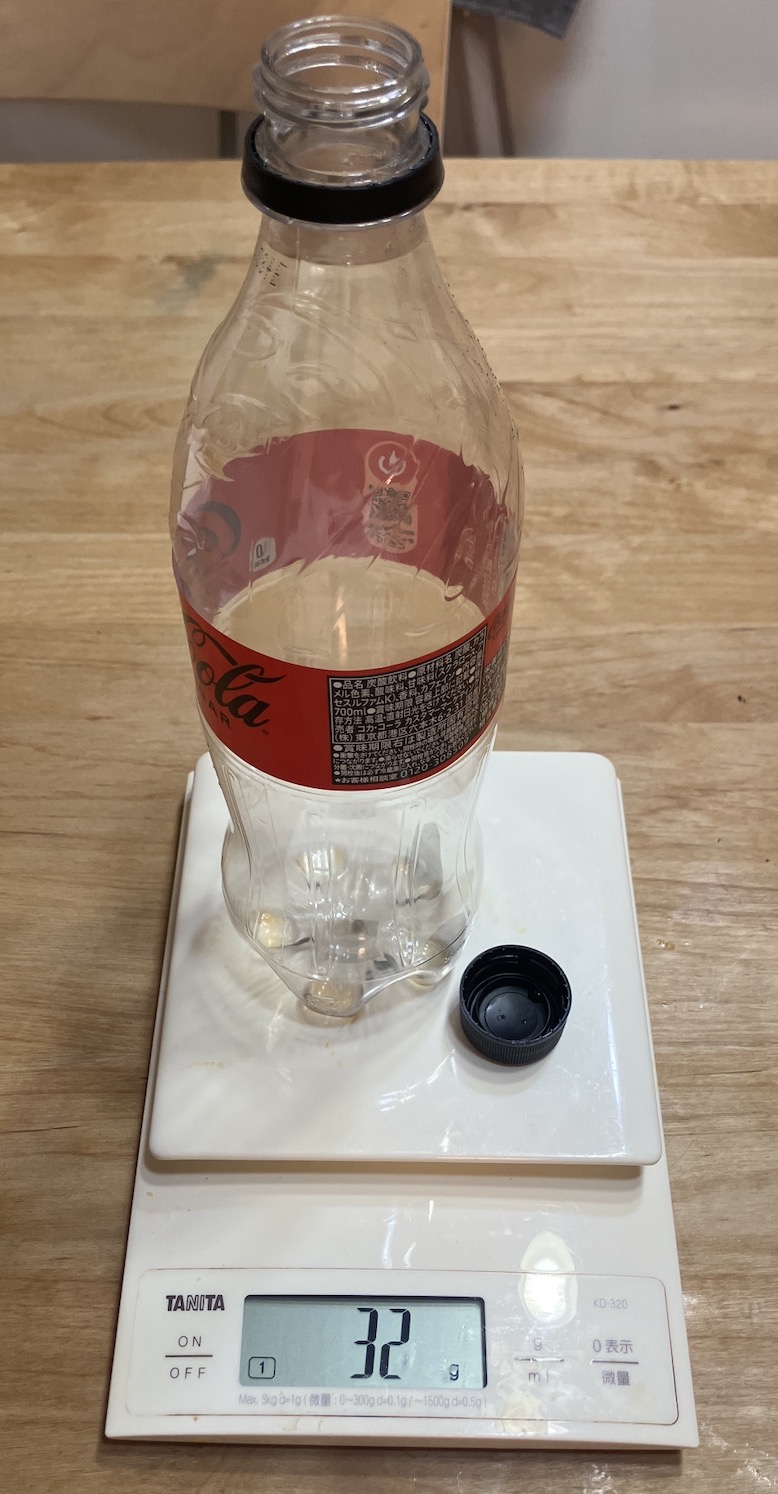
Both bottles weighed 32 g, so there was virtually no difference.
That means the difference in whether they float or sink comes entirely from what’s inside.
Just a 31 g Difference… But It Changes Everything
Here’s the key number:
730 g − 699 g = 31 g
A difference of only 31 g is enough to dramatically change buoyancy.
So where does that extra weight come from?
Let’s look at the ingredient labels.
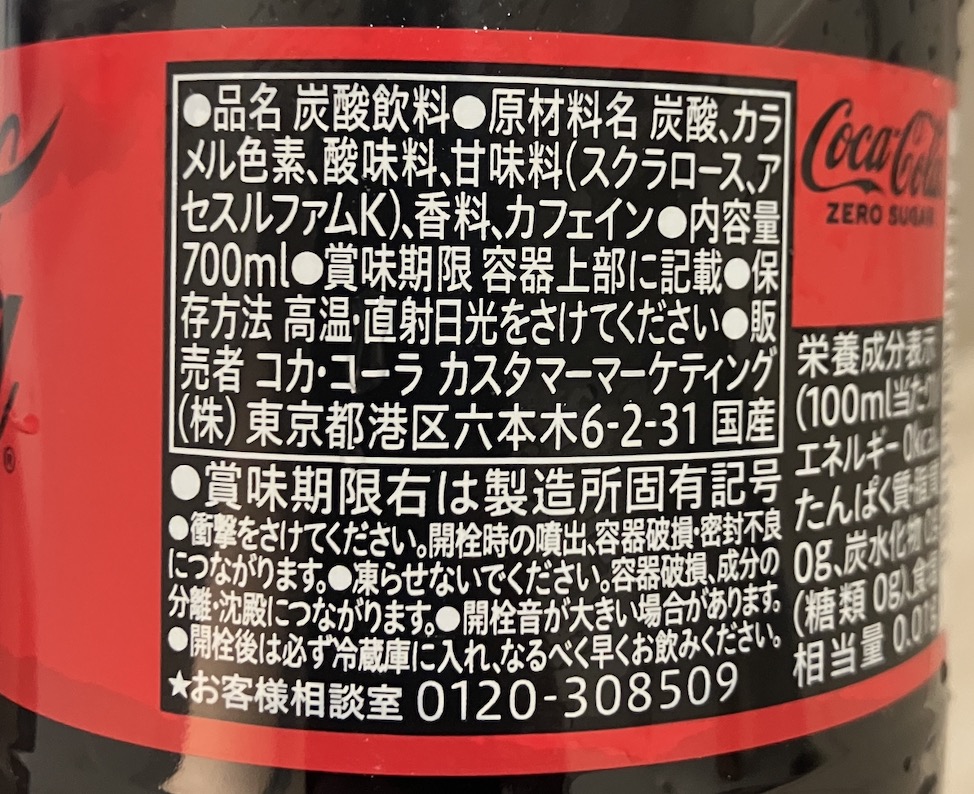
Regular cola contains sugar.
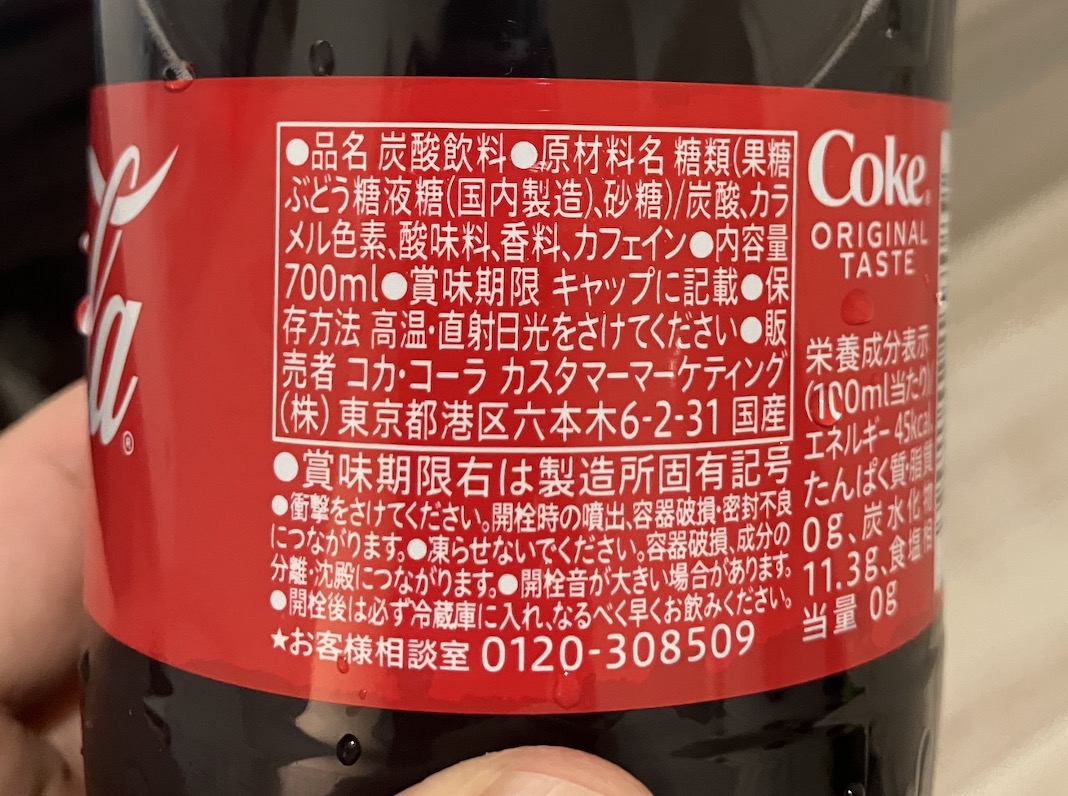
Zero-sugar cola, on the other hand, uses artificial sweeteners (sucralose and acesulfame potassium).
The Secret Behind Artificial Sweeteners
Here’s an interesting fact.
Sucralose is about 600 times sweeter than ordinary table sugar (sucrose).
That means you only need about one six-hundredth as much to achieve the same sweetness.
For example, if a drink normally requires 30 g of sugar, only about 0.05 g of sucralose can produce a similar level of sweetness.
Imagine replacing two tablespoons of sugar with an amount of sweetener that’s barely visible—that’s how powerful it is.
That’s why zero-sugar cola can taste sweet while adding almost no extra mass.
Based on these numbers, it’s completely reasonable that regular cola ends up denser and is therefore more likely to sink.
The Final Test: Into the Bathtub!
Theory is great, but experiments are even better.
So I put both bottles into water.
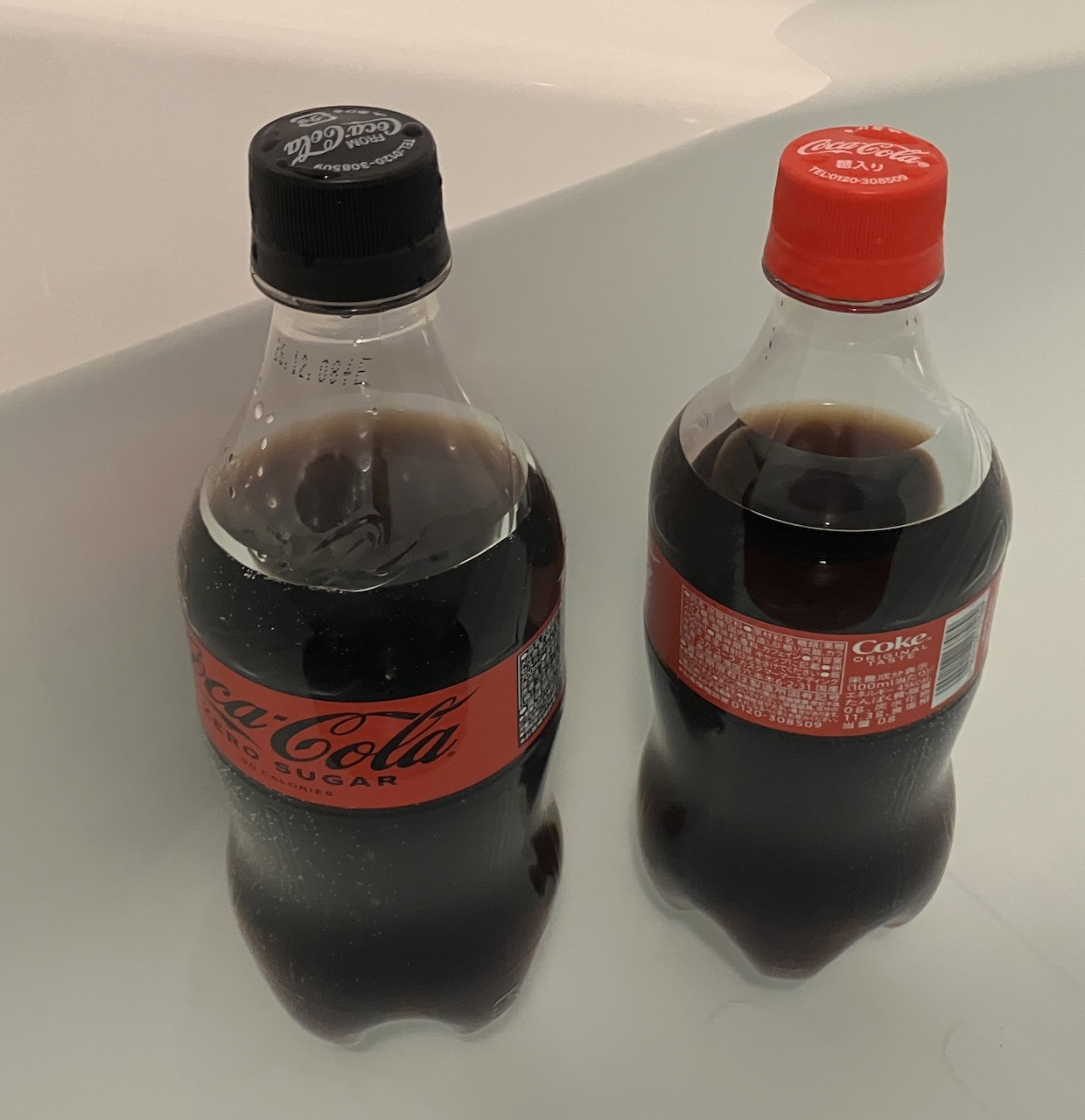
From the side, the difference becomes obvious.
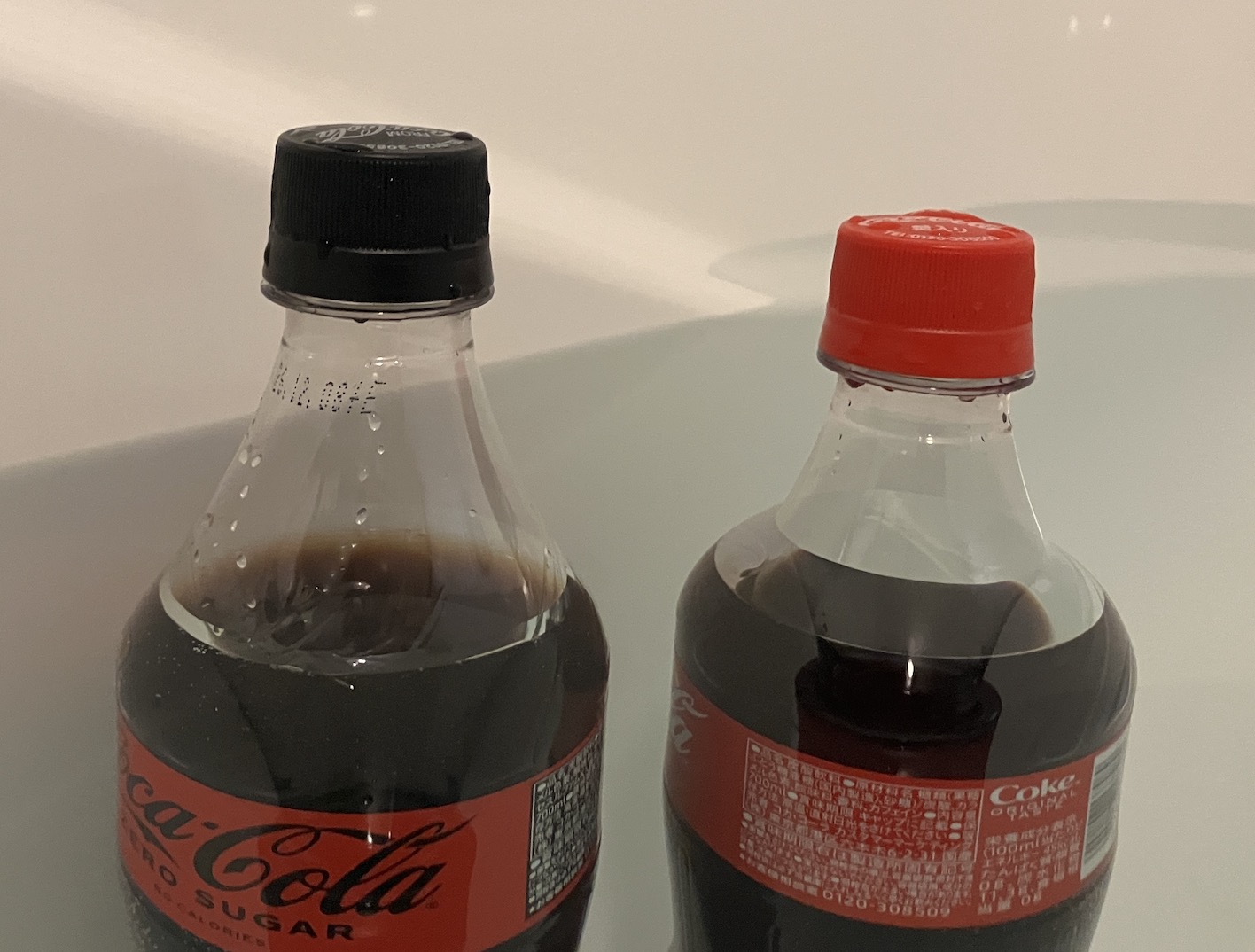
Both plastic bottles float, but not in the same way.
The zero-sugar cola sits higher above the surface, while the regular cola sinks noticeably deeper into the water.
This clearly shows that the regular cola has a higher density.
What Happens with Cans?
This experiment used plastic bottles, but cans introduce another factor.
Besides the liquid inside, you also have to consider the weight of the aluminum can itself and the small pocket of air trapped inside.
Aluminum has a density of 2.7 g/cm3, making it much denser than water.
However, the air space near the top of the can acts like a tiny built-in flotation chamber, providing additional buoyancy.
Whether the can floats or sinks depends on the balance between the weight of the aluminum, the liquid inside, and the buoyant force created by that air pocket.
Based on the results of this experiment, it seems entirely plausible that a regular cola can would sink while a zero-sugar cola can would float—just like in the original video.
Now I really want to try the experiment with actual cans!
Did you know that some bowling balls float while others sink?
Contact & More Science Fun
Science is full of fascinating surprises! Here you’ll find easy science experiments you can try at home, along with clear explanations of the science behind them. Feel free to explore the site!
・The Science Notebook is now available as a book. Learn more here.
・Learn more about Ken Kuwako here.
・For writing, lectures, science workshops, TV consulting, or media appearances, click here.
・Follow the latest article updates on X!
 Science Notebook Channel features fun science experiment videos!
9月のイチオシ実験!
テレビ番組監修・イベント等のお知らせ
- 9月25日(金)21:00〜 かまいたちの瞬間回答!にて、科学監修を行いました。
- 10月10日(土)11:15~12:00 千葉市科学フェスタ2026「桑子先生の回転科学ショー」にてサイエンスショーを行います。
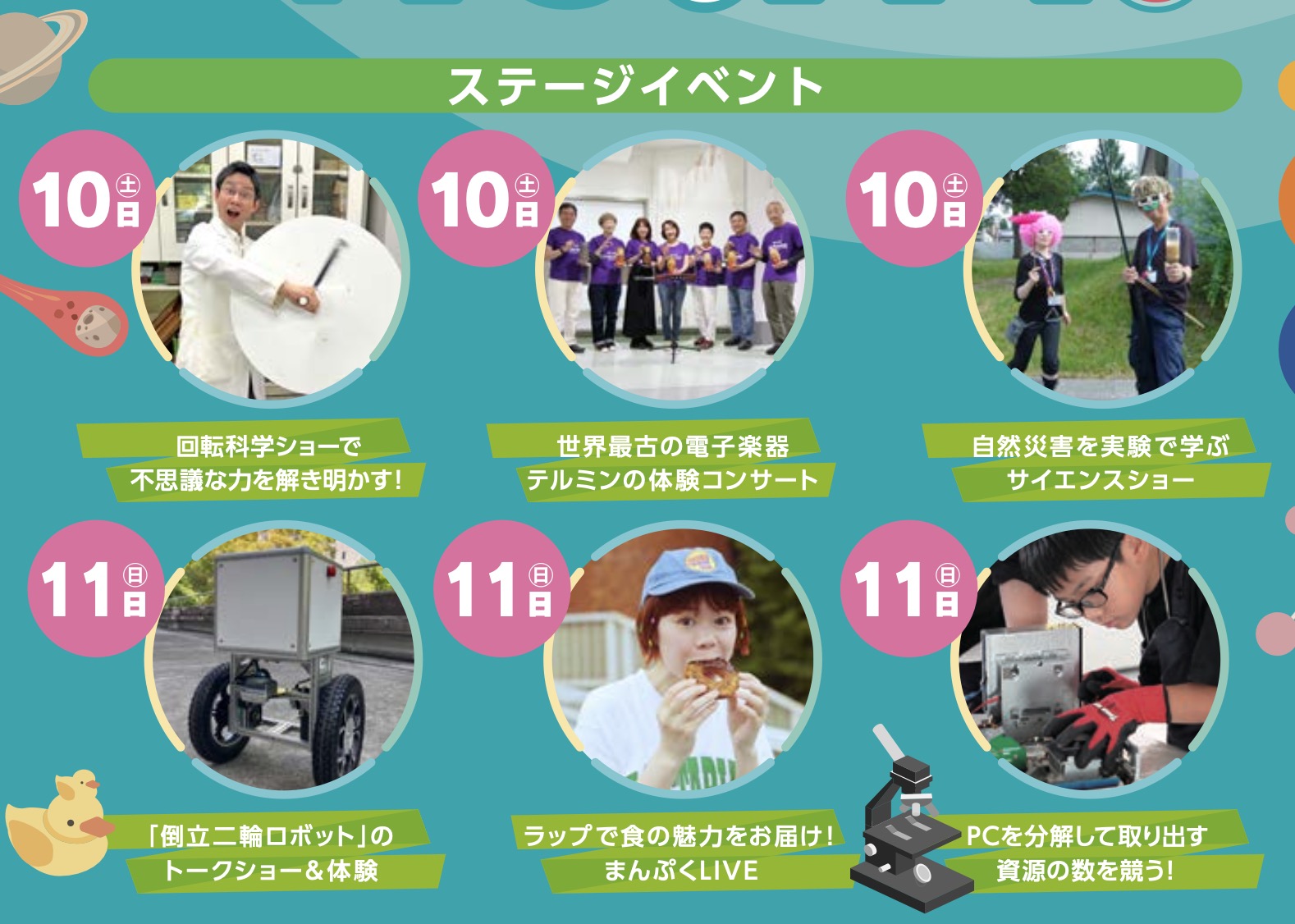
- 12月26日(土) ナリカサイエンスアカデミー(教員向け実験講習会)開催
書籍のお知らせ
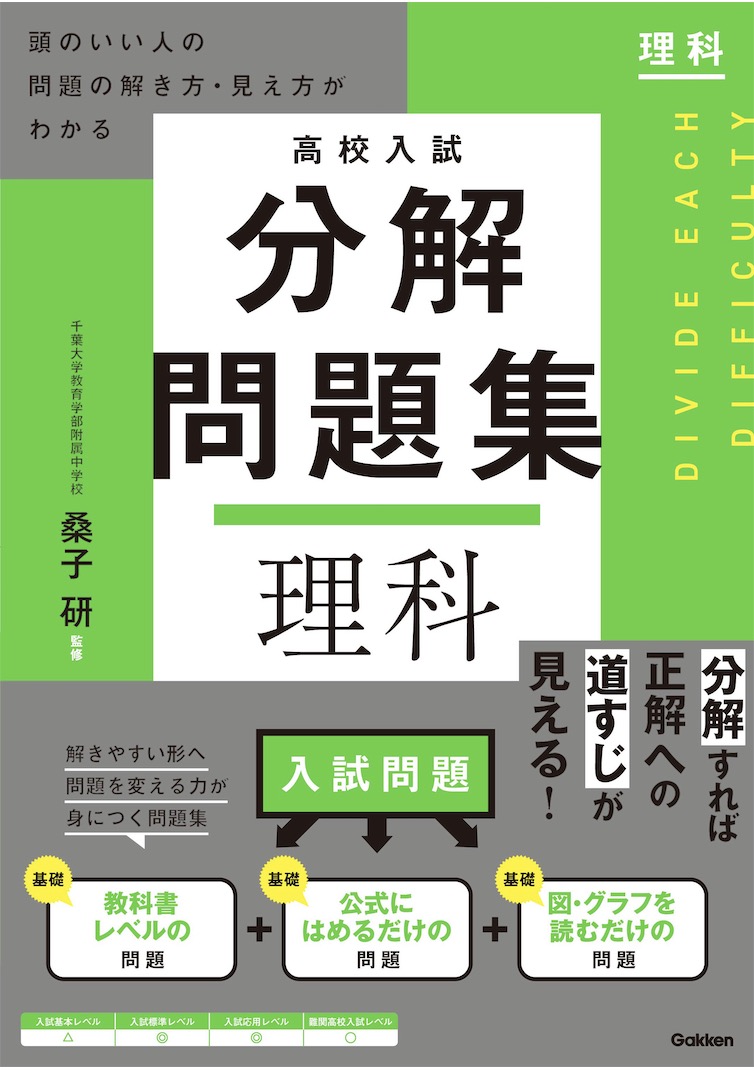
- 『高校入試 分解問題集 理科』(学研)…難しい問題も小さな問題に分解することで、問題を解くことができます。そんな分解の技術が身につくように深く関わりを持って作りました。
 『大人のための高校物理復習帳』(講談社)…一般向けに日常の物理について公式を元に紐解きました。特設サイトでは実験を多数紹介しています。※増刷がかかり6刷となりました(2026/02/01)
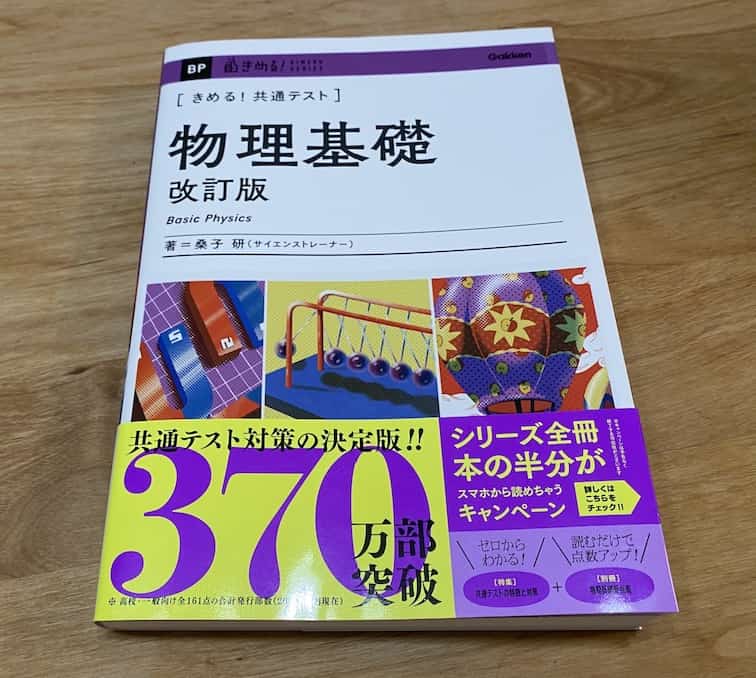
- 『きめる!共通テスト 物理基礎 改訂版』(学研)… 高校物理の参考書です。イラストを多くしてイメージが持てるように描きました。授業についていけない、物理が苦手、そんな生徒におすすめです。特設サイトはこちら。
各種SNS(更新情報をお届け!)
【日本語】X(Twitter)/instagram/Facebook 【英語】BlueSky/Threads
Explore
- 楽しい実験…お子さんと一緒に夢中になれるイチオシの科学実験を多数紹介しています。また、高校物理の理解を深めるための動画教材も用意しました。
- 理科の教材… 理科教師をバックアップ!授業の質を高め、準備を効率化するための選りすぐりの教材を紹介しています。
- Youtube…科学実験等の動画を配信しています。
- 科学ラジオ …科学トピックをほぼ毎日配信中!AI技術を駆使して作成した「耳で楽しむ科学」をお届けします。
- 講演 …全国各地で実験講習会・サイエンスショー等を行っています。
- About …「科学のネタ帳」のコンセプトや、運営者である桑子研のプロフィール・想いをまとめています。
- お問い合わせ …実験教室のご依頼、執筆・講演の相談、科学監修等はこちらのフォームからお寄せください。