From Bucket to Science Lab! Measuring Sound Wavelengths with Your Smartphone (Air Column Resonance Experiment)
I’m Ken Kuwako, a science educator. Every day is an experiment.
In this article, I’ll introduce a simple but powerful experiment that explores sound resonance using the iPhone app “AƒG – Audio Function Generator.” Students can actually experience the relationship between wavelength and frequency, then confirm it with calculations. Best of all, the equipment is inexpensive and easy to find, making this an experiment you can bring straight into tomorrow’s classroom.
Measuring Sound Wavelength with Resonance
This experiment takes advantage of resonance—the phenomenon where sound suddenly becomes much louder under specific conditions. Resonance is one of the most important concepts in wave physics. By creating resonance inside an acrylic tube placed in water, you can visualize sound waves, measure their wavelength, and calculate their frequency.
Materials
- Acrylic tube: About 50 cm (20 in) long is ideal. Tubes are available at most hardware stores for around ¥800. A narrower inner diameter produces clearer resonance.
- iPhone: With the “AƒG – Audio Function Generator” app installed. One phone per group is plenty. Having students install the app beforehand makes the activity run much more smoothly.
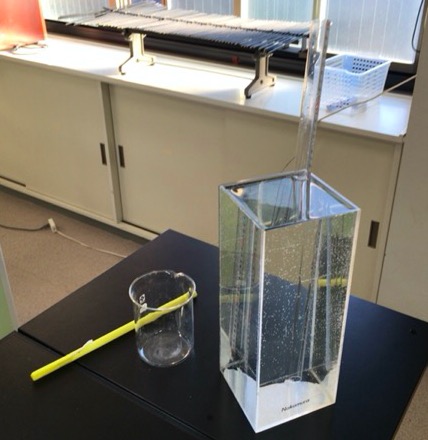
- Water tank: Deep enough to stand the acrylic tube upright while keeping it submerged.
- Stickers or a permanent marker: For marking resonance points. A measuring tape attached to the tube makes measurements even more accurate.
Procedure
- Install the app. Ask students to install “AƒG – Audio Function Generator” on their iPhones before class. If you’re doing this at home, simply install it yourself.
- Fill the tank with water. Fill the tank completely and let the water settle so the surface is as still as possible.
- Place the acrylic tube. Stand the tube vertically in the tank, making sure it remains upright.
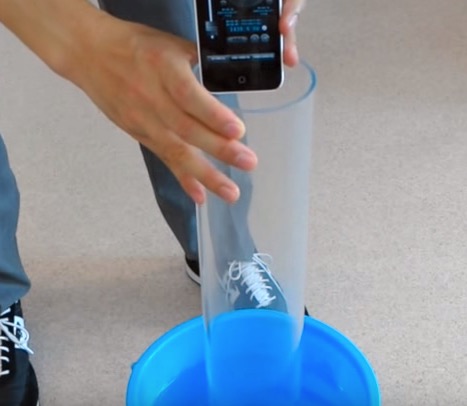
- Generate a tone. Open the AƒG app and select a frequency between about 400 and 800 Hz. Place the iPhone on top of the tube so that the speaker faces directly into the opening.
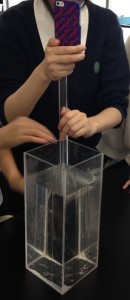
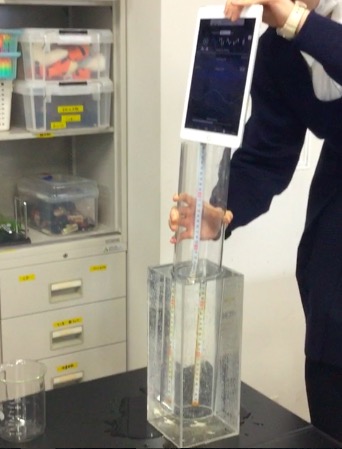
- Find the first resonance point. Hold the iPhone and tube together and slowly move them up and down. Listen carefully for the position where the sound suddenly becomes much louder. That’s your first resonance point.
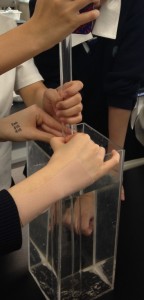
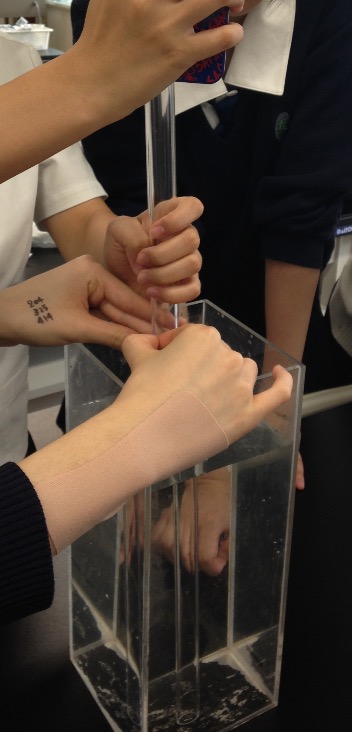
- Mark the first point. Measure the distance between the top of the tube and the water surface when the loudest sound occurs. Mark this position with a sticker or permanent marker.
- Find the second resonance point. Continue moving the tube until you hear another strong resonance. This point will occur with the water surface lower than the first one.
- Mark the second point. Record this position in the same way.
- Measure the wavelength. Measure the distance between the two resonance marks. This distance equals exactly half of the wavelength (λ / 2). Simply double the measured distance to obtain the wavelength λ.
Quiz: Does the Sound Wave Extend Beyond the Tube?
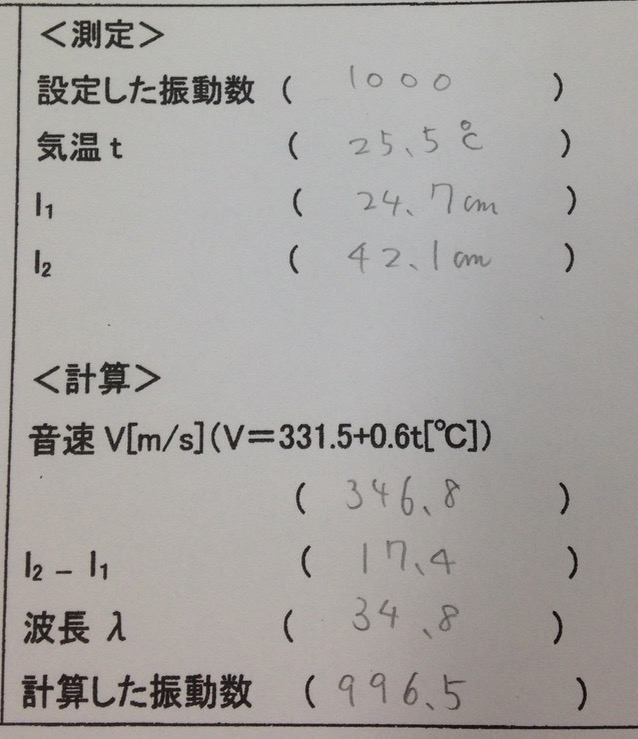
One fascinating thing you’ll notice is that the calculated wave length and the physical length of the air column don’t quite match.
Suppose one group found resonance when the air column measured 0.415 m. They also measured the distance between two resonance points and calculated a wavelength of 0.34 m.
Can you figure out what standing wave formed inside the tube and estimate the end correction?
Hint: If the wavelength is 0.34 m, then one-quarter wavelength is:
0.34 ÷ 4 = 0.085 m
The measured resonance length of 0.415 m is very close to five quarter-wavelengths:
0.085 × 5 = 0.425 m
This tells us that the fifth-quarter-wave mode (the third resonance) was produced.
But notice something interesting:
Calculated length: 0.425 m
Measured length: 0.415 m
The missing 0.010 m represents the distance that the vibrating air actually extends beyond the open end of the tube. This is called the end correction.
0.425 m − 0.415 m = ???
The answer is 1 cm!
This is one of the joys of physics experiments—you can measure something invisible simply by comparing theory with experimental data.
Calculating the Speed of Sound and Frequency
First, measure the room temperature.
Then calculate the speed of sound using:
v = 331.5 + 0.6t
where t is the air temperature in °C.
Next, use the measured wavelength λ together with the speed of sound v to calculate the frequency.
Since:
v = fλ
we obtain:
f = v / λ
Finally, compare your calculated frequency with the frequency set in the AƒG app. They should be remarkably close.
Why Does Resonance Occur?
This experiment demonstrates resonance in a closed tube.
The sound wave reflects from the water surface, producing a standing wave inside the tube. A standing wave appears stationary, with certain points (nodes) barely moving while others (antinodes) vibrate strongly.
In this setup, the open end of the tube is an antinode, while the water surface is a node.
The simplest resonance occurs when the air column is one-quarter of a wavelength long. The next resonances occur at three-quarters of a wavelength, five-quarters of a wavelength, and so on. In other words, resonance occurs only at odd multiples of one-quarter wavelength.
When you locate two consecutive resonance points, they correspond to λ/4 and 3λ/4. Their separation is therefore:
(3λ/4) − (λ/4) = λ/2
Doubling this distance gives an accurate measurement of the wavelength.
How Students React
Whenever I run this activity, students are surprisingly eager to install the tone generator app and immediately begin searching for resonance points.
“It’s getting louder here!”
Moments like this quickly fill the classroom with excitement. Even more satisfying is watching students calculate the frequency from their own measurements and discover that it almost perfectly matches the value they entered into the app.
Many students are amazed that an ordinary smartphone can become a scientific instrument. Realizing that everyday technology can be used to explore physics sparks genuine curiosity. Since each group only needs one phone, preparation is simple as well.
From a Homemade Experiment to a Commercial Science Kit
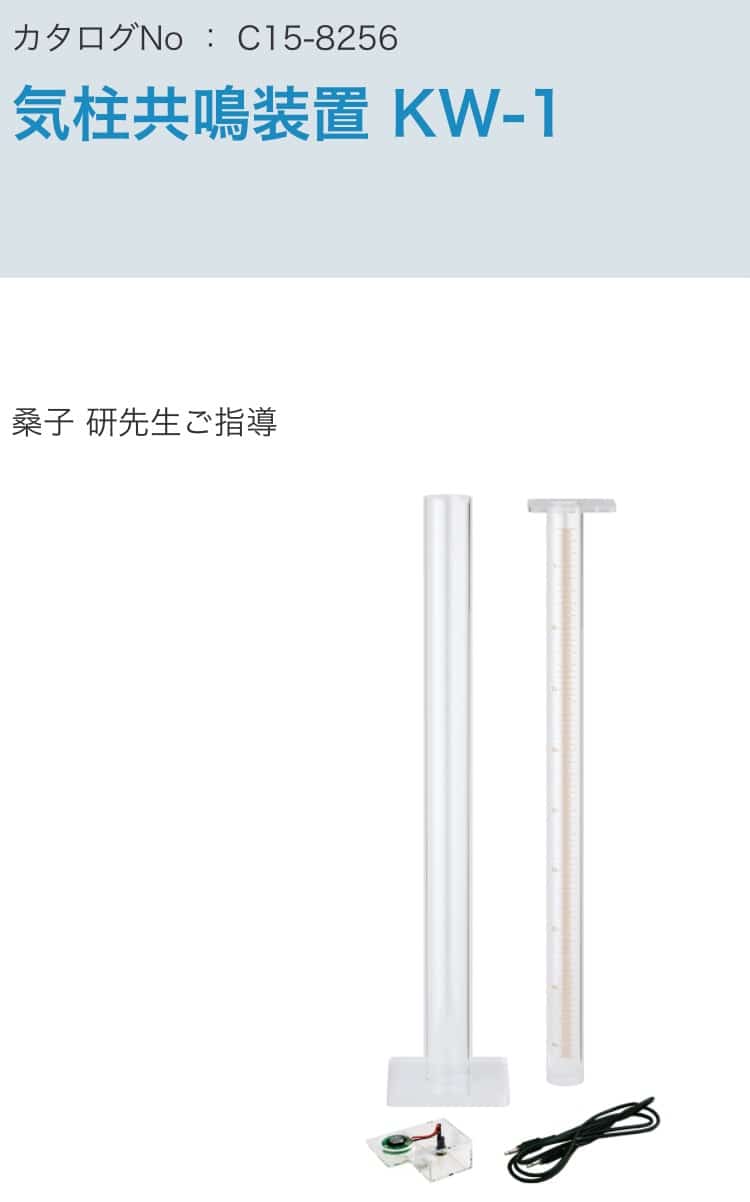
Interestingly, this homemade resonance experiment eventually led to the development of a commercial educational apparatus called the “KW-1.”
During a Narika Science Academy (NSA) event, I was demonstrating the experiment using a bucket and PVC pipe. A member of Narika’s staff happened to see it and wondered if the setup could be made easier for classrooms. That conversation eventually grew into the development of the KW-1 resonance apparatus.
As for the name “KW,” I was told it was chosen jokingly after my family name, Kuwako.
It’s amazing how a simple homemade experiment can unexpectedly evolve into a professional science teaching tool. Encounters like these are part of what makes science so rewarding.
Contact & Collaboration
I love making science approachable and fun for everyone. You’ll find plenty of easy experiments you can try at home, along with practical tips and explanations. Feel free to explore!
• My science experiments have been published as a book. Learn more here.
• Learn more about me here.
• For writing, lectures, science workshops, TV consulting, media appearances, and other collaborations, click here.
• Follow me on X for updates whenever new articles are published!
 Science Idea Channel features hands-on experiment videos!
10月のイチオシ実験!
テレビ番組監修・イベント等のお知らせ
- 10月27日(火) テレビ監修番組放送予定
- 11月27日(金) テレビ監修番組放送予定
- 12月26日(土) ナリカサイエンスアカデミー(教員向け実験講習会)開催
書籍のお知らせ
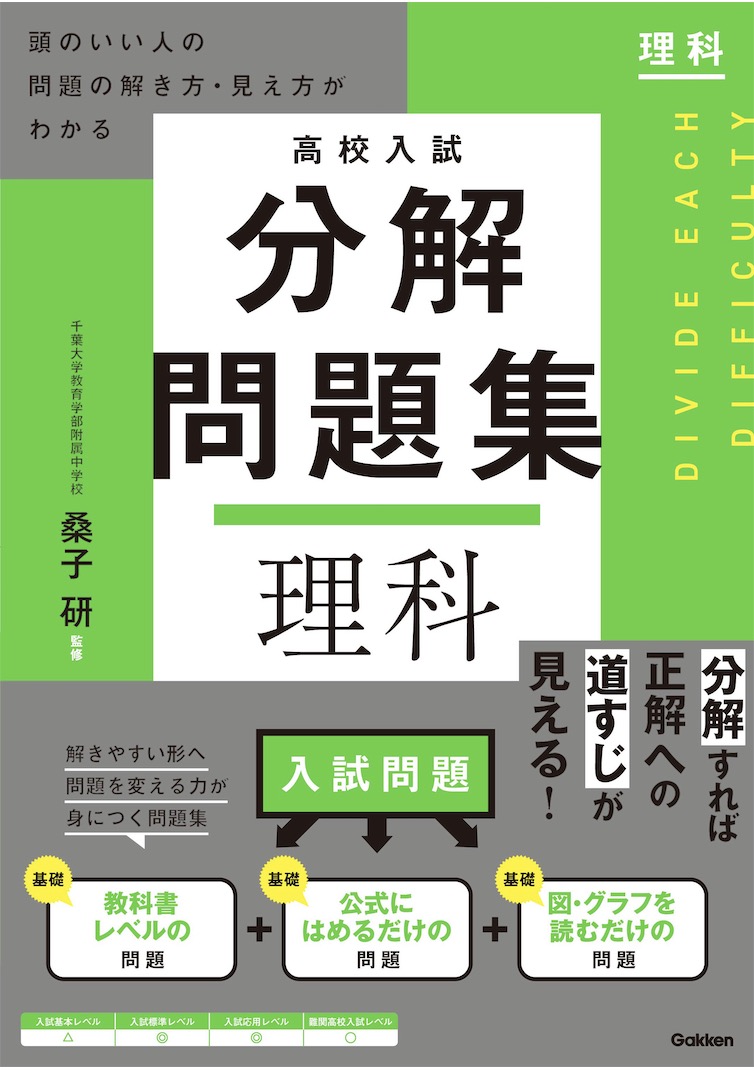
- 『高校入試 分解問題集 理科』(学研)…難しい問題も小さな問題に分解することで、問題を解くことができます。そんな分解の技術が身につくように深く関わりを持って作りました。
 『大人のための高校物理復習帳』(講談社)…一般向けに日常の物理について公式を元に紐解きました。特設サイトでは実験を多数紹介しています。※増刷がかかり6刷となりました(2026/02/01)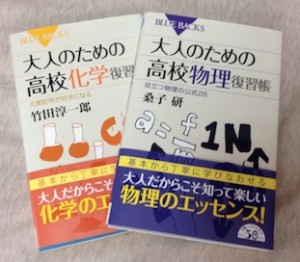
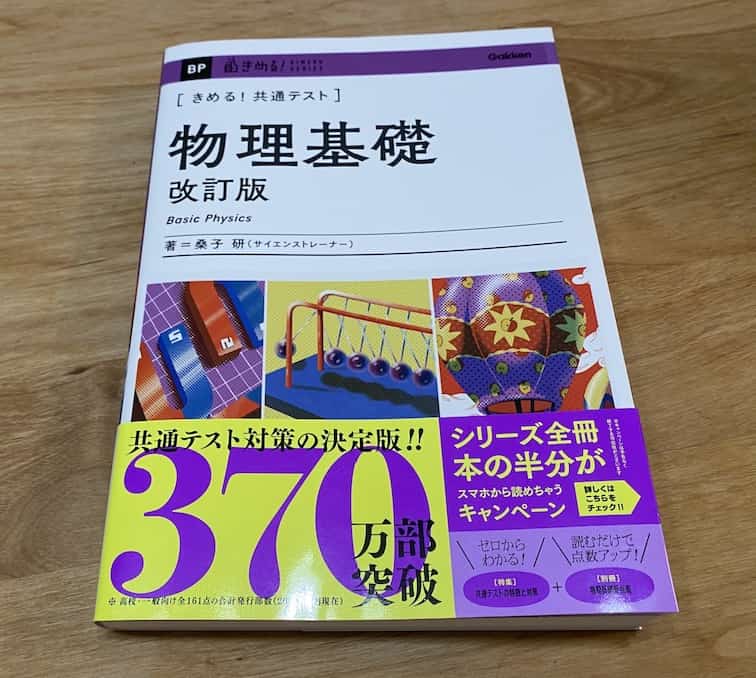
- 『きめる!共通テスト 物理基礎 改訂版』(学研)… 高校物理の参考書です。イラストを多くしてイメージが持てるように描きました。授業についていけない、物理が苦手、そんな生徒におすすめです。特設サイトはこちら。
各種SNS(更新情報をお届け!)
【日本語】X(Twitter)/instagram/Facebook 【英語】BlueSky/Threads
Explore
- 楽しい実験…お子さんと一緒に夢中になれるイチオシの科学実験を多数紹介しています。また、高校物理の理解を深めるための動画教材も用意しました。
- 理科の教材… 理科教師をバックアップ!授業の質を高め、準備を効率化するための選りすぐりの教材を紹介しています。
- Youtube…科学実験等の動画を配信しています。
- 科学ラジオ …科学トピックをほぼ毎日配信中!AI技術を駆使して作成した「耳で楽しむ科学」をお届けします。
- 講演 …全国各地で実験講習会・サイエンスショー等を行っています。
- About …「科学のネタ帳」のコンセプトや、運営者である桑子研のプロフィール・想いをまとめています。
- お問い合わせ …実験教室のご依頼、執筆・講演の相談、科学監修等はこちらのフォームからお寄せください。