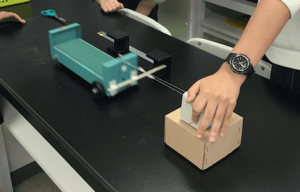
See Standing Waves for Just $3! Super Easy String Vibration Experiment with a Speaker & iPad
I’m Ken Kuwako, the Science Trainer. Every day is an experiment.
Why Do Guitar Strings Vibrate in That Characteristic Shape?
When you strum a guitar, what exactly are the strings doing? It turns out they’re not simply moving back and forth. At certain frequencies, something remarkable happens: the wave seems to freeze in place. This fascinating phenomenon is called a standing wave.
Today, we’re going to make this invisible physics visible using nothing more than a speaker that costs about ¥400 and an iPad. It’s a wonderful experiment where music and physics come together!
You can clearly see the standing waves in the video above. In this article, I’ll show you how to build the setup yourself. The materials cost only a few dollars, and the construction is surprisingly simple, so give it a try!
What Is a Standing Wave?
Before we start building, let’s take a quick look at the science behind it.
When a wave travels along a string, it reflects back from both ends. The reflected waves overlap with the original wave. Under the right conditions, this creates a pattern that appears to stand still. This is known as a standing wave.
The pattern consists of antinodes (points that move with large amplitudes) and nodes (points that remain completely stationary). The regular arrangement of these points makes the wave look almost frozen in time, creating a surprisingly beautiful sight.
This same principle is what allows string instruments such as guitars and violins to produce rich and resonant tones.
Materials You’ll Need
A speaker, an iPad, a USB power source, scissors, a utility knife, and cotton twine (1.4 mm diameter works best)
Here’s the speaker I used for this project.
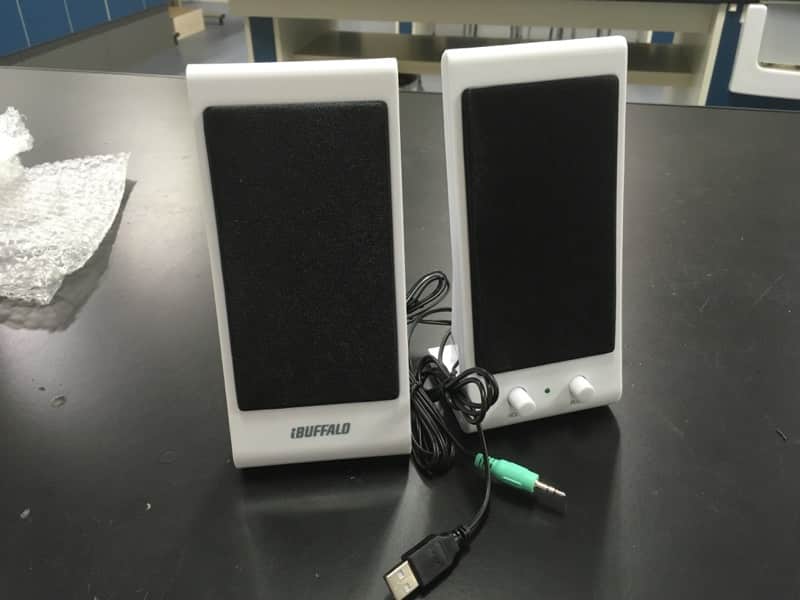
iBUFFALO USB Speaker, 1W, White, No Wall Outlet Required
A ¥300 speaker from Daiso will work just as well. The construction process is almost identical.
How to Build It
Step 1: Remove the Front Cover
First, remove the protective cover from the front of the speaker. It usually comes off easily with a firm pull.
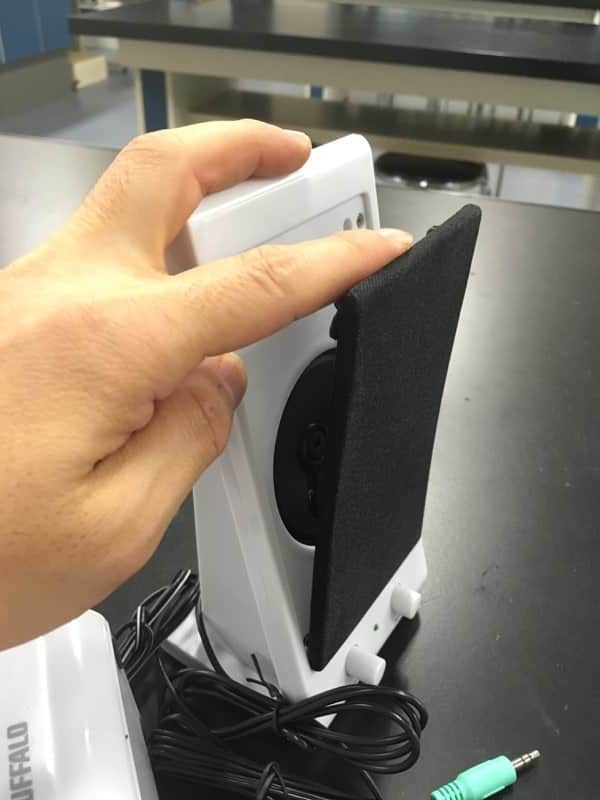
Step 2: Remove the Speaker Cone
Next, cut away the cone diaphragm—the part that normally vibrates to produce sound.
Use a utility knife to make a small cut, then peel the material away by hand. Do this for both the left and right speakers.
This is the key step. Normally, a speaker cone transfers vibration energy into the air to create sound. By removing the cone, that energy can be transferred directly into the string instead.
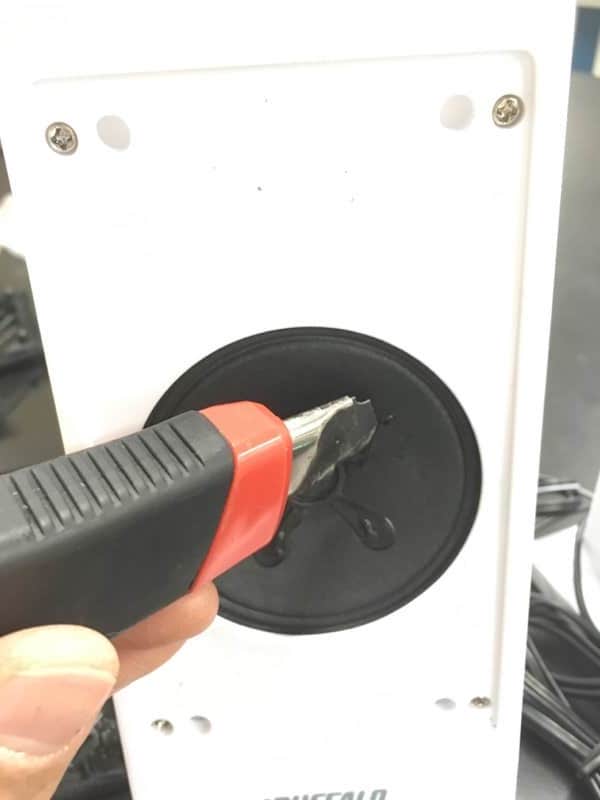
Make a cut with the utility knife.
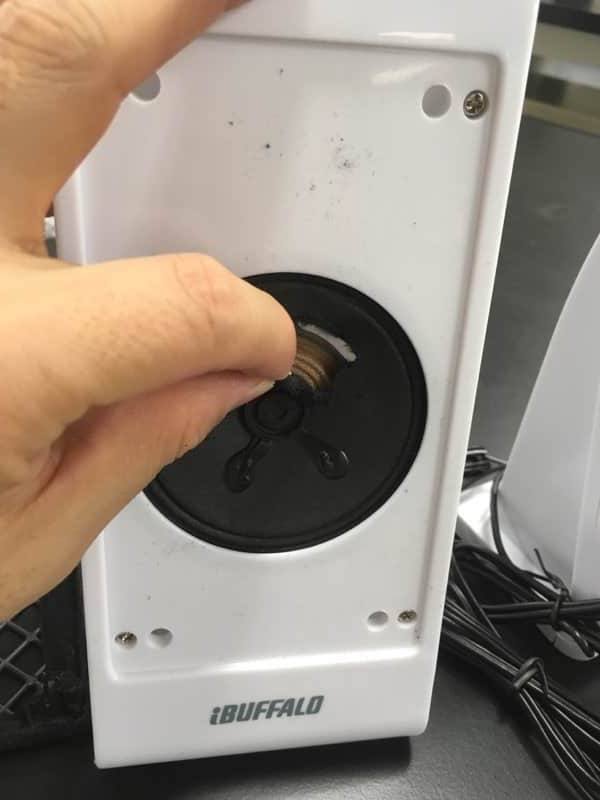
Then peel the material away by hand.
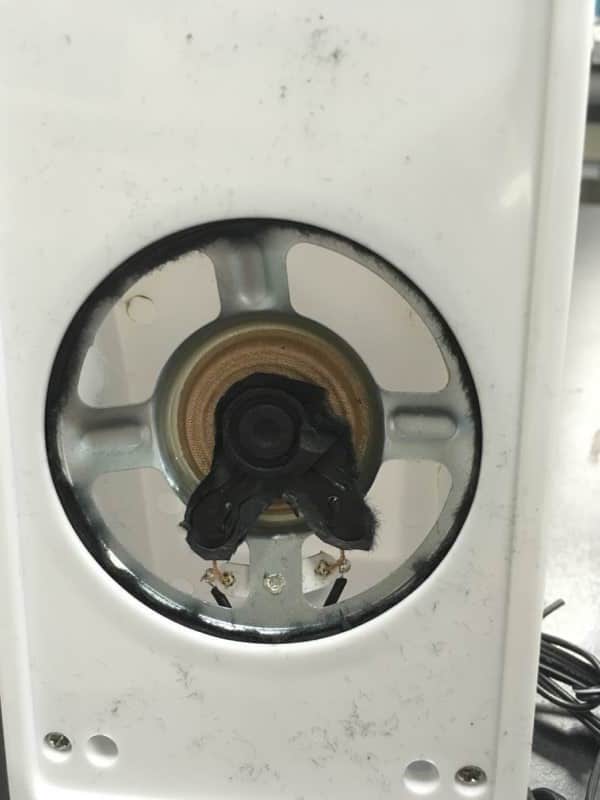
It should look like this. Be careful not to cut the wires.
Step 3: Attach the String and You’re Done!
Simply stretch the cotton twine across the vibrating parts of the speakers.
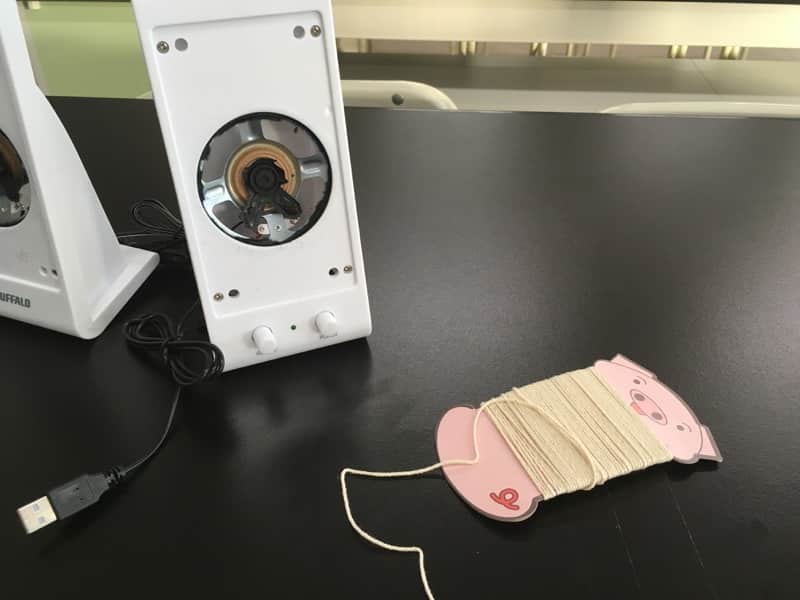
Cotton twine can be purchased at a discount store. A diameter of 1.4 mm gives the best results.
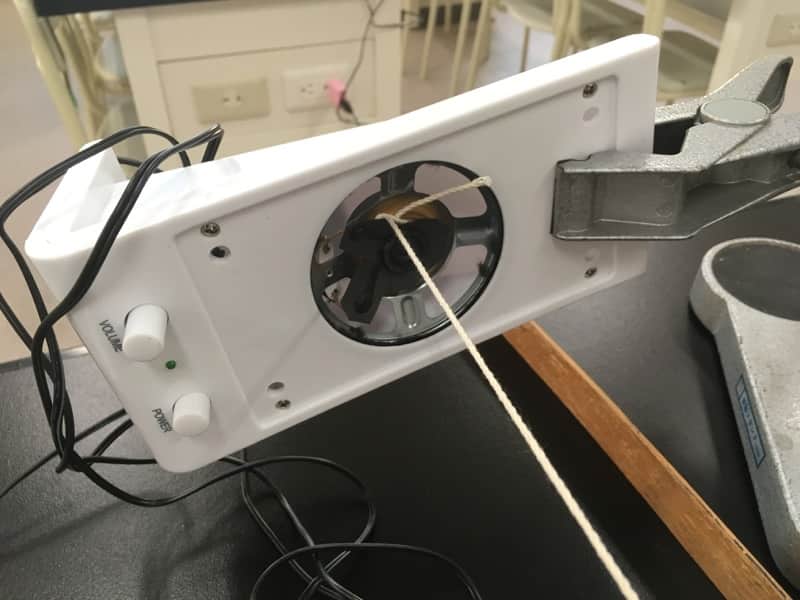
Your setup should look something like this.
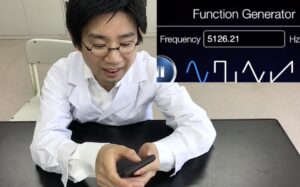
How to Use It: Control the Frequency with an iPad
Now all you need to do is send a tone from your iPad to the speaker.
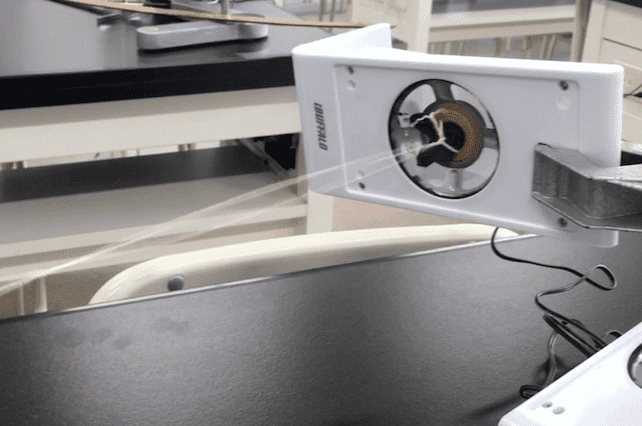
Since the speaker cones have been removed, very little sound is produced. Instead, the cotton string vibrates dramatically.
As you gradually change the frequency, there will be a moment when the string suddenly forms a perfect standing wave pattern.
That instant of discovery is what makes this experiment so exciting. The USB power supply simply powers the speaker and can also be purchased at a discount store.
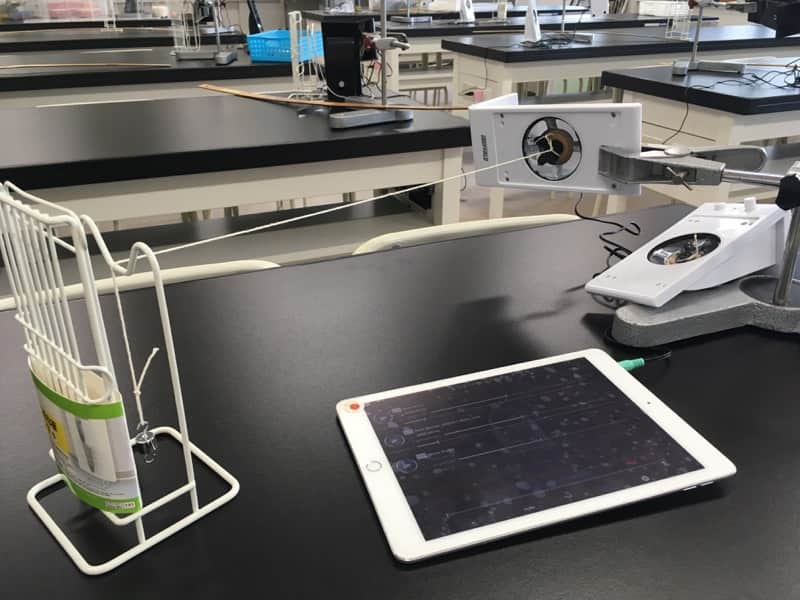
Here’s what the complete setup looks like.
And this is what an actual standing wave looks like when it’s formed.
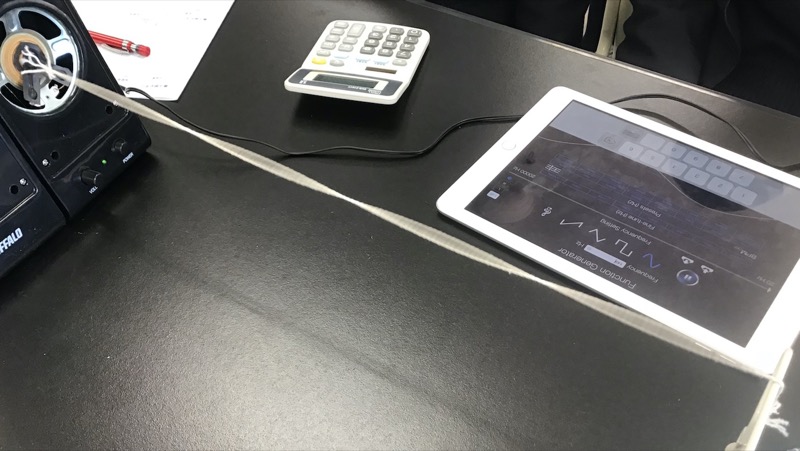
The frequency can be adjusted freely using an app called AFG. You can learn more about AFG here:
理科実験の頼れる相棒!簡単操作で周波数を自由自在に設定できる無料アプリ『Audio Function Generator』(AfG)
NARIKA’s CR-WEB Low-Frequency Signal Generator App is also an excellent tool for this experiment.
The Magic Between Analog and Digital
When people talk about using technology in education, they often imagine experiences that exist entirely on a screen. But I believe the real magic happens when digital precision meets the physical world.
In this experiment, digital technology allows us to control frequency with incredible accuracy, while an ordinary piece of string responds by creating beautiful, visible wave patterns right before our eyes.
You can study standing waves from diagrams in a textbook. But watching a real string sway and settle into a standing wave is an entirely different experience. It’s the moment when someone suddenly realizes, “So that’s what a wave really is!”
If you have the chance, give it a try. It’s a simple experiment that leaves a lasting impression.
Contact & Collaboration
Bringing the wonder of science closer to everyday life! This site is filled with fun science experiments you can try at home, along with practical tips and easy-to-understand explanations. Feel free to explore and discover something new.
・The content from Science Notebook is now available as a book. Learn more here.
・To learn more about Ken Kuwako, click here.
・For writing projects, lectures, science workshops, TV consulting, appearances, and other inquiries, click here.
・Follow updates and new articles on X!
 Science Ideas Channel features videos of exciting science experiments!
9月のイチオシ実験!
お弁当箱をプラバンがわりにしてキーホルダーを作ろう!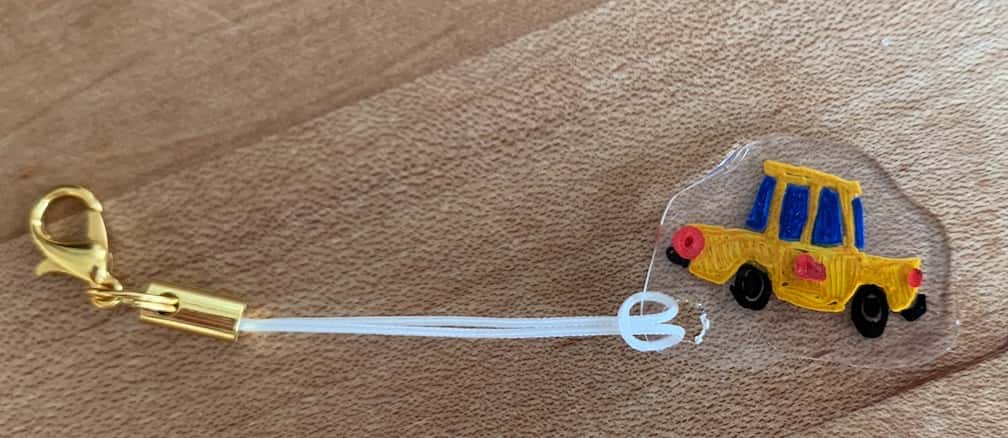
テレビ番組監修・イベント等のお知らせ
- 8月27日(木)科学監修番組放送予定
- 9月20日(日)ダビンチマスターズ出演予定
- 10月10日(土)11:15~12:00 千葉市科学フェスタ2026「桑子先生の回転科学ショー」にてサイエンスショーを行います。
- 12月26日(土) ナリカサイエンスアカデミー(教員向け実験講習会)開催
書籍のお知らせ
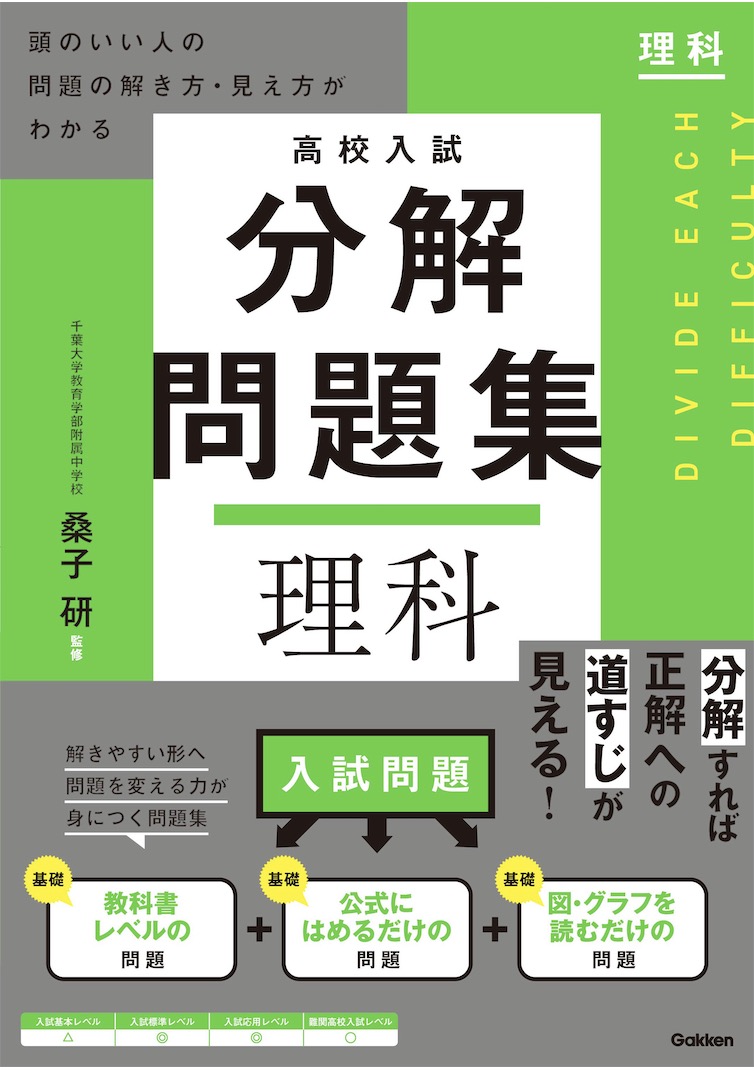
- 『高校入試 分解問題集 理科』(学研)…難しい問題も小さな問題に分解することで、問題を解くことができます。そんな分解の技術が身につくように深く関わりを持って作りました。
 『大人のための高校物理復習帳』(講談社)…一般向けに日常の物理について公式を元に紐解きました。特設サイトでは実験を多数紹介しています。※増刷がかかり6刷となりました(2026/02/01)

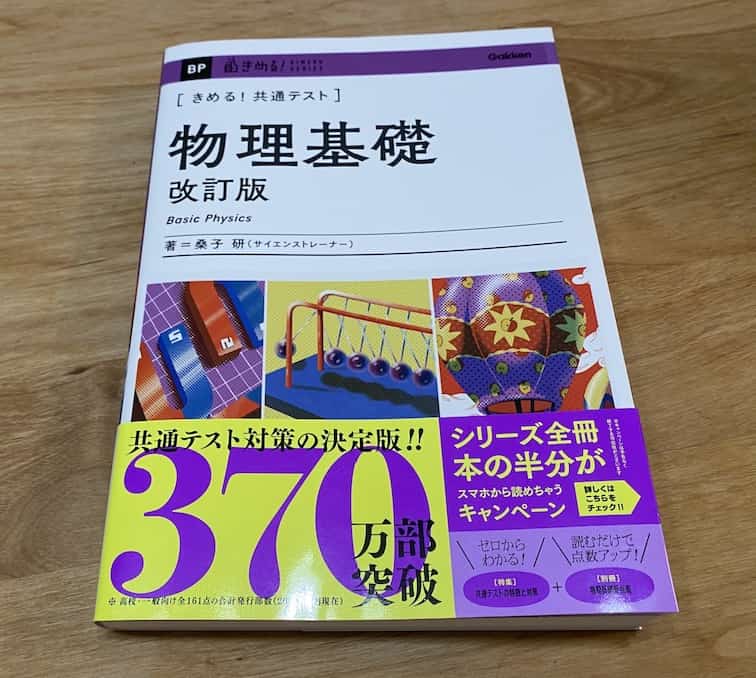
- 『きめる!共通テスト 物理基礎 改訂版』(学研)… 高校物理の参考書です。イラストを多くしてイメージが持てるように描きました。授業についていけない、物理が苦手、そんな生徒におすすめです。特設サイトはこちら。
各種SNS(更新情報をお届け!)
【日本語】X(Twitter)/instagram/Facebook 【英語】BlueSky/Threads
Explore
- 楽しい実験…お子さんと一緒に夢中になれるイチオシの科学実験を多数紹介しています。また、高校物理の理解を深めるための動画教材も用意しました。
- 理科の教材… 理科教師をバックアップ!授業の質を高め、準備を効率化するための選りすぐりの教材を紹介しています。
- Youtube…科学実験等の動画を配信しています。
- 科学ラジオ …科学トピックをほぼ毎日配信中!AI技術を駆使して作成した「耳で楽しむ科学」をお届けします。
- 講演 …全国各地で実験講習会・サイエンスショー等を行っています。
- About …「科学のネタ帳」のコンセプトや、運営者である桑子研のプロフィール・想いをまとめています。
- お問い合わせ …実験教室のご依頼、執筆・講演の相談、科学監修等はこちらのフォームからお寄せください。