Can Two Glass Plates and Tape Create a Rainbow? We Built a DIY Device to See Light Interference in Action
I’m Kuwako Ken, your science trainer. Every day is an experiment.
Just by stacking two pieces of glass together, shimmering rainbow stripes suddenly appear. It feels almost like magic—but this beautiful phenomenon can actually be recreated with everyday materials. All you need are two microscope slide glasses and a strip of transparent tape. In this experiment, we explored the mysterious behavior of light known as “wedge-shaped interference.”
What Is Wedge Interference? A Phenomenon Caused by Light Acting Like a Wave
First, let’s look at why these colorful stripes appear.
Light behaves not only like particles, but also like waves. When a tiny layer of air exists between two glass plates, light reflects off both the top and bottom surfaces of that air gap. These two reflected waves overlap with each other. When wave peaks line up, the light becomes brighter. When peaks and valleys overlap, they cancel each other out and become darker. This is called interference.
The air layer between the two glasses isn’t perfectly uniform—it gradually changes thickness like a wedge. Because the thickness changes from place to place, different colors strengthen or weaken at different points, producing those beautiful rainbow stripes.
In fact, this is exactly the same principle behind the rainbow colors on soap bubbles or the oily patterns floating on puddles after rain. The same hidden physics is already all around us in daily life.
How to Build the Device — You Only Need Four Simple Materials
For this experiment, we used two large microscope slide glasses. The setup is incredibly simple. Place a strip of transparent tape on one edge of one glass plate to create a tiny gap, then place the second glass plate on top. Finally, press the glasses together firmly using clips or your fingers.
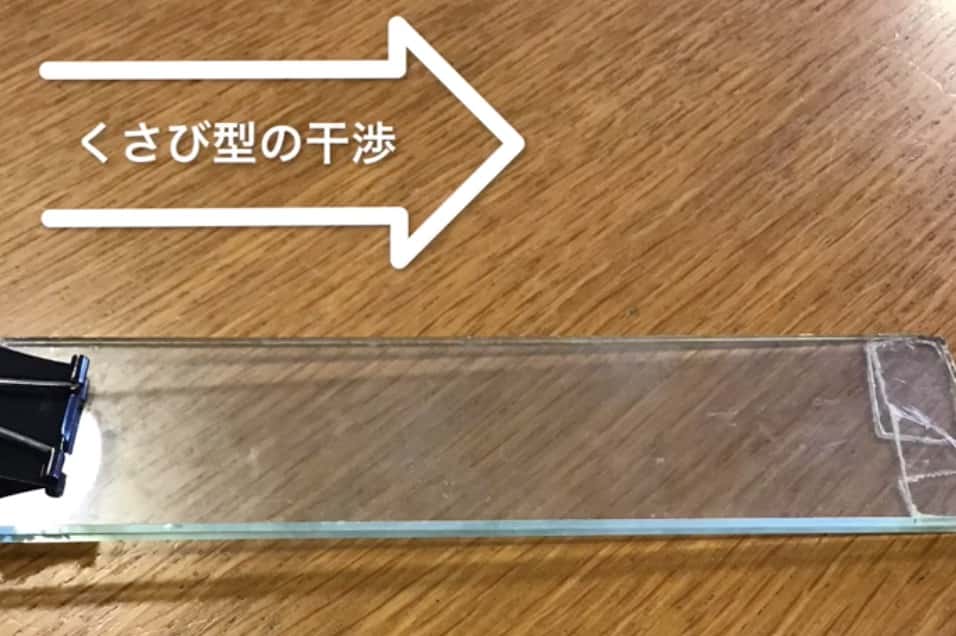
A single layer of tape is about 0.05 millimeters thick—around 50 micrometers. That’s roughly half the thickness of a human hair. This incredibly tiny gap becomes the stage where light waves interfere with each other.
For comparison, the wavelength of visible light is more than a thousand times smaller still. Inside this microscopic air layer, light is performing an astonishingly delicate dance.
What You’ll See — Rainbow Stripes Appear Near Your Finger
When you press the glass more tightly with your finger and shine sunlight or another bright light onto it, faint vertical stripes begin to appear. Take a look at the video below.
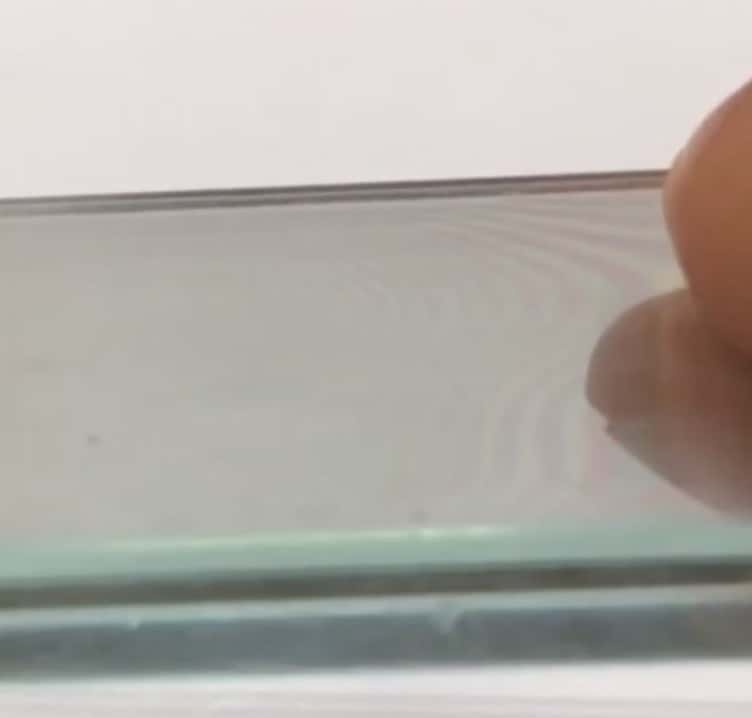
Can you spot the rainbow-colored stripes appearing near the finger?
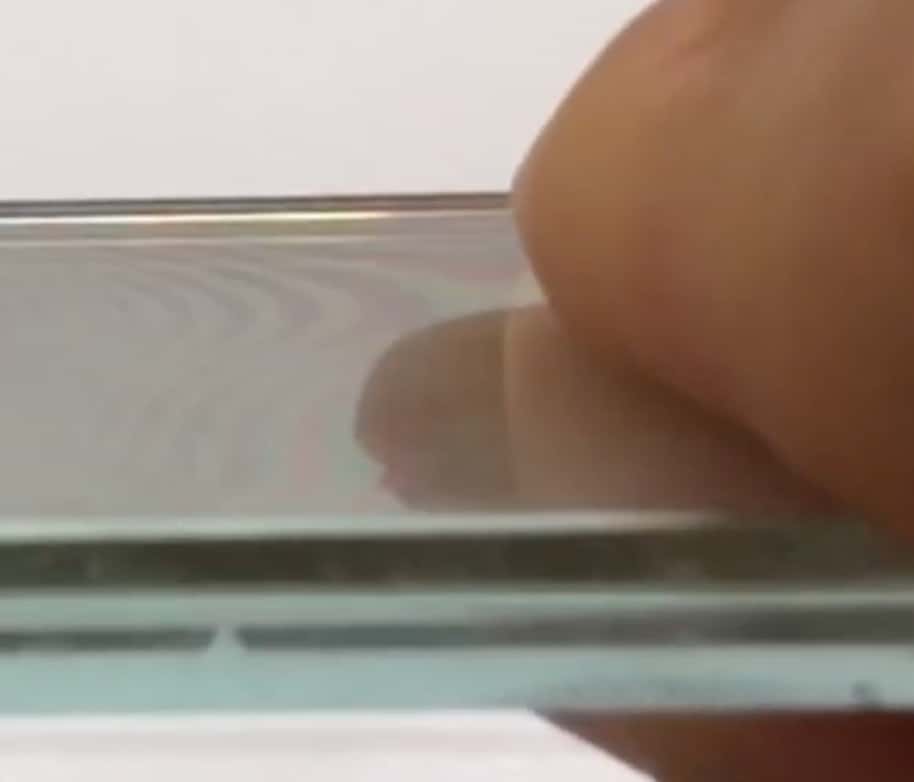
The important point is that the stripes appear near the area where the two glass plates are closest together. As the gap between the glasses changes, the conditions for interference also change, which alters the spacing between the stripes.
In fact, by carefully measuring the stripe spacing, scientists can even calculate the exact angle of the air wedge itself. That’s how precise this phenomenon is.
The stripes can be surprisingly difficult to see at first, so try tilting your viewing angle slightly. Changing the angle of incoming light often makes the pattern much clearer.
This Same Principle Is Used in High-Precision Technology
Wedge interference isn’t just a classroom curiosity—it’s also used in modern industry. In the manufacturing of lenses and semiconductors, engineers inspect surfaces by analyzing patterns of interference fringes that reveal microscopic unevenness.
If the stripe pattern becomes distorted, it indicates flaws or warping on the surface. Using light waves as an ultra-sensitive ruler, scientists can measure structures on the scale of nanometers—just one millionth of a millimeter.
That means this simple experiment, made from two pieces of glass and a strip of tape, lets you experience the exact same physics behind cutting-edge optical measurement technology.
Try it near a sunny window someday. It’s a rare chance to actually see—with your own eyes—that light truly behaves like a wave.
Contact & Requests
We share fun and fascinating science experiments that you can try at home, along with easy-to-understand explanations and tips. Feel free to explore more science ideas!
・The “Science Notebook” articles are now available as a book. Learn more here
・About the creator, Kuwako Ken, click here
・For requests such as writing, lectures, science workshops, TV supervision, or appearances, click here
・Follow updates for new articles on X!
 The Science Idea Channel features experiment videos!
9月のイチオシ実験!
お弁当箱をプラバンがわりにしてキーホルダーを作ろう!
テレビ番組監修・イベント等のお知らせ
- 8月27日(木)科学監修番組放送予定
- 9月20日(日)ダビンチマスターズ出演予定
- 10月10日(土)11:15~12:00 千葉市科学フェスタ2026「桑子先生の回転科学ショー」にてサイエンスショーを行います。
- 12月26日(土) ナリカサイエンスアカデミー(教員向け実験講習会)開催
書籍のお知らせ
- 『高校入試 分解問題集 理科』(学研)…難しい問題も小さな問題に分解することで、問題を解くことができます。そんな分解の技術が身につくように深く関わりを持って作りました。
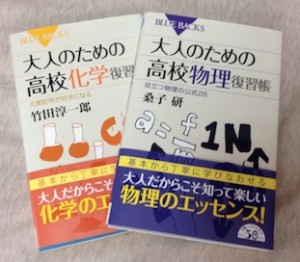
 『大人のための高校物理復習帳』(講談社)…一般向けに日常の物理について公式を元に紐解きました。特設サイトでは実験を多数紹介しています。※増刷がかかり6刷となりました(2026/02/01)
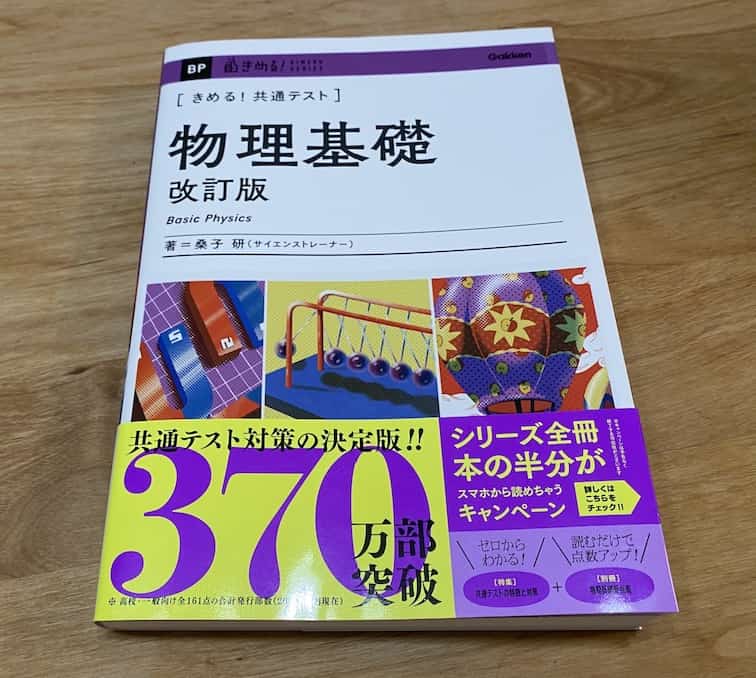
- 『きめる!共通テスト 物理基礎 改訂版』(学研)… 高校物理の参考書です。イラストを多くしてイメージが持てるように描きました。授業についていけない、物理が苦手、そんな生徒におすすめです。特設サイトはこちら。
各種SNS(更新情報をお届け!)
【日本語】X(Twitter)/instagram/Facebook 【英語】BlueSky/Threads
Explore
- 楽しい実験…お子さんと一緒に夢中になれるイチオシの科学実験を多数紹介しています。また、高校物理の理解を深めるための動画教材も用意しました。
- 理科の教材… 理科教師をバックアップ!授業の質を高め、準備を効率化するための選りすぐりの教材を紹介しています。
- Youtube…科学実験等の動画を配信しています。
- 科学ラジオ …科学トピックをほぼ毎日配信中!AI技術を駆使して作成した「耳で楽しむ科学」をお届けします。
- 講演 …全国各地で実験講習会・サイエンスショー等を行っています。
- About …「科学のネタ帳」のコンセプトや、運営者である桑子研のプロフィール・想いをまとめています。
- お問い合わせ …実験教室のご依頼、執筆・講演の相談、科学監修等はこちらのフォームからお寄せください。