Gravity Challenge: Do Feathers and Steel Balls Really Fall at the Same Speed?
I’m Ken Kuwako, your science trainer. Every day is an experiment.
“If you drop two objects with different weights at the same time, which one hits the ground first?” — how would you answer?
Many people might say the heavier one falls faster. But in reality, that’s not the case. There’s a simple tool you can use at home to see this surprising phenomenon for yourself: it’s called the BeeSpi.
What is BeeSpi?
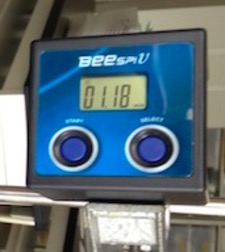
Do you have a BeeSpi?
Have you ever heard of BeeSpi?
BeeSpi is a simple, U-shaped speed measuring device. Inside the frame are two sensors, and when an object passes through the opening, it measures its speed.
Originally, it was designed to measure the speed of toys like marbles, but thanks to its convenience, it eventually found its way into science experiments. It’s even exported worldwide. One of its biggest advantages is that, despite being a speedometer, it’s very affordable.
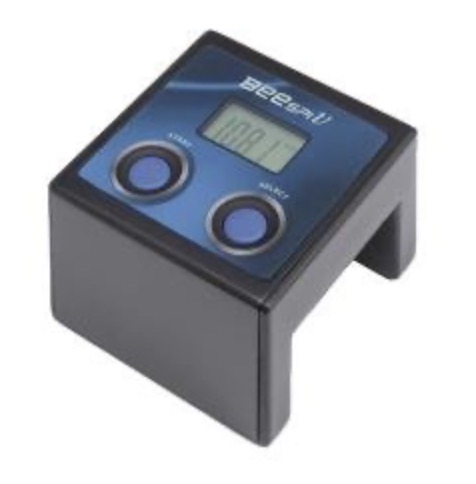
BeeSpi V (Simple Speed Measuring Device)
You can get one for around 3,000 yen, and science versions can measure speed not only in km/h but also in m/s (meters per second), which is very useful. It’s often used in experiments like building roller coasters to study potential and kinetic energy. Even more impressively, if you use two BeeSpi devices, you can measure acceleration.
That means you can actually calculate the famous “acceleration due to gravity” yourself!
This experiment is easy enough to try at home, so give it a go with your kids. You’ll be amazed to see that both light and heavy objects experience the same acceleration.
What You’ll Need
Here’s what to prepare:
Two BeeSpi devices, a stand, clips for the stand, a measuring tape, a mat (or even a paper cup), and beads or marbles.
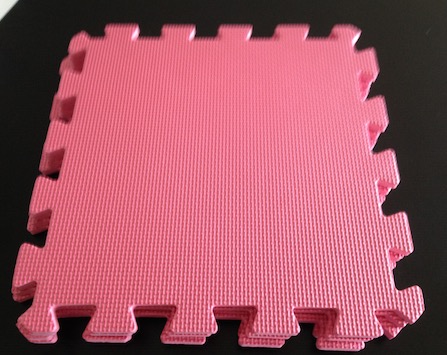
These are common science experiment tools, but as long as you can secure the BeeSpi devices, you can improvise. The mat can be something simple like a cut piece from a 100-yen shop item. A paper cup works just fine too.
Procedure
① Attach the two BeeSpi devices to a stand and place a mat (or paper cup) underneath.
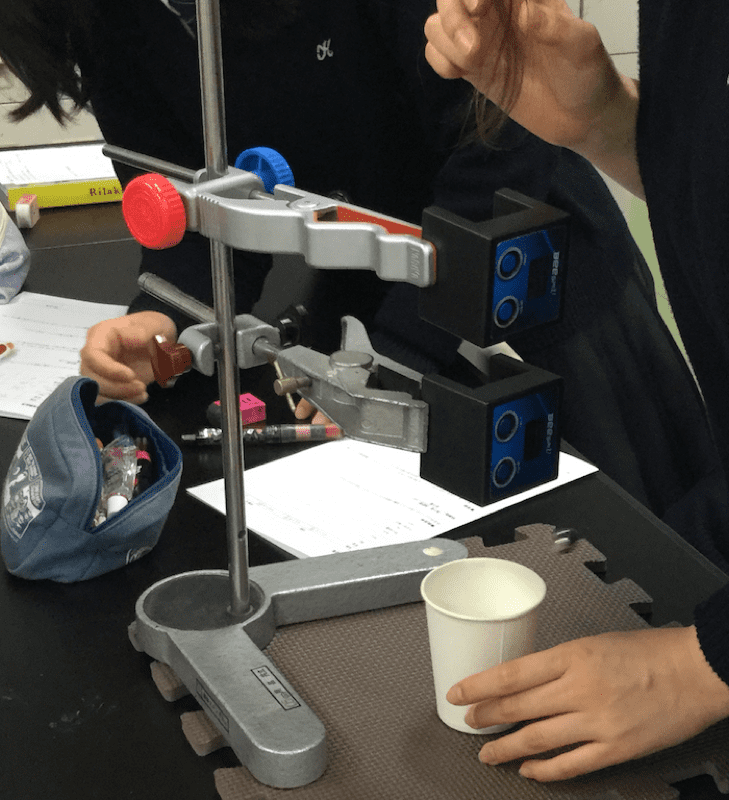
② Drop a marble and record the speeds measured by the upper and lower devices. If the marble hits the BeeSpi, try again.
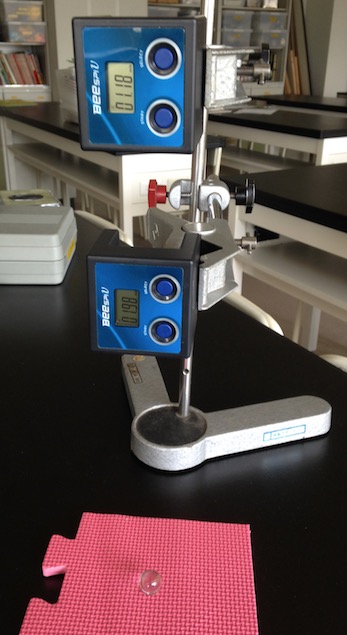
③ Once successful, measure the distance between the two BeeSpi devices using a ruler or measuring tape.
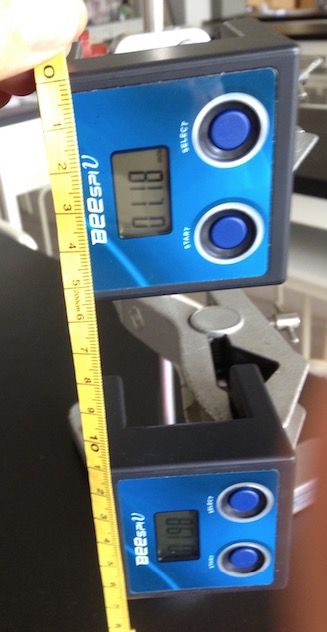
④ Take the two recorded speeds (V₀ and V) and the distance (x), and plug them into the equation of uniformly accelerated motion:
V² − V₀² = 2ax
Then calculate the acceleration a using a calculator. (We’ll explain the principle shortly.)
Example Results
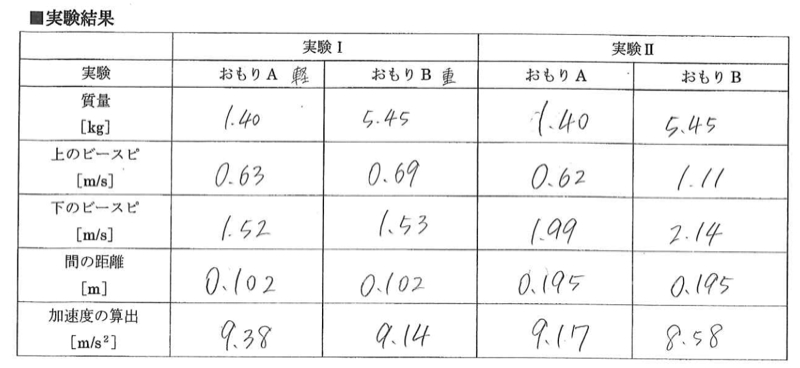
Sample results
The Principle: Why Can We Calculate Gravity?
Let’s look at the theory behind measuring gravitational acceleration with a simple speedometer.
By eliminating time t from two equations of uniformly accelerated motion (the velocity equation and the position equation), we obtain the following:
x − x₀ represents the distance traveled.
From this equation, if you measure v, v₀, x, and x₀, you can determine the acceleration a between those two points. Since falling motion is uniformly accelerated, measuring speed at just two positions allows you to calculate gravitational acceleration.
For example, drop a ball five times from a height of 60.0 cm and measure its speed at 40.0 cm and 20.0 cm. Here’s an example from an actual experiment:
Height [m] Speed [m/s] (average of 5 trials)
0.400 1.93
0.200 2.74
Plugging these values into the formula gives 9.46 m/s² — very close to the theoretical value of 9.8 m/s². Try calculating it with your own data!
What is Uniformly Accelerated Motion?
The formula used here is one of the equations of uniformly accelerated motion. This type of motion refers to movement in a straight line where acceleration (the rate of change of speed) remains constant.
Free fall is a classic example. Ignoring air resistance, objects accelerate downward at about 9.8 m/s² every second.
The Fascinating World of Gravity
In this experiment, we used marbles, but try using objects with different weights, like beads. You’ll find that the acceleration remains nearly the same, close to 9.8 m/s². That’s the beauty of gravitational acceleration.
This fact was discovered over 400 years ago by Galileo Galilei. His finding that “heavy and light objects fall at the same rate” overturned common belief at the time and eventually led to Newton’s law of universal gravitation.
Interestingly, gravitational acceleration varies slightly depending on where you are on Earth. It’s a bit stronger at the poles than at the equator. That’s why rocket launch sites are built as close to the equator as possible — even a small difference in gravity can affect launch efficiency.
On other celestial bodies, gravity is completely different. On the Moon, for example, it’s only about 1.6 m/s² — roughly one-sixth of Earth’s gravity. That’s why astronauts can bounce so lightly there.
Even something as simple as gravity connects to the shape of our planet and the vastness of space. That’s where the true wonder of science lies. Try changing the drop height or the objects you use, and see what happens!
Contact & Requests
Let’s bring the wonders of science closer to everyday life! I share fun, easy-to-follow experiments you can try at home, along with helpful tips. Feel free to explore more!
・The content from this blog is now available as a book. Learn more here
・About the author, Ken Kuwako
・For inquiries (writing, lectures, workshops, TV supervision, appearances, etc.)
・Stay updated on new articles via X
 Science Idea Channel features experiment videos!
10月のイチオシ実験!
テレビ番組監修・イベント等のお知らせ
- 10月27日(火) テレビ監修番組放送予定
- 11月27日(金) テレビ監修番組放送予定
- 12月26日(土) ナリカサイエンスアカデミー(教員向け実験講習会)開催
書籍のお知らせ
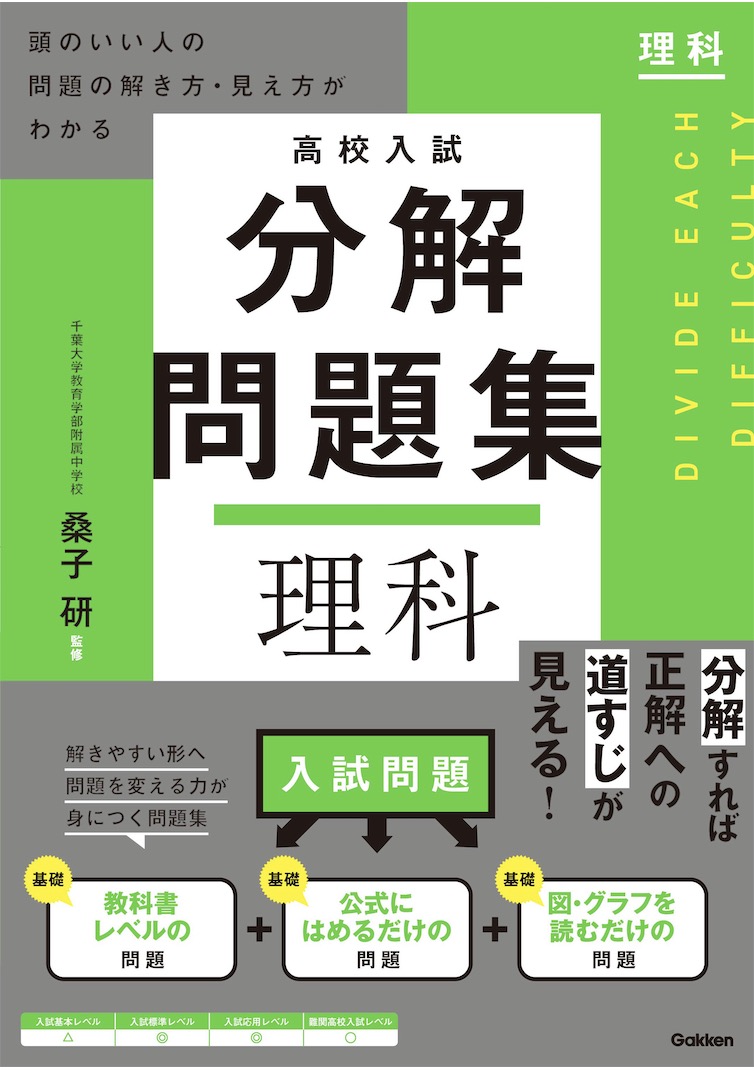
- 『高校入試 分解問題集 理科』(学研)…難しい問題も小さな問題に分解することで、問題を解くことができます。そんな分解の技術が身につくように深く関わりを持って作りました。
 『大人のための高校物理復習帳』(講談社)…一般向けに日常の物理について公式を元に紐解きました。特設サイトでは実験を多数紹介しています。※増刷がかかり6刷となりました(2026/02/01)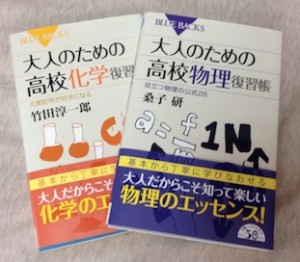
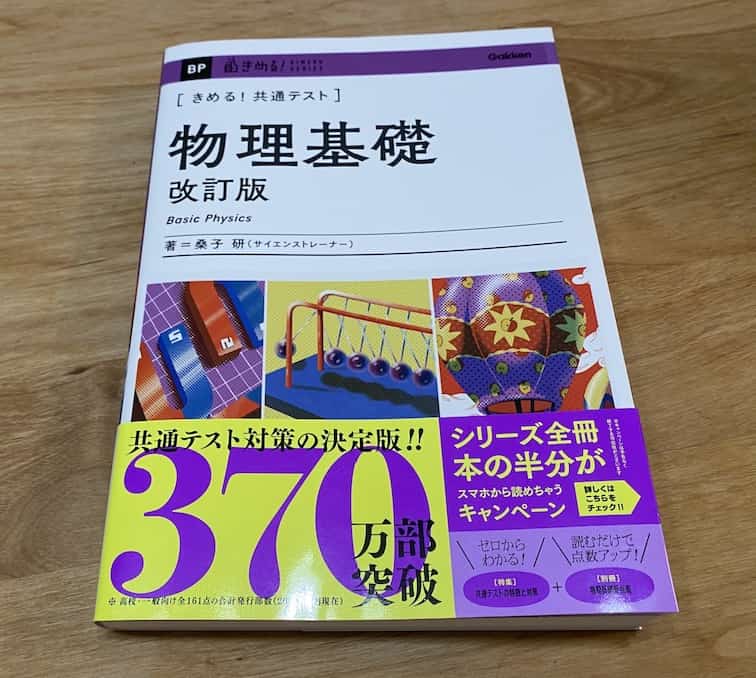
- 『きめる!共通テスト 物理基礎 改訂版』(学研)… 高校物理の参考書です。イラストを多くしてイメージが持てるように描きました。授業についていけない、物理が苦手、そんな生徒におすすめです。特設サイトはこちら。
各種SNS(更新情報をお届け!)
【日本語】X(Twitter)/instagram/Facebook 【英語】BlueSky/Threads
Explore
- 楽しい実験…お子さんと一緒に夢中になれるイチオシの科学実験を多数紹介しています。また、高校物理の理解を深めるための動画教材も用意しました。
- 理科の教材… 理科教師をバックアップ!授業の質を高め、準備を効率化するための選りすぐりの教材を紹介しています。
- Youtube…科学実験等の動画を配信しています。
- 科学ラジオ …科学トピックをほぼ毎日配信中!AI技術を駆使して作成した「耳で楽しむ科学」をお届けします。
- 講演 …全国各地で実験講習会・サイエンスショー等を行っています。
- About …「科学のネタ帳」のコンセプトや、運営者である桑子研のプロフィール・想いをまとめています。
- お問い合わせ …実験教室のご依頼、執筆・講演の相談、科学監修等はこちらのフォームからお寄せください。