A Dazzling Duet and a Grand Chorus of Light! Unraveling the Secret Colors of Shimmering Mica
I’m Ken Kuwako, your science trainer. Every day is an experiment.
Wouldn’t it be amazing if a simple piece of stone could transform into a shimmering, rainbow-colored masterpiece, just like a kaleidoscope? During a recent experiment with my intern, Mr. F, we witnessed exactly that kind of magic. The star of the show was a mineral called Muscovite—a common, everyday mineral you might find anywhere.
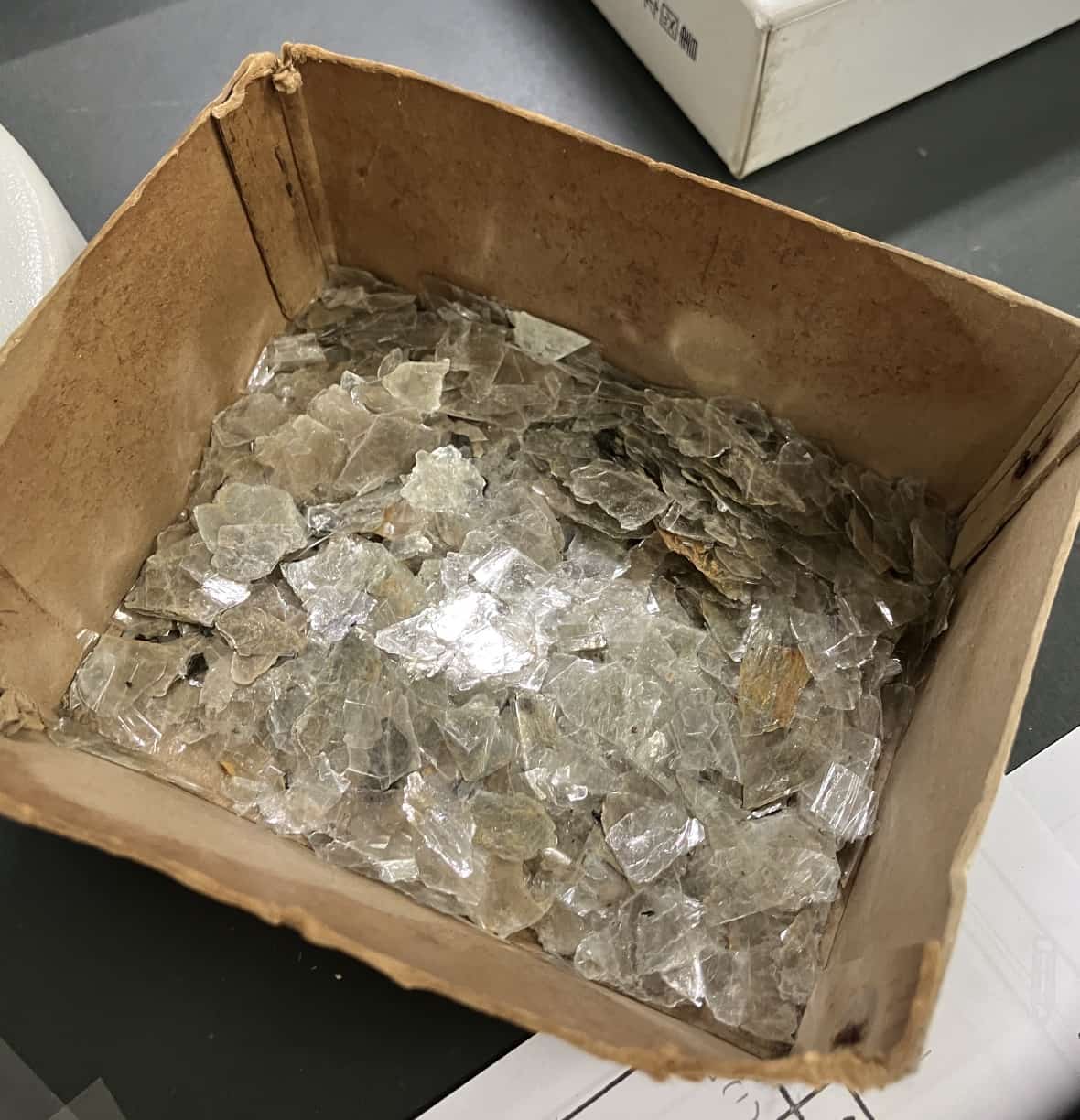
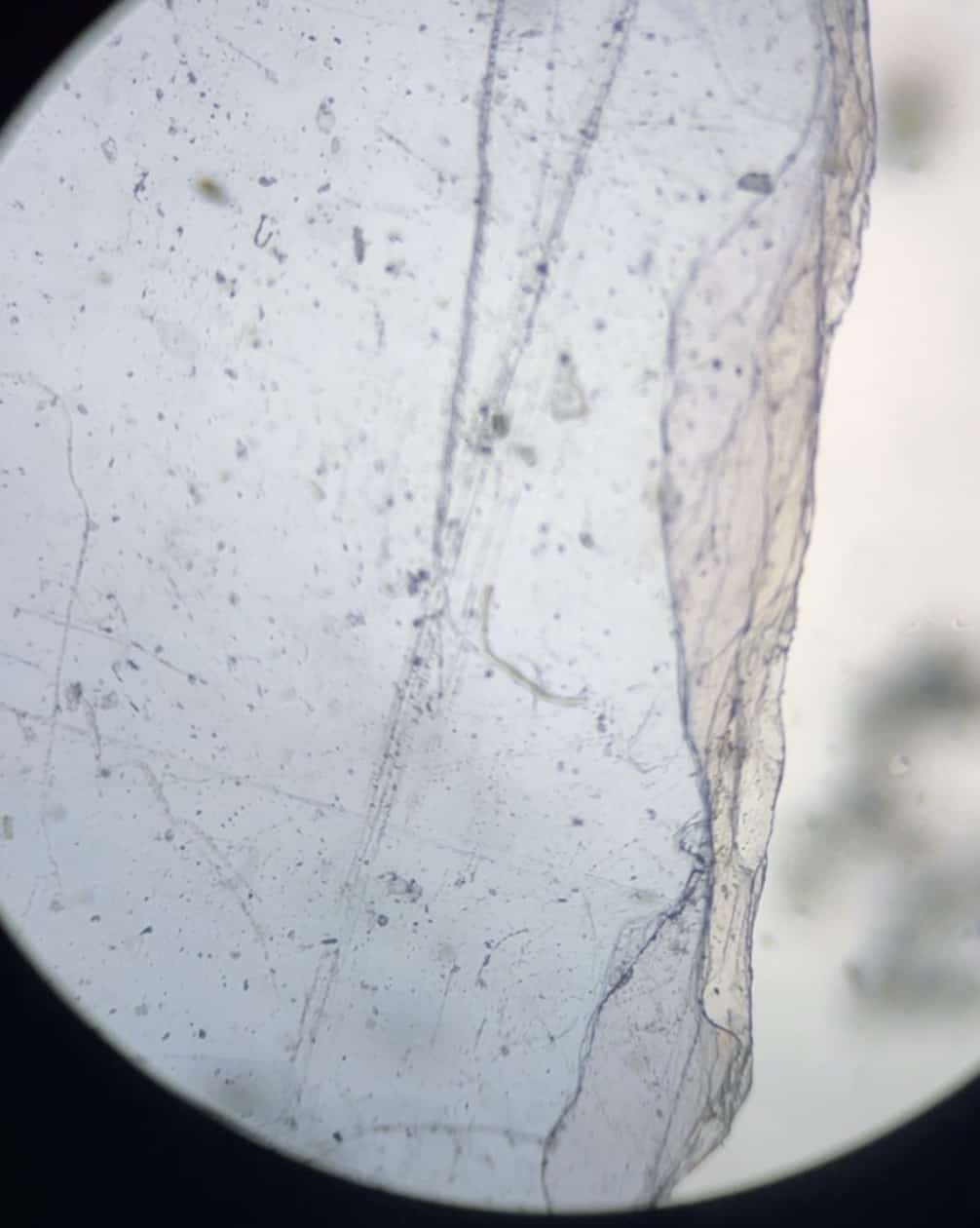
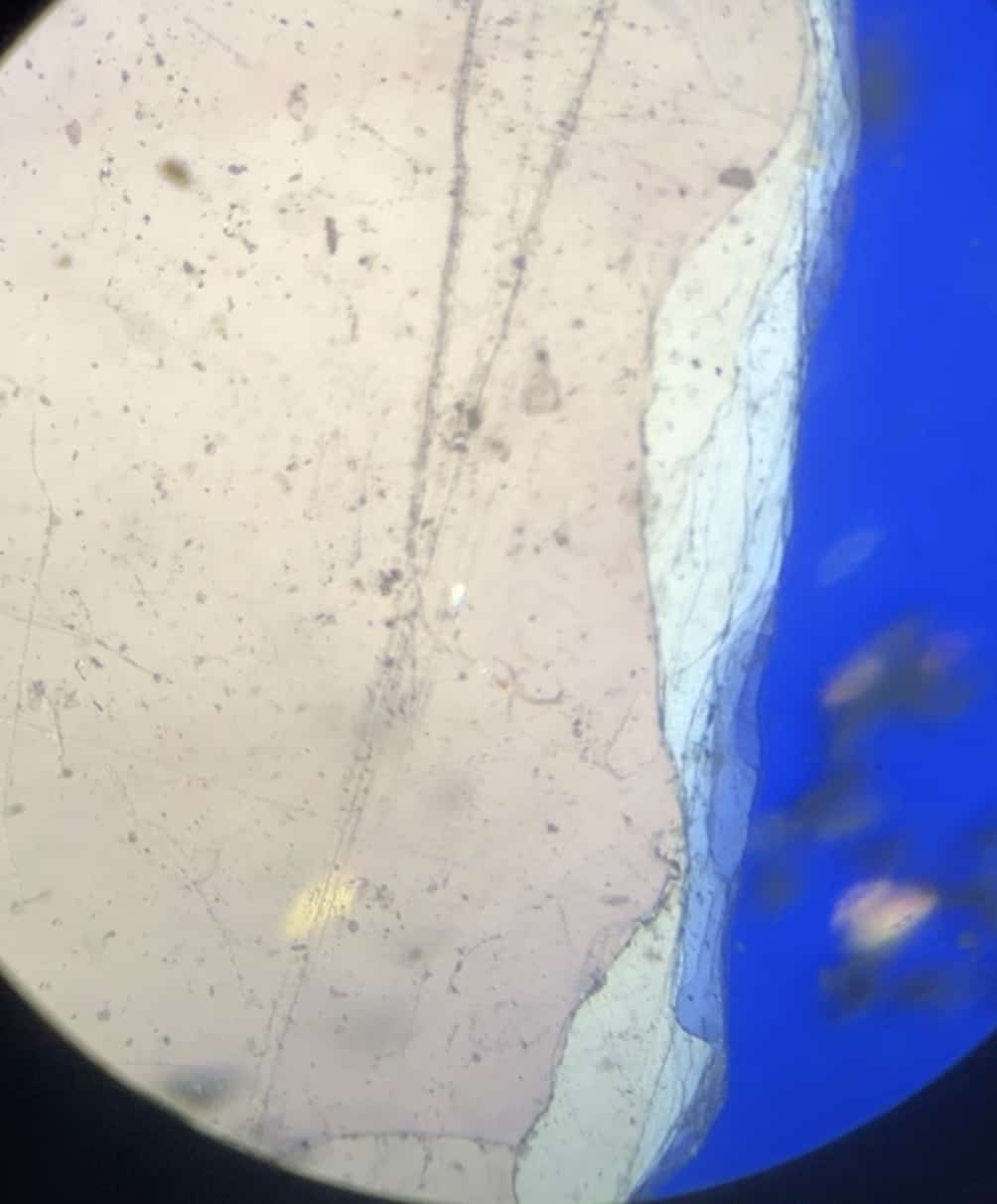
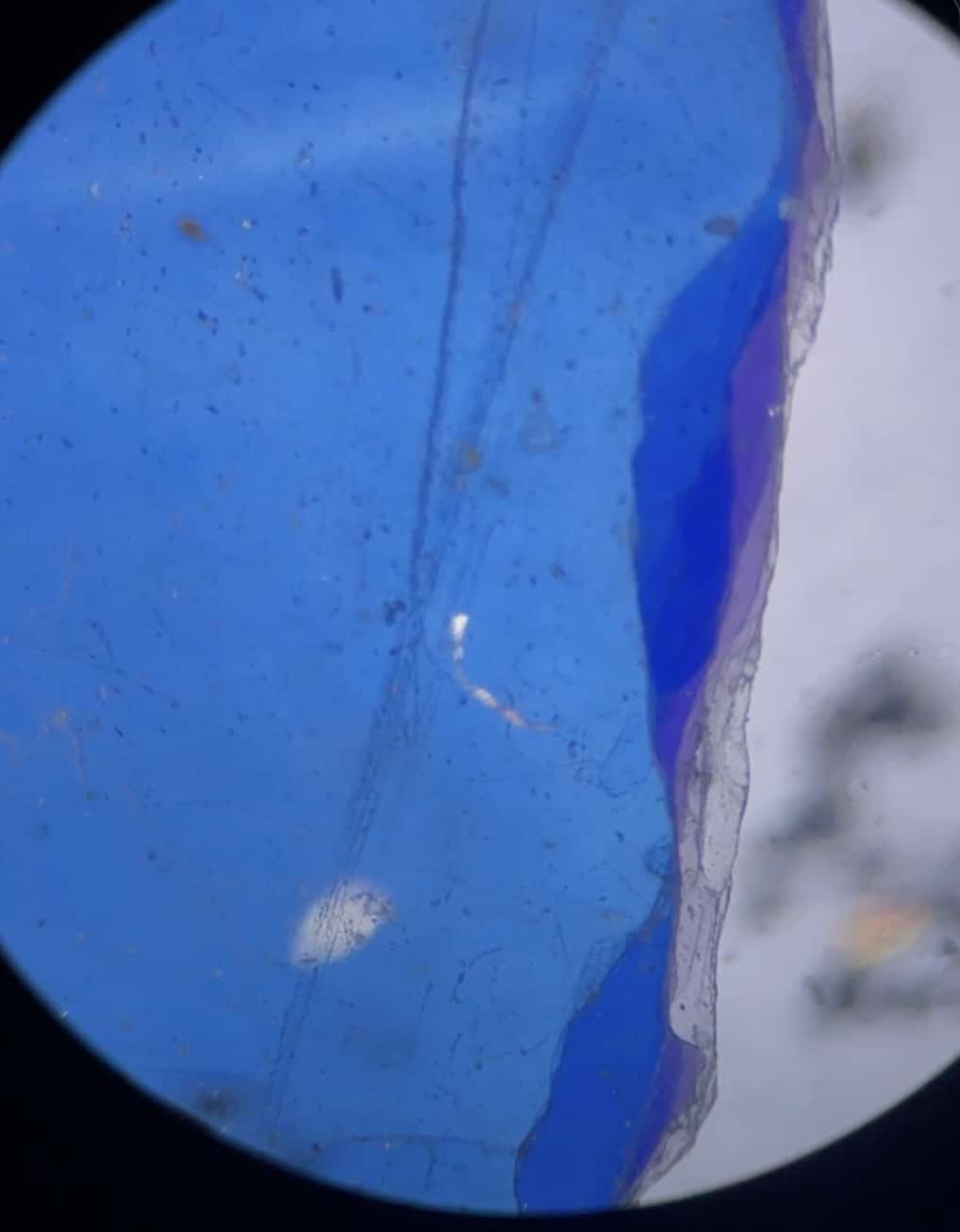
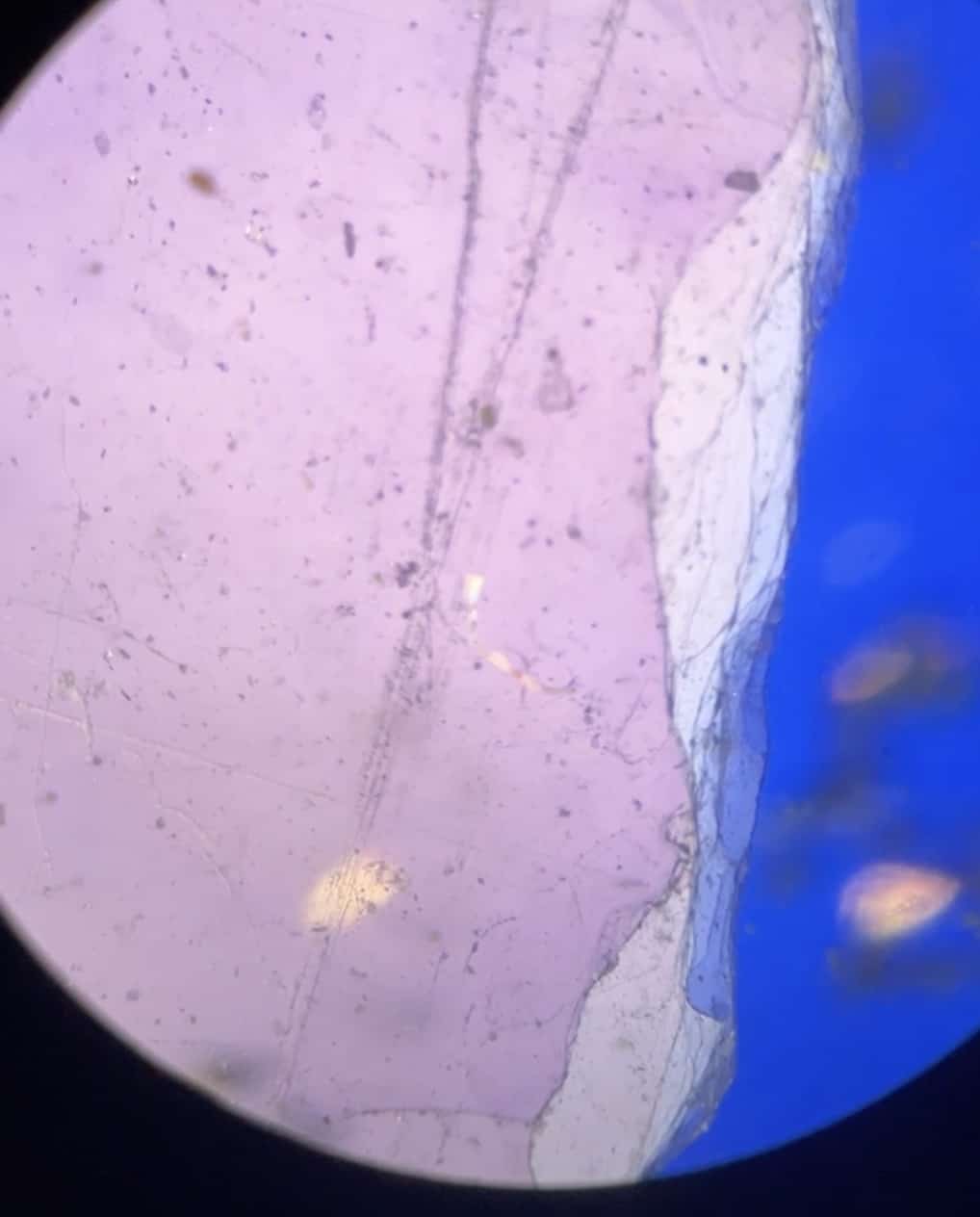
As I peered through the microscope and gently rotated the Muscovite between two special filters called polarizing plates, a breathtaking display of colors unfolded before my eyes. Today, let’s dive into the secret of why this tiny mineral puts on such a spectacular light show!
A Little Magic Found in the Lab
For this experiment, we used only two things: Muscovite and two “polarizing plates.” Think of a polarizing plate as a set of microscopic blinds that only allow light vibrating in a specific direction to pass through.
First, I placed one polarizing plate near the microscope’s light source. Then, I set the second plate above the Muscovite sample, near the objective lens. That’s all the preparation needed!
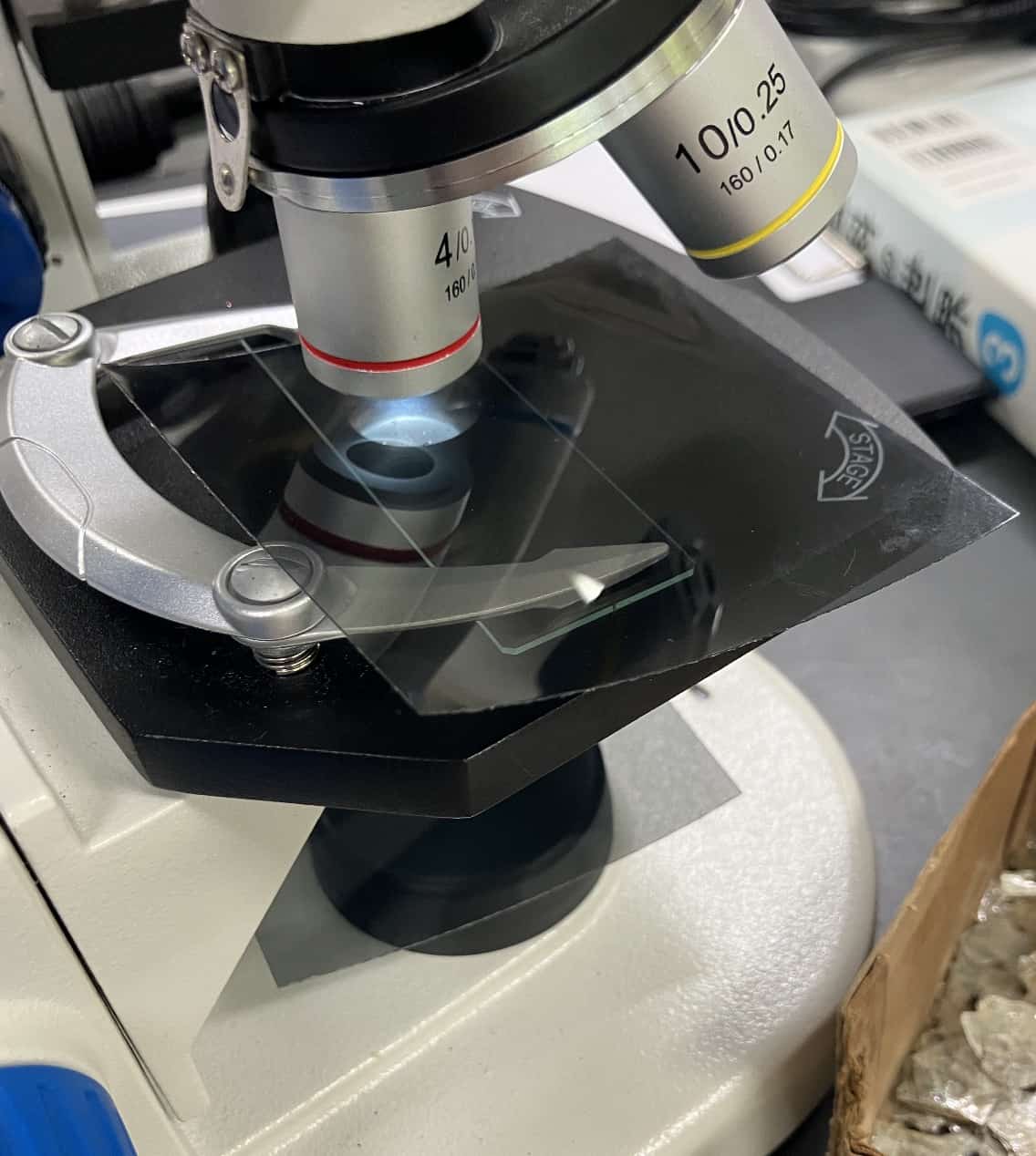
As I slowly turned the top plate, the Muscovite—which initially looked transparent—began to glow with vivid hues of blue, yellow, pink, and green. It felt as if the stone itself was casting a spell on the light.
Why Does the Color Change? The Science Behind the Light Show
This beautiful phenomenon isn’t actually magic; it’s a fascinating scientific process involving two properties of light: “birefringence” and “interference.” It might sound complicated, but let’s break it down.
The Art of Splitting Light: Birefringence
When light passes through the first polarizing plate, it’s organized into a single direction. As this light enters the Muscovite, it actually splits into two separate rays. What’s more, these two rays travel through the mineral at slightly different speeds. This is called birefringence. Imagine two people running a three-legged race, but their stride lengths don’t quite match. Even if they start together, they’ll fall out of sync. That’s exactly what happens to the light inside the Muscovite.
The Tiny Gap: Phase Shift
Because the two rays travel at different speeds, they emerge from the mineral out of sync. Since light behaves like a wave, the “peaks” and “valleys” of these two waves no longer line up. This misalignment is called a “phase shift,” and it is the crucial key to creating color.
A Chorus of Waves: Interference
After passing through the Muscovite, the two out-of-sync rays reach the second polarizing plate (the analyzer). Here, they are merged back into a single path, causing a phenomenon called “interference.” When waves overlap, if the peaks align, the light becomes stronger—like an orchestra playing the same note to create a powerful sound. If a peak meets a valley, they cancel each other out—similar to how noise-canceling headphones work. Sunlight contains all the colors of the rainbow, but the phase shift caused by the Muscovite strengthens some colors while weakening others. As a result, we see specific, brilliant colors.
The Secret of the Spin
So why do the colors shift when you rotate the plate? By turning the second polarizing plate, you change the angle at which the two rays are recombined. As the angle changes, the conditions for which colors are strengthened or weakened also change continuously. This creates a parade of shifting colors for our eyes to enjoy. Beyond its beauty, this phenomenon is a vital tool for geologists to identify minerals and uncover the history of how crystals were formed.
The Hidden World of Polarization
The technology of polarization is everywhere in our daily lives. It’s in your smartphone screen, the sunglasses that reduce glare while driving, and even the 3D glasses at the movie theater. Muscovite itself has been cherished for centuries in Japan, known as “Kirara” for its sparkling luster. It has been used in everything from traditional Japanese paints to modern cosmetics like foundation and eyeshadow. It’s thrilling to realize that the “sparkle” we often overlook is actually powered by such an incredible scientific story! If you look at the world around you with a fresh perspective, you might just find grand scientific adventures hidden in the most ordinary places.
Inquiries and Requests
Bringing the wonder and fun of science closer to you! I share tips and easy-to-follow guides for fun science experiments you can try at home. Feel free to explore!
Learn more about the author, Ken Kuwako, here.
For work requests (writing, lectures, science workshops, TV supervision/appearances, etc.), click here.
Follow the latest updates on X (formerly Twitter)!
 Check out my experiment videos on the Science Material Channel!
9月のイチオシ実験!

テレビ番組監修・イベント等のお知らせ
- 9月25日(金)21:00〜 かまいたちの瞬間回答!にて、科学監修を行いました。
- 10月10日(土)11:15~12:00 千葉市科学フェスタ2026「桑子先生の回転科学ショー」にてサイエンスショーを行います。

- 12月26日(土) ナリカサイエンスアカデミー(教員向け実験講習会)開催
書籍のお知らせ
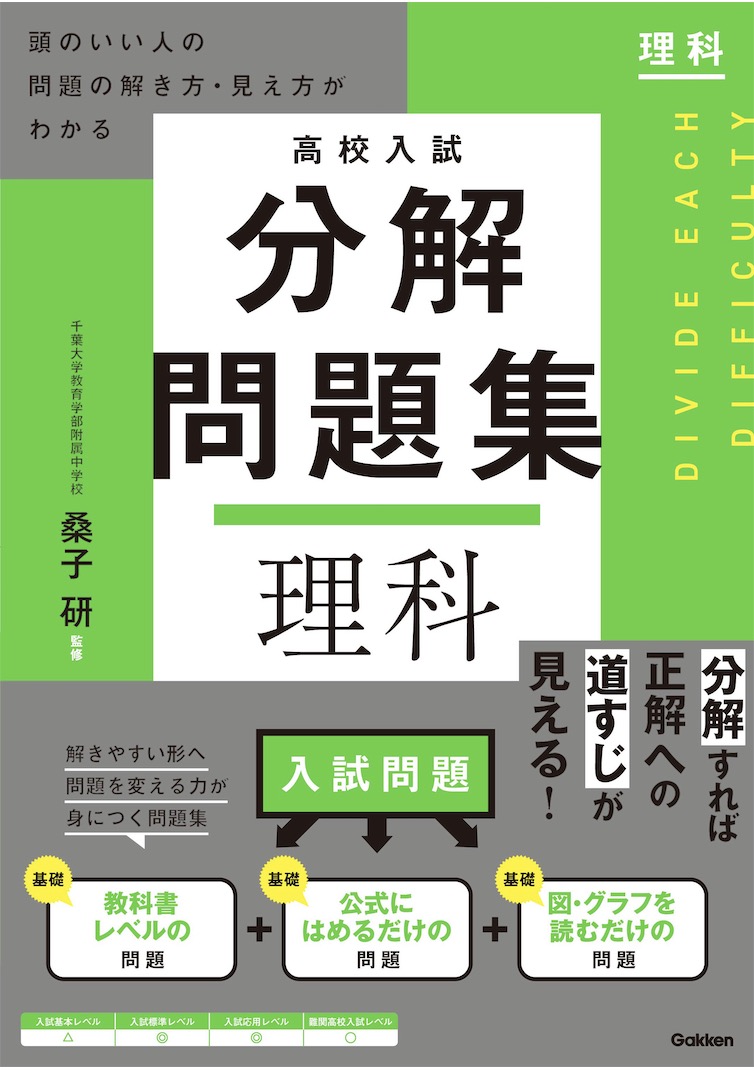
- 『高校入試 分解問題集 理科』(学研)…難しい問題も小さな問題に分解することで、問題を解くことができます。そんな分解の技術が身につくように深く関わりを持って作りました。
 『大人のための高校物理復習帳』(講談社)…一般向けに日常の物理について公式を元に紐解きました。特設サイトでは実験を多数紹介しています。※増刷がかかり6刷となりました(2026/02/01)

- 『きめる!共通テスト 物理基礎 改訂版』(学研)… 高校物理の参考書です。イラストを多くしてイメージが持てるように描きました。授業についていけない、物理が苦手、そんな生徒におすすめです。特設サイトはこちら。

各種SNS(更新情報をお届け!)
【日本語】X(Twitter)/instagram/Facebook 【英語】BlueSky/Threads
Explore
- 楽しい実験…お子さんと一緒に夢中になれるイチオシの科学実験を多数紹介しています。また、高校物理の理解を深めるための動画教材も用意しました。
- 理科の教材… 理科教師をバックアップ!授業の質を高め、準備を効率化するための選りすぐりの教材を紹介しています。
- Youtube…科学実験等の動画を配信しています。
- 科学ラジオ …科学トピックをほぼ毎日配信中!AI技術を駆使して作成した「耳で楽しむ科学」をお届けします。
- 講演 …全国各地で実験講習会・サイエンスショー等を行っています。
- About …「科学のネタ帳」のコンセプトや、運営者である桑子研のプロフィール・想いをまとめています。
- お問い合わせ …実験教室のご依頼、執筆・講演の相談、科学監修等はこちらのフォームからお寄せください。