Gravity-Defying Noodles: The Hidden Physics of Japan’s Legendary Soba Delivery Masters
I am Science Trainer Ken Kuwako. Every day is an experiment.
【This article is also available on the radio!】
Have you ever seen those masters of delivery in manga or old TV shows? They handle mountains of stacked soba steamer baskets on a bicycle as if they were an extension of their own body. Take a look at this photo from the Showa era. Yes, this is a real, unedited photo!
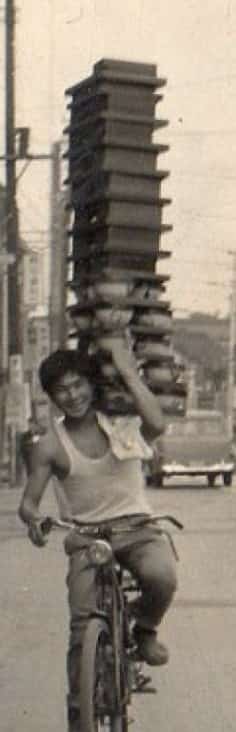
Reference site: https://mag.japaaan.com/step/24051
Amazing! It looks like an acrobatics act!
I wonder how high they can actually stack those?
Have you ever wondered that?
Actually, this legendary sight isn’t magic or just a circus trick. It is a highly calculated technique backed by deep laws of physics. Today, let’s look at the traditional skills of soba delivery through a scientific lens and uncover the three physics secrets to never letting the tower fall.
The Physics of the Soba Tower: 3 Key Points
1. The Basics of Stability: Preventing the Shift
The absolute requirement for stabilizing a soba tower is preventing any shift. If a single steamer basket (seiro) slides even slightly, the center of gravity of the entire tower tilts. Once it loses balance, the whole thing collapses in an instant.
So, how much of a shift can the tower handle?
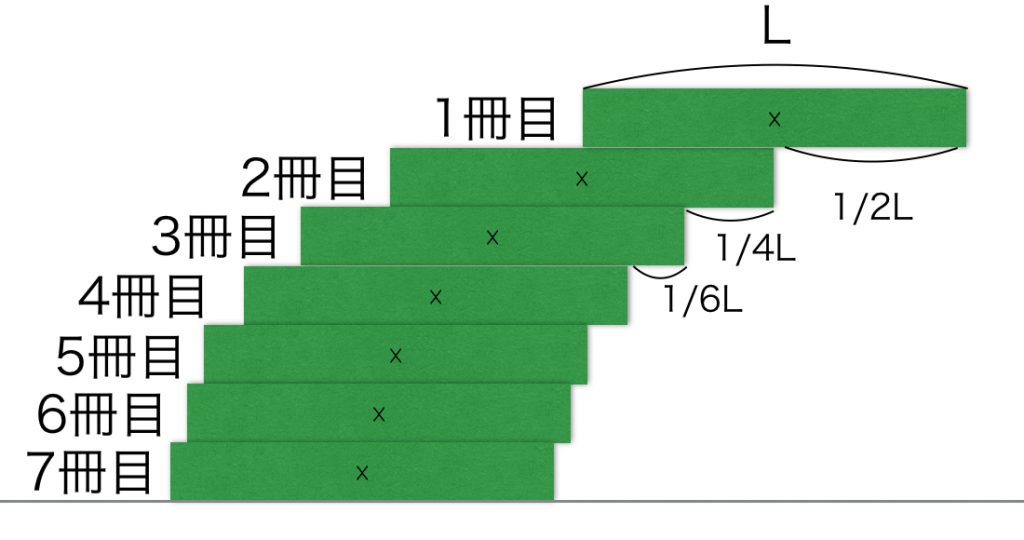
The secret lies in a concept called the Base of Support. This refers to the area of the bottom surface supporting the object. Think of a game of Jenga. As long as you stack blocks directly on top of each other, they are stable. But as you slide them out little by little, there comes a moment where—crash!—it all falls down.
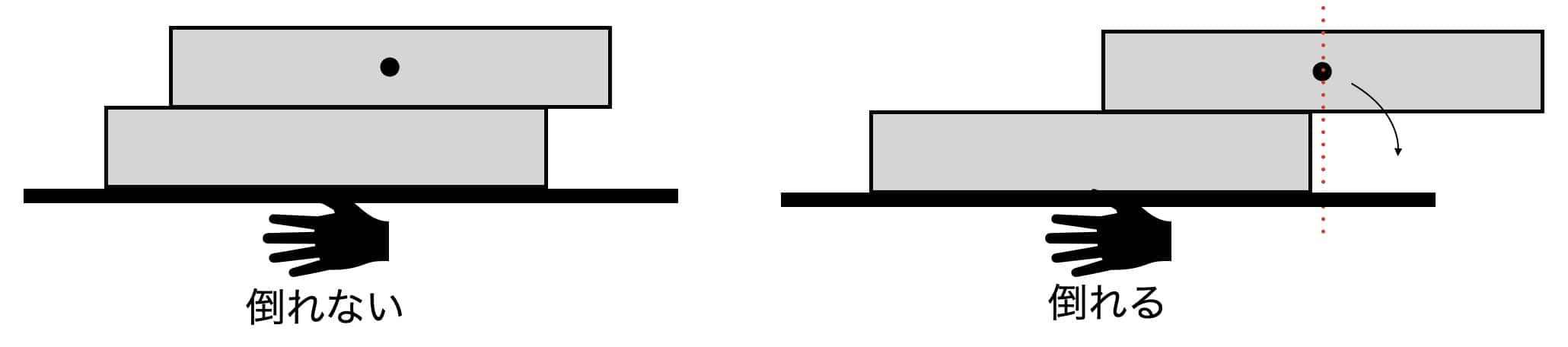
The same applies to the soba tower. Theoretically, the tower will not fall as long as the center of gravity of all the baskets above a certain point remains within the base of support of the basket directly beneath them.
Choosing wider baskets: This increases the base of support, significantly boosting stability. It makes the tower harder to topple even if the center of gravity shifts slightly.
Using non-slip mats: This increases friction and prevents sliding.
This relationship between the center of gravity and the base of support can be applied to stacking books or anything else. For more details, check out this article:
2. The Secret of Balance: Lowering the Center of Gravity
The higher the center of gravity, the more likely an object is to fall with even a slight shake or tilt. Conversely, keeping the center of gravity low dramatically improves stability. This is the same principle behind roly-poly toys that always stand back up, or F1 cars that race low to the ground to avoid flipping.
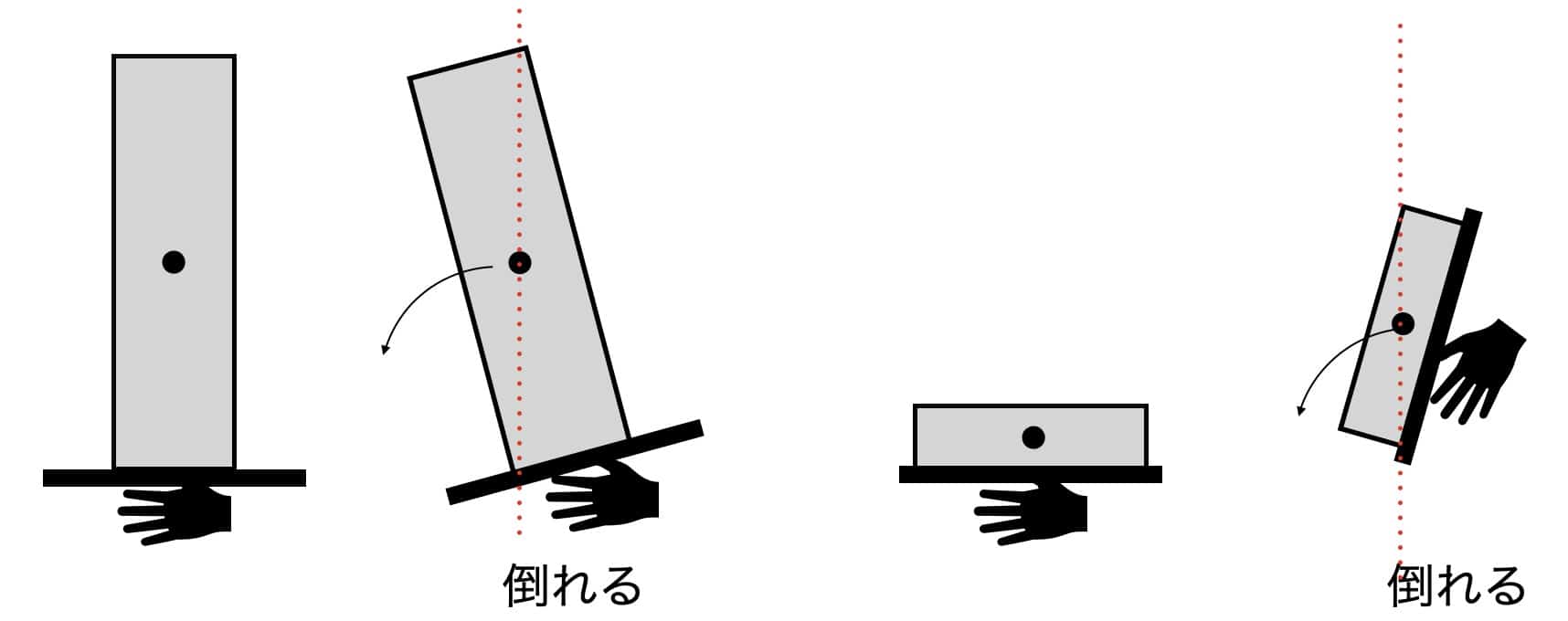
Furthermore, when the center of gravity is low, the torque (rotational force) caused by inertia or centrifugal force during acceleration, braking, or cornering becomes smaller. This makes the tower much more stable and reduces the physical strain on the person carrying it.
Just as the pyramids of Egypt have stood stable for thousands of years, the smartest way to stack is the Pyramid Style: heavy and wide at the bottom, narrowing as you go up.
3. The Master Level: Becoming One with the Tower
The final trick is to keep the tower close to your body. By controlling the combined center of gravity of the person, the bicycle, and the soba tower so that it stays directly over the tiny contact patch where the tires touch the ground, you prevent tipping over.
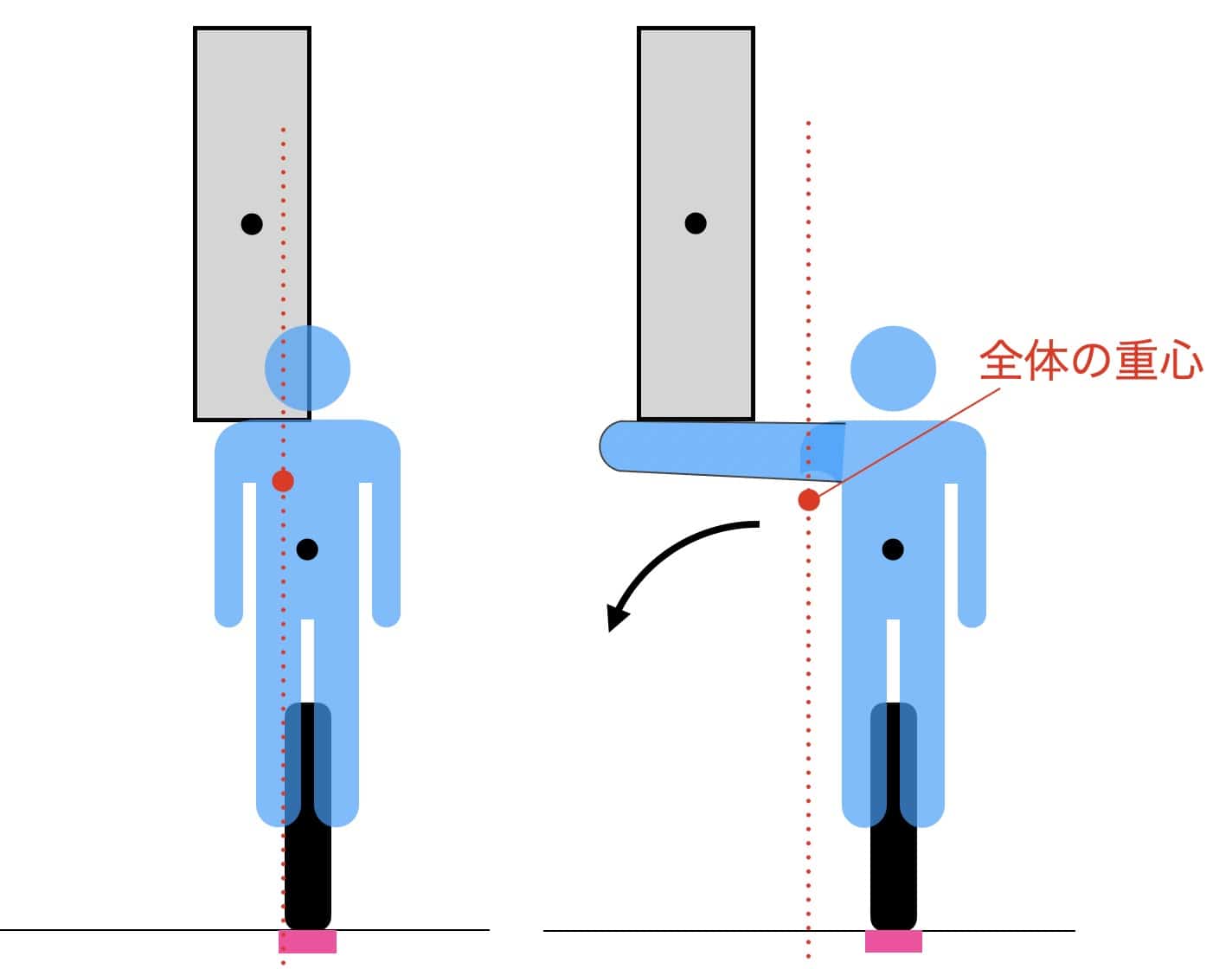
The delivery masters treat the tower as part of their own body, using their entire frame to balance and skillfully manipulate the center of mass. Interestingly, a mountain bike with thick tires is easier to stabilize than a road bike with thin tires because it has a larger base of support.
Also, when you carry something heavy, isn’t it easier to hold it close to your chest rather than with outstretched arms? This is the Law of the Lever. By keeping the distance between the fulcrum (your body) and the load close, you reduce the required force. Bringing the tower’s center of gravity closer to your own makes it much easier to control vertical and horizontal wobbles or vibrations.
More Physics Hidden in Professional Craftsmanship
Beyond the three tips we’ve discussed, the smooth movements of these masters hide even more physical laws.
The Law of Inertia: Starting and Stopping When a train suddenly starts, your body is pulled backward; when it brakes, you lurch forward. That is inertia. Objects want to maintain their current state of motion. Professional delivery people avoid sudden starts and stops, accelerating and decelerating smoothly to prevent the baskets from sliding.
Centrifugal Force: Masterful Turning When turning a corner, centrifugal force tries to pull the tower outward. Much like a motorcycle racer, the delivery person leans their body inward to create a centripetal force that balances the centrifugal force, keeping the tower perfectly upright.
Impulse: Absorbing the Impact When catching a fast baseball, you pull your glove back slightly as you catch it, right? This increases the time it takes for the ball to stop, which softens the impact on your hand. Delivery masters do the same, using their arms and knees like cushions to absorb the shocks from bumps in the road.
At first glance, physics might seem unrelated to a soba shop. However, through years of experience, professional craftsmanship converges into the most logical, efficient, and beautiful movements by unconsciously maximizing the laws of physics. Did you feel the wonder of science hidden in everyday life? I encourage you to look around and find your own “Why?” in the world around you!
Contact and Inquiries
Making the wonders of science more accessible! I share fun science experiments you can do at home and easy-to-understand tips. Feel free to explore! ・About the author, Ken Kuwako: Click here ・For business inquiries (writing, speaking, workshops, TV supervision, etc.): Click here ・Get the latest updates on X (Twitter)!
 Check out the Science Material Channel for experiment videos!
9月のイチオシ実験!
お弁当箱をプラバンがわりにしてキーホルダーを作ろう!
テレビ番組監修・イベント等のお知らせ
- 8月27日(木)科学監修番組放送予定
- 9月20日(日)ダビンチマスターズ出演予定
- 10月10日(土)11:15~12:00 千葉市科学フェスタ2026「桑子先生の回転科学ショー」にてサイエンスショーを行います。
- 12月26日(土) ナリカサイエンスアカデミー(教員向け実験講習会)開催
書籍のお知らせ
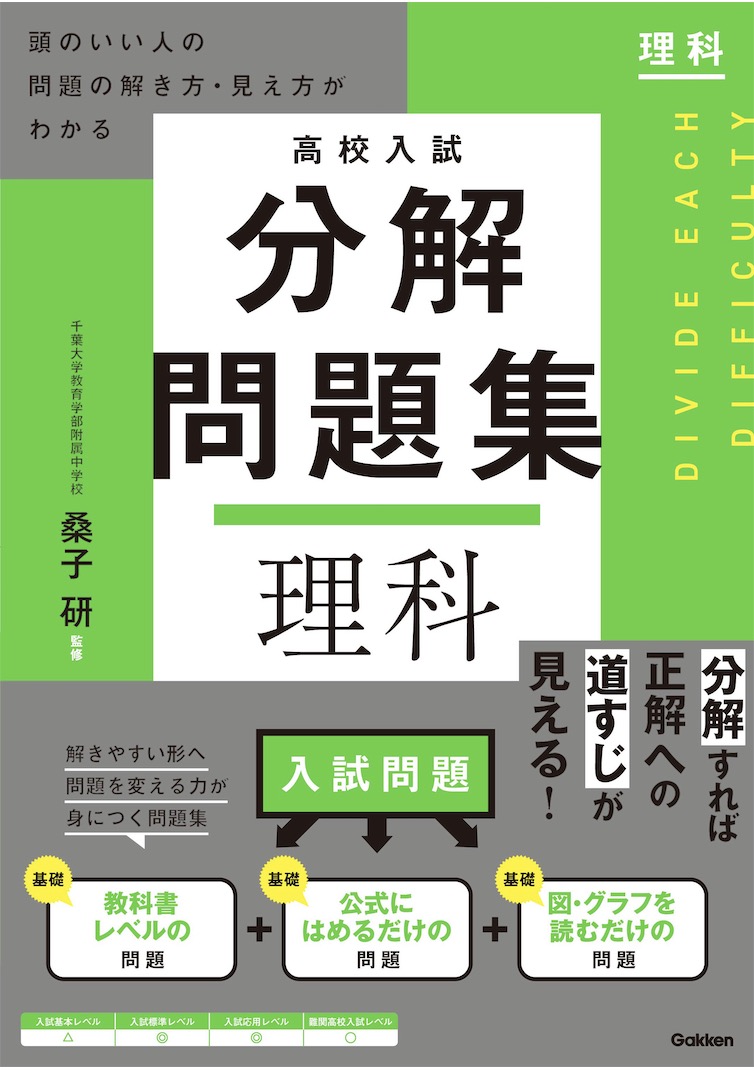
- 『高校入試 分解問題集 理科』(学研)…難しい問題も小さな問題に分解することで、問題を解くことができます。そんな分解の技術が身につくように深く関わりを持って作りました。
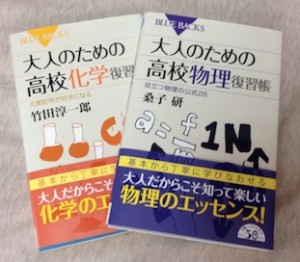
 『大人のための高校物理復習帳』(講談社)…一般向けに日常の物理について公式を元に紐解きました。特設サイトでは実験を多数紹介しています。※増刷がかかり6刷となりました(2026/02/01)
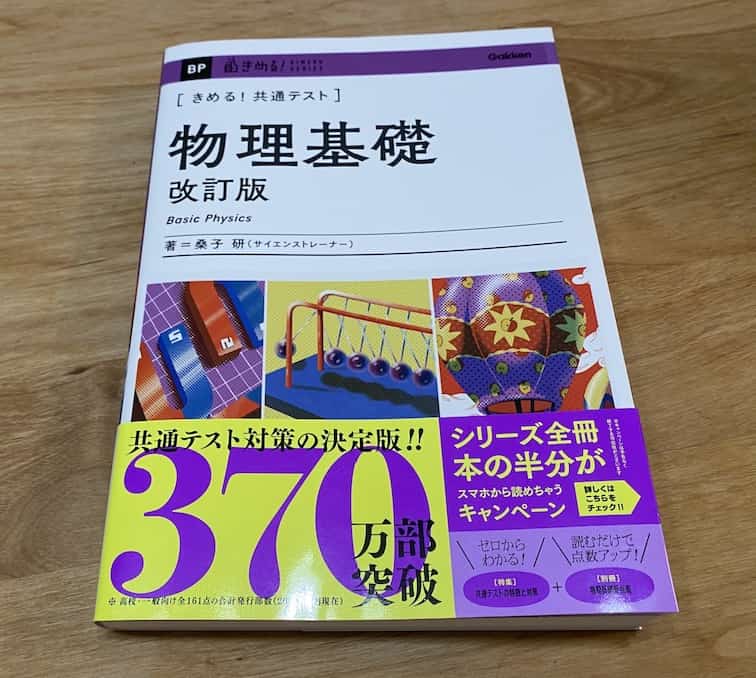
- 『きめる!共通テスト 物理基礎 改訂版』(学研)… 高校物理の参考書です。イラストを多くしてイメージが持てるように描きました。授業についていけない、物理が苦手、そんな生徒におすすめです。特設サイトはこちら。
各種SNS(更新情報をお届け!)
【日本語】X(Twitter)/instagram/Facebook 【英語】BlueSky/Threads
Explore
- 楽しい実験…お子さんと一緒に夢中になれるイチオシの科学実験を多数紹介しています。また、高校物理の理解を深めるための動画教材も用意しました。
- 理科の教材… 理科教師をバックアップ!授業の質を高め、準備を効率化するための選りすぐりの教材を紹介しています。
- Youtube…科学実験等の動画を配信しています。
- 科学ラジオ …科学トピックをほぼ毎日配信中!AI技術を駆使して作成した「耳で楽しむ科学」をお届けします。
- 講演 …全国各地で実験講習会・サイエンスショー等を行っています。
- About …「科学のネタ帳」のコンセプトや、運営者である桑子研のプロフィール・想いをまとめています。
- お問い合わせ …実験教室のご依頼、執筆・講演の相談、科学監修等はこちらのフォームからお寄せください。