Why Acidic Cleaners Work: The Science Behind the Stains They Remove (The Science of Cleaning)
Hi, I’m Ken Kuwako, your Science Trainer. Every day is an experiment!
Want the big-picture roundup on the science of cleaning? You can find it here.
You’ve probably heard the words “acid” and “alkali.” Technically, an alkali is a base that’s dissolved in water. When it comes to cleaning, the heavy hitter among the strong alkalis is sodium hydroxide. The gentler, safer options include sodium bicarbonate (pH 8.2 to 8.4), sodium carbonate (pH 11 to 12), and sodium sesquicarbonate (about pH 9.8; think of it as sodium bicarbonate plus sodium carbonate in one).
Acidic Cleaners (for Water Stains)


The powdered kind is the better deal. Just dissolve it in water before using.
A lot of stubborn grime has one thing in common: it doesn’t dissolve in water. The classic example is the white “water stain” on your bathroom mirror. Water stains count as mineral deposits, meaning water-insoluble stuff like calcium salts, magnesium salts, and iron oxides. Professional cleaners call it “scale.”
Tap water carries a small amount of dissolved minerals, such as calcium ions and magnesium ions. When a water droplet evaporates, only the water escapes into the air as vapor, and calcium carbonate and magnesium carbonate get left behind. That’s the white, scaly crust you see. At home, it loves to build up inside kettles, on bathroom mirrors, and around the spots in the toilet where water flows out.

Here’s a water-stained mirror. Wiping it with a neutral detergent barely makes a dent.
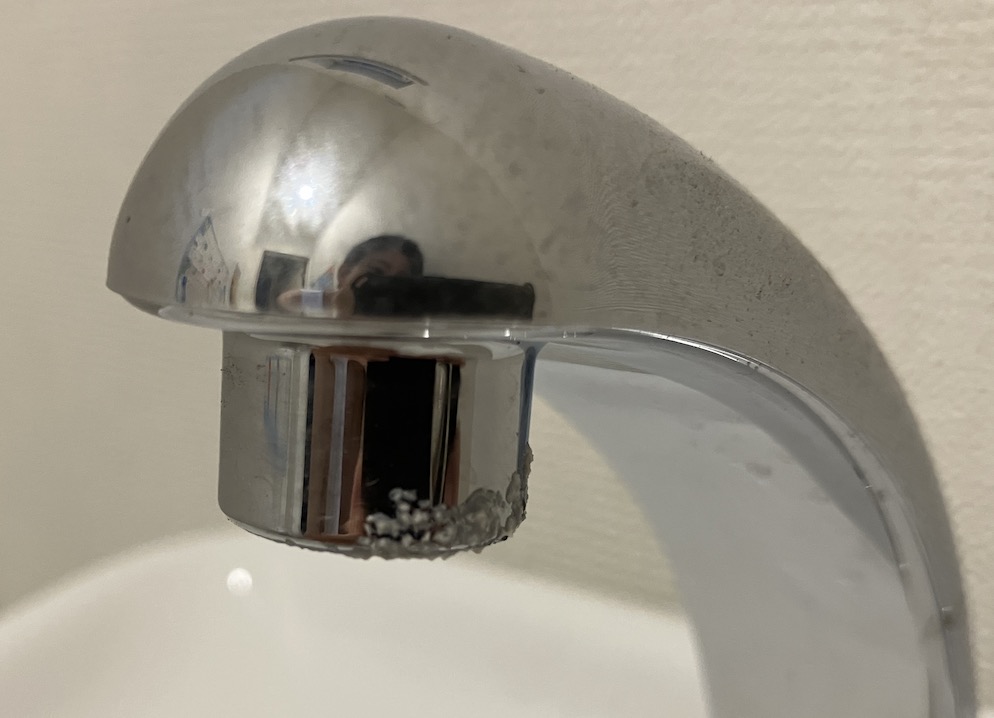
Water stains in the toilet. Rock-hard and really stubborn.
Iron is another culprit. It dissolves in water as the colorless ferrous ion, Fe2+. Once it’s oxidized into the ferric ion, Fe3+, it turns brownish and becomes much less soluble. And when it becomes iron(III) oxide, Fe2O3, better known as rust, it won’t dissolve in water at all.
Not All Acids Are Equal: Know Their Strengths and Weaknesses
Acids are a go-to for tackling grime. The chemistry at the heart of it is a neutralization and decomposition reaction between the acid and an alkaline carbonate. Calcium carbonate, the main ingredient of water stains, is chemically a salt with weakly alkaline properties. Add an acidic substance like citric acid or acetic acid, and it breaks down in a reaction like this:

When calcium carbonate meets an acid, it breaks down into water-soluble calcium ions, water, and bubbles of carbon dioxide. The solid scale is transformed into something that dissolves, so you can simply rinse it away.
A famous experiment that shows this off is soaking a raw egg in vinegar. The shell (calcium carbonate) dissolves, leaving behind a squishy, bouncy, see-through “skeleton egg” (also called a vinegar egg).
-
- Put a raw egg in a container and pour in plenty of vinegar.
- Rest a lid loosely on top (or cover with plastic wrap) and leave it in the fridge or a cool, dark place for 2 to 3 days.
- Once the shell has dissolved, take the egg out and gently rinse off any leftover film under a light stream of tap water.
The calcium carbonate in the eggshell reacts with the acetic acid in the vinegar, and the shell dissolves while releasing bubbles of carbon dioxide.
That said, not every acid dissolves every kind of grime equally well. Depending on the acid, there are stains it can dissolve and stains it can’t, so it pays to know each one’s personality.
Hydrochloric acid is the all-rounder; acetic and citric acid have a few weak spots
Hydrochloric acid, for example, dissolves both iron(III) hydroxide and calcium carbonate, the culprit behind those white stains around the house. It handles both with ease.
Citric acid is a safe organic acid. It’s great at dissolving calcium carbonate, but not very strong against iron(III) hydroxide. There’s also a catch: if you don’t rinse it off with water right away, the grime can come back. If you clean with citric acid and then leave it sitting for a long time, a substance called calcium citrate can form. It’s an insoluble salt (meaning it barely dissolves in water), and it’s even harder to remove than the stain you just dissolved. So when cleaning with citric acid, the key is to not leave it on too long, and to rinse it off thoroughly.
Reference: “The Basics and Science of Cleaning and Detergents” (Shuwa System)
Acetic acid is a safe organic acid too. It works well on calcium water stains but isn’t much help with iron stains, so it’s pretty similar to citric acid. Acetic acid is often used in natural cleaning.
Then there’s sulfuric acid. When sulfuric acid combines with calcium, it forms calcium sulfate, which barely dissolves in water. That’s why sulfuric acid isn’t suited for removing calcium or magnesium deposits. Instead of dissolving the grime, you could end up creating a new, harder-to-dissolve substance.
How Does Calcium Carbonate Come Off? Let’s Look at the Chemical Equation!
Calcium carbonate, the main ingredient of water stains, leans toward the alkaline side. When you apply an acidic cleaner (citric acid), a neutralization reaction like this takes place:

Take a close look at the right side, the “after” picture.
-
Calcium ions: These dissolve in water.
-
Water: Well, that’s a liquid, of course.
-
Carbon dioxide: It fizzes up as bubbles (a gas) and floats away.
In other words, the moment it reacts, a “solid that won’t dissolve in water” is turned into “something that dissolves in water” and “a gas.” Here’s the chemical equation (using acetic acid as an example):

As a result of this reaction, rock-hard calcium carbonate transforms into calcium acetate, a salt that dissolves readily in water. The stuff that was caked on and clinging tight breaks apart into ions that dissolve into the water, which is why you can just rinse it off with the shower.
Acid can dissolve calcium carbonate because it chemically snaps the bonds holding the “stone” together and turns it into something else, which water can then wash away. So even though calcium carbonate doesn’t dissolve in water, as long as you have an acid, you can keep eating away at it from the surface.
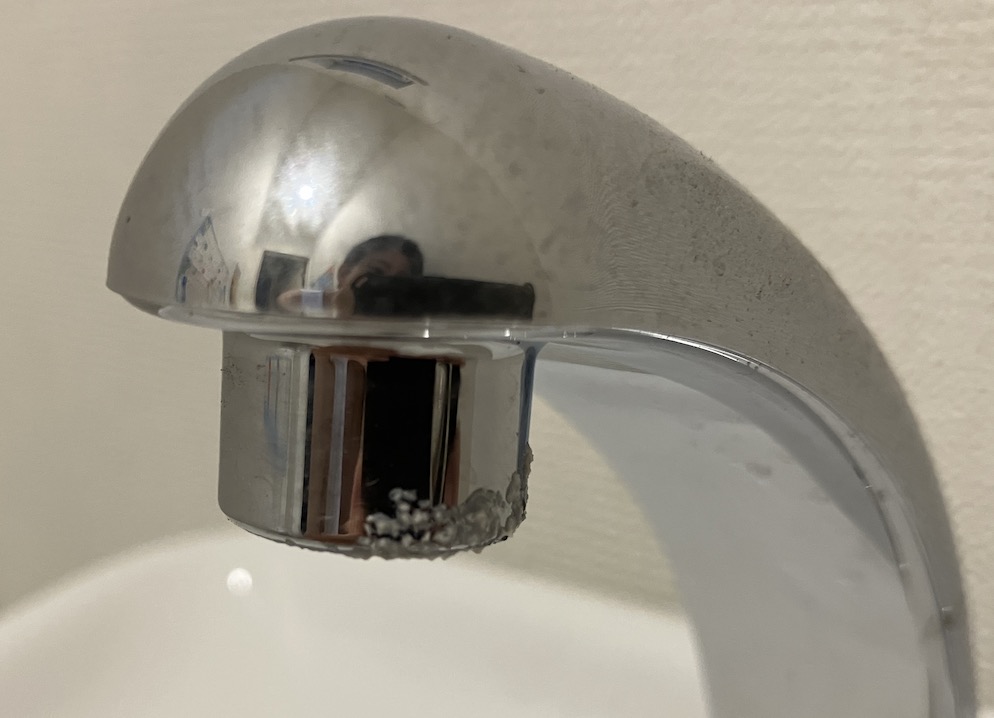
Here’s some calcium carbonate “stone” that built up around the hand-washing spot on the toilet at my house.
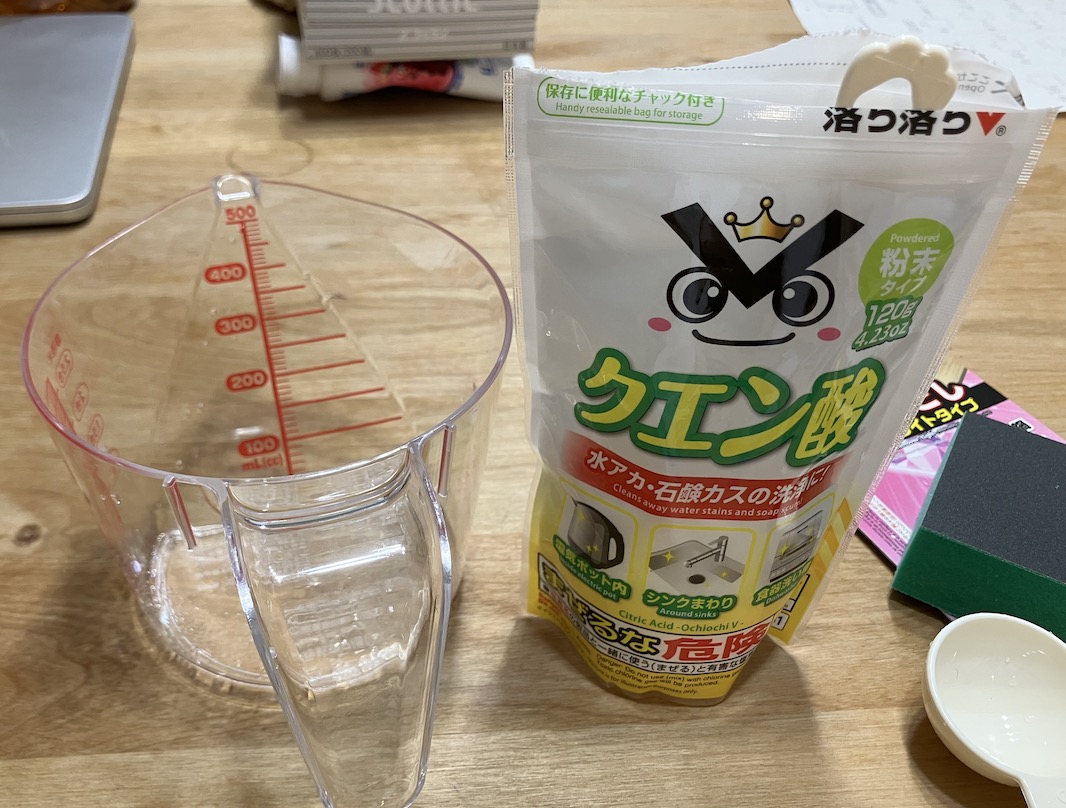
First, make a very concentrated citric acid solution. Soak paper towels in it and wrap them snugly around the deposit. Then I left it for one hour.
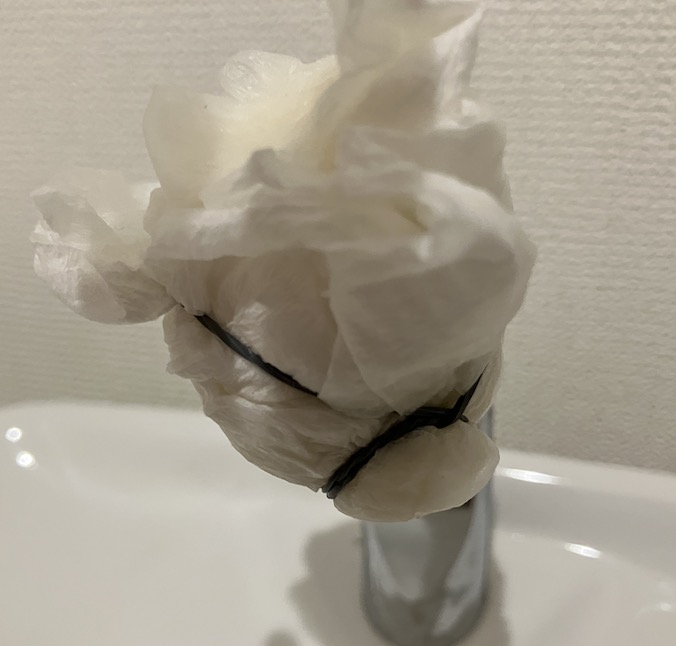
Here’s how it looked after one hour.
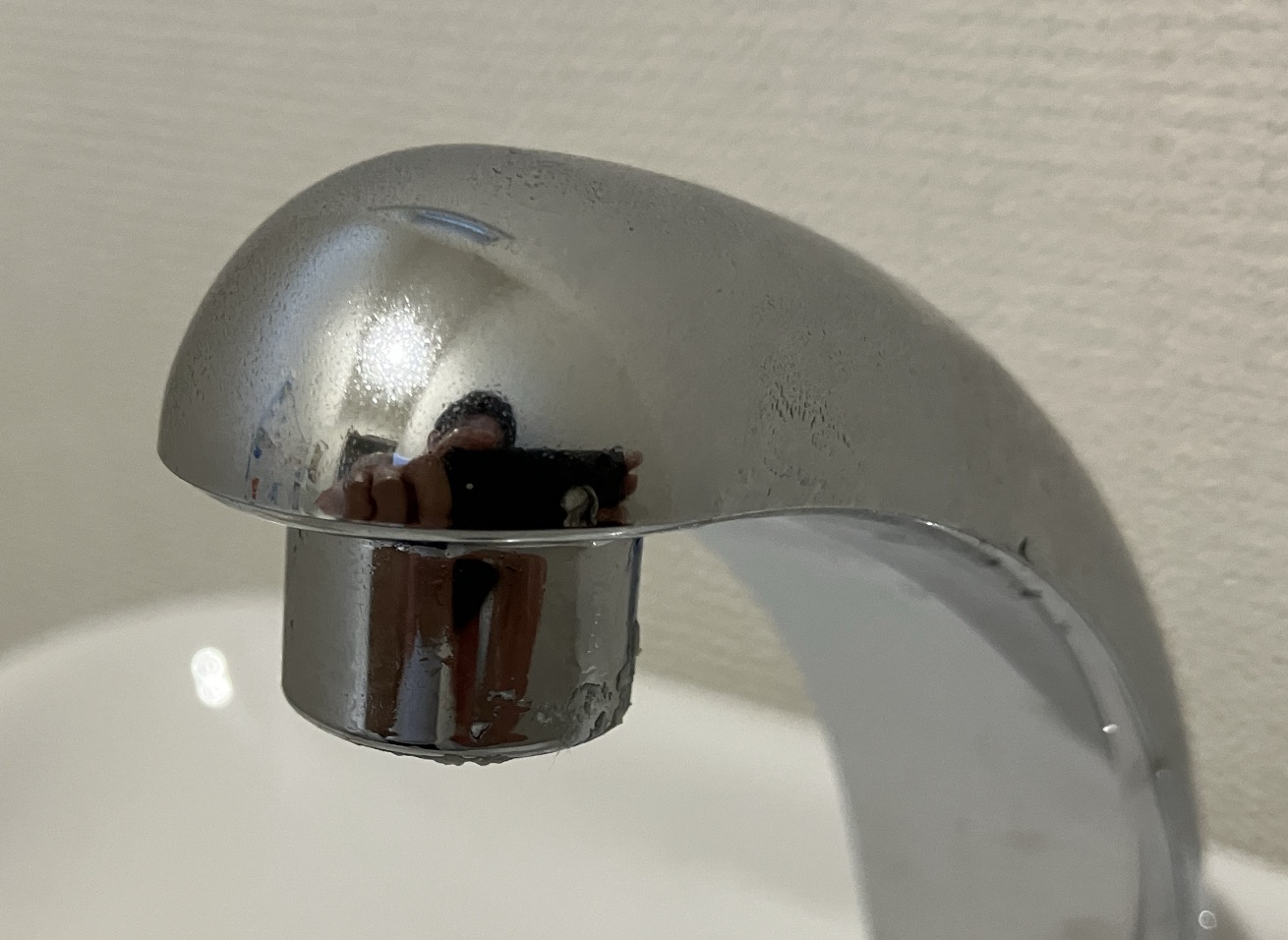
A good amount of the calcium carbonate “stone” has already come off. Next, give it a light scrub with a sponge made for water stains.
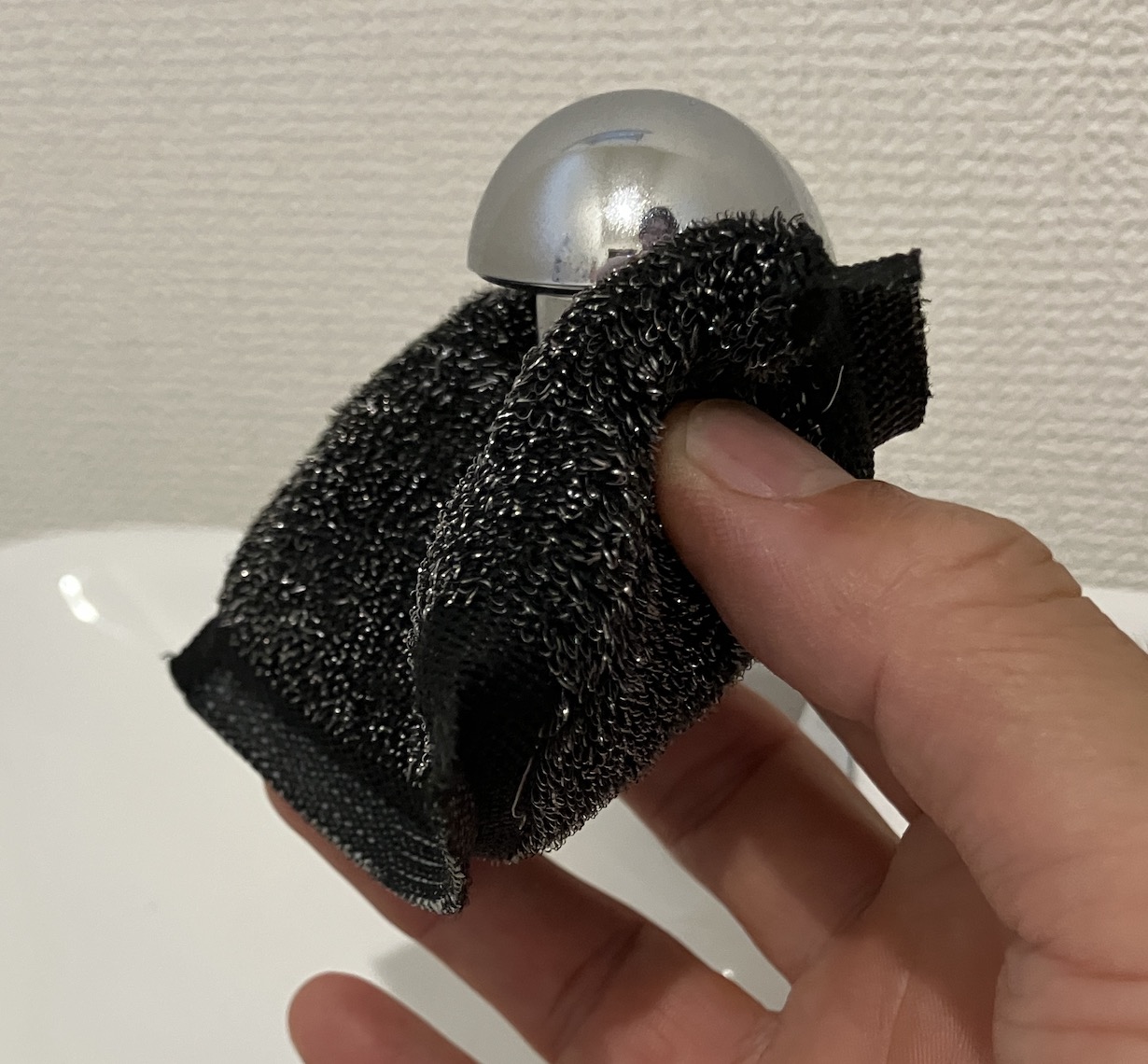
Squeaky clean!
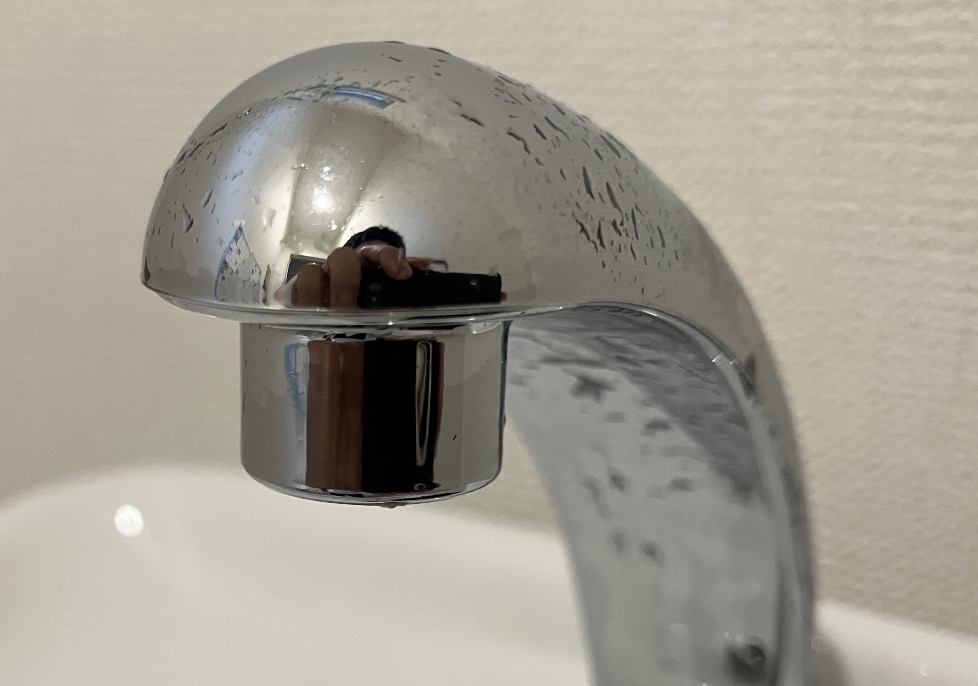
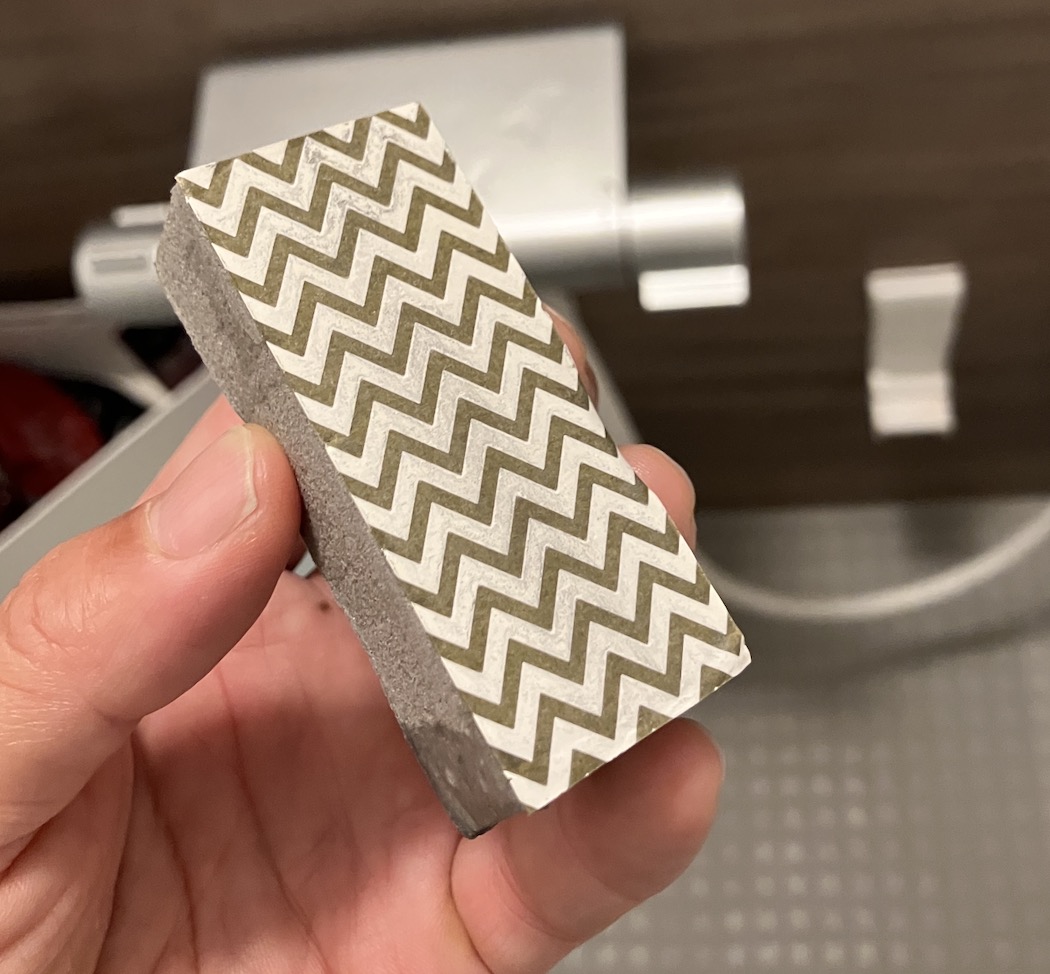
For scaly buildup on a bathroom mirror, I recommend the diamond abrasive pads sold at 100-yen shops. Start by using one to physically scrub off the big chunks of scale,
then soak a paper towel in a fairly strong citric acid solution, stick it onto the mirror, and let it sit. Finish by rinsing with water, and the mirror comes out sparkling.
Before
After
The Danger of Strong Acids: Protein “Denaturation”
With strong alkalis like sodium hydroxide, the scary part is that they turn fats into soap (saponification) and chop proteins apart through hydrolysis, dissolving them. So what’s the scary part of strong acids like hydrochloric acid?
Strong acids release a huge number of hydrogen ions (H⁺), which wreck the hydrogen bonds and the balance of electric charges that hold a protein molecule in its three-dimensional shape. The protein loses its original structure and becomes denatured.
Think of poached eggs: a splash of vinegar in the water makes the egg white firm up. A similar thing happens to the proteins in your skin. Denatured proteins lose their normal function and turn hard. That’s what’s behind a chemical burn from hydrochloric acid.
Side note: acid burns cause a type of tissue damage called “coagulative necrosis.” The denatured proteins harden and form a film, and that film acts as a brake against further acid seeping deeper. For that reason, even with equally strong chemicals, acid burns tend to stay relatively shallow compared with burns from alkaline substances like sodium hydroxide. (Alkalis cause “liquefactive necrosis,” dissolving fats and proteins as they penetrate ever deeper, so the damage tends to go further down.)
If you do get any on your skin, the rule is “rinse with plenty of running water, no matter what.” Trying to neutralize it by pouring on another chemical (like baking soda water) isn’t recommended, because the neutralization reaction itself gives off heat and could make the burn worse. Dilute and wash the chemical away with running water, then see a doctor as soon as you can.
Contact and Requests
Bringing the wonder and fun of science closer to everyday life! I put together easy-to-follow science experiments you can do at home, along with tips to make them work. Feel free to search around!
・The contents of my science blog have been published as a book! Details here
・Learn more about me, Ken Kuwako, here
・For requests (writing, talks, science workshops, TV supervision and appearances, and more), click here
・Get article updates on X!
 The Science Neta Channel has experiment videos, too!
10月のイチオシ実験!
テレビ番組監修・イベント等のお知らせ
- 10月27日(火) テレビ監修番組放送予定
- 11月27日(金) テレビ監修番組放送予定
- 12月26日(土) ナリカサイエンスアカデミー(教員向け実験講習会)開催
書籍のお知らせ
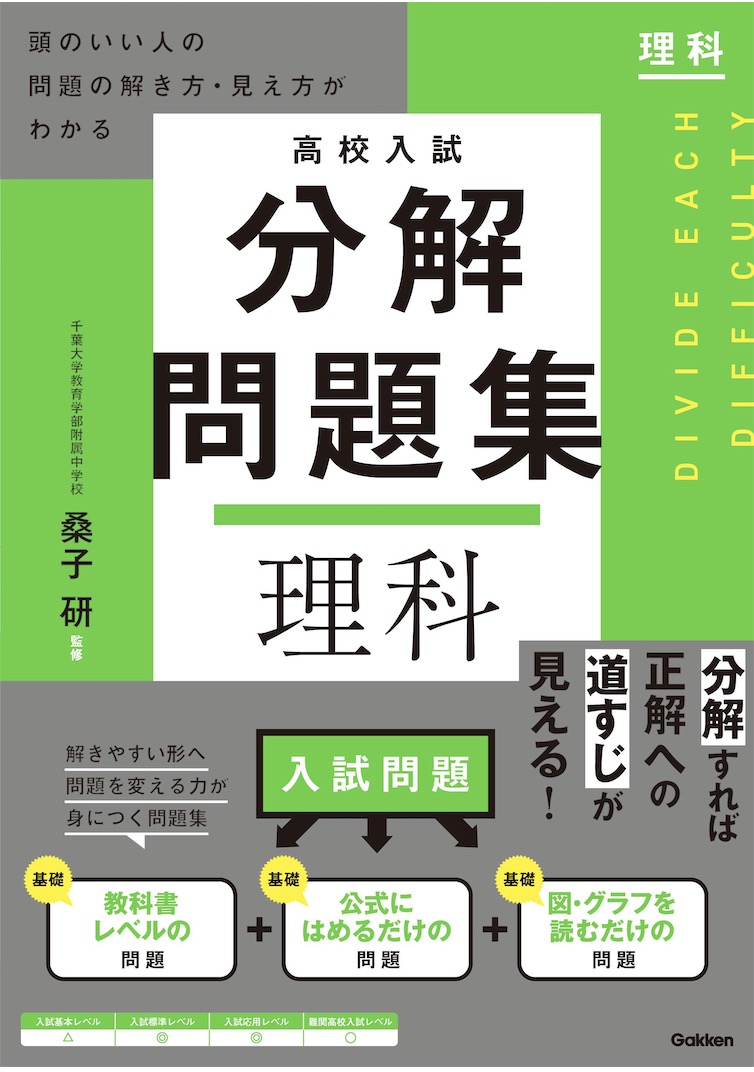
- 『高校入試 分解問題集 理科』(学研)…難しい問題も小さな問題に分解することで、問題を解くことができます。そんな分解の技術が身につくように深く関わりを持って作りました。
 『大人のための高校物理復習帳』(講談社)…一般向けに日常の物理について公式を元に紐解きました。特設サイトでは実験を多数紹介しています。※増刷がかかり6刷となりました(2026/02/01)
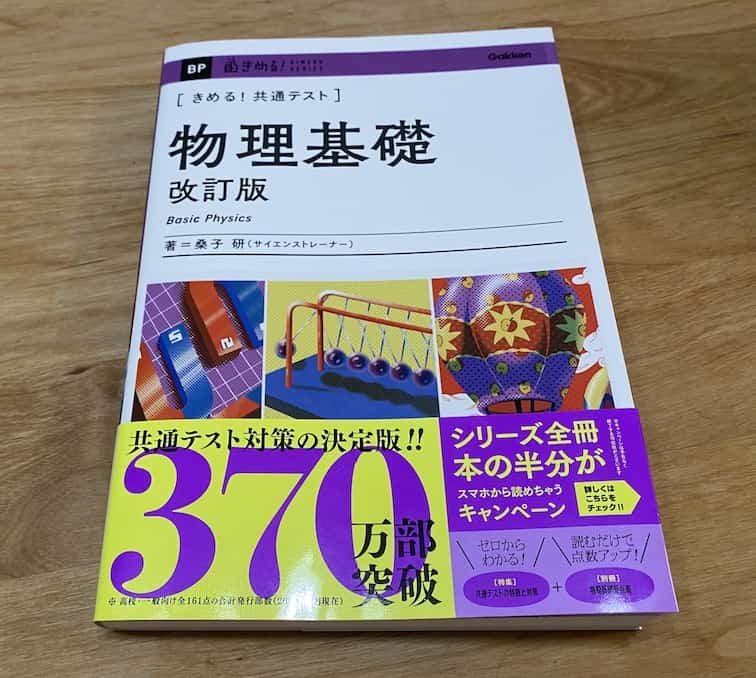
- 『きめる!共通テスト 物理基礎 改訂版』(学研)… 高校物理の参考書です。イラストを多くしてイメージが持てるように描きました。授業についていけない、物理が苦手、そんな生徒におすすめです。特設サイトはこちら。
各種SNS(更新情報をお届け!)
【日本語】X(Twitter)/instagram/Facebook 【英語】BlueSky/Threads
Explore
- 楽しい実験…お子さんと一緒に夢中になれるイチオシの科学実験を多数紹介しています。また、高校物理の理解を深めるための動画教材も用意しました。
- 理科の教材… 理科教師をバックアップ!授業の質を高め、準備を効率化するための選りすぐりの教材を紹介しています。
- Youtube…科学実験等の動画を配信しています。
- 科学ラジオ …科学トピックをほぼ毎日配信中!AI技術を駆使して作成した「耳で楽しむ科学」をお届けします。
- 講演 …全国各地で実験講習会・サイエンスショー等を行っています。
- About …「科学のネタ帳」のコンセプトや、運営者である桑子研のプロフィール・想いをまとめています。
- お問い合わせ …実験教室のご依頼、執筆・講演の相談、科学監修等はこちらのフォームからお寄せください。