[The Right-Hand Screw Rule] Are Magnets Really Just “Moving Electricity”?! Discover the Wonders of Electromagnetism in Everyday Life
Ken Kuwako, Science Trainer. Every day is an experiment.
The Magnetic Field Made by Electric Current: Uncovering the Link Between Electricity and Magnetism

Did you ever play with a magnet and iron sand at the sandbox as a kid? Chances are that mysterious pull got you pretty excited. And what about rubbing a plastic pencil board on your head to make your hair stand on end? Static electricity is another everyday phenomenon we all meet in science class. But how would you feel if I told you that the “force of magnets” and the “force of static electricity” actually spring from the very same thing: electricity?
For a long time, scientists believed these two forces were completely separate. Then, in 1820, the Danish physicist Hans Christian Ørsted made a discovery that changed history. When he ran an electric current through a wire, the compass needle sitting nearby swung to point in a new direction. It looked like magic.
This discovery proved that “moving electricity” (electric current) creates magnetism. Static electricity has nothing to do with magnetism, yet the moment it starts to flow, it suddenly becomes magnetic. Electricity and magnetism, once thought to be two unrelated forces, turned out to be two sides of the same coin. Let’s take a look at the key law behind this connection, and how we put it to use.
What Is a Magnetic Field?
First, let’s get to know the “magnetic field,” an essential idea for understanding how magnetic forces work. A magnetic field is the region of space where magnetic forces are felt, and it surrounds magnets and electric currents. Hold iron sand up to a magnet and it clings thickly to the N and S poles, right? That’s because the magnet creates a magnetic field around itself, and that field pulls the iron sand in.
People have known about the mysterious power of magnets since ancient times. Natural magnets were commonly found in the Magnesia region of Turkey, and that’s said to be where the word “magnet” comes from. Every magnet has two poles, N and S. Just like with static electricity, like poles repel each other and opposite poles attract.
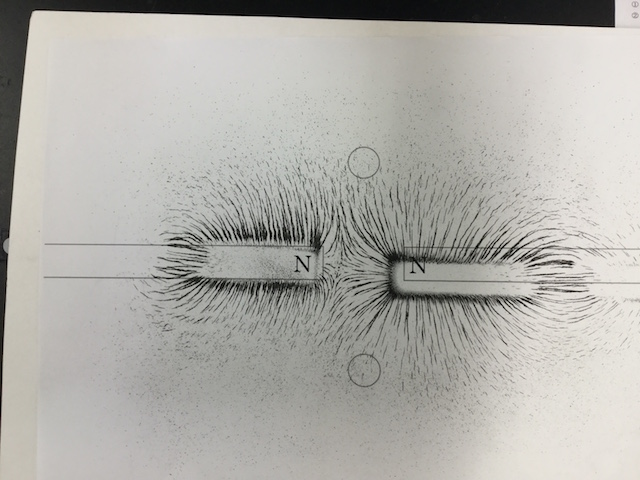
There’s a way to actually see these magnetic forces at work: magnetic field lines. Place compasses around a bar magnet and their needles will line up in a neat, orderly pattern. Follow the direction the N end of the needle points and draw a line, and a beautiful curve appears, leaving the N pole and looping back into the S pole. That’s a magnetic field line. The more tightly packed the lines are, the stronger the magnetic field.
How Current Makes a Magnetic Field: The Right-Hand Screw Rule
Ørsted’s experiment showed that electric current creates a magnetic field. But how exactly does that field take shape?
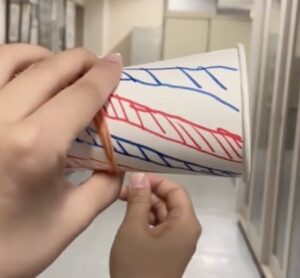
When current flows through a straight wire, a magnetic field swirls around it in circles. Point your right thumb in the direction the current is flowing, and your curled fingers show the direction of the field. It’s just like turning a right-handed screw: the direction the screw advances (the current) and the direction it turns (the magnetic field) are locked together. This handy trick is called the right-hand screw rule.
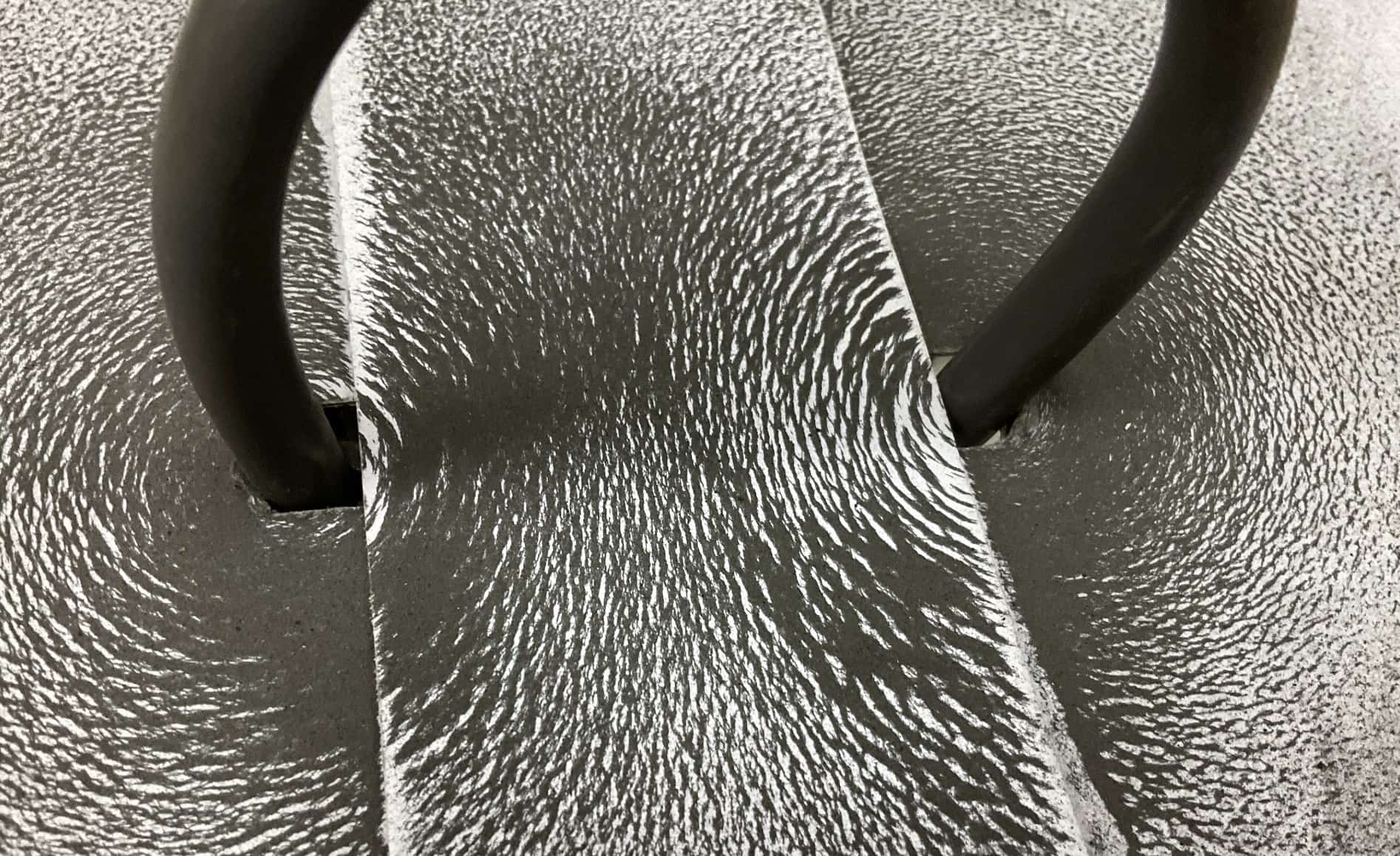
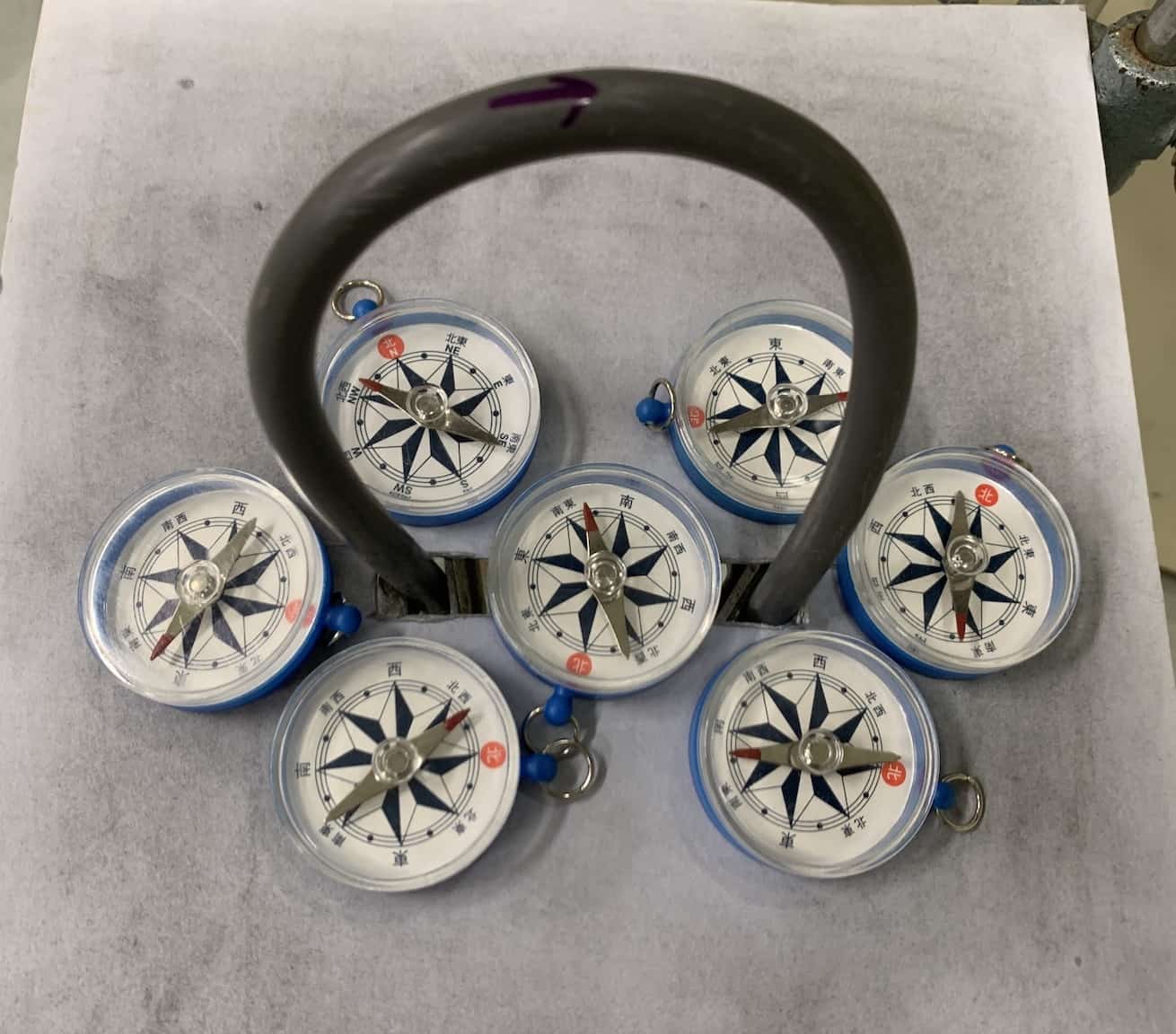
The strength of the field that a current produces follows this simple formula:
H = I / 2πr
The magnetic field (H) is proportional to the amount of current (I) and inversely proportional to the distance from the wire (r). In other words, the more current you send through, and the closer you get to the wire, the stronger the field.
Turning Current into a Magnet: The Electromagnet
The fact that current creates a magnetic field is put to work all around us. The best-known example is the electromagnet.
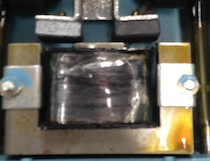
The field appears only while current is flowing, and it vanishes the moment you switch the current off. Could we use that trick to build a powerful magnet?
The secret ingredient is a coil, a wire wound round and round. Remember the right-hand screw rule from earlier? When current runs through a looped wire, the magnetic fields from every part of the loop point the same way at the center, and they reinforce each other. Stack up lots of loops and run current through them, and you get a very strong field at the center, working just like a real bar magnet.
You can find the direction of an electromagnet’s field with another right-hand rule. Curl your fingers, from index finger to pinky, in the direction the current flows, and your thumb points in the direction of the magnetic field. Electromagnets are hard at work all over our lives, from cranes lifting scrap iron to recycling plants separating aluminum cans from steel ones.
What Is a Magnet Really Made Of? The Molecular Current Theory
So why does an ordinary magnet, the kind we use every day, give off a magnetic field in the first place?
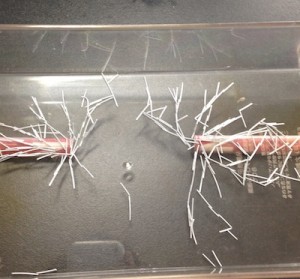
To crack this mystery, scientists zoomed in all the way to the world of atoms. Around each atom, negatively charged electrons whirl about like planets. That motion is the same as a tiny current flowing in a circle.
The scientist who pushed this idea forward was the Frenchman André-Marie Ampère. He proposed that a magnet is full of countless tiny circular currents, all lined up neatly in the same direction, and together they produce a strong magnetic field. This is called the molecular current theory.
The reason iron sand and nails stick to a magnet is that an outside magnetic field temporarily lines up the circular currents in their atoms, turning them into magnets too. This is called magnetization.
This way of thinking helps explain all sorts of magnetic phenomena we see in daily life. Take Earth’s magnetic field, which stretches between the North and South Poles. The dynamo theory explains it like this: as Earth rotates, molten metal deep inside carries free electrons along with it, creating electric currents, and those currents produce the magnetic field. Even our giant planet turns out to be a magnet, with electric current at its very core.
Electricity and magnetism look like totally different things at first glance, but they are deeply connected. This “unification of electricity and magnetism” was a landmark discovery that even led to Einstein’s theory of relativity. Without these laws of physics, none of the electronics we rely on every day would exist.
※ This article is a companion piece to my book, 『High School Physics Refresher for Grown-Ups』. You can read more articles from the series too, so please head over here.

『High School Physics Refresher for Grown-Ups』(Amazon link)
Contact and Requests
Bringing the wonder and fun of science closer to everyone! This site collects fun science experiments you can do at home, along with tips to make them work. Try searching around!
・Learn more about the site’s author, Ken Kuwako, here
・For requests (writing, talks, science workshops, TV supervision or appearances, and more), please click here
・Article updates are posted on X!
 Watch experiment videos on the Science Neta Channel!
9月のイチオシ実験!
テレビ番組監修・イベント等のお知らせ
- 9月25日(金)21:00〜 かまいたちの瞬間回答!にて、科学監修を行いました。
- 10月10日(土)11:15~12:00 千葉市科学フェスタ2026「桑子先生の回転科学ショー」にてサイエンスショーを行います。

- 12月26日(土) ナリカサイエンスアカデミー(教員向け実験講習会)開催
書籍のお知らせ
- 『高校入試 分解問題集 理科』(学研)…難しい問題も小さな問題に分解することで、問題を解くことができます。そんな分解の技術が身につくように深く関わりを持って作りました。
 『大人のための高校物理復習帳』(講談社)…一般向けに日常の物理について公式を元に紐解きました。特設サイトでは実験を多数紹介しています。※増刷がかかり6刷となりました(2026/02/01)

- 『きめる!共通テスト 物理基礎 改訂版』(学研)… 高校物理の参考書です。イラストを多くしてイメージが持てるように描きました。授業についていけない、物理が苦手、そんな生徒におすすめです。特設サイトはこちら。

各種SNS(更新情報をお届け!)
【日本語】X(Twitter)/instagram/Facebook 【英語】BlueSky/Threads
Explore
- 楽しい実験…お子さんと一緒に夢中になれるイチオシの科学実験を多数紹介しています。また、高校物理の理解を深めるための動画教材も用意しました。
- 理科の教材… 理科教師をバックアップ!授業の質を高め、準備を効率化するための選りすぐりの教材を紹介しています。
- Youtube…科学実験等の動画を配信しています。
- 科学ラジオ …科学トピックをほぼ毎日配信中!AI技術を駆使して作成した「耳で楽しむ科学」をお届けします。
- 講演 …全国各地で実験講習会・サイエンスショー等を行っています。
- About …「科学のネタ帳」のコンセプトや、運営者である桑子研のプロフィール・想いをまとめています。
- お問い合わせ …実験教室のご依頼、執筆・講演の相談、科学監修等はこちらのフォームからお寄せください。