From Chaos to Clarity: How I Teach Circuit Diagrams in the Classroom
I’m science trainer Ken Kuwako. Every day is an experiment.
Have you ever opened a science textbook, looked at those sharp, angular circuit diagrams, and thought, “This looks complicated…” or “Why do I even need to memorize these symbols?”
But hidden inside every one of those tiny symbols is generations of human ingenuity — a clever system created to control the invisible force we call electricity.
Today, I’d like to share a classroom lesson that transforms boring-looking circuit symbols into an exciting story of discovery.
A Pencil Becomes a Wire? An Electric Adventure Begins with Surprise
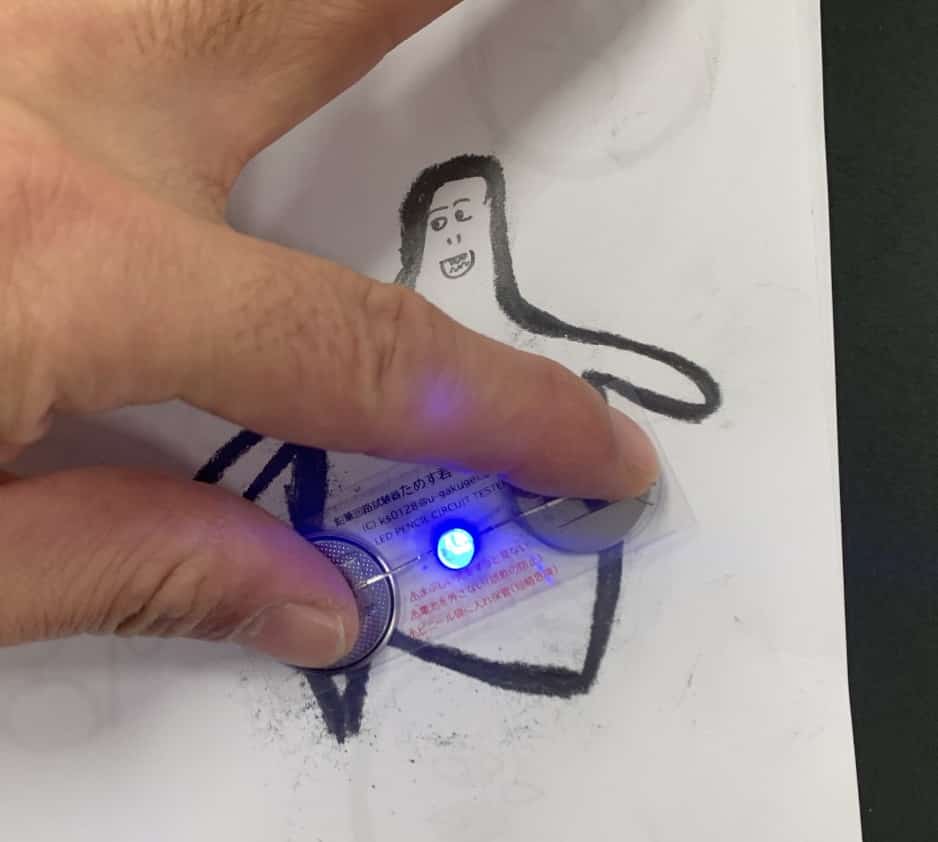
In my classes, we never begin by memorizing symbols. Instead, we start with an experiment that instantly grabs everyone’s attention using the “Pencil Circuit Experiment Kit” (Tamesu-kun).
Did you know that pencil lead can conduct electricity?
The core of a pencil is mainly made of graphite, a form of carbon with layered atoms. Because electrons can move freely between those layers, graphite can carry electricity much like a metal does.
When students actually draw thick dark lines on paper and use them as “roads” for electricity to light up a small bulb, their eyes light up too. That first hands-on experience — creating an electrical pathway with their own hands — becomes an important stepping stone toward understanding circuit diagrams later on.
“Real-Life Chaos” vs. “Ideal Simplicity”
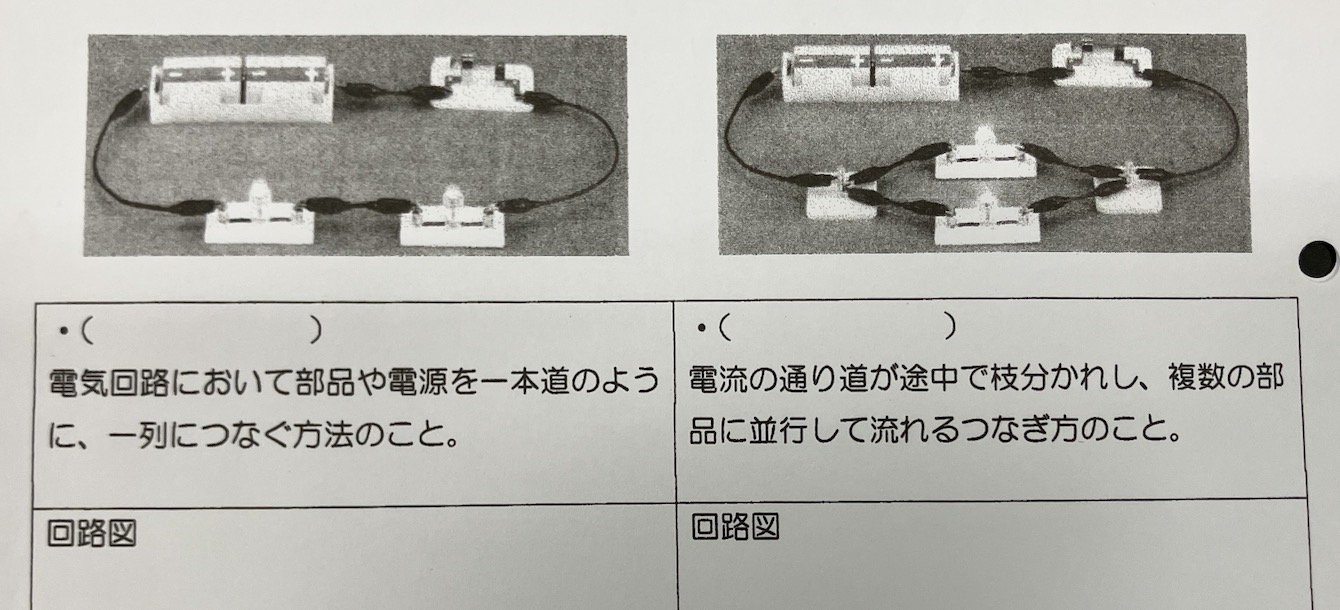
In the second lesson, students move on to building real series circuits and parallel circuits using batteries, bulbs, and switches.
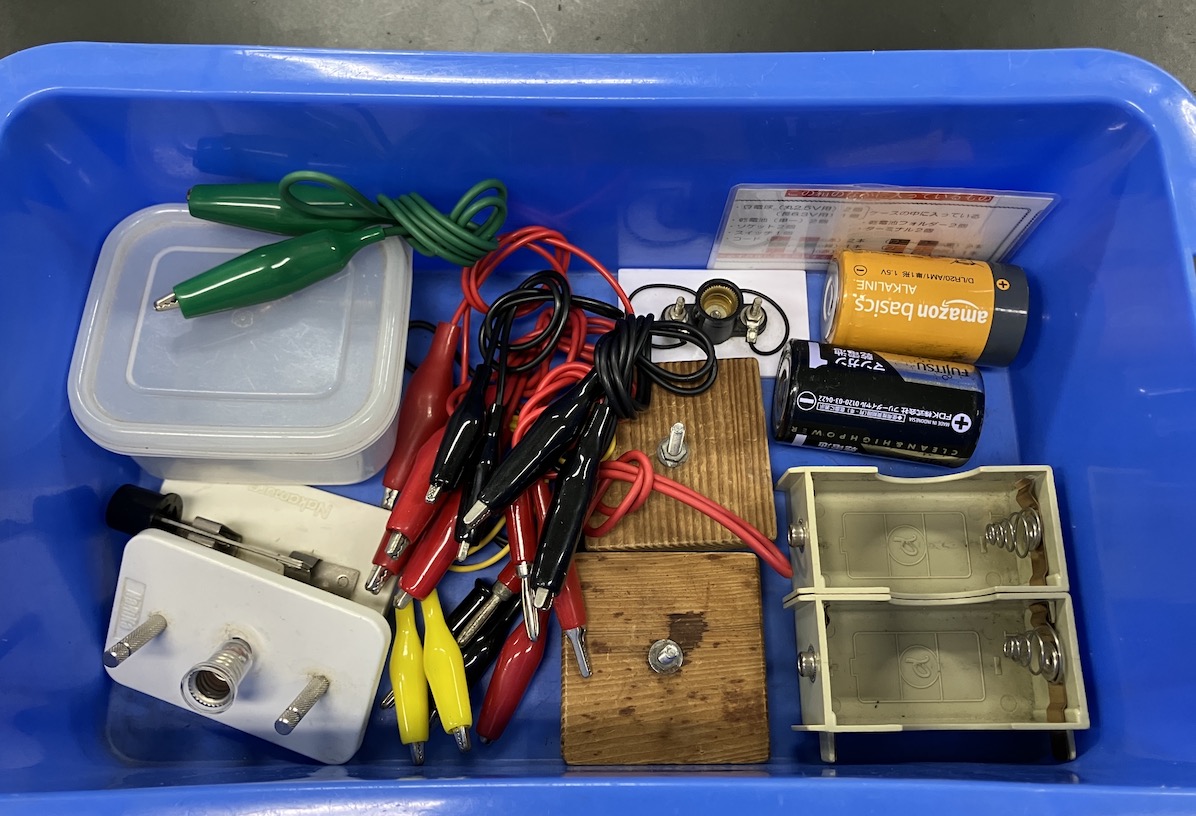
Each group of four students receives two boxes like these. At this stage, I also explain what belongs in each box and how to put everything back properly so the setup can be reused smoothly every class.
And then something interesting happens.
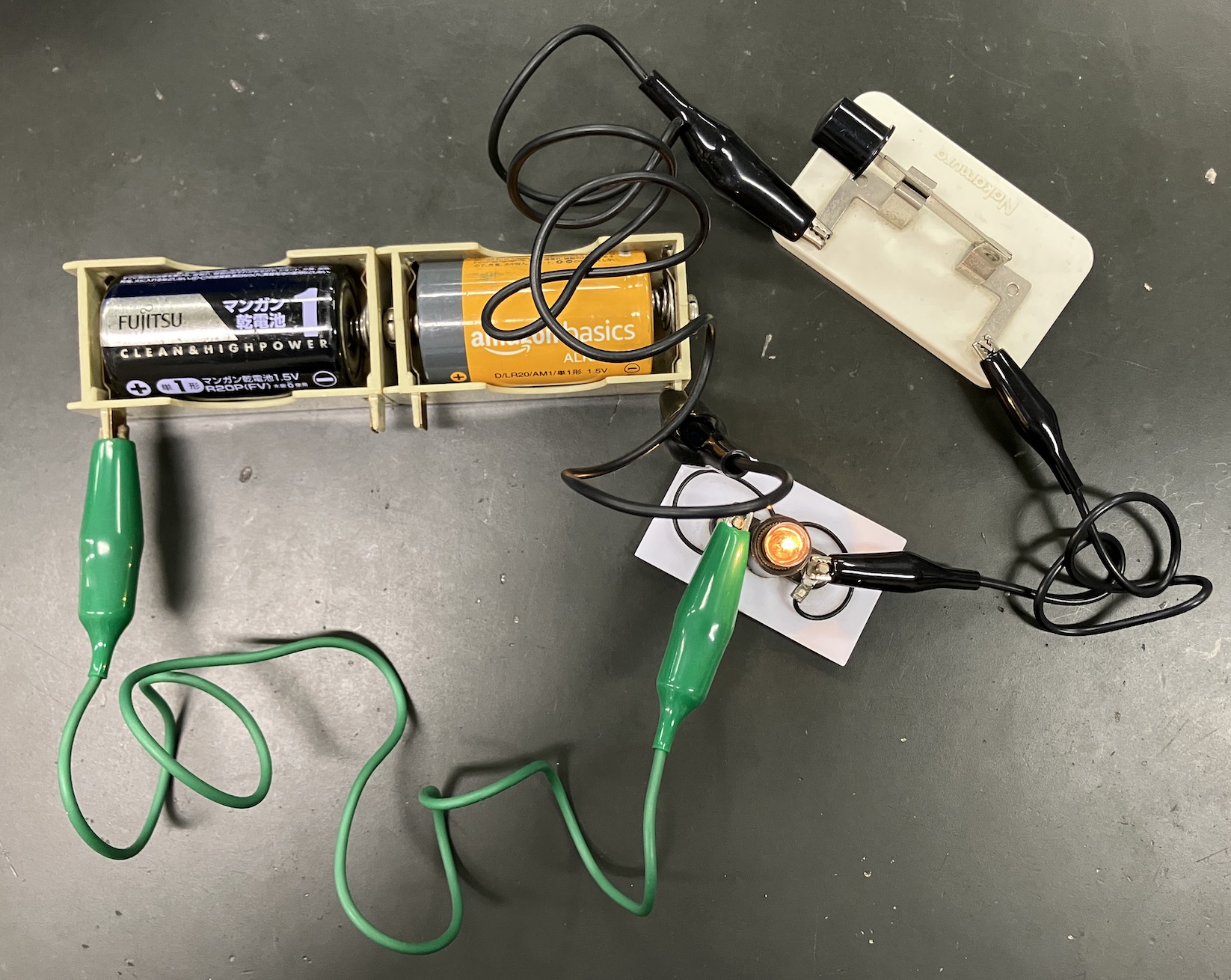
The moment students start handling real components, the knowledge they supposedly learned in elementary school suddenly becomes much harder to organize. Wires get tangled, connections become confusing, and before long, desks are covered in what I call a full-on “spaghetti wiring disaster.”
That’s when I ask them:
“Could you explain this messy setup accurately to a friend over the phone?”
This is a series circuit.
And this one is a parallel circuit.
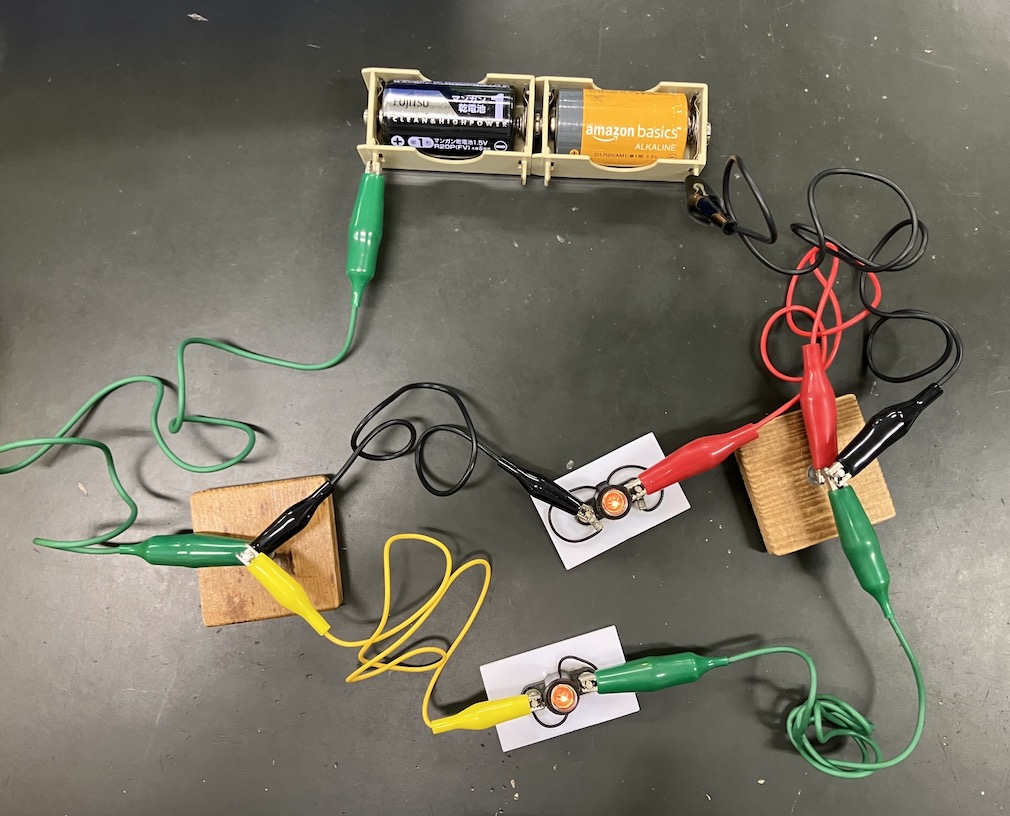
Some students accidentally write “平列” instead of “並列” in Japanese, so we talked about that too.
Circuit Diagrams Are a Universal Map
Only at this point do circuit symbols finally appear.
Students are asked to organize and draw the circuits they built. I demonstrate how to draw the series circuit, while the students tackle the parallel circuit on their own.
And then they suddenly realize something important.
“Wait… the extra messy wires can just be simple straight lines!”
“Using symbols is way faster than drawing actual batteries and bulbs!”
A circuit diagram is essentially a “map of electricity” — a tool invented to communicate information quickly and accurately. It strips away the chaos of real-life wiring and keeps only the essential flow of electricity.
Those angular straight lines aren’t there to make things look difficult. They exist because they make circuits easier to read and help prevent design mistakes.
The moment students truly experience that advantage, circuit symbols stop being meaningless things to memorize and become a practical shared language.
At the end of the lesson, students practiced reading circuit diagrams by drawing circuits and then building them from the diagrams alone. We also experimented with LED bulbs and compared them with regular miniature bulbs.
Interestingly, LEDs sometimes light up… and sometimes they don’t.
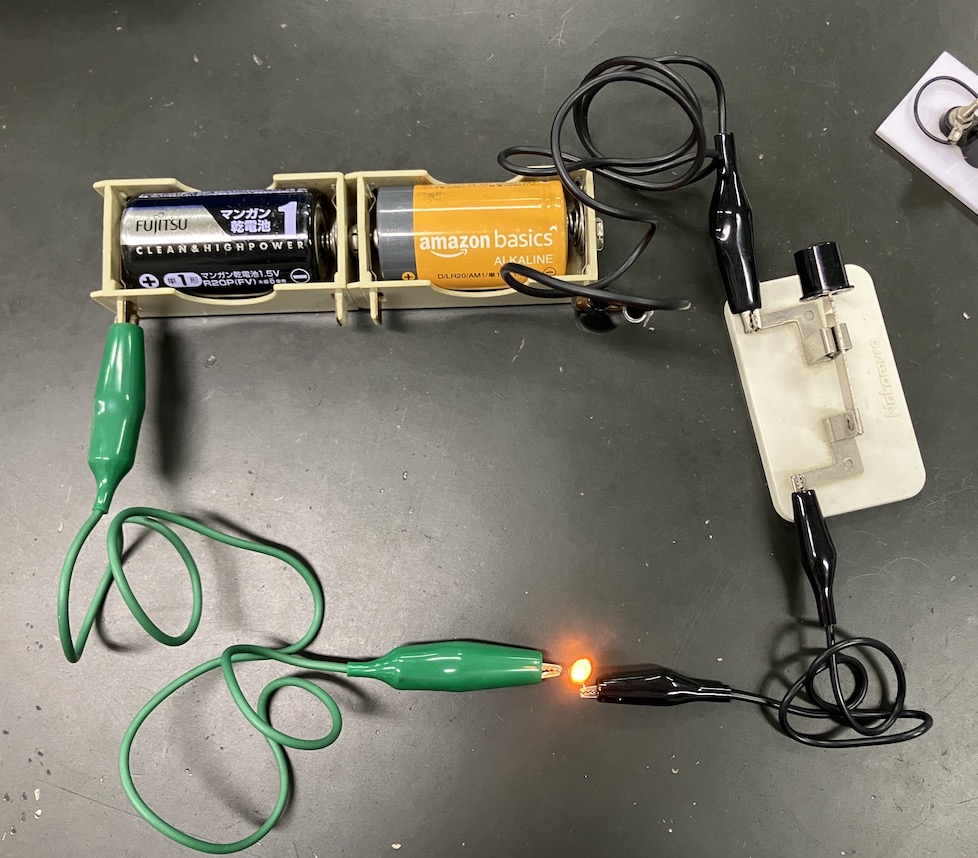
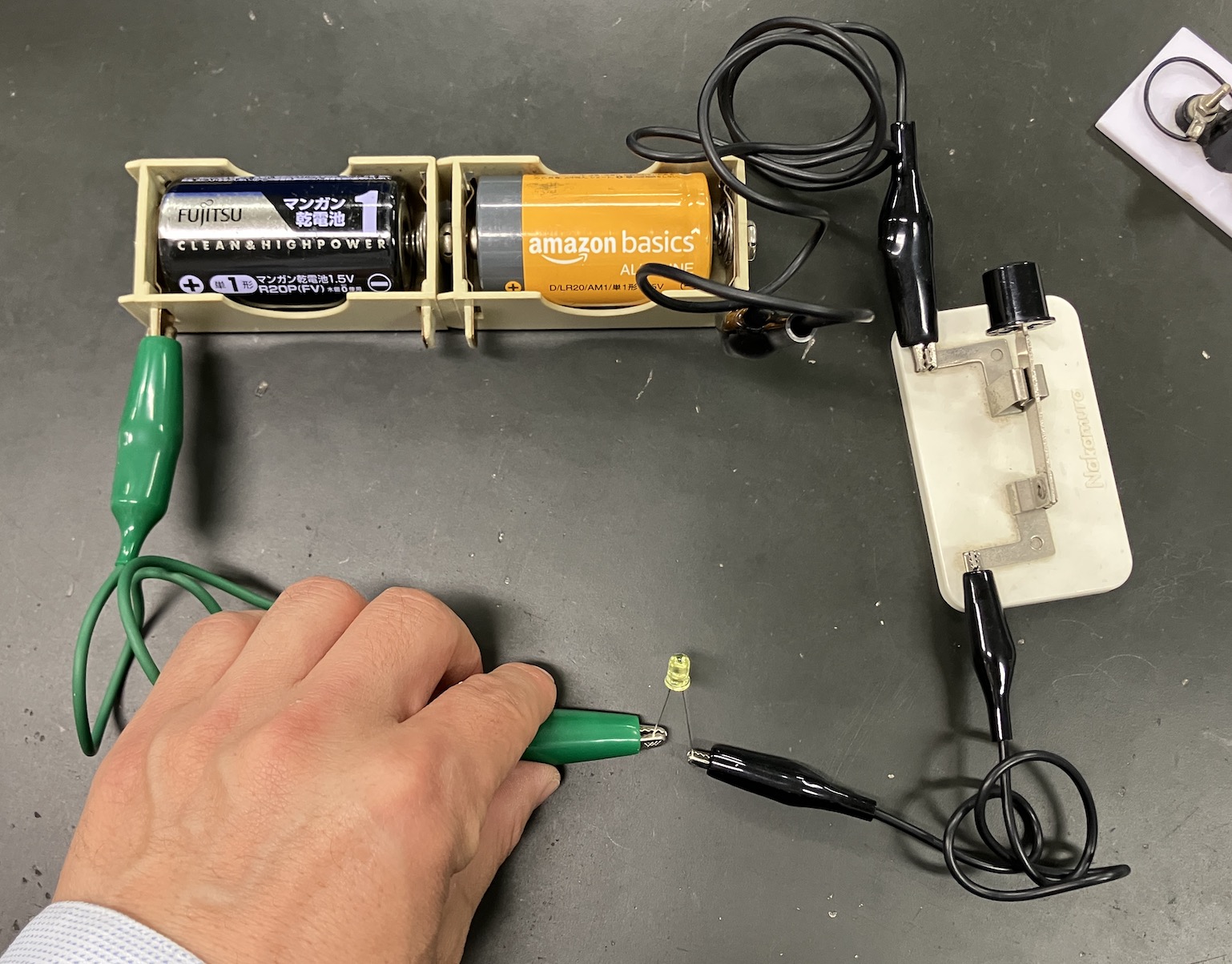
Why does that happen?
Once students understand why they are learning something, science becomes far more exciting — and far more meaningful.
The next time you see the inside of an electronic device or glance at a building blueprint, try looking for the elegant simplicity hidden within the design.
Contact & Requests
Making the wonders of science feel closer and more accessible!
I share fun science experiments you can try at home, along with easy-to-understand explanations and tips. Feel free to explore more!
・The contents of “Science Notebook” have been published as a book. Learn more here
・Learn more about Ken Kuwako here
・For requests such as writing, lectures, science workshops, TV supervision, or appearances, click here
・Updates on new articles are posted on X!
 The Science Idea Channel features experiment videos!
9月のイチオシ実験!
お弁当箱をプラバンがわりにしてキーホルダーを作ろう!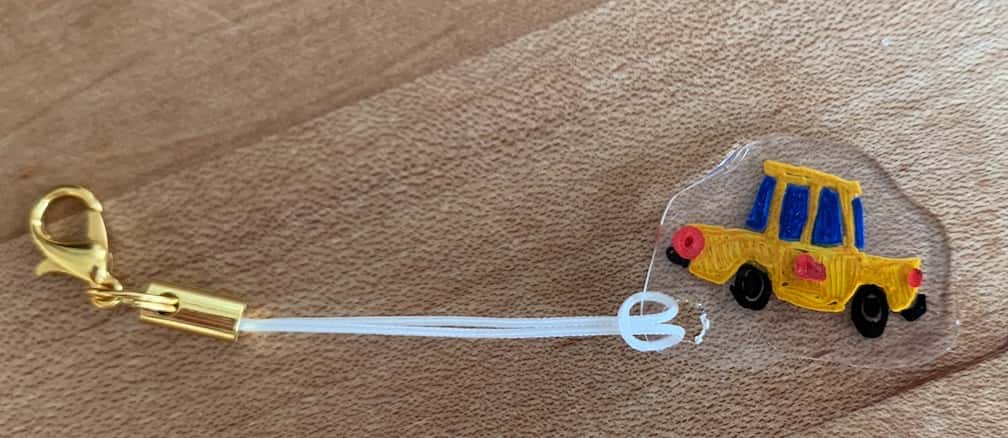
テレビ番組監修・イベント等のお知らせ
- 8月27日(木)科学監修番組放送予定
- 9月20日(日)ダビンチマスターズ出演予定
- 10月10日(土)11:15~12:00 千葉市科学フェスタ2026「桑子先生の回転科学ショー」にてサイエンスショーを行います。
- 12月26日(土) ナリカサイエンスアカデミー(教員向け実験講習会)開催
書籍のお知らせ
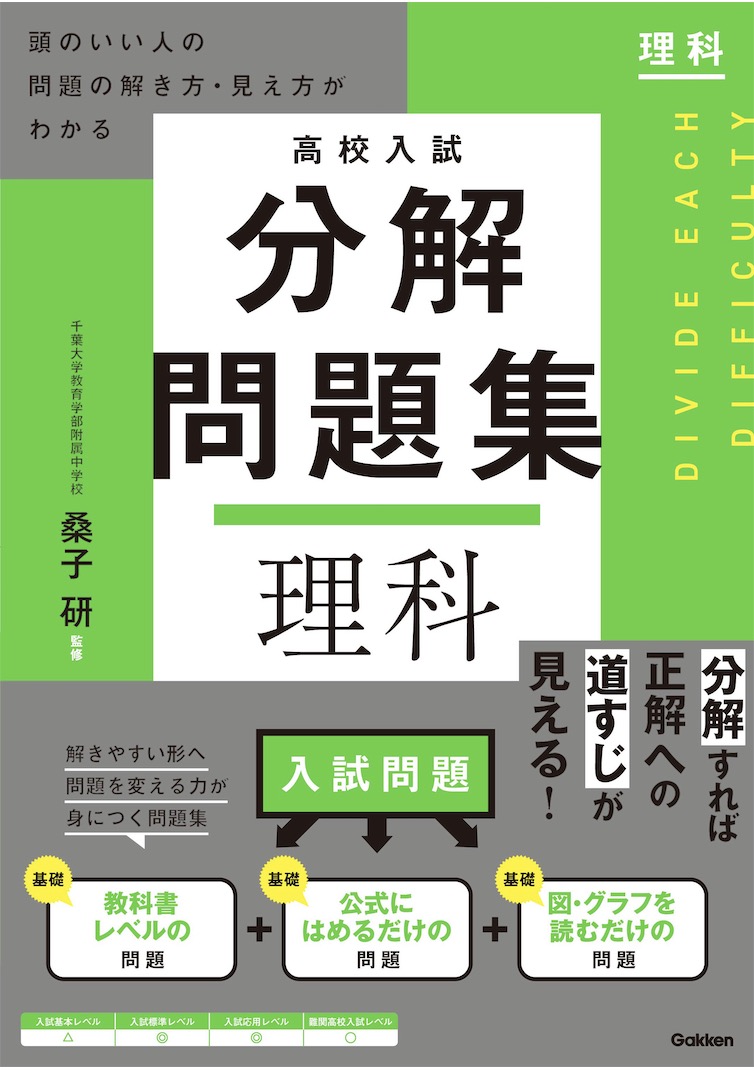
- 『高校入試 分解問題集 理科』(学研)…難しい問題も小さな問題に分解することで、問題を解くことができます。そんな分解の技術が身につくように深く関わりを持って作りました。
 『大人のための高校物理復習帳』(講談社)…一般向けに日常の物理について公式を元に紐解きました。特設サイトでは実験を多数紹介しています。※増刷がかかり6刷となりました(2026/02/01)
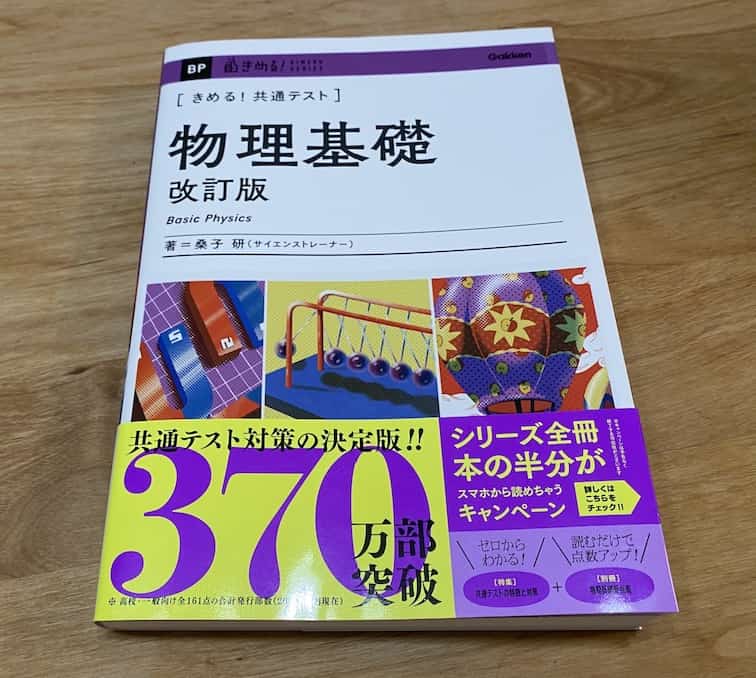
- 『きめる!共通テスト 物理基礎 改訂版』(学研)… 高校物理の参考書です。イラストを多くしてイメージが持てるように描きました。授業についていけない、物理が苦手、そんな生徒におすすめです。特設サイトはこちら。
各種SNS(更新情報をお届け!)
【日本語】X(Twitter)/instagram/Facebook 【英語】BlueSky/Threads
Explore
- 楽しい実験…お子さんと一緒に夢中になれるイチオシの科学実験を多数紹介しています。また、高校物理の理解を深めるための動画教材も用意しました。
- 理科の教材… 理科教師をバックアップ!授業の質を高め、準備を効率化するための選りすぐりの教材を紹介しています。
- Youtube…科学実験等の動画を配信しています。
- 科学ラジオ …科学トピックをほぼ毎日配信中!AI技術を駆使して作成した「耳で楽しむ科学」をお届けします。
- 講演 …全国各地で実験講習会・サイエンスショー等を行っています。
- About …「科学のネタ帳」のコンセプトや、運営者である桑子研のプロフィール・想いをまとめています。
- お問い合わせ …実験教室のご依頼、執筆・講演の相談、科学監修等はこちらのフォームからお寄せください。