We Peeked Inside Photosynthesis! — Hunting for Starch in Waterweed Leaves Under the Microscope
I’m Ken Kuwako, the Science Trainer. Every day is an experiment.
Textbooks tell us that plants use light to make starch. But have you ever stopped and wondered, “Does that really happen?” This time, we carried out an experiment to witness the process with our own eyes. The moment tiny granules inside the leaf suddenly turned dark under the microscope, it was impossible not to say, “Whoa!”
What You’ll Need
A microscope, Elodea (Canadian waterweed), slide glass, cover glass, tweezers, iodine solution, electric pot, and a light source.
Preparing the Experiment — “Light” Leaves vs. “Dark” Leaves
For this experiment, we prepared two different types of leaves under different conditions. The Elodea was collected about a day and a half beforehand. One group of leaves was kept in complete darkness for 1.5 days so the plants would consume as much stored starch as possible.
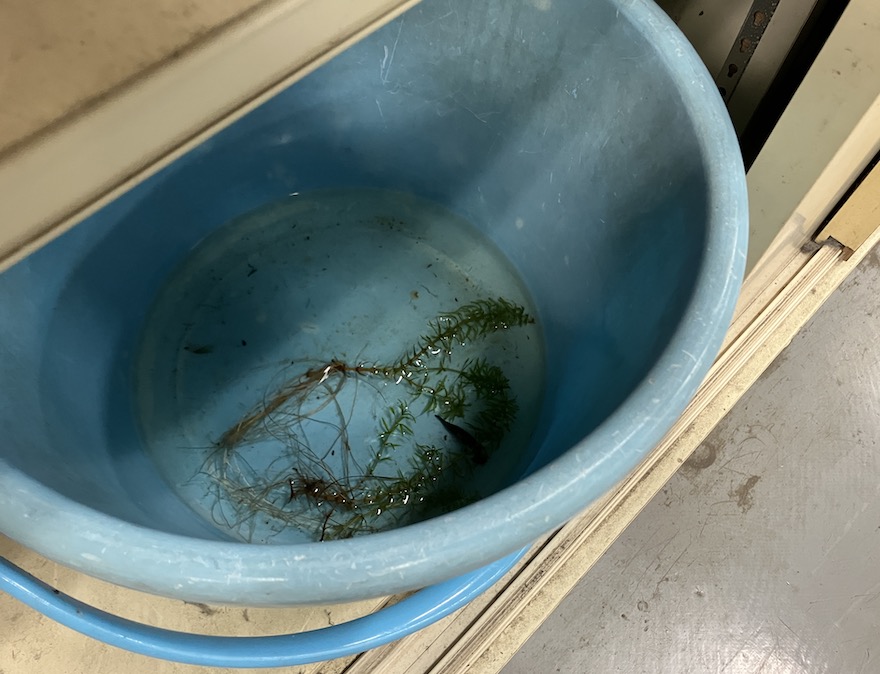
We placed the plants inside a shelf to block out all light.
The other group was exposed to artificial light for the same 1.5-day period so photosynthesis could continue actively. This difference — “light” versus “no light” — is the key to the entire experiment. Here is the light we used. (Plant Growth Light (Amazon))
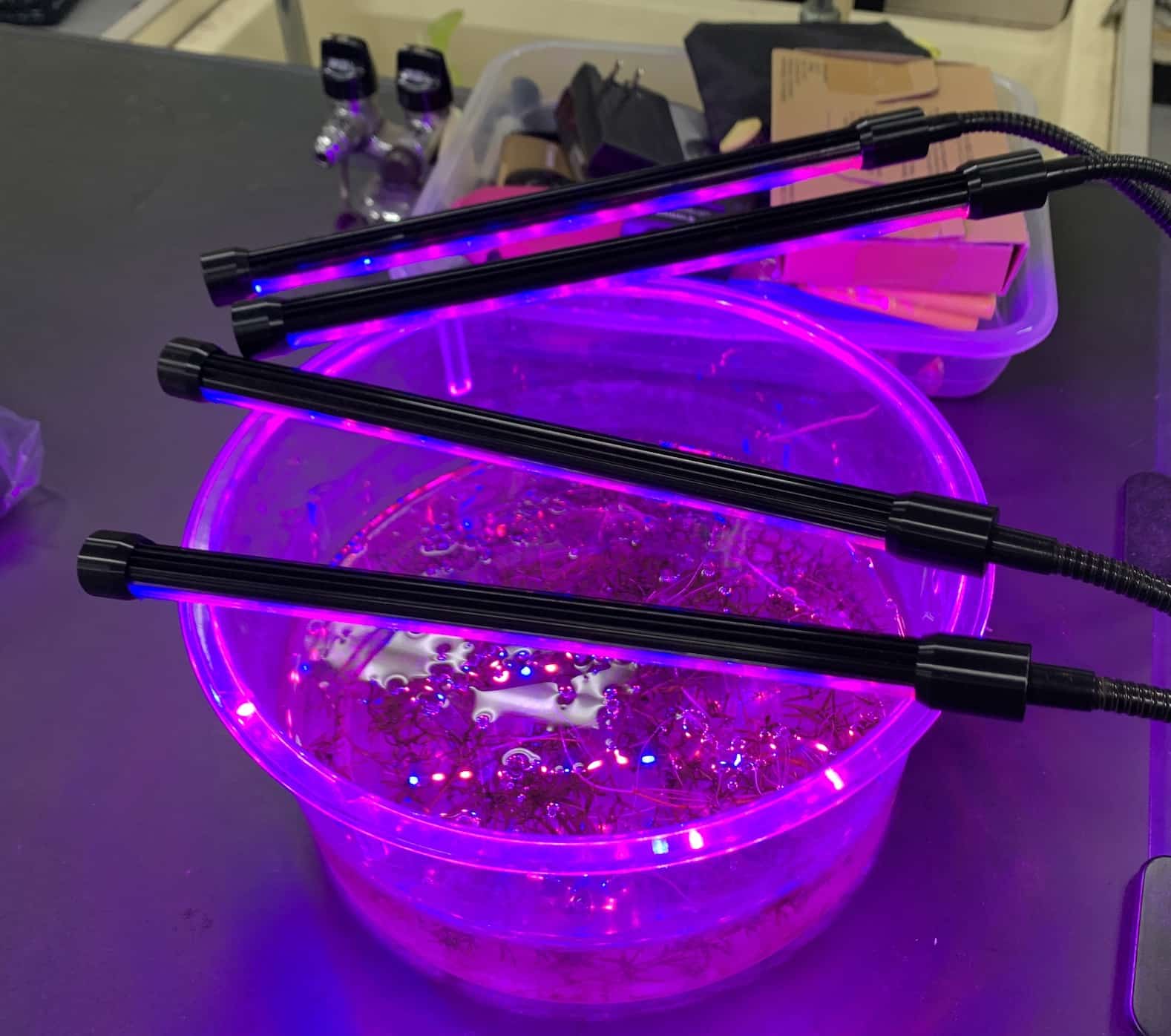
This light is specially designed for plant photosynthesis. Some teaching guides recommend using infrared or longer-wavelength light. But why would longer wavelengths work better?
Photosynthesis actually relies on two reaction systems called Photosystem I and Photosystem II, and each absorbs slightly different wavelengths of light. Far-red light around 700 nm is said to drive Photosystem I especially efficiently.
I wonder whether this effect is unique to Elodea or true for plants in general. If anyone knows more about this, I’d love to hear your thoughts.
Boiling the Leaves — Why Boil Them?
Next, we boiled the prepared leaves in an electric pot for about five minutes. The electric pot turned out to be incredibly useful.
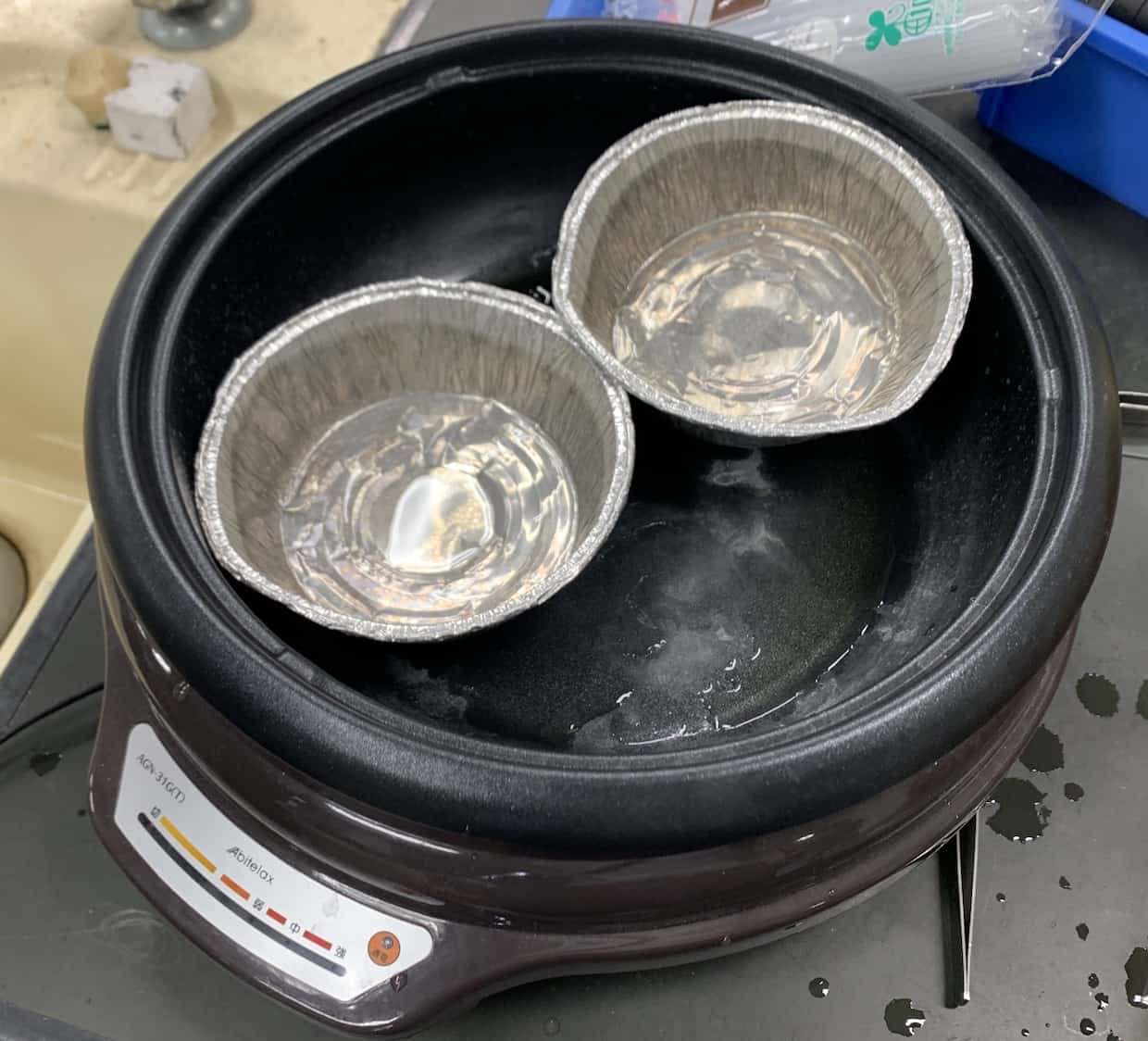
If you’re wondering, “Why boil the leaves?” — great question.
Boiling breaks down the leaf cells, allowing the iodine solution to penetrate more easily. It also softens the leaves, making them easier to observe under the microscope. We used two aluminum containers: one for the light-exposed leaves and one for the dark-treated leaves, so we wouldn’t mix them up during processing.
Staining with Iodine — Hunting for Starch
After boiling, we picked up a leaf with tweezers, placed it on a slide glass, and gently removed excess water with kitchen paper. Then we added iodine solution and waited about one minute. After covering the sample with a cover glass, we observed it under the microscope.
Iodine reacts with starch and turns blue-purple to black. This famous reaction is called the iodine-starch reaction. In other words, wherever the sample turns dark, starch is present.
First, we observed the leaf without adding iodine solution.
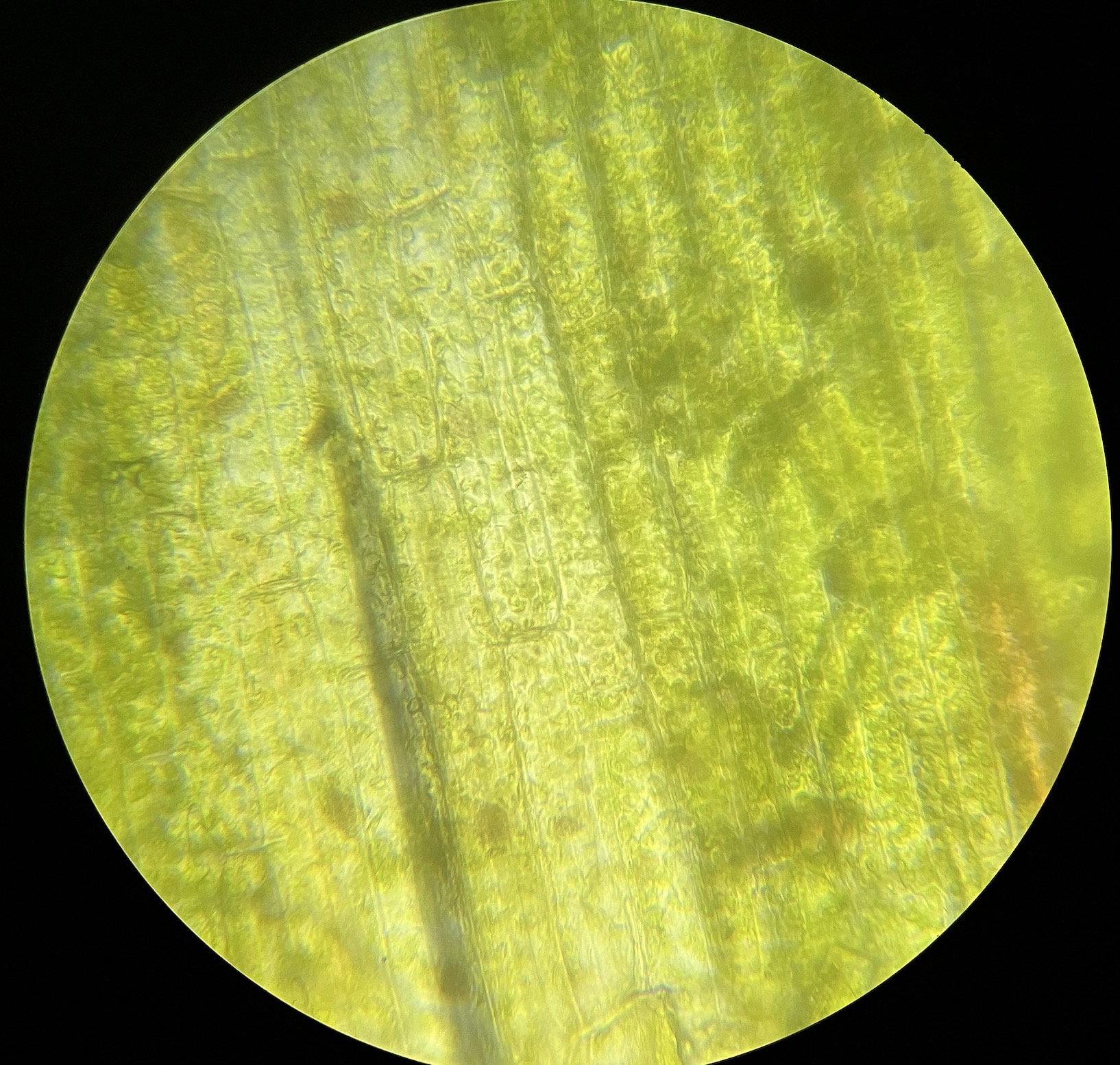
Zooming in closer…
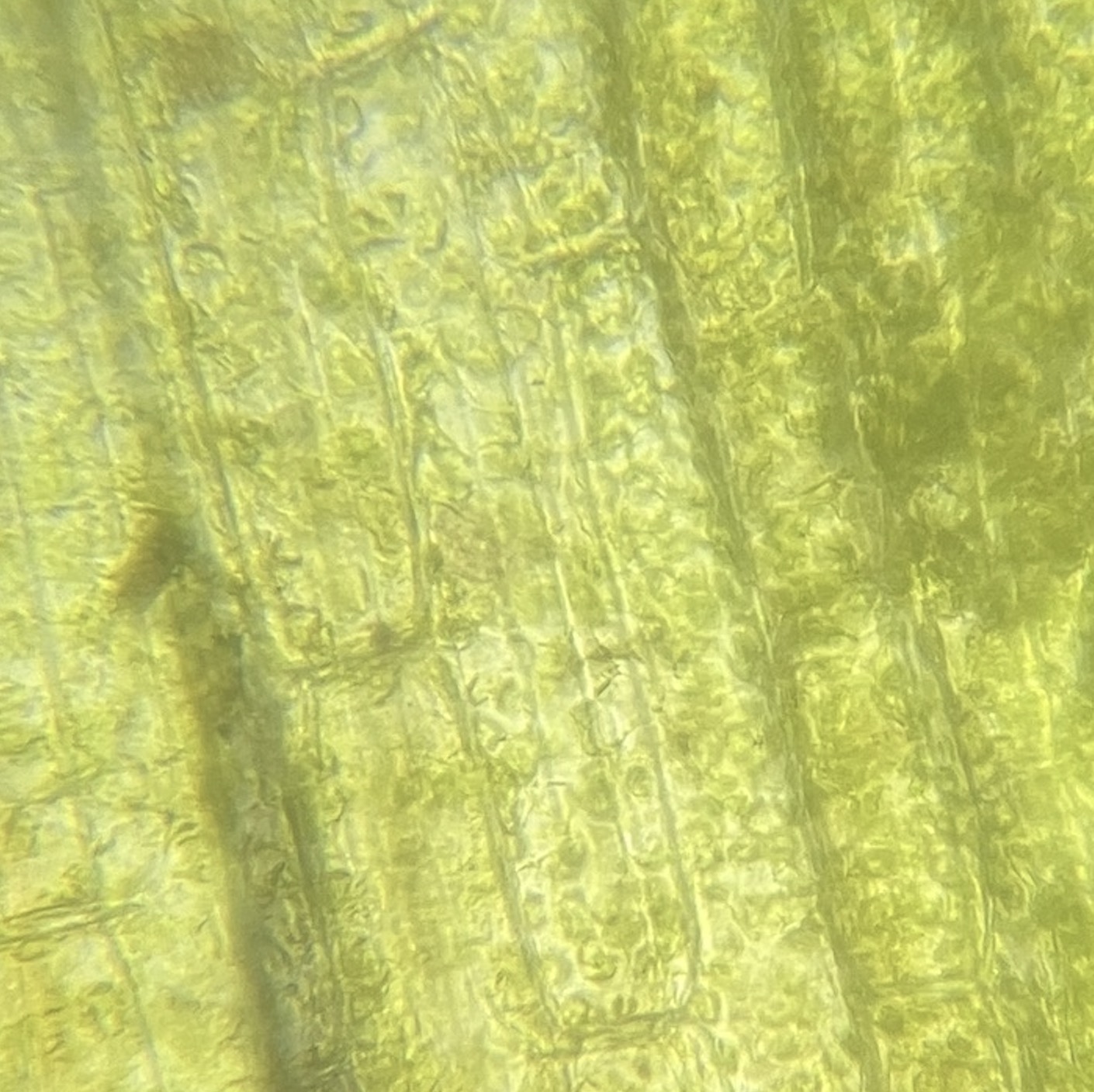
The structures believed to be chloroplasts were not stained.
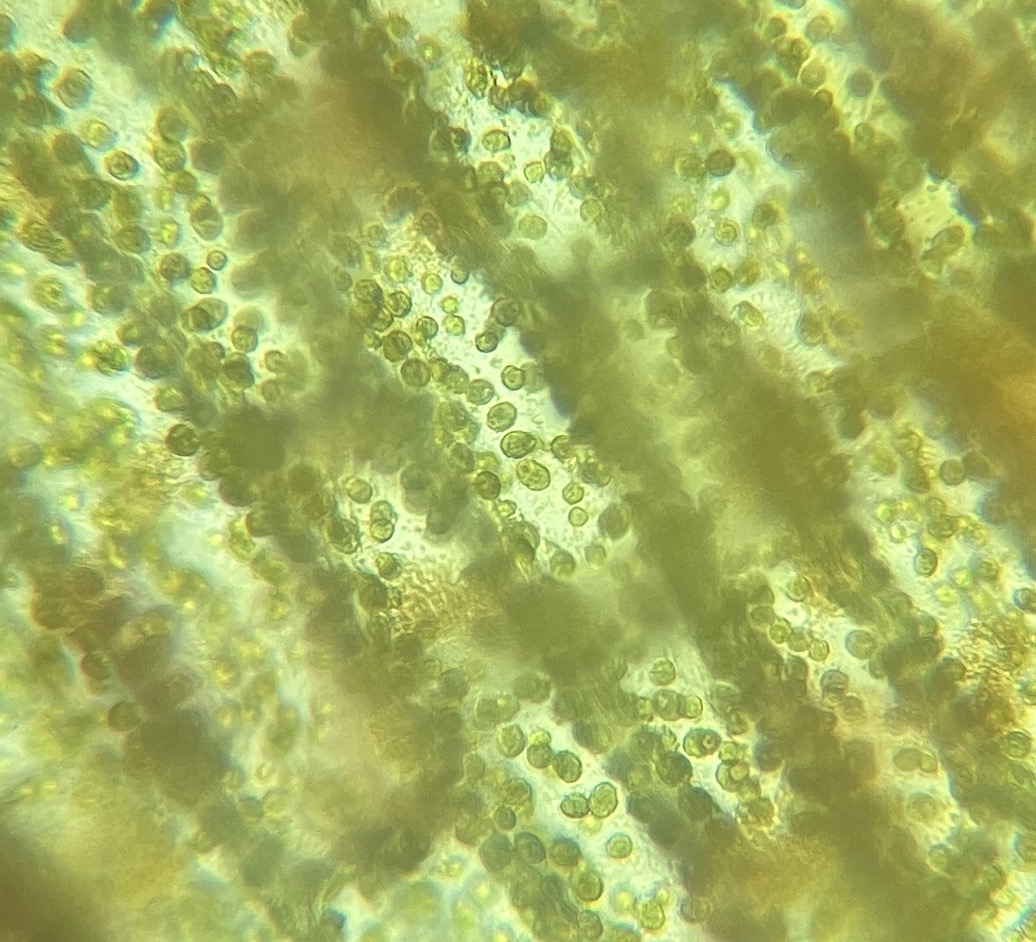
Next, we observed a leaf treated with iodine solution. This sample had been kept in the dark.
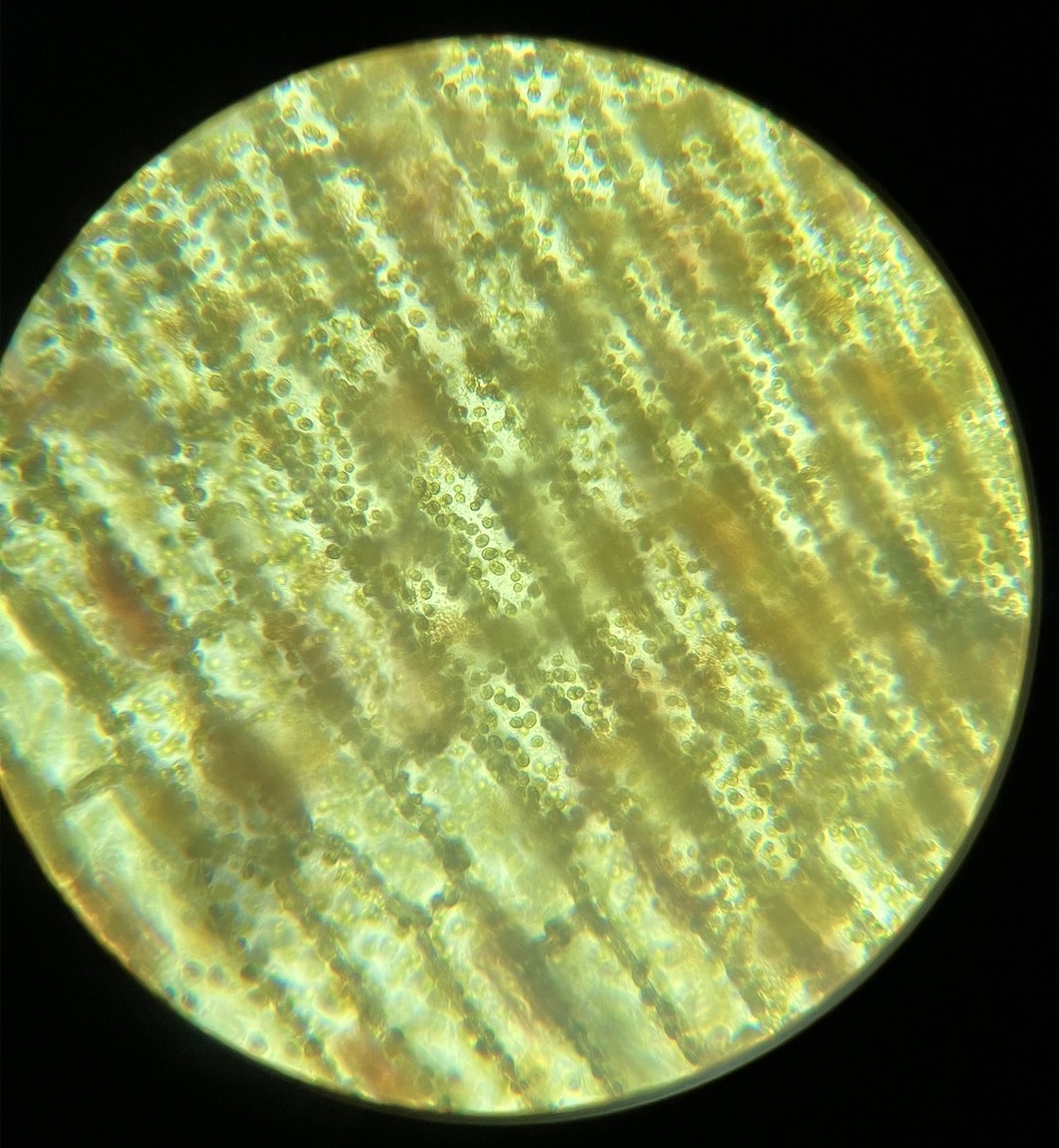
Maybe there’s a slight amount of staining?
Now for the leaves that stayed under the light.
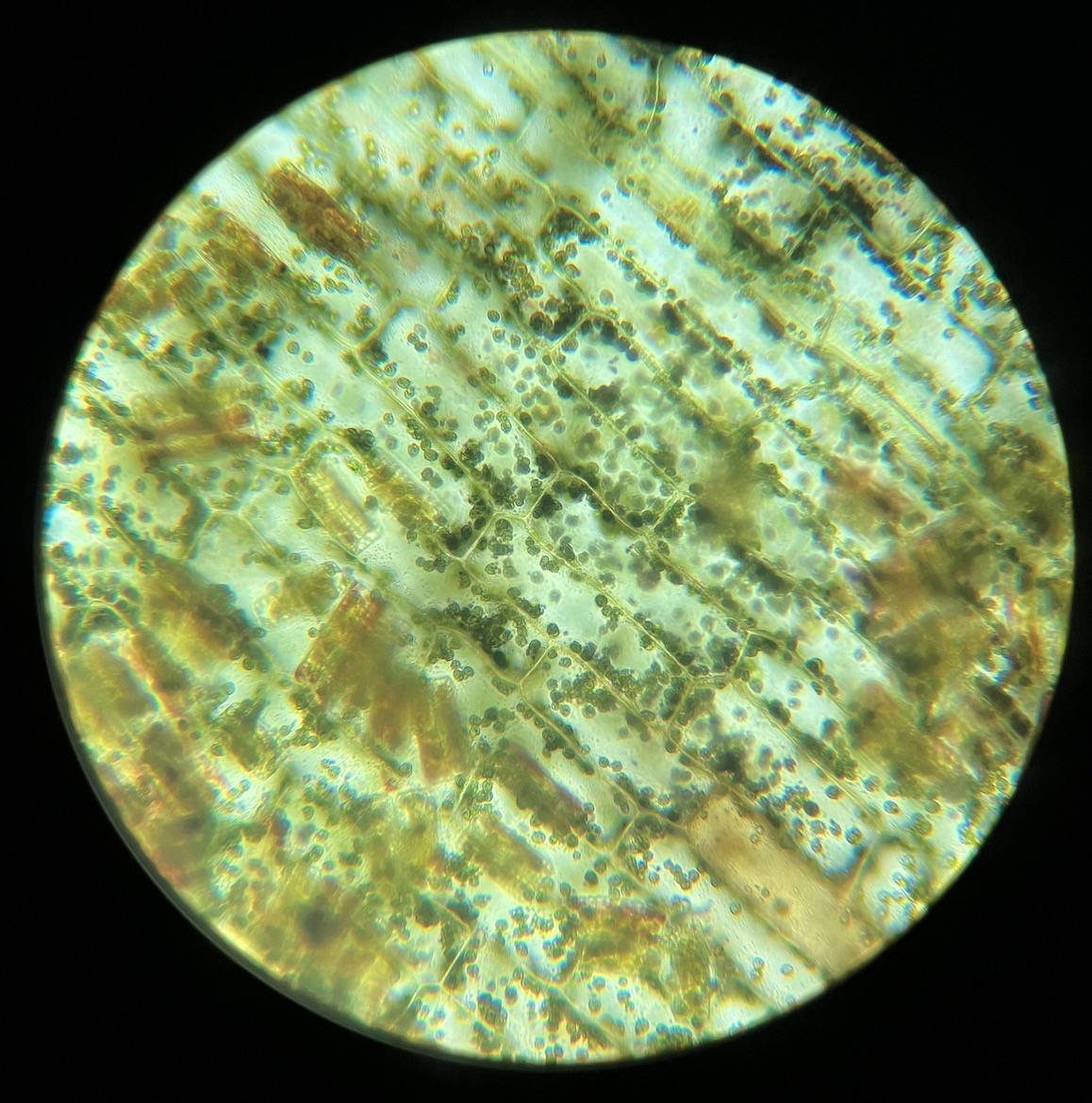
Magnified view:
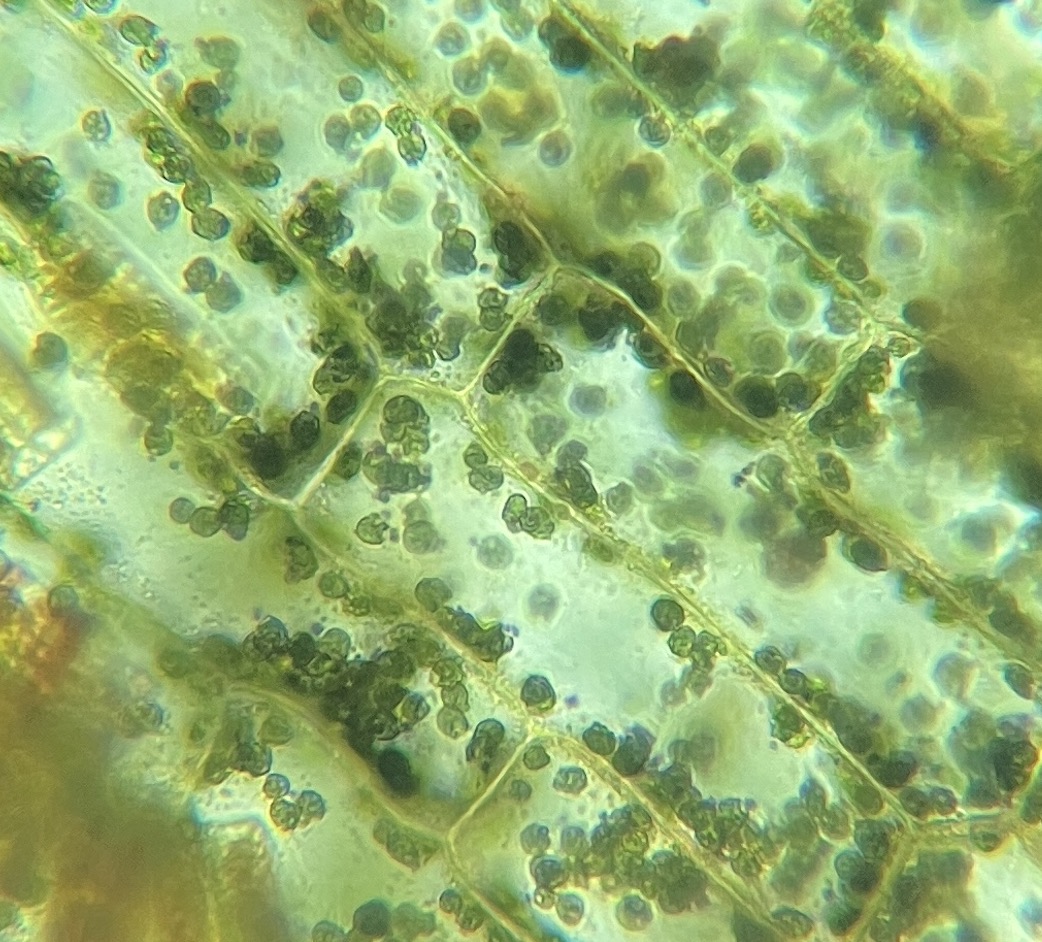
The black-stained structures are chloroplasts inside the leaf cells.
That’s right — the true “worksite” of photosynthesis is inside these chloroplasts. Let’s compare the results side by side.
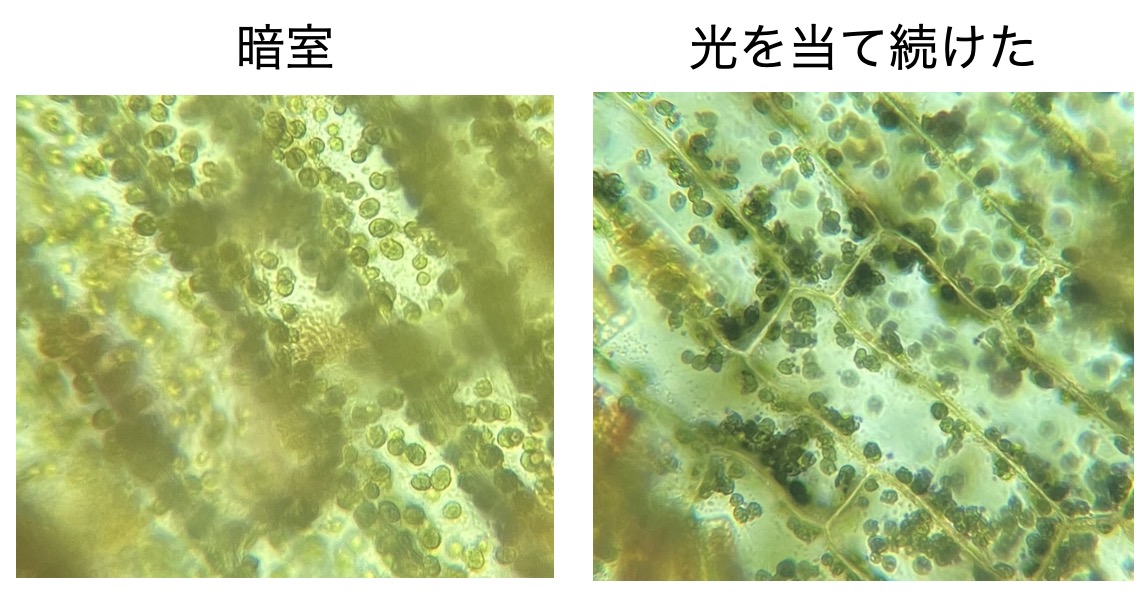
You can clearly see a difference in how strongly the chloroplasts are stained. Chloroplasts are tiny green structures found only in plant cells. Inside them, light energy is used to turn water and carbon dioxide into starch (sugars) and oxygen.
In this experiment, only the chloroplasts from the light-exposed leaves turned black with iodine solution, while the leaves kept in darkness showed little to no staining. This gave us direct visual evidence that photosynthesis truly takes place inside chloroplasts.
Those tiny black dots seen through the microscope may look small, but they are producing the energy source used by nearly every living thing on Earth — powered by sunlight. Even the starch in the rice we eat originally came from photosynthesis inside plant chloroplasts.
Chloroplasts are like microscopic factories supporting life on our planet.
If you ever get the chance, take a look at the “scene of photosynthesis” through a microscope yourself.
Contact & Requests
We want to make the wonder and excitement of science feel closer to everyday life! Here you’ll find easy-to-understand science experiments you can try at home, along with helpful tips and explanations. Feel free to explore more experiments!
・The content from “Science Notebook” has been published as a book. Learn more here
・About the creator, Ken Kuwako: here
・For inquiries about writing, lectures, science workshops, TV supervision, appearances, and more: here
・Follow updates on new articles on X!
 Science Neta Channel features science experiment videos!
9月のイチオシ実験!
お弁当箱をプラバンがわりにしてキーホルダーを作ろう!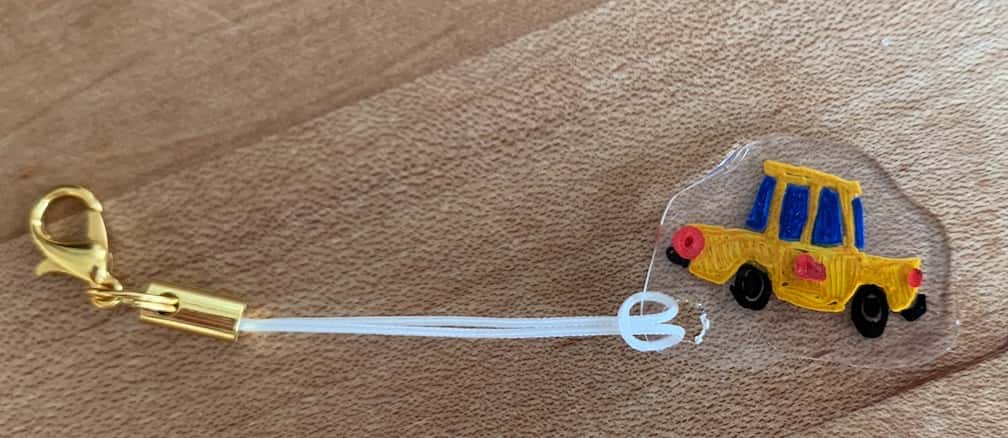
テレビ番組監修・イベント等のお知らせ
- 8月27日(木)科学監修番組放送予定
- 9月20日(日)ダビンチマスターズ出演予定
- 10月10日(土)11:15~12:00 千葉市科学フェスタ2026「桑子先生の回転科学ショー」にてサイエンスショーを行います。
- 12月26日(土) ナリカサイエンスアカデミー(教員向け実験講習会)開催
書籍のお知らせ
- 『高校入試 分解問題集 理科』(学研)…難しい問題も小さな問題に分解することで、問題を解くことができます。そんな分解の技術が身につくように深く関わりを持って作りました。
 『大人のための高校物理復習帳』(講談社)…一般向けに日常の物理について公式を元に紐解きました。特設サイトでは実験を多数紹介しています。※増刷がかかり6刷となりました(2026/02/01)
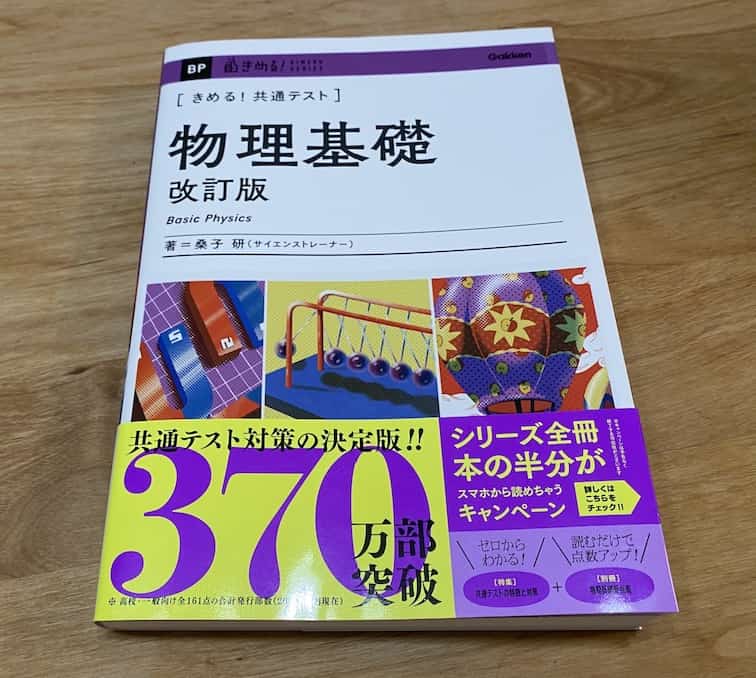
- 『きめる!共通テスト 物理基礎 改訂版』(学研)… 高校物理の参考書です。イラストを多くしてイメージが持てるように描きました。授業についていけない、物理が苦手、そんな生徒におすすめです。特設サイトはこちら。
各種SNS(更新情報をお届け!)
【日本語】X(Twitter)/instagram/Facebook 【英語】BlueSky/Threads
Explore
- 楽しい実験…お子さんと一緒に夢中になれるイチオシの科学実験を多数紹介しています。また、高校物理の理解を深めるための動画教材も用意しました。
- 理科の教材… 理科教師をバックアップ!授業の質を高め、準備を効率化するための選りすぐりの教材を紹介しています。
- Youtube…科学実験等の動画を配信しています。
- 科学ラジオ …科学トピックをほぼ毎日配信中!AI技術を駆使して作成した「耳で楽しむ科学」をお届けします。
- 講演 …全国各地で実験講習会・サイエンスショー等を行っています。
- About …「科学のネタ帳」のコンセプトや、運営者である桑子研のプロフィール・想いをまとめています。
- お問い合わせ …実験教室のご依頼、執筆・講演の相談、科学監修等はこちらのフォームからお寄せください。