Same White Light, Totally Different Inside! Uncovering the Secrets of Sunlight and Fluorescent Lamps with a Diffraction Grating
I’m science trainer Ken Kuwako. Every day is an experiment.
Today, I’d like to share an experiment where we observed white light using a diffraction grating. Sunlight and fluorescent light both look “white” to our eyes, but when you break them down into their components, they turn out to be completely different kinds of light. Let’s take a peek at those hidden differences with a diffraction grating (and remember—never look directly at the Sun!).
Check out the video below.
What Exactly Is a Diffraction Grating?
Here’s what a diffraction grating looks like. The viewing window contains the grating itself, and this particular one has 5,000 lines packed into every single centimeter. You can even buy them online quite easily.
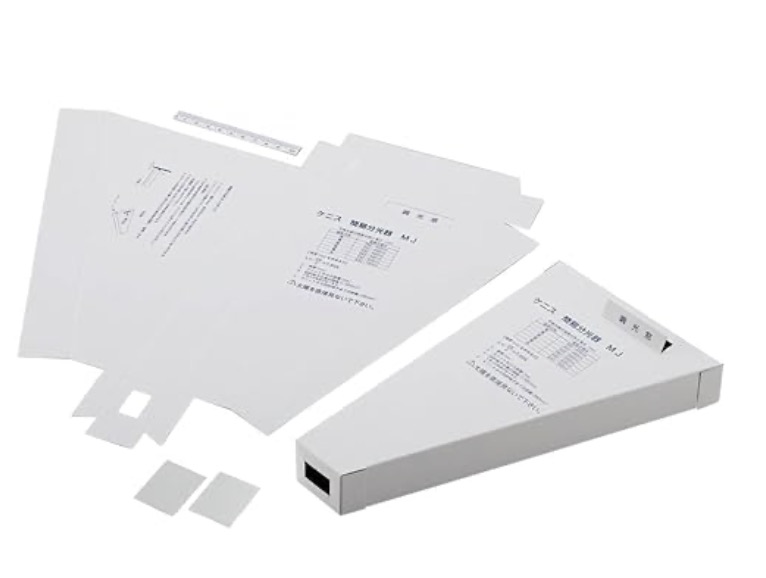
Simple Spectroscope Kit MJ (Set of 8) – Kenis
Five thousand lines per centimeter means each groove is spaced only 0.002 mm apart—that’s just 2 micrometers. When light hits these incredibly tiny grooves, each wavelength bends at a slightly different angle, causing the colors to spread apart. It’s exactly the same reason the back of a CD or DVD shimmers with rainbow colors.
This particular spectroscope was purchased from Kenis. Light enters through the slit on the right side, passes through the diffraction grating attached to the viewing window, and the separated colors are projected to the left.
Breaking Apart Fluorescent Light — Strange “Lines” Appear
First, let’s look at fluorescent light. The band of light separates into blue, cyan, green, orange, and red from right to left.
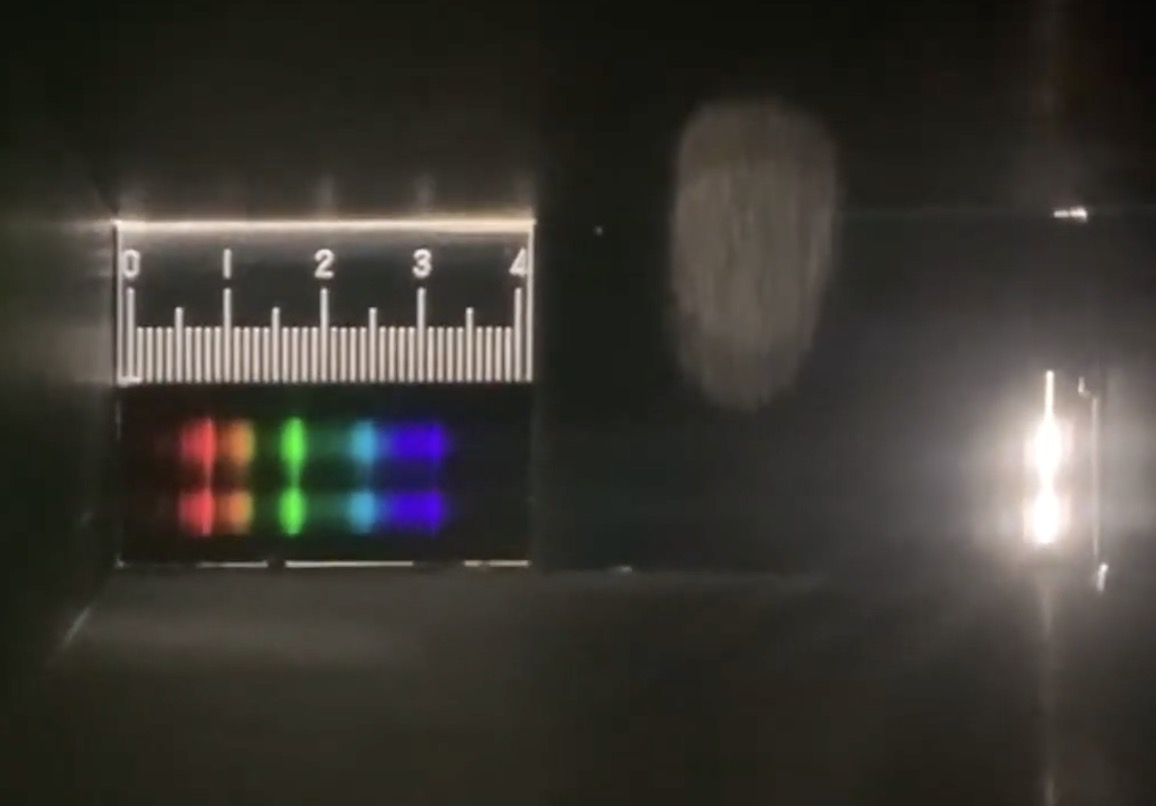
What’s fascinating is that the light doesn’t appear continuous. Instead, it shows up as distinct bright lines.
This happens because gases such as mercury inside the fluorescent lamp emit only specific wavelengths of light. Each type of gas produces its own unique set of wavelengths, known as an “emission spectrum.”
In fact, astronomers use this exact property to figure out what distant stars are made of. By splitting starlight into spectra, humanity can identify the ingredients of stars we could never physically visit. Simply by analyzing light, we can uncover the chemistry of the universe.
What Happens When You Split Sunlight?
Next, we examined sunlight. Once again, be extremely careful and never look directly at the Sun.
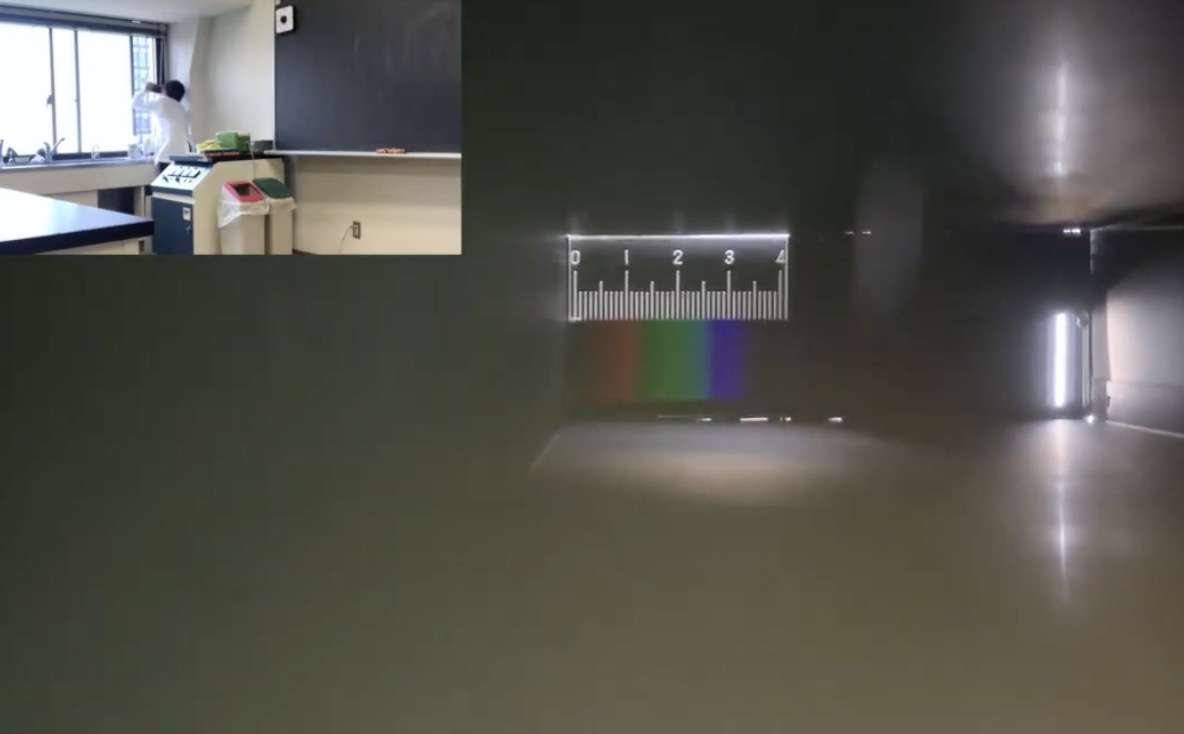
Here’s the result. The colors smoothly transition from blue on the left to red on the right, just like a rainbow.
Unlike the sharp “lines” seen in fluorescent light, every color blends continuously into the next. This is called a “continuous spectrum.”
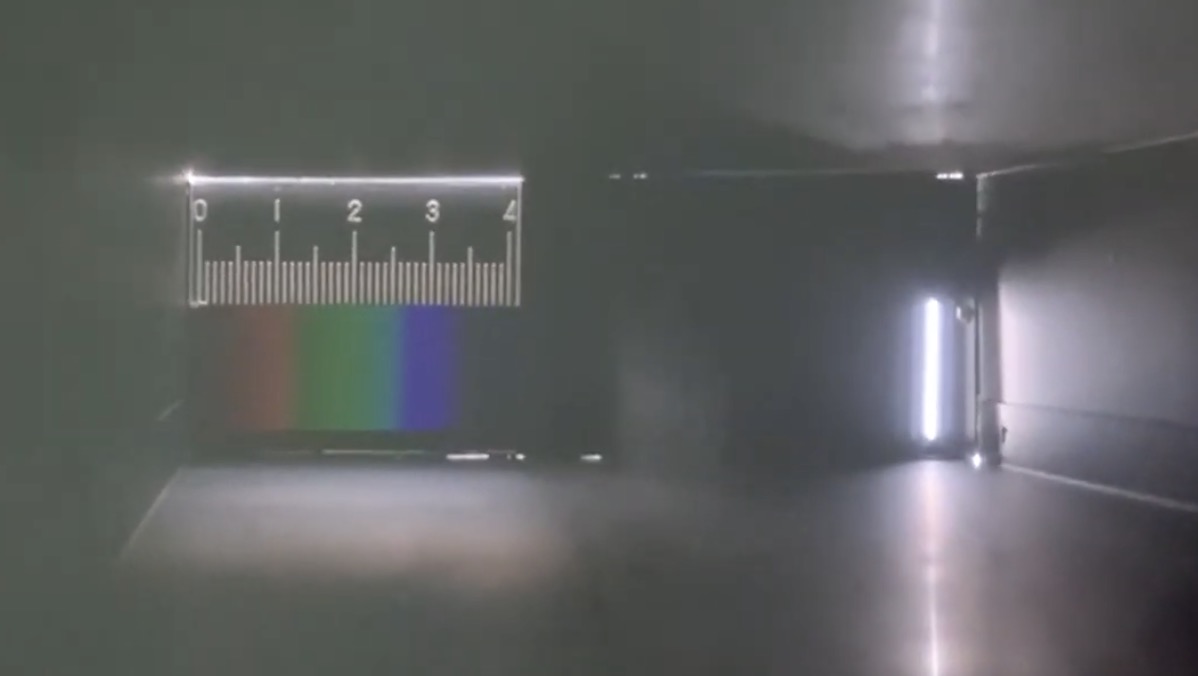
In other words, sunlight contains light of every visible wavelength.
The reason we see rainbows after rain is that tiny water droplets in the air act like miniature prisms, separating sunlight into different colors. The continuous spectrum seen through the diffraction grating is essentially the same phenomenon happening right before your eyes.
If you’ve studied diffraction formulas in school, try comparing them with what you observed here. Why does blue appear closer to the center while red spreads farther outward? The key lies in the relationship between wavelength and diffraction angle.
Blue light has a shorter wavelength, while red light has a longer one. Start from that idea, and the answer may reveal itself naturally.
Contact & Requests
Let’s make the wonders of science feel closer and more exciting! Here you’ll find easy and fun science experiments you can try at home, along with clear explanations and helpful tips. Feel free to explore more!
・The “Science Notebook” content has been turned into a book. Learn more here
・Learn more about Ken Kuwako here
・For requests such as writing, lectures, science workshops, TV supervision, or appearances, click here
・Follow updates for new articles on X!
 Science Idea Channel features hands-on experiment videos!
10月のイチオシ実験!
テレビ番組監修・イベント等のお知らせ
- 10月27日(火) テレビ監修番組放送予定
- 11月27日(金) テレビ監修番組放送予定
- 12月26日(土) ナリカサイエンスアカデミー(教員向け実験講習会)開催
書籍のお知らせ
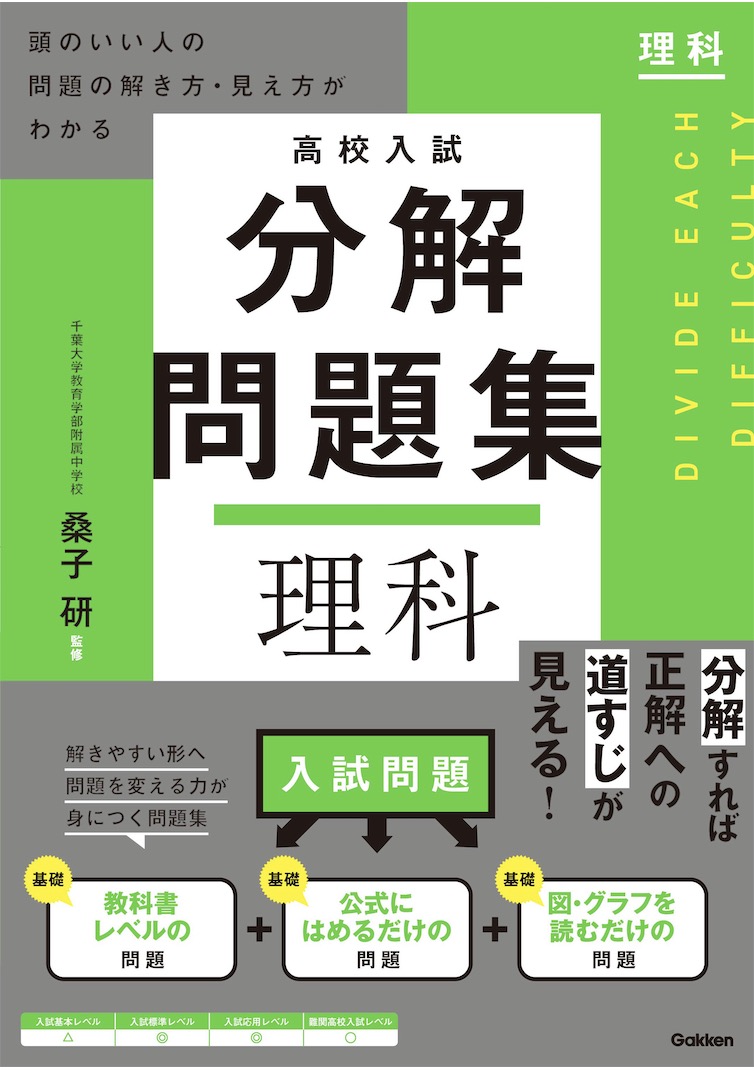
- 『高校入試 分解問題集 理科』(学研)…難しい問題も小さな問題に分解することで、問題を解くことができます。そんな分解の技術が身につくように深く関わりを持って作りました。
 『大人のための高校物理復習帳』(講談社)…一般向けに日常の物理について公式を元に紐解きました。特設サイトでは実験を多数紹介しています。※増刷がかかり6刷となりました(2026/02/01)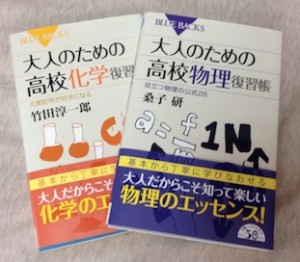
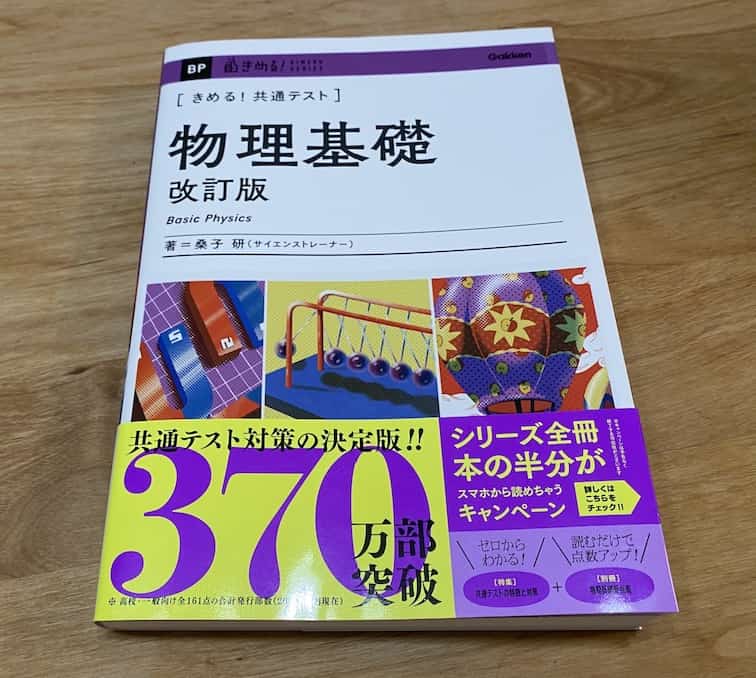
- 『きめる!共通テスト 物理基礎 改訂版』(学研)… 高校物理の参考書です。イラストを多くしてイメージが持てるように描きました。授業についていけない、物理が苦手、そんな生徒におすすめです。特設サイトはこちら。
各種SNS(更新情報をお届け!)
【日本語】X(Twitter)/instagram/Facebook 【英語】BlueSky/Threads
Explore
- 楽しい実験…お子さんと一緒に夢中になれるイチオシの科学実験を多数紹介しています。また、高校物理の理解を深めるための動画教材も用意しました。
- 理科の教材… 理科教師をバックアップ!授業の質を高め、準備を効率化するための選りすぐりの教材を紹介しています。
- Youtube…科学実験等の動画を配信しています。
- 科学ラジオ …科学トピックをほぼ毎日配信中!AI技術を駆使して作成した「耳で楽しむ科学」をお届けします。
- 講演 …全国各地で実験講習会・サイエンスショー等を行っています。
- About …「科学のネタ帳」のコンセプトや、運営者である桑子研のプロフィール・想いをまとめています。
- お問い合わせ …実験教室のご依頼、執筆・講演の相談、科学監修等はこちらのフォームからお寄せください。