Step Into a Tiny Universe Under the Microscope! A Guide to Discovering “Living Works of Art” in Your Biotope
I am Ken Kuwako, your science trainer. Every day is an experiment.
Did you know that within a single drop of water, there lies an invisible universe as vibrant and wild as a jungle?
As spring arrives, life begins to bloom in school biotopes. This is the perfect season when diverse microorganisms emerge, offering a fantastic opportunity to share their wonders with students. Today, I’ll introduce a lesson on microscopic observation—an easy-to-do adventure into the micro-world using water right from your local biotope.
Lesson Prep: Gear Up for the Micro-Expedition!
The secret to a successful observation starts with choosing the right tools.
Collection Kit: Plastic bottles or beakers, pipettes, droppers, hole slide glasses, cover glasses, and tissues or cotton wool for water absorption.
Microscope: An optical microscope (40x to 400x magnification is ideal).
Resources: Diagrams of water fleas (Daphnia) and diatoms, and identification sheets to help name your finds.
How to Collect Microbes: Target the Creatures’ Hideouts!
First, collect water from a school biotope, a pond, or even a nearby puddle. The trick here is not to just take “clean” water, but to bring back a combo of water plants + mud + murky sediment.
Areas around aquatic plants like Anacharis (waterweeds) are prime real estate for microorganisms. This is where water fleas and diatoms gather, significantly increasing the “population density” of your sample. If you look closely at the container, you might see tiny shadows jumping around. These are often crustaceans like Daphnia or Cyclops (relatives of shrimp and crabs), and they are the lead actors of our observation.
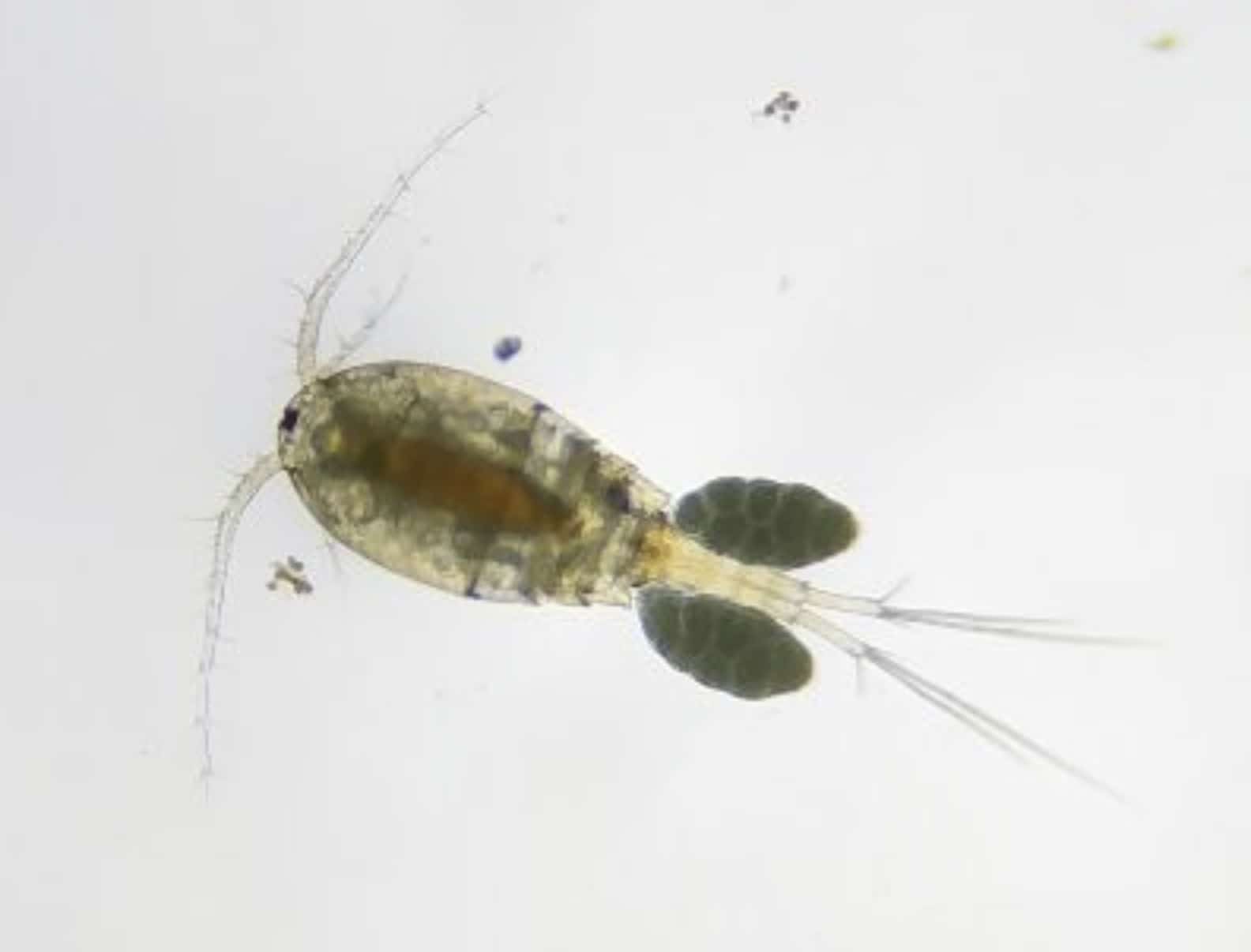
Cyclops (Water Flea)
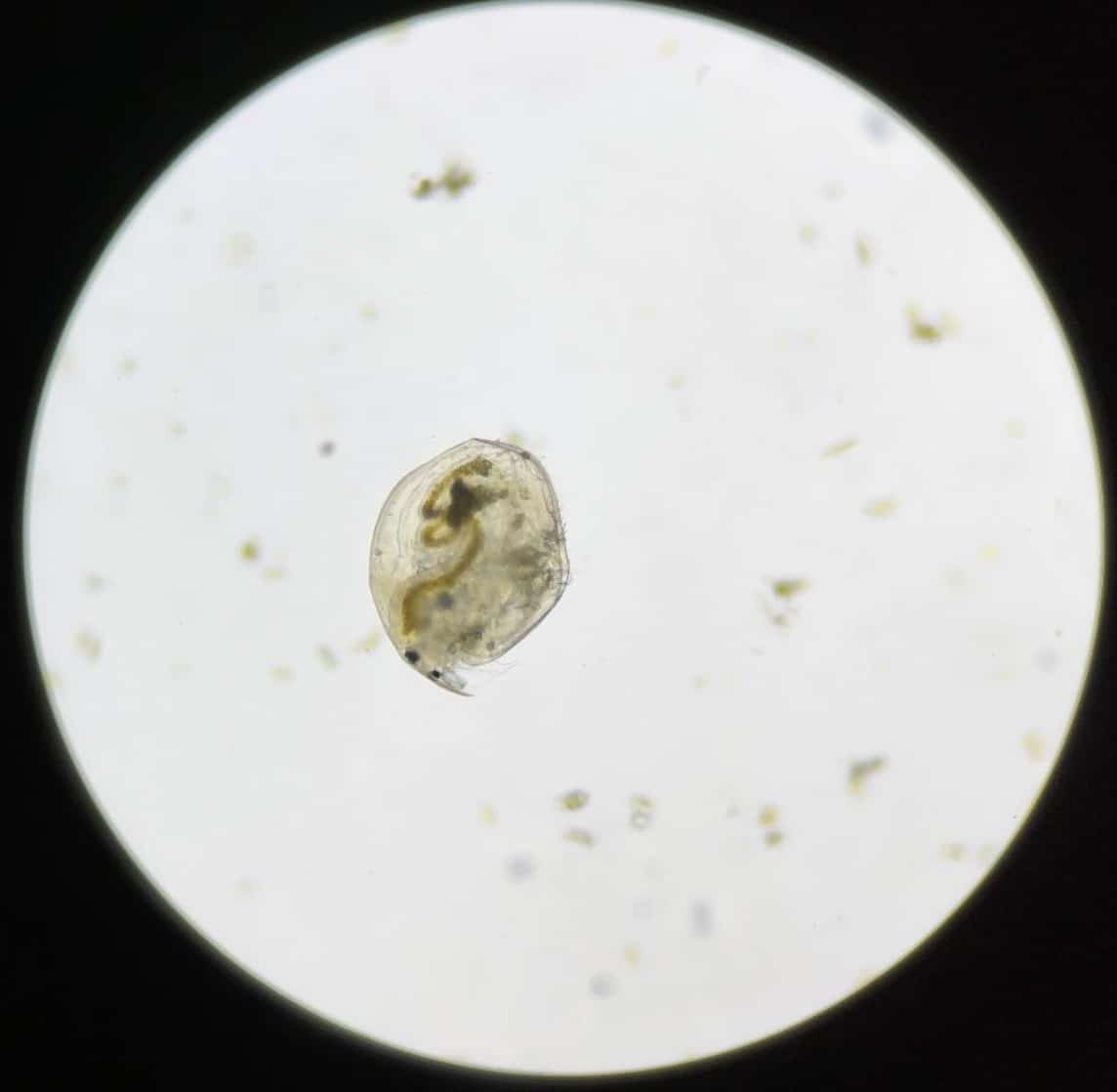
Observation Steps: The Ninja Trick to Freezing Motion
Microorganisms are incredibly fast, so you’ll need a little strategy. Aim for a moving Daphnia with your dropper and suck it up precisely. Place one drop in the center of a hole slide glass and gently place the cover glass on top.
Here is the pro tip! If there is too much water, the water flea will swim around and vanish from your field of view. Use a tissue to lightly soak up the excess water from the edges. This limits their movement, allowing you to observe them in detail.
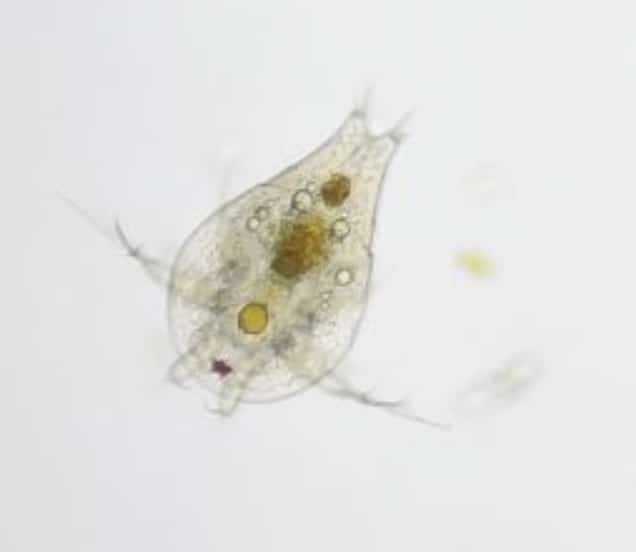
Residents of the Microscope: Wonders of the Micro-Universe
When you peer through the lens, unique creatures begin to reveal themselves.
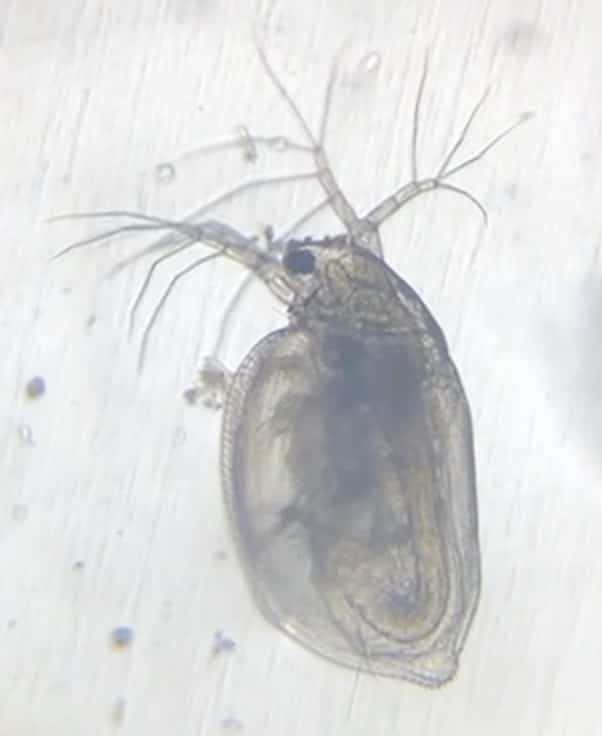
– Daphnia (40x magnification and up)
Their round, cute appearance makes them a hit with students. If you look through their transparent bodies, you can see their hearts beating rapidly. Despite their size, they are multicellular organisms just like shrimp. You can literally see the pulse of life.
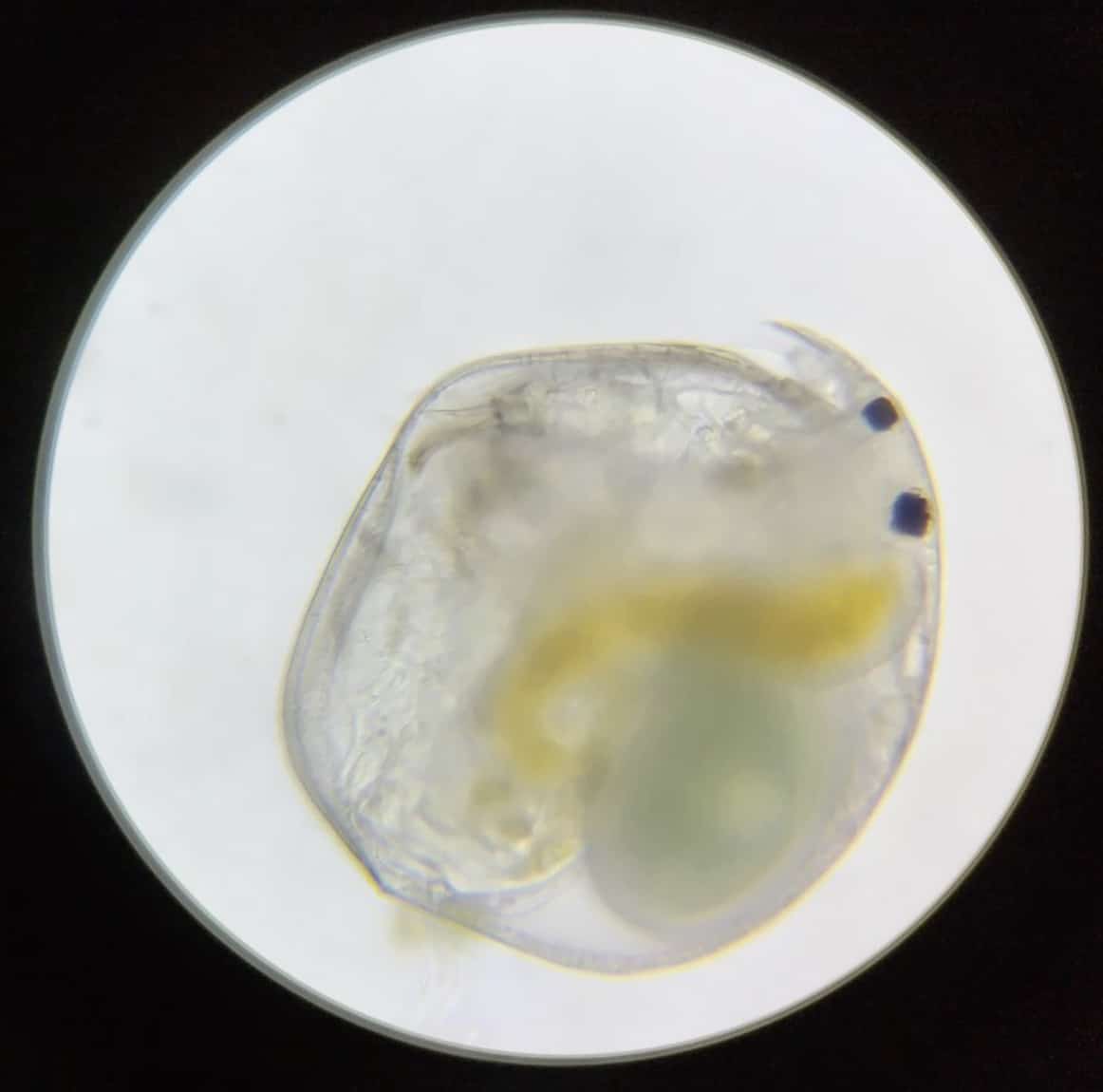
– Cyclops (100x magnification and up)
Similar to Daphnia but with a more streamlined body and powerful swimming style. You can distinguish them by the shape of their tails and the way they move.
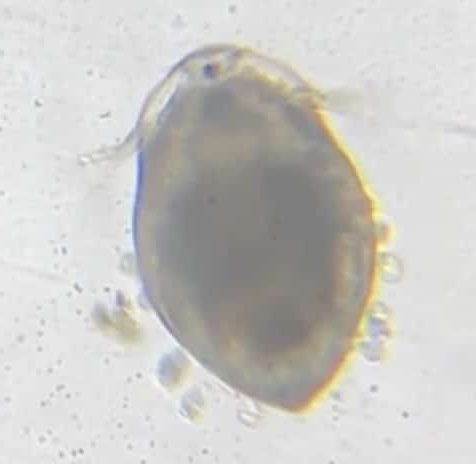
– Diatoms (200x to 400x magnification)
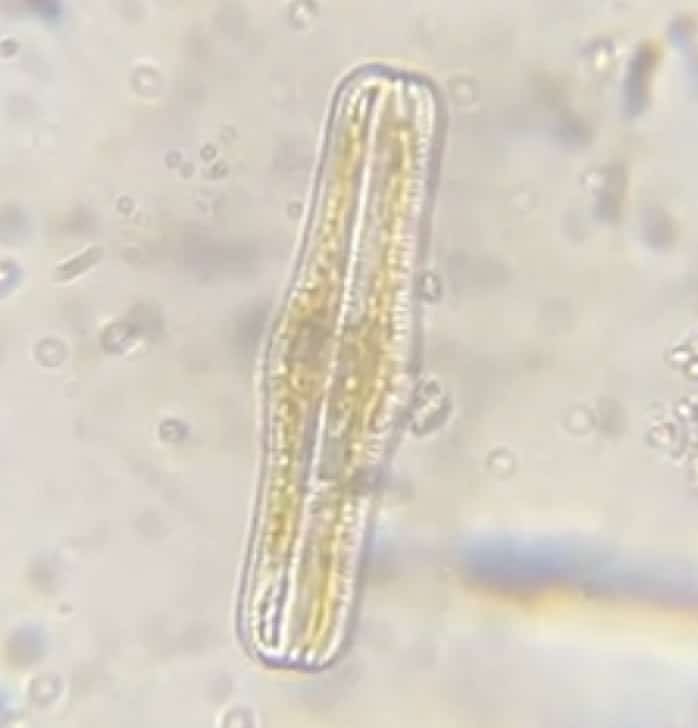
These are single-celled algae that look like exquisite glasswork. As a type of phytoplankton, they soak up light to perform photosynthesis and produce oxygen. In fact, it is said that a huge portion of the Earth’s oxygen is produced by these invisible algae!
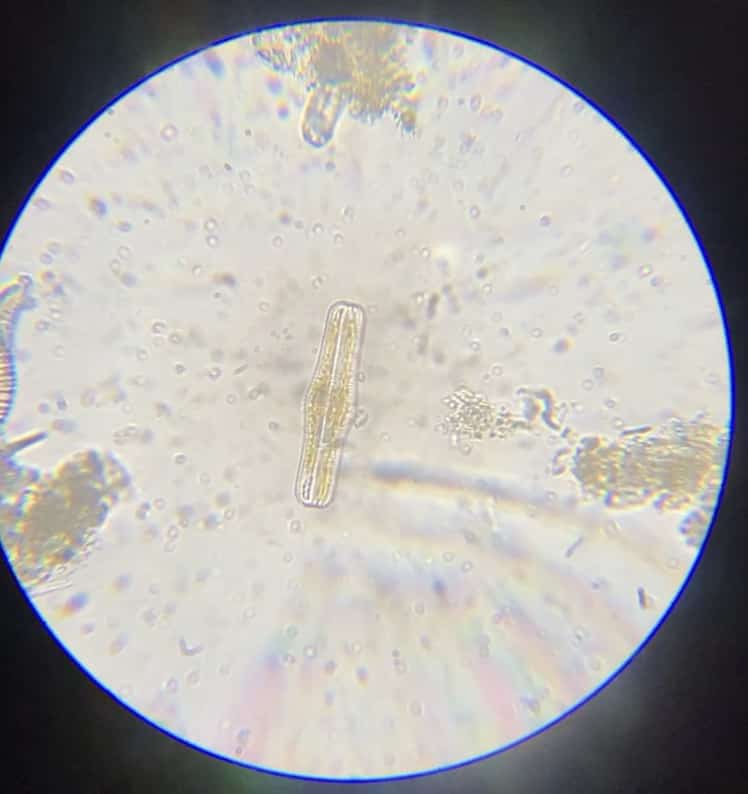
This is a close-up of a diatom. Its geometric patterns are truly artistic.
And here is Scenedesmus. As its Japanese name “Ikadamo” (raft algae) suggests, it is characterized by cells lined up like a raft.
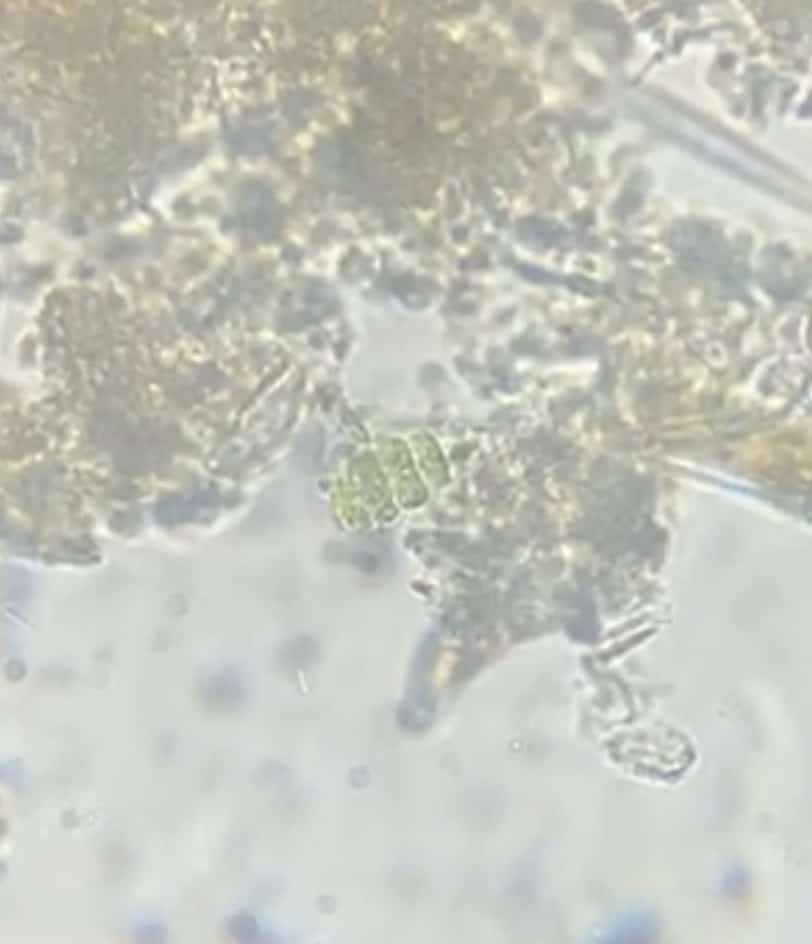
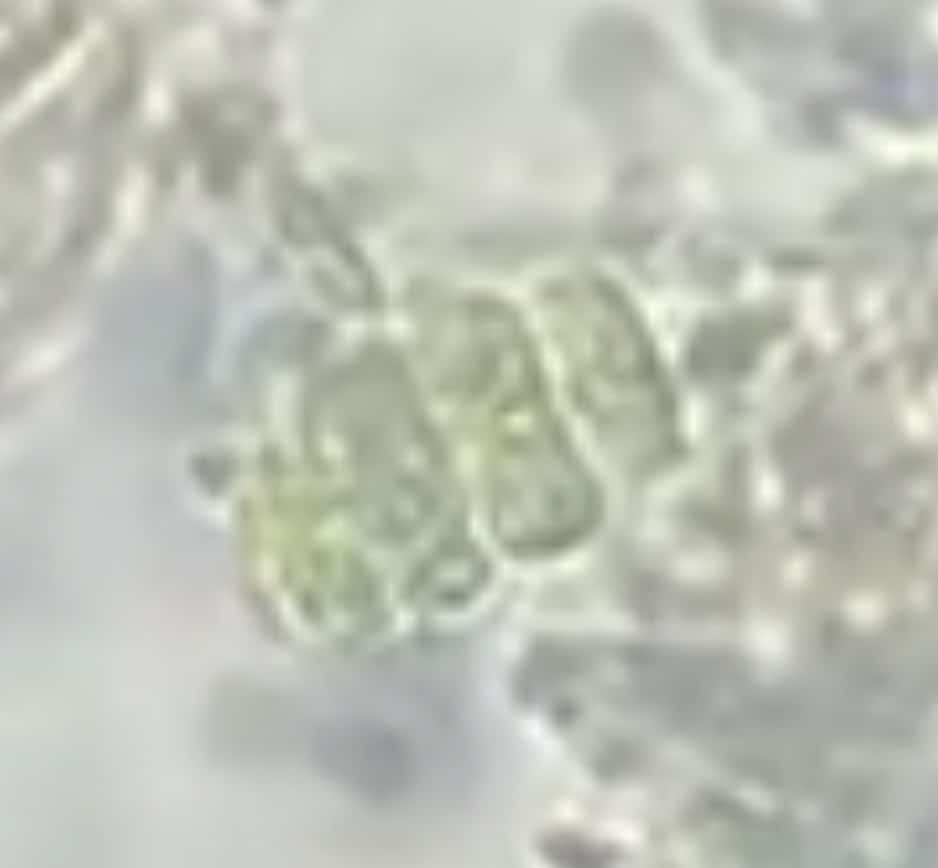
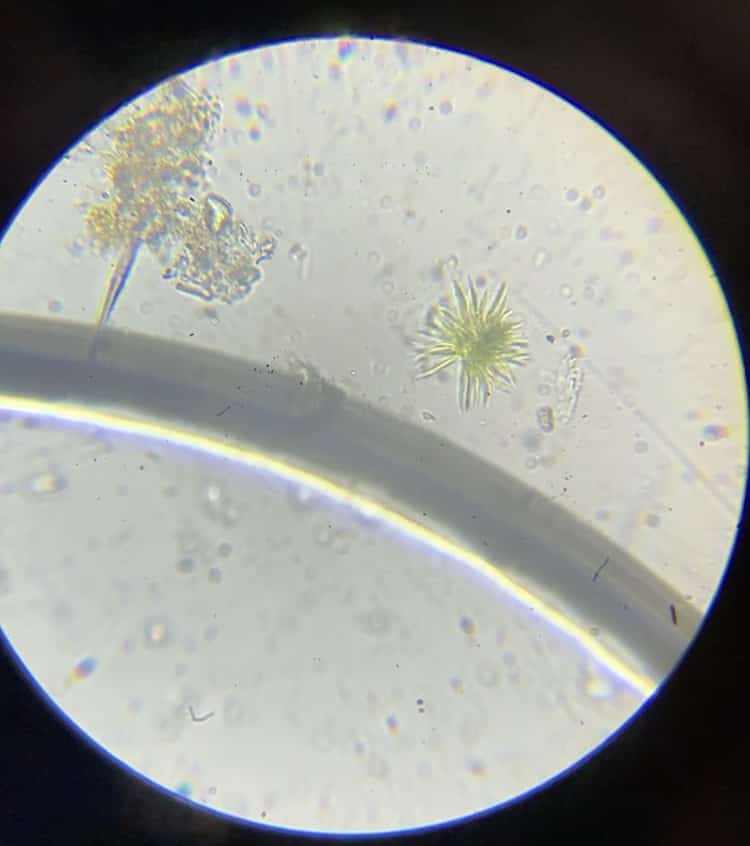
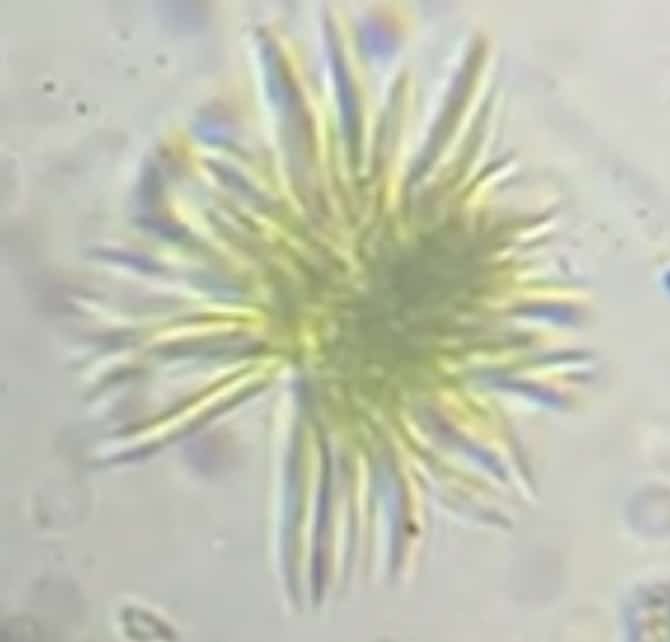
Pediastrum, which looks like a tiny medal or crest. Nature’s design skills never cease to amaze.
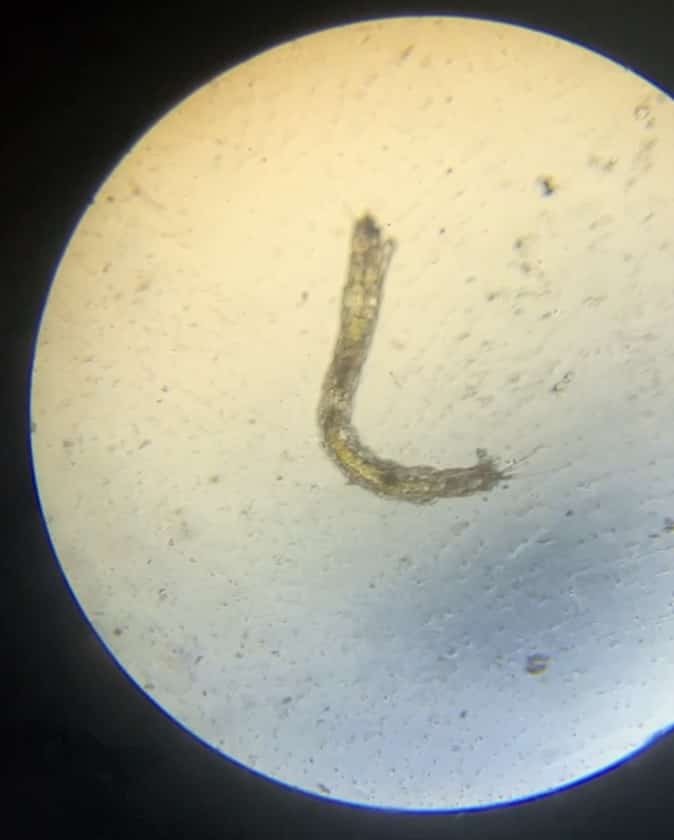
This one is a midge larva. It’s a sign that the season of buzzing mosquitoes is just around the corner.
Because microorganisms are heavily influenced by water temperature and sunlight, spring to early summer is the best time for observation. During this period, as insect larvae and various algae thrive, you’ll likely encounter a “new resident” every time you look through the lens.
Why not bring the joy of discovery into your science classroom by utilizing the nature right in your school biotope? When students realize the rich diversity hidden in a single drop of water, their perspective on the world expands immensely.
Contact & Requests
Let’s make the wonders of science more accessible! I’ve compiled various fun science experiments you can try at home and tips on how to make them work. Feel free to explore more!
The “Science Notes” content is now a book! Details here.
Learn more about the operator, Ken Kuwako, here.
For various requests (writing, lectures, workshops, TV supervision/appearances), click here.
– Stay updated via X (formerly Twitter)!
 The Science Lab Channel is streaming experiment videos now!
9月のイチオシ実験!
お弁当箱をプラバンがわりにしてキーホルダーを作ろう!
テレビ番組監修・イベント等のお知らせ
- 8月27日(木)科学監修番組放送予定
- 9月20日(日)ダビンチマスターズ出演予定
- 10月10日(土)11:15~12:00 千葉市科学フェスタ2026「桑子先生の回転科学ショー」にてサイエンスショーを行います。
- 12月26日(土) ナリカサイエンスアカデミー(教員向け実験講習会)開催
書籍のお知らせ
- 『高校入試 分解問題集 理科』(学研)…難しい問題も小さな問題に分解することで、問題を解くことができます。そんな分解の技術が身につくように深く関わりを持って作りました。
 『大人のための高校物理復習帳』(講談社)…一般向けに日常の物理について公式を元に紐解きました。特設サイトでは実験を多数紹介しています。※増刷がかかり6刷となりました(2026/02/01)

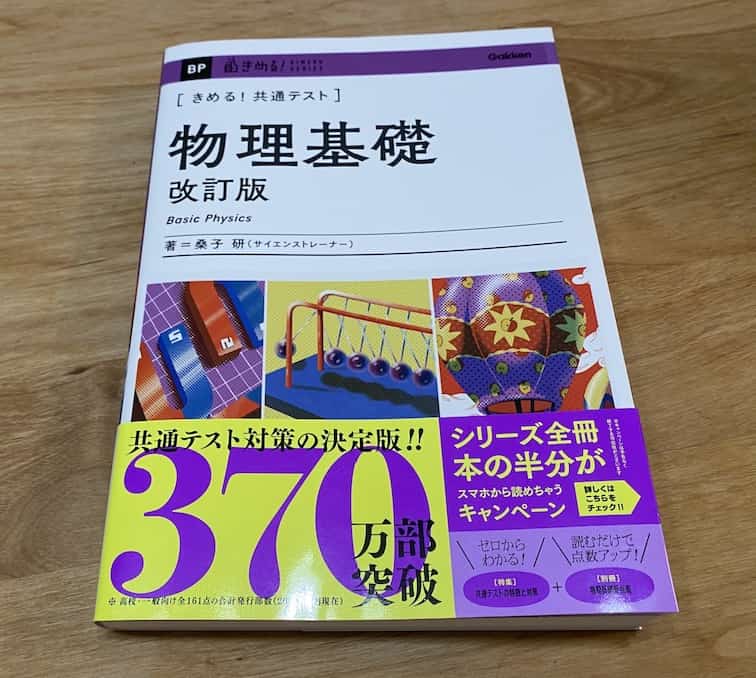
- 『きめる!共通テスト 物理基礎 改訂版』(学研)… 高校物理の参考書です。イラストを多くしてイメージが持てるように描きました。授業についていけない、物理が苦手、そんな生徒におすすめです。特設サイトはこちら。
各種SNS(更新情報をお届け!)
【日本語】X(Twitter)/instagram/Facebook 【英語】BlueSky/Threads
Explore
- 楽しい実験…お子さんと一緒に夢中になれるイチオシの科学実験を多数紹介しています。また、高校物理の理解を深めるための動画教材も用意しました。
- 理科の教材… 理科教師をバックアップ!授業の質を高め、準備を効率化するための選りすぐりの教材を紹介しています。
- Youtube…科学実験等の動画を配信しています。
- 科学ラジオ …科学トピックをほぼ毎日配信中!AI技術を駆使して作成した「耳で楽しむ科学」をお届けします。
- 講演 …全国各地で実験講習会・サイエンスショー等を行っています。
- About …「科学のネタ帳」のコンセプトや、運営者である桑子研のプロフィール・想いをまとめています。
- お問い合わせ …実験教室のご依頼、執筆・講演の相談、科学監修等はこちらのフォームからお寄せください。