Style Meets Science! Choose Clothes That Beat Static with the Triboelectric Series
I’m Ken Kuwako, your Science Trainer. Every day is an experiment!
【This article is also available on Radio!】
Have you ever reached for a doorknob in winter or early spring and—zap!—felt that sharp, annoying sting? We’ve all been there with static electricity. Recently, a post by a sock shop on X (formerly Twitter) went viral for sharing “material combinations that prevent static.” People were blown away, commenting things like, “I wish I knew this sooner!” and “It’s like a fun science experiment!” This viral tip is actually rooted in a fascinating concept we learn in middle school science: Triboelectricity (or simply, how things get electrically charged).
The Secret of the “Triboelectric Series”: It’s All in the Combo!
There is a scientific scale called the “Triboelectric Series” that ranks materials based on how easily they gain or lose electrons. When two different materials rub together, one becomes positively charged and the other becomes negatively charged. If you layer a “plus-leaning” material with a “minus-leaning” material, you’re essentially creating a giant battery on your body, leading to that unpleasant “pop” when you touch something metal.
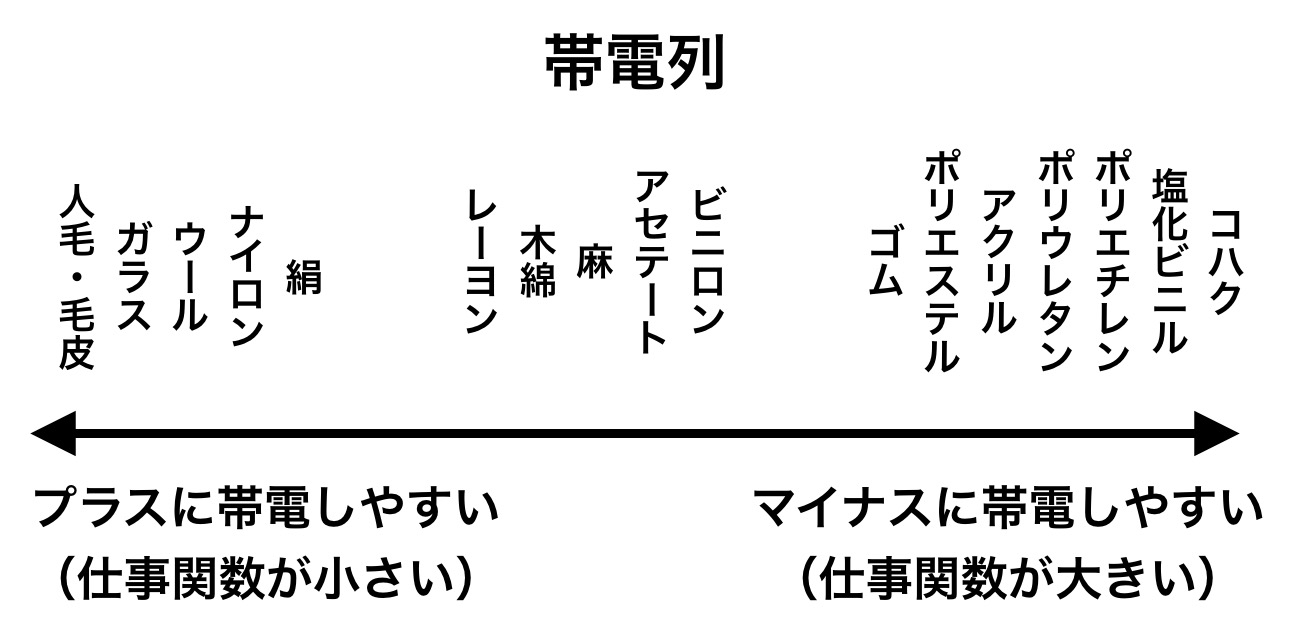
Let’s look at common fashion materials:
① [Materials that tend to be Positively Charged] Nylon, Wool, Rayon
Wool is a natural fiber, while Nylon is synthetic.
② [Materials that tend to be Negatively Charged] Acrylic, Polyester, Acetate, Polyurethane
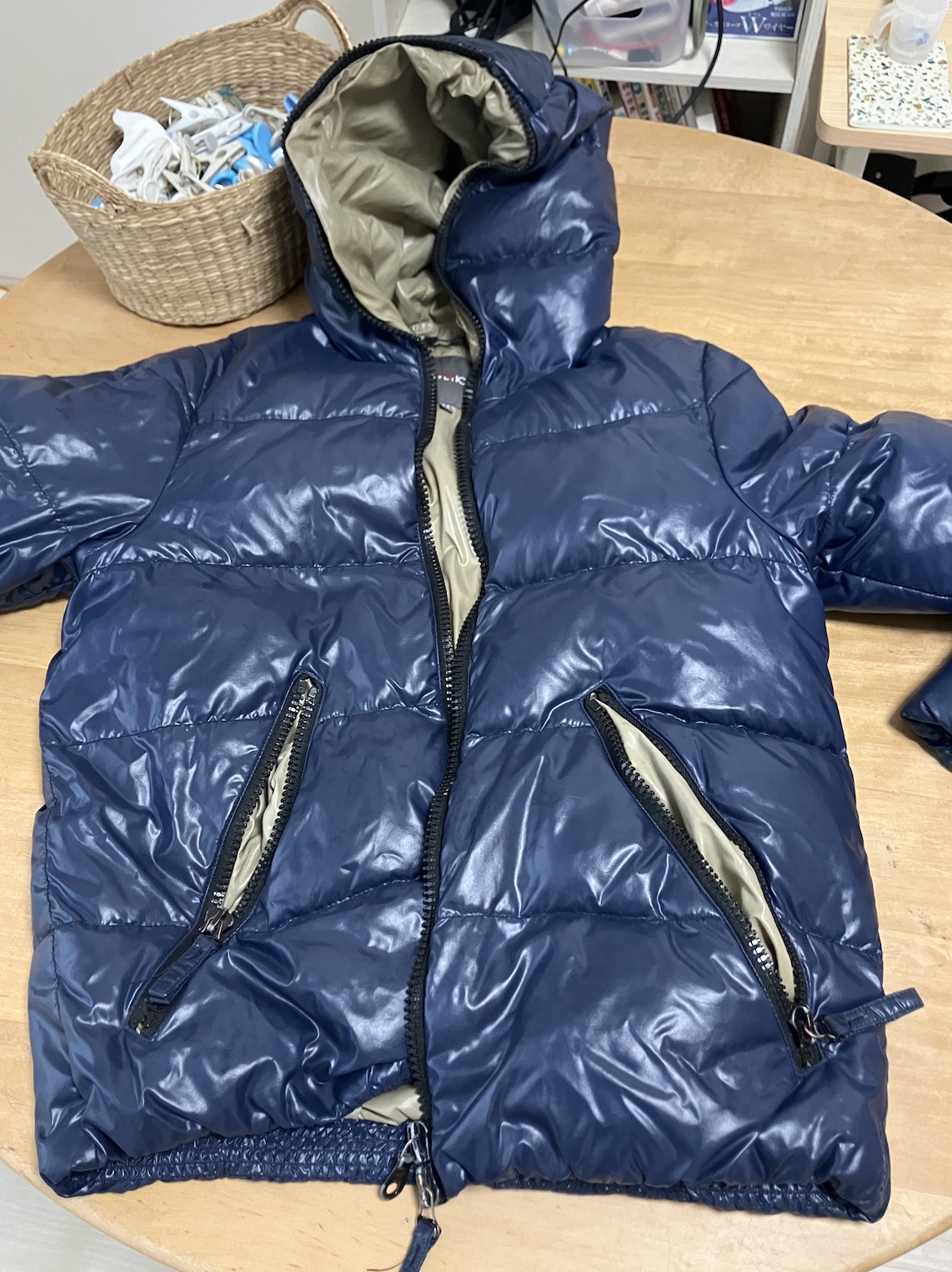
Synthetic fibers often lean toward the negative side. For example, this jacket is primarily made of acrylic.
③ [The “Neutral” Players] Cotton, Silk, Linen
Cotton, linen, and silk are generally neutral. They don’t charge easily on their own, though they can pick up a charge depending on what they are rubbed against. (Note: Rayon is a semi-synthetic fiber made from natural cellulose).
Think about your daily outfit. Pairing ① and ② is a recipe for a “shocking” day. Even ①+③ or ②+③ can generate some static.
Take popular thermal innerwear like Heattech; it’s usually a blend of ③ Cotton and ② Acrylic.
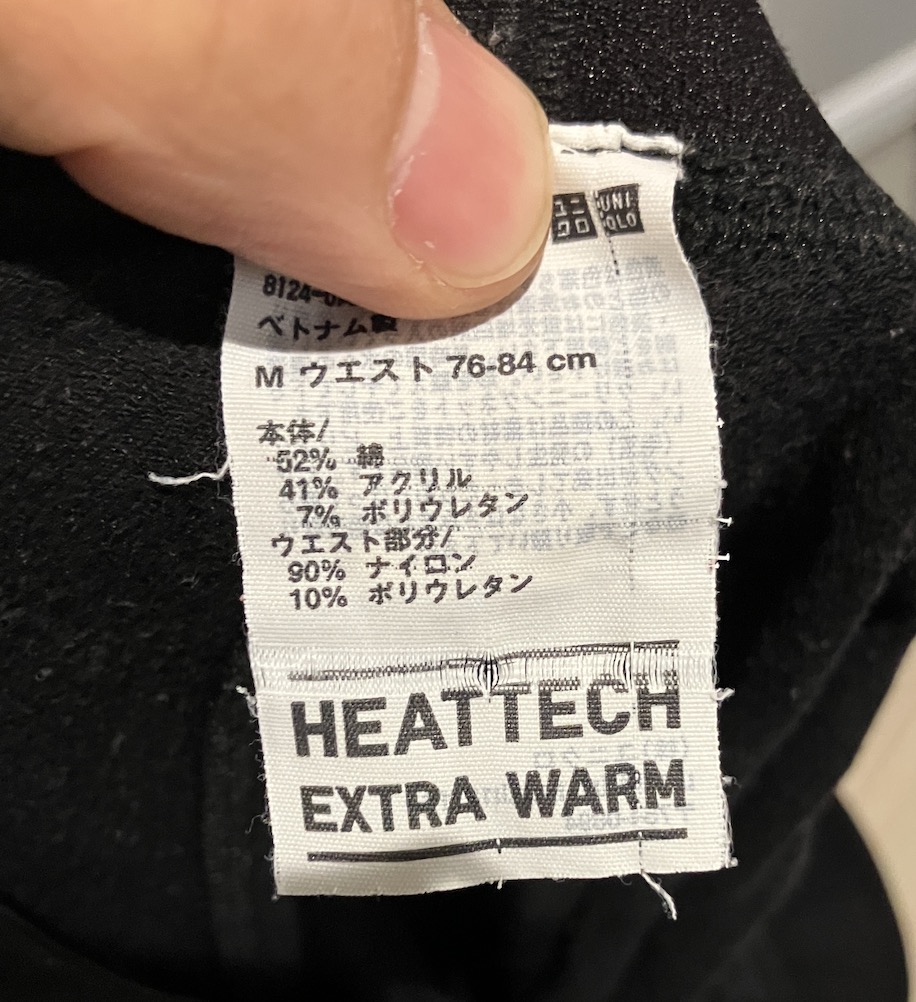
This means the fabric as a whole tends to be negatively charged. If you throw a ① Wool sweater over it, you’ve created the “perfect storm” for accumulating static electricity.
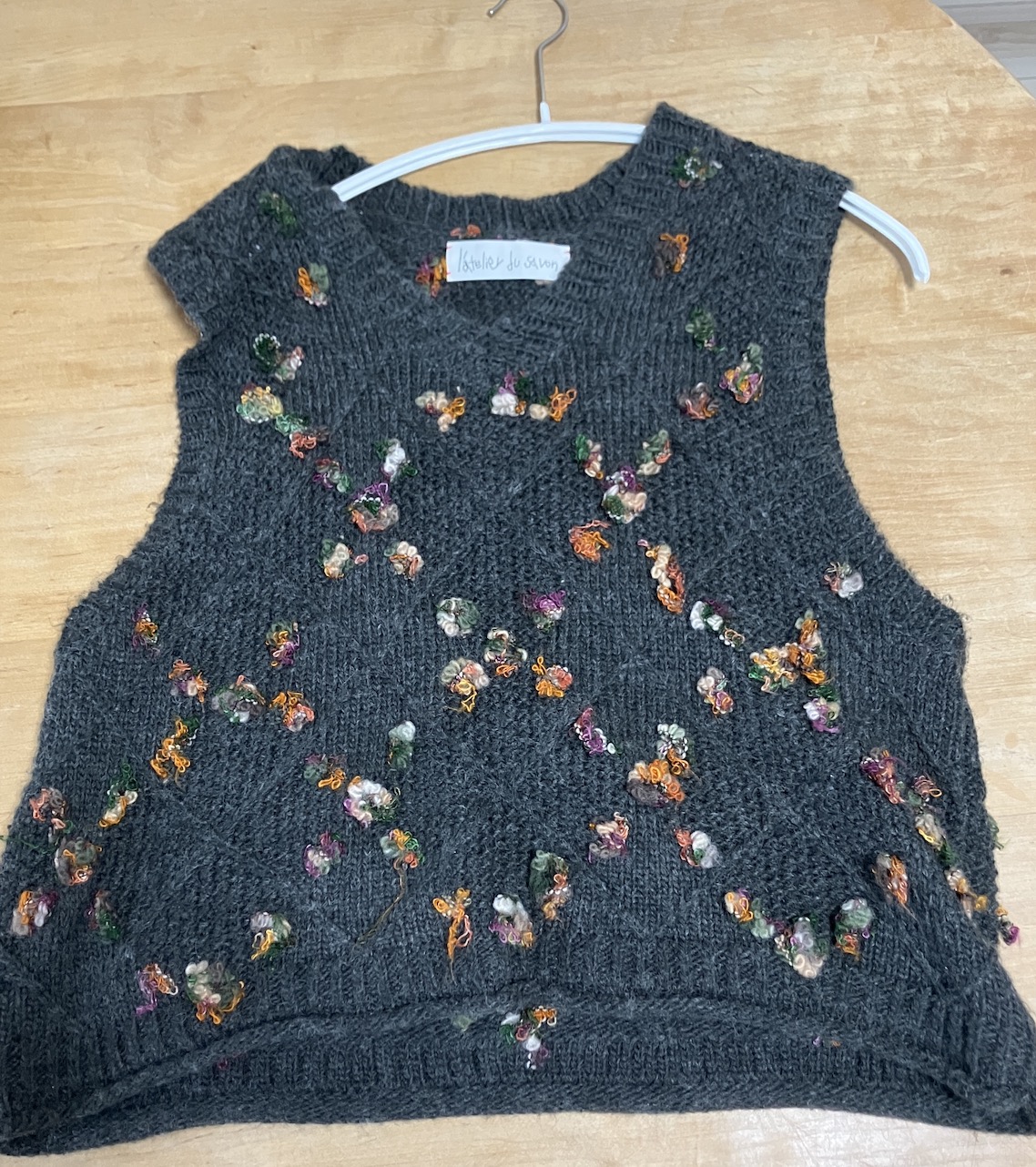
Consider stockings: they are often a mix of stretchy ② Polyurethane and durable ① Nylon. Since they contain both ends of the spectrum, they are practically static-magnets! Combine that with a skirt made of ① Cotton, ② Polyester, or ① Wool, and you’ll find your skirt constantly “clinging” to your legs.
So, what’s the fix? The best way to dodge the shock is to wear the same material throughout. But since dressing head-to-toe in one fabric is tough, try choosing Cotton (③) for your base layers. Because it sits in the middle of the scale, the “potential difference” (the electrical gap) remains small regardless of what you wear over it.
If you’re dressing for warmth, the best layering technique is a ③ Cotton shirt, followed by a fluffy ① Wool sweater, and topped with a windproof ① Nylon jacket. This traps warm air effectively, but if you’re sensitive to static, you’ll need to balance these materials carefully!
It’s Not Just Your Clothes! The Trap Under Your Feet
Even with a perfect outfit, static can still get you.
For example: Thick-soled shoes. If you’re wearing shoes with heavy rubber soles, the static electricity built up in your body has nowhere to go. It can’t escape into the ground because the thick rubber acts as an insulator. You carry that charge around until—zap!—you touch a doorknob and discharge it all at once.
Walking on carpets is another big culprit, as the constant friction between your feet and the floor generates a massive amount of static.
You might have the “perfect” clothing combination, but your shoes or the floor you walk on can still charge you up. Static prevention is all about the total balance of your clothes, footwear, and environment. Next time you pick out your socks or outfit, keep this “material chemistry” in mind. A little science can go a long way in making your day a lot more comfortable!
Inquiries & Requests
Bringing the wonder and fun of science closer to you! I share easy-to-follow tips and fun science experiments you can try at home. Feel free to explore more!
・The “Science Notebook” is now a book! Details here.
・Learn more about the author, Ken Kuwako, here.
・For requests (writing, speaking, science workshops, TV supervision/appearances, etc.), click here.
・Get the latest updates on X (Twitter)!
 Check out experiment videos on the Science Material Channel!
9月のイチオシ実験!
テレビ番組監修・イベント等のお知らせ
- 9月25日(金)21:00〜 かまいたちの瞬間回答!にて、科学監修を行いました。
- 10月10日(土)11:15~12:00 千葉市科学フェスタ2026「桑子先生の回転科学ショー」にてサイエンスショーを行います。

- 12月26日(土) ナリカサイエンスアカデミー(教員向け実験講習会)開催
書籍のお知らせ
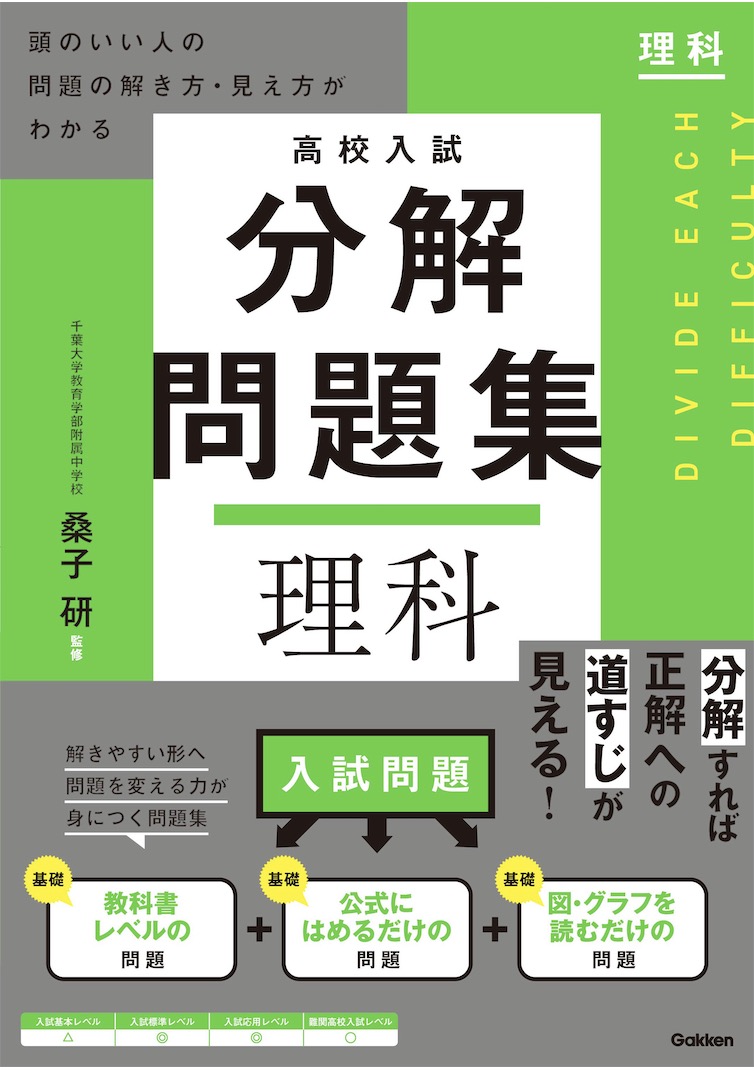
- 『高校入試 分解問題集 理科』(学研)…難しい問題も小さな問題に分解することで、問題を解くことができます。そんな分解の技術が身につくように深く関わりを持って作りました。
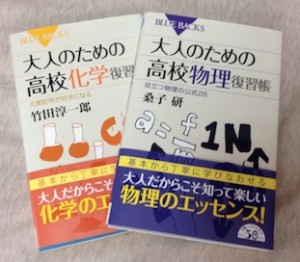
 『大人のための高校物理復習帳』(講談社)…一般向けに日常の物理について公式を元に紐解きました。特設サイトでは実験を多数紹介しています。※増刷がかかり6刷となりました(2026/02/01)
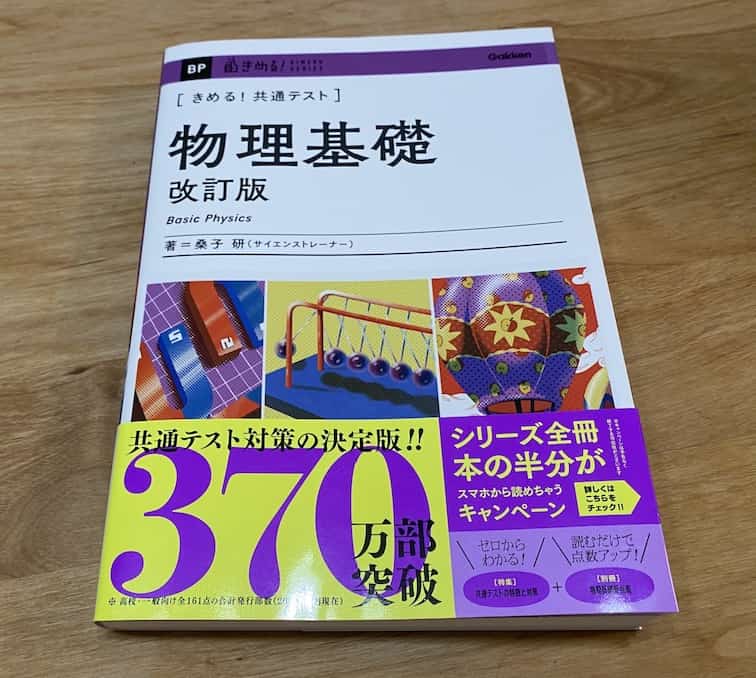
- 『きめる!共通テスト 物理基礎 改訂版』(学研)… 高校物理の参考書です。イラストを多くしてイメージが持てるように描きました。授業についていけない、物理が苦手、そんな生徒におすすめです。特設サイトはこちら。
各種SNS(更新情報をお届け!)
【日本語】X(Twitter)/instagram/Facebook 【英語】BlueSky/Threads
Explore
- 楽しい実験…お子さんと一緒に夢中になれるイチオシの科学実験を多数紹介しています。また、高校物理の理解を深めるための動画教材も用意しました。
- 理科の教材… 理科教師をバックアップ!授業の質を高め、準備を効率化するための選りすぐりの教材を紹介しています。
- Youtube…科学実験等の動画を配信しています。
- 科学ラジオ …科学トピックをほぼ毎日配信中!AI技術を駆使して作成した「耳で楽しむ科学」をお届けします。
- 講演 …全国各地で実験講習会・サイエンスショー等を行っています。
- About …「科学のネタ帳」のコンセプトや、運営者である桑子研のプロフィール・想いをまとめています。
- お問い合わせ …実験教室のご依頼、執筆・講演の相談、科学監修等はこちらのフォームからお寄せください。