Everyday Objects Become Magic Wands! Catching a “Giant Wave” with a Bicycle Rope and Rubber Hose
I am Ken Kuwako, your Science Trainer. Every day is an experiment!
Have you ever captured the true essence of an invisible wave with your own hands? Waves are all around us—from the vibration of a guitar string to the ripples in a bathtub. But there is a specific, mysterious kind of wave that looks like it is standing perfectly still: the Standing Wave. When you observe this phenomenon on a massive scale, it is surprisingly dynamic and beautiful! Today, I will show you how to “catch” giant waves using simple items from the dollar store or a garden hose from the hardware shop. These are magic-like science experiments you can try at home or in your backyard, not just in a lab.
Challenge with Dollar Store Bungee Cords: Waves Dancing in 3D
First, let’s look at an experiment using “bungee cords” typically used for bicycle luggage racks. You can find these in lengths of about 3 meters at 100-yen shops, and they make for world-class scientific equipment.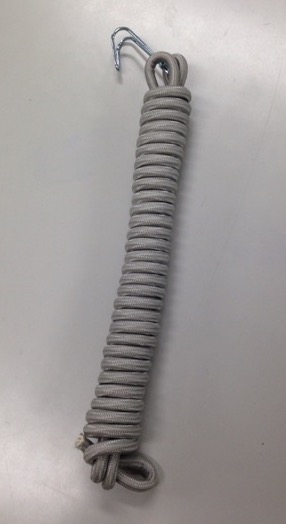 The method is simple. Two people hold opposite ends of the cord, and one person shakes their end up and down (or side to side) with a steady rhythm. In physics terms, the wave you send out crashes into the wave reflecting back from your partner. When they overlap perfectly, a Standing Wave is born.Start by shaking slowly to create one large curve, known as an Antinode (the “belly” of the wave). As you increase your shaking speed, you will see the belly split into two, then three! Unlike experiments with standard metal springs, bungee cords tend to rotate and twist, allowing you to observe 3D Standing Waves that look like an evolved form of a jump rope. Creating four bellies takes some serious skill—give it a try!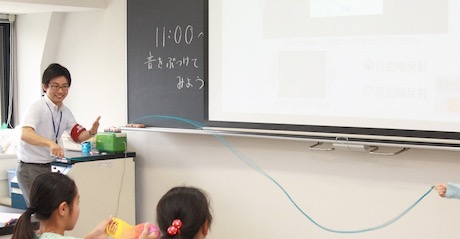
Turning a Clear Hose into a Giant Instrument? The Secret of the Sand
Next is an experiment using clear vinyl tubing found at hardware stores. Have you ever noticed the interesting way a garden hose moves when you are watering the plants? If you add one clever “tweak,” the hose will reveal incredibly clean standing waves. That secret ingredient is filling the hose with sand.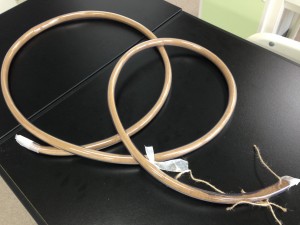 If you shake an empty hose, the wave disappears almost instantly. However, by filling it with sand, you increase its linear density (weight per meter). Thanks to inertia, the wave’s motion becomes clearly visible. Check out this video of a sand-filled hose hanging from the ceiling!https://youtu.be/RL78pTVsqZgWhat do you think? There are moments where the hose looks frozen in mid-air, right? That is the true form of a Standing Wave.
The Science Connection: Why Does Sand Make It Work?
The speed $v$ at which a wave travels through a string or hose is determined by the tension $S$ (the force pulling it) and the weight per meter $\rho$ (linear density), expressed in the following formula: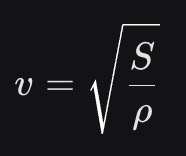 By adding sand to increase the weight, the wave travels much slower, making it easy for our eyes to track. By making everyday objects just a little “heavier,” the laws of science suddenly feel much closer to home. Bungee cords and garden hoses—by simply changing your perspective, these everyday items turn your world into a fantastic Physics Playground. Go out and explore your own giant waves!
Inquiries and Requests
I am dedicated to making the wonders of science accessible to everyone! I’ve put together tips and fun experiments you can do at home. Take a look around!My “Science Notebook” content is now a book! Details here.Learn more about the author, Ken Kuwako, here.For professional requests (writing, speaking, workshops, TV supervision/appearances), click here.– Follow me on X (formerly Twitter) for updates!
 Explore experiment videos on the Science Material Channel!
9月のイチオシ実験!
お弁当箱をプラバンがわりにしてキーホルダーを作ろう!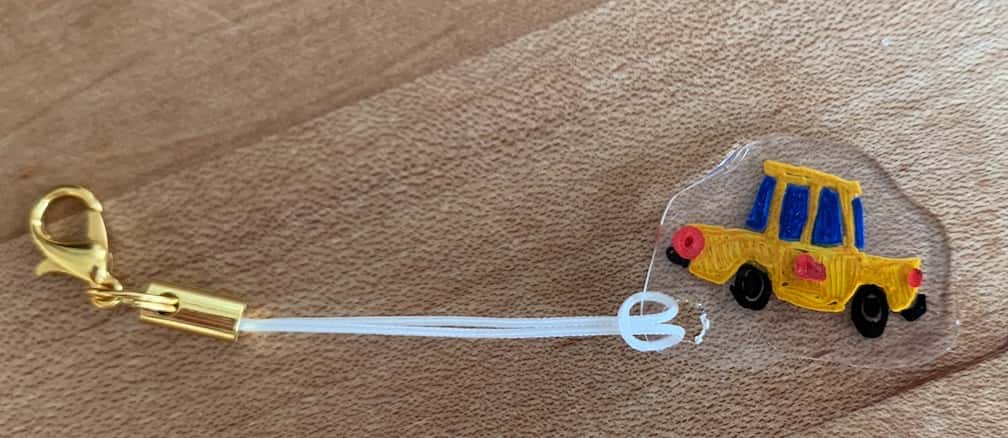
テレビ番組監修・イベント等のお知らせ
- 8月27日(木)科学監修番組放送予定
- 9月20日(日)ダビンチマスターズ出演予定
- 10月10日(土)11:15~12:00 千葉市科学フェスタ2026「桑子先生の回転科学ショー」にてサイエンスショーを行います。
- 12月26日(土) ナリカサイエンスアカデミー(教員向け実験講習会)開催
書籍のお知らせ
- 『高校入試 分解問題集 理科』(学研)…難しい問題も小さな問題に分解することで、問題を解くことができます。そんな分解の技術が身につくように深く関わりを持って作りました。
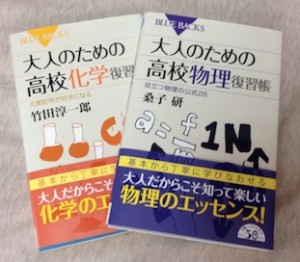
 『大人のための高校物理復習帳』(講談社)…一般向けに日常の物理について公式を元に紐解きました。特設サイトでは実験を多数紹介しています。※増刷がかかり6刷となりました(2026/02/01)
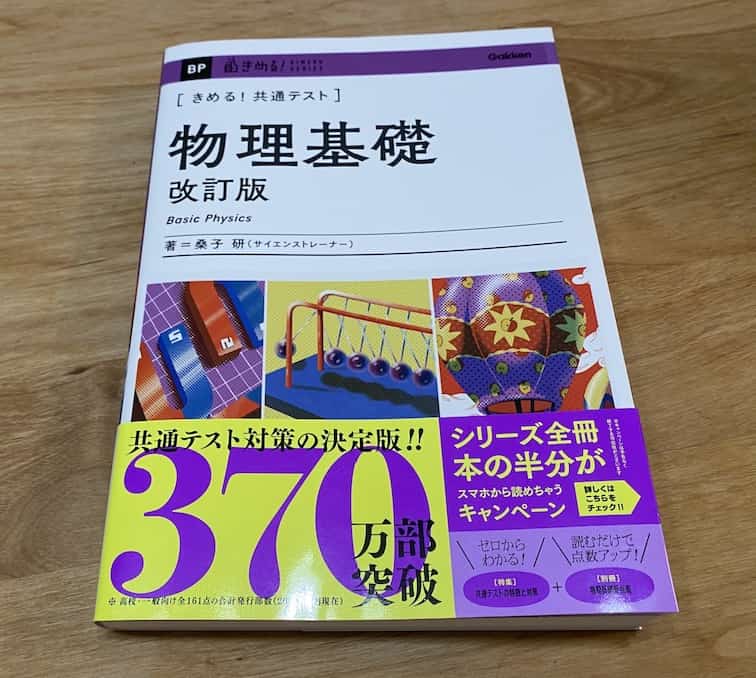
- 『きめる!共通テスト 物理基礎 改訂版』(学研)… 高校物理の参考書です。イラストを多くしてイメージが持てるように描きました。授業についていけない、物理が苦手、そんな生徒におすすめです。特設サイトはこちら。
各種SNS(更新情報をお届け!)
【日本語】X(Twitter)/instagram/Facebook 【英語】BlueSky/Threads
Explore
- 楽しい実験…お子さんと一緒に夢中になれるイチオシの科学実験を多数紹介しています。また、高校物理の理解を深めるための動画教材も用意しました。
- 理科の教材… 理科教師をバックアップ!授業の質を高め、準備を効率化するための選りすぐりの教材を紹介しています。
- Youtube…科学実験等の動画を配信しています。
- 科学ラジオ …科学トピックをほぼ毎日配信中!AI技術を駆使して作成した「耳で楽しむ科学」をお届けします。
- 講演 …全国各地で実験講習会・サイエンスショー等を行っています。
- About …「科学のネタ帳」のコンセプトや、運営者である桑子研のプロフィール・想いをまとめています。
- お問い合わせ …実験教室のご依頼、執筆・講演の相談、科学監修等はこちらのフォームからお寄せください。