Magnets Dance in a Paper Cup! Discover How Speakers Work with a Homemade Wire
I’m Ken Kuwako, a Science Trainer. Every day is an experiment.
“An invisible magnetic field carrying sound through the air.”
Have you ever experienced something that felt almost like magic?
The other day, while visiting the science museum Tsukuba EXPO Center, I came across an exhibit that made me stop in my tracks. It was a fascinating speaker that used a coil. Simply holding the coil-equipped speaker in the invisible magnetic field coming from the base allowed you to hear sound through electromagnetic induction.
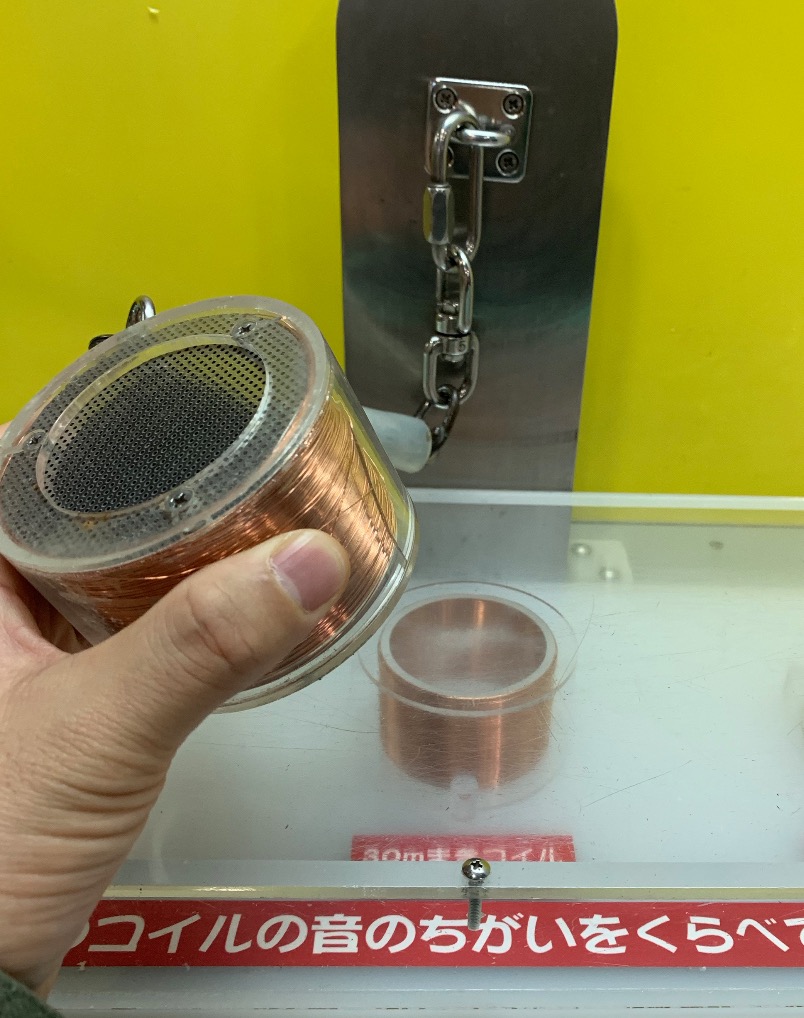
Move it farther away, and the sound becomes faint. Bring it closer, and the sound suddenly gets much louder. We may understand in theory that a magnetic field can generate an electric current across empty space, but actually experiencing it is so fascinating that you can’t help saying, “Wow!”
This time, I’d like to show you how to recreate this “electricity jumping through space” at home. The star of the show is a homemade magic wire called the Pascal Wire, which you can make with materials from a dollar store and a little ingenuity.
It is a homemade experimental device made by taking advantage of a cable containing multiple bundled wires, such as a 10-core cable. Making it requires some soldering, but once you’ve built it, it is inexpensive and remarkably effective.
The Science Recipe
What you’ll need:
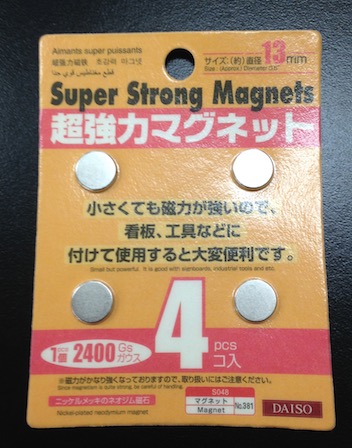
Pascal Wire (homemade) Paper cup Neodymium magnet (small but powerful)
Steps:
Connect the Pascal Wire to an AC power supply.
Wind the wire into a coil about the same size as the bottom of the paper cup.
Place the neodymium magnet inside the paper cup.
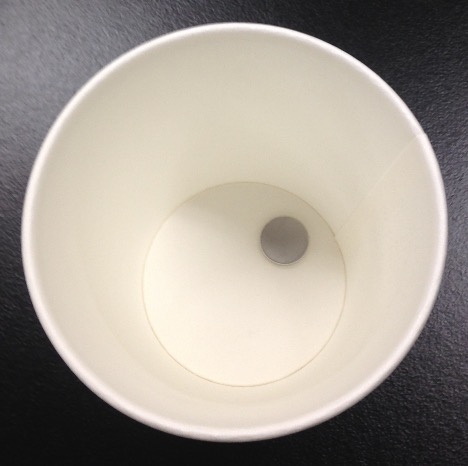
Once everything is ready, turn on the AC current and carefully watch what happens inside the cup.
Experimental Results: A Dancing Magnet and a Mysterious “Sound”
I recorded the experiment on video. Be sure to turn up the volume before playing it!
What did you think? The moment you switch it on, you can see the magnet start dancing inside the paper cup, almost as if it has a mind of its own.
What’s Going On? Why Does the Magnet Dance?
Why did the quiet, motionless magnet suddenly start going wild? The secret lies in the combination of “AC” and an “electromagnet.”
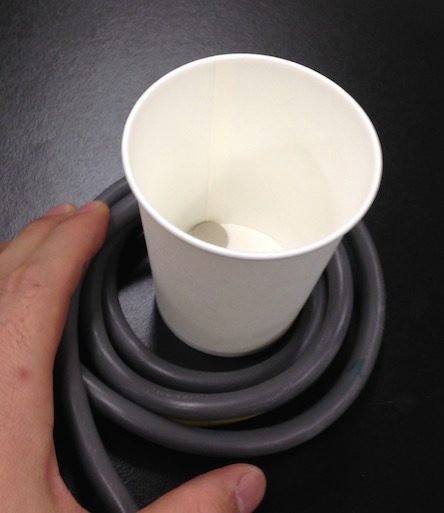
The magnetic field created by the electric current makes the magnet vibrate.
The electricity supplied through the outlets we use every day is “alternating current,” or AC. Unlike “direct current,” or DC, from a battery, the direction of the current repeatedly switches back and forth. In Japan, this happens 50 times per second in eastern Japan and 60 times per second in western Japan. That is incredibly fast!
When current flows through the coil made from the Pascal Wire, it becomes an “electromagnet.” So what happens when AC flows through it? Exactly! The electromagnet’s north and south poles switch back and forth dozens of times every second.
Place a neodymium magnet on top of this electromagnet, whose poles are switching at tremendous speed, and the magnet is alternately “pulled toward” and “pushed away” over and over again. As a result, the magnet vibrates rapidly, making it look as though it is dancing.
The “Heartbeat of AC” and How a Speaker Works
Now firmly attach the vibrating magnet to the bottom of the paper cup using vinyl tape or something similar, and put your ear close to the cup.
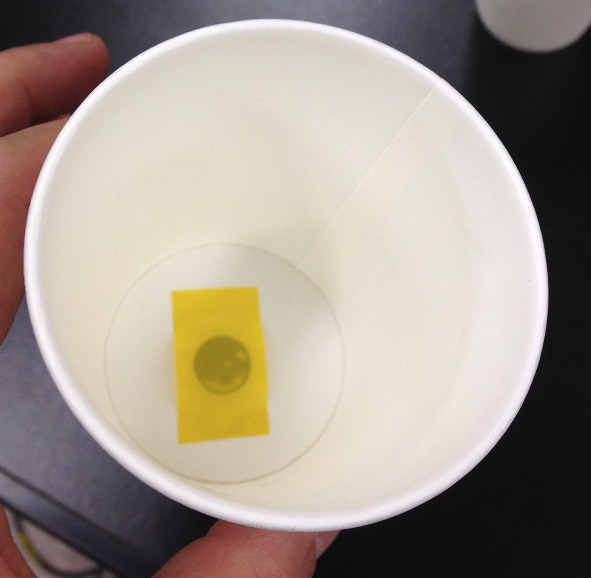
Can you hear a low “buzzing” sound?
That sound is produced when the tiny vibrations of the magnet shake the bottom of the paper cup, which in turn makes the surrounding air vibrate. It is, quite literally, the heartbeat of alternating current.
By the way, the pitch of the sound is determined by how many times the magnet vibrates each second. There is a difference between the 50 Hz electricity used in eastern Japan and the 60 Hz electricity used in western Japan—roughly the musical interval between C and E♭. The sound should therefore be slightly higher in western Japan. If you ever get the chance to try this experiment in both regions, comparing the sounds could be fun!
And here’s the really interesting part: this is essentially how a speaker works!
The music we listen to every day originally exists as “complexly changing electrical signals (AC).” These signals are sent through a coil inside a speaker, and the interaction between the coil and a magnet makes the speaker diaphragm vibrate. Those vibrations are then transmitted through the air to our ears as sound.
The exhibit at Tsukuba EXPO Center that I mentioned at the beginning was essentially demonstrating this process in reverse. In other words, it allowed visitors to experience electromagnetic induction—the phenomenon in which moving a coil through a magnetic field generates electricity—as sound.
A paper cup, a magnet, and some homemade wire. With such simple materials, you can see and feel the basic mechanism behind a speaker, one of the symbols of modern technology. That, to me, is one of the great joys of science.
With just a little time and curiosity, anyone can listen to the “voice” of electricity. Why not try experiencing the heartbeat of AC for yourself at home?
Questions, Requests, and Collaborations
Want to bring the wonders and excitement of science a little closer to everyday life? I share fun science experiments you can try at home, along with simple tips and explanations. Have a look around and search for whatever catches your curiosity!
・The content from Science Notes has been published as a book. For more information, click here.
・For more information about the author, Ken Kuwako, click here.
・For inquiries and requests, including writing, lectures, science workshops, and TV science supervision or appearances, click here.
・For updates on new articles, follow me on X!
 Science Notes Channel features videos of science experiments!
9月のイチオシ実験!
テレビ番組監修・イベント等のお知らせ
- 9月25日(金)21:00〜 かまいたちの瞬間回答!にて、科学監修を行いました。
- 10月10日(土)11:15~12:00 千葉市科学フェスタ2026「桑子先生の回転科学ショー」にてサイエンスショーを行います。

- 12月26日(土) ナリカサイエンスアカデミー(教員向け実験講習会)開催
書籍のお知らせ
- 『高校入試 分解問題集 理科』(学研)…難しい問題も小さな問題に分解することで、問題を解くことができます。そんな分解の技術が身につくように深く関わりを持って作りました。
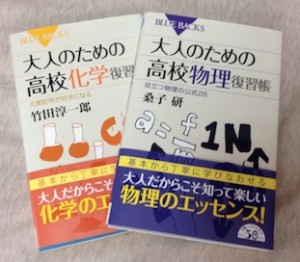
 『大人のための高校物理復習帳』(講談社)…一般向けに日常の物理について公式を元に紐解きました。特設サイトでは実験を多数紹介しています。※増刷がかかり6刷となりました(2026/02/01)
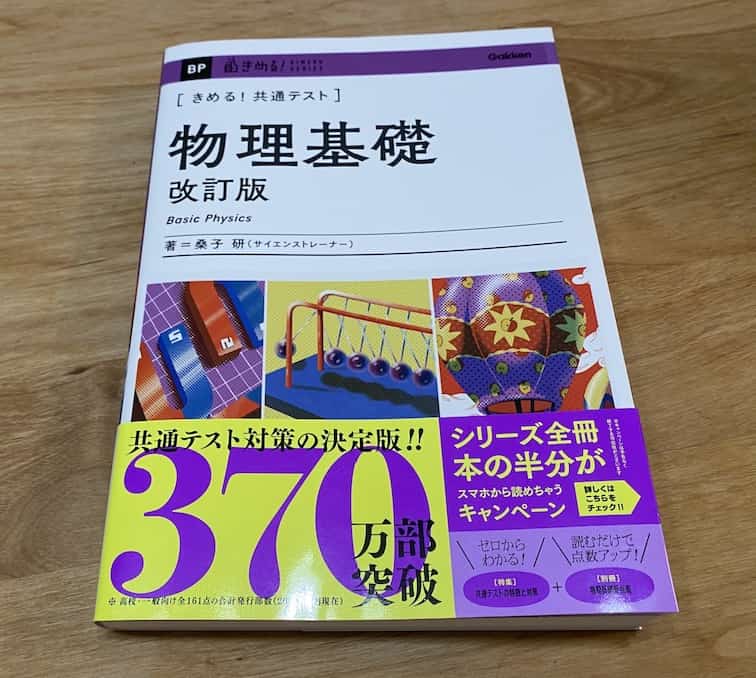
- 『きめる!共通テスト 物理基礎 改訂版』(学研)… 高校物理の参考書です。イラストを多くしてイメージが持てるように描きました。授業についていけない、物理が苦手、そんな生徒におすすめです。特設サイトはこちら。
各種SNS(更新情報をお届け!)
【日本語】X(Twitter)/instagram/Facebook 【英語】BlueSky/Threads
Explore
- 楽しい実験…お子さんと一緒に夢中になれるイチオシの科学実験を多数紹介しています。また、高校物理の理解を深めるための動画教材も用意しました。
- 理科の教材… 理科教師をバックアップ!授業の質を高め、準備を効率化するための選りすぐりの教材を紹介しています。
- Youtube…科学実験等の動画を配信しています。
- 科学ラジオ …科学トピックをほぼ毎日配信中!AI技術を駆使して作成した「耳で楽しむ科学」をお届けします。
- 講演 …全国各地で実験講習会・サイエンスショー等を行っています。
- About …「科学のネタ帳」のコンセプトや、運営者である桑子研のプロフィール・想いをまとめています。
- お問い合わせ …実験教室のご依頼、執筆・講演の相談、科学監修等はこちらのフォームからお寄せください。