Inside the Secret of Flowers! Dissecting Azaleas & Rapeseed Blossoms — Long-Term Preservation with OPP Tape!
Meet Ken Kuwako, the Science Trainer. Every Day is an Experiment.
Exploring the Anatomy of Flowers: Brassica and Azalea
Spring is the season when all sorts of flowers begin to bloom. This time, we delved into the “Structure of Flowers”, a core topic in first-year junior high school biology, by observing and dissecting the flowers of Brassica (rapeseed/mustard flower) and Azalea.
Observing the Brassica Flower
I live in Chiba Prefecture, in the southern Kanto region. Here, I observed that Brassica starts blooming in mid-April and begins to fade by the end of the month. For this reason, we changed the usual lesson order and dedicated our April class to observing and dissecting the flowers. The Brassica flowers we observed already had fruit forming at the base, which highlighted just how quickly plants grow.
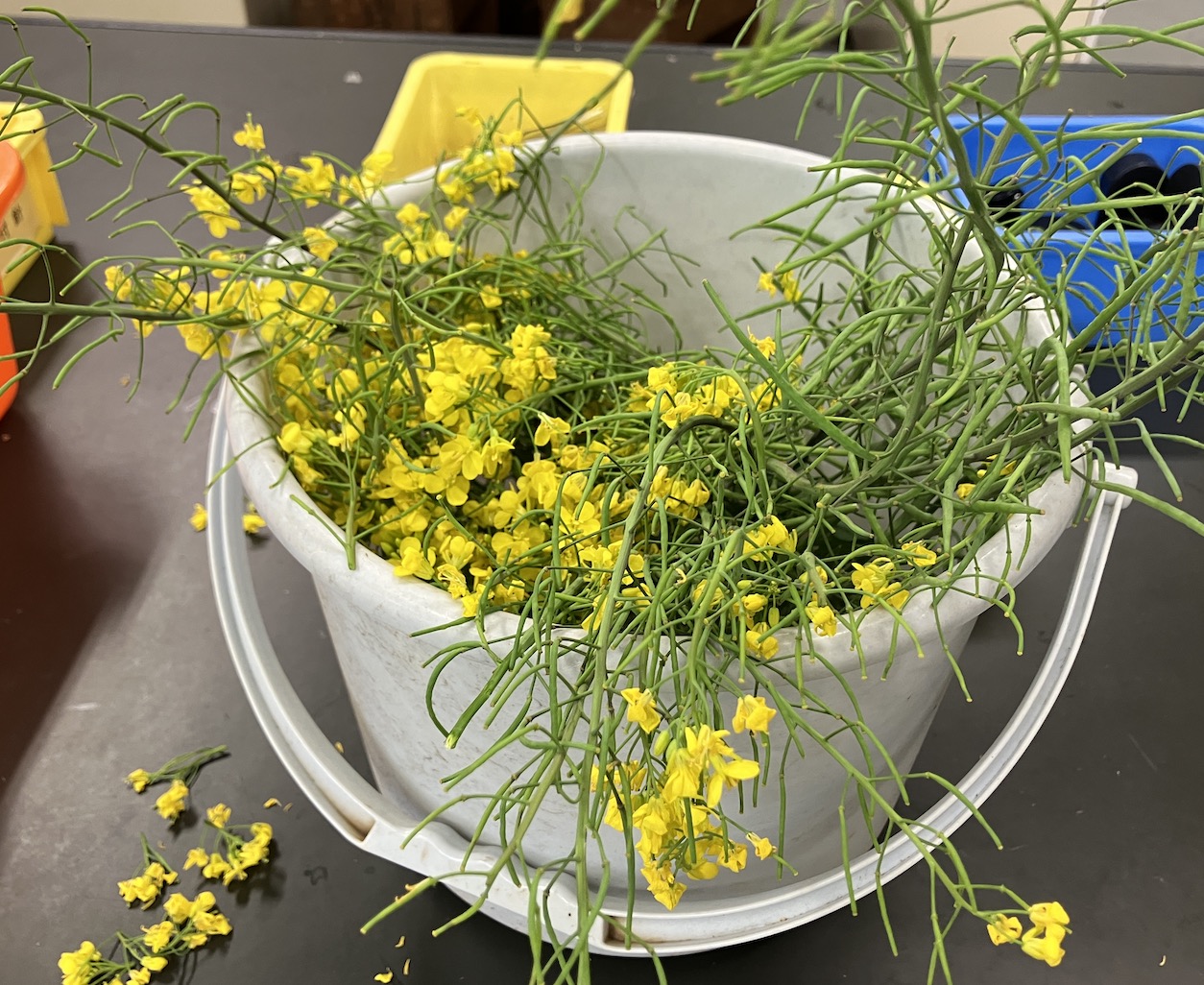
I brought these Brassica flowers from a vacant lot near my home in a bucket.
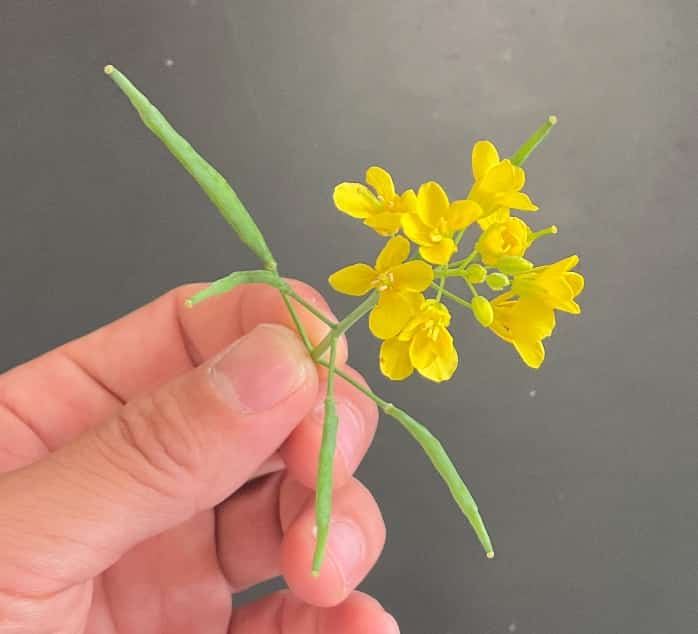
When we observed them again in May, all the flowers had dropped, leaving only the fruits. This clearly demonstrates how crucial timing is for flower observation!
Dissecting the Brassica Flower
Using tweezers, we carefully took apart the Brassica flowers and used tape to stick and organize the individual parts. I managed to photograph one student’s work, and it was meticulously organized. A great idea from a colleague was to use wide OPP tape (Oriented Polypropylene), which allowed the students to firmly attach the flower parts for easier observation.
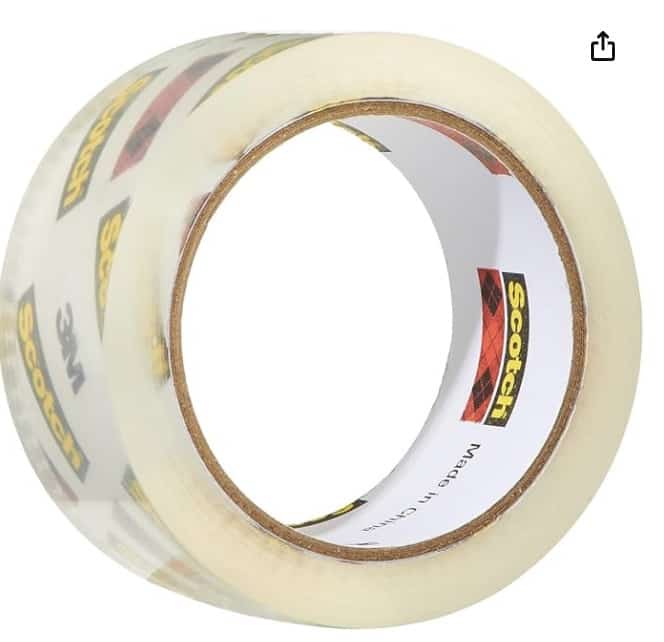 3M Scotch Packaging Tape from Amazon
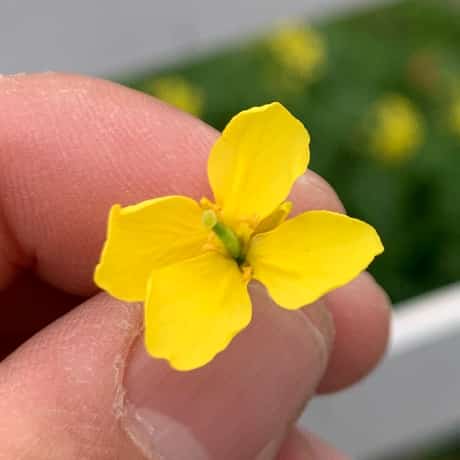
There are 4 petals.
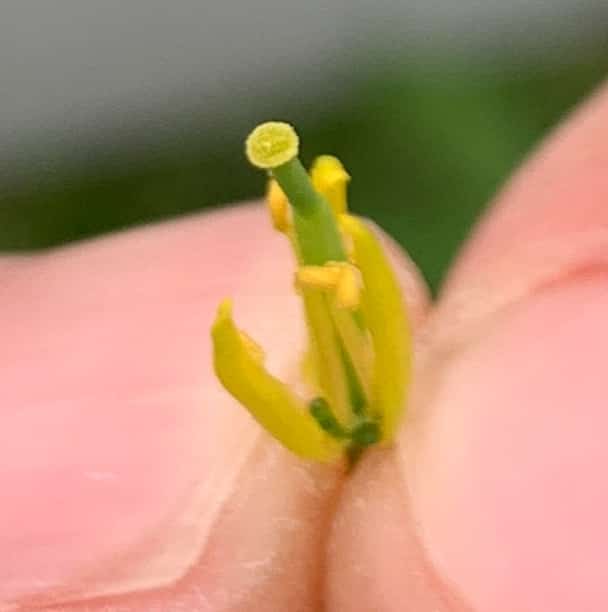
We found 4 sepals, 6 stamens, and 1 pistil. Since the petals are separate, it is classified as a dicotyledonous polypetalous flower. Using a marker to number the parts is a helpful strategy.
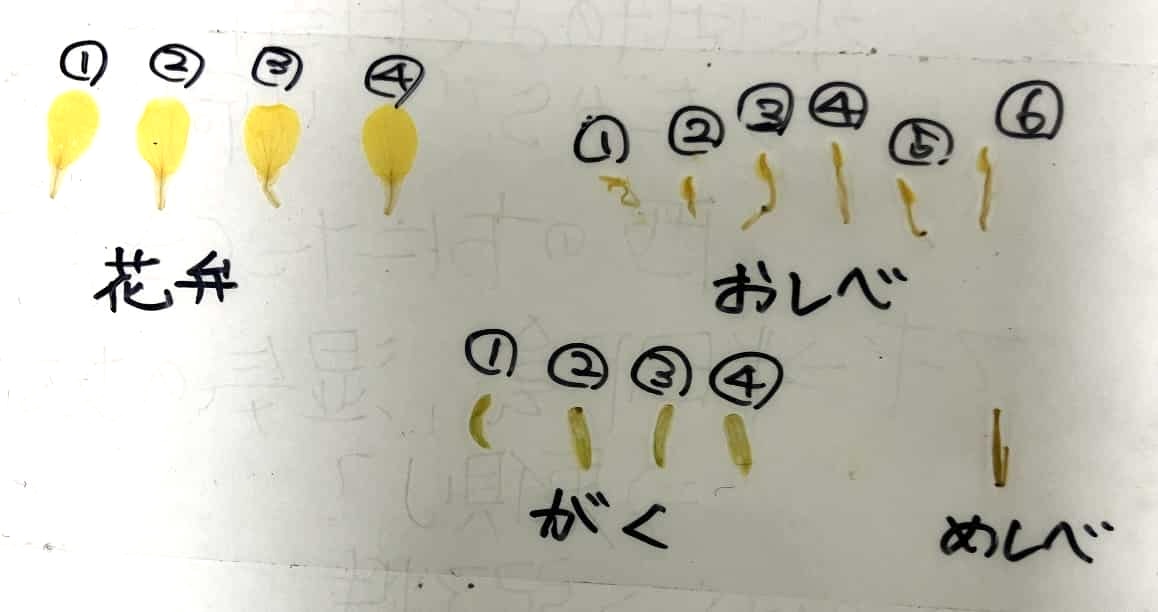
The structure of the Brassica flower is as follows:
- Sepals: 4
- Petals: 4
- Stamens: 6
- Pistil: 1
By actually dissecting and confirming the floral parts, the students gained a much better understanding of the role of each organ.
Observing the Azalea Flower
Azaleas bloom from late April through May. We timed our observation to catch them at peak bloom. Azaleas are a gamopetalous flower, meaning their petals are fused together, which made them difficult to separate. Many students struggled, but it was a great opportunity to learn about the unique characteristics of different flower types.
The students collected the Azaleas from the school grounds.
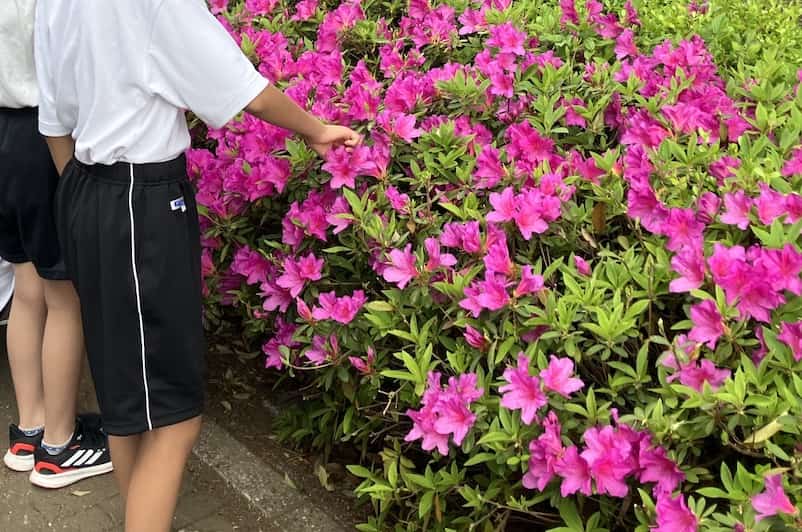
Each student collected their own specimen.
Tips for Dissecting the Azalea Flower
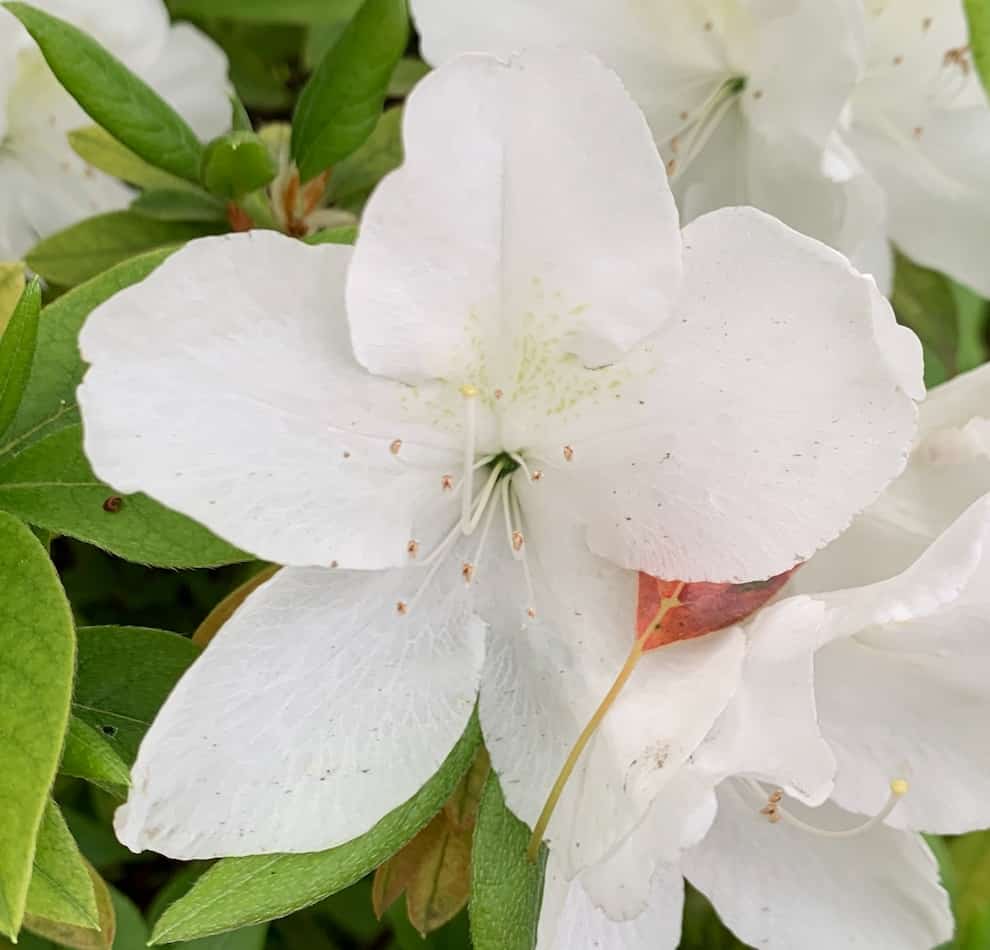
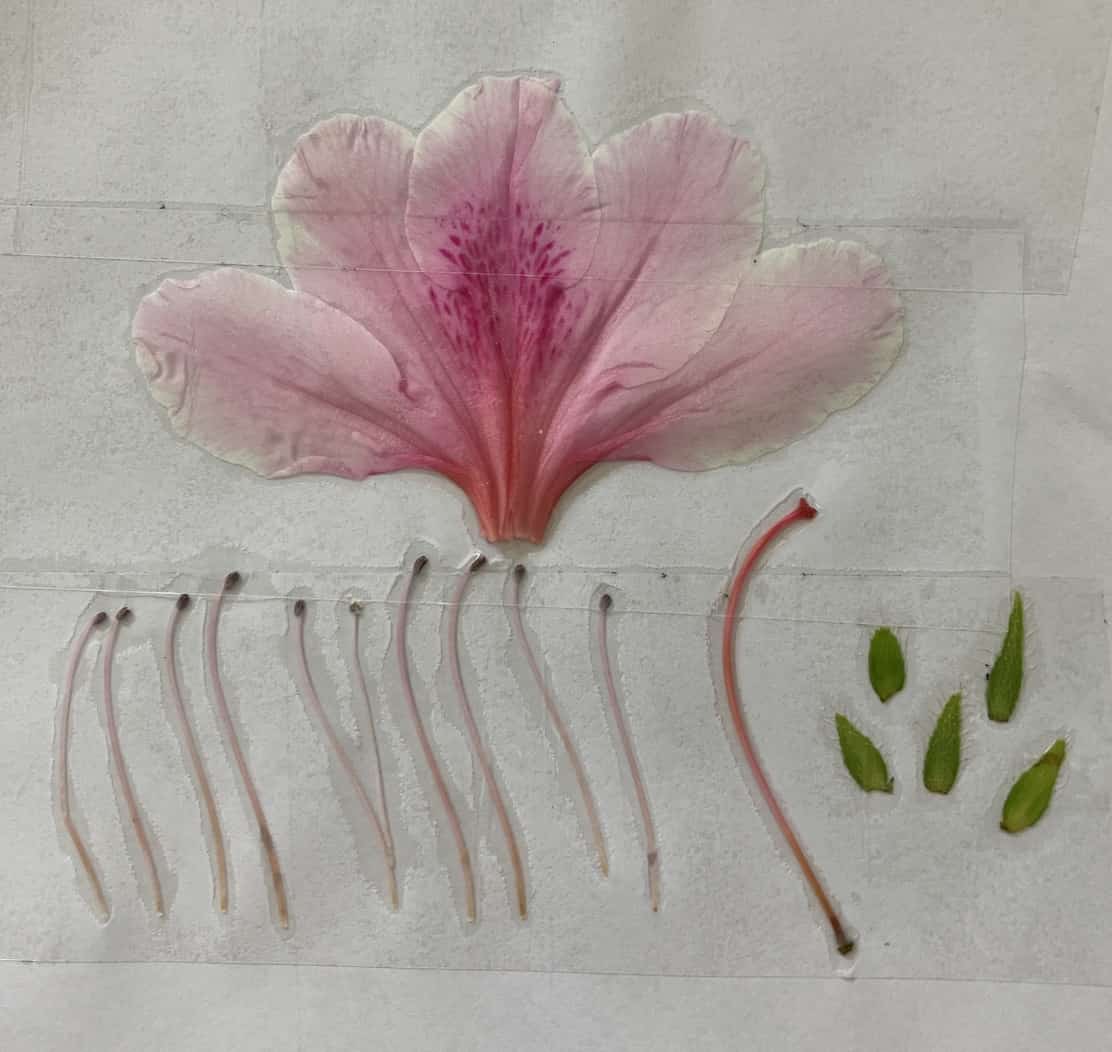
Since the petals are fused, dissecting the Azalea is tough, but here is the structure:

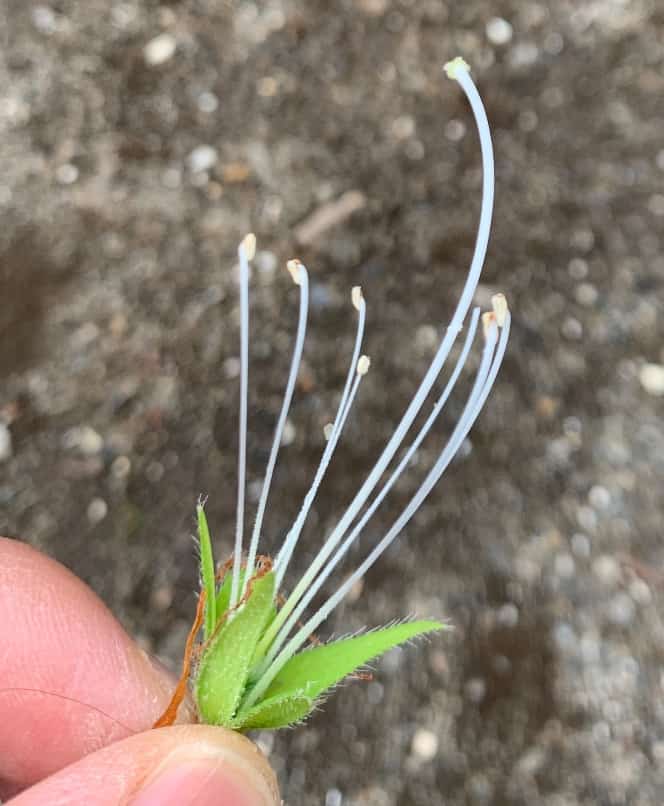
10 stamens and 1 pistil

Did one of the stamens go missing?
This is a student’s file two months later. The colors have faded over time, but they still look beautiful.
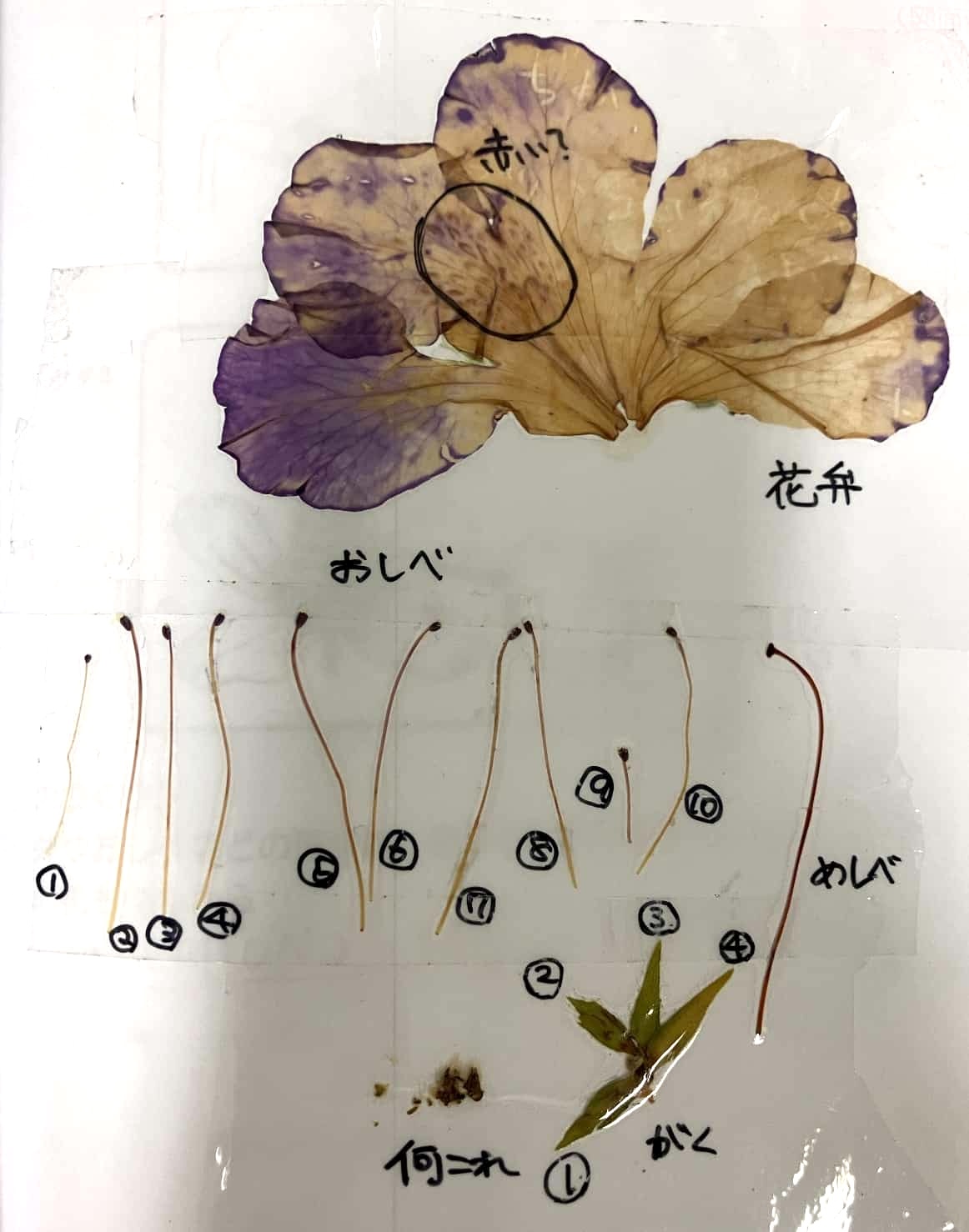
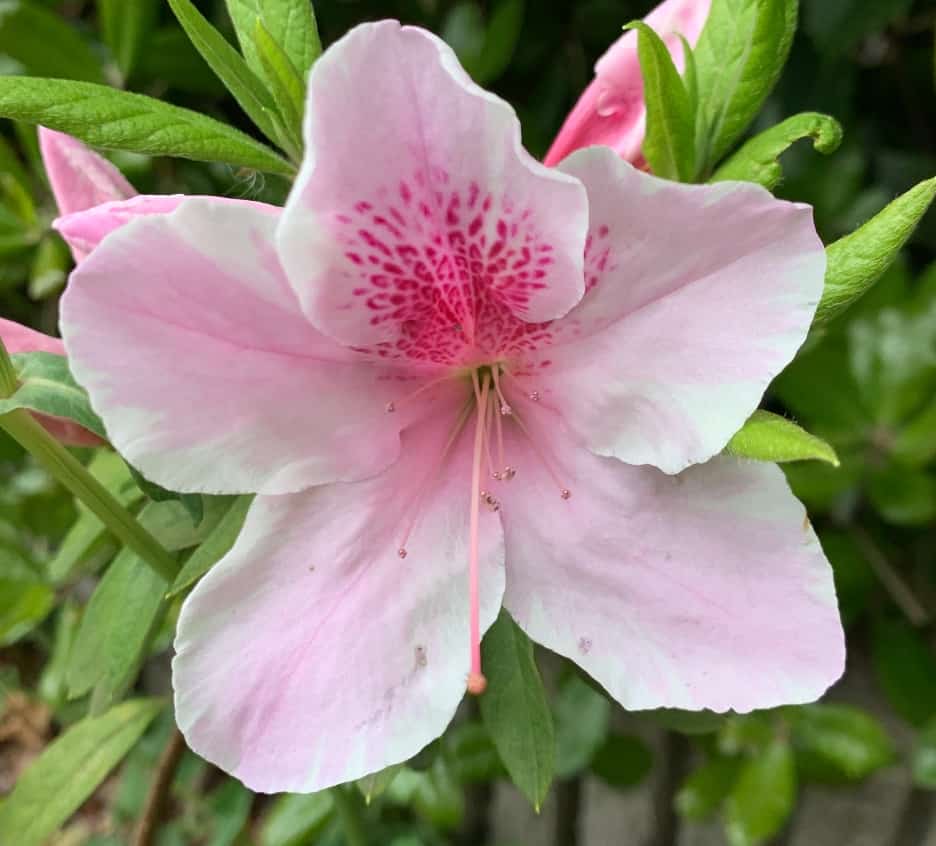
The dark spot on the petal is called a nectar guide or honey guide, which reportedly exists to show insects where the nectar is.
- Sepals: 5
- Petals: 5 (Fused – Gamopetalous)
- Stamens: 10
- Pistil: 1
The Azalea is a tree everyone knows, but familiarity often prevents us from observing things closely. In reality, we often know very little about the things closest to us.
How to Preserve Your Flowers
It’s best to press and stick the observed flowers onto your notebook or worksheet for safekeeping. When using OPP tape, it’s vital to squeeze out all the air to ensure tight adhesion. If done properly, the specimen can be preserved in good condition for about six months.
Making pressed flowers is also highly recommended. They retain their beautiful shape over time and serve as a valuable record for your science studies.
By observing flowers firsthand in this way, students gain a deeper understanding of plant structure and mechanics. Let’s keep exploring and learning science in a fun way by observing the plants around us!
https://phys-edu.net/wp/?p=45249
Inquiries and Requests
Bringing the wonders and fun of science closer to you! We’ve compiled easy-to-understand tips and exciting science experiments you can do at home. Feel free to search around! ・Learn more about the administrator, Ken Kuwako, here. ・For various requests (writing, lectures, experiment classes, TV supervision, appearances, etc.), click here. ・Updates are posted on X!
 We post experiment videos on the Kuwako Science Channel!
9月のイチオシ実験!
テレビ番組監修・イベント等のお知らせ
- 9月25日(金)21:00〜 かまいたちの瞬間回答!にて、科学監修を行いました。
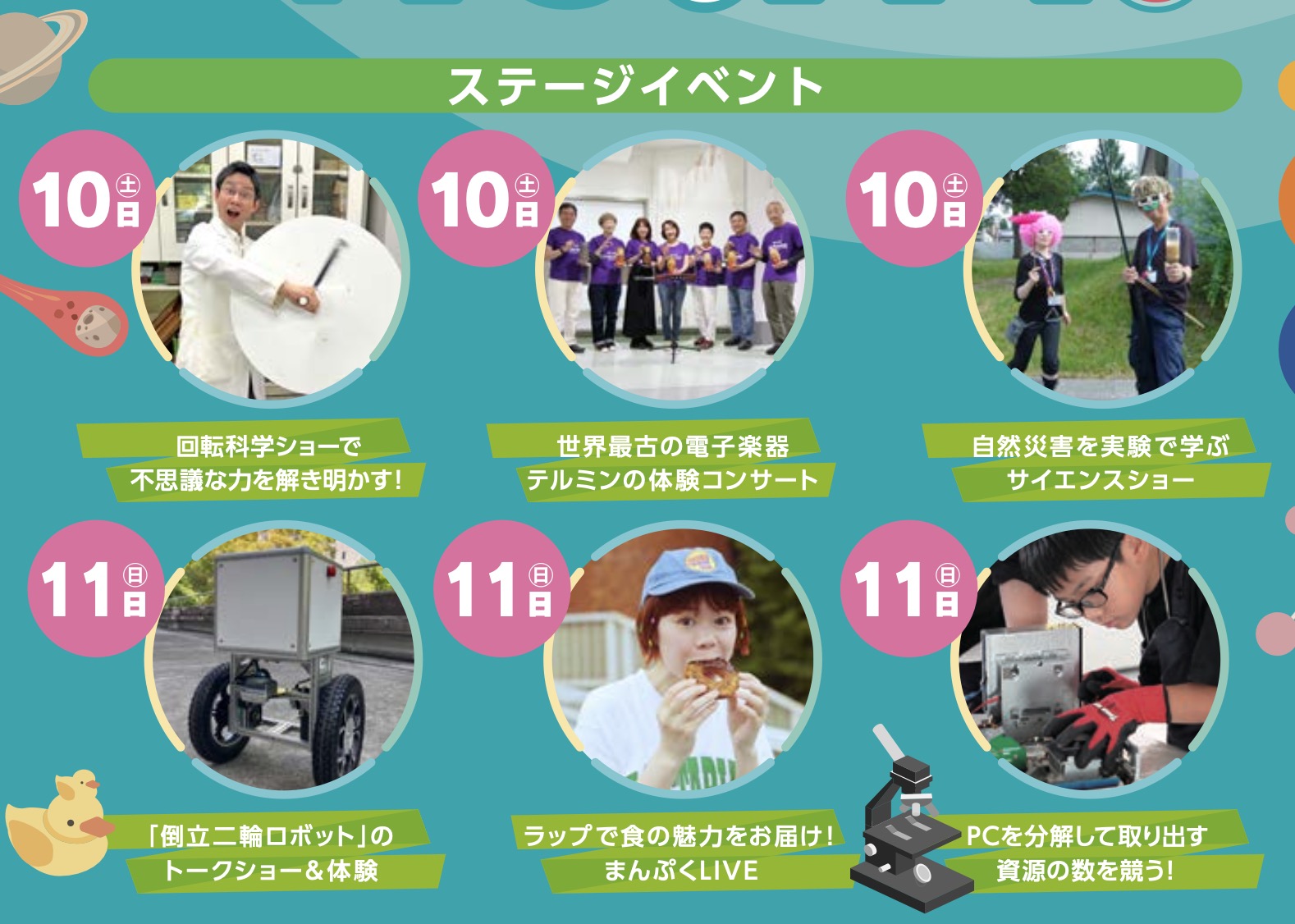
- 10月10日(土)11:15~12:00 千葉市科学フェスタ2026「桑子先生の回転科学ショー」にてサイエンスショーを行います。
- 12月26日(土) ナリカサイエンスアカデミー(教員向け実験講習会)開催
書籍のお知らせ
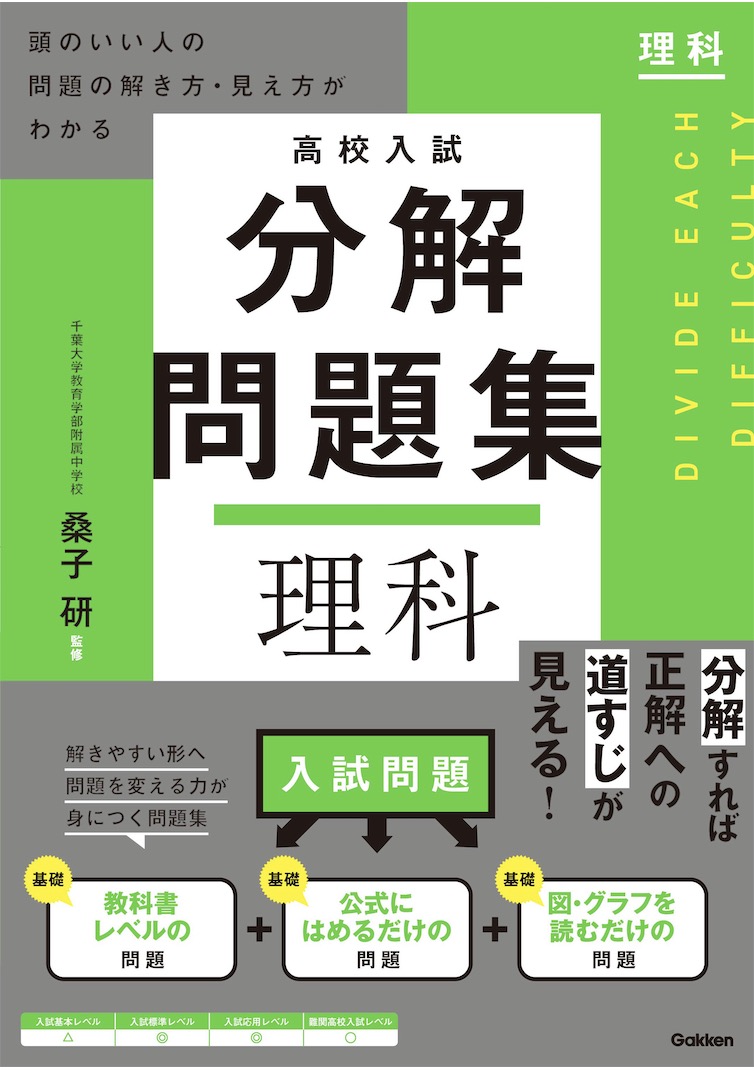
- 『高校入試 分解問題集 理科』(学研)…難しい問題も小さな問題に分解することで、問題を解くことができます。そんな分解の技術が身につくように深く関わりを持って作りました。
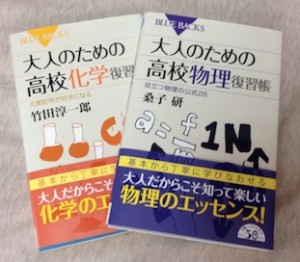
 『大人のための高校物理復習帳』(講談社)…一般向けに日常の物理について公式を元に紐解きました。特設サイトでは実験を多数紹介しています。※増刷がかかり6刷となりました(2026/02/01)
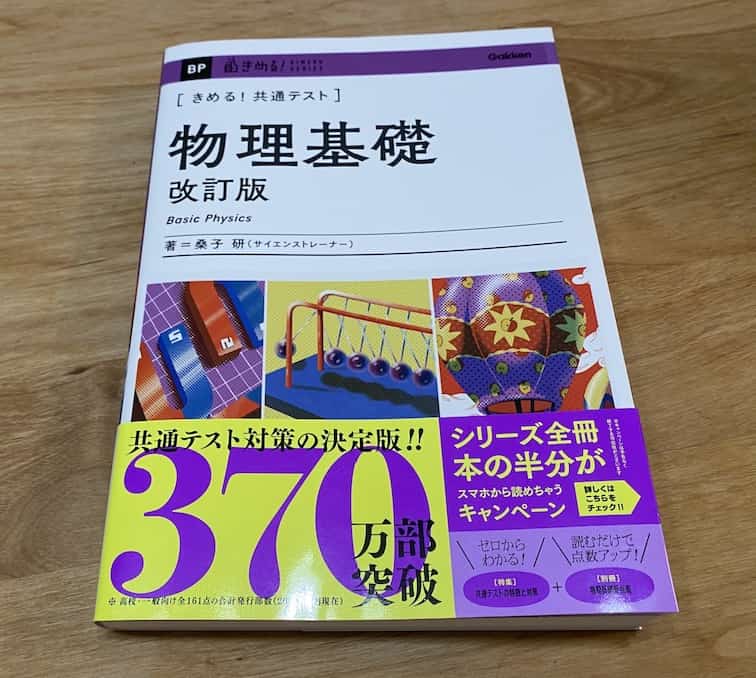
- 『きめる!共通テスト 物理基礎 改訂版』(学研)… 高校物理の参考書です。イラストを多くしてイメージが持てるように描きました。授業についていけない、物理が苦手、そんな生徒におすすめです。特設サイトはこちら。
各種SNS(更新情報をお届け!)
【日本語】X(Twitter)/instagram/Facebook 【英語】BlueSky/Threads
Explore
- 楽しい実験…お子さんと一緒に夢中になれるイチオシの科学実験を多数紹介しています。また、高校物理の理解を深めるための動画教材も用意しました。
- 理科の教材… 理科教師をバックアップ!授業の質を高め、準備を効率化するための選りすぐりの教材を紹介しています。
- Youtube…科学実験等の動画を配信しています。
- 科学ラジオ …科学トピックをほぼ毎日配信中!AI技術を駆使して作成した「耳で楽しむ科学」をお届けします。
- 講演 …全国各地で実験講習会・サイエンスショー等を行っています。
- About …「科学のネタ帳」のコンセプトや、運営者である桑子研のプロフィール・想いをまとめています。
- お問い合わせ …実験教室のご依頼、執筆・講演の相談、科学監修等はこちらのフォームからお寄せください。