Shake, Hold, and Erupt! Create a Mini Volcano with Cola Power!
I’m Ken Kuwako, your Science Trainer. Every day is an experiment!
You can use Coca-Cola to safely (well, mostly!) recreate a model of Earth’s dynamic activity: a volcanic eruption. In this exciting science experiment, we’ll dive into the secret behind the explosive power hidden inside a common carbonated drink. This specific experiment was developed and refined with my trainees, T and S, where we researched the optimal liquid volume and hole size. Please use our findings as a reference for your own attempt!
What You’ll Need
・700mL of Cola (While 350mL or 500mL bottles work, the size of the bottle will change the power of your eruption!)
・A soldering iron (or an awl, thumbtack, or anything else you can use to make a small hole in the cap)
・(IMPORTANT!) Wear clothes you don’t mind getting dirty, and make sure you have a wide open space for the experiment (a bathtub or, ideally, an outdoor area is best). If you’re doing this at school, be sure to run a preliminary test first. We failed once, too!
Experiment Steps
① Use the soldering iron or awl to make a tiny hole in the cola bottle cap. (※Always have an adult present when using fire or sharp objects.)
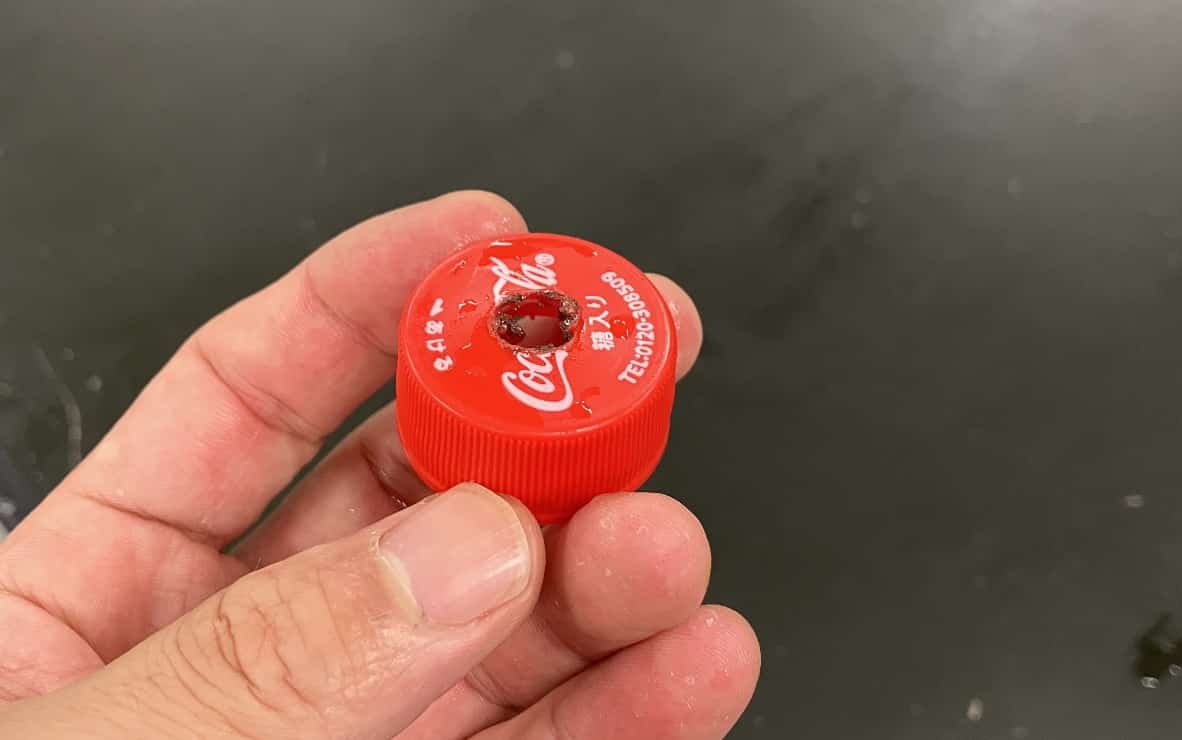
The size of the hole will change the strength of the eruption.
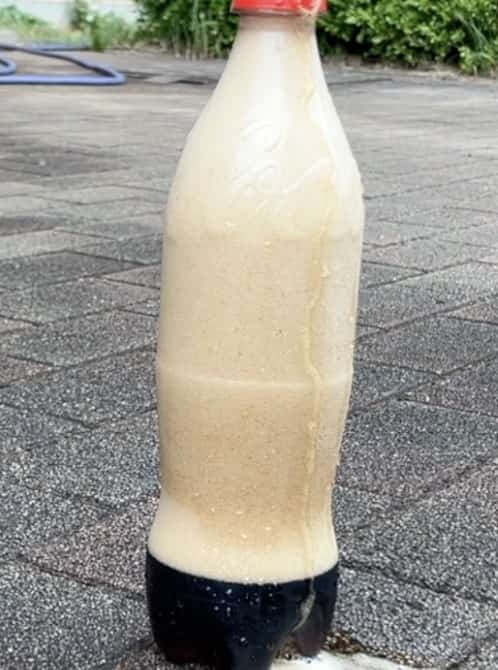
② Drink (or pour out) the cola until the liquid level is just above the label. The goal is to create an air pocket (space) inside the bottle.
③ Tightly close the cap with the hole. While firmly pressing your thumb over the hole (or using masking tape to cover it), shake the cola violently! Give it a good, vigorous shake for about five seconds.
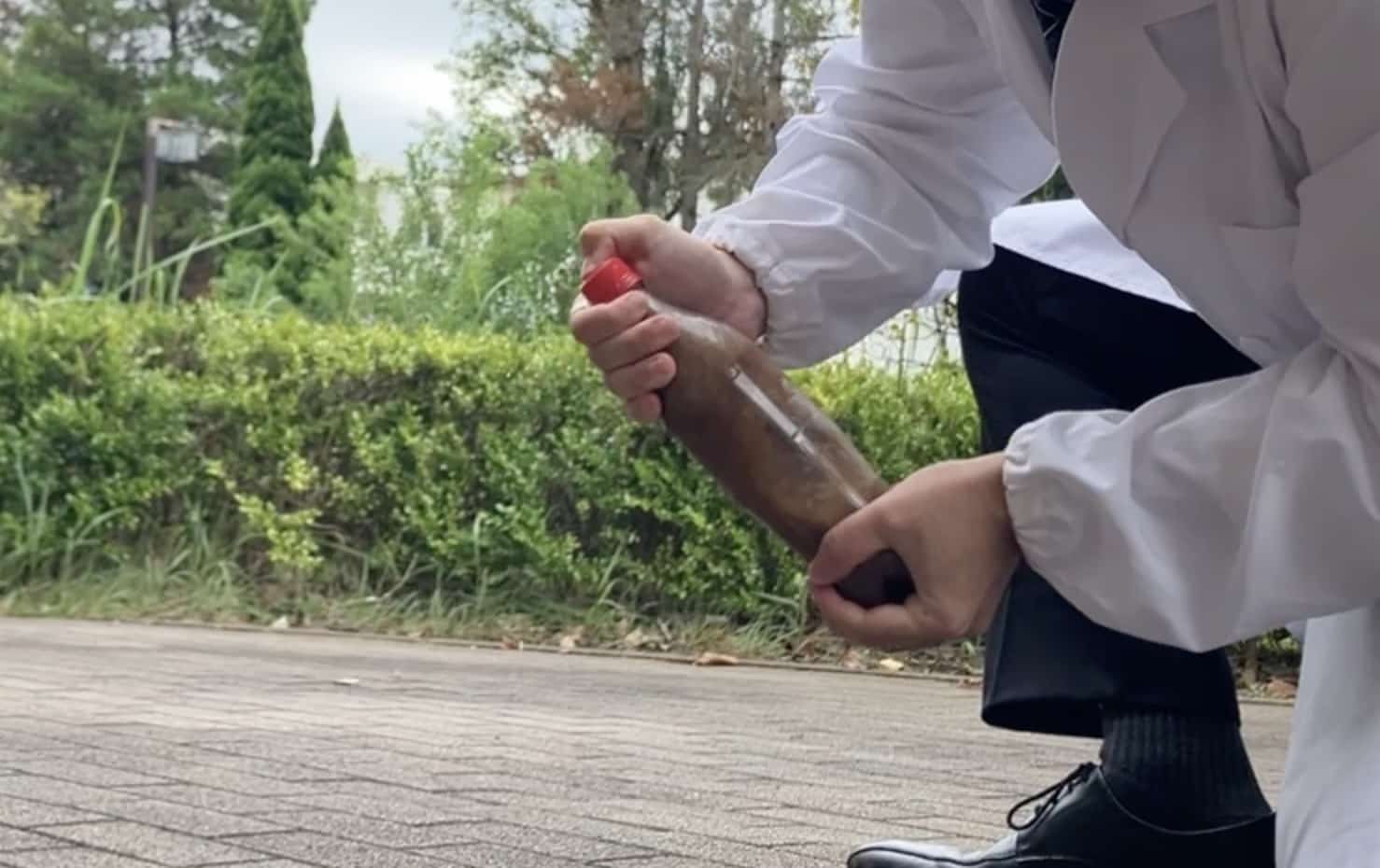
④ Place the bottle on the floor or ground. When you’re ready, let go of your thumb all at once! (or rapidly remove the masking tape!)
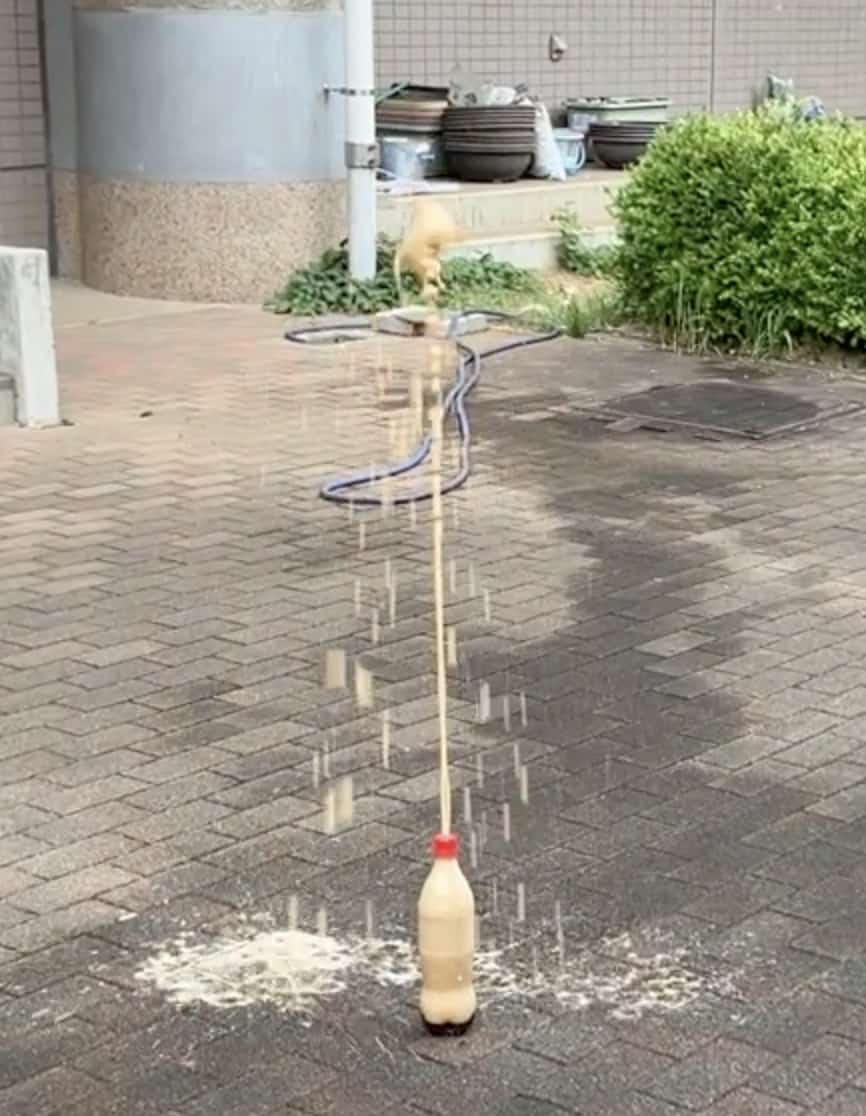
⑤ The eruption begins!
Why Did it Erupt? The Pressure Secret Hidden in Cola
This is similar to the “Mentos and Coke” experiment you often see in YouTuber videos. In cola, a gas called Carbon Dioxide (CO2) is forcibly pushed into the liquid under high pressure (this is called being ‘dissolved’).
① Step 3 (Shaking): Shaking the bottle stimulates the dissolved CO2 in the cola (liquid), causing it to rapidly escape from the liquid and try to return to its gaseous state.
② Pressure Buildup Inside the Bottle: The gaseous CO2 that has escaped the liquid collects in the empty space you created. The more you shake, the more this space fills with gas, resulting in extremely high pressure (a taut, ready-to-burst state) inside the bottle.
③ Step 4 (Releasing the Finger): When you release your finger, you create a path for the high-pressure gas to rush out toward the lower pressure (the outside ‘atmospheric pressure’). At this moment, the gas inside the bottle drags the cola liquid along with it, causing it to blast out of the tiny hole with incredible force! Furthermore, the sudden drop in internal pressure causes the remaining dissolved CO2 in the cola to exclaim, “That’s enough!” and turn into gas, creating a chain reaction that sustains the explosive eruption.
The Science of Eruptions: When Your Cola Transforms into “Magma”
This experiment is actually an excellent model for a real volcanic eruption.
Inside the Plastic Bottle = A deep underground “Magma Chamber”
The Cola = “Magma”
The Dissolved CO2 = The “Water (H2O)” or gas dissolved in Magma
Ordinarily, magma remains stable deep underground, with water and gas dissolved in it due to high pressure. However, if the magma is somehow triggered to move closer to the surface or the pressure drops, the dissolved water suddenly flashes into “steam (gas).” When water changes from liquid to gas (steam), its volume expands by a staggering 1,700 times! This tremendous expansion force is the driving engine that violently forces magma out of a volcano’s crater, causing an eruption.
Bonus Feature: Can You Make “Pumice”?
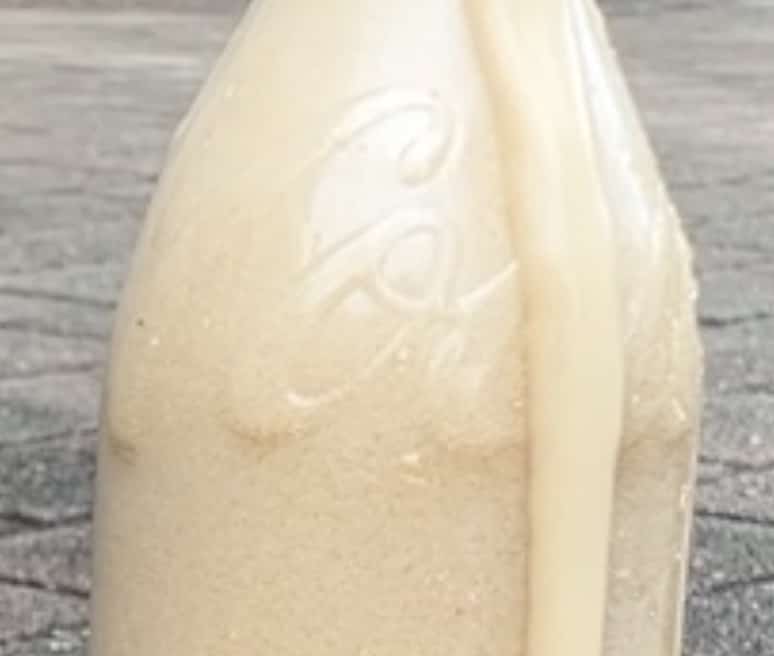
After the experiment, look closely at the remaining cola—you’ll see tons of bubbles. What if this “bubbly magma (cola)” were to cool and solidify rapidly the moment it erupted? That’s right, you would get “Pumice.” Pumice floats on water because it has so many of these ‘bubbles’ (which are the escape routes of the gas) inside it.
It’s a simple experiment, but it’s a profound way to truly feel the energy of our planet. ※ Make sure to do this in a safe area where it’s okay to get messy, and try it out with your family!
Inquiries and Requests
Bring the wonders and fun of science closer to home! We’ve put together easy-to-understand tips and fun science experiments you can do right at home. Feel free to search around! ・The content of our Science Idea Book has been published as a book. Find out more here ・For more information about the administrator, Ken Kuwako, click here ・For various requests (writing, lectures, science workshops, TV supervision, appearances, etc.), click here ・Article updates are posted on X!
 We post experiment videos on the Science Idea Channel!
10月のイチオシ実験!
テレビ番組監修・イベント等のお知らせ
- 10月27日(火) テレビ監修番組放送予定
- 11月27日(金) テレビ監修番組放送予定
- 12月26日(土) ナリカサイエンスアカデミー(教員向け実験講習会)開催
書籍のお知らせ
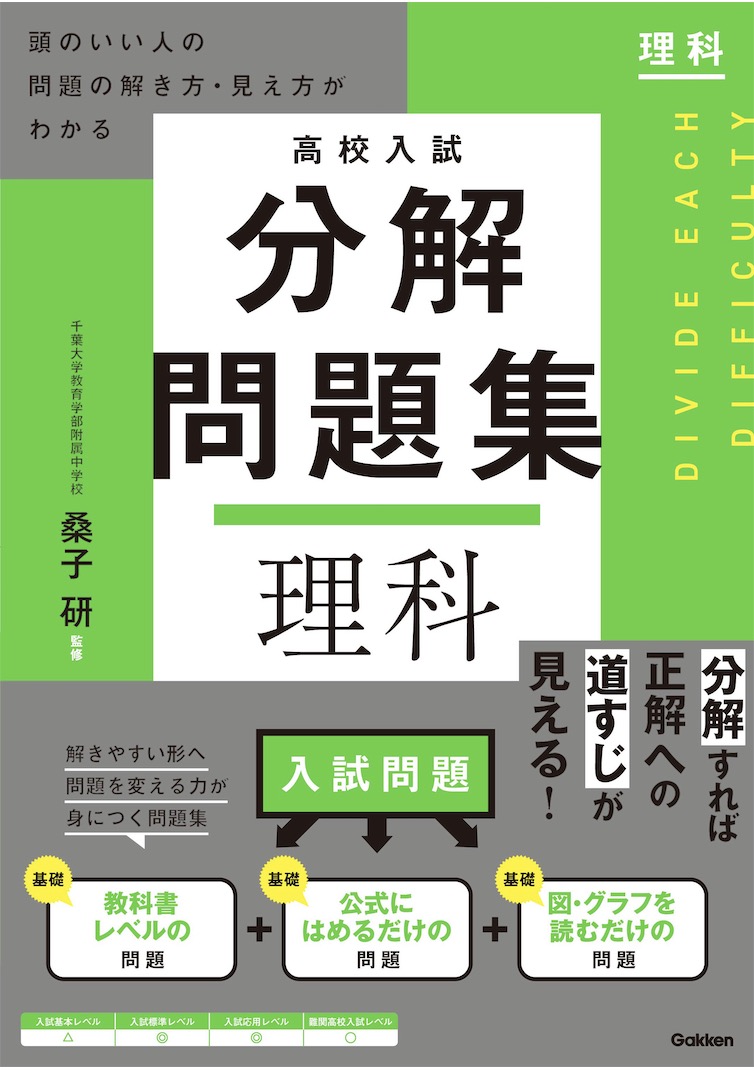
- 『高校入試 分解問題集 理科』(学研)…難しい問題も小さな問題に分解することで、問題を解くことができます。そんな分解の技術が身につくように深く関わりを持って作りました。
 『大人のための高校物理復習帳』(講談社)…一般向けに日常の物理について公式を元に紐解きました。特設サイトでは実験を多数紹介しています。※増刷がかかり6刷となりました(2026/02/01)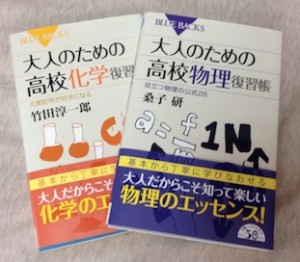
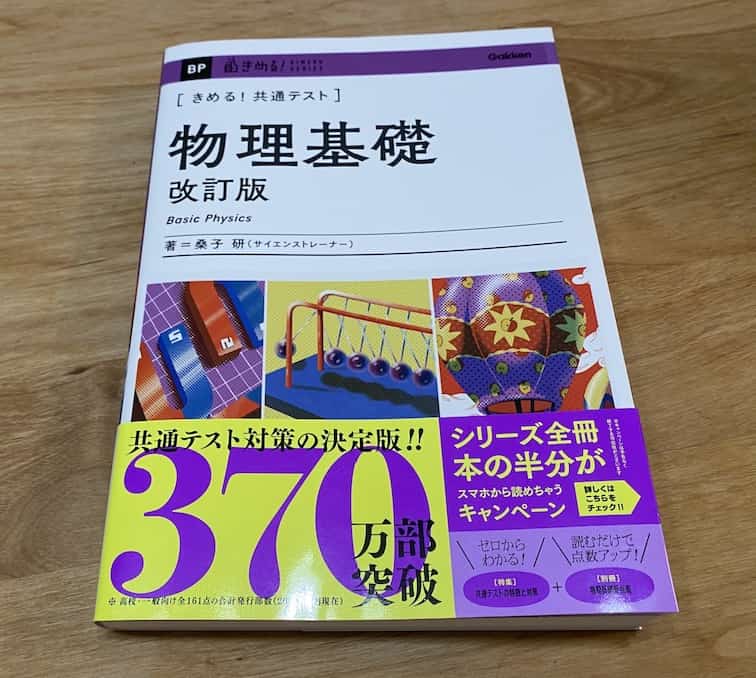
- 『きめる!共通テスト 物理基礎 改訂版』(学研)… 高校物理の参考書です。イラストを多くしてイメージが持てるように描きました。授業についていけない、物理が苦手、そんな生徒におすすめです。特設サイトはこちら。
各種SNS(更新情報をお届け!)
【日本語】X(Twitter)/instagram/Facebook 【英語】BlueSky/Threads
Explore
- 楽しい実験…お子さんと一緒に夢中になれるイチオシの科学実験を多数紹介しています。また、高校物理の理解を深めるための動画教材も用意しました。
- 理科の教材… 理科教師をバックアップ!授業の質を高め、準備を効率化するための選りすぐりの教材を紹介しています。
- Youtube…科学実験等の動画を配信しています。
- 科学ラジオ …科学トピックをほぼ毎日配信中!AI技術を駆使して作成した「耳で楽しむ科学」をお届けします。
- 講演 …全国各地で実験講習会・サイエンスショー等を行っています。
- About …「科学のネタ帳」のコンセプトや、運営者である桑子研のプロフィール・想いをまとめています。
- お問い合わせ …実験教室のご依頼、執筆・講演の相談、科学監修等はこちらのフォームからお寄せください。