“Your Lungs Can’t Inflate Themselves!?” Learning How Breathing Works with a Plastic Bottle Model (Diaphragm & Lungs)
I’m Ken Kuwako, a Science Trainer. Every day is an experiment!
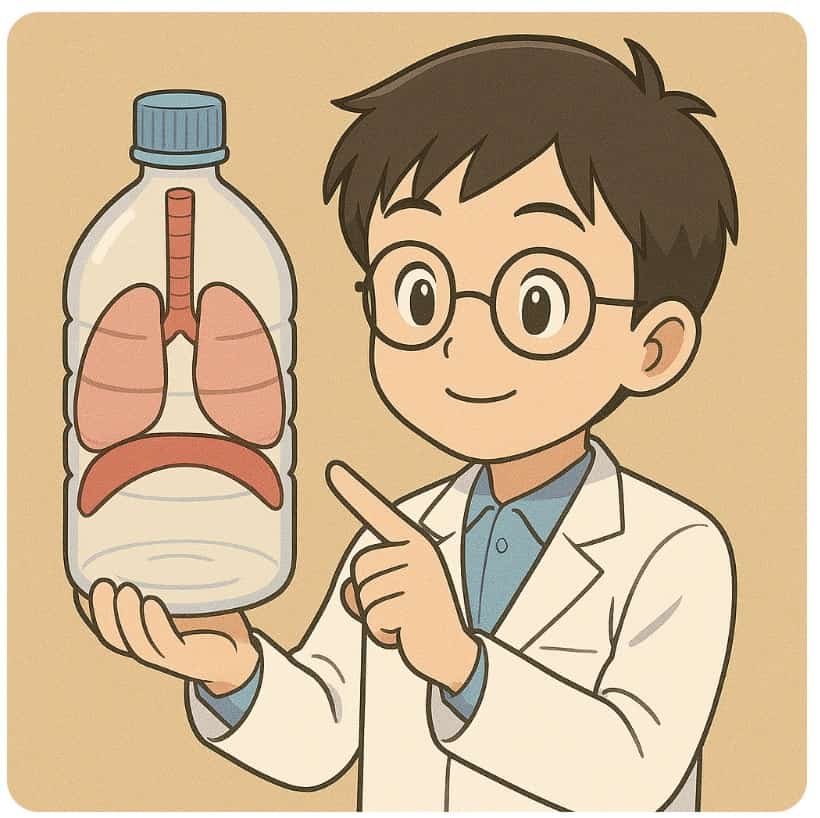
See How the Lungs Work with a Plastic Bottle and Balloons! A Simple Model for Science Class
“How do the lungs get air in and out?”
When tackling this question in the respiratory system unit for first-year junior high students, a hands-on model can make a huge difference in their understanding. Here’s a simple lung model that can be made using everyday materials. All you need is a 500 mL plastic bottle and a couple of balloons. Something that might otherwise be sitting forgotten in the corner of a science lab can be transformed into a tool that lets students experience the wonders of the human body firsthand.
What’s more, this particular model was designed and made by a student teacher using their own creativity and ingenuity. When students see it in action, they often respond with an impressed “Whoa!” Despite its simplicity, the model makes the mechanics of breathing surprisingly intuitive.
■ Materials (for one model)
• 500 mL plastic bottle (with the bottom cut off)
• Red balloon (cut in half; one half is attached to the mouth of the bottle to represent a lung)
• Blue balloon (attached to the bottom to represent the diaphragm)
• Cellophane tape or rubber band
■ How to Make It and How It Works
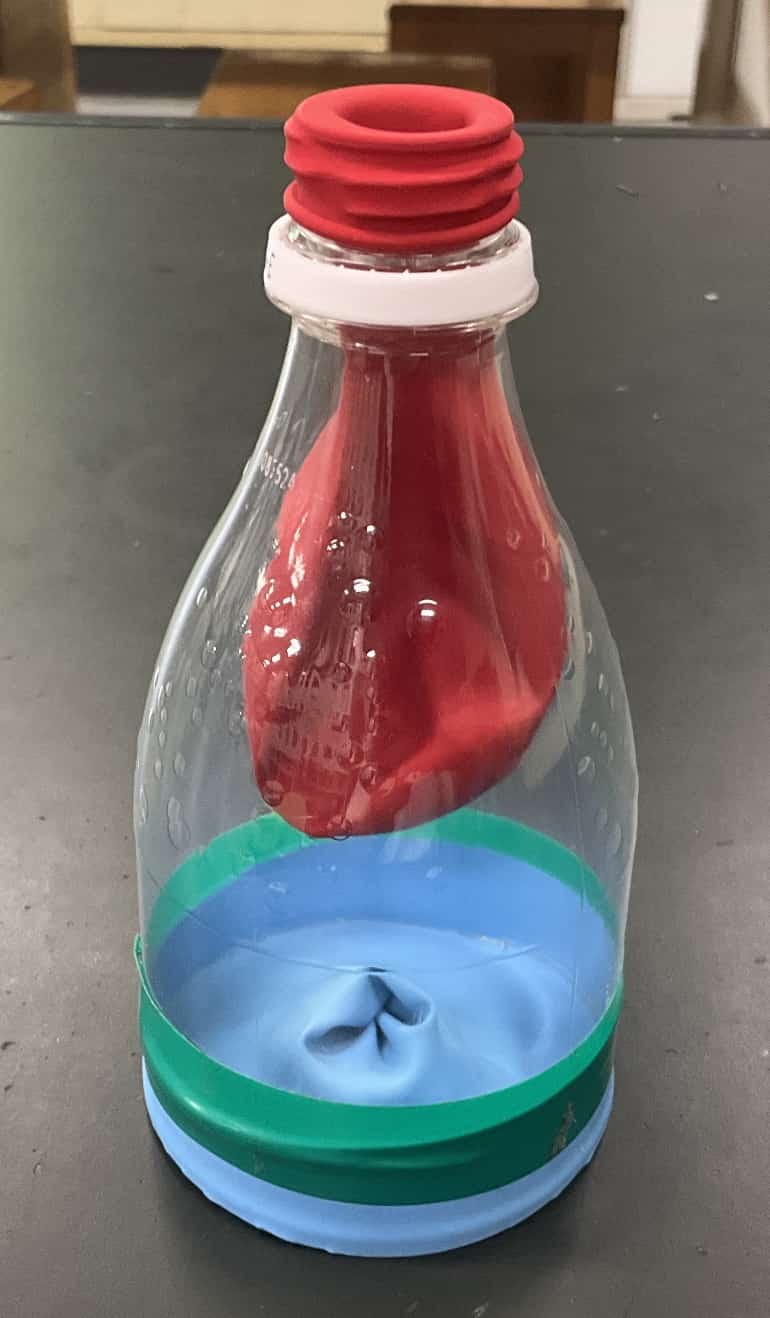
1. Cut off the bottom of the plastic bottle. (For safety, it’s best for the teacher to do this part in advance using a cutter or similar tool.)
2. Attach the red balloon to the mouth of the bottle, letting it hang down inside. This represents the “lung.”
3. Stretch the blue balloon over the cut-off bottom of the bottle. (Use the rounded part of the cut balloon and stretch it over the opening.) This represents the “diaphragm.”
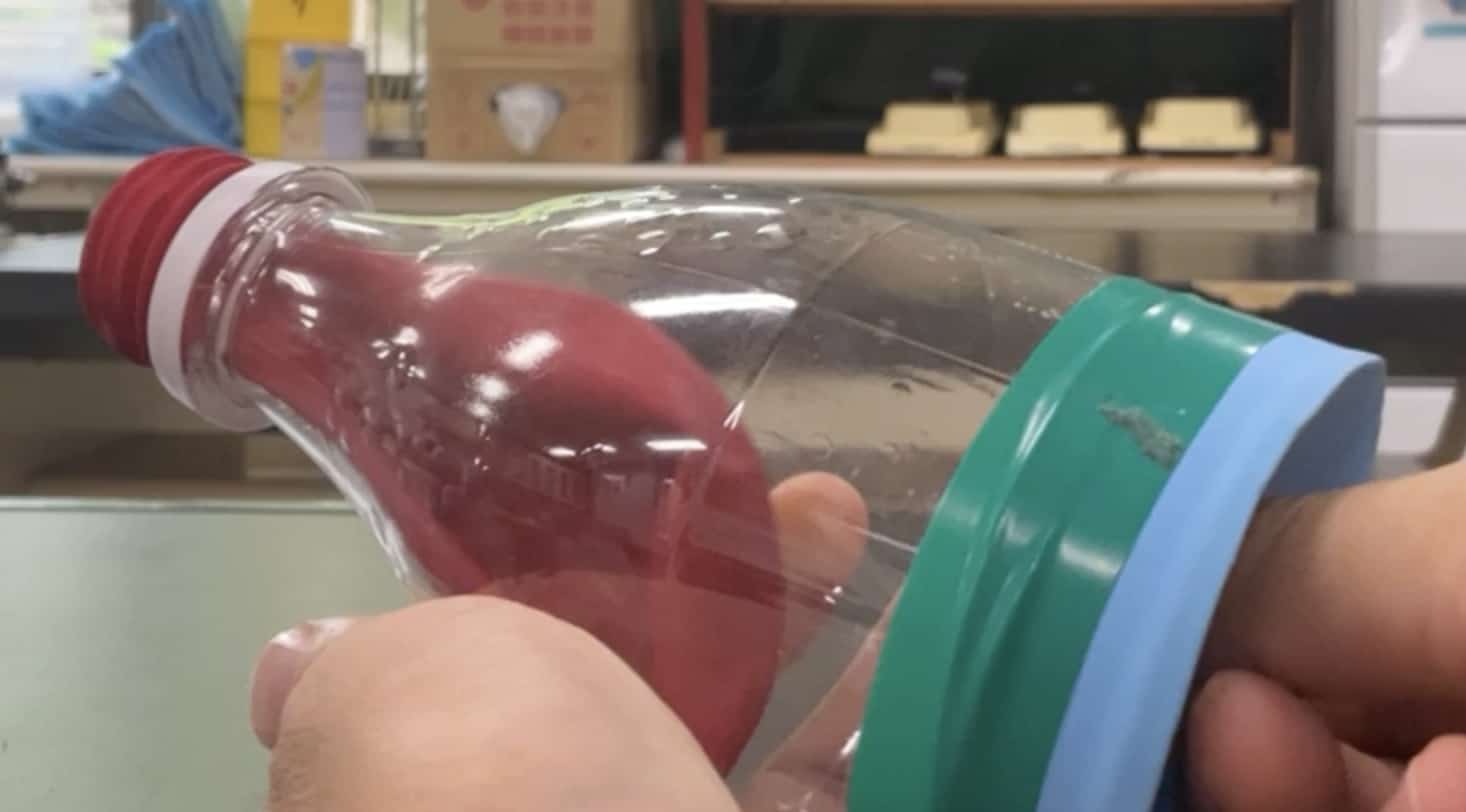
4. Pull the blue balloon downward, and the air pressure inside the bottle decreases, causing the red balloon (the “lung”) to expand. Push the blue balloon upward, and the “lung” contracts.
This simple movement allows students to experience an important fact: the lungs don’t inflate by themselves. Instead, air moves in and out as the surrounding muscles, including the diaphragm, move.
Pull down on the diaphragm (blue), and the lung (red) expands.

Push up on the diaphragm (blue), and the lung (red) contracts.
■ Tips for Using the Model in Class
• Visually demonstrate that the lungs themselves do not contain muscles that make them expand and contract.
• Explain how changes in air pressure cause air to flow in and out.
• Have students work in groups. If the teacher prepares the bottle in advance, including the cutting, the activity will run much more smoothly.
If you have students make the models themselves, take extra care when handling the blue balloon used for the diaphragm. It is thin and tears easily, so having plenty of spare balloons on hand is a good idea.
This is a wonderfully simple teaching tool that can turn everyday materials into an instant “Ah, now I get it!” moment. If you have some spare time, make a few models in advance and keep them on hand. You’ll be glad to have them when the right opportunity comes along!
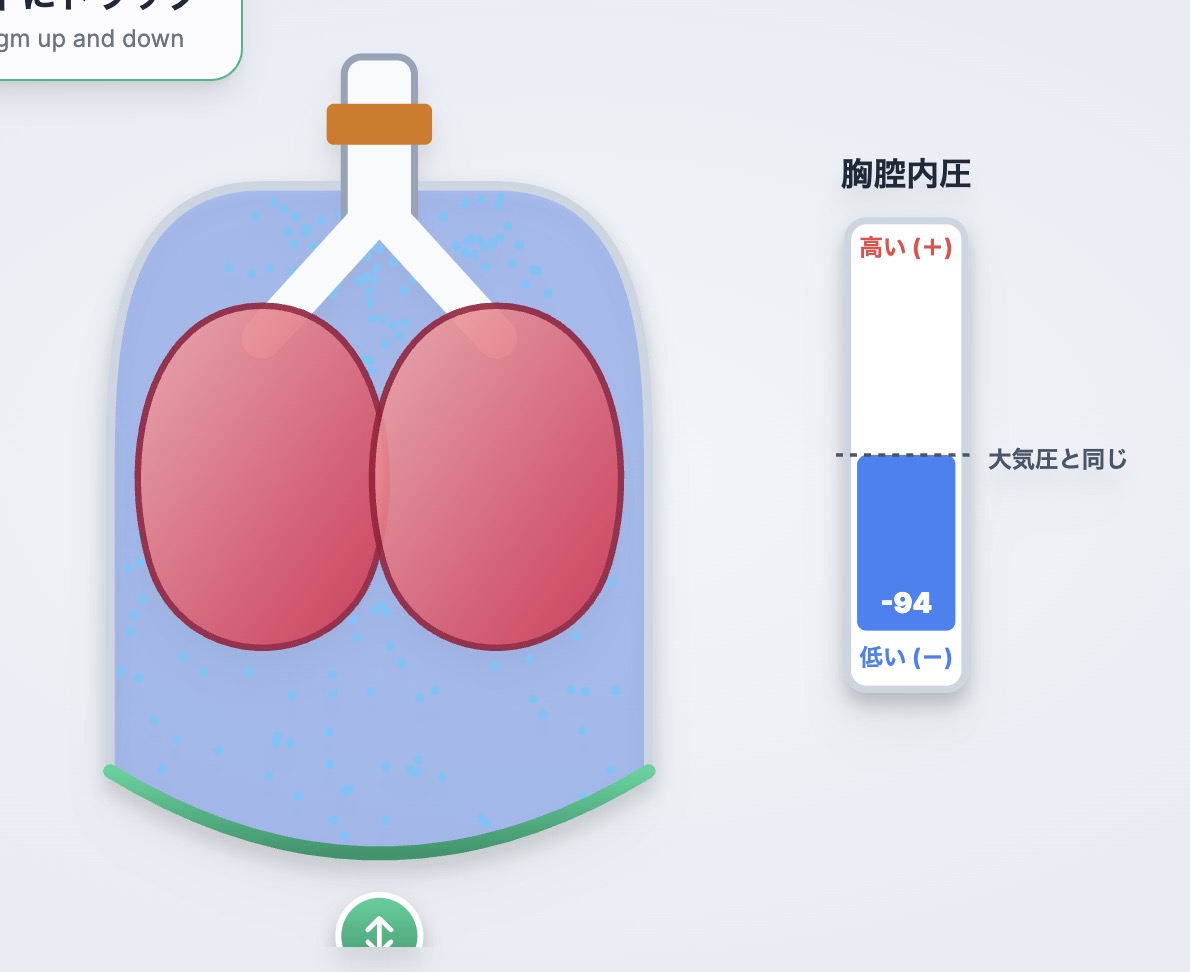
There is also a simulation available on the site below. Having students try the simulation themselves alongside the physical model should help deepen their understanding even further.
Contact and Requests
Bring the wonder and fun of science a little closer! I share fun science experiments you can do at home, along with easy-to-understand tips and tricks. Take a look around and search for more!
・For more information about the site and its author, Ken Kuwako, click here.
・For various requests (writing, lectures, science workshops, TV science supervision, appearances, etc.), click here.
・Article updates are posted on X!
 Science Ideas Channel features videos of science experiments!
9月のイチオシ実験!
お弁当箱をプラバンがわりにしてキーホルダーを作ろう!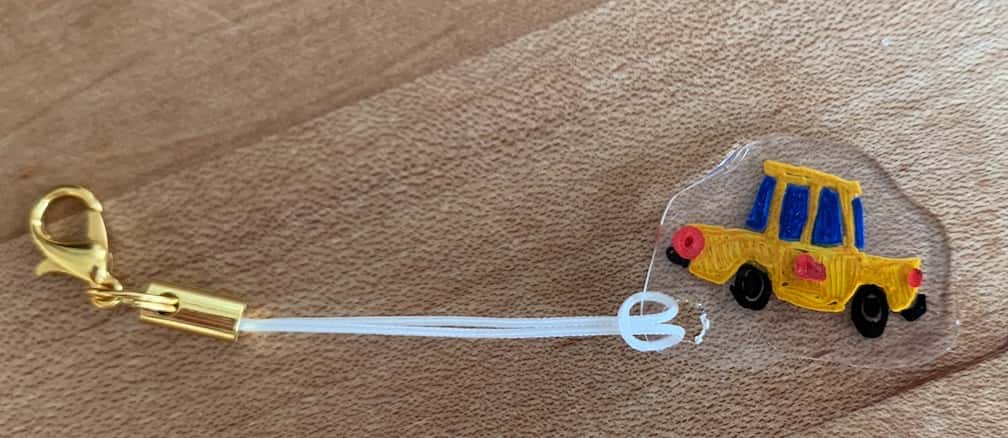
テレビ番組監修・イベント等のお知らせ
- 8月27日(木)科学監修番組放送予定
- 9月20日(日)ダビンチマスターズ出演予定
- 10月10日(土)11:15~12:00 千葉市科学フェスタ2026「桑子先生の回転科学ショー」にてサイエンスショーを行います。
- 12月26日(土) ナリカサイエンスアカデミー(教員向け実験講習会)開催
書籍のお知らせ
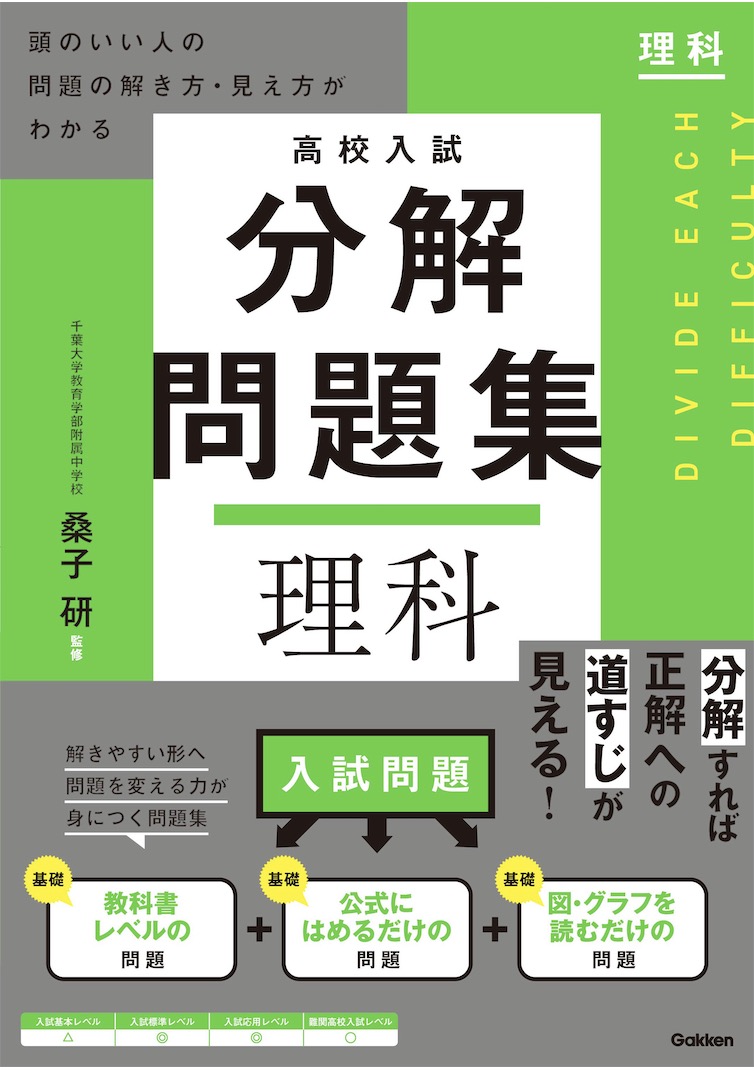
- 『高校入試 分解問題集 理科』(学研)…難しい問題も小さな問題に分解することで、問題を解くことができます。そんな分解の技術が身につくように深く関わりを持って作りました。
 『大人のための高校物理復習帳』(講談社)…一般向けに日常の物理について公式を元に紐解きました。特設サイトでは実験を多数紹介しています。※増刷がかかり6刷となりました(2026/02/01)
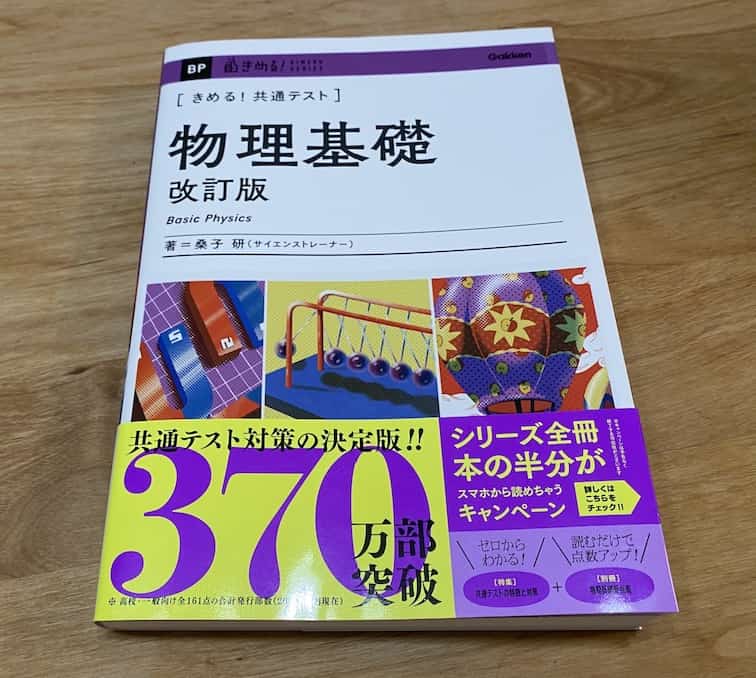
- 『きめる!共通テスト 物理基礎 改訂版』(学研)… 高校物理の参考書です。イラストを多くしてイメージが持てるように描きました。授業についていけない、物理が苦手、そんな生徒におすすめです。特設サイトはこちら。
各種SNS(更新情報をお届け!)
【日本語】X(Twitter)/instagram/Facebook 【英語】BlueSky/Threads
Explore
- 楽しい実験…お子さんと一緒に夢中になれるイチオシの科学実験を多数紹介しています。また、高校物理の理解を深めるための動画教材も用意しました。
- 理科の教材… 理科教師をバックアップ!授業の質を高め、準備を効率化するための選りすぐりの教材を紹介しています。
- Youtube…科学実験等の動画を配信しています。
- 科学ラジオ …科学トピックをほぼ毎日配信中!AI技術を駆使して作成した「耳で楽しむ科学」をお届けします。
- 講演 …全国各地で実験講習会・サイエンスショー等を行っています。
- About …「科学のネタ帳」のコンセプトや、運営者である桑子研のプロフィール・想いをまとめています。
- お問い合わせ …実験教室のご依頼、執筆・講演の相談、科学監修等はこちらのフォームからお寄せください。