900 Million Possibilities from Just 6 Blocks! What LEGO Ducks Teach Us About the Joy of Thinking
I’m Ken Kuwako, your Science Trainer. Every day is an experiment.
If someone told you, “Build a duck using six blocks,” what kind of duck would you imagine? Surprisingly, even if you gave the exact same instructions to an entire class, no two ducks would ever turn out exactly alike. This simple little “duck-building” activity ended up changing the way my students approached science experiments. Let me tell you how.
Telling students, “Be more proactive!” or “Get involved!” only gets you so far. On the other hand, when students carry out an experiment without a clear sense of purpose, their conclusions often end up looking like something copied straight from the textbook. What I really want is for them to look at their experimental results and come up with their own ideas about what those results might mean.
That’s where the “Duck Workshop” using LEGO Education came in. I started inserting this five-minute activity just before experiments, and little by little, I began to see a change in the way students engaged with their experiments.
Let’s Build a Duck with LEGO!
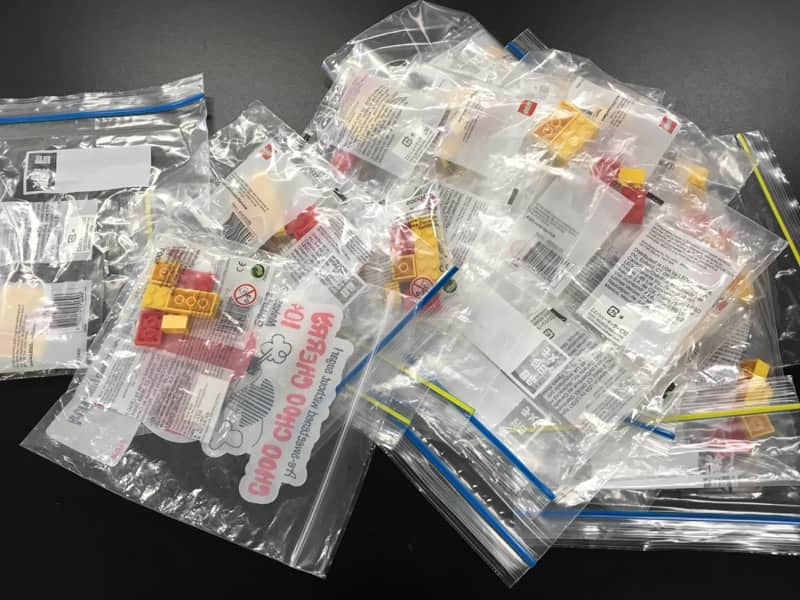
Inside each bag are six LEGO bricks.
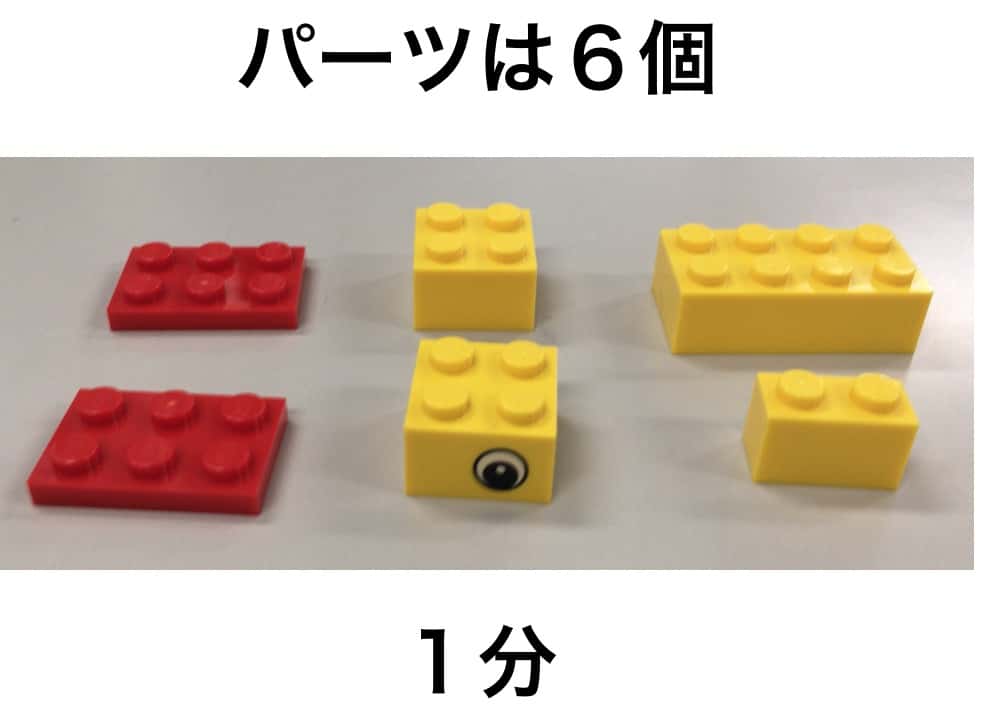
Using these six bricks, each student builds their own duck. The fun part is that they can use all six pieces or only some of them. They have just one minute. Ready, set, build!
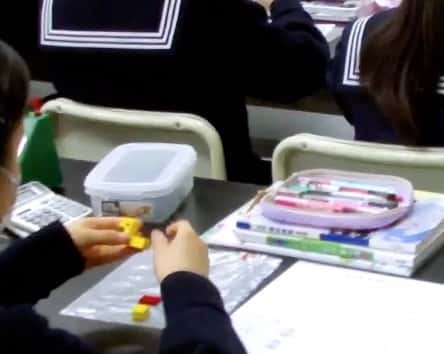
Once everyone has finished, students show their creations to the people sitting nearby. They explain their designs to their neighbors and talk about why they built their ducks the way they did.
Why Did You Put the Beak There? — Discoveries Through Conversation
Students put their design choices into words, explaining things like why they decided to place the beak in a particular spot. Then, their classmates get a chance to ask questions. Once this exchange is over, we line up all the ducks on the desks and take a good look at them together.
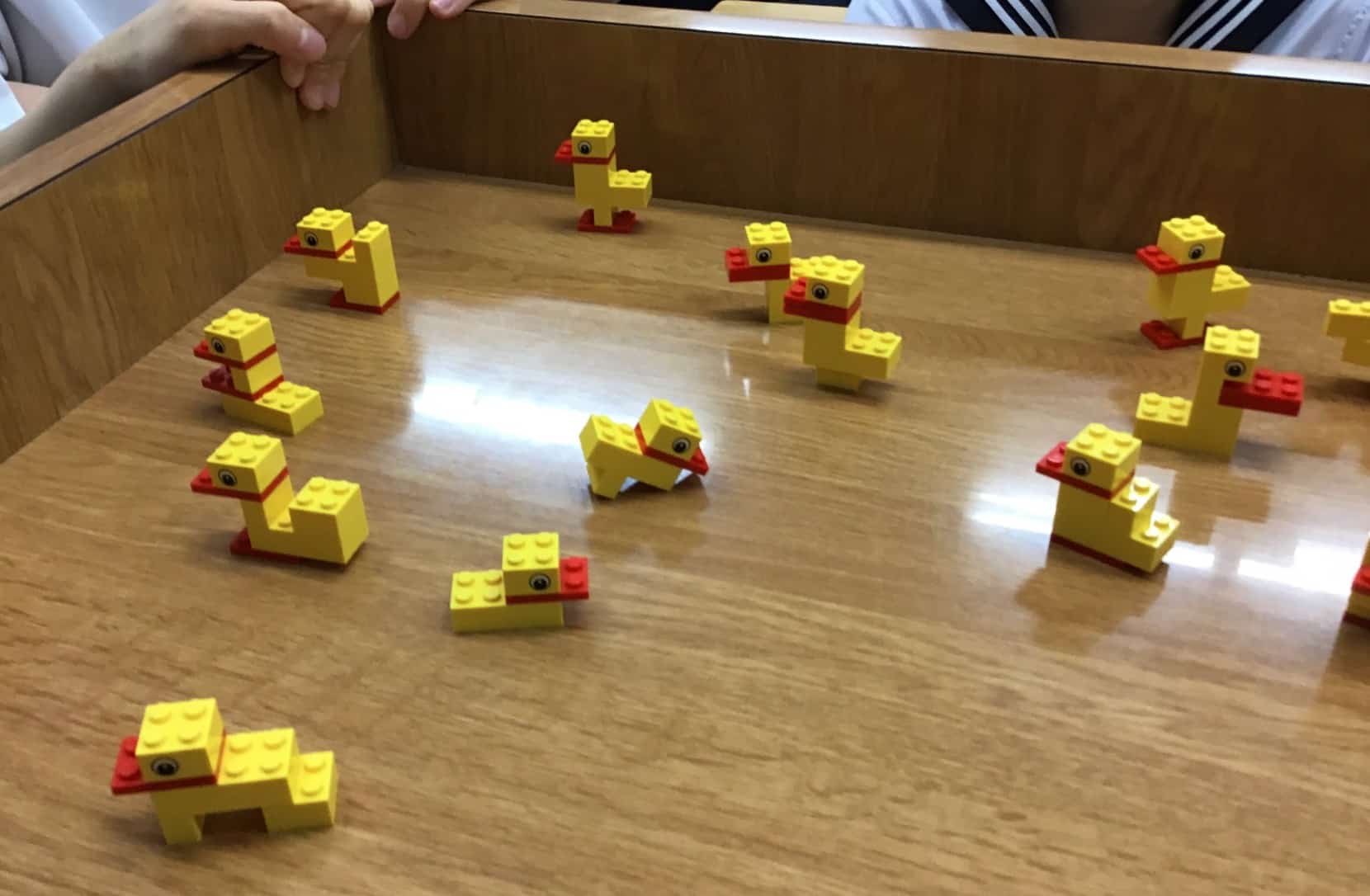
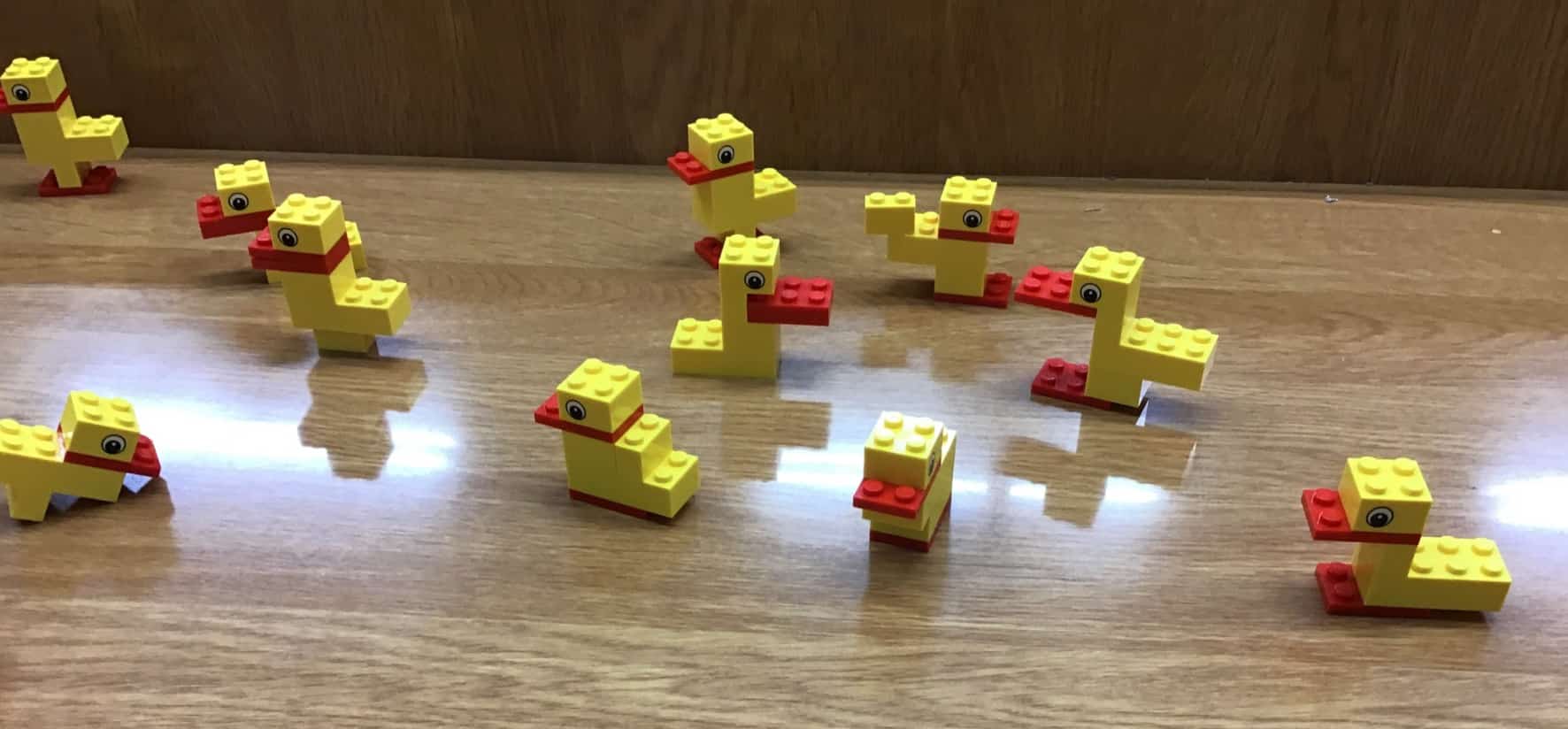
When you actually do this activity, each student starts out thinking, “Well, obviously, this is what a duck looks like!” But when all the finished creations are placed side by side, you can’t help but be amazed by the incredible variety of “ducks” sitting in front of you.
Not a single one is exactly the same.
In other words, students can see right before their eyes that there isn’t always just one correct answer.
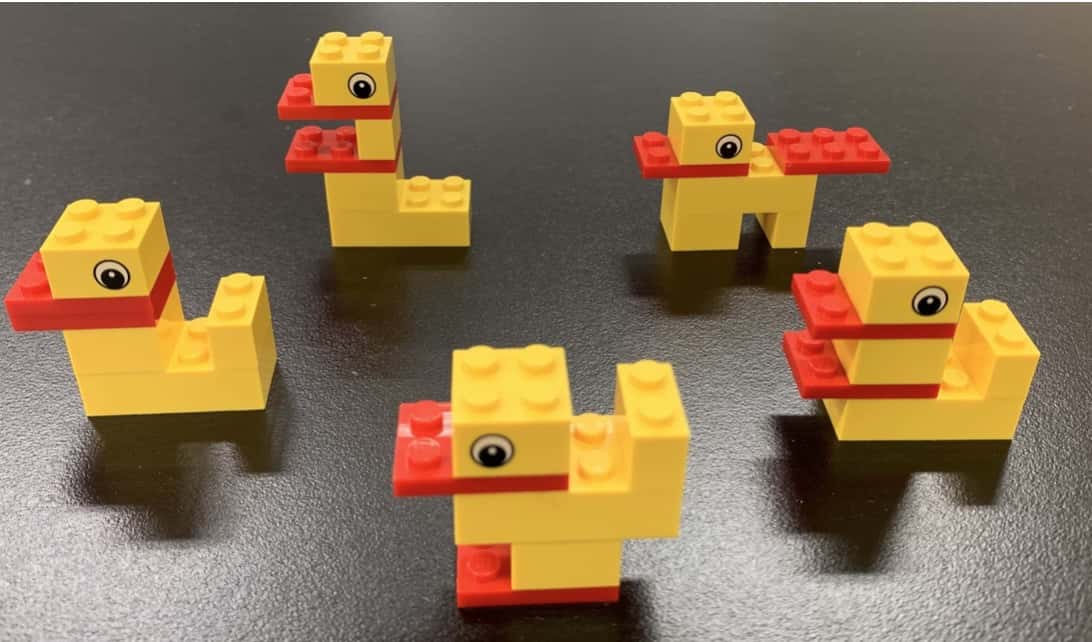
A World of “About 900 Million Possibilities” from Just Six Bricks
As it turns out, there’s some fascinating mathematics behind this diversity. In theory, there are 24 possible combinations when you connect two basic bricks with eight studs each. With three bricks, that number jumps to 1,060. And with six bricks, you can create an astonishing 900 million different configurations. Every additional brick makes the number of possibilities explode.
That’s another fascinating mathematical world hiding inside a simple LEGO activity.
The important thing is that none of these creations is “wrong.” Each student has their own idea of what a duck should look like, and this activity makes that beautifully clear. Students also naturally begin noticing what is interesting about other people’s creations. Before long, you start hearing comments from all around the room like, “Oh, I never thought of building it that way!”
There Isn’t Always Just One “Answer” in the Real World
In the real world, there is rarely just one answer to a problem. In fact, sometimes we don’t even know what the actual problem is in the first place.
As this duck activity shows us, the themes teachers present, the ways students approach them, and the answers they come up with can all be virtually limitless. It seems that LEGO’s philosophy is that this diversity is precisely what makes us human.
This is how I use the activity, but there are plenty of other possibilities, too. For example, one biology teacher told me that they use the activity at the beginning of a classification lesson and then have students classify the ducks they have created.
Ducks with legs. Ducks without legs. Ducks with red beaks. Ducks with yellow beaks.
Students can practice classifying the same collection of objects from all sorts of different perspectives. I think it’s a wonderfully flexible activity that can be used not only in science, but also in biology and other subjects.
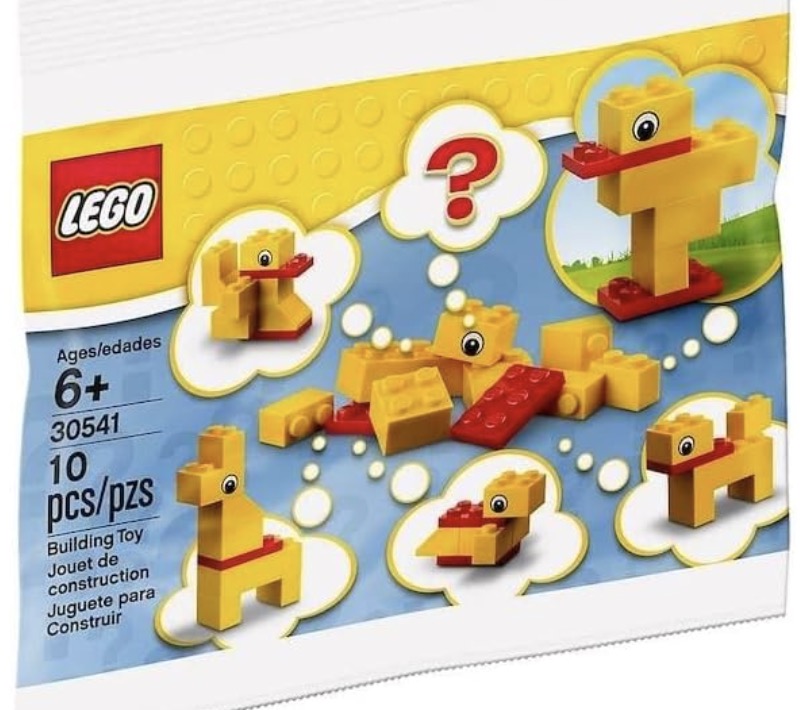
Amazon sometimes shows the item as out of stock, but when I contacted Narika Co., Ltd. directly, I was able to purchase it in bulk.
The “Duck Workshop” is simple, versatile, and surprisingly useful. Why not give it a try in your own classroom?
Contact & Requests
I want to make the wonders and excitement of science a little more accessible to everyone! On this blog, I share fun science experiments you can try at home, along with easy-to-understand tips and tricks. Feel free to explore and search around!
・The Science Notes blog has now been published as a book. For more information, click here.
・For more information about me, Ken Kuwako, click here.
・For inquiries and requests, including writing, lectures, science workshops, TV science supervision, and appearances, click here.
・For updates on new articles, follow me on X!
 Science Notes Channel features videos of science experiments!
9月のイチオシ実験!
お弁当箱をプラバンがわりにしてキーホルダーを作ろう!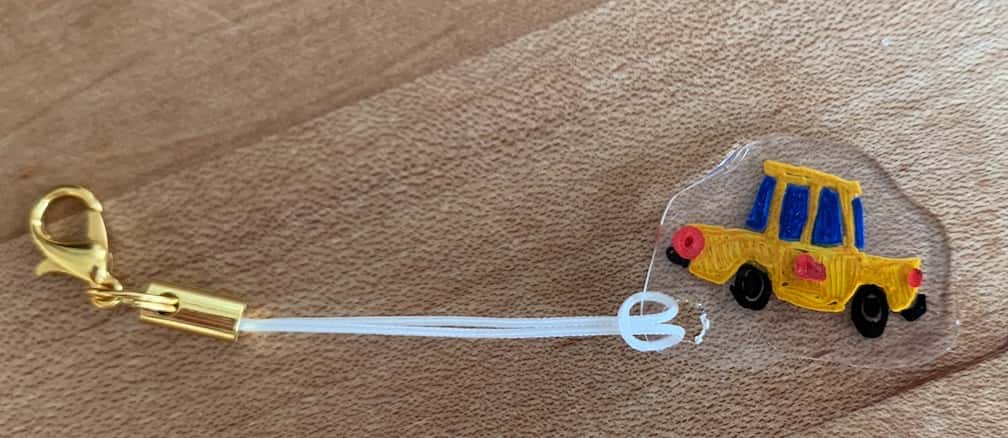
テレビ番組監修・イベント等のお知らせ
- 8月27日(木)科学監修番組放送予定
- 9月20日(日)ダビンチマスターズ出演予定
- 10月10日(土)11:15~12:00 千葉市科学フェスタ2026「桑子先生の回転科学ショー」にてサイエンスショーを行います。
- 12月26日(土) ナリカサイエンスアカデミー(教員向け実験講習会)開催
書籍のお知らせ
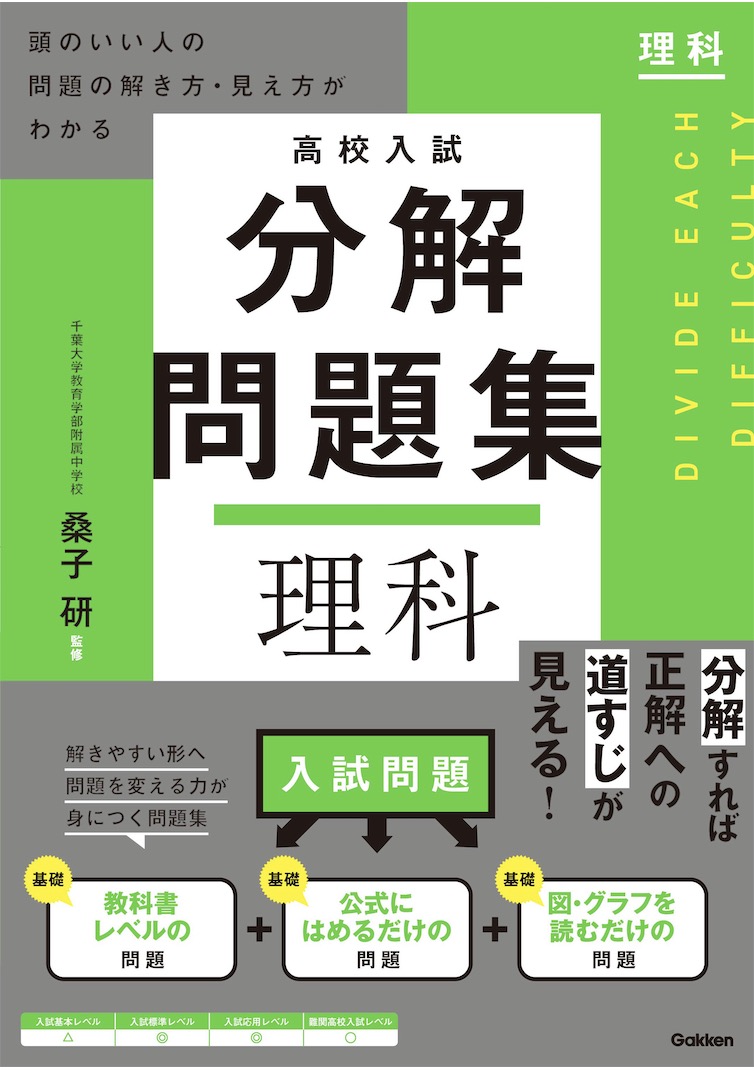
- 『高校入試 分解問題集 理科』(学研)…難しい問題も小さな問題に分解することで、問題を解くことができます。そんな分解の技術が身につくように深く関わりを持って作りました。
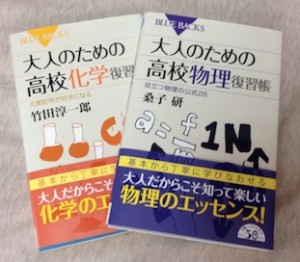
 『大人のための高校物理復習帳』(講談社)…一般向けに日常の物理について公式を元に紐解きました。特設サイトでは実験を多数紹介しています。※増刷がかかり6刷となりました(2026/02/01)
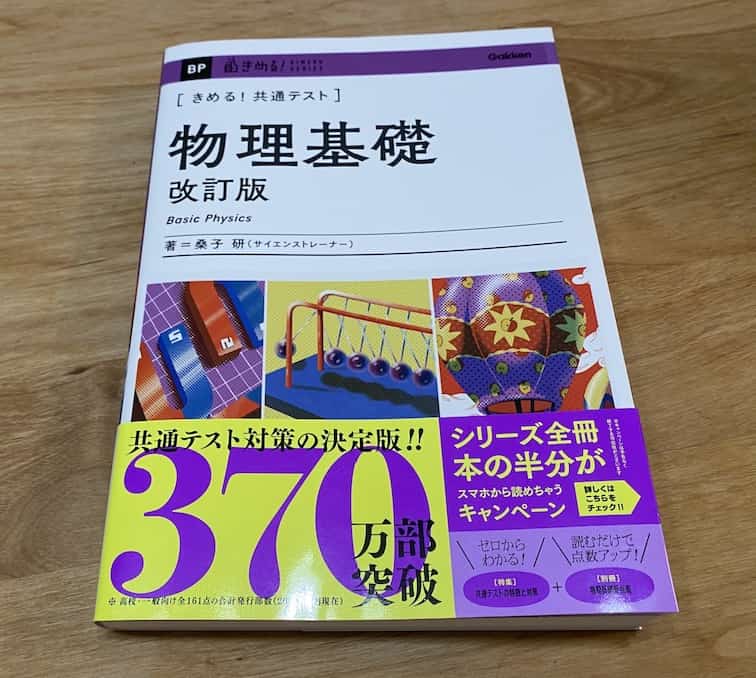
- 『きめる!共通テスト 物理基礎 改訂版』(学研)… 高校物理の参考書です。イラストを多くしてイメージが持てるように描きました。授業についていけない、物理が苦手、そんな生徒におすすめです。特設サイトはこちら。
各種SNS(更新情報をお届け!)
【日本語】X(Twitter)/instagram/Facebook 【英語】BlueSky/Threads
Explore
- 楽しい実験…お子さんと一緒に夢中になれるイチオシの科学実験を多数紹介しています。また、高校物理の理解を深めるための動画教材も用意しました。
- 理科の教材… 理科教師をバックアップ!授業の質を高め、準備を効率化するための選りすぐりの教材を紹介しています。
- Youtube…科学実験等の動画を配信しています。
- 科学ラジオ …科学トピックをほぼ毎日配信中!AI技術を駆使して作成した「耳で楽しむ科学」をお届けします。
- 講演 …全国各地で実験講習会・サイエンスショー等を行っています。
- About …「科学のネタ帳」のコンセプトや、運営者である桑子研のプロフィール・想いをまとめています。
- お問い合わせ …実験教室のご依頼、執筆・講演の相談、科学監修等はこちらのフォームからお寄せください。